
US President Trump’s latest crackdown on immigration has expanded to farms in California, raising concerns over labor shortages and disruptions to supply chains throughout the country.
Read MoreEcotourism in Antigua and Barbuda
Amidst climate change and poverty, Antigua and Barbuda actively promotes ecotourism for both locals and global travelers.
Read MoreSingapore: The Green Metropolis
This ultra-modern city has become Asia’s most sustainable oasis.
Read MoreAt The Frontlines of Climate Change: The Middle East
The Middle East is bearing the brunt of climate change, heating up at twice the global rate and navigating devastating fallout from droughts, displacement and conflict.
Read MoreCanada’s Smoke Signals: The Nation’s Escalating Wildfire Crisis
From breathing hazards to burned forests, the consequences of Canada’s wildfires are far-reaching and long-lasting.
Read MoreMexico’s Sustainable Desert Island: Isla Espiritu Santo
A desert island in Mexico is heavily protected by federal and global organizations to prevent ecological disruption, but still hosts seasonal, environmentally conscious glamping.
Read MoreThe Clean Energy Revolution Comes to Mongolian Ger Districts
A large portion of Ulaanbaatar’s population lives in traditional tent housing or gers and experiences some of the world’s worst pollution; sustainable energy may be the solution.
Read MoreCanada’s Wildlife Crossings Pave the Way in Road Ecology
The Canadian government has found a solution to protect its native animals: crossing structures.
Read MoreHow IVF Could Get Rhinos Off the Endangered Animal List
Before Sudan died in 2018, scientists collected his sperm in hopes of developing an embryo that would carry on the species. In December 2019, eggs from Najin and Fatu were harvested and sent to the same lab as Sudan’s sperm. It is here that scientists toyed with the idea of in vitro fertilization (IVF) for rhinos.
Read MorePeruvian Farmer Loses Climate Case, But Sets Global Precedent
Saúl Luciano Lliuya sued the German energy company RWE for damages to his home related to climate change. He lost, but the case is still considered a win for environmental activists.
Read MoreWear Once, Waste Always: The Hidden Toll of Festival Fashion
Festival fashion is fast, flashy and overwhelmingly disposable.
Read MoreThe Hidden Climate Cost of Namibia and Botswana’s Oil Refinery
Energy independence for southern Africa could boost local economies, but oil refinery aspirations hold a hidden cost, contributing to greater climate issues.
Read MoreHow Indigenous Knowledge Supports Conservation in Australia’s Outback
Across the arid regions that define the Australian Outback, Aboriginal groups’ deep connection with the land has led to enduring protection against species loss and environmental decay.
Read MoreCarbon Credits Aren’t as Green as They Seem
Carbon credits are a tool to reduce emissions, but they tend to carry more weight as a marketing tactic rather than a sustainable practice.
Read MoreTrash to Treasure: A Tour Through Cairo’s Garbage City
Take a guided walk through Cairo’s Garbage City and discover how one community is turning waste into a way of life.
Read MorePreserving Heritage and Habitat: Indigenous Australian Rangers Redefine Ecotourism
Indigenous Australians are blending ancient traditions with modern science to preserve and protect endangered ecosystems and species.
Read MoreCalifornia’s Fashion Act: Fighting For Accountability
California’s Fashion Accountability Act is bringing environmental transparency to the trillion-dollar industry.
Read MoreVietnam’s Floating Markets Are Disappearing
Kennedy Kiser
Climate change, migration and tourism are reshaping life on the Mekong Delta’s rivers.
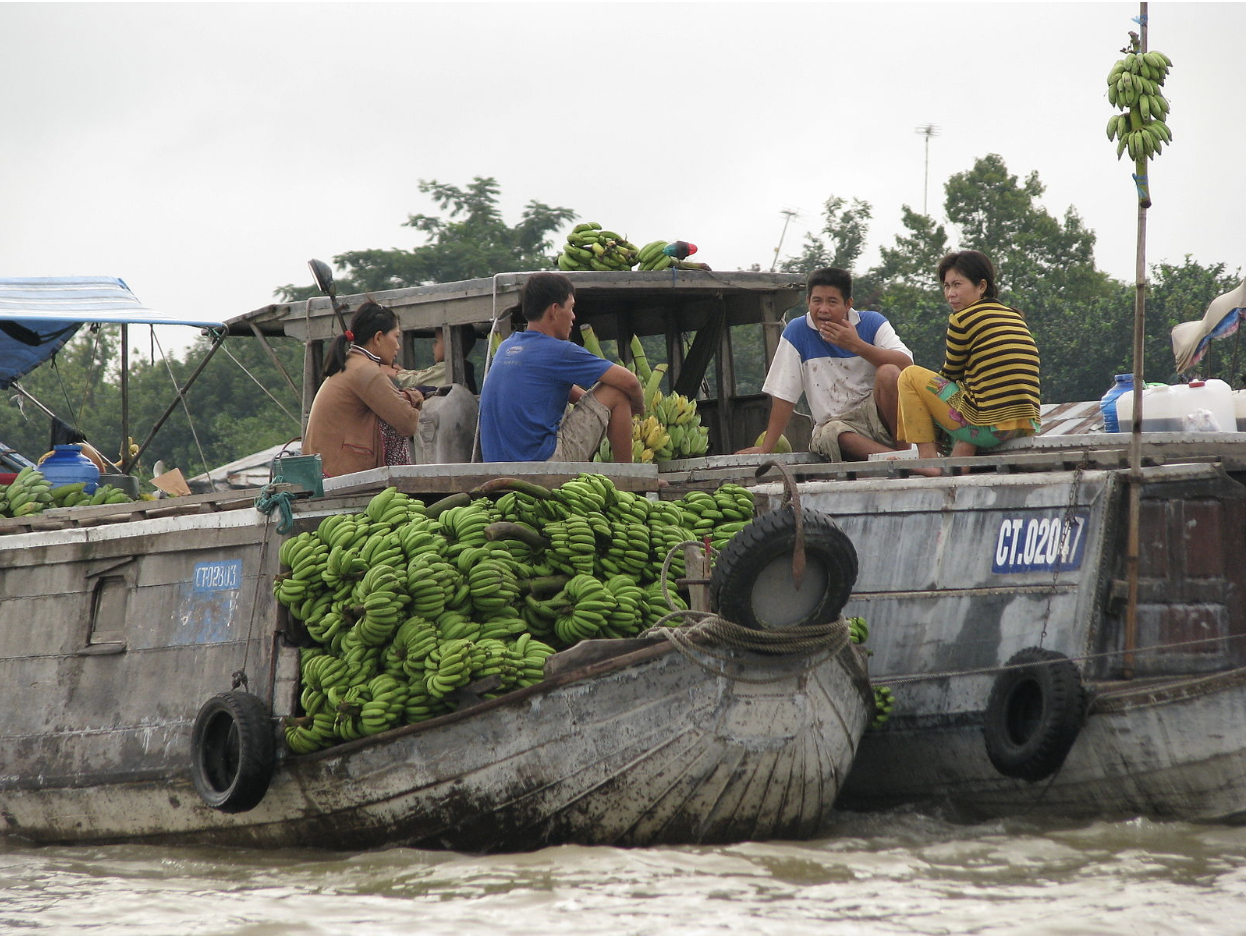
Bananas being traded at the Cai Be floating market in Vietnam. McKay Savage. CC BY 2.0.
In Vietnam’s Mekong Delta, boats once crowded with fruits, vegetables and steaming bowls of noodle soup now drift by in dwindling numbers. The iconic floating markets, such as Cai Rang in Can Tho, are in decline. Rising sea levels and saltwater intrusion have transformed daily life in the delta, threatening these vibrant centers of commerce and culture. These markets have been around for generations, and in the 1990s, were major trade hubs. But today, many of these boats are gone.
The decline is largely environmental. The Mekong Delta, which supplies half of Vietnam’s rice and a third of its GDP, is being overwhelmed by rising sea levels and saltwater intrusion. Climate change has intensified these threats, but human activity plays a role too. According to Environmental Law Alliance Worldwide, the overuse of groundwater, upstream hydropower dams and sand mining have all accelerated the erosion and subsidence of the delta. As saltwater continues to creep further on land, fertile rice paddies turn sterile and make freshwater harder to access. For boat vendors, this means fewer crops to sell, higher transportation costs and increasingly unreliable river routes.
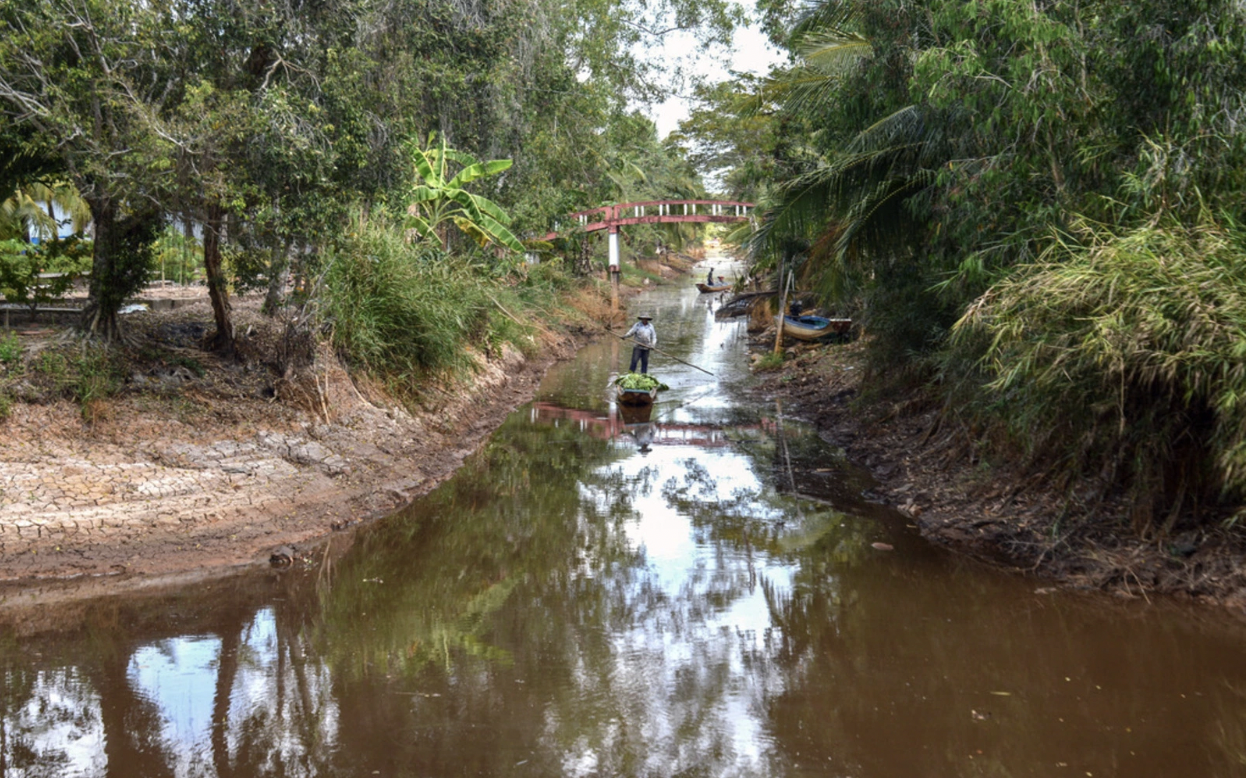
Saltwater intrusion impacts farmland in Vietnam’s Mekong Delta. AFP. CC BY 4.0.
This decline in floating markets severely impacts local families, especially those who depend on the markets. Many vendors face dwindling incomes, leading to increased migration to urban areas in search of better opportunities. For instance, Nguyen Thi Thuy, a former farmer, was forced to leave her home due to saltwater intrusion and now works as a security guard in Ho Chi Minh City. Just a decade or two ago, her income from selling fruit on the water would have been enough to sustain a family.

Aerial view of storm surge over Thi Nai Bay, Quy Nhon, 1969. Bill Gann. CC BY 2.0.
Adding to this shift is an increasing generational divide. Many younger residents no longer see a future in river-based life. Education and tech-based jobs in the cities hold more appeal than selling local produce. In part, local governments are struggling to maintain these markets as an increasing number of vendors’ children choose to leave instead of inheriting the family business. As fewer people choose to stay, the floating communities face cultural erosion.
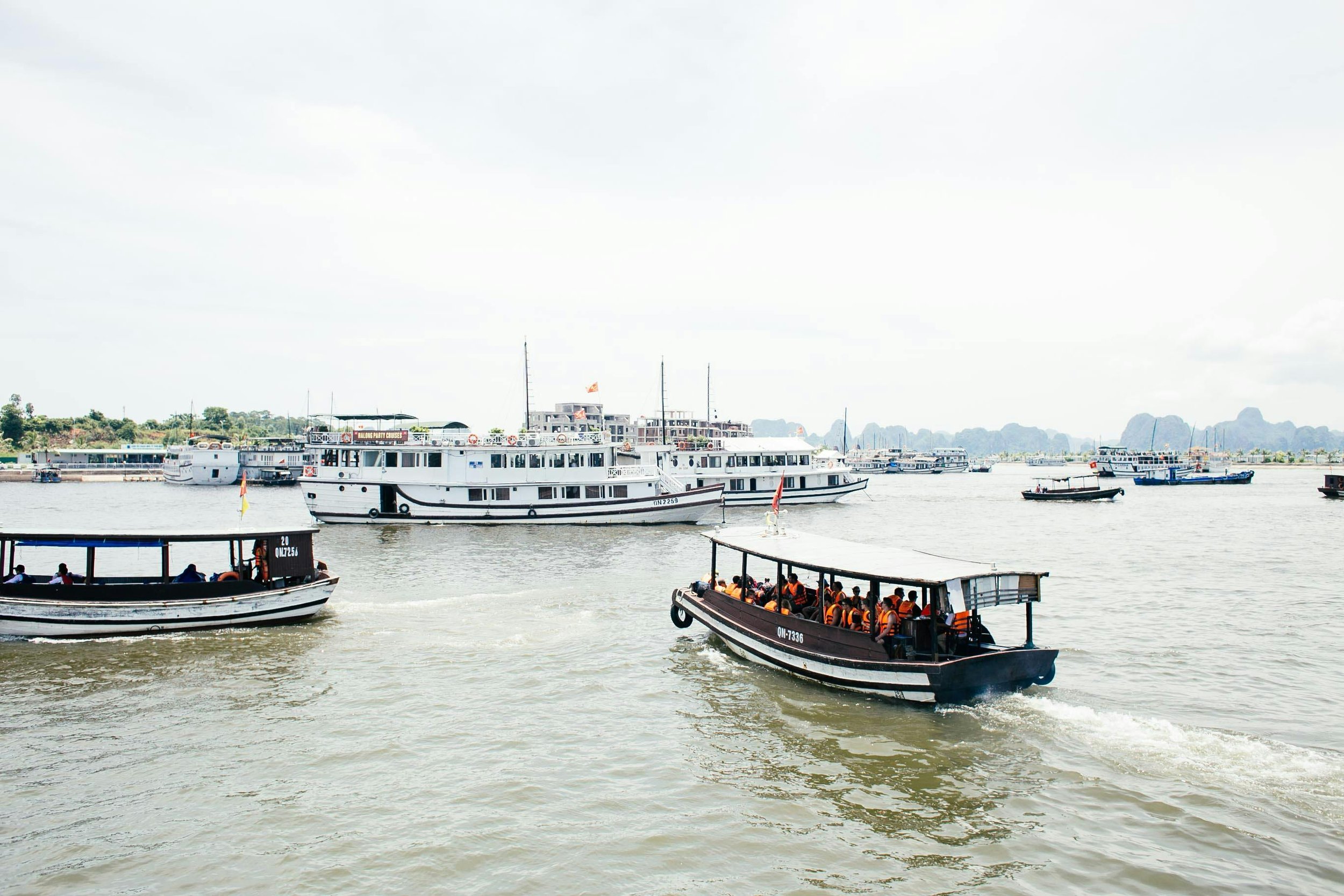
Passenger ferries at a harbor in Vietnam. Rachel Claire. CC0.
Tourism presents both challenges and opportunities for the preservation of floating markets. While increased tourist interest can provide economic benefits, it can also lead to cultural commodification and environmental degradation. Some markets that have become more tourist-oriented have, in turn, seen their authenticity and traditional practices diminish.
However, efforts are underway to balance tourism development with cultural preservation. In 2016, the Can Tho City People’s Committee approved the Preserving and Developing Cai Rang Floating Market project. This project aims to promote tourism and environmental hygiene while transforming Cai Rang into a “hub for the Mekong Delta’s agricultural products.”.
The future of Vietnam’s floating markets hinges on sustainable practices that honor their cultural significance while adapting to environmental realities. Community engagement, responsible tourism and environmental conservatism are key to ensuring the survival and success of these markets. As the Mekong Delta navigates the challenges of climate change, preserving the unique heritage of its floating markets remains crucial.
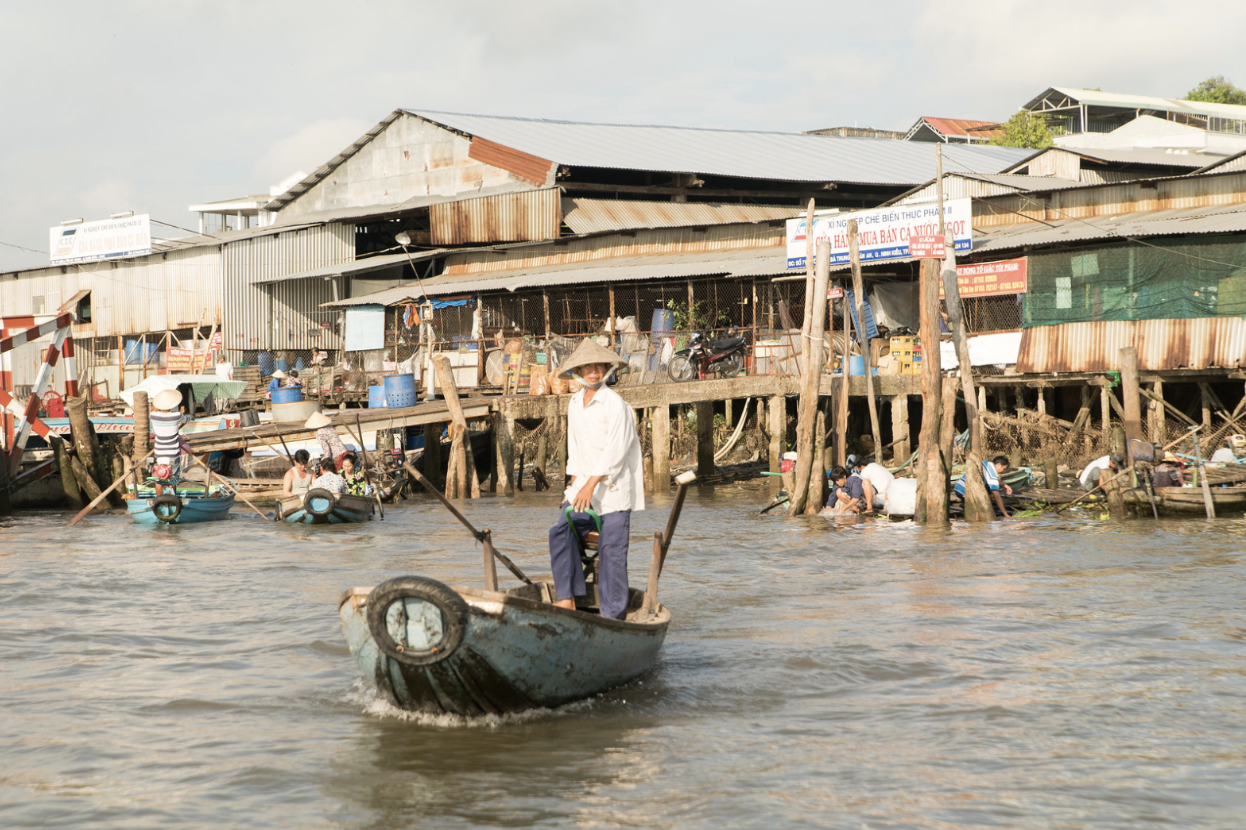
Boats at the Cai Rang floating market in Can Tho, Vietnam. pixiduc. CC BY 2.0.
For travelers hoping to experience the floating markets, visiting with care and intention matters. Cai Rang in Can Tho remains the largest and most accessible market. It is best visited early in the morning when trading is at its peak. Smaller markets like Phong Dien offer a local, less touristy atmosphere and are perfect for travelers seeking a quieter glimpse of daily life. Opt for small, locally operated boat tours and avoid bringing single-use plastics that could end up in the river. Supporting vendors by buying fresh produce or food dishes directly from their boats will not only enhance your experience but also help maintain these communities. By traveling mindfully, visitors can help preserve the spirit of Vietnam’s floating markets for generations to come.

Kennedy Kiser
Kennedy is an English and Comparative Literature major at UNC Chapel Hill. She’s interested in storytelling, digital media, and narrative design. Outside of class, she writes fiction and explores visual culture through film and games. She hopes to pursue a PhD and eventually teach literature! @kennedy_kiser
The Hidden Cost of Counterfeit Luxury
Zoe Lodge
Though the price tag might be tempting, counterfeit goods have a broader negative societal and environmental impact than many realize.
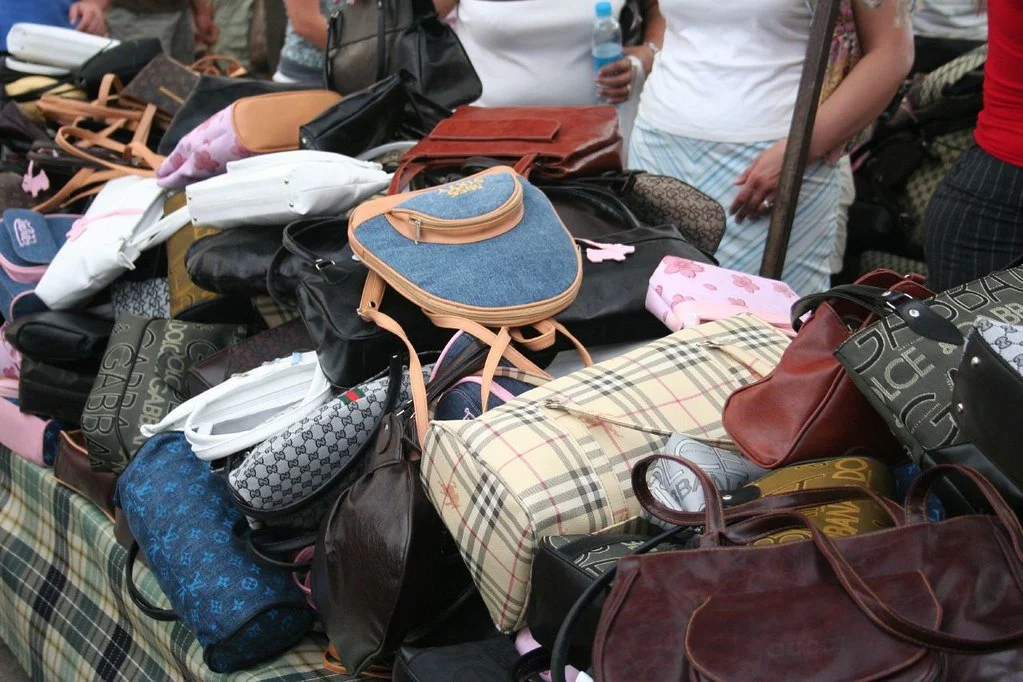
Street stand selling counterfeit bags. Nick Adams. CC BY-NC-SA 2.0.
The counterfeit goods market has expanded dramatically in recent years, moving far beyond street vendors in tourist hotspots to major online marketplaces like Temu, AliExpress and DHGate. Emma Warbey, Detective Chief Inspector of the Police International Property Crime Unit in London, noted that “it’s becoming easier for counterfeit goods to enter the marketplace, with online sales portals, social media, and apps.”
What was once a niche market has become a booming industry, driven in part by social media influencers showcasing “dupe hauls” of fake designer bags, shoes and clothing, promoting the overconsumption of counterfeit luxury goods. While these “dupe” items offer an affordable way to mimic luxury, the reality of their production and ethical impact is far less glamorous.
Luxury fashion is synonymous with exclusivity, as high-end designer items remain out of reach for most consumers due to high prices and limited availability. Through nearly identical copies of luxury items sold at a fraction of the price, counterfeit goods offer an illusion of prestige without the financial burden. Social media influencers have only fueled this trend by normalizing the purchase of fake goods, often describing them as “budget-friendly” alternatives rather than illegal imitations.
Growing demand has created an underground economy that thrives on accessibility and affordability. According to Keith Goldstein, the president and COO of VerifyMe, “the total amount of counterfeit goods sold each year comes in at around $1.7 trillion to $4.5 trillion, which would make counterfeiting at least the tenth largest economy […] It’s also responsible for 2.5 million jobs lost globally.”
Despite their popularity, purchasing counterfeit goods comes with a number of ethical issues. First and foremost, they are illegal to manufacture, sell, and, in many cases, even possess. Many countries have strict intellectual property laws prohibiting the production and distribution of fake designer products, with penalties ranging from hefty fines to imprisonment. Luxury brands invest significant resources in protecting their designs through trademarks, and counterfeit operations directly undermine these efforts.
Additionally, the quality of counterfeit goods is often leagues below the original. Many are made from cheap materials that do not match the durability or craftsmanship of genuine designer pieces. While the items may look similar at first glance, they can fall apart and show signs of wear after minimal use, making them a poor investment even at a lower price point.
Beyond the personal drawbacks of purchasing counterfeit items, the industry itself has serious ethical and environmental implications. Counterfeit production often relies on exploitative labor conditions, including underpaid workers, child labor and unsafe workplaces. Many counterfeit factories operate in countries with weak labor regulations, allowing manufacturers to cut costs and skirt the law at the expense of workers’ rights and safety.
The industry’s environmental impact is equally concerning. Counterfeit goods are frequently produced using toxic materials, synthetic dyes and low-quality plastics that contribute to pollution and waste. The sheer volume of goods produced and shipped worsens global overconsumption, contributing more products to landfills. Unlike reputable brands that are increasingly prioritizing sustainability and ethical sourcing, counterfeit manufacturers have no incentive to follow environmental guidelines. The result is a shadowy industry that promotes unsustainable practices while flooding the market with disposable, low-quality goods.
As counterfeit luxury items continue to gain popularity, consumers must be mindful of their purchasing decisions. The short-term benefit of a cheap designer look comes at the considerably higher cost of legal risks, poor quality, exploitative labor and environmental harm.
GET INVOLVED:
Instead of opting for counterfeits, consumers can explore ethical alternatives by shopping at second-hand luxury markets, designer rental services and brands that prioritize affordability without compromising quality or ethics.
For example, The RealReal is a verified online retailer featuring secondhand designer goods at reasonable prices, allowing consumers to shop at lower cost to both their wallet and the environment.
Apps and websites such as Pickle, Rent the Runway and Nuuly offer short-term rentals of designer items at a fraction of the cost, enabling a cyclical and sustainable use of well-crafted fashion items.

Zoe Lodge
Zoe is a student at the University of California, Berkeley, where she is studying English and Politics, Philosophy, & Law. She combines her passion for writing with her love for travel, interest in combatting climate change, and concern for social justice issues.
Is Ethical Tourism in Hawaii Possible?
How to visit the Hawaiian Islands while minimizing your environmental and cultural impact.
Read More