
Mexico is turning its growing sargassum seaweed problem into clean fuel as it piles up along its eastern coastline.
Read MoreThis 3,000-Year-Old Mesoamerican Ball Game is Making a Comeback
After centuries of near disappearance, Mexico's oldest sport is being reclaimed by a new generation.
Read More7 Climate Activists Under Age 35
While Greta Thunberg may be the most well-known young climate activist, here are 6 more from around the world.
Read MoreBeyond the Board: Navigating the Surf Culture of Sayulita
Beyond the Pacific swells, this Mexican destination provides travelers with a community atmosphere, where modern surfing meets the ancient traditions of the Wixarika people.
Read MoreMexican Citizens Take Up Arms Against Drug Cartels
When the Mexican government failed to protect its citizens, community militias rose to fight back against powerful drug cartels.
Read MoreThe Mexican Dance That Defies Erasure: Danza Azteca
Aztec dances exist today as living prayers and powerful symbols of Indigenous survival, uniting Mexican Americans in the United States.
Read MoreThe Colorful Culture of Mexican Folk Arts
For thousands of years, unique folk art has held a significant place in Mexican culture, defining not only the country’s complex history but also its proud national identity.
Read MoreThe Searching Mothers of Mexico: Fighting for the Disappeared
Mothers in Mexico search for their missing children with little to no help from authorities, risking their lives against the oppressors: cartels.
Read MoreZapatista Radio: Indigenous Broadcasts Resist Erasure in Mexico
In Chiapas, Mexico, Zapatista-run community radio stations preserve Mayan languages, report local issues and bypass state-controlled narratives.
Read MoreMexico Maintains Deadly Reputation for Journalist Violence
Journalist murder cases only continue to rise in Mexico after a federal law was enacted to protect media workers from threats of violence, calling for reforms and increased federal support.
Read MoreMexico’s Sustainable Desert Island: Isla Espiritu Santo
A desert island in Mexico is heavily protected by federal and global organizations to prevent ecological disruption, but still hosts seasonal, environmentally conscious glamping.
Read MoreThe Mother Activists Searching for Justice in Mexico
In response to drug cartel violence and lack of government action, the Madres Buscadoras, “searching mothers”, of Mexico have taken an imperative step forward in searching for their disappeared loved ones.
Read MoreMexico’s Maquiladoras: The Border Factories Harming Female Workers
While a source of cheap labor, the maquiladora system is fraught with social and environmental issues.
Read MoreWhere Protest Lives in Paint: Oaxaca’s Murals of Resistance
Kennedy Kiser
Oaxaca’s vibrant street murals speak out against injustice, preserve Indigenous identity and invite travelers to witness resistance in color.
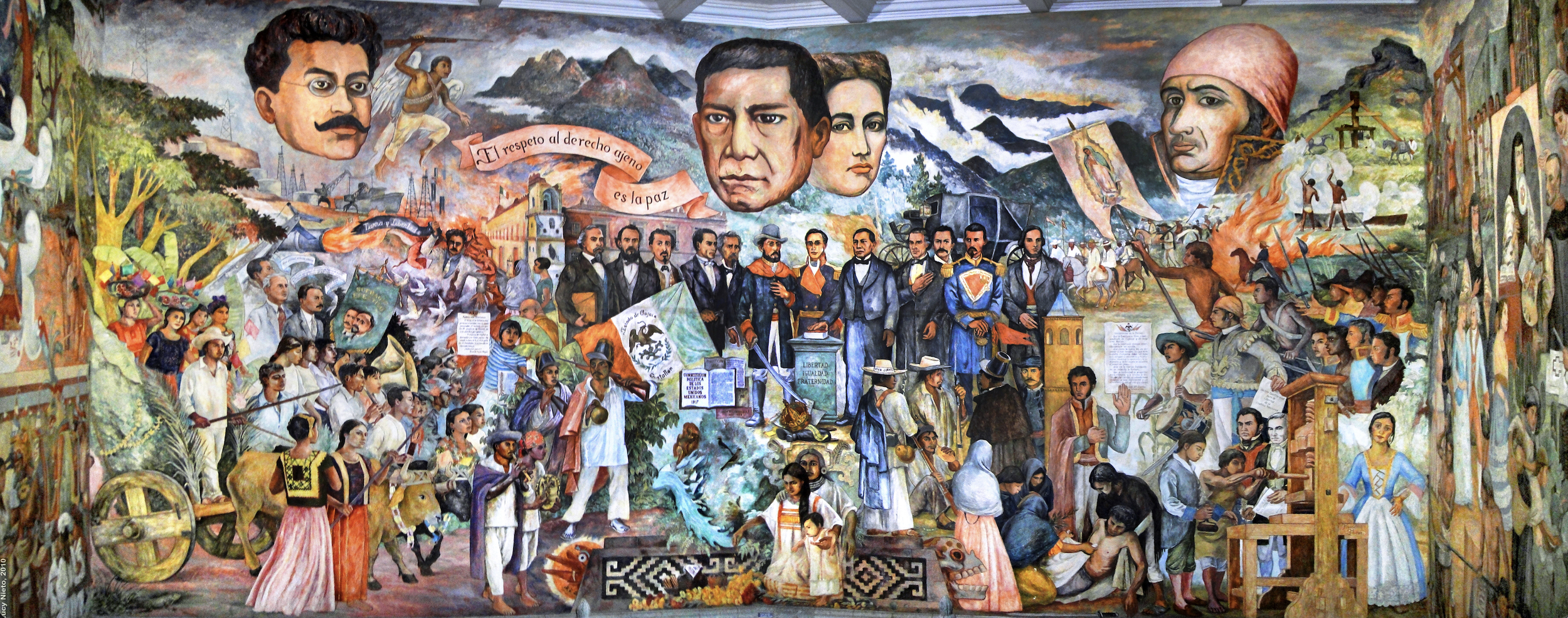
Oaxaca mural of revolutionary figures and Mexican
In the southern Mexican state of Oaxaca, visual art spills onto the streets and across crumbling walls, telling stories rarely captured in textbooks or by tour guides. Oaxaca has long been a hub for both Indigenous culture and political resistance. Its murals reflect this layered history with vibrant and sometimes defiant voices, often highlighting legacies of colonialism and systemic inequality.
Many amplify the voices of the Zapotec and Mixtec peoples, who have long resisted marginalization and assimilation. As scholar Bethany J. Welch explains, murals function as a way for Indigenous communities to reclaim public space and narrate their histories, refusing to allow their story to be filtered through state-sanctioned narratives and the lens of tourism.
Mural referencing the 43 missing students in Oaxaca, Mexico. Tobias Versus. CC BY 2.0.
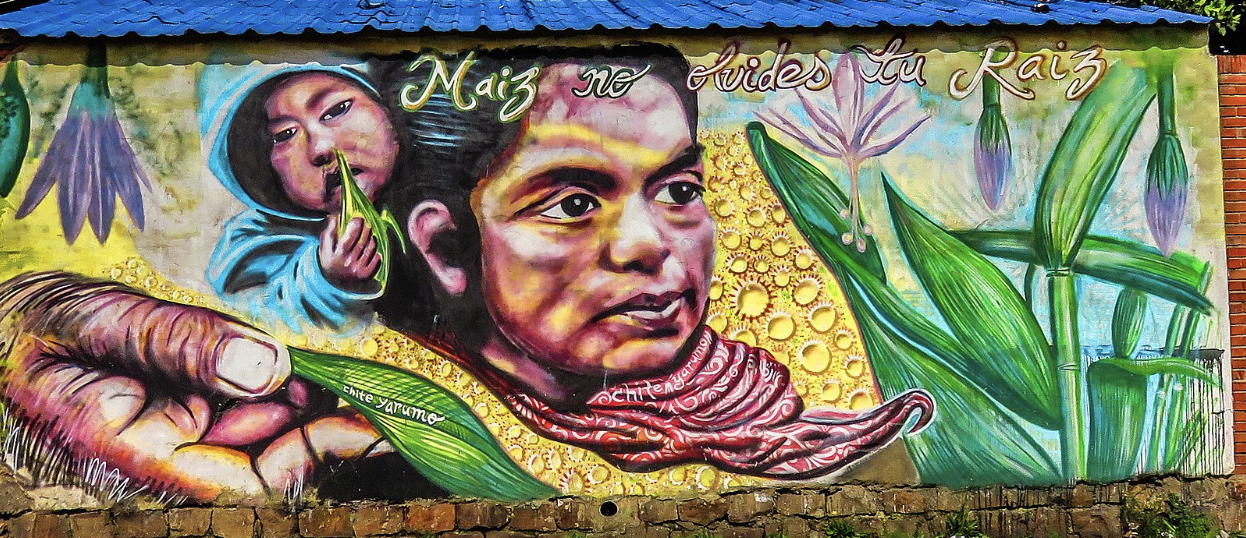
Strolling through neighborhoods like Jalatlaco or Xochimilco becomes a visual lesson in autonomy. On Jose Lopez Alavez Street, bold images of Indigenous women, animal protectors and corn deities appear on walls beside neighborhood cafes and galleries. The murals mix ancient Zapotec symbols with messages of resistance to gentrification, environmental destruction and cultural erasure.
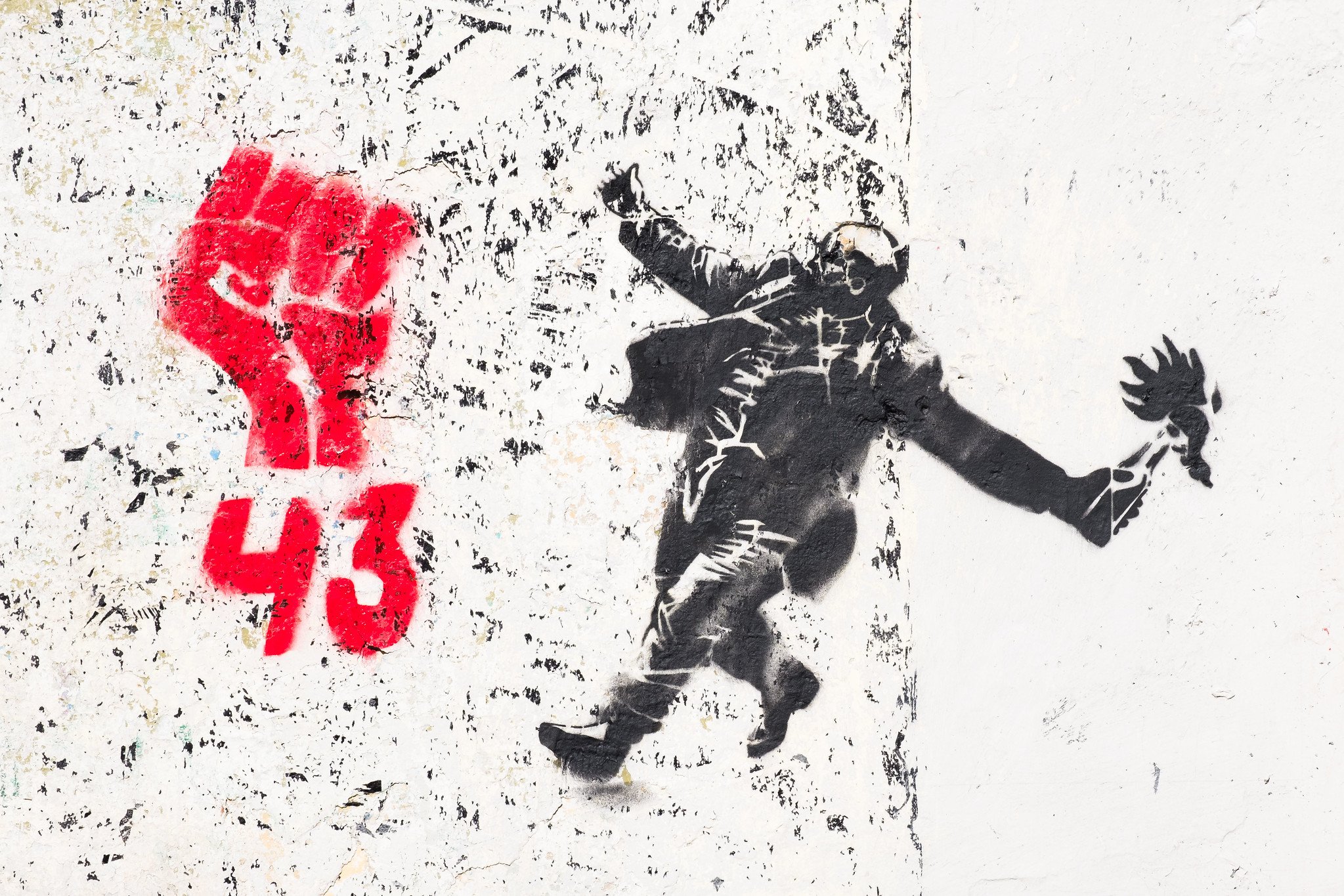
Mural referencing the 43 missing students in Oaxaca, Mexico. Tobias Versus. CC BY 2.0.
In central Oaxaca, a wall along Berriozabal Street honors the 43 students from the Ayotzinapa Rural Teachers' College who disappeared in 2014 while on their way to a protest. Created by the Urtarte Collective, the mural preserves their names and images, reminding passersby of the unresolved violence that continues to haunt their community. Elsewhere, recurring symbols like the possum — a local protest motif — emerge in politically charged artwork critiquing police violence and land theft.

Muralist painting wall for Casa de la Cultura in Oaxaca. Alejandro Linares Garcia. CC BY-SA 4.0.
Murals also serve as visual protests against environmental injustice. Canadian mining company Fortuna Silver Mines carries out operations near San Jose del Progreso despite long-standing resistance from locals. Murals in neighborhoods like La Noria depict masked water defenders, cracked land and slogans like “El agua vale más que el oro,” or in English, “water is worth more than gold.”

Feminist mural reading “Sin mujeres no hay revolución” in Mexico City. Wendy Aviles R. CC BY-SA 4.0.
Themes of gender injustice are equally prevalent. Oaxaca, like many parts of Mexico, faces an ongoing femicide crisis. In response, murals around the Santo Domingo Cultural Center and near Carmel Alto feature the faces of missing women, alongside phrases like “Ni Una Menos” (meaning “not one less” in English).
While often photographed, these murals are not decorative. They are part of an ongoing dialogue between community and state, artist and audience. Travelers can deepen their understanding by participating in walking tours run by local artists, such as Caminos del Arte, which provide historical and political context while ensuring support flows back into the neighborhoods depicted on the walls.
Oaxaca’s murals are not permanent fixtures. They adapt in response to elections, tragedies and resistance movements. Some are painted over, others quietly fade and many are reborn in new forms. This continued renewal reflects a larger truth: in Oaxaca, street art is a living archive — one that documents what official records often omit.

Kennedy Kiser
Kennedy is an English and Comparative Literature major at UNC Chapel Hill. She’s interested in storytelling, digital media, and narrative design. Outside of class, she writes fiction and explores visual culture through film and games. She hopes to pursue a PhD and eventually teach literature!
6 Tropical Countries To Escape the Winter Chill
Avoid the cold temperatures of winter by taking off to these six tropical destinations around the world, each offering a lush climate and magical adventures.
Read MoreCelebrate Pride at Oaxaca’s Annual Parade this June
Color and culture unite in the streets of Mexico’s Oaxaca.
Read MoreExperience Black Mexico
Black Mexicans celebrate their African heritage through arts and culture.
Read MoreVIDEO: Mexico’s 600-Year-Old Dance of the Flying Men
For the past 600 years, dancers in Papantla, Mexico, have taken to the skies to perform the acrobatic spectacle, the Danza de los Voladores (Dance of the Flyers). Four flyers and one guide dressed in vibrant colors ascend a 20-meter pole, anchored only by a single rope tied to their legs. There, they begin the ritual, flying through the air to ask the sun deity for rain and blessings.
Read MoreBeyond the Binary: Mexico’s Muxes Break Traditional Gender Norms
Travel to the Mexican state of Oaxaca and you’ll find muxes, third-gender identifying individuals whose very existence breaks the gender binary. While muxes today face barriers to equality, their rich culture represents the best of the indigenous Ismto Zapotec culture.
Read More7 Sites of Mexico City’s Architectural Diversity, from Baroque to Brutalist
Mexico City is a flourishing metropolis with a plethora of historic and modernist architectural sites. Here are a few attractions scattered around the city.
Read More