
Puerto Rico is officially in another water crisis, and recently proposed luxury resort development plans threaten the already fragile water ecosystem.
Tax Incentives Drive Gentrification in Puerto Rico
Kleigh Carroll
Wealthy investors and tech entrepreneurs are buying up land in Puerto Rico, driving up property rates and forcing locals out of their neighborhoods.
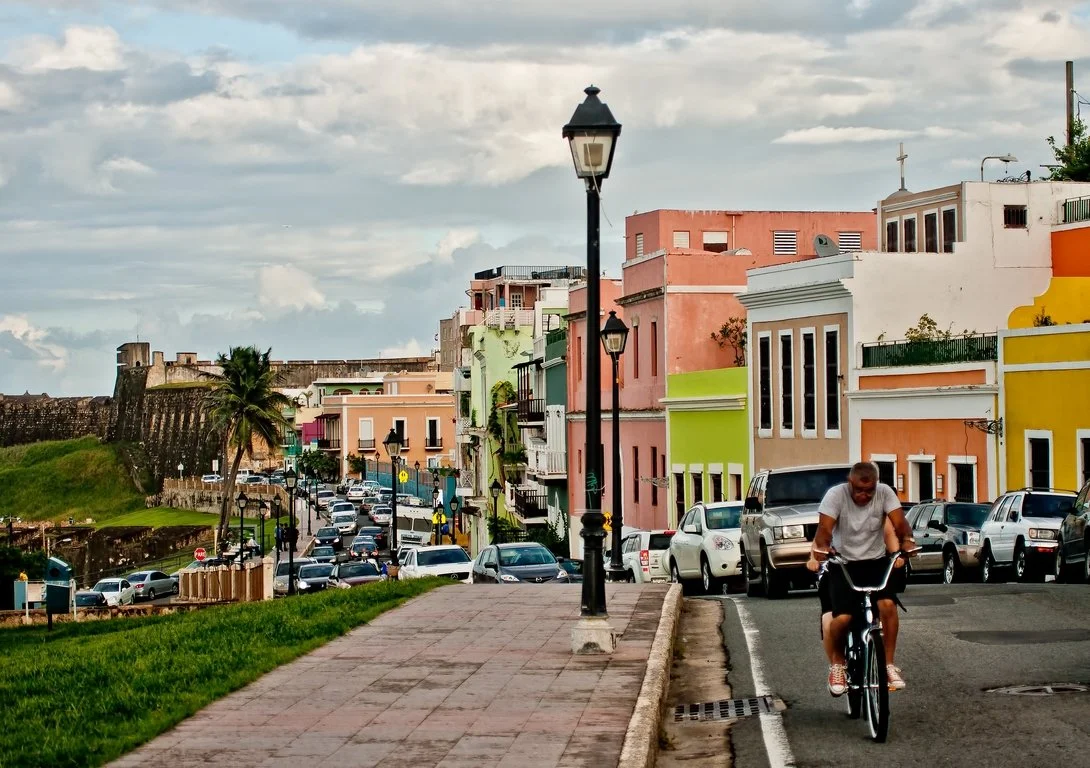
Street in San Juan, Puerto Rico. R9 Studios FL. CC-BY-2.0.
The island of Puerto Rico struggled with an economic recession from 2006 to 2017, during which the economy contracted by 10% and unemployment shot up to nearly 15% at its peak. To draw in foreign investment and stimulate economic growth, the government passed legislation designed to attract tech, finance and wealthy investors to the island. The first of two acts, Act 20, provided tax incentives for companies that establish and expand export services businesses in Puerto Rico. The second, Act 22, provided a total exemption from income taxes on all interest and dividends realized after an individual becomes a bona fide resident. The laws were further revised and repackaged in 2019, now known collectively as Act 60.
Living in a United States territory, residents of Puerto Rico normally benefit from a unique tax status that exempts them from federal income tax. However, Act 60 does not apply to long-time residents of the island. As a result, the incentives have only worsened income inequality and exacerbated a mass exodus of Puerto Ricans to the United States.
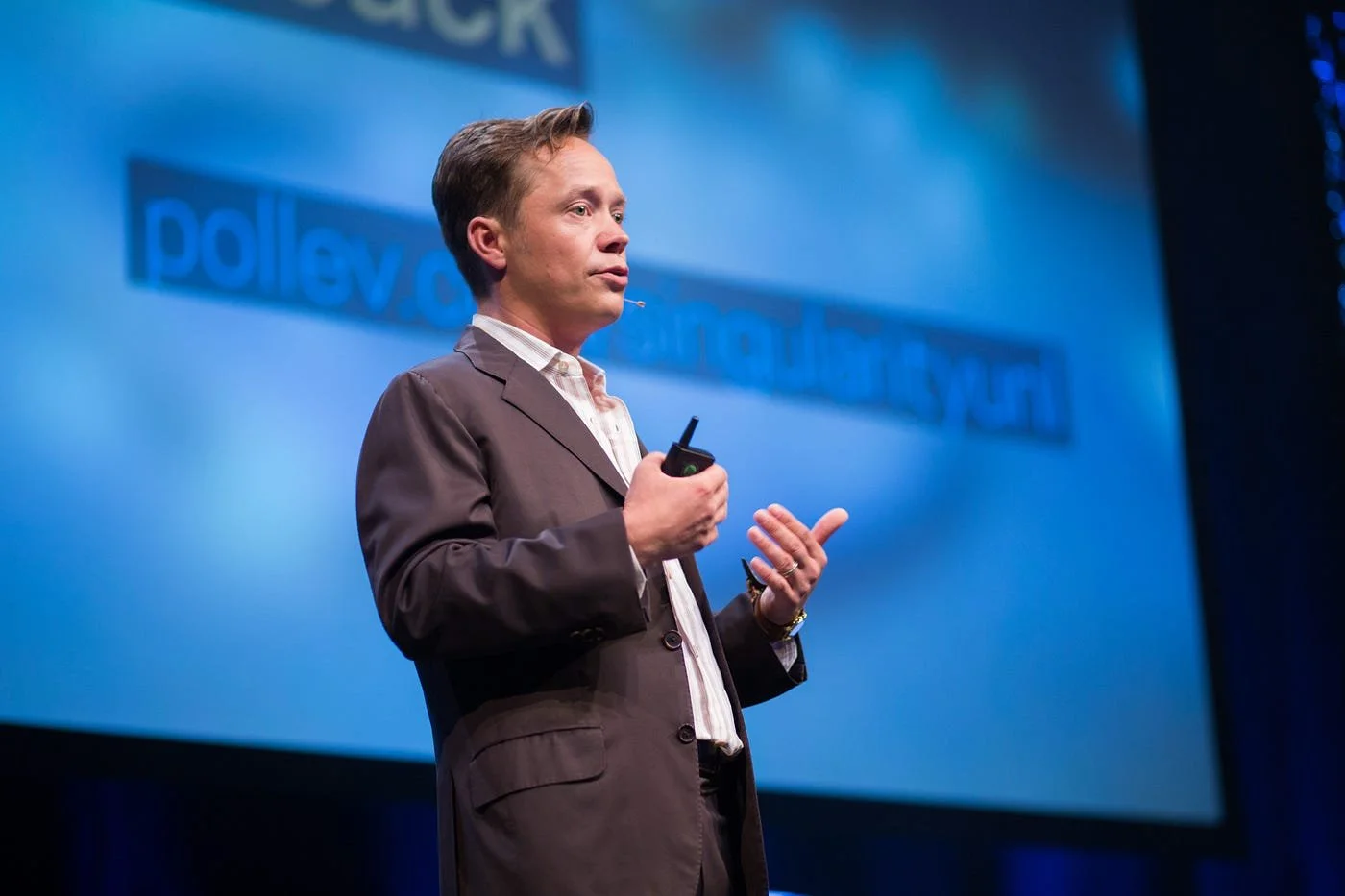
Brock Pierce speaks at a conference. Sebastiaan ter Burg. CC-BY-4.0.
In the aftermath of Hurricane Maria, which ravaged the island in 2017, U.S. crypto investors saw an opportunity to take advantage of tax incentives. They hoped to rebuild a part of the capital, San Juan, into what they called “Puertopia” — a modern city run on virtual money and public contracts. Members of this community who flocked to the island included men like Brock Pierce, co-founder of the digital currency Tether, and social media influencer Logan Paul. Upon moving to the island in 2017, Pierce and his partners took over numerous properties, including a beachfront hotel in Vieques and a museum in Old San Juan. They made grand promises to revitalize the economy using blockchain, refurbishing historic neighborhoods and building their own airports and docks.
But there is little evidence that wealthy newcomers like Pierce have done anything to stimulate economic growth on the island. Instead, they have contributed to a surge in housing prices, driving up the cost of living for locals and displacing Puerto Rican families, especially in coastal towns like Rincon, where beachfront property is prime real estate. Housing prices in San Juan increased by 22% between 2018 and 2021 as tax law beneficiaries spent an estimated $1.3 billion on real estate between 2015 and 2019, according to research conducted by Puerto Rico’s Department of Economic Development and Commerce.
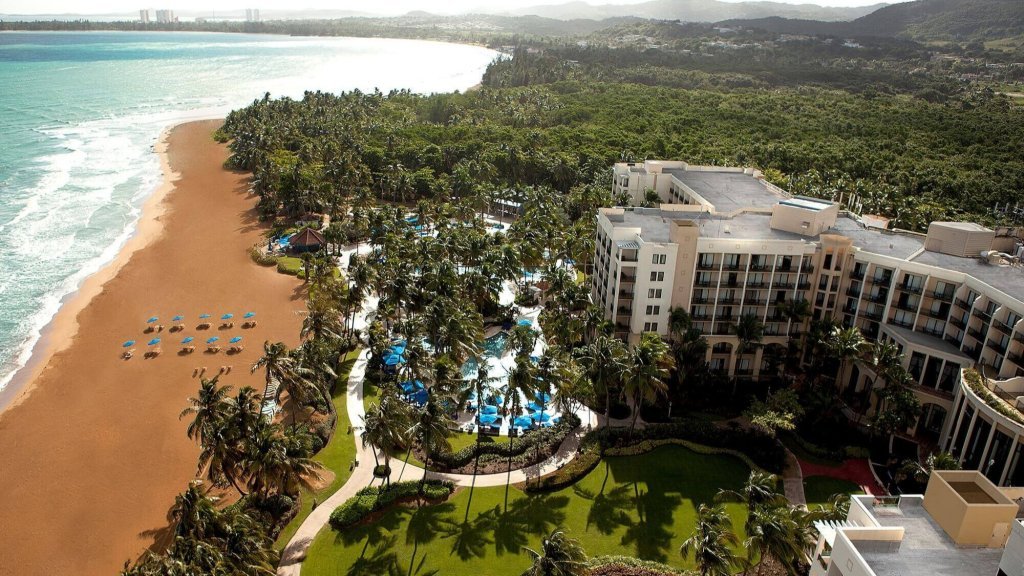
Golf resort in coastal Puerto Rico. Your Golf Travel. CC BY-NC-ND 4.0.
According to the 2023 census, the median household income in Puerto Rico is $25,096 — less than a third of the median household income in the United States. Many locals forced to relocate have to commute longer distances and pay expensive tolls. Marina Reyes Franco, an art curator at the Museo de Arte Contemporaneo in Puerto Rico, told the Guardian that she has struggled to find affordable housing in recent years. She blames the tax laws, claiming, “At the end of the day, this is about a new era of colonialism and laws that only benefit the elite.”
Gentrification culturally erodes communities and contributes to a loss of heritage and identity. Not only does it mean that locals can no longer afford to live in the places they call home, but an influx of wealthy newcomers can alter the character of neighborhoods, displacing local businesses, cultural institutions and the unique cultural fabric of Puerto Rican communities.

Solidarity With Puerto Rico Rally in Chicago, Illinois. Charles Edward Miller. CC BY-SA 2.0.
GET INVOLVED:
#AbolishAct60 is a grassroots movement aimed at repealing Act 60. By using social media to raise awareness and inspire collective action, they encourage the Puerto Rican diaspora to put pressure on their representatives. Help amplify their message here.
Diaspora en Resistencia is a nonprofit utilizing social media to mobilize support through online petitions demanding that the Puerto Rican government take action.
You can also petition your representatives to reevaluate Puerto Rican tax policies. U.S. lawmakers, including Chuck Schumer and Alexandria Ocasio-Cortez, have already spoken out against the measure.
Kleigh Carroll
Kleigh is a student at UC Berkeley studying Geography and Journalism. She hopes to integrate her skills in these fields in pursuit of a career in journalism. She is passionate about being outside, exploring, and writing in all of its forms.
6 Tropical Countries To Escape the Winter Chill
Avoid the cold temperatures of winter by taking off to these six tropical destinations around the world, each offering a lush climate and magical adventures.
Read More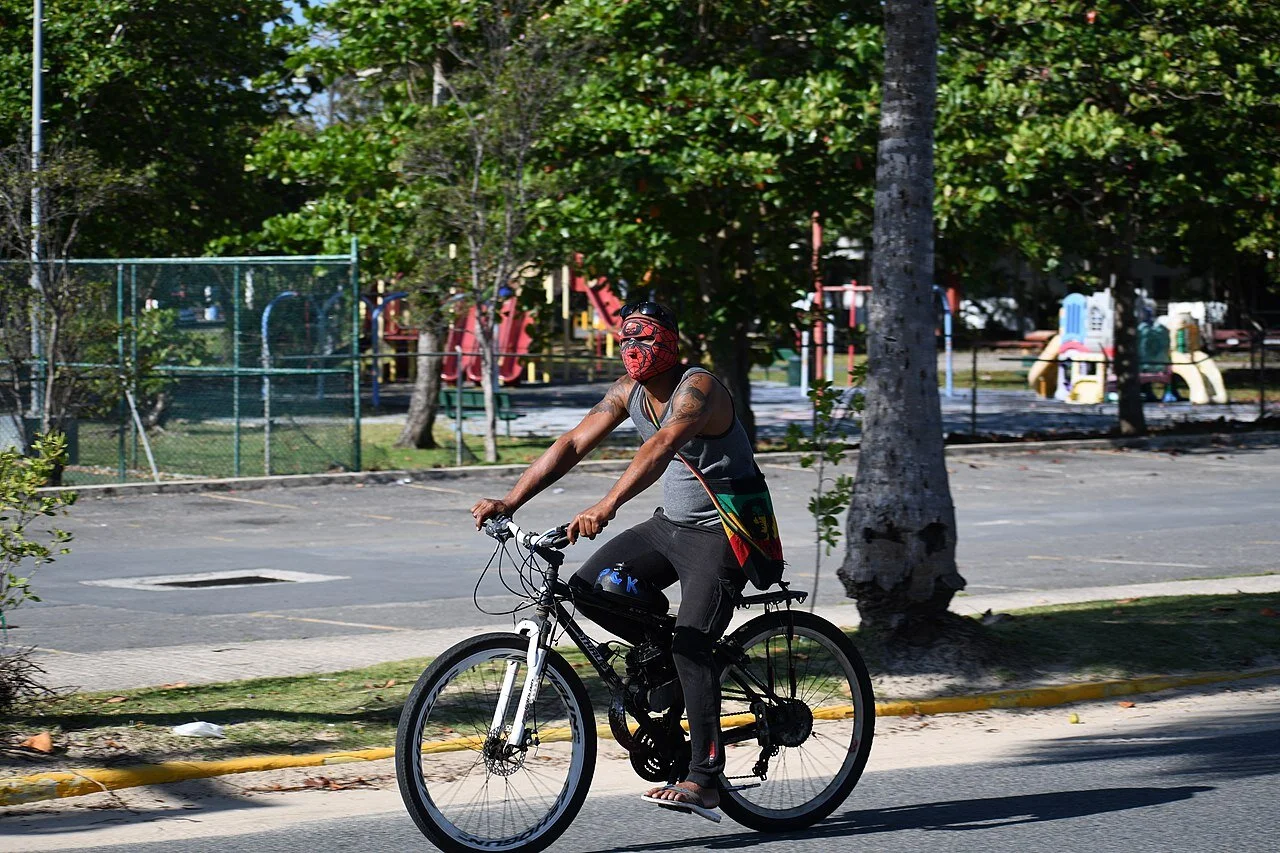
“A man wears a protective mask while riding a bike in Ocean Park, San Juan, Puerto Rico, during the coronavirus quarantine, on March 29th, 2020.” Maryamarce. CC BY-SA 4.0
When Will Puerto Ricans Receive Stimulus Aid?
On May 15, 2020, the U.S. House approved the $3 trillion HEROES Act, which contains a second round of coronavirus relief aid for state and local governments, and for American taxpayers who are struggling due to the pandemic. Although the bill passed in the House, it is unlikely to be approved by the Republican-dominated Senate. Nonetheless, many Americans, about 20 million, are still waiting for their stimulus checks from the CARES Act, which was signed into law on March 27, 2020.
Included in the group of U.S. citizens still waiting for the first round of relief aid are residents of Puerto Rico who have yet to receive their stimulus checks. In an interview with MSNBC on April 25, San Juan Mayor Carmen Yulín Cruz said, “No one in Puerto Rico has received the $1200 from the federal government. We’re having problems with a local $500 check that the governor said was going to be distributed.”
On a May 19 update on the COVID-19 Economic Impact Payments (EIP), the Social Security Administration said they anticipate “that beneficiaries in the territories could begin receiving their EIP in early June.” June is a long time to wait to receive aid that is necessary right now. As of May 23, 276,737 Puerto Ricans have filed for unemployment since March 14—a little more than a quarter of their labor force.
The coronavirus pandemic is not the only crisis that Puerto Rico is facing as they are slowly recovering from Hurricane Maria, which devastated the island in September 2017. A 5.4 magnitude earthquake struck Puerto Rico on May 2, displacing at least 50 families and knocking out power—power which has yet to be fully restored since the total blackout caused by Hurricane Maria. The island has been without full power for 981 days and counting. The displaced families have formed impromptu camps: living in tents and lacking “even basic supplies, including sufficient food,” according to Direct Relief, a humanitarian aid organization.
Months after the 6.4 magnitude earthquake that struck the island on January 7, “thousands of people are still slumbering each night under camping tents, on cots, in their cars and in enormous open tents that serve as government shelters,” according to The New York Times. Their situations are made more dire by the coronavirus pandemic.
Experts worry the pandemic will threaten Puerto Rico’s health care system that is already in crisis. Before the outbreak, access to medical resources and services was limited. NBC News reported that, “according to the Health Resources and Services Administration, 72 of the island’s 78 municipalities are considered to be medically underserved and face ‘unmet health care needs.’” The limited number of physicians and lack of funding for hospitals, clinics and labs make it more difficult to treat patients who have fallen ill from a virus that disproportionately affects communities of color.

Asiya Haouchine
is an Algerian-American writer who graduated from the University of Connecticut in May 2016, earning a BA in journalism and English. She was an editorial intern and contributing writer for Warscapes magazine and the online/blog editor for Long River Review. She is currently studying for her Master’s in Library and Information Science. @AsiyaHaou
Removing the Ghosts of Hurricane Maria from Puerto Rico’s Sea
Raimundo Chirinos has devoted his life and career to protecting Puerto Rico’s waters. And in the wake of Hurricane Maria, his devotion matters more than ever. Among its many assaults, the Category 5 storm pulled fishing gear from the island’s shores into the ocean, creating “ghost traps.” These misplaced traps inadvertently catch fish and other species, disrupting the ecosystem and the local fishing economy. More determined than ever to protect his island’s waters, Raimundo has hired local dive fishermen to help him locate ghost traps, creating economic opportunity and community in the wake of devastation.
How Solar Energy Is Bringing Power Back to Puerto Rico
After watching Hurricane Maria devastate his native Puerto Rico, New York City-based architect Jonathan Marvel knew he needed to do anything he could to give back. He banded together a group of friends to launch Resilient Power Puerto Rico, hoping to use the strength of renewable, solar energy to provide a steady source of electricity back to the island.
Just two weeks after the ambitious initiative was born, Marvel was back in Puerto Rico installing solar panels and batteries on the rooftops of community centers. The storm had wiped out power lines and had left people without electricity. Solar-powered energy would allow them to live and operate off the grid, without reliance on fossil fuel-burning power plants. Suddenly, these solar-powered community centers were able to provide spaces where people could refrigerate medication, filter water and gather together to rely on one another in the midst of a humanitarian crisis.
At last count, Marvel and Resilient Power Puerto Rico were able to bring solar power to 20 community centers across the island—helping over 100,000 people in the process.
Still, Marvel’s work is far from over. It took nearly a year before the Puerto Rico Electric Power Authority restored power to most of the island’s residents, and, according to reports, the electricity system is in not in a much better state than it was before Maria wiped out the island.
Longer term, Marvel dreams of a day when Puerto Rico is able to shift to 100-percent renewable energy sources. He believes it is an achievable goal, and Resilient Power Puerto Rico is working to make it a reality.
“We can no longer rely on large fossil fuel burning power plants distributing energy and wires that are going to get blown down every year,” Marvel says. “We have all this power from the sun that needs to be harnessed.”
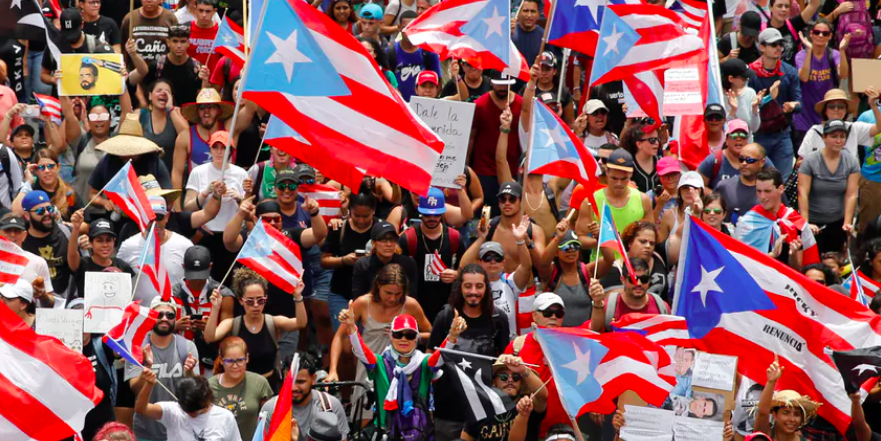
People wave Puerto Rican flags as they attend a rally to celebrate the resignation of Puerto Rican Governor Ricardo Rosselló in San Juan, Puerto Rico on July 25. REUTERS/Marco Bello
Puerto Ricans Unite Against Rosselló – And More Than a Decade of Cultural Trauma
Puerto Ricans wrote a new chapter in their history on July 24.
Governor Ricardo Rosselló finally resigned after 12 days of massive protests in Puerto Rico, as well as protests abroad, that demanded his resignation; all the protests used the hashtag #RickyRenuncia.
The beginning of the protests can be traced to the release by Centro de Periodismo Investigativo of 889 pages of a Telegram chat transcript that exposed offensive and unethical comments made by the governor and his inner circle.
But the chat was only the latest blow. A series of natural and human-made disasters have caused turmoil and trauma in Puerto Ricans’ lives, including the more than decade-long recession that started in 2006; the financial crisis and subsequent enactment of the PROMESA law in 2016that reinforced Puerto Rico’s colonial status; and the devastation caused by Hurricanes Irma and Maria in 2017.
Rosselló’s corruption further compromised the post-disaster recovery of Puerto Ricans, many of whom continue to suffer personal and cultural trauma.
Whereas personal trauma “involves a wound and the experience of great emotional anguish by an individual,” by cultural trauma, we mean what sociologist Jeffrey Alexander says “occurs when members of a collectivity feel they have been subjected to a horrendous event that leaves indelible marks upon their group consciousness, marking their memories forever and changing their future identity in fundamental and irrevocable ways.”
The chat’s transcript served as a catalyst for Puerto Ricans to come together in indignation.
Personal and cultural trauma
Together, we have been studying Puerto Rican activism, the diaspora’s political ideologies and migration, particularly in Central Florida, for many years.
After Hurricanes Irma and Maria, approximately 159,000 to 176,000 Puerto Ricans moved to the continental U.S. This major movement is expected to continue, with an anticipated 14% of the island population leaving over the next two years.
We wanted to understand the conditions under which post-disaster Puerto Rican migrants successfully integrated into continental U.S. society, and the challenges they face. We will soon begin a two-year study on how those leaving the island after the hurricanes have fared in Central Florida.
Data we have collected already suggest that post-disaster migrants continue to experience personal trauma and stress long after the immediate disasters passed.
Some Puerto Ricans not only lost family members or everything they owned, but, even a year after impact, many in Puerto Rico still lacked access to basic necessities such as potable water, warm food, shelter, medicines, and electricity.
Of the 19 Puerto Ricans we have interviewed so far, as well as over 100 surveyed, many were deeply impacted by Hurricane Maria and its aftermath. For those in our sample who lived on the island during the hurricane but have since moved to Florida, many felt traumatic loss in leaving their homes and families behind to survive the slow recovery.
Many told us that they lost their jobs, suffered health problems and, upon migration, faced racism and downward occupational mobility in the continental U.S.
Members of the diaspora also experienced personal trauma during the days and weeks after the hurricanes, not knowing about the status of their loved ones in Puerto Rico.
One of the Puerto Ricans we interviewed, John, explained the agony he felt in the aftermath of the storm waiting to hear from his father in Puerto Rico: “I talked to my dad the night before it was supposed to hit and he said he’ll call me as soon as he can. And then I didn’t hear from him for a couple days, so it was definitely stressful,” he said.
His father finally called; John said, “That was one of the most important phone calls I ever received… I cried because I was just excited to hear from him.”
In recent years, the totality of personal traumas Puerto Ricans have faced, including the recent chat scandal, amount to an arc of cultural trauma.
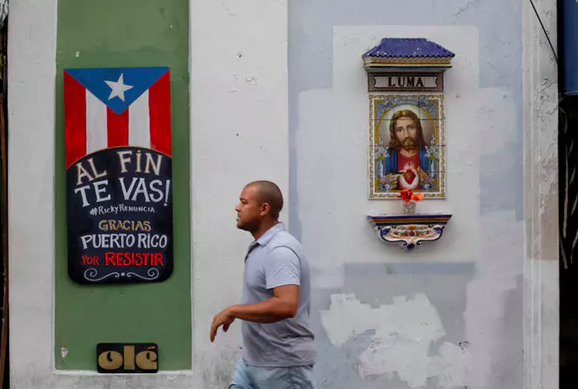
A man walks past a sign that reads ‘You are finally leaving. Ricky resign. Thanks Puerto Rico for resisting’ on the street that leads to La Fortaleza, the official residence of the governor of Puerto Rico. REUTERS/Marco Bello
Resiliency and resistance
Puerto Ricans told us that they have used a range of coping mechanisms to contend with their challenges. Some of the main coping strategies to deal with personal trauma were connecting with family and friends for support; finding solace in their faith; trying to adapt to new daily routines; and trying to secure a job to provide for their families.
All of these resilient acts bring meaning to their sacrifices and losses. Our interviewees are actively recreating their homes, whether in Puerto Rico or elsewhere.
We see the current collective protests as acts of resistance to their cultural trauma. The protests have brought about a sense of group solidarity that has strengthened cohesion among the people of Puerto Rico, regardless of where they are geographically. These protests also signal that Puerto Ricans are actively reconstructing a more democratic society.
That is why journalists and participants have compared these recent protests to the “Todo Puerto Rico con Vieques” (All of Puerto Rico with Vieques) movement that aimed to remove the U.S. Navy from using the island of Vieques – part of Puerto Rico – for military exercises, particularly, the “Paz para Vieques” march on February 21, 2000. Back then, these collective actions aimed to hold the U.S. government accountable for the damages caused by the bombings in Vieques and the poor health of its residents. The protests were successful in removing the navy, although Vieques residents are still battling in court for reparations and clean-up.
Research shows that these types of group political actions can help to foster a process of collective healing, notably when the objectives are achieved.
While the Telegram chat was the latest shock in an arc of cultural trauma afflicting Puerto Ricans, we think that Puerto Ricans have demonstrated powerful acts of resilience in rebuilding a hopeful future for Puerto Rico. A simple hashtag – #RickyRenuncia – represents resistance against more than a decade of struggles, yet it is only the beginning of what is to come.
ELIZABETH ARANDA is a Professor of Sociology at the University of South Florida.
ALESSANDRA ROSA is a Postdoctoral Scholar in Anthropology and Sociology at the University of South Florida.
THIS ARTICLE WAS ORIGINALLY PUBLISHED ON THE CONVERSATION.