
By Cove Johnson Rabidoux
From viral destinations to geotagging, social media has reshaped tourism, and not just for the better.
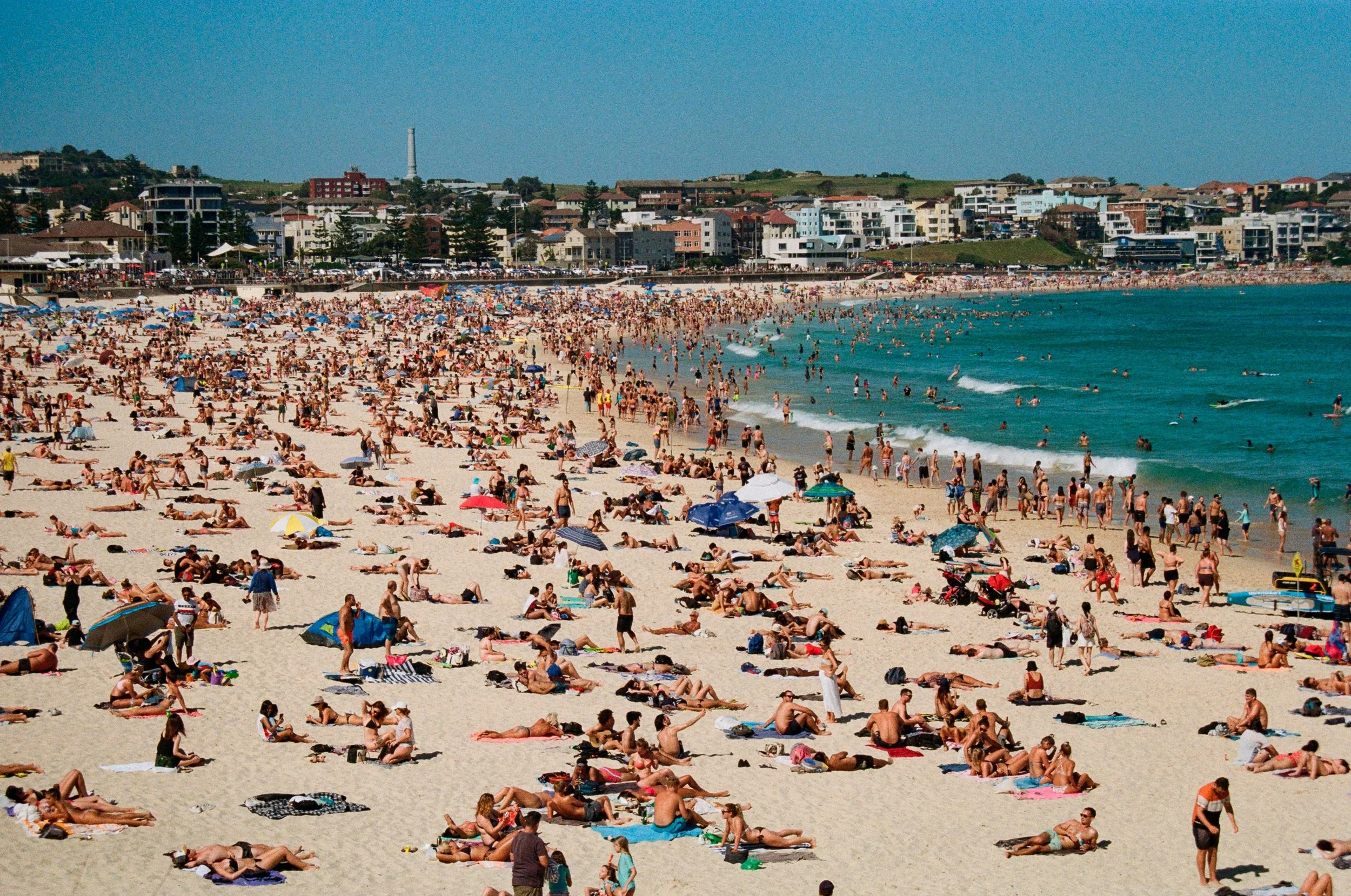
A beach packed with tourists. Prescott Horn. Unsplash.
If you ever find yourself scrolling your For You page for inspiration on where to travel next, you are not alone. According to Statista, 75% of travelers turn to social media when planning their trips. But while platforms like TikTok and Instagram have made discovering destinations easier than ever, they have also contributed to a growing problem: overtourism.
Overtourism occurs when a destination receives more visitors than it can sustainably accommodate. And while tourism can boost local economies and support cultural exchange, an excessive number of visitors often damages natural environments and strains local infrastructure.
But how does social media fuel this problem? It begins with the algorithm. Most social media platforms use engagement-based algorithms that prioritize content with high levels of likes, shares, and comments. As a result, videos and photos of already-popular destinations are highlighted, increasing their visibility even further. This creates a cycle where the places influencers post about quickly become viral travel hotspots.
Ulrike Gretzel, a professor at the University of Southern California, explained that after travelers are exposed to influencer content, they often become interested not only in the destination itself but also in the specific "props and scenes" featured in the post. In other words, many visitors seek to recreate the same photos and experiences to help build their own online identities. This is evident in the fact that 48% of people strive to travel to spots they can show off on social media.
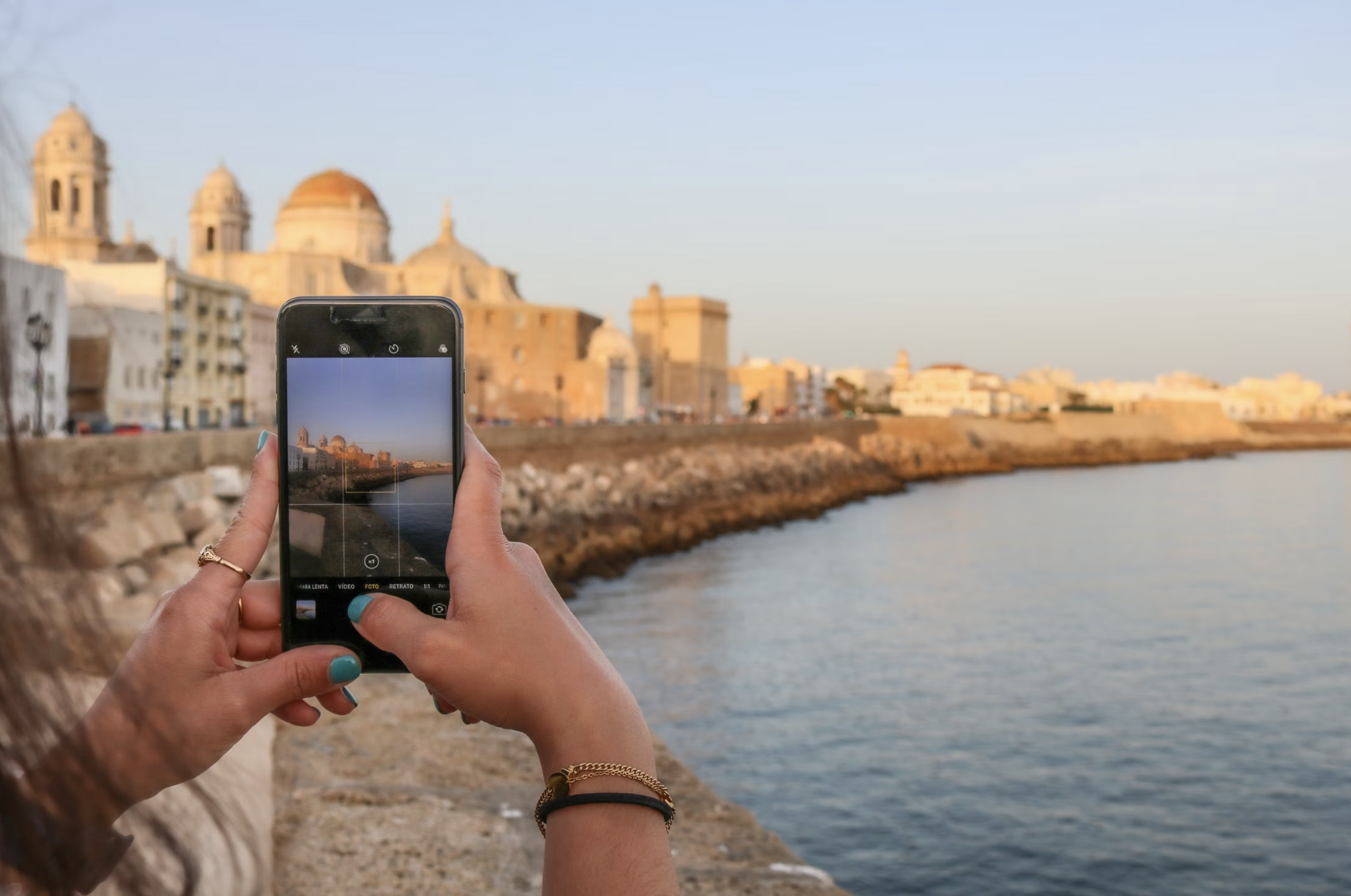
A woman taking photos in Cadiz, Spain. Ani Ani. Pexels.
Yet it’s not just algorithms that impact travel behaviors; social media’s geotagging feature also plays a role. Geotagging refers to the ability to mark the exact location of the photos you post online, making it easy for thousands of people to find the same locations almost instantly. Ultimately, this can cause surges in visitors that a destination may not be equipped to handle.
This was the case for Burney Falls, a secluded waterfall in Shasta County, California. After going viral on Instagram, this largely unknown site became inundated with visitors hoping to take a selfie in front of the 129-foot waterfall. It became so popular that park managers have recently implemented a reservation system to combat overcrowding.
After all, overtourism has consequences that extend far beyond crowded attractions and long lines. Among its impacts is environmental degradation. Increased foot traffic can trample fragile vegetation, disturb wildlife and harm ecosystems. In some destinations, the environmental damage has become so severe that officials have enforced temporary closures to allow ecosystems to recover.
Local communities also bear many of the costs of overtourism. When tourism rises, inflation, excessive crowds and evictions become much more common. In fact, to accommodate the number of visitors, many landlords may evict their residents in order to turn properties into vacation rentals. Justin Francis, CEO of Responsible Travel, has said that many “residents feel they are losing their cities, they feel it's a betrayal of their heritage."
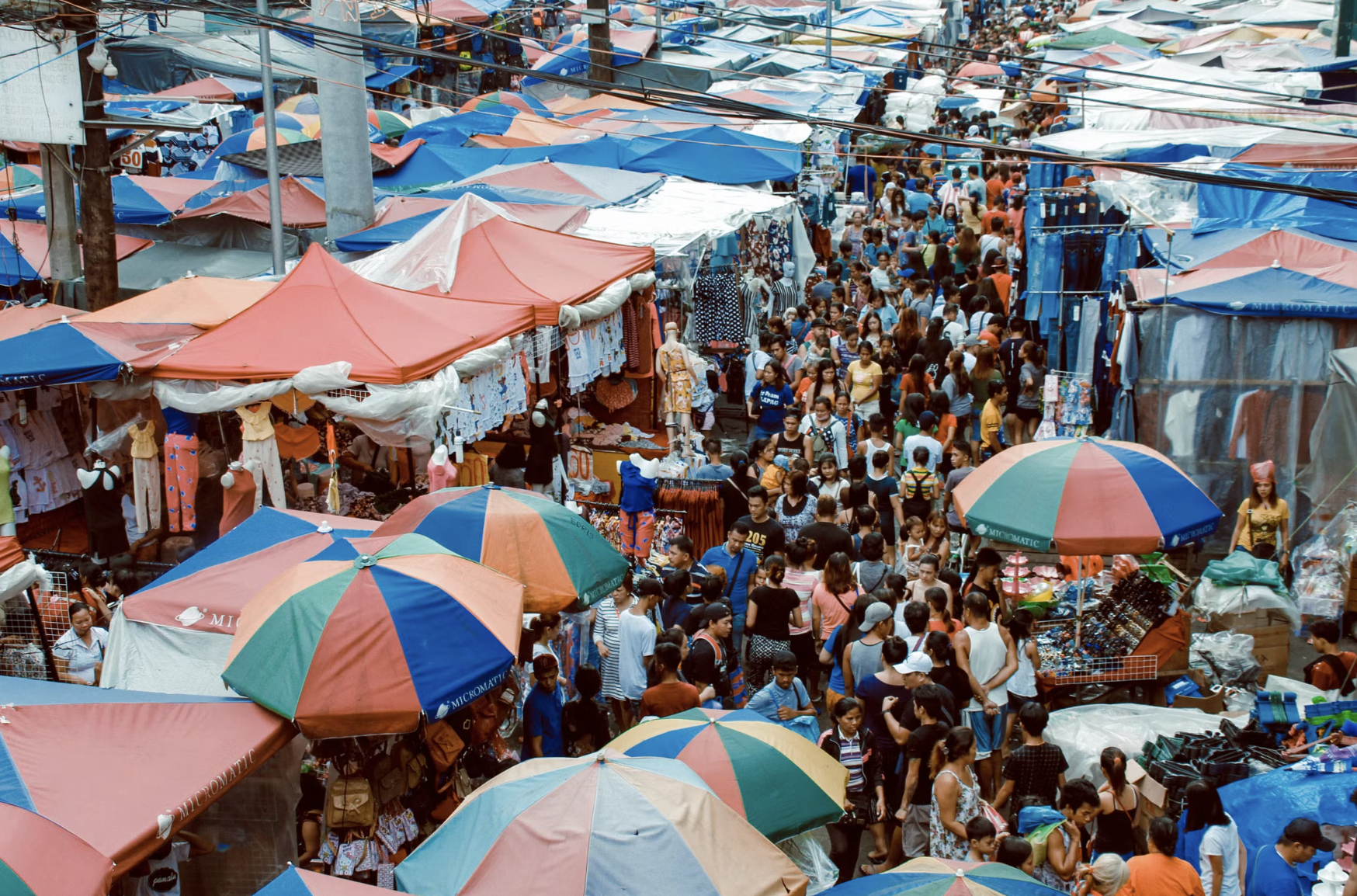
A crowded market in Manila, Philippines. Nic Law. Pexels.
Fortunately, travelers can help reduce the impacts of overtourism through a few simple actions. Mainly, it’s important to be intentional about your travel choices. Choosing destinations thoughtfully rather than simply following viral trends can help preserve local communities. Additionally, before visiting a place, consider asking yourself: Am I actually interested in exploring this site, or do I simply want to post about the experience?
While social media has transformed how we discover destinations, it has also given us greater responsibility. Small decisions, such as where to visit and what to share online, can collectively make a meaningful difference.
GET INVOLVED
Travel during off-seasons. Follow all signs and customs of the local communities you visit. Avoid geotagging small and vulnerable destinations.

Cove Johnson Rabidoux
Cove is an English student at the University of California, Los Angeles. Her writing can be found in the Daily Bruin, The Teen Magazine, Piece of Cake Magazine, and other publications. In her free time, she enjoys reading and traveling.