
By Julia Sassaman
The practice of haggling among travelers remains a subject of debate, shaped by economic pressures facing street vendors and “tourist taxes.”
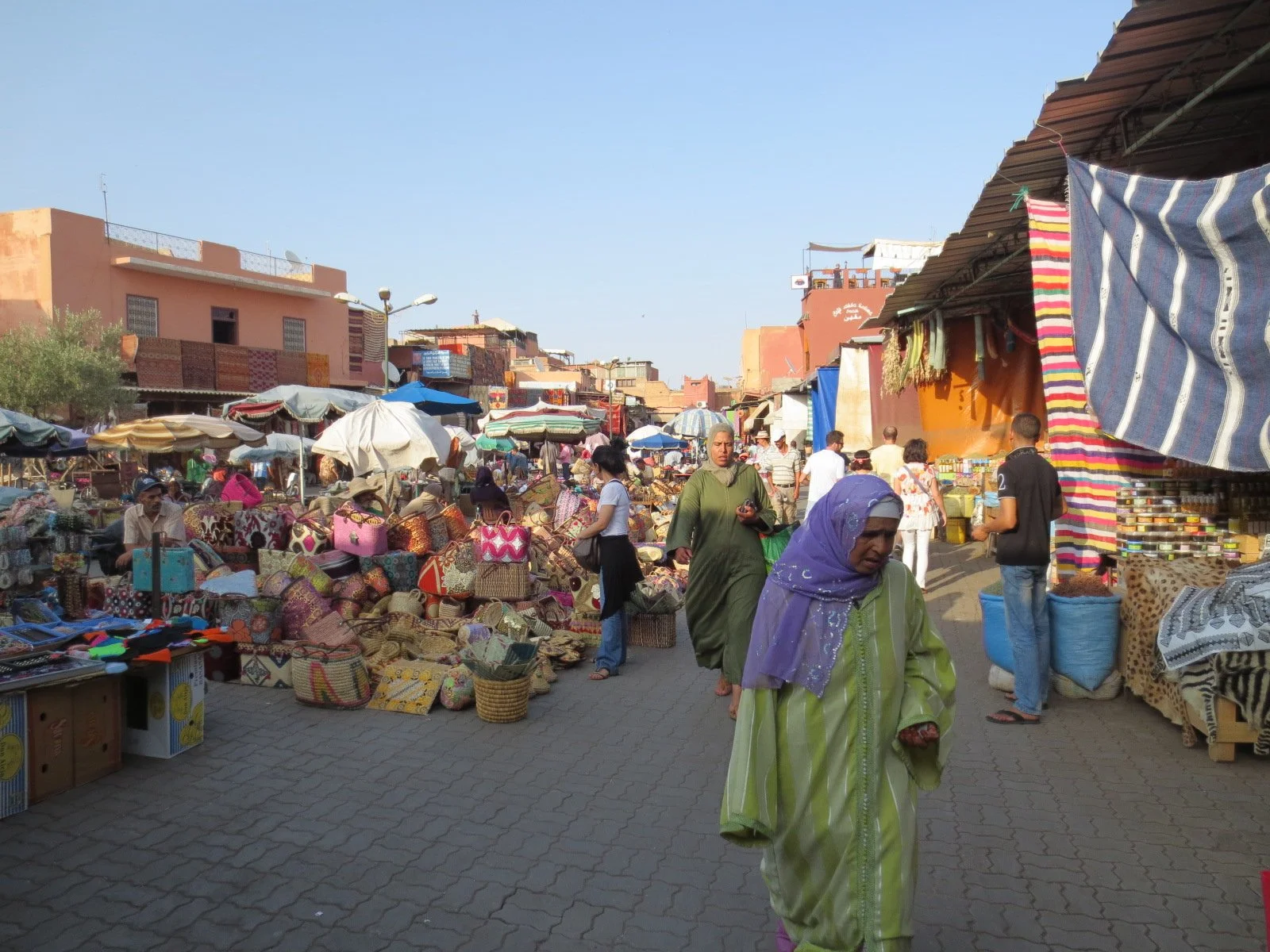
The Marrakesh Souks. Arnaud 25. CC BY-SA 3.0.
Haggling, or bargaining, is common practice for markets worldwide, from souks and street bazaars to open-air produce markets. These markets offer travelers the opportunity to experience local culture through cuisine and artisanal goods. Across the world, travelers and locals alike negotiate the prices of goods and services with vendors. In fact, fixed prices were only popularized in the West starting in the 1870s. Before then, haggling was the norm.
Whether it's Marrakesh’s souks or Mexico’s tianguis, vendors have established what are commonly referred to as “tourist taxes,” or higher rates on merchandise applied to foreigners. A common perception is that travelers are financially privileged enough to afford markups. Affluent locals are also subject to higher prices, whereas non-affluent locals typically pay closer to true prices. Locals’ familiarity with regional goods and pricing makes it harder for vendors to overcharge them.
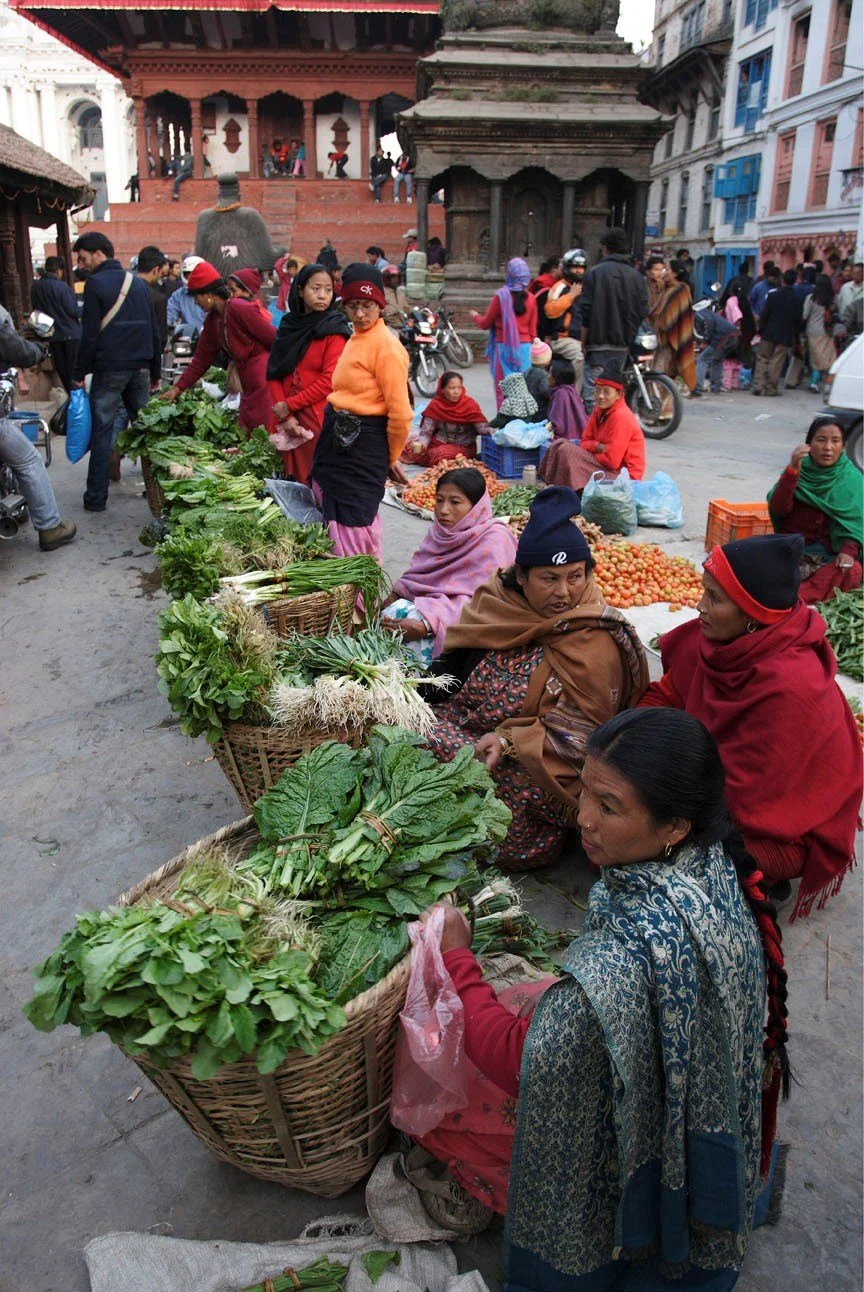
Vendors selling vegetables in Kathmandu market. ILO/Raju Bhandar. CC BY-NC-ND 2.0.
Kathmandu, the capital of Nepal, is home to the Durbar Square market and is part of the Kathmandu Valley, a UNESCO World Heritage site. One jewelry vendor there, Parvati Budathoki, shared her perspective on “tourist taxes,” saying, “I don’t really put up my price too much for foreigners. For something that costs 500 rupees (around $5) I’ll say 1500 ($15). I won’t sell for less than 600 ($6).” Nationally, the daily minimum wage is about $4.28 (Rs651.67), and about 20% of Nepalese live below the poverty line. While Kathmandu has a relatively low poverty rate compared to Nepal’s national rate, at around 7%, the city is still home to 59,218 people living in poverty.
To some, the “tourist tax” seems unfair. Street vendors argue that prices that seem high by local standards are often comparatively low in travelers' home countries. Additionally, the ability to travel for leisure itself indicates a degree of financial privilege and larger purchasing power.
Because of the economic imbalance between some travelers and vendors, haggling for the lowest possible price can overlook the fact that many vendors depend on daily sales for their livelihood. As informal workers, many street vendors lack set salaries or labor protections. Due to the field’s low barriers to entry, groups that face obstacles with formal employment, such as migrants and women, are more likely to work in these roles.
A statistical brief from Women in Informal Employment: Globalizing and Organizing, or WIEGO, found that Africa has the highest rates of street vendor employment, and that these jobs are dominated by women in Ghana (83%), South Africa (62%) and Senegal (57%). Street vendors face ongoing challenges, including lack of recognition under government regulations, market destabilization during the COVID-19 pandemic and supply chain disruptions linked to climate change.
When travelers do not haggle and accept high upfront prices, vendors may choose to raise prices for locals as well, adjusting to prices buyers are willing to pay. Therefore, haggling can be viewed as not only a way for visitors to engage with local culture but also as a way to avoid incentivizing inflated prices.
GET INVOLVED
If you want to learn more about haggling etiquette while traveling, read the following guides:
When is it Okay to Haggle? How to Shop at Markets Without Being a Jerk.
Haggle like a pro with these 8 simple rules
Moroccan Souks: How to Haggle Like a Local Without Being Rude

Julia Sassaman
Julia is a fourth-year student at the University of Michigan studying political science and international studies. She recently studied abroad in Geneva, Switzerland, researching post-conflict tourism and international human rights law. After graduation, she hopes to move to Europe to pursue a career centered on global human rights. In her free time, she enjoys painting, baking, journaling, and reading.