
Long flights can be exhausting, but a little preparation can make hours in the air much easier.
Read MoreThe Science Behind Sunburns and Skin Cancer
Why are sunburns so scary? Uncover what they are, how they happen and what the likelihood of skin cancer really is.
10 Travel Hacks for Gen Z
Learn to travel efficiently in the digital age as a Gen Z traveler.
Read MoreShould Travelers Haggle in Local Markets?
The practice of haggling among travelers remains a subject of debate, shaped by economic pressures facing street vendors and “tourist taxes.”
Read MoreFarm Stays: Gen Z’s New Travel Frontier
Gen Z’s interest in sustainable travel is highlighted by the increasing popularity of farm stay expeditions
Read MoreDon’t Eat and Walk: Japan’s Rule That Leaves Travelers Confused
The Japanese value of staying in the moment and being mindful grounds the custom of not eating and walking simultaneously.
Read MoreHow Wildlife Selfies Turn Deadly
For the perfect photo or social media selfie, travelers continue to get dangerously close to wildlife with sometimes fatal results.
Read MoreWork Anywhere: Your Guide to Planning the Perfect Workcation
All you need to know about planning a successful workcation — the trend that allows you to seamlessly balance career and adventure.
Read MoreThe 8 Best Sustainable Travel Companies
Booking a trip with a responsible tourism company can help ensure that you leave a positive impact on the communities you visit.
Read MoreHow to Authentically Experience Culture While Supporting Locals
Getting in touch with locals is the perfect way to engage meaningfully with all a destination has to offer.
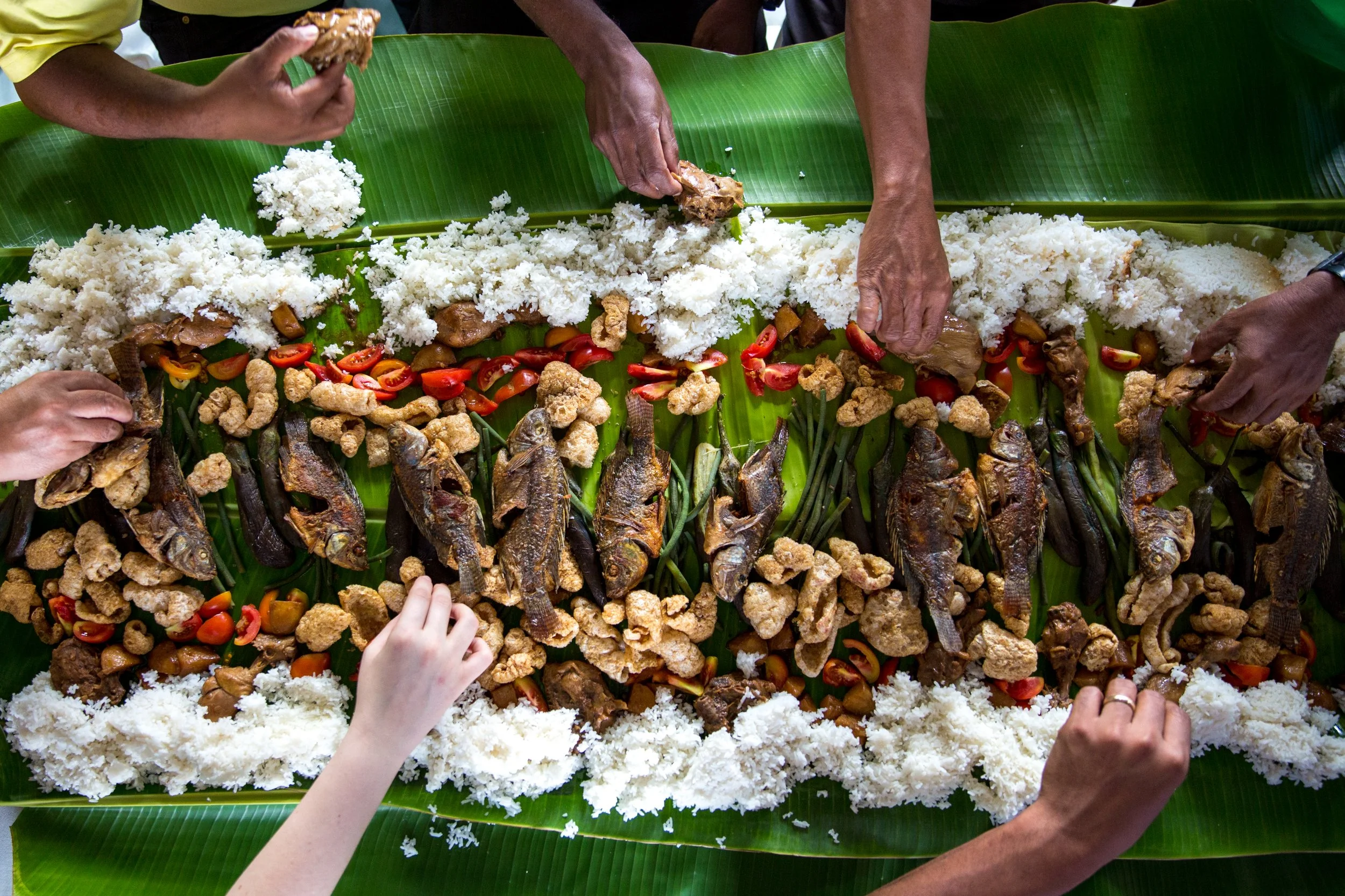
A meal shared in the Philippines. Avel Chuklanov. CC0 1.0
Whether you are growing distrustful of hyped social media recommendations when traveling somewhere new or are merely trying to find a way to support locals on your journey, there are many ways to create an enjoyable trip while experiencing the beauty of a city from the perspective of one of its inhabitants. From sharing meals to discovering the delights of a city beyond mere tourist attractions, engaging with locals is an excellent way to enjoy the unadulterated beauty of a destination.
For many, part of immersing themselves in a culture revolves around the dinner table. Although both dives and upscale restaurants offer a plethora of meal-sharing experiences, there is nothing like enjoying a home-cooked meal. Spanning 6 continents, Traveling Spoon connects travelers with locals hoping to welcome tourists to their culture through the power of food. Whether it be a traditional cooking class using family recipes in Ecuador or gaining new insight into French cuisine through a vinegar tour in Cognac, the website provides a variety of options for travelers to experience a full range of culinary experiences. From market tours to cooking classes, Traveling Spoon cultivates connections and allows those coming from near or far to feel at home when abroad.
Similar to Traveling Spoon, Eat With is a popular sight for travelers looking to get an authentic food experience. While Traveling Spoon offers more destinations, eatwith.com is a good source for those visiting major cities such as New York, Rome and Paris. Both sites offer experiences as low as $15, but some vendors can charge into the hundreds of dollars depending on the city and precise details of the experience.
With 151 destinations spanning 40 countries, the International Greeter Association is a non-profit offering free walking tours around various cities. Started in 1992 in New York City, this free-of-charge service is now expanding again after the Covid-19 pandemic. The greeter network is composed of passionate locals looking to show off what their city has to offer and to provide a friendly face to those visiting.
The not-for-profit nature of the organization makes utilizing the International Greeter Association an excellent way for tourists to engage with a city and its culture from an insider's perspective; learning about local gems, using public transport and discussing the greeter’s personal relationship with their city can be a great way to engage on with a destination on a whole new level, and maybe make a friend along the way.
Although social media is riddled with hyped restaurants and attractions that can make searching for cultural authenticity difficult, following creators that unveil local secrets is an excellent way to leverage new technology. For example, Elizabeth and Sophie Michilli are a mother-daughter duo from Italy who showcase their experiences in Puglia and Rome, highlighting local favorite restaurants and boutiques. Though it can be difficult to navigate through sponsored and algorithmically recommended content, using social media as a tool to engage with local creators can be an effective way to meaningfully tailor your trip to support local establishments.

Nicola DeGregorio
Nicola is studying English Literature at George Washington University, where she also reports for the student newspaper, The Hatchet. Nicola's passion for literature and writing has sparked an interest in exploring the broader context surrounding written texts. Researching and writing for Catalyst Planet allows her to investigate nuanced issues that intersect with her interests in art history, culinary practices, and cultural traditions.
How to Score Cheap International Flights
International travel doesn't have to break the bank - learn how to find the best deals.
Read MoreRising Travel Fees in Bhutan
After two years of being closed off to visitors due to COVID-19, Bhutan is re-opening to tourism, but with an increased tourism fee.
Children and pigeons in Thimphu. Xiaojun Deng. CC BY 2.0
Bhutan is a beautiful Buddhist country located in Southeast Asia. It is located along the eastern edge of the Himalayas, and there is plenty of mountain and valley scenery, as well as Buddhist monasteries. There are a multitude of reasons to visit Bhutan, but there is one interesting reason that might stop some people from going: the “High Value, Low Impact” tourism fee.
In the past, the government of Bhutan has charged the equivalent of $65 USD per night per traveler. This has been a system implemented for three decades, but after COVID-19 and the decrease in tourism everywhere, the Tourism Council of Bhutan will raise the fee to $200 during the low travel season when the country reopens on September 23, 2022. During high season, the fee will be $250 per day for every person. India, Bangladesh and Maldives have been exempt from the tourism fee thus far, but when the country reopens, the government has decided to charge visitors from these three nations $17, with a few exceptions for certain age groups. Bhutan has been closed to outsiders for the past few years due to strict COVID-19 guidelines. The money gained from the travel fee increase will be used to decrease the carbon footprint created by tourists visiting the country, as well as to help the Bhutanese who work in the tourism industry. Even with the fee, tourism in Bhutan does make up 6% of the country’s GDP.
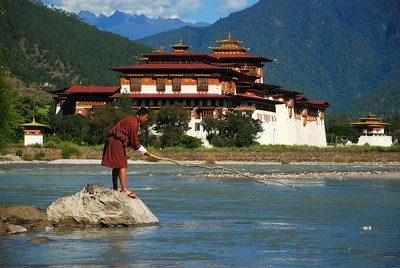
Keeping Bhutan’s rivers clean. United Nations Photo. CC BY-NC-ND 2.0
There is a misconception that the $200 is an extra expense in addition to the usual travel costs, but that is incorrect. These fees are actually all inclusive, meaning it covers the cost of typical travel expenses, such as food, accommodations (though choosing to stay at luxurious hotel will cost extra), tour guides, transportations and tourist site entrance fees. Souvenirs, tour guide tips and drinks are the most common travel expenses that are excluded from the tourism tax. Those people have to pay for themselves.
A large question about the existence of the travel fee is where the money goes. Part of it, of course, goes to the government (around 30%), but the rest does go to the tour guides, hotels, drivers and other staff mem bers in the tourism industry. The government also does work to improve education, infrastructure and healthcare systems for its citizens, so the money tourists pay does go to improving the country. Furthermore, whether flying or driving into Bhutan, carbon emissions are being produced, and the tour buses and other modes of transportation add to it. Offsetting people’s carbon footprint from all that is an area the government is devoted to. The promotion of carbon-neutral traveling and making the tourism industry more sustainable overall are what Bhutan is committed to achieveing in order to improve the country.
Bhutan is not the only country with a tourism fee. There are other countries that have implemented it as a way to combat over tourism and protect the tourist industry in each country, such as Italy, Japan, Germany and Spain. There are many more countries that do this, and the tax ranges from less than $1 to over $50, depending on the country. The money goes back to it, from the workers to the upkeep of tourist attractions. Many countries have implemented it, and the fee is worked in as a tax for things like airline tickets or hotels. Bhutan does the highest tax, but with the money, the country has worked hard to preserve its culture and natural beauty.
RELATED CONTENT:

Katherine Lim
Katherine Lim is an undergraduate student at Vassar College studying English literature and Italian. She loves both reading and writing, and she hopes to pursue both in the future. With a passion for travel and nature, she wants to experience more of the world and everything it has to offer.
5 Tips for Haggling at a Souk in Morocco
At Moroccan souks and bazaars, haggling is a must-have skill for any shopper.
Read MoreVoluntourism: What Could Go Wrong When Trying to Do Right?
Here are some of the common problems I have seen in the voluntourism market and some tips for travelers on how to choose the right program.
Read More