
As temperatures rise and climate variability increases, even the camel is struggling to survive across the Horn of Africa.
Read MoreThe Great Green Wall: Africa’s Sustainable Wonder
Designed to combat desertification, the Great Green Wall is transforming landscapes and livelihoods across Africa.
Read MoreToxic Gold: How E-Waste Is Poisoning Ghana
A nation celebrated for hospitality and growth is being choked by the world’s discarded electronics and the dangerous labor they demand.
Read MoreHow the 2026 Ebola Outbreak in Uganda Is Affecting the Nation’s Tourism
As the Ebola outbreak circulates throughout the Democratic Republic of the Congo, Uganda’s tourism industry has taken a critical hit.
Read MoreInside the Vehicle: Botswana’s Wilderness Guides
Appreciate the world of field conservation, guiding and safaris through the lives of Botswana’s wilderness guides.
Read MoreWhere the Desert Meets the Sea: Namibia's Skeleton Coast
Shipwrecks, towering dunes and desert wildlife make this remote stretch of Namibia’s coast a paradise for adventurous travelers.
Read MoreThe Odyssey Sparks Backlash for Filming in Occupied Territory
Christopher Nolan’s new film has put the Moroccan occupation of Western Sahara in the spotlight.
Read MoreA Look Into African Nations’ Deportation Agreements
Dozens of people have been deported by US President Trump to African countries where they have no citizenship or established ties.
Read MoreRussian Mercenaries Have Built a Drug Empire in the Heart of Africa
Remnants of the Wagner Group have used tramadol, a prescription opioid, to seize control of the Central African Republic.
Read MoreCape Verde Offers More Than an Incredible Game of Soccer
After its historic World Cup debut, Cape Verde is drawing new attention for its music, landscapes and morabeza culture.
Read MoreAfrica’s Population Is Notably Young. Its Leaders are Remarkably Old.
Zimbabwe becomes the latest nation to alter its constitution, allowing its 83-year-old president to stay in power until 2030.
Read MoreXenophobia Sweeps Across South Africa
Anti-migrant groups have vowed to hold demonstrations every week, leading to fear of violence.
Read MoreSee the Endangered Vultures in Lesotho's Dragon Mountain
The Drakensberg escarpment in Lesotho is one of the last strongholds for two endangered vulture species.
Read MoreUganda's Media Crackdown Signals More Than an Attack on the Press
Uganda’s latest media shutdown is about more than press freedom: it offers a glimpse into how power is being exercised, and perhaps transferred, in one of Africa’s longest-serving governments.
Read MoreThe Human Cost of Coltan Mining in the Democratic Republic of the Congo
Modern technology is not just fueled by electricity but also by Congolese coltan miners, who face exploitation and unsafe working conditions.
Read MoreStolen Vanilla: Madagascar’s High-Stakes Black Market
Behind the vanilla industry lies a struggle in Madagascar, where small farmers face nightly threats on top of poverty, weak governance and a global demand that fuels a thriving black market.
Read MoreHow Conflict in Sudan Is Impacting Women and Girls
By Cove Johnson Rabidoux
Gender violence and limited access to healthcare have left Sudanese women increasingly vulnerable as war continues.
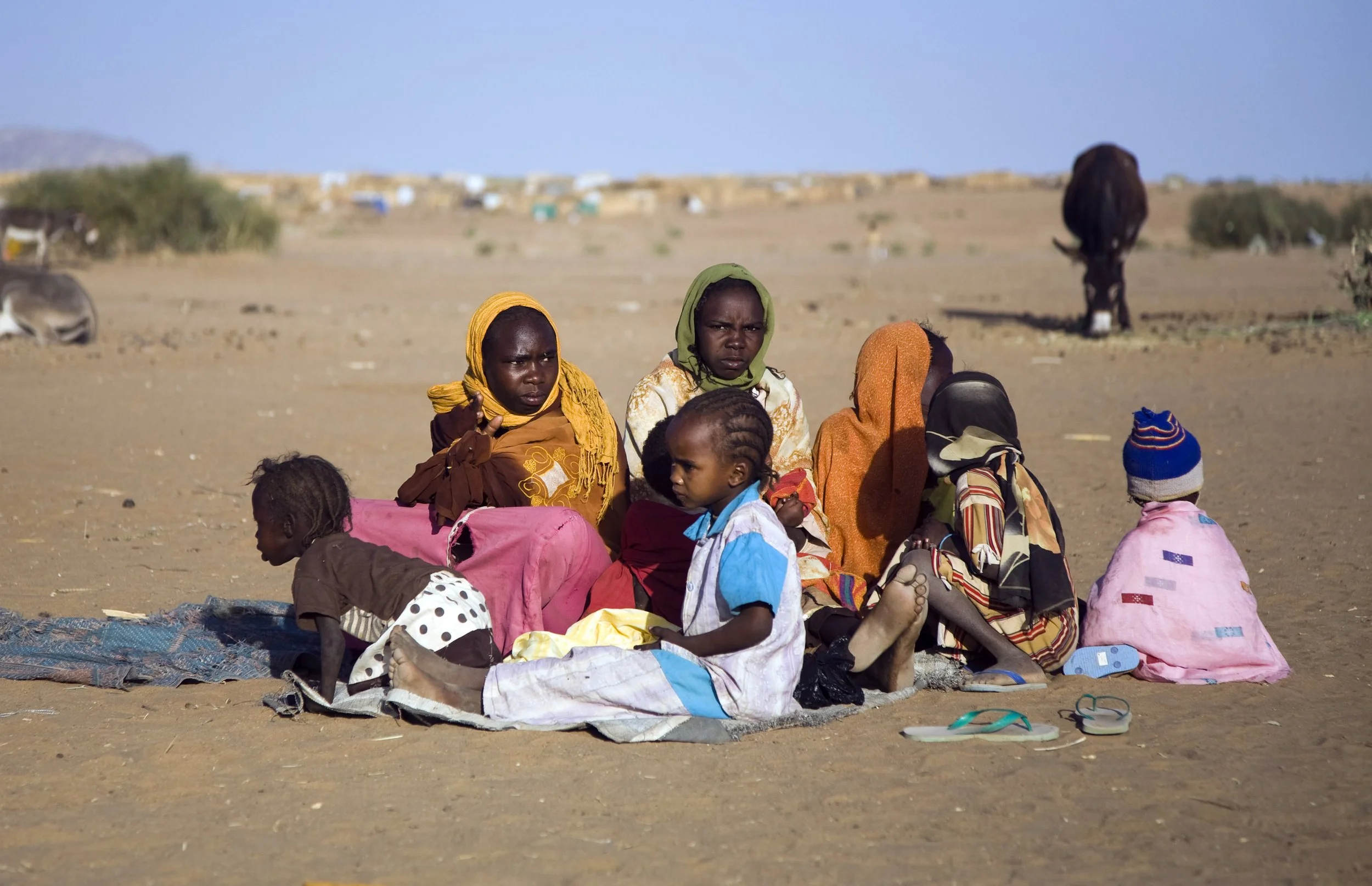
Sudanese women and children. Albert Gonzalez Farran. CC BY-NC-ND 2.0.
Civil war in Sudan started in April 2023 following the collapse of negotiations between the Sudanese Armed Forces (SAF) and the Rapid Support Forces (RSF). Since then, the country has been decimated by violence, widespread famine and a crumbling healthcare system, all of which make it nearly impossible for humanitarian support organizations to provide aid.
According to the United Nations, the situation in Sudan is the world’s worst humanitarian crisis, with more than 33 million people in need of support. Women and girls have been disproportionately affected, facing alarming rates of food insecurity and displacement.
Millions of women have had to relocate to refugee and displacement camps, where they face shortages of food, clean water and medical supplies. At these camps, they experience the additional risk of gender-based violence, both by fellow civilians and members of the SAF and RSF themselves.
The United Nations described rape, sexual slavery and violence as common war tactics used throughout the country. They report that sexual violence has not only been used to exert control over communities but to instill fear and deepen the psychological trauma of survivors and their families. One woman told Human Rights Watch, “Every time I try to sleep, I see how my parents and husband were killed, and I remember all the things they did to me. It is torturing me.”
Her experience is far from unique. Survivors of sexual violence, especially that which is war-related, often experience long-term trauma, including depression, post-traumatic stress disorder and sleep disturbances. Many also face social stigma within their communities, which can lead to further isolation. In Sudan, these challenges are compounded by the deterioration of the healthcare system and limited humanitarian access. With little international aid, survivors are left without medical care, counseling or legal assistance.
Additionally, without reliable healthcare, pregnant women and new mothers are unable to receive adequate maternal support. This often increases the likelihood of preventable complications for both mothers and infants.
Yet despite these conditions, Sudanese women are committed to protecting their communities. Across the country and within displacement camps, women-led groups have helped distribute food, protect children from violence and provide midwifery and other medical assistance.
But as fighting persists across the country, humanitarian groups argue that greater international attention is crucial in addressing the crisis. Sudan has received comparatively limited international coverage compared to other global conflicts. Experts suggest this is partially because more “geopolitically influential countries” are often prioritized in media coverage, leaving other large-scale humanitarian crises underreported.
In the case of Sudan, Tom Perriello, former U.S. special envoy to Sudan, said, “I don’t think I’ve ever seen as big of a disconnect between the scale of a crisis and the scale of media coverage in my life, and that is both because the scale of the suffering in Sudan is so high and because the [media] coverage is abominably low.”
The statement reflects ongoing concerns about the visibility of the crisis and its impact on its civilians. For many Sudanese women and girls, support remains uncertain as they continue to navigate the world’s worst humanitarian emergency.
GET INVOLVED:
Sign Amnesty International’s petition to demand an arms embargo in Sudan. Spread the word about the atrocities facing women in Sudan today. Support female protection and aid by donating to UN Women. For updates and additional information, follow UNICEF and ReliefWeb.
Cove Johnson Rabidoux
Cove is an English student at the University of California, Los Angeles. Her writing can be found in the Daily Bruin, The Teen Magazine, Piece of Cake Magazine, and other publications. In her free time, she enjoys reading and traveling.
Why Nigeria’s Largest Floating Village Is Being Demolished
By Julia Sassaman
Thousands of residents of Makoko, Nigeria’s largest floating village, have been displaced after the Lagos State Government carried out demolitions as part of broader redevelopment efforts.
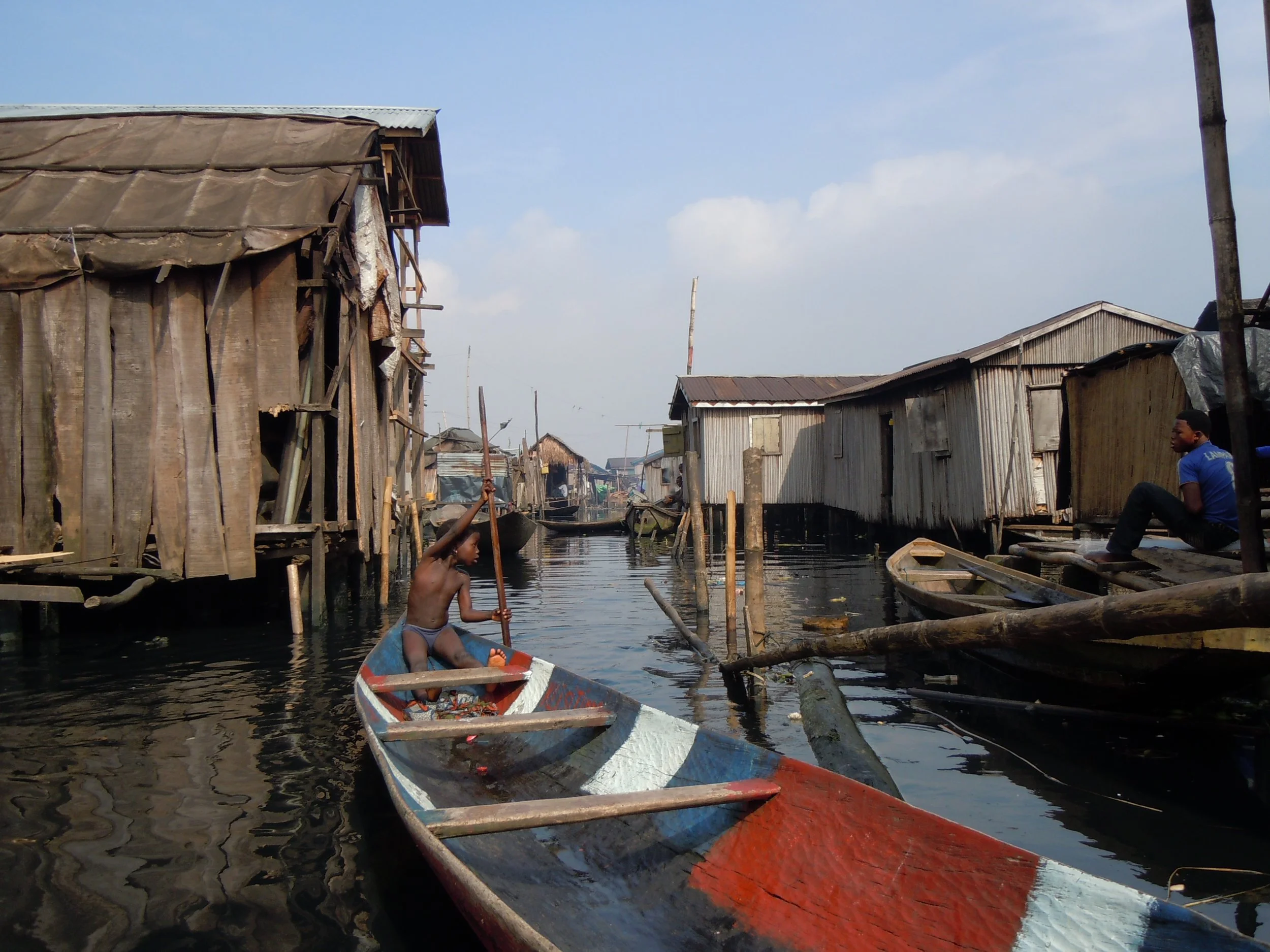
A young boy canoeing through the Makoko canals. Heinrich Boll Stiftung. CC BY-SA 2.0.
Sometimes called the “Dubai of Africa,” Lagos is a rapidly growing city on the Lagos Lagoon in southwest Nigeria, undergoing large-scale construction, tourism and housing development. As Nigeria’s largest city, Lagos is home to more than 14 million residents. Despite increasing investment in high-end developments and infrastructure on its islands, approximately 60% to 75% of residents live in informal settlements. These settlements typically consist of displaced or impoverished individuals who establish communities on state or private land without legal ownership, often lacking clean water, sanitation or basic urban services.
The city struggles to accommodate its growing population alongside high poverty rates and a shortage of affordable housing. Climate-related challenges, such as sea-level rise and coastal erosion, have also increased pressure on the Lagos State Government (LASG) to implement redevelopment projects. However, urban renewal efforts have drawn criticism from many Lagosians, who argue these developments often prioritize the wealthy over the broader population. Demolitions of informal settlement communities have further fueled controversy, prompting questions about the LASG’s redevelopment priorities.
One of the most well-known informal settlements in Lagos is Makoko. Founded in the late 19th century by Egun fishing families, Makoko later became home to immigrants and residents priced out of other areas of the city. Located across land and water, the community’s economy centers on fishing and aquatic commerce. Homes, schools, businesses, churches and medical clinics rest on wooden stilted structures above the Lagos Lagoon, separated by canals and only navigable by canoe. Population estimates are approximate, ranging from 85,000 to over 1 million residents; Makoko lacks formal recognition from the LASG, making accurate census data difficult to obtain. Community members face challenges like inadequate sanitation, unreliable electricity, limited access to education and healthcare and overcrowding.
In an interview with the BBC, Lagos real estate developer Peacemaker Afolabi states, "Everywhere in Lagos is prime land. And waterfront is always prime.” Demolitions of Makoko began in December 2025 and continued into 2026. The LASG has affirmed that the demolitions only targeted structures within a 100 to 250-meter radius of high-voltage power lines, which pose safety risks to residents, and that proper warning was provided beforehand.
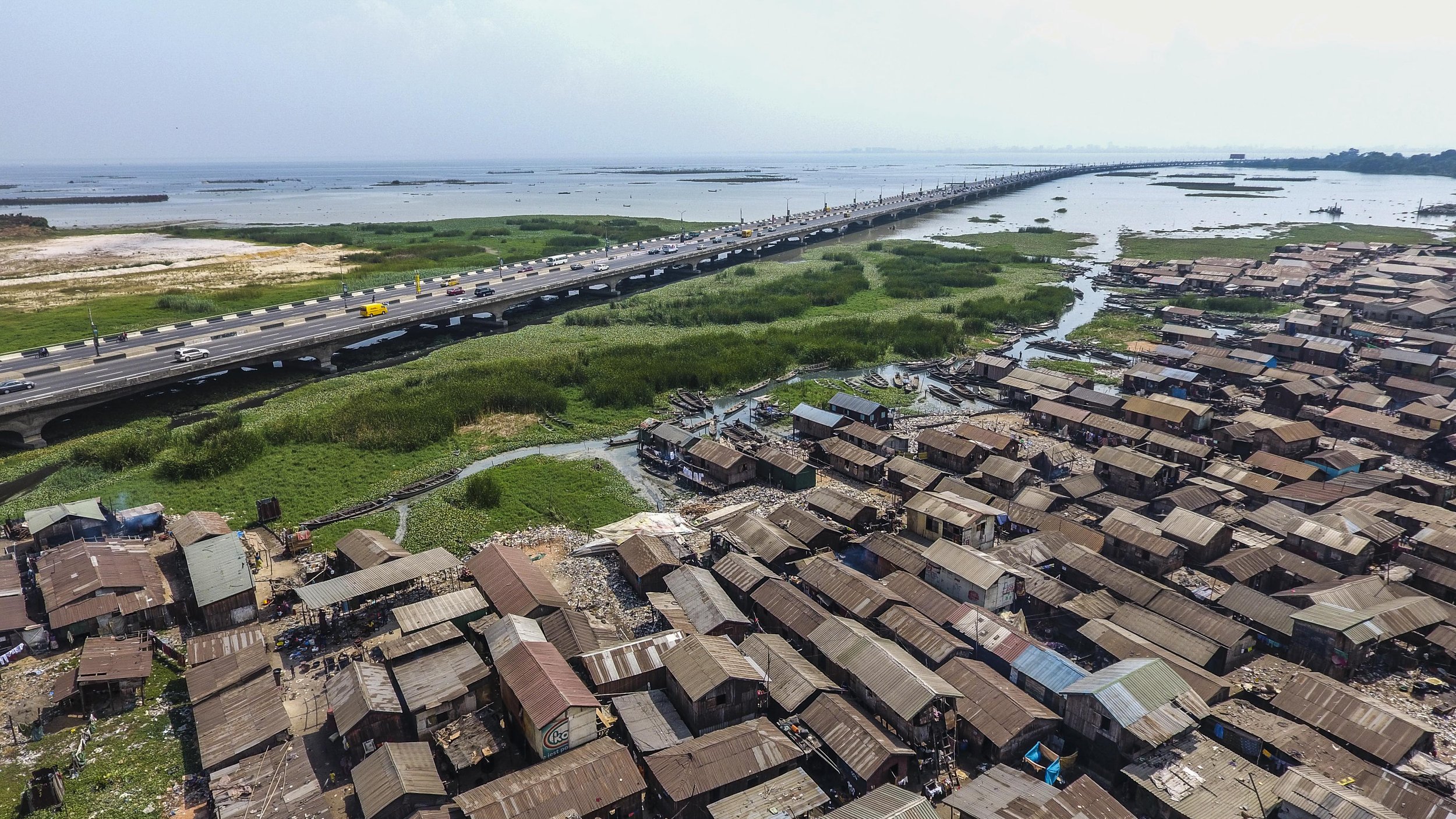
Aerial view of Makoko waterfront settlements on the Lagos Lagoon. S.aderogba. CC BY-SA 4.0.
The demolitions were carried out by bulldozers and armed police, who used force and tear gas against protestors opposing the evictions. Thousands of homes, shops and community sites were destroyed. At least 40,000 people were displaced, sleeping on the demolition debris, under bridges or in canoes without personal belongings, safe shelter or the means to continue their livelihoods. As of May 2026, a resettlement plan to move displaced residents to Agbowa-Ikosi, a community built by refugees, has been proposed by the Lagos State Assembly, but the LASG and Makoko leadership have yet to reach a concrete agreement.
The 2025-2026 demolitions are not isolated incidents. Makoko has experienced demolitions and displacement tied to private development projects dating back to 2005. Similarly, in 2012, residents only received three days' notice before thousands of homes were removed, again citing proximity to power lines. Since then, Makoko residents have proposed sustainable reconstruction plans that preserve the community’s cultural and historical ties to the waterfront, including the Makoko/Iwaya Regeneration Plan, which the LASG has not implemented.
The city government maintains that the demolitions protect both the coastal environment and residents living near high-voltage power lines. However, residents believe that the bulldozing extended beyond the warned radius and that adequate warning was not given. The LASG also faces criticism for failing to recognize generational customary land rights and providing no financial support to displaced residents.
The absence of community-based reconstruction plans and affordable housing options in Lagos has drawn skepticism from the UN, NGOs and Makoko residents. In a 2026 press release, experts from the UN Office of the High Commissioner for Human Rights advised Lagos state authorities to suspend demolitions, provide the necessary assistance to displaced communities and involve Makoko residents in future developments.
GET INVOLVED:
Follow organizations such as the International Network for Economic,
Social and Cultural Rights (ESCR-Net), which frequently posts articles, resources and events focused on global housing and human rights issues. ESCR-Net also released a solidarity letter demanding an end to forced evictions in Makoko, accountability for the resulting harms caused and stronger protections for residents’ rights.
Donate or contribute expertise to JEI, a community-based legal advocacy organization providing paralegal services to Nigerian communities, including Makoko. Additionally, support their YouTube channel, Media4Change, a partnership with storytellers from Nigerian informal settlements that regularly posts video projects documenting the experiences and challenges facing these communities.
Follow, support or volunteer with Nigeria-based organizations empowering local communities, including Home of Mother Earth Foundation, Spaces for Change and the Nigerian Slum/Informal Settlement Federation.
Explore the Slum Dwellers International website to learn more about human rights issues facing informal settlements globally, as well as their advocacy and support in expanding access to economic opportunities and essential services.
Julia Sassaman
Julia is a fourth-year student at the University of Michigan studying political science and international studies. She recently studied abroad in Geneva, Switzerland, researching post-conflict tourism and international human rights law. After graduation, she hopes to move to Europe to pursue a career centered on global human rights. In her free time, she enjoys painting, baking, journaling, and reading.
Ebola’s Next Wave: What Africa Knows That the World Forgets
A fast-moving outbreak in Central Africa is a reminder that Ebola is contained by trust and resources, not luck.
Read MoreRead Africa Month: 10 Books to Check Out
From Rwanda to Sudan, explore a continent of literature in this reading list.
Read More