
Alex Jung
As Kenya protests proposed Finance Bills, police respond with violent force, threatening freedom of speech.
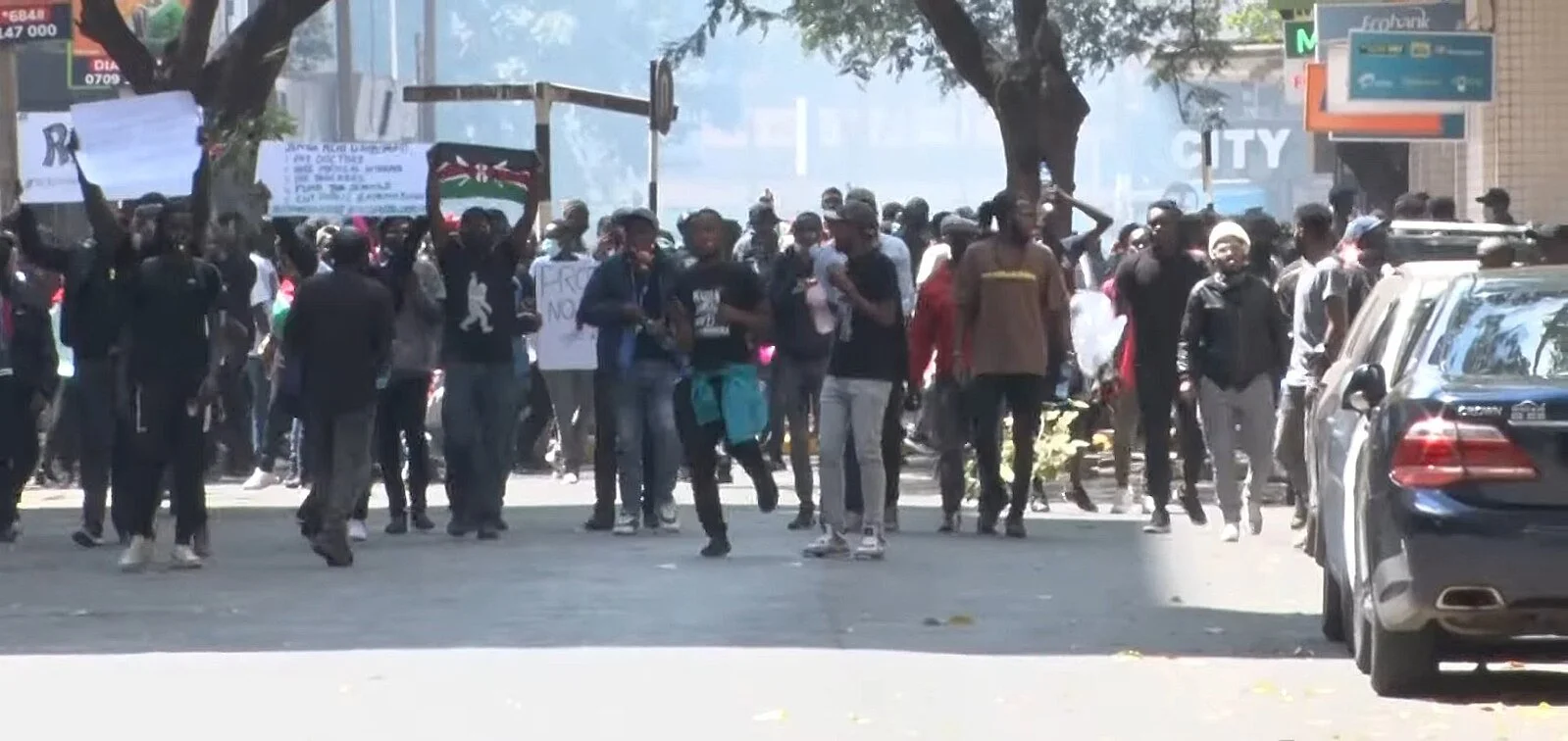
Kenya 2024 protests. Capital FM Kenya. CC BY 3.0.
Kenya has experienced significant challenges to freedom of speech and expression in response to protests following the Finance Bills of 2023 and 2024. Over 100,000 people in Nairobi, the capital of Kenya, protested last year in response to the harsh terms of the 2024 Finance Bill, which would ultimately increase the wage gap and lead to a sharp rise in the cost of living. The use of police brutality toward peaceful demonstrators has been noted and critiqued by several human rights organisations around the world, such as Amnesty International and Human Rights Watch. U.S. Representative Ilhan Omar has also shared her concern, stating, “The use of deadly force against civilians exercising their democratic rights not only violates basic human rights but also undermines Kenya’s democratic foundations.” Notably, in 2024, Kenyan President William Ruto withdrew the bill following large-scale protests. Nonetheless, the questions regarding democracy, freedom of expression and the efficacy of government have been raised and continue to be debated within Kenya today.
The 2024 Finance Bill aimed to see tax increases on various goods, ultimately increasing government revenue. For example, according to The Nonviolence Project at the University of Wisconsin-Madison, the bill aimed to apply a 16% bread tax, a 2.5% car tax and a tax on income made from digital marketplaces. While taxes are a regulatory aspect of a national economy, sharp increases in taxes have resulted in difficulty for many Kenyans to access food products. Consequently, protests erupted in the streets. Despite the bill ultimately being withdrawn, many Kenyans continued to protest the government corruption and perceived authoritarian governance, including a call for the resignation of President Ruto. But these calls are not a new phenomenon; in 2023, President Ruto signed the 2023 Finance Bill into law despite more than 90% of Kenyans opposing it. This highlights the democratic backsliding of many Kenyan fiscal policies, resulting in protests.
The main reason why police brutality amidst the protests in Kenya has gained international attention is that the main drivers of the protests are the youth. Killings and violence against young protesters by the Kenyan police have been a major cause of concern within the nation. The youth organised many of the protests through social media platforms, including TikTok, Instagram and X. Famous online hashtags, such as #RejectFinanceBill2024 and #RutoMustGo, trended greatly and became phrases utilized in the protests, seen in the streets of many Kenyan cities. Photos, videos and posters of the police brutality and the protests themselves allowed for more international traction and attention. The Kenyan government also retaliated on various social media platforms by claiming many of the youth protesters were simply criminals or spoiled elites. Ultimately, they claimed that youth activism was synonymous with the destabilization of national peace.
The Kenya National Commission on Human Rights has claimed that the police have killed at least 60 protesters and abducted another 66 people, but this number is projected to be larger, with many individuals still missing. Many videos on social media platforms have revealed scenes of police shooting directly into crowds and abducting various protesters. Several bodies have been found in rivers, forests and mortuaries. This increases suspicion and a lack of transparency to the public regarding police action toward protesters. Nobody has been held accountable for the police brutality, as no investigation or prosecution efforts have been made. Protests of the Finance Bill have continued in 2025, and in June, 400 people were injured as a result of police brutality. The United Nations has called for restraint of the police and their use of violent methods toward protesters. The fight for freedom of expression and speech remains a significant challenge in Kenyan society today.
GET INVOLVED:
Freedom of expression and speech is a fundamental right. To learn more, readers can explore the various projects and NGOs fighting for this freedom in Kenya. These include the UNESCO National Coalition on Freedom of Expression and Content Moderation in Kenya, Article 19 Kenya and the Kenyan Human Rights Commission.

Alex Jung
Alex is from New Zealand and South Korea, and is currently a student at the University of Chicago. He is majoring in Political Science and International Relations, and minoring in Middle Eastern Studies. He is passionate about social justice for minorities and indigenous communities. In his free time, he enjoys learning languages (Korean, English, Mandarin, and Persian) and writing novels and short stories.