
Ashley McDermott
In quiet national monuments, travelers can experience pueblos and cliff dwellings, some of the most impressive and well-preserved innovations in early Southwestern architecture.
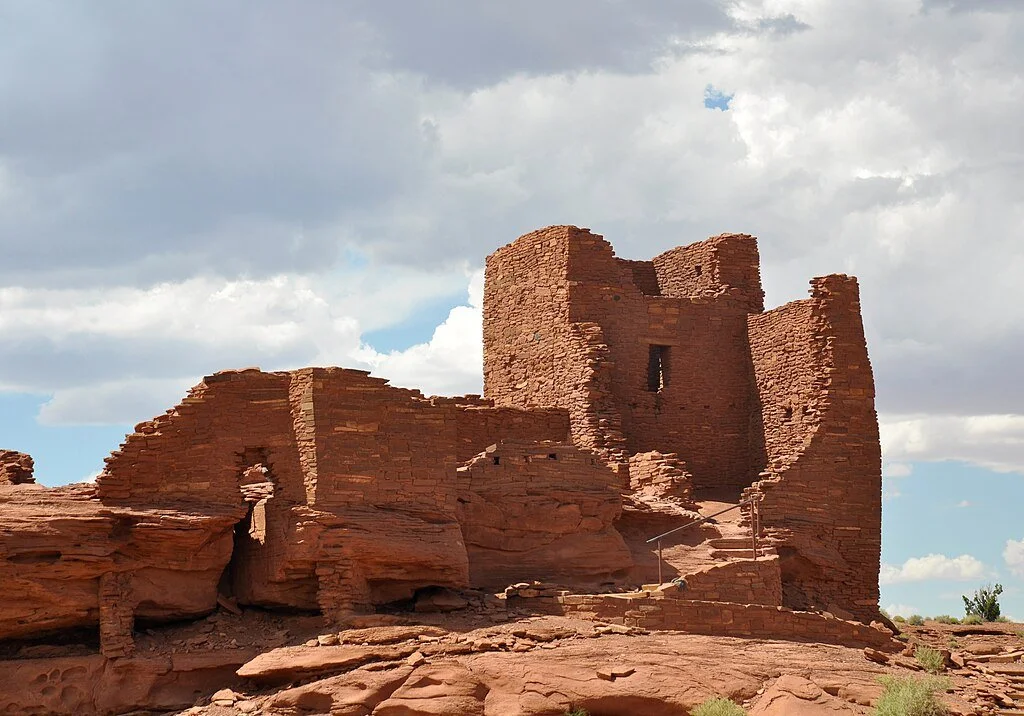
Wukoki Pueblo at Wupatki National Monument. Jarek Tuszynski. CC-BY-SA 4.0.
Between 1150 and 1300, a new architectural movement arose among the Ancestral Puebloan peoples of the American Southwest: pueblos carved into cliff faces. While pueblos, which refer to Puebloan settlements, had previously been constructed near farmland on various mesas, people began living and cooking in their cliff-homes, traversing narrow paths and ladders to reach agricultural land. While Mesa Verde National Park is known for its cliff dwellings, it is possible to see the remains of these structures in lesser-traveled national monuments.
The six national monuments on this list were created to preserve Indigenous heritage, but the National Park Service (NPS) has a fraught history with Native peoples in the U.S. As the National Parks Conservation Association writes, "All national parks exist on traditional Indigenous lands.” When parks were established in the 19th and early 20th centuries, Indigenous people were violently driven off future parkland in order to preserve the false image of an uninhabited “pristine” wilderness. Until recently, the stories of Indigenous inhabitants were erased, while the history of ancient peoples was emphasized. Today, 250 land-use agreements exist between NPS and Native groups, but access to certain sites is an ongoing issue. When visiting these parks, it's important to remember their cultural significance for contemporary communities, the enduring effects of forced removal and ongoing struggles over access and land rights
1. Wupatki National Monument, Arizona
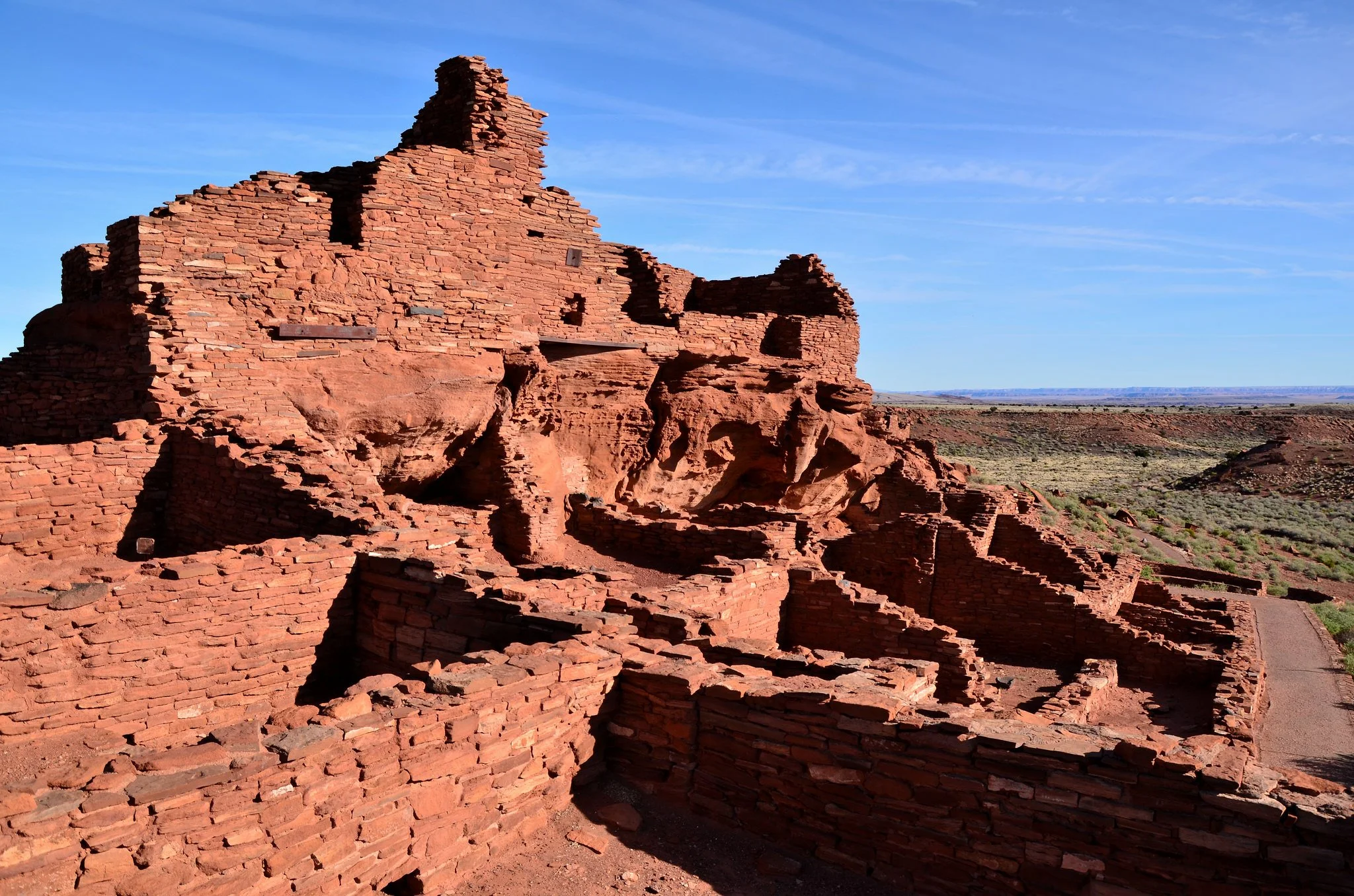
Wupatki Pueblo at Wupatki National Monument. Tony Fernandez. CC-BY-NC 2.0
Built in approximately 1100, Wupatki marks a time just before the rise of cliff dwellings and is exemplary of the pueblo style. Once a regional trade center, the Wupatki Pueblo site includes more than 100 rooms and a ball court. Around 85 to 100 people lived in the pueblo, and the surrounding area held at least 1,000. While Wupatki is the largest structure, several other structures lie within 10 miles of the site, including Wukoki Pueblo, which is a three-story structure with eight rooms, the 50-room Citadel and Lomaki and Box Canyon Pueblos. Wupatki is adjacent to the visitor center and is an easy walk to explore, with trailheads to the other sites located along the Sunset Crater-Wupatki Loop Road.
2. Walnut Canyon National Monument, Arizona
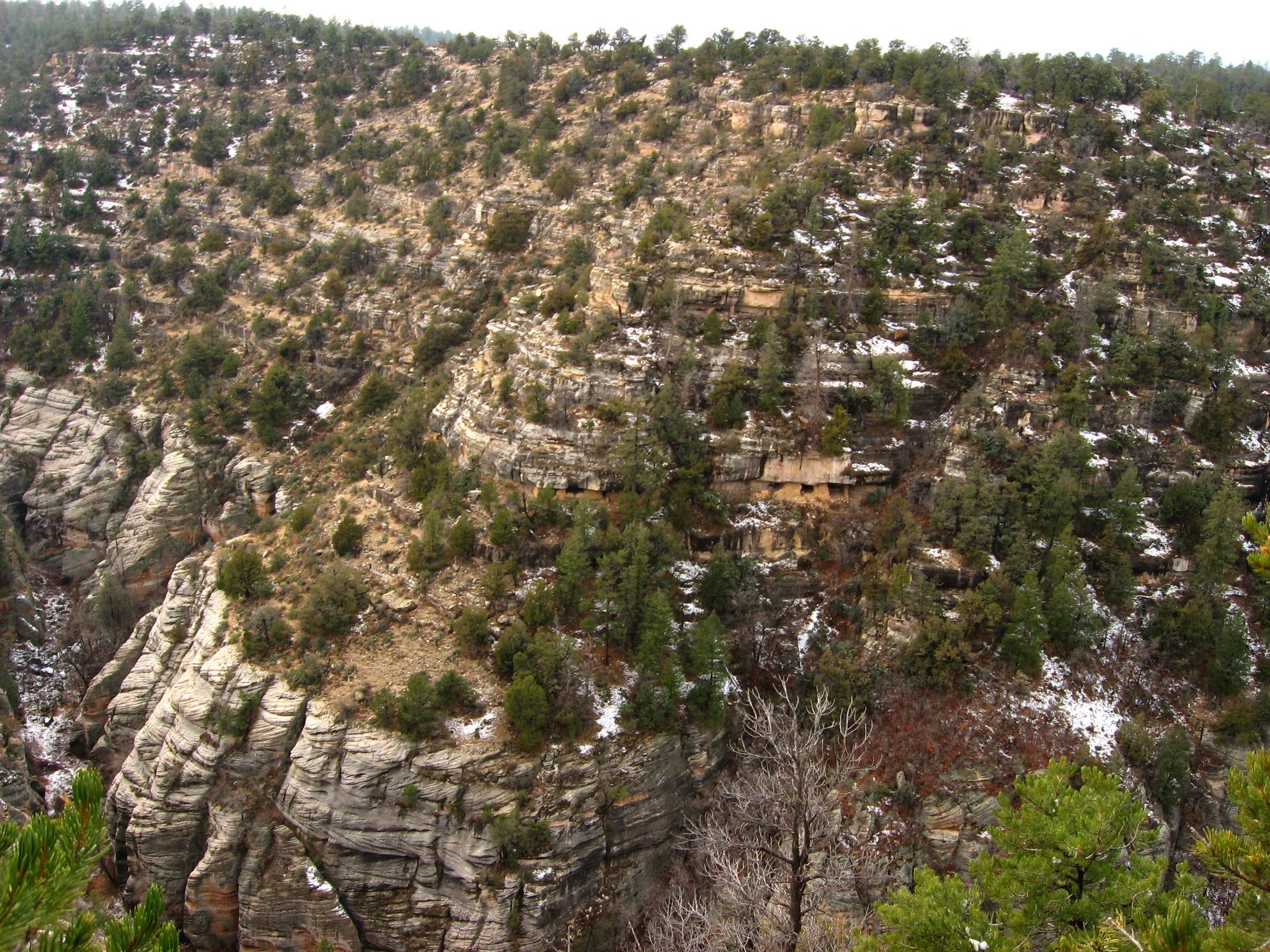
Cliff dwellings in Walnut Canyon. Ken Lund. CC-BY-SA 2.0.
350 feet below the canyon rim lie the 25 existing cliff dwellings of Walnut Canyon National Monument. The dwellings were built between 1100 to 1250 by the Sinagua people of northern Arizona and the Verde Valley, people who had once farmed the canyon's rim. There are two hiking trails at the monument: the first is an easy, paved 0.7-mile loop that overlooks the canyon, and the second, more strenuous hike takes visitors down 736 stairs to view the cliff dwellings.
3. Navajo National Monument, Arizona
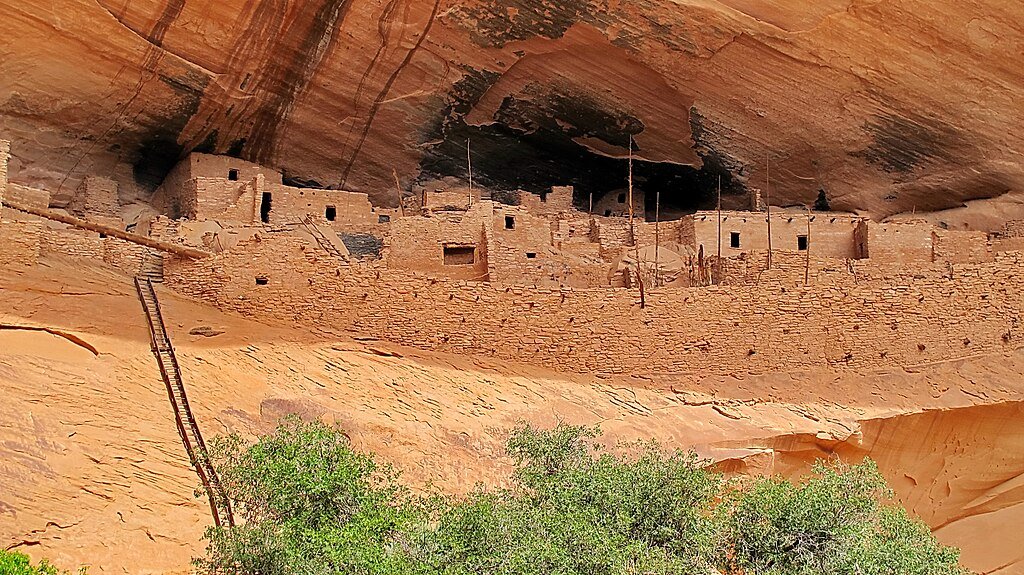
Approach to Keet Seel at Navajo National Monument. Al_HikesAZ. CC BY-SA 2.0.
The cliff pueblos of Navajo National Monument consist of Keet Seel, the Betatakin Cliff Dwelling and the Inscription House. The site is situated entirely within the territory of the Navajo Nation. The ruins lie in naturally formed alcoves in the surrounding sandstone. Keet Seel is one of the best preserved cliff dwellings in the U.S, and it was last inhabited in the 1200s, while the Betatakin Cliff Dwelling contains 80 surviving rooms. The Inscription House, named for the 1660 inscription of a Spanish conquistador or missionary, has unfortunately suffered from erosion, looting and vandalism, and it is not open to the public. Ranger-led hikes are offered to Betatakin, with the arduous route taking three to five hours over steep terrain. Travelers can visit Keet Seel on ranger-led backcountry overnight trips, which take hikers on a strenuous 17-mile hike with 1,000 feet of elevation loss and gain.
4. Aztec Ruins National Monument, New Mexico
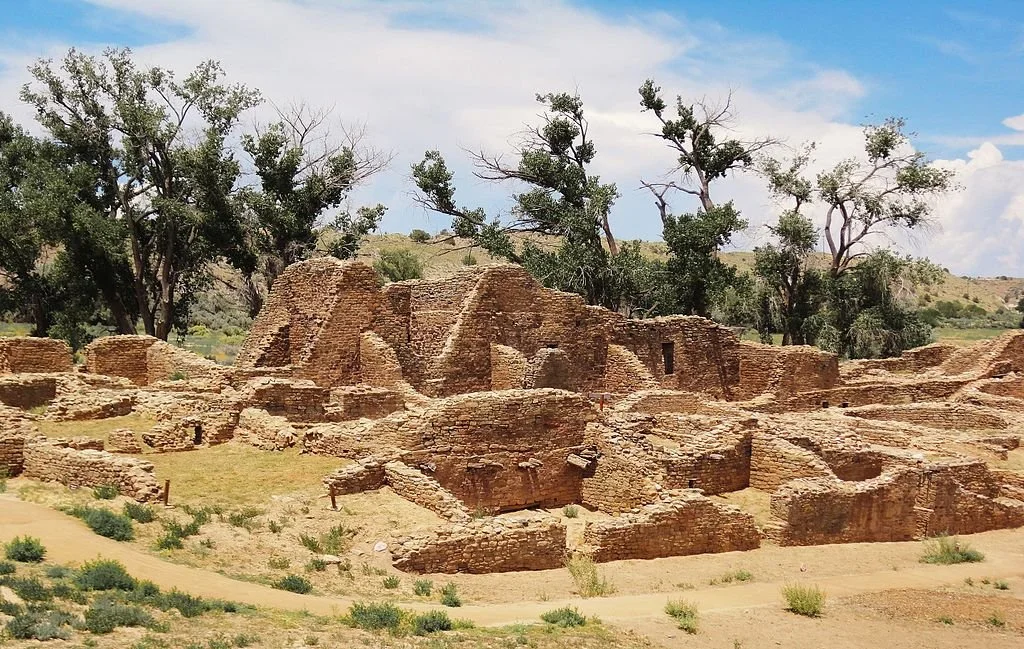
Aztec Ruins National Monument. Rationalobserver, CC BY-SA 4.0.
The Aztec Ruins gained its name from early European settlers who mistakenly believed that people from the Aztec Empire built the sites. The pueblos are actually the work of the Ancestral Puebloans, who built and occupied the site for over 200 years from 1100 to 1300. The site features a great house that was once the center of a large regional community and a restored great kiva, or ceremonial structure. Both are accessible from an easy 0.5-mile self-guided hike.
5. Bandelier National Monument, New Mexico
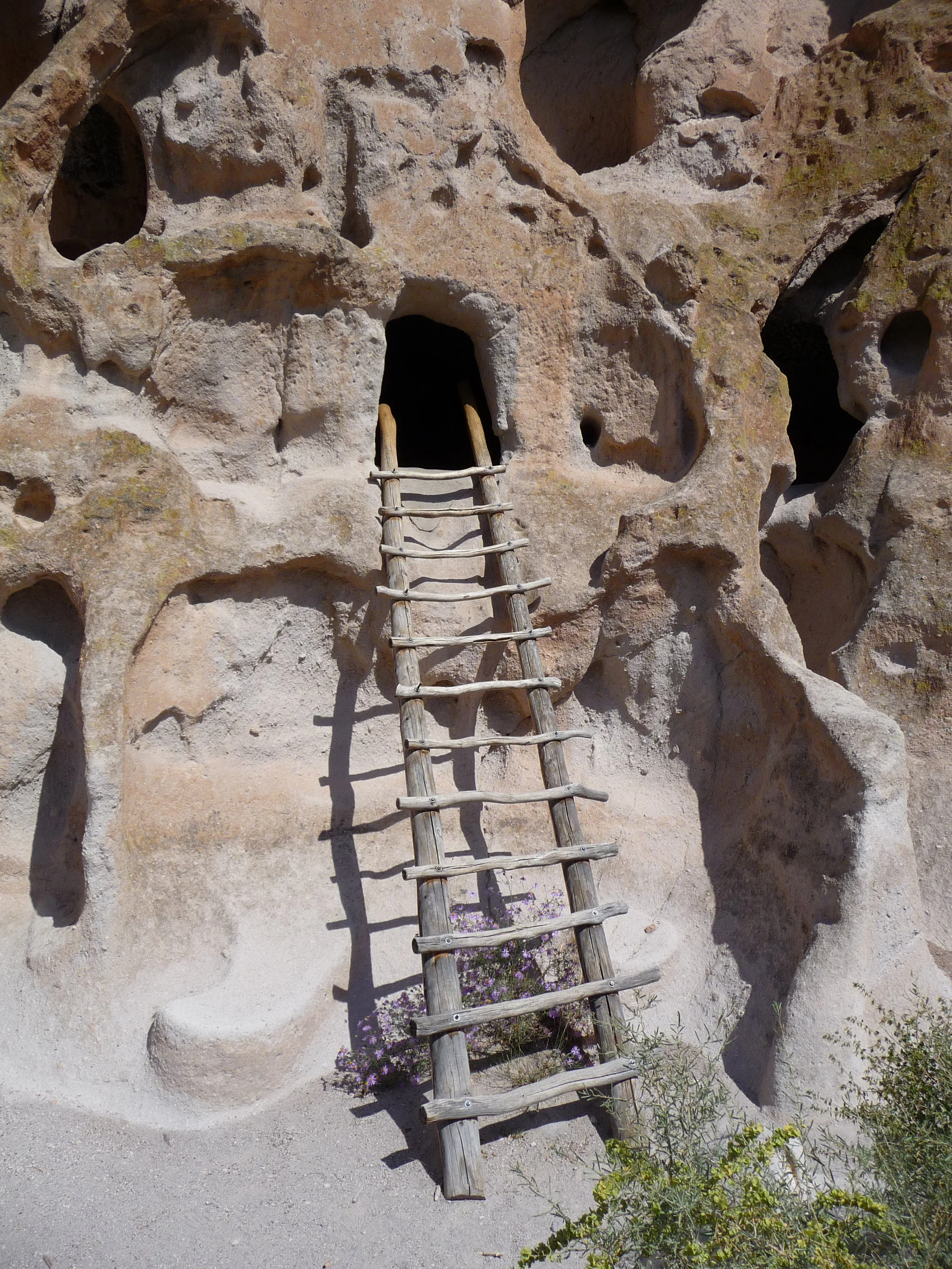
Ladder at Bandelier National Monument. Daniel Mayer. CC BY-SA 3.0.
Bandelier National Monument offers the chance to enter cliff dwellings as they may have been entered 900 years ago: by ladder. An easy hike along the 1.4-mile Pueblo Loop Trail allows visitors to climb ladders to view the inside of cavates, or small human-made alcoves in the sandstone, which date back to 1150. A half-mile off the Pueblo Loop lies the Alcove House, located nearly 150 feet above the Frijoles Canyon and accessible by a series of four ladders and stone stairs. Alcove House contains a reconstructed kiva and alcoves with structures that once housed 25 families.
6. Montezuma Castle National Monument, Arizona
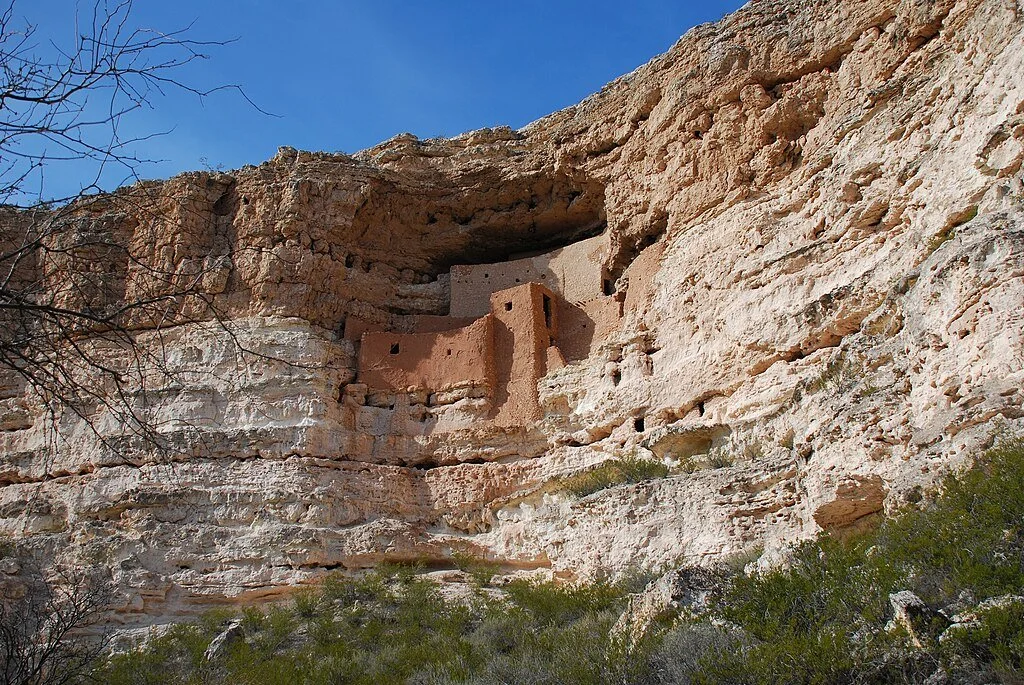
Montezuma Castle. Rhasan, CC BY-SA 3.0
Montezuma Castle is described as a "high-rise" apartment building, with 20 rooms that would have each been inhabited by a separate family. Like Wupatki and Walnut Canyon, it was built by the Sinagua people. Montezuma's Castle was also incorrectly attributed to the Aztec Empire, and thus the site was named "Montezuma" after the ninth emperor. The structure was inhabited from 1050 to 1300, when the Sinagua likely migrated to other regions in what is now the U.S. To view the cliff dwelling, travelers can take a short, self-guided hike to view the 20-story structure located 90 feet above the creek bed.
Ashley McDermott
Ashley is a PhD candidate in Linguistic Anthropology at the University of Michigan. She is committed to making her research useful for the communities she works with. Her work explores how families navigate language use and language shift in Bishkek, Kyrgyzstan. When she’s not working on her research, you’ll find her adventuring with her toddler daughter, whose commentary keeps every day interesting.