
As temperatures rise and climate variability increases, even the camel is struggling to survive across the Horn of Africa.
Read MoreThe Great Green Wall: Africa’s Sustainable Wonder
Designed to combat desertification, the Great Green Wall is transforming landscapes and livelihoods across Africa.
Read MoreToxic Gold: How E-Waste Is Poisoning Ghana
A nation celebrated for hospitality and growth is being choked by the world’s discarded electronics and the dangerous labor they demand.
Read MoreInside the Vehicle: Botswana’s Wilderness Guides
Appreciate the world of field conservation, guiding and safaris through the lives of Botswana’s wilderness guides.
Read MoreA Look Into African Nations’ Deportation Agreements
Dozens of people have been deported by US President Trump to African countries where they have no citizenship or established ties.
Read MoreRussian Mercenaries Have Built a Drug Empire in the Heart of Africa
Remnants of the Wagner Group have used tramadol, a prescription opioid, to seize control of the Central African Republic.
Read MoreCape Verde Offers More Than an Incredible Game of Soccer
After its historic World Cup debut, Cape Verde is drawing new attention for its music, landscapes and morabeza culture.
Read MoreAfrica’s Population Is Notably Young. Its Leaders are Remarkably Old.
Zimbabwe becomes the latest nation to alter its constitution, allowing its 83-year-old president to stay in power until 2030.
Read MoreXenophobia Sweeps Across South Africa
Anti-migrant groups have vowed to hold demonstrations every week, leading to fear of violence.
Read MoreSee the Endangered Vultures in Lesotho's Dragon Mountain
The Drakensberg escarpment in Lesotho is one of the last strongholds for two endangered vulture species.
Read MoreUganda's Media Crackdown Signals More Than an Attack on the Press
Uganda’s latest media shutdown is about more than press freedom: it offers a glimpse into how power is being exercised, and perhaps transferred, in one of Africa’s longest-serving governments.
Read MoreThe Human Cost of Coltan Mining in the Democratic Republic of the Congo
Modern technology is not just fueled by electricity but also by Congolese coltan miners, who face exploitation and unsafe working conditions.
Read MoreStolen Vanilla: Madagascar’s High-Stakes Black Market
Behind the vanilla industry lies a struggle in Madagascar, where small farmers face nightly threats on top of poverty, weak governance and a global demand that fuels a thriving black market.
Read MoreWhy Nigeria’s Largest Floating Village Is Being Demolished
By Julia Sassaman
Thousands of residents of Makoko, Nigeria’s largest floating village, have been displaced after the Lagos State Government carried out demolitions as part of broader redevelopment efforts.
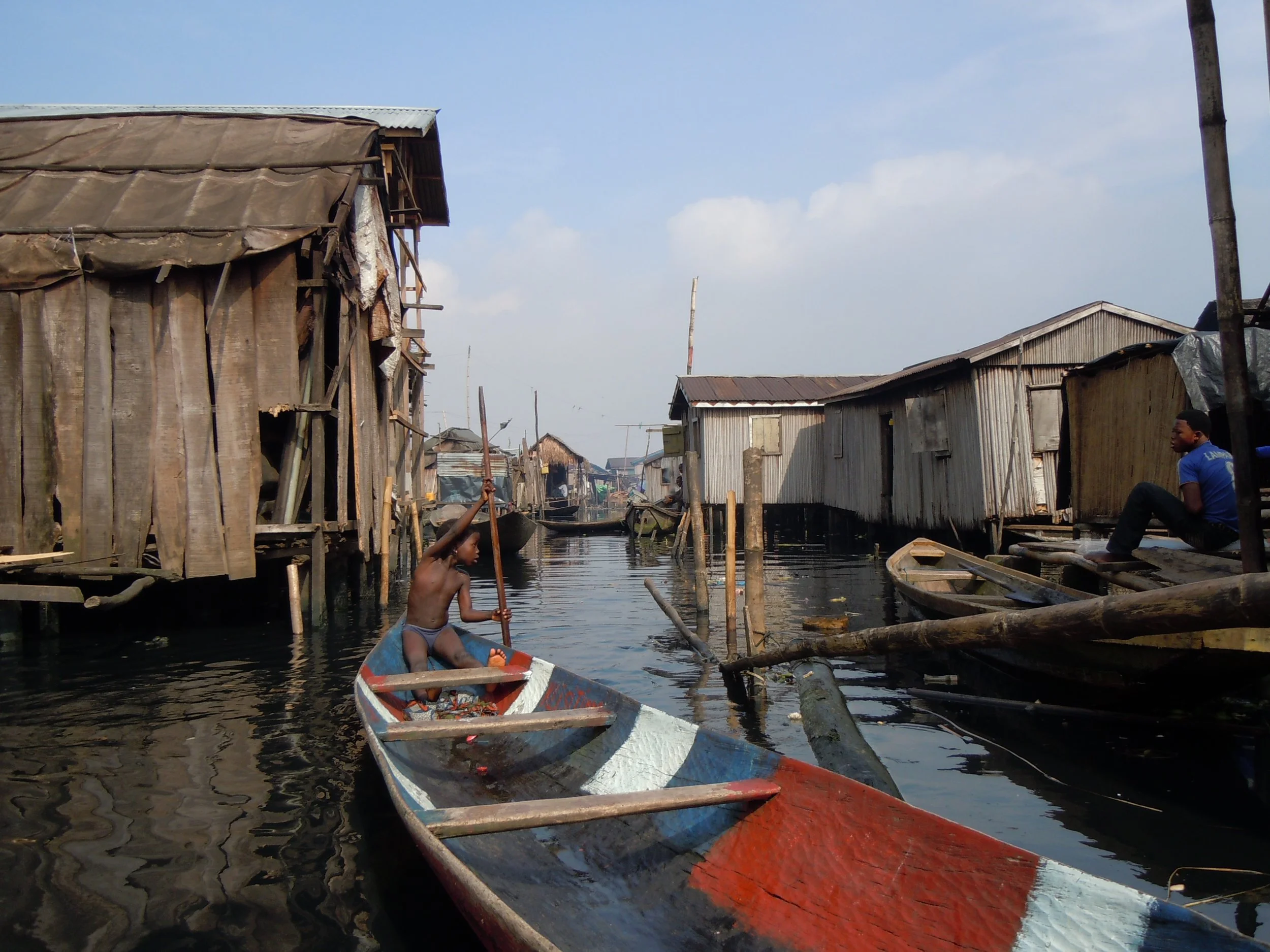
A young boy canoeing through the Makoko canals. Heinrich Boll Stiftung. CC BY-SA 2.0.
Sometimes called the “Dubai of Africa,” Lagos is a rapidly growing city on the Lagos Lagoon in southwest Nigeria, undergoing large-scale construction, tourism and housing development. As Nigeria’s largest city, Lagos is home to more than 14 million residents. Despite increasing investment in high-end developments and infrastructure on its islands, approximately 60% to 75% of residents live in informal settlements. These settlements typically consist of displaced or impoverished individuals who establish communities on state or private land without legal ownership, often lacking clean water, sanitation or basic urban services.
The city struggles to accommodate its growing population alongside high poverty rates and a shortage of affordable housing. Climate-related challenges, such as sea-level rise and coastal erosion, have also increased pressure on the Lagos State Government (LASG) to implement redevelopment projects. However, urban renewal efforts have drawn criticism from many Lagosians, who argue these developments often prioritize the wealthy over the broader population. Demolitions of informal settlement communities have further fueled controversy, prompting questions about the LASG’s redevelopment priorities.
One of the most well-known informal settlements in Lagos is Makoko. Founded in the late 19th century by Egun fishing families, Makoko later became home to immigrants and residents priced out of other areas of the city. Located across land and water, the community’s economy centers on fishing and aquatic commerce. Homes, schools, businesses, churches and medical clinics rest on wooden stilted structures above the Lagos Lagoon, separated by canals and only navigable by canoe. Population estimates are approximate, ranging from 85,000 to over 1 million residents; Makoko lacks formal recognition from the LASG, making accurate census data difficult to obtain. Community members face challenges like inadequate sanitation, unreliable electricity, limited access to education and healthcare and overcrowding.
In an interview with the BBC, Lagos real estate developer Peacemaker Afolabi states, "Everywhere in Lagos is prime land. And waterfront is always prime.” Demolitions of Makoko began in December 2025 and continued into 2026. The LASG has affirmed that the demolitions only targeted structures within a 100 to 250-meter radius of high-voltage power lines, which pose safety risks to residents, and that proper warning was provided beforehand.
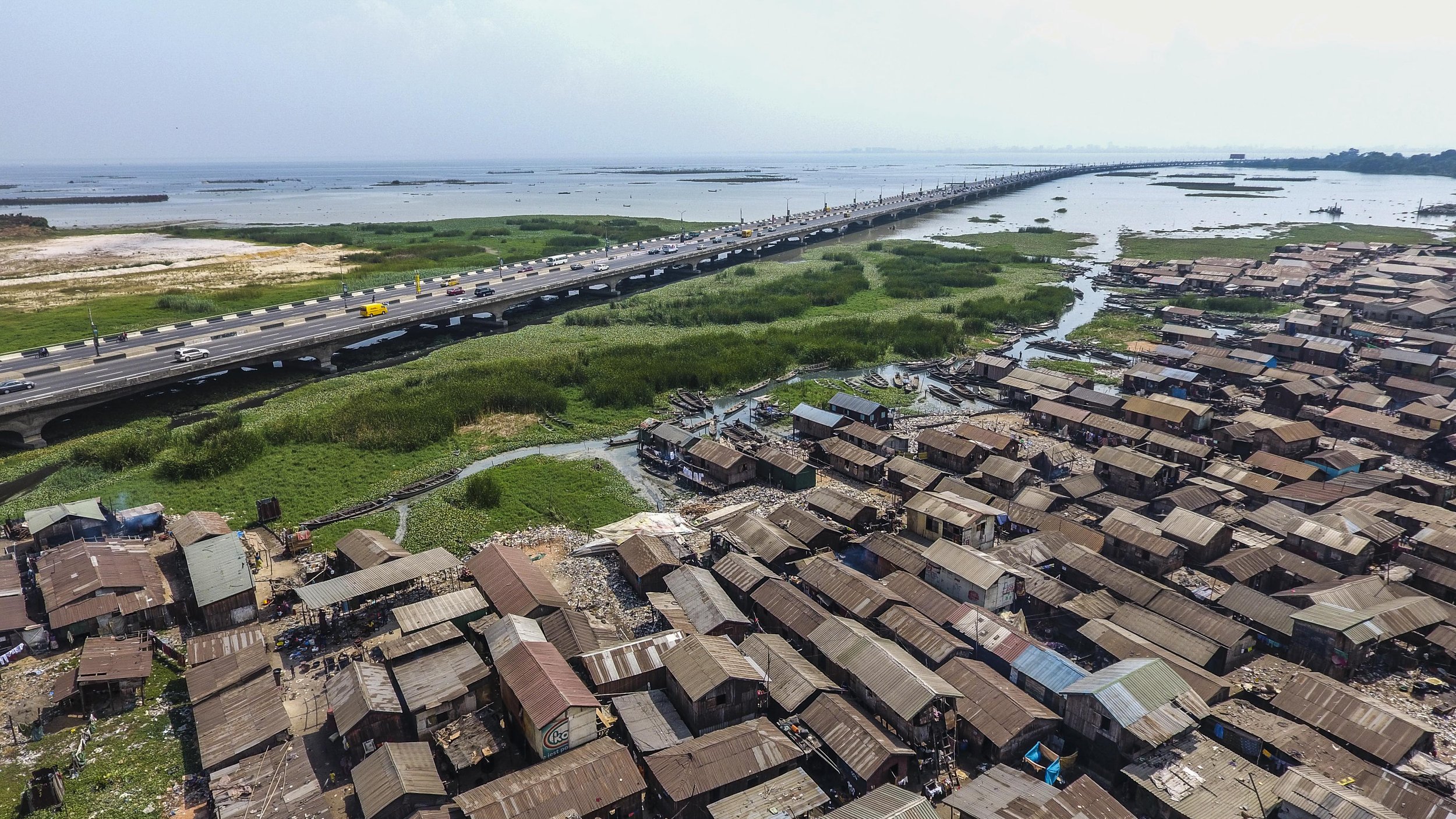
Aerial view of Makoko waterfront settlements on the Lagos Lagoon. S.aderogba. CC BY-SA 4.0.
The demolitions were carried out by bulldozers and armed police, who used force and tear gas against protestors opposing the evictions. Thousands of homes, shops and community sites were destroyed. At least 40,000 people were displaced, sleeping on the demolition debris, under bridges or in canoes without personal belongings, safe shelter or the means to continue their livelihoods. As of May 2026, a resettlement plan to move displaced residents to Agbowa-Ikosi, a community built by refugees, has been proposed by the Lagos State Assembly, but the LASG and Makoko leadership have yet to reach a concrete agreement.
The 2025-2026 demolitions are not isolated incidents. Makoko has experienced demolitions and displacement tied to private development projects dating back to 2005. Similarly, in 2012, residents only received three days' notice before thousands of homes were removed, again citing proximity to power lines. Since then, Makoko residents have proposed sustainable reconstruction plans that preserve the community’s cultural and historical ties to the waterfront, including the Makoko/Iwaya Regeneration Plan, which the LASG has not implemented.
The city government maintains that the demolitions protect both the coastal environment and residents living near high-voltage power lines. However, residents believe that the bulldozing extended beyond the warned radius and that adequate warning was not given. The LASG also faces criticism for failing to recognize generational customary land rights and providing no financial support to displaced residents.
The absence of community-based reconstruction plans and affordable housing options in Lagos has drawn skepticism from the UN, NGOs and Makoko residents. In a 2026 press release, experts from the UN Office of the High Commissioner for Human Rights advised Lagos state authorities to suspend demolitions, provide the necessary assistance to displaced communities and involve Makoko residents in future developments.
GET INVOLVED:
Follow organizations such as the International Network for Economic,
Social and Cultural Rights (ESCR-Net), which frequently posts articles, resources and events focused on global housing and human rights issues. ESCR-Net also released a solidarity letter demanding an end to forced evictions in Makoko, accountability for the resulting harms caused and stronger protections for residents’ rights.
Donate or contribute expertise to JEI, a community-based legal advocacy organization providing paralegal services to Nigerian communities, including Makoko. Additionally, support their YouTube channel, Media4Change, a partnership with storytellers from Nigerian informal settlements that regularly posts video projects documenting the experiences and challenges facing these communities.
Follow, support or volunteer with Nigeria-based organizations empowering local communities, including Home of Mother Earth Foundation, Spaces for Change and the Nigerian Slum/Informal Settlement Federation.
Explore the Slum Dwellers International website to learn more about human rights issues facing informal settlements globally, as well as their advocacy and support in expanding access to economic opportunities and essential services.

Julia Sassaman
Julia is a fourth-year student at the University of Michigan studying political science and international studies. She recently studied abroad in Geneva, Switzerland, researching post-conflict tourism and international human rights law. After graduation, she hopes to move to Europe to pursue a career centered on global human rights. In her free time, she enjoys painting, baking, journaling, and reading.
Ebola’s Next Wave: What Africa Knows That the World Forgets
A fast-moving outbreak in Central Africa is a reminder that Ebola is contained by trust and resources, not luck.
Read MoreRead Africa Month: 10 Books to Check Out
From Rwanda to Sudan, explore a continent of literature in this reading list.
Read MoreSurfing Morocco Responsibly: How Travelers Can Protect Culture and the Coast
Kara Karinauskaite
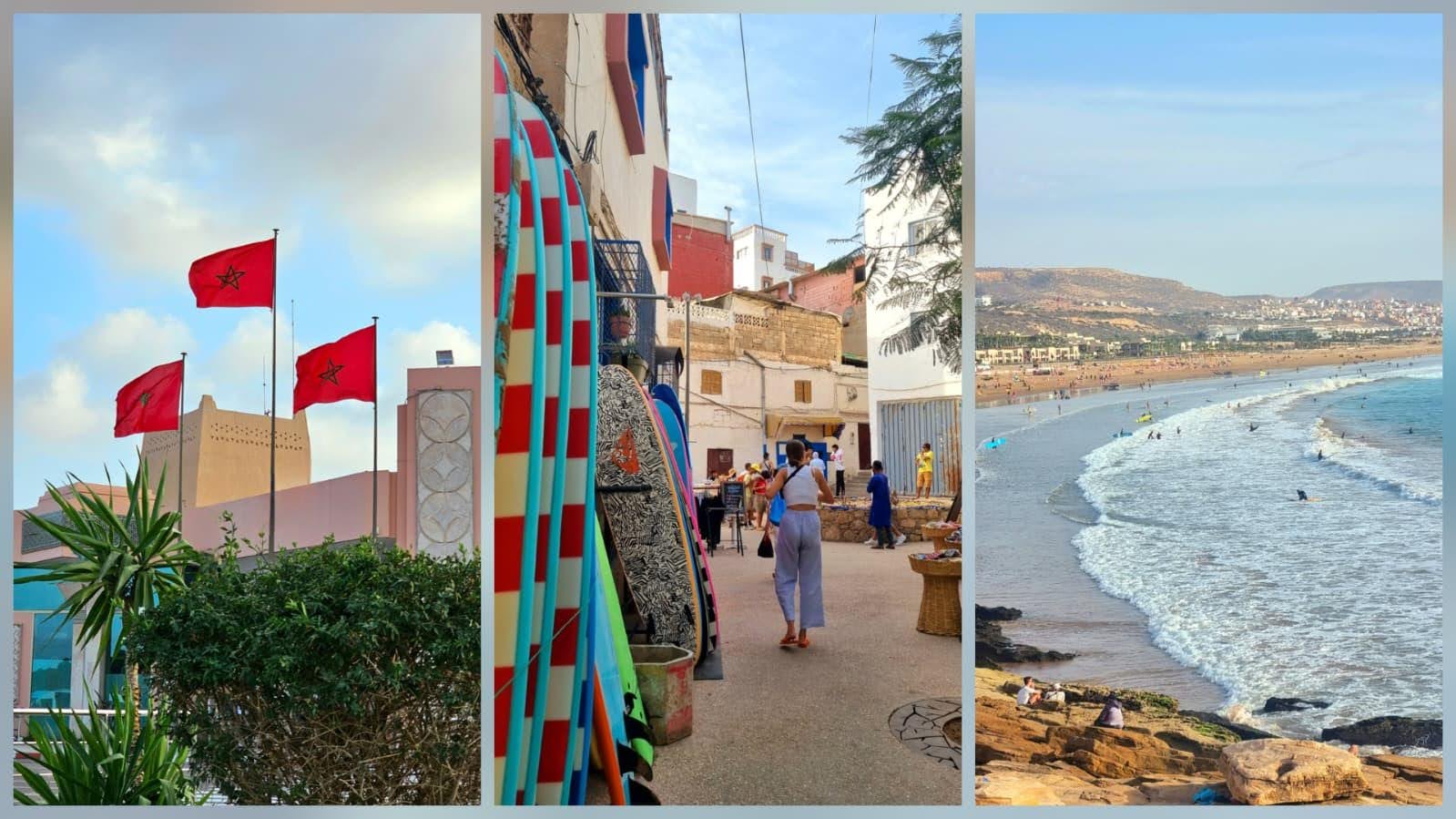
Taghazout, Morocco. Kara Karinauskaite.
Last November, I traveled to Taghazout, a small coastal town in Morocco. It was my second year in a row traveling to the country specifically to surf. Spending my days in the water and my evenings with local surfers put into perspective just how closely surf culture is tied to everyday life and the local economy.
While I was there, I learned that the Agadir tourism area, including Taghazout, recorded about 1.5 million tourist arrivals in 2025, compared with about 0.9 million tourists in 2015, showing how rapidly tourism in the region has grown over the past decade.
For generations, the people of Taghazout and the wider Agadir region have relied on fishing, argan oil production and trade as key sources of income, with the area’s Indigenous Berber heritage still evident in local culture and craftsmanship today. Taghazout has attracted international surfers and travelers since the 1960s, when its consistent waves and relaxed atmosphere caught the attention of visitors from around the world. This helped transform the local economy, leading to the development of surf camps, guesthouses and related services that now make surf tourism a major source of income alongside traditional livelihoods.
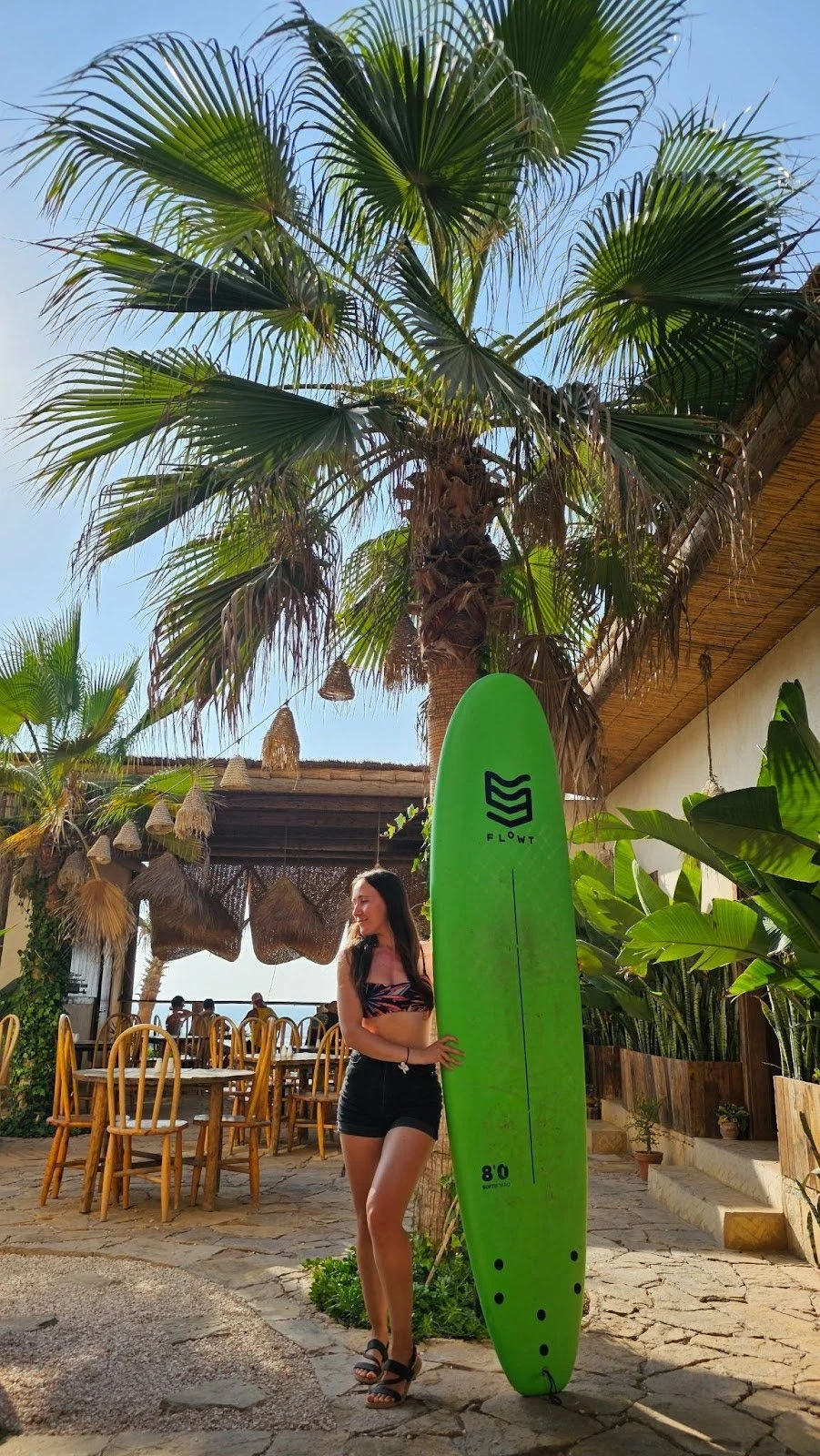
Surfing in Morocco. Kara Karinauskaite.
During my trips to Morocco, all of the surf instructors and trip guides I met were from the Agadir region, and having the direction of people who had surfed the coastline for many years made a real difference, as their deep knowledge of conditions, tides and safety spots provided me with the most well-informed surfing experience. They were always happy to talk with me about the area’s history, culture and how life in the village has changed with the growth of surf tourism, and they even took the time to teach me a few local phrases, making everyday interactions feel more personal. The surf instructors also invited us to visit their local hammam, a type of steam bath, which felt like an incredible privilege and offered a rare insight into everyday community life beyond the surf scene.
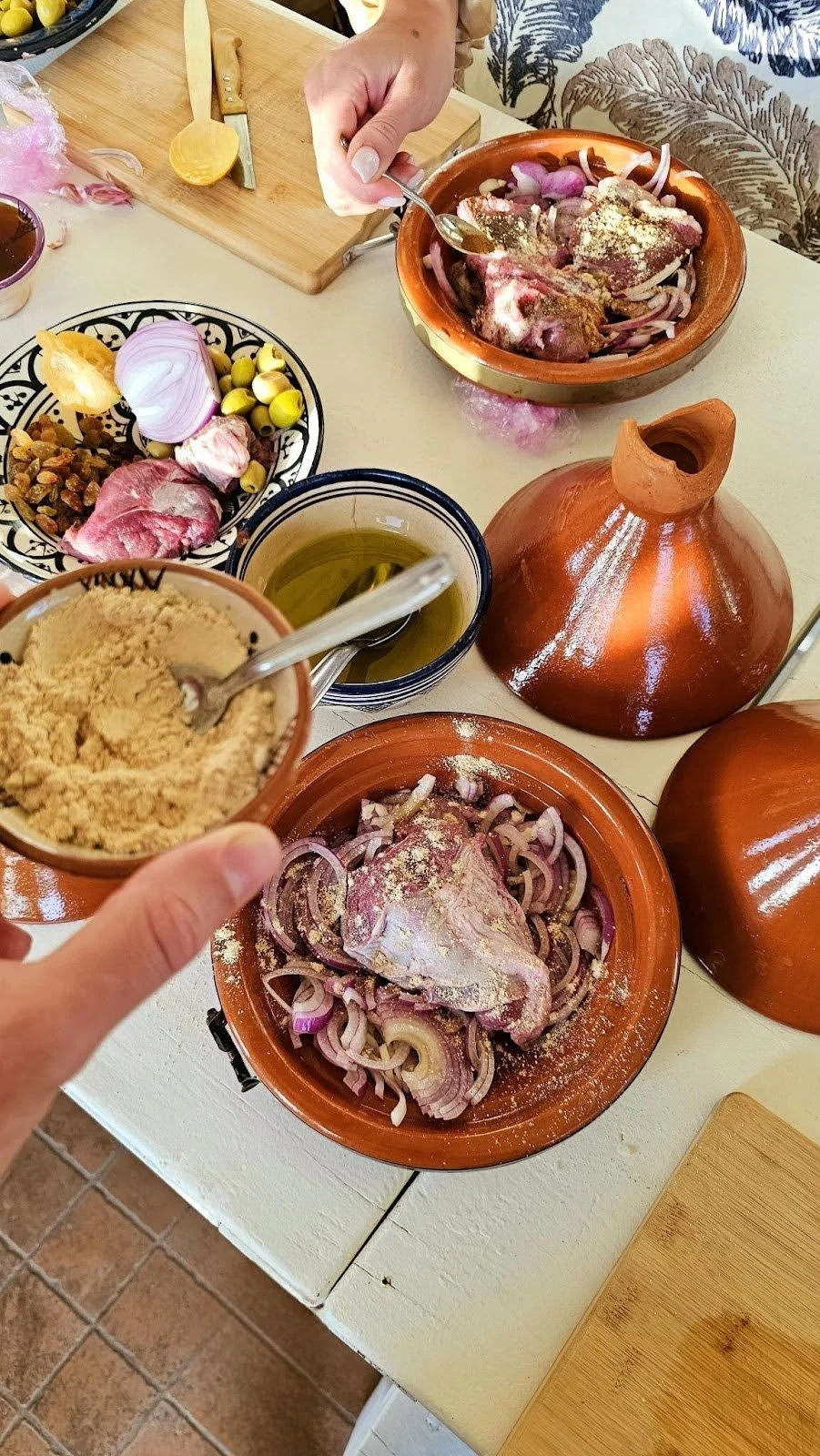
Learning local recipes at Blue Waves Morocco. Kara Karinauskaite.
While surf tourism supports an array of local businesses, such as instructors, board repairers, cafes and small guesthouses, it also increases pressure on beaches, water use and fragile coastal environments. During my visits, I learned from local instructors about practical ways to reduce these impacts.
Travelers can support the Taghazout area responsibly by choosing locally owned businesses, helping tourism income remain within the community. Respecting local culture is equally important, including dressing modestly away from the beach, asking permission before photographing people and learning a few basic words of Arabic or Amazigh. Being conscious of one’s environmental impact also makes a meaningful difference, such as by avoiding single-use plastics, taking part in beach cleanups and disposing of waste properly. Visitors can further help by conserving water through shorter showers, reusing towels and being mindful of water use in surf camps and accommodations. Protecting natural spaces by sticking to marked paths, avoiding walking on dunes and following local guidance when accessing beaches and surf spots helps preserve the coastline for both residents and future travelers.
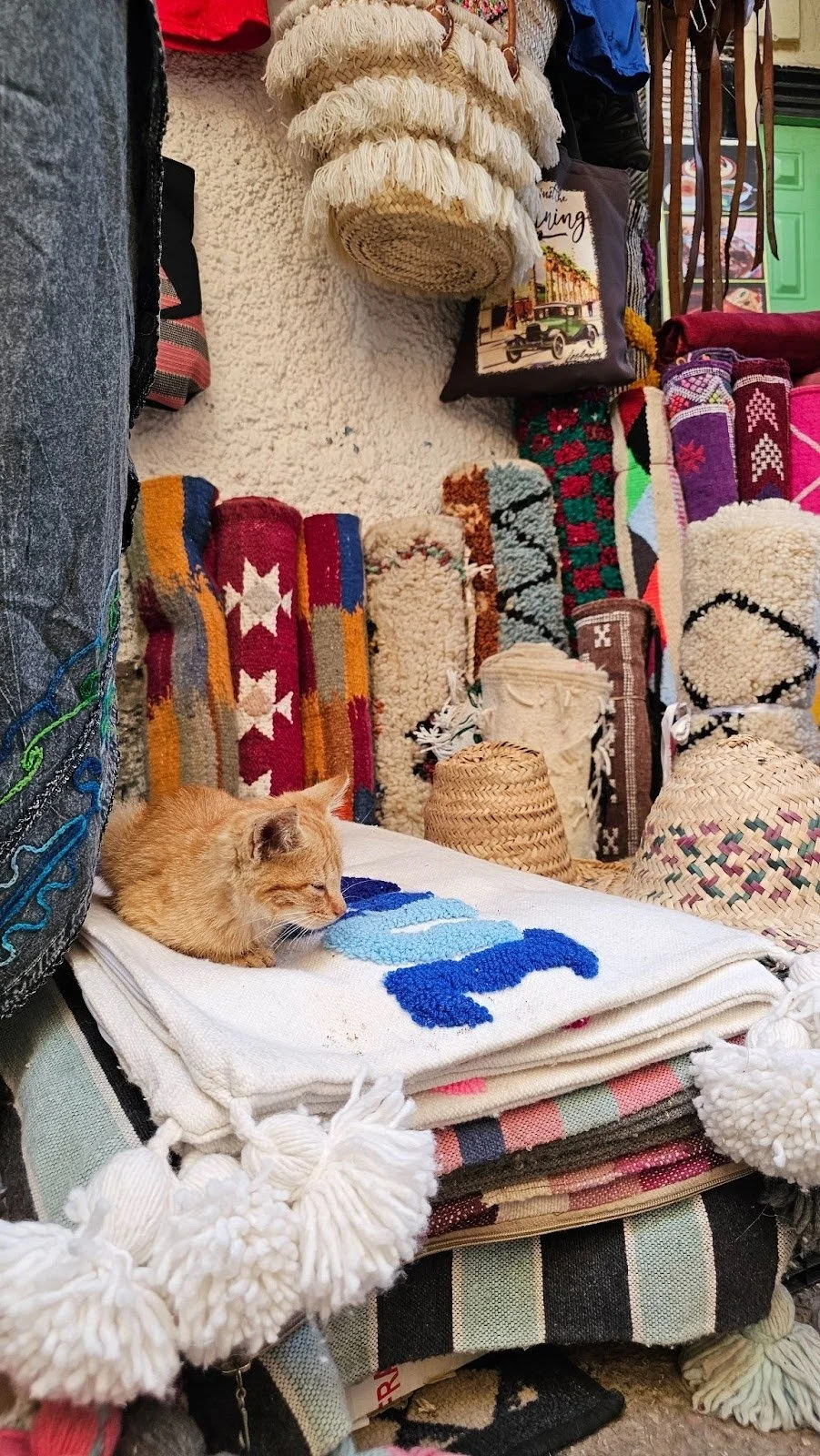
Local business in Morocco. Kara Karinauskaite.
Surfing in Taghazout has shown me how important responsible travel is for the future of its community. By supporting the local economy, respecting cultural practices and helping protect the coastline, visitors can contribute to a tourism that allows surf communities like Taghazout’s to continue benefiting from travel without losing the character and environment that define them.
GETTING THERE:
Blue Waves is a guesthouse in Anza, just a 15-minute drive from Taghazout, that is perfect for travelers who want to immerse themselves in surf culture. Local cooks and hospitality staff make the experience feel genuinely rooted in the community, and alongside its welcoming accommodations, it stands out for its use of locally made pottery and textiles.
Cafe Restaurant Surf Berbere and Dar Josephine are two eateries I particularly enjoyed in Taghazout. They attract visitors with their locally-inspired dishes and provide a warm atmosphere for dining. The town also has many small street-side restaurants offering traditional Moroccan food, which are worth exploring for a more everyday, locally-rooted experience.
Another place that should not be missed is Anza Souk, one of the largest markets in the area. Open on Wednesdays, it is a traditional market that offers a lively setting to buy spices, handmade pottery and other souvenirs.

Kara Karinauskaite
Coming from a TV editing background, Kara has worked with broadcasters including the BBC and Discovery Channel. She is a passionate traveller and filmmaker who enjoys documenting meaningful travel experiences and connecting with people who share her interest in sustainable tourism, culture, and nature.
The Gray Area Between Animal Rides and Animal Rights
Nick Dauk
Camel rides and horse-drawn carriages in the tourism industry create moral dilemmas for travelers.
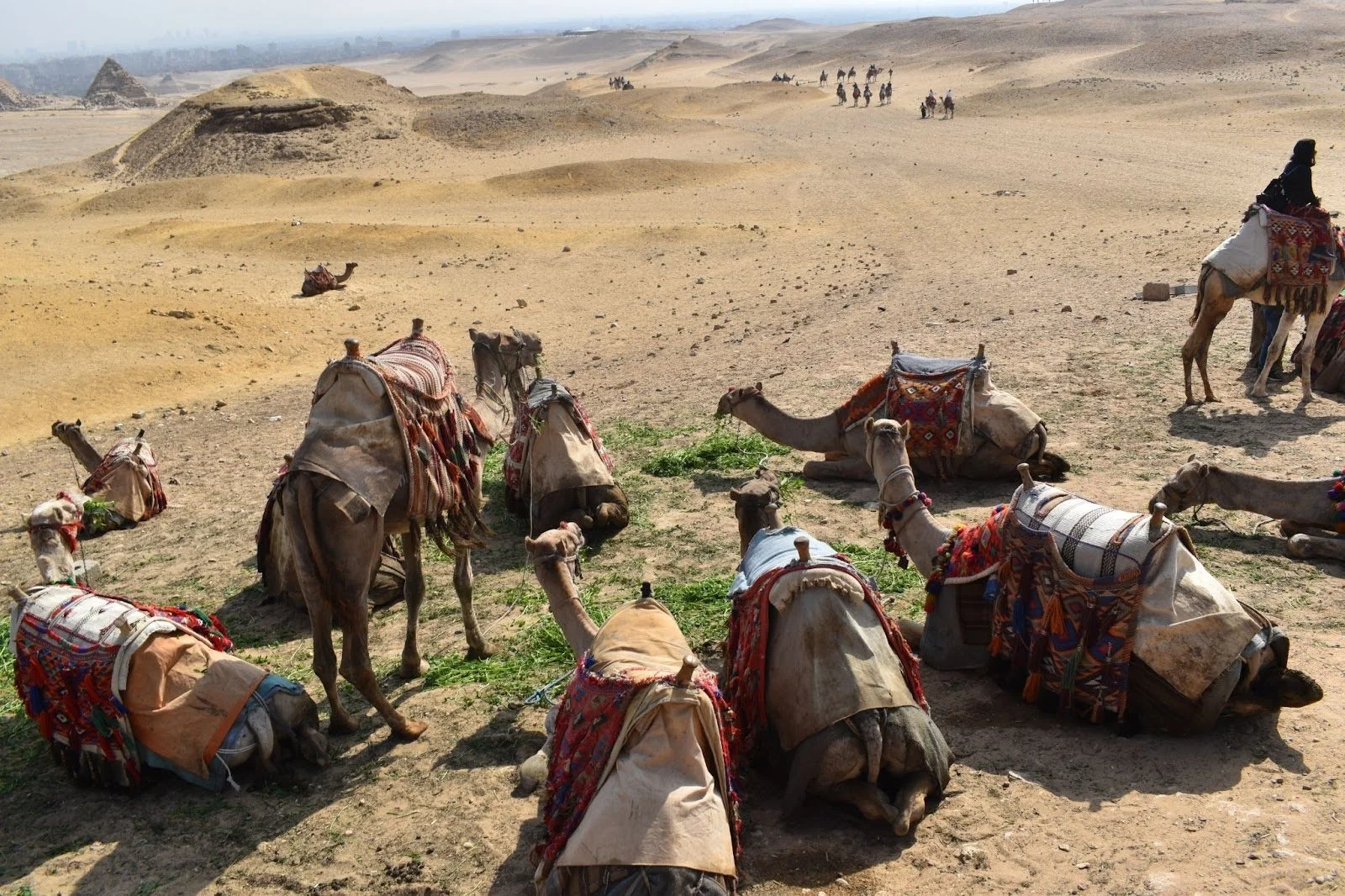
Camels used for tourist rides at the Pyramids of Giza. Nick Dauk.
Seven men stand above a dead horse, discussing the easiest way to move its carcass into a truck bed. This is the second expired equine my tour group has encountered in Egypt; the first, an unfortunate foal, was discarded like trash on the streets of Cairo. Sadly, this is a common sight for many international travelers and is the reason Luxor’s Animal Care in Egypt (ACE) charity veterinary hospital exists. The organization was founded by U.K. traveler Kim Taylor 25 years ago, after she observed the mistreatment of working horses and donkeys in Luxor.
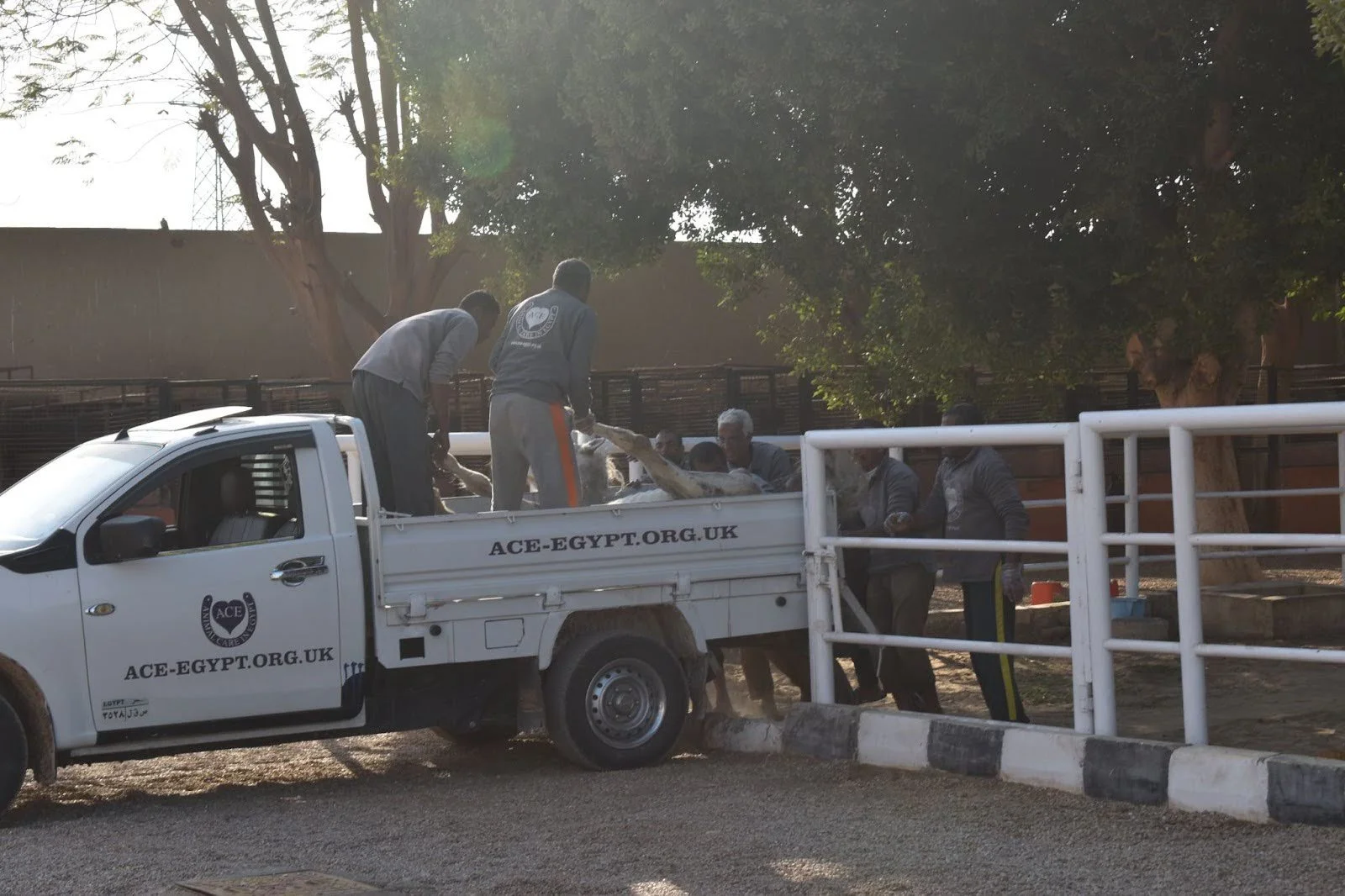
Luxor’s ACE veterinary staff loading a deceased horse into a pick-up truck. Nick Dauk.
In 2023, while I am on tour with Exodus Adventure Travels, I see horses pulling carriages through Luxor that get whipped, kicked and treated like machinery. The reality is that many of the animals working in Egypt’s tourism sector are irresponsibly cared for at best and grossly abused at worst. The issue is not unique to Egypt; elsewhere in the world, equines, elephants and other animals are also subject to mistreatment within a tourism context.
The ethics of animal welfare seem black and white in principle, but both the tourist and the tourism company are often guilty of harboring, even subconsciously, a murky gray scale. Listening to the voices of tourism companies, veterinarians and animal welfare advocates can help travelers draw the line in making ethically educated decisions when encountering animals in the tourism industry. “Animal advocacy is absolutely central to how responsible wildlife tourism should operate,” Head of Positive Impact at Jacada Travel, Natalie Lyall-Grant, tells me. In 2025, Jacada performed an audit of its wildlife-related activities and subsequently removed more than 40 animal experiences from its portfolio of tours. “We prohibit physical interactions with wild animals, refusing to sell attractions that exploit them for profit or forced performance,” Lyall-Grant adds.
Jacada is far from the only tour company to reassess animal encounters; a decade ago, companies like G Adventures and Intrepid Travel banned elephant rides on their tours. The Elephant Conservation Center (ECC) in Laos claims that traveler expectations have also shifted: more travelers are actively seeking out ethical wildlife experiences and pointedly rejecting activities like elephant rides. But even so, the fact is that animal mistreatment is often made less obvious to travelers.
Abuse and Mistreatment Are Often Hidden From Tourists
“Travelers increasingly want to do the right thing, but they’re rarely given the full picture,” says Emily Guice, Corporate Responsibility Officer for PETA. “They don’t see the open sores hidden under saddles, the stables saturated with urine and waste, or animals that are forced to work for hours without proper shade, food or water.”
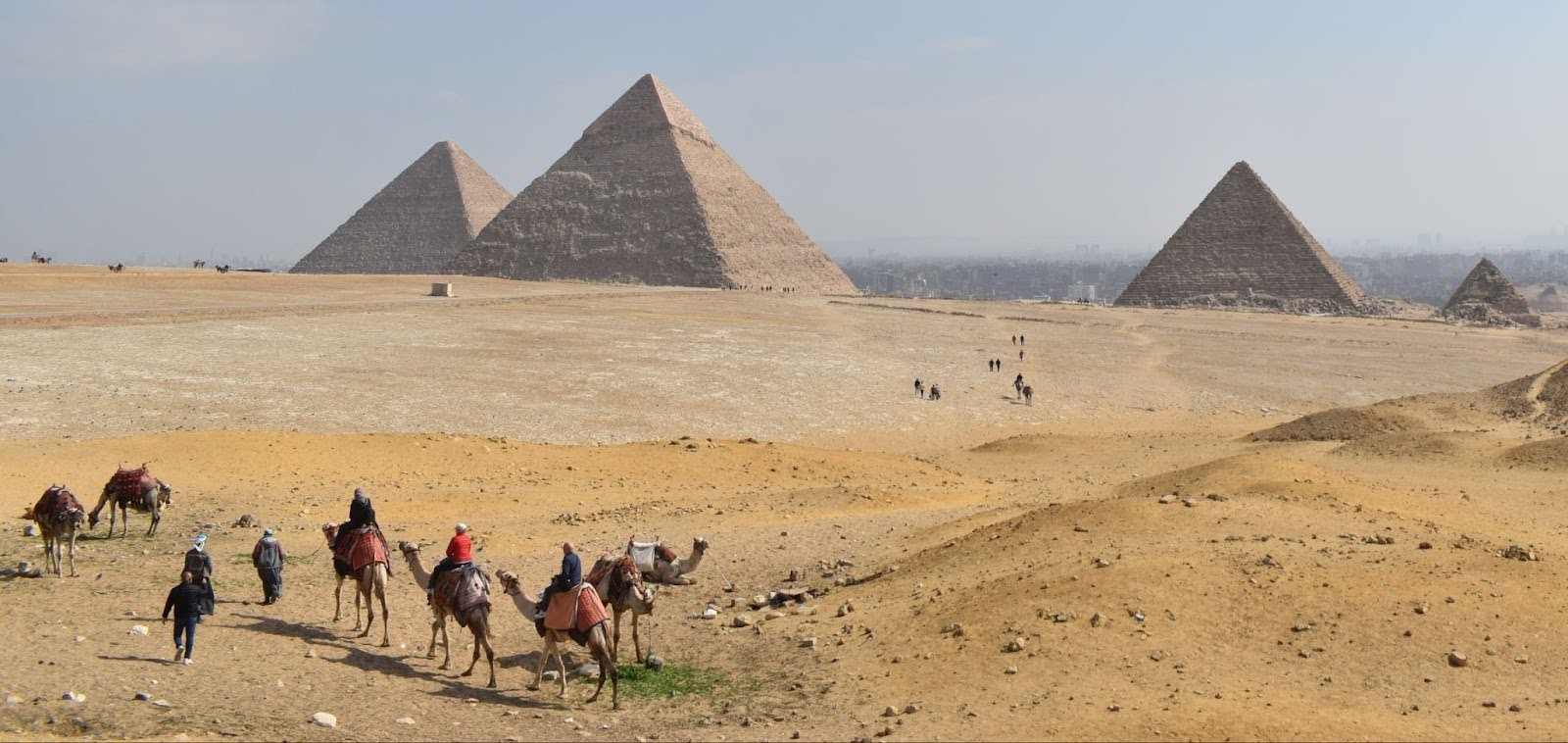
A group of camels used for tourism at the Giza Necropolis. Nick Dauk.
In 2019, PETA uncovered widespread abuse of both horses and camels in Egypt that continued through 2025. The animals were covered in wounds and emaciated, then dumped daily in a hidden graveyard near the pyramids when they expired. I hear these same claims when I visit Luxor’s ACE veterinary hospital. Jana, a German volunteer equine veterinarian, tells me that she regularly sees severe wounds and diseases that she typically doesn’t encounter in Europe. Speaking from a medical perspective, she believes that tourists should not purchase Luxor’s horse-drawn carriage rides, but she also doesn’t think that opting out instantly saves the animals’ lives. “You see a really skinny horse and assume the owners are so cruel, but they’re often just as skinny,” Jana says. “It’s not as easy of a decision as it seems, and I haven’t found a solution for myself yet.”
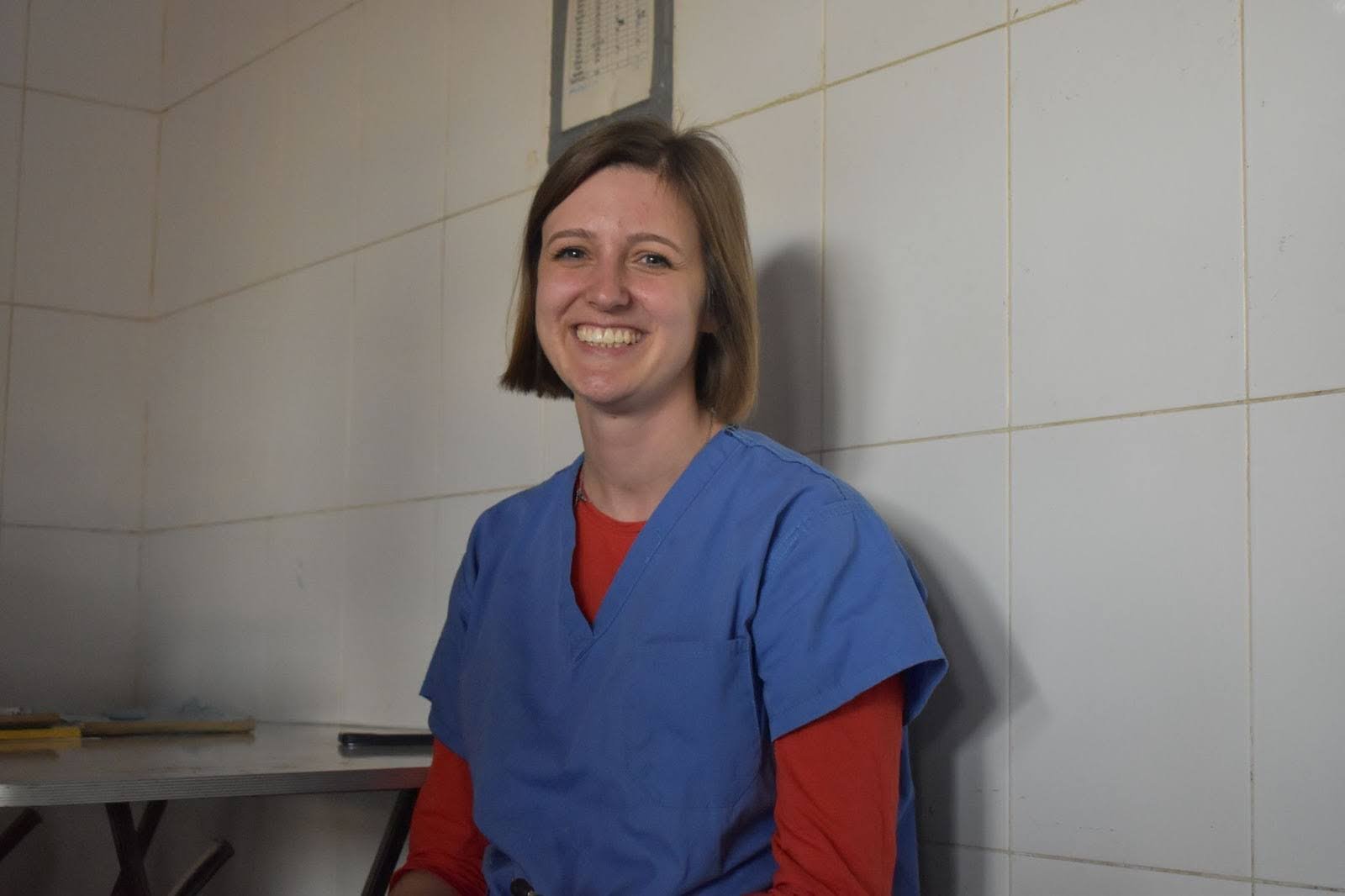
Jana, a German equine veterinarian at ACE in Luxor. Nick Dauk.
A spokesperson from Brooke, an international charity focused on the protection and welfare of working equines, agrees that the issue is complicated for the animal operators. “Most do the best they can within their resources, even if they lack the capacity, opportunity or motivation to make changes.” Yet, while purchasing these services may contribute to the animal’s care, the traveler still needs to understand their responsibility. “Demand drives practice, so ethical choices support better care. Consider if use of the animal is necessary, and how operators support their welfare during and outside of work.”
Other advocates like PETA take a different stance, noting that the need for change lies at a deeper level. “Jobs tied to animal exploitation are precarious by design,” Guice says. “When companies stop promoting animal rides, tourism doesn’t disappear; it shifts to ethical alternatives and opens the door to more sustainable tourism work.”
The Gray Area Between Animal Rides and Animal Rights
At no point did our Exodus tour guide offer or encourage us to ride any animal in Egypt, opting instead to include an ATV ride near Giza’s pyramids and free time to stroll Luxor’s markets on foot. However, Exodus, along with G Adventures, Intrepid Travel and Jacada Travel, does currently offer horseback riding on some Latin America tours. Travelers may find themselves in unfamiliar, sometimes uncomfortable positions where they’re encouraged to make a decision without knowing all of the details. “It really shouldn’t fall on the traveler to figure this out on their own. That’s our responsibility,” said Intrepid’s Leigh Barnes.
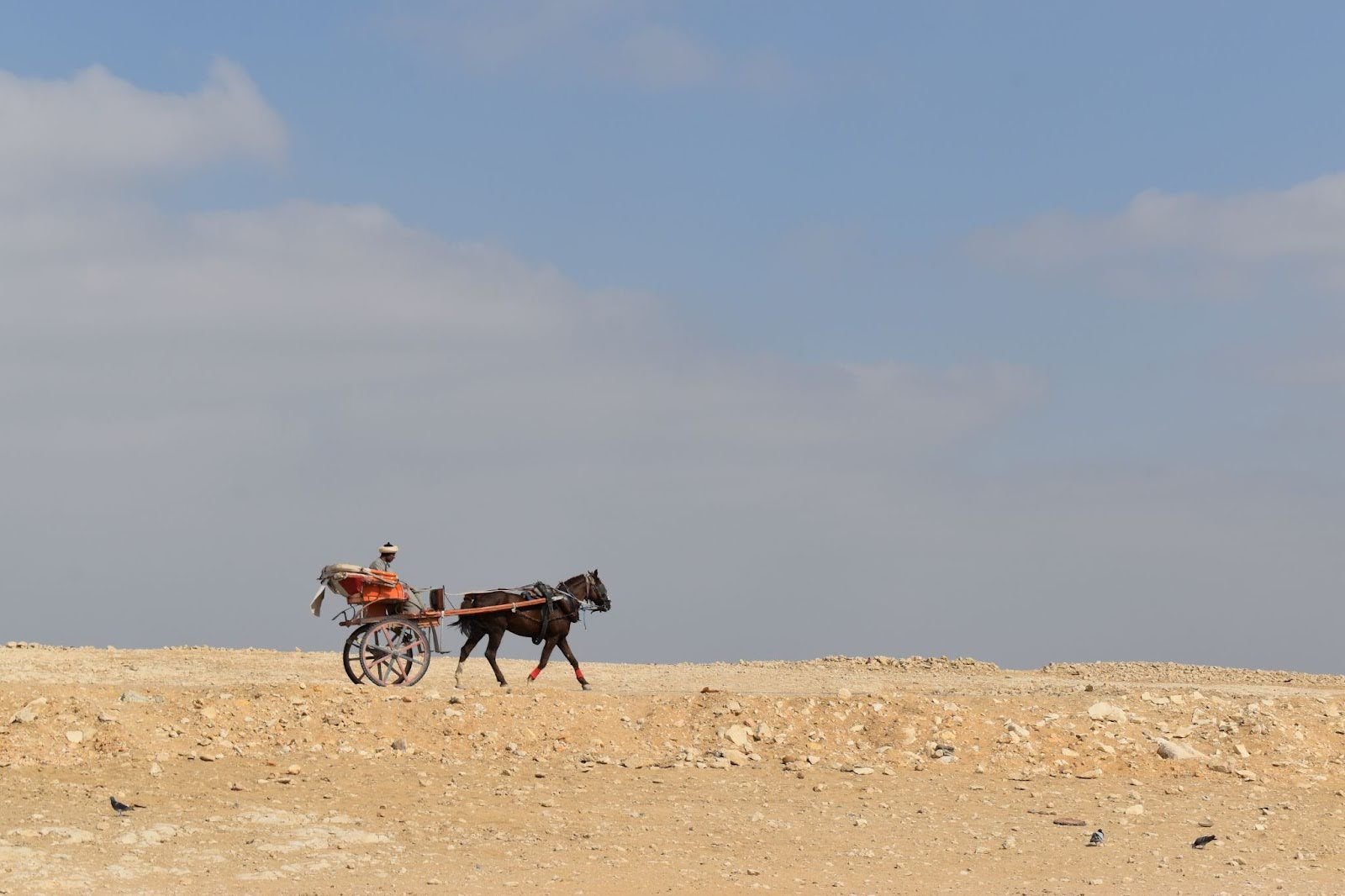
Horse cart and owner near the Great Pyramid of Giza. Nick Dauk.
Thankfully, those looking for alternatives to riding an animal can still achieve a memorable experience at many unforgettable destinations. In Giza, for instance, tourists have the option of riding the new electric buses to the pyramids. Ultimately, the responsibility does fall on both the tour company and the tourist. It’s the operator’s choice on who and how to partner with animal-focused activities, and it’s the traveler’s decision of how they choose to financially support these operators. “The future of animal-friendly tourism isn’t about finding the least harmful ride,” Guice says. “It’s about choosing experiences that let animals be animals, not attractions.”
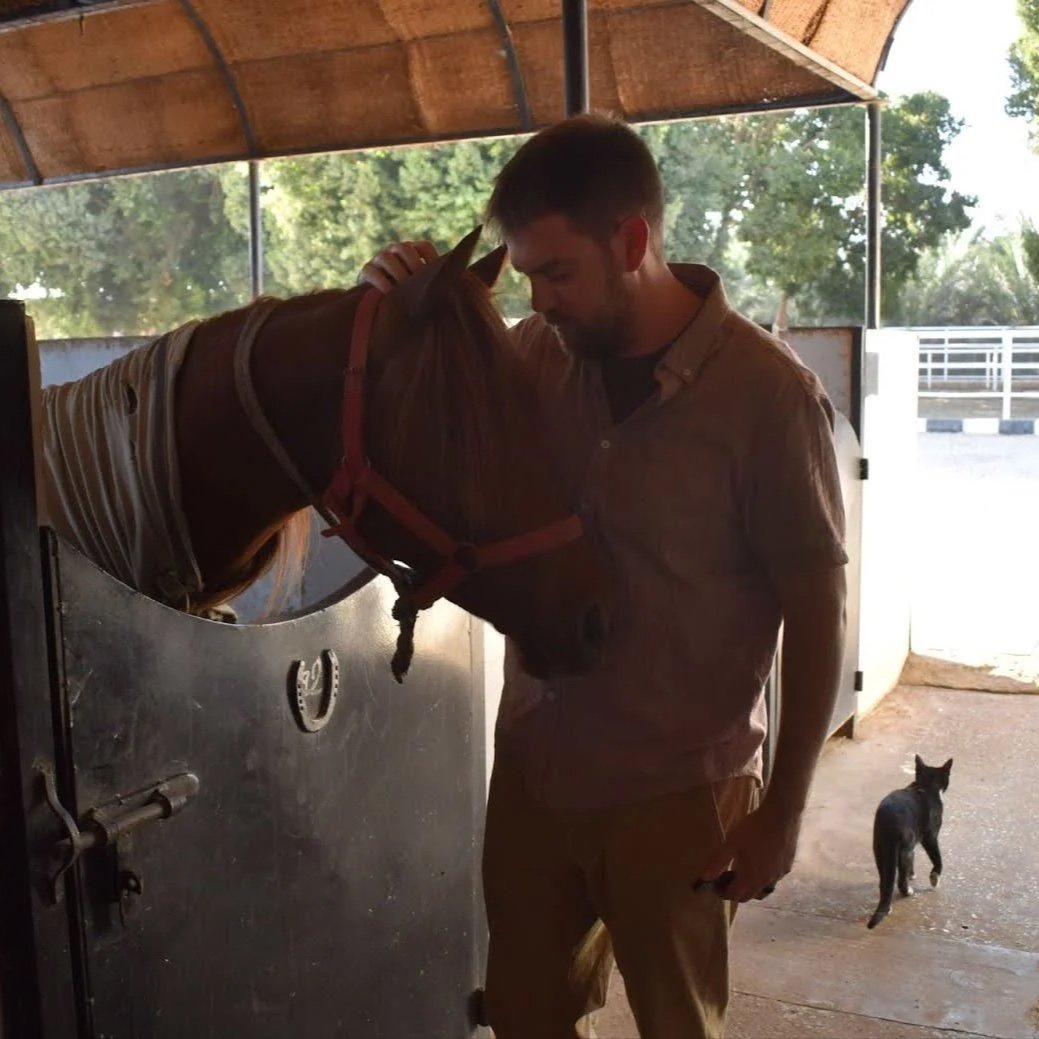
Nick Dauk
Based in Florida, Nick Dauk is a travel writer primarily focusing on tourism sustainability initialives, endangered wildlife, and vulnerable populations. His work has been featured in National Geographic, Afar, The National Post, and Euronews. When he's not photographing the wonders of the Arctic, the Amazon, or Africa, he's usually seeking out cultural, cuisine, and community-based stories across the Americas and Europe.
How Rats are Combating Cambodia’s Mine Crisis
Ryan Yianni
On the outskirts of Siem Reap, rats are leading the fight against landmines in one of the world’s most affected countries.
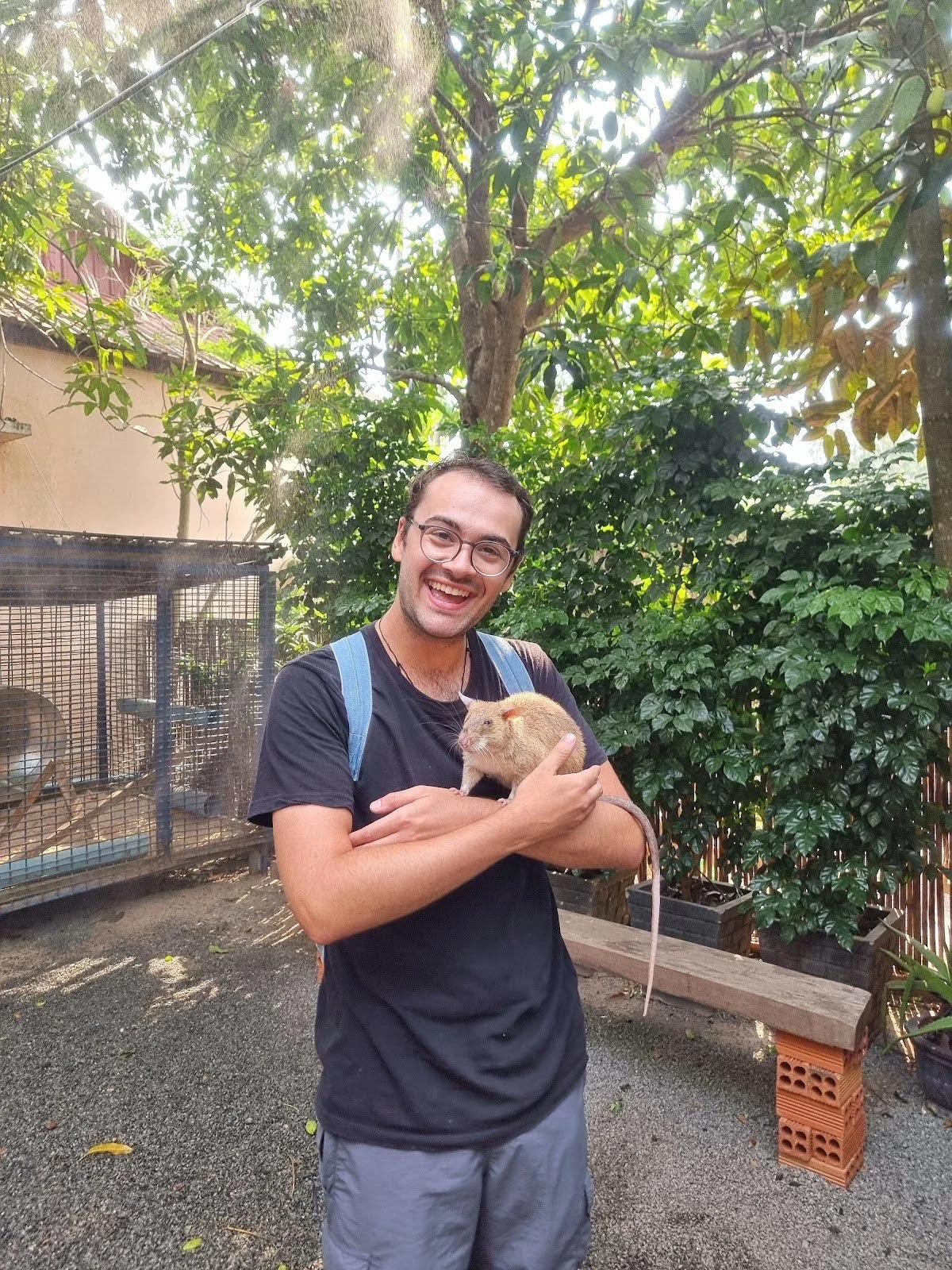
Author pictured with Glen the HeroRAT. Ryan Yianni.
“Once you’ve been to Cambodia, you’ll never stop wanting to beat Henry Kissinger to death with your bare hands.”
One of the late Anthony Bourdain’s most recognizable quotes centers on the role the U.S. played in the devastation of the mine-infested Southeast Asian country during the Vietnam and Cambodian Civil Wars. Cambodia’s natural beauty, plethora of breathtaking temples and numerous UNESCO World Heritage sites are overshadowed by its dark history of authoritarianism and genocide under Pol Pot and the Khmer Rouge. Perhaps there is no greater evidence of the past’s lingering effect on the nation than the estimated 6 million mines still littered across Cambodia, which claimed the lives of 12 people in 2024, along with another 29 casualties and eight amputations. During my visit to the country in March 2025, I was able to seeAPOPO’s visitor center, learning how one organization is working to clear these mines using a rather unconventional method: rats.
Cambodia has one of the highest rates of amputation in the world, with over 40,000 amputees since the outbreak of hostilities in the 1960s. Several sides are responsible for planting the explosives that have caused these casualties; the Americans dropped nearly 3 million tons of ordnance between 1965 and 1973, the Khmer Rouge, under Pot, laid an estimated 4 million to 6 million landmines and other munitions, and the government of the People’s Republic of Kampuchea, a satellite state of Vietnam, planted mines along the entirety of the Cambodia-Thailand border after the Rouge’s overthrowal. There are a number of organizations working to remove the remaining unexploded ordnance (UXO) in Cambodia, such as the HALO Trust, Mines Advisory Group and Cambodian Self Help Demining, all doing valuable work. One notable group is APOPO, which stands out for its innovative use of rats as a mine action solution.
APOPO is a Belgian NGO that trains southern giant pouched rats, dubbed HeroRATs, and survey dogs to detect landmines and tuberculosis. Founded in 1997 by Bart Weetjens, who discovered a publication in which gerbils were used for scent detection, APOPO began training rats in 1998 with funding from the Belgian government before relocating their headquarters to Tanzania in 2000, where they are still based. Having gathered enough evidence that the rats would be effective, they carried out their first trials in 2003, with all twenty landmines successfully found. Achieving operational accreditation in 2004, the group officially launched its HeroRAT campaign the following year before beginning its operations in 2006, tackling mine-clearance procedures in Mozambique. They partnered with the Cambodian Mine Action Center in 2014, with the first group of HeroRATs arriving in 2015. As of 2026, they operate in Angola, Azerbaijan, Cambodia and Ukraine, and they have cleared over 170,000 mines from over 132 million square meters of land. Their work so far in Cambodia has seen them clear over 8,000 landmines and nearly 43,000 pieces of UXO, such as bombs, shells and other munitions that failed to detonate, returning over 75 million square meters of land to local communities. At APOPO’s visitor center in Siem Reap, you can learn firsthand about the work they do in helping clear Cambodia of mines and overcome the traumas of the country’s past.
The visitor center provides tours every day from 8:30 a.m. to 4:30 p.m. Each tour lasts approximately one hour, and tickets can be purchased on arrival or in advance on their website. I arrived at the center in the afternoon after a ten-minute tuk-tuk ride from the core of Siem Reap. Conveniently, the center is also located near Angkor Wat, making the temple a perfect addition to your travel itinerary (plus, they have a cafe on site and make a great mango smoothie). On my visit to the APOPO center, having gone later in the day, I was able to enjoy fewer crowds, followed by a beautiful sunset at Angkor Wat. Most people go to the center in the morning before heading to Angkor Wat during the day, as you can’t go past the main gates of the temple after 5 p.m.
At the start of the tour, you’ll be shown a video contextualizing the scale of the mine issue in Cambodia and explaining the work that APOPO does to clear UXO. Then you will be able to look through the center at the displays of cleared explosives before heading out to the demonstration zone, where you finally meet the stars of the show: the HeroRATs.
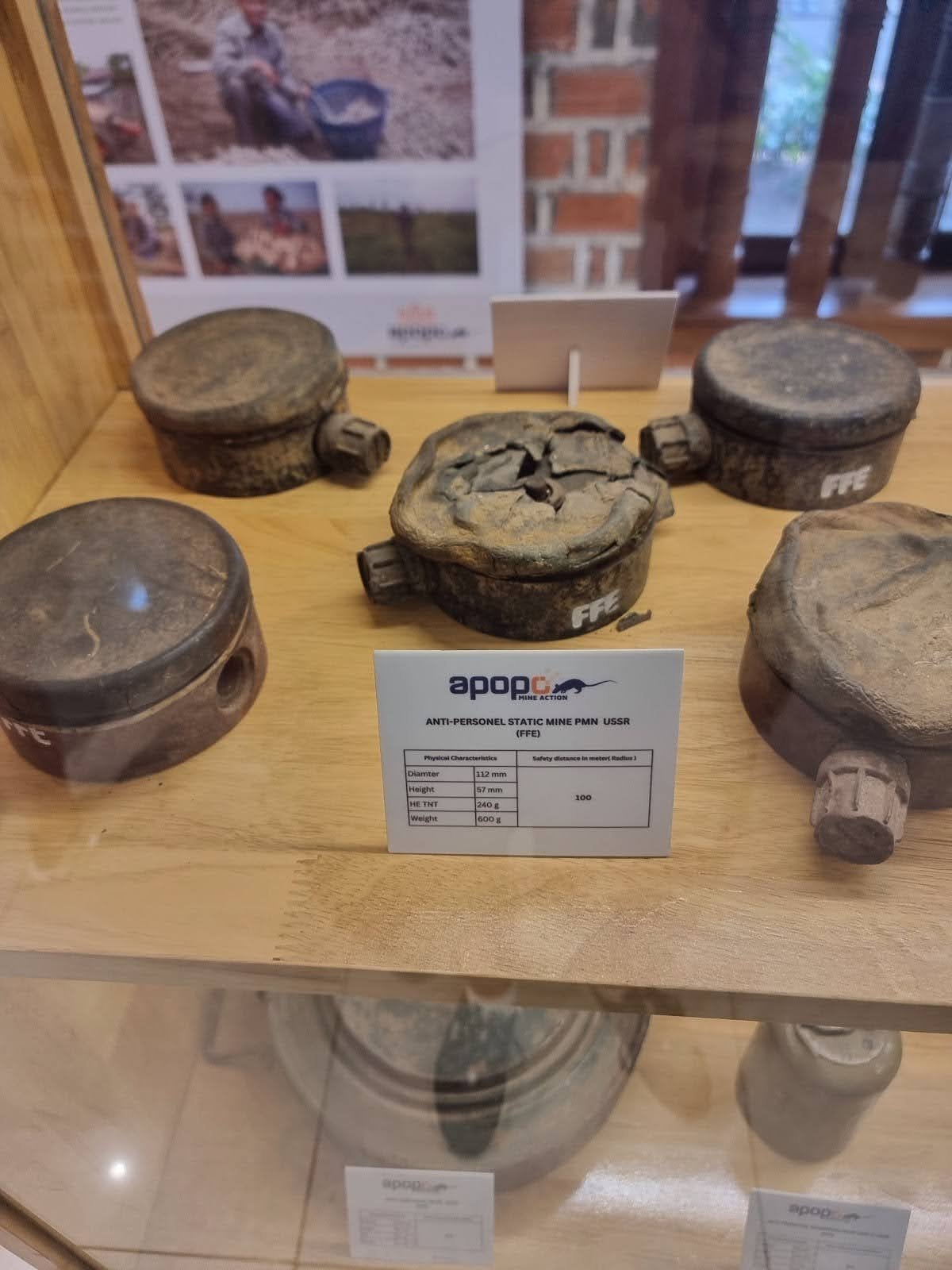
Recovered explosives housed in the APOPO Visitor Center. Ryan Yianni
Once outside, you get an up-close and personal interaction with the rats, even being able to hold one of them. Here, I learned that the rats are trained with a click toy to encourage them to hunt before they are introduced to the TNT scent. The weight of the rats allows them to detect mines without setting them off, and the speed at which they can locate the scents makes for an efficient way to clear large swathes of land. The rats are much quicker and safer than humans ever could be; once fully trained, they can clear an area the size of a tennis court in 30 minutes. To put that into perspective, it would take a human using a metal detector four days to clear an area this size. At the center, you will also get to see a reenactment of how they scan for TNT, with defused mines laid out in the demonstration zone for the rats to sniff and detect.
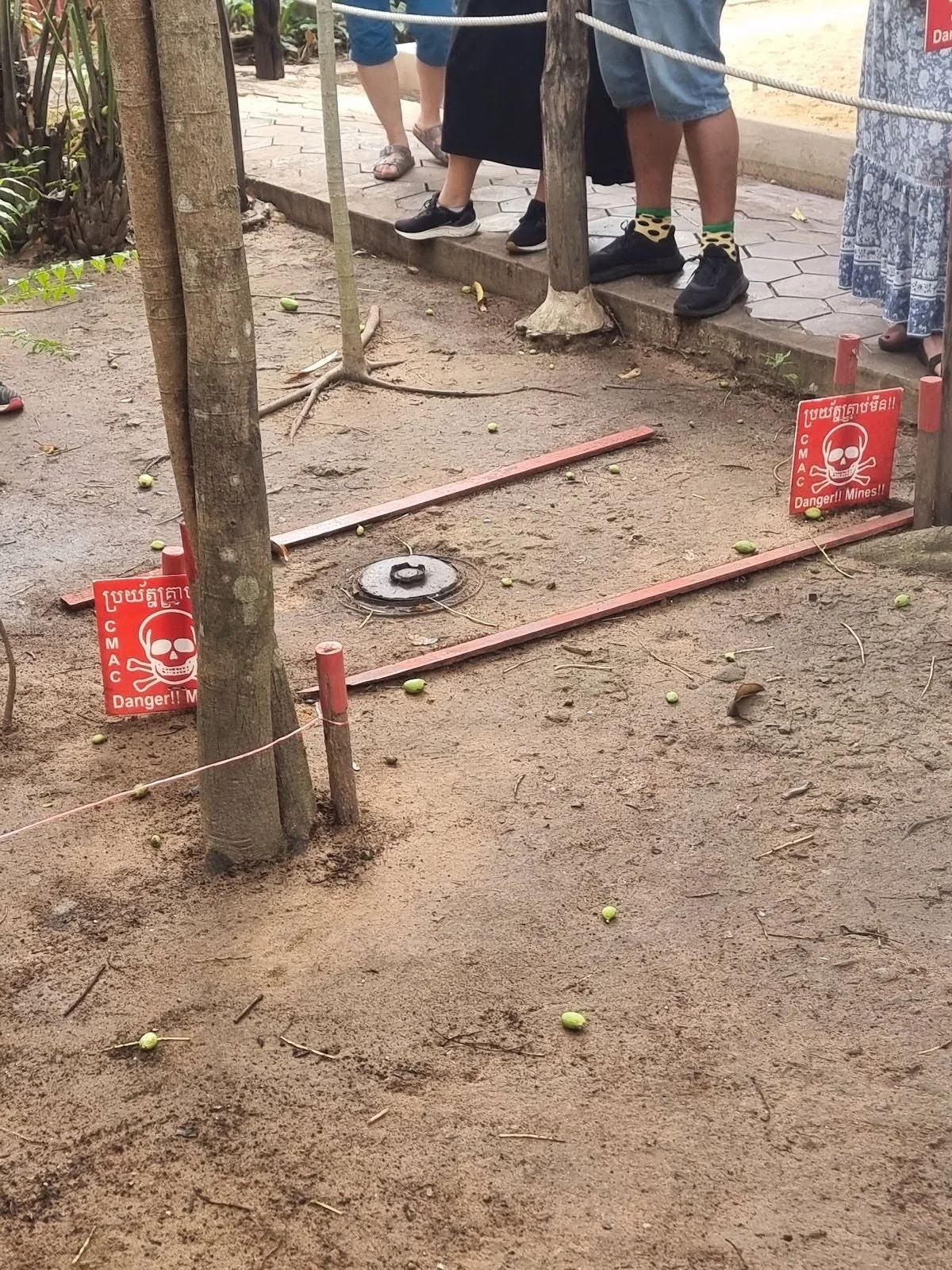
Demonstration area in APOPO Visitor Center. Ryan Yianni.
Undoubtedly, the hero and poster boy of the APOPO mission is Ronin, who in 2024 was awarded a Guinness World Record for being the most successful Mine Detection Rat in history, having detected 109 landmines and 15 items of UXO in Cambodia. Unfortunately, during the production of this article, APOPO announced that Ronin had passed away after suffering health complications. There is still a whole team of HeroRATs stationed in Cambodia, with 24 new rats arriving from their training base in Mozambique in October 2025.
APOPO is a brilliant organization working hard to remove landmines and UXO from the Cambodian countryside and beyond. They strive to make the world a safer place and help countries move past their dark histories, and having recently celebrated 10 years of operations in Cambodia, they’re showing no signs of slowing down in their mission to help the country become completely mine-free. Taking a trip to APOPO’s visitor center is especially enlightening when taking in the context of some of Siem Reap’s other important historical sites, such as the genocide museum and the killing fields. Visiting will give you a raw, unfiltered look into the horrors of the Pol Pot regime and an appreciation for Cambodia’s emergence from the dark history it is still facing the consequences of.
GET INVOLVED:
If you would like to support APOPO’s work, you can do so here.
Ryan Yianni
Nigeria's Kidnapping Crisis
Kidnapping in northern Nigeria is no longer an occasional headline, it’s a daily risk. Here’s what’s fueling the surge, and what it’s costing families.
Read More