
Explore a firsthand account of Mount Kilimanjaro’s Northern Circuit Route, with its incredible flora and fauna, remarkable people and an unfortunate mountain evacuation.
Read MoreThe Disappearing Snows of Mt. Kilimanjaro
As the mountain's snow melts, its ecosystem faces escalating pressures from tourism, climate change, and deforestation.
Read More6 Things to Know About Kilimanjaro From a Past Climber
Tanzania is home to the tallest mountain in Africa, Mount Kilimanjaro. However, here are six things everyone should know before deciding if they are ready to brave the mountain.
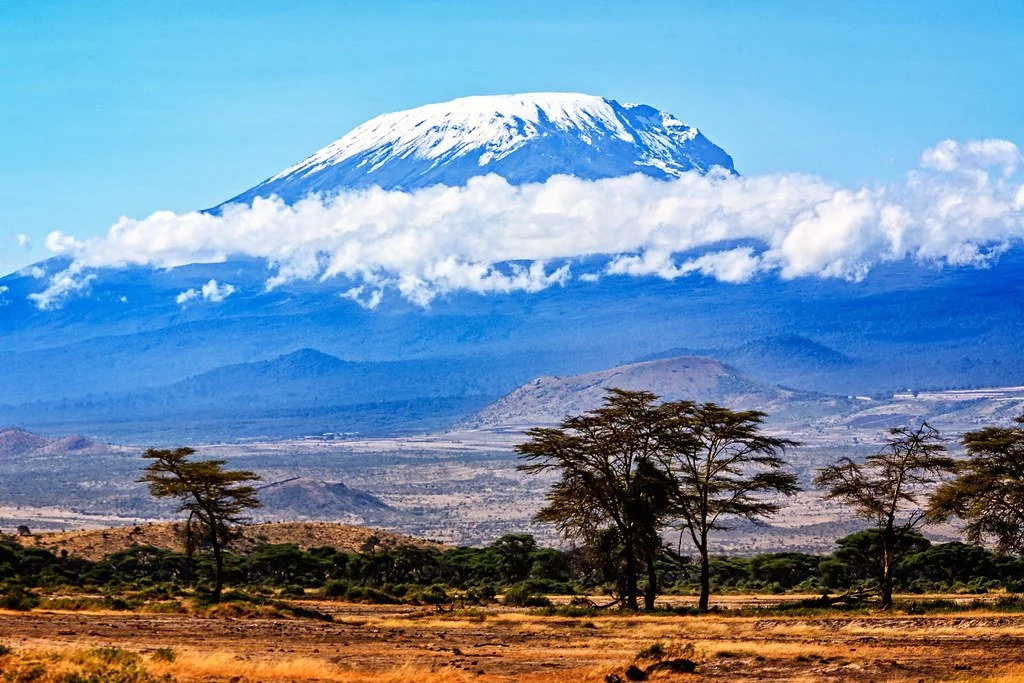
Mount Kilimanjaro. Gary Craig. CC BY-NC-ND 2.0.
Mount Kilimanjaro was created by three volcanic cones called Kibo, Shira, and Mawenzi about 2.5 million years ago. Standing at 19,341 feet, it is home to almost every ecological system: cultivation, forest, heather-moorland, alpine desert, and arctic summit zones. Climbers pass through each of these ecosystems in stages based on elevation. What many may not realize is that Kilimanjaro is dormant, not dead. This means the dormant Kibo cone could erupt again.
I made the climb in January. I will be extremely honest; it was quite miserable at times. It is simply impossible to put into words what hiking a mountain like that will do to you. From the daily struggles of altitude sickness and the feeling of breathing almost nonexistent air, to being the most exhausted you have ever been in your life, dehydrated, starving but unable to keep food down, to having to use the “bathroom” behind a rock right on the side of the trail. I even saw someone lose their life from cardiac arrest. Though it is, thankfully, not a common occurrence, it was rough.
With that said, the struggles make the reward that much sweeter. When I reminisce on my experience, I remember the hard times, but the beautiful moments I was fortunate enough to be a part of are more prominent. The dance and guitar sessions the group would have on our breaks, the feeling of being in a place completely isolated from the world, climbing higher than the plane that got me there, finding a new strength in myself that otherwise would have remained unknown. Kilimanjaro is a monster mountain, but it was the best experience of my life.
1. “Pole, Pole” are words to live by
“Pole, pole” translates to “slowly,” and I cannot stress enough how important this simple phrase is. It doesn’t matter what your physical abilities are, if you do not take your time, you will be hurting. Taking at least five days (depending on your route), this hike is no joke. It’s important to put your pride aside and accept that you might not be the fastest person to get up the mountain, and that’s completely OK! This was something I quickly learned. On the first day, I tried keeping up with the front of my group and very quickly learned I simply wouldn’t make it all six days if I kept that up. No matter what your pace, a guide will always stay by your side, carry things for you if you are struggling, and motivate you to keep going. Guides want you to succeed just as much as you want to, so definitely listen to their advice. They’re lifesavers—literally!
2. You will create amazing connections with your guides and porters
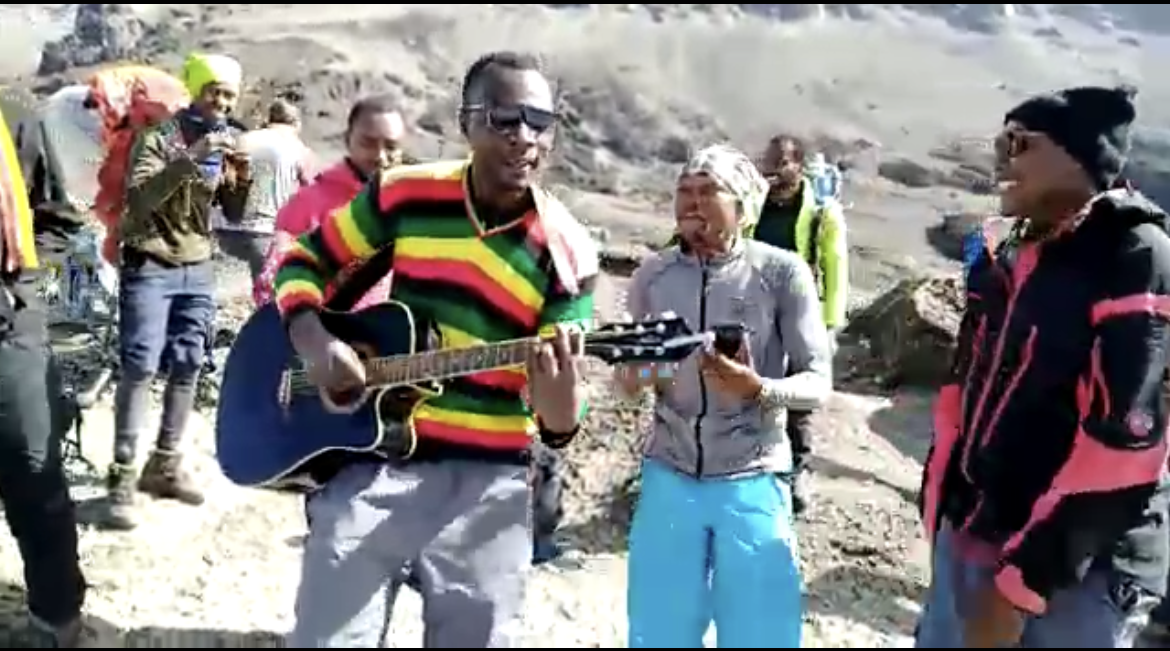
Photo taken by John Willard, my guide on my Kilimanjaro hike.
Your team on Kili will be absolutely amazing, no doubt about it. They will do whatever they can to help you summit, practically carry you if need be. They are extremely selfless and charismatic people, and they make the experience so much more enjoyable. Porters are the men and women who dedicate themselves to carrying all of your gear up the mountain, setting up camp, cooking meals, and creating a vibrant hike experience. Guides spend time with you on your hike—helping you stay on the trail, keeping an eye on your health, and really just guiding you to the summit. On my trip, the team loved to dance and sing and always invited us to join them on breaks and when at camp. They welcomed us to become immersed in the culture and understand the historical importance of Mount Kilimanjaro. The guides and porters truly enhanced the experience, so much that you simply won’t want to leave them. You will want to have WhatsApp downloaded on your phone so you can put in your favorite porters’ and guides’ numbers; when you get home, having those connections will keep a piece of Kili in your heart forever.
3. You will probably get sick
I hate to be the bearer of bad news, but if you decide to climb Kili, you will most likely find yourself experiencing at least some altitude sickness symptoms. It’s inevitable when going up 19,000 feet. Headache, nausea, and exhaustion are some of the more common symptoms. They will not end your hike early, but they will make life a little more miserable on the mountain. You just have to push through! Your guides will keep track of your vitals every day and will encourage you to eat and drink as much as your body will allow—food and water will be your best friend up there. You may hear people say that getting to high elevations eliminates your appetite, and this is very true. I found it hard to stomach even soup broth on my hike. It is best to pack some of your favorite snacks to help get past your lack of appetite. Many people, including myself, take altitude sickness pills to help combat symptoms. They are worth taking as long as they don’t cause negative effects on your body. They helped lessen the severity of my symptoms.
4. It is like being in a movie
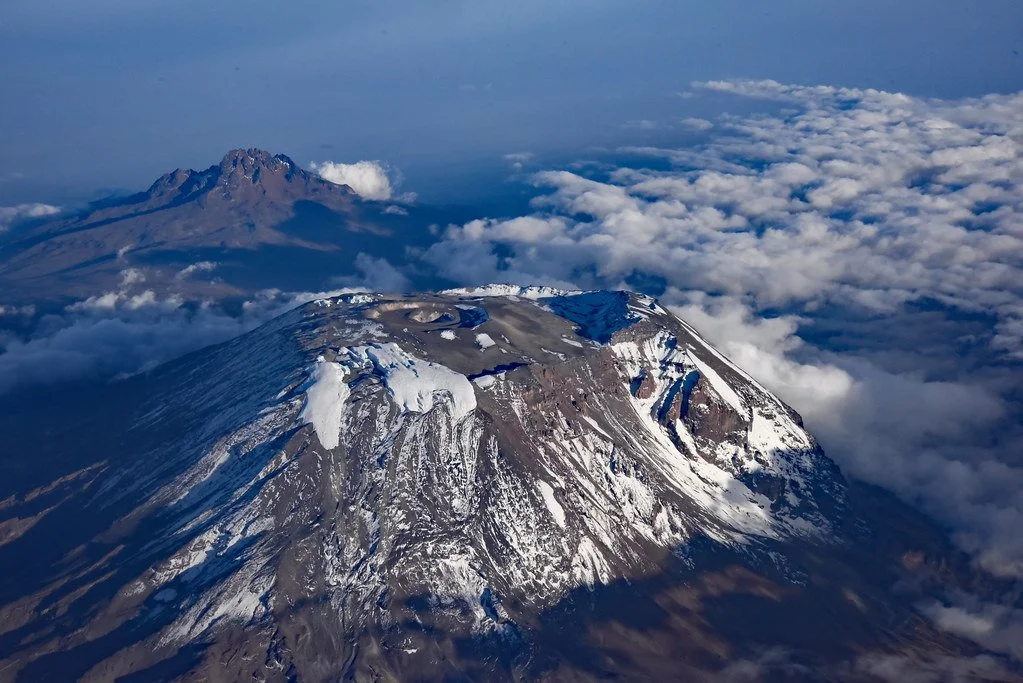
Aerial View of Mount Kilimanjaro.Takashi Muramatsu. CC BY-ND 2.0.
Kilimanjaro is absolutely breathtaking. I remember feeling like I was living in a Star Wars scene for the majority of the hike. The sunsets and sunrises are unlike anything you will ever see again. Barranco Camp, where you will find yourself after hiking from Shira to Lava Tower to Barranco, was the highlight of my entire hike. Beautiful waterfalls, camping on a cliff in the clouds, being surrounded by the massive Barranco Wall (which you will be climbing up the next morning)—it is a beautiful and untouched part of the world. It makes the everyday battle worth it. When you’re feeling like giving up, just stop and turn around. The view you see will give you the courage to keep going.
5. You may see some horrific things

Barranco Wall on Mount Kilimanjaro. Haleigh Kierman
This is not a guarantee, but it is best to know what can happen. During my hike, I witnessed a man pass away right on the trail from cardiac arrest. I never thought I would see something like this, so it is important you know that really anything is possible before deciding if the hike is right for you. It is much more common to see people get physically sick or use the “bathroom” in clear sight, which are things we can typically move on with. With that said, there is always the possibility you can see something more severe. Do not fear though, Kilimanjaro is remarkably safe given its size. Around 30,000 hikers attempt each year with only a 0.03% death rate. If you know and trust your individual abilities and health, there is little to be concerned about.
6. You will discover an unimaginable amount of self-pride when you finish
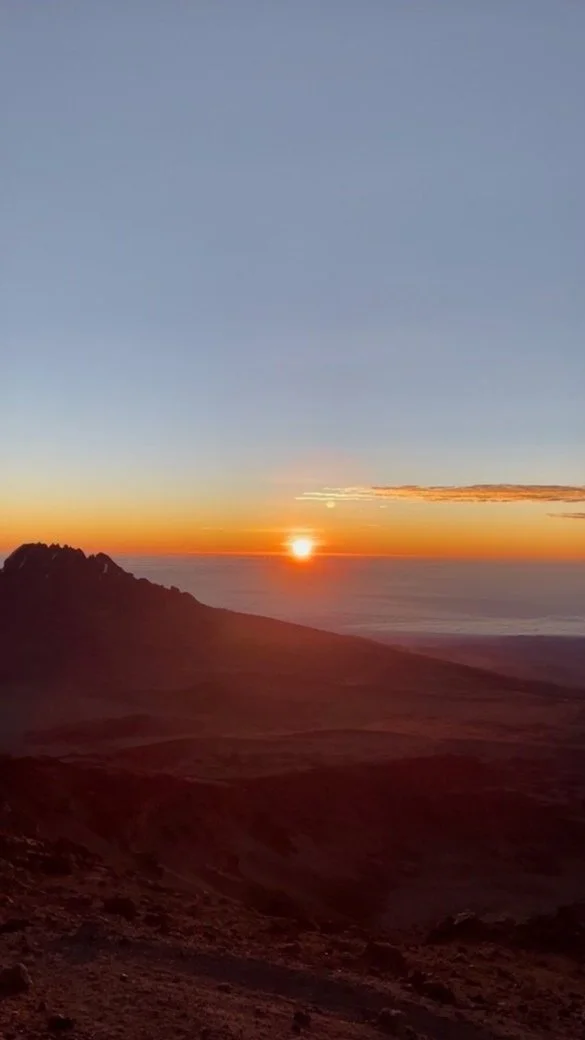
Sunrise on Summit Day. Haleigh Kierman
Summit day: it’s killer. You begin the final trek to the summit around 11:30 p.m. and get to the top around 8 a.m., depending on your pace. At this point, you will be sleep-deprived, feeling as though you are suffocating with every step you take because the air is so thin. But somehow, you will find that strength in you to keep going. And when you finally make it to the top, all you will feel is euphoria. You may even shed a tear or two. Kili will push you to your limit and then past that. You really will discover a new part of yourself you didn’t know was there. If you set your mind to conquering Kilimanjaro, you can do it. It will be one of the hardest things you will ever do, but the reward is a feeling of accomplishment that will change your life forever.
Haleigh Kierman
Haleigh is a student at The University of Massachusetts, Amherst. A double Journalism and Communications major with a minor in Anthropology, she is initially from Guam, but lived in a small, rural town outside of Boston most of her life. Travel and social action journalism are her two passions and she is appreciative to live in a time where writers voices are more important than ever.
The Maasai Spirit
This series of images was taken while on assignment in the Maasai Mara Game Reserve in Kenya.


As we were leaving the reserve one day our driver suggested we stop at a nearby Maasai village. I thought it would be just a quick stop and a chance to pickup some handmade souvenirs.
Knowing that the Maasai depend on tourists to supplement their subsistence farming, I didn't expect the warmth of our welcome and the genuine dialogue I would have with the chief. He introduced us to the village, showing every aspect of their daily life. Speaking passionately about the realities confronting the Maasai people and the hard choices they must make in order to preserve their cultural identity — from environmental issues threatening their homes and grazing lands, exposure to tourists and the lure of modern life.
He was an erudite speaker, having mastered English and more than 6 African languages. This worldliness empowered him to make mindful decisions governing the collective future of his tribe. All the while recognizing the hypocrisies of a developed worlds existence. In his village no one went hungry, loneliness and depression did not exist and the elders were a revered and integral part of the social dynamic.
He encouraged me to take photos, wanting to share their simple but dignified life, beautiful aesthetic and overt happiness. I hope these images honor the chief's wishes and convey some of the Maasai spirit.
RELATED CONTENT:
Julien Campeil
Julien is an Australian born photographer living in New York. His work has appeared in many publications worldwide including Vogue, GQ and Conde Nast Traveler.
You can view more of his work online at: www.juliencapmeil.com
For print purchases Email: info@juliencapmeil.com
Beyond Kilimanjaro: The Rich Culture of Tanzania
While Kilimanjaro, the tallest mountain in Africa, gives Tanzania the most notoriety, there is so much more to this country’s culture and landscape. The Maasai peoples, national parks, notable food, and the unique island of Zanzibar that has strong Arabic influence. Read more…
Read MoreAmazing Styles of African Architecture
Africa is home to many beautiful styles of architecture, each shaped by the region and time when it developed.
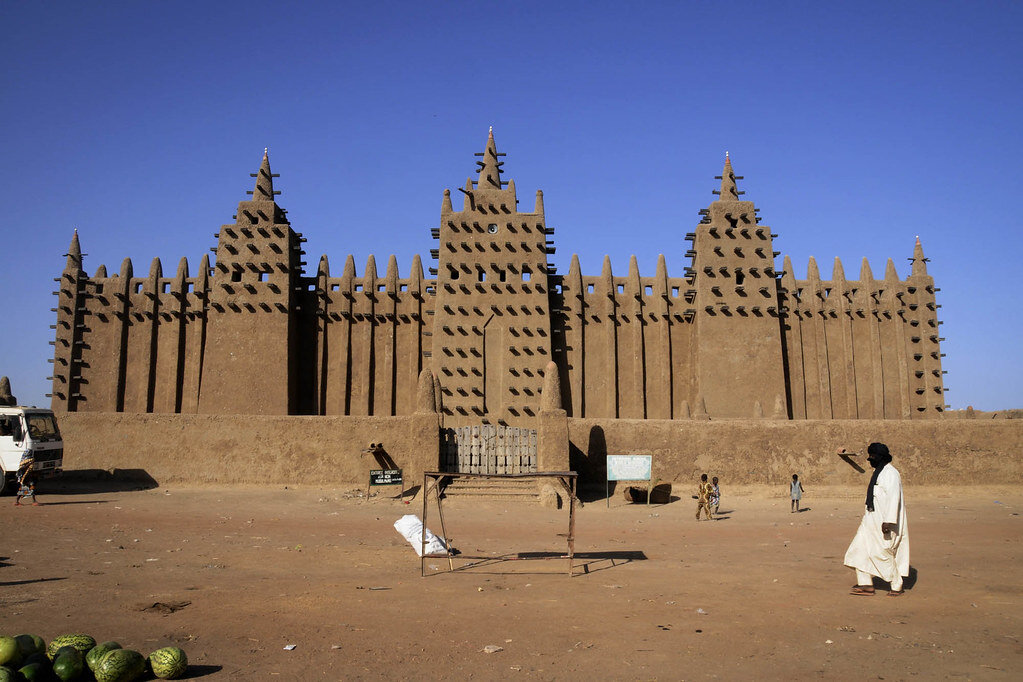
The Great Mosque of Djenné, Mali. UN Mission in Mali. CC BY-NC-SA 2.0
While most people are familiar with European styles of architecture, such as Gothic and Renaissance, African architecture is not as frequently showcased. Other than the Pyramids at Giza, Africa’s architectural marvels are relatively little-known. International media often overlooks the cultural, historical and societal diversity of Africa in favor of news that portrays the continent in a negative light. There are a wide variety of architectural styles across Africa, each influenced by their environment and the time when they developed. Below are just three examples of Africa’s many unique architectural styles: Sudano-Sahelian, Afro-Modernist and Swahili.
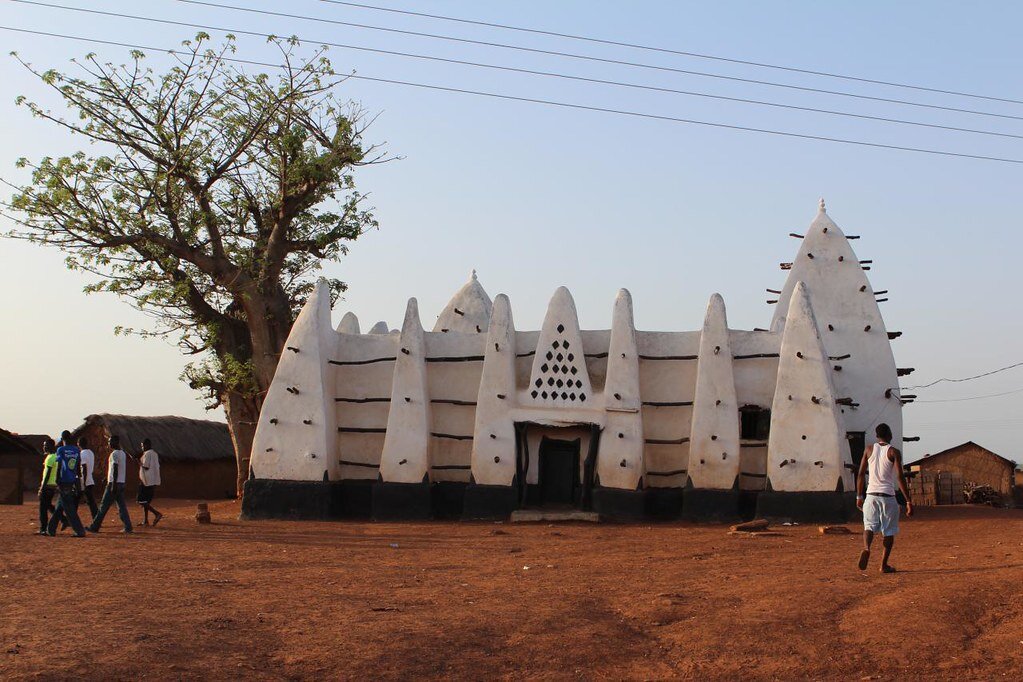
The Larabanga Mosque in Larabanga, Ghana, built in the Sudano-Sahelian style. Carsten ten Brink. CC BY-NC-ND 2.0
1. Sudano-Sahelian
Sudano-Sahelian architecture is characterized by the use of adobe, mud bricks and wooden-log support beams that jut out of the walls, as well as grassy materials like thatch and reeds which are used for roofing, reinforcement and insulation. The name Sudano-Sahelian refers to the indigenous peoples of the Sahel region in Africa—which extends from modern-day Senegal on the West Coast to Eritrea on the East Coast—and the Sudanian Savanna, just south of the Sahel. The Sudano-Sahel region is semi-arid, with an environment that transitions from the Saraha in the north to tropical deciduous forests in the south; there are both trees and wide, grassy plateaus. The earth is a major building resource in the region, which led to the development of the area’s distinct adobe architecture around 250 B.C. Today, ancient Sudano-Sahelian architecture remains a major influence on many contemporary African architects, such as Francis Kéré, who wants to showcase African traditions in his architectural projects.
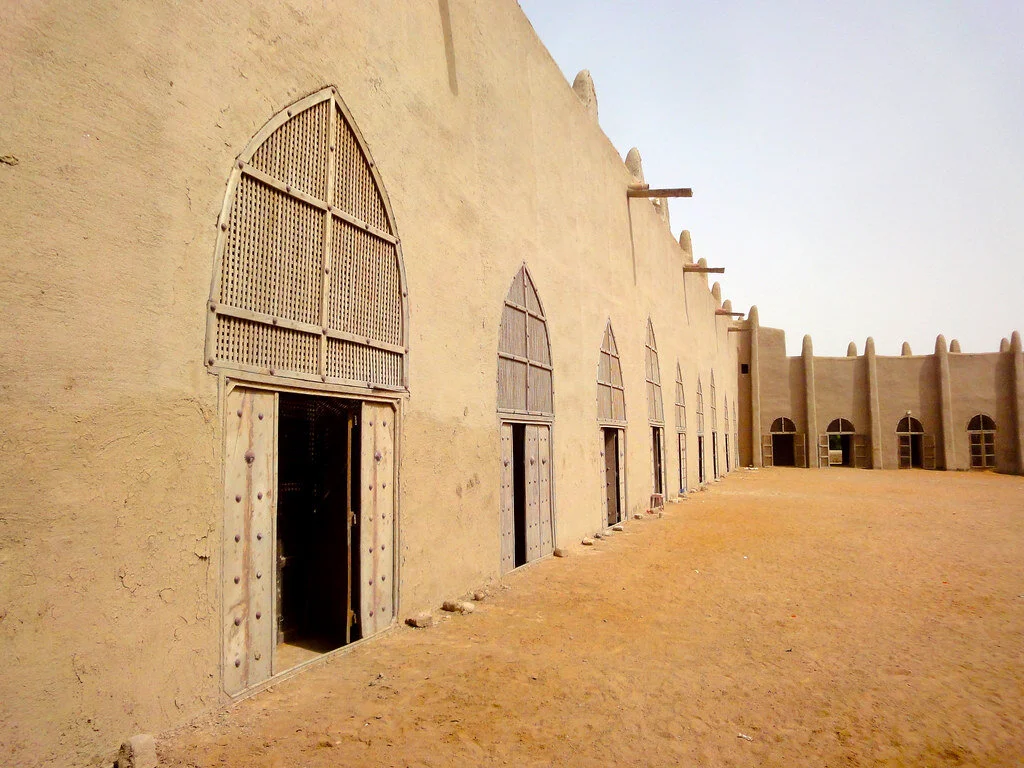
The courtyard of The Great Mosque at Djenné. Johannes Zielcke. CC BY-NC-ND 2.0
One of the most impressive examples of Sudano-Sahelian architecture is The Great Mosque of Djenné in Djenné, Mali. While the mosque was constructed in 1907, there have been a number of mosques on this same site since the 13th century, all built in the traditional Sudano-Sahelian style.

Ghana’s Independence Square. CC Chapman. CC BY-NC-ND 2.0
2. Afro-Modernism
Afro-Modernism refers to Africa’s post-colonial experimental architecture boom of the 1960s and 1970s. Thirty-two African nations declared their independence from European colonial powers between 1957 and 1966. New elected governments ushered in an era of public works projects, including university campuses, banks, hotels and even ceremonial spaces like Ghana’s Independence Square. The architecture of the era largely used concrete, as it was more easily cooled than other materials—a necessity in hot, equatorial climates. Afro-Modernism draws on European styles of architecture; many buildings were designed by European architects. African influence is clearly present as well, though, and African architects like Samuel Opare Larbi were crucial to the movement. Staples of Afro-Modernism include bold shapes and the combination of traditional building materials like adobe with modern materials, such as concrete and steel.

Some examples of Afro-Modernism include the Kenyatta International Conference Centre in Nairobi, Kenya which has a lily-shaped auditorium; the FIDAK exhibition center in Dakar, Senegal, which is made up of a number of triangular prisms; and some buildings at the University of Zambia in Lusaka, Zambia, which has various open-air galleries and exposed staircases.
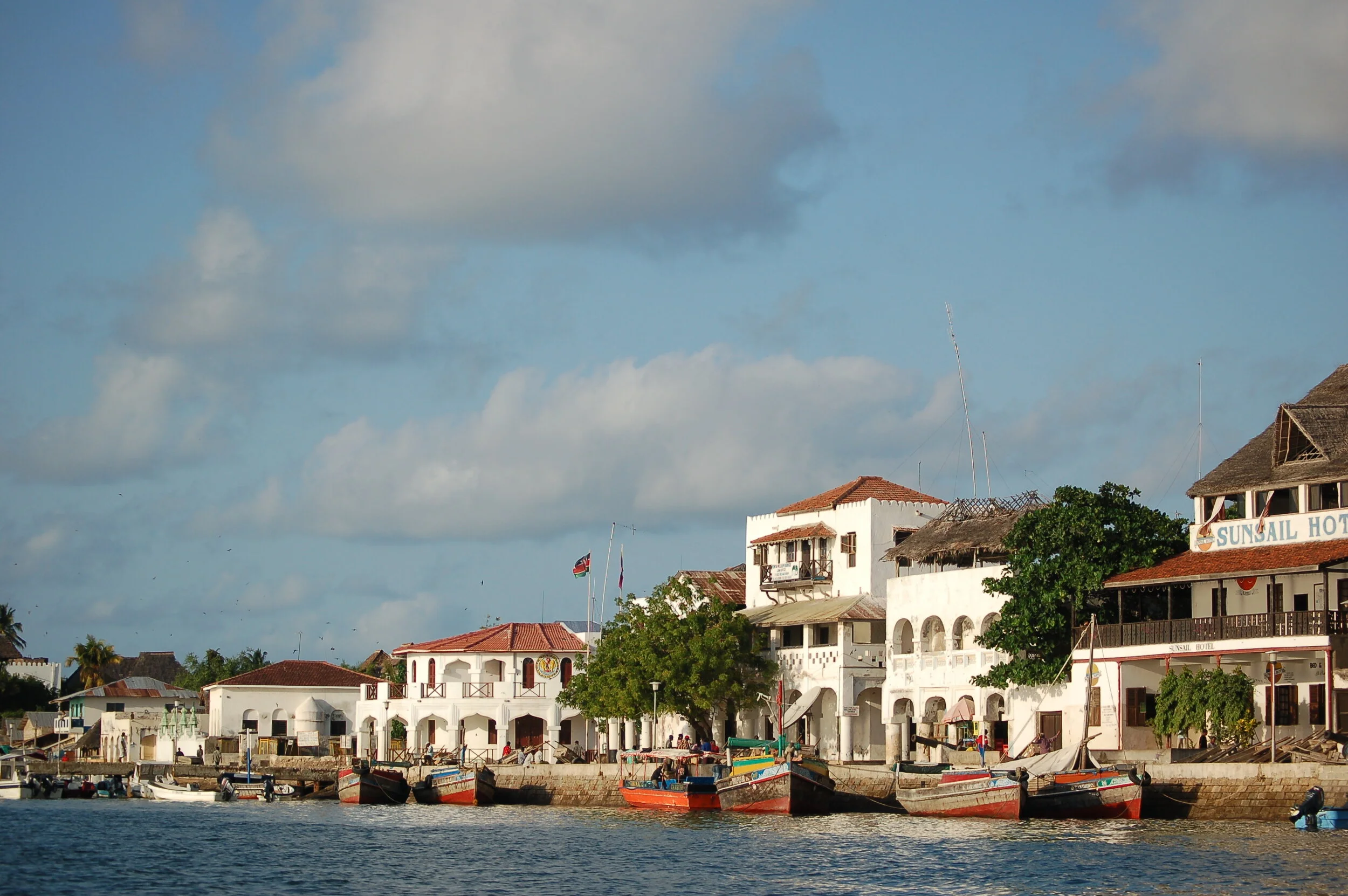
Lamu Old Town in Lamu, Kenya. These stone buildings are made in the Swahili style of architecture. Erik (HASH) Hersman. CC BY 2.0
3. Swahili
Monumental stone structures dating back to at least the 13th century populate the Swahili Coast, an 1,800-mile stretch along the Indian Ocean in modern-day Tanzania and Kenya. The area is rich with coral limestone, which became a crucial building material for the indigenous Swahili people.
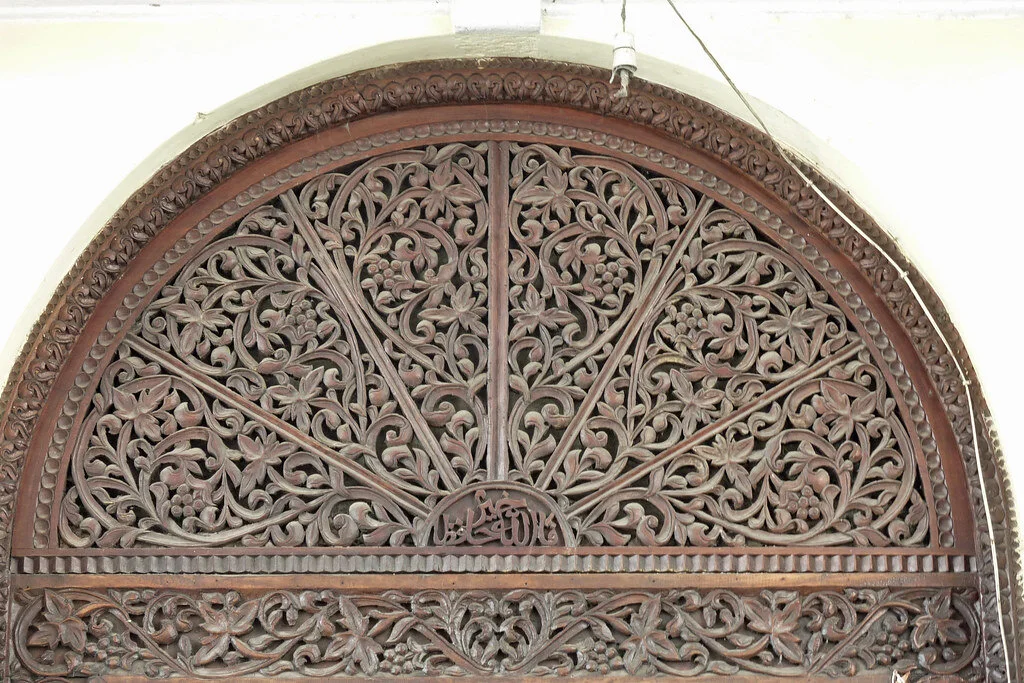
A close-up of Swahili woodwork. Konstantinos Dafalias. CC BY 2.0
The stone architecture evolved over time to include intricate decorative elements, such as carved door frames and windows with natural and geometric designs. The carvings in Swahili architecture date back to the 17th century, with the earliest known example being from 1694. During the 18th and 19th centuries, the practice of stone and wood carving grew more widespread. Carvers drew influence from architecture and art overseas, including neo-Gothic, British Raj and Indian Gujarati styles.
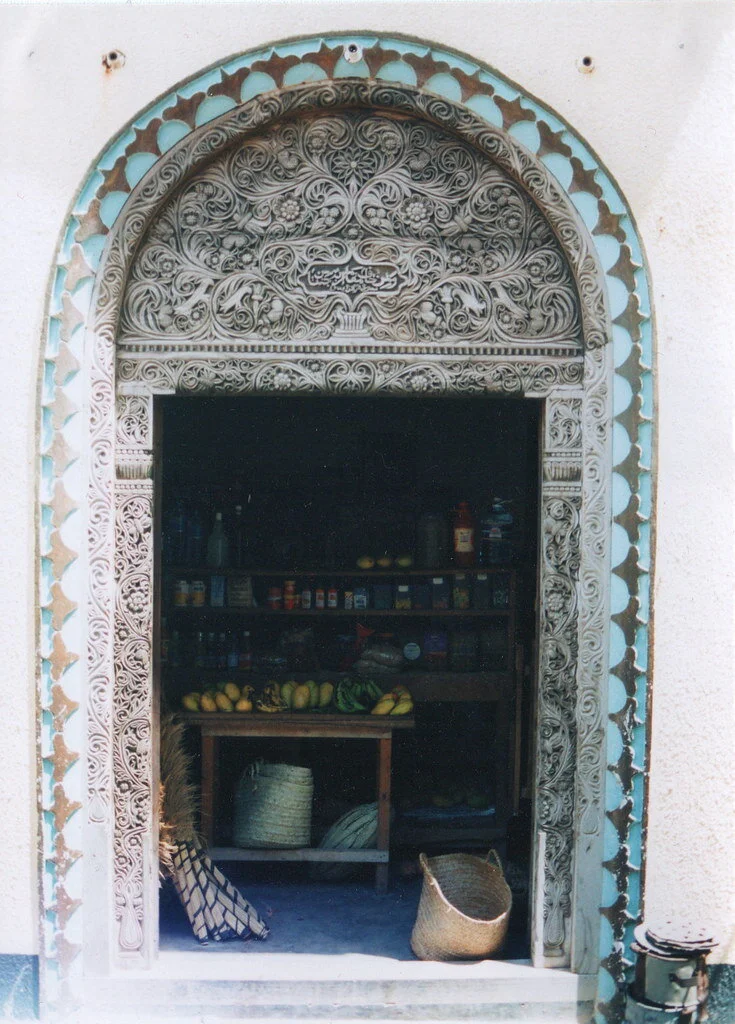
A carved stone door in Lamu, Kenya. Justin Clements. CC BY 2.0
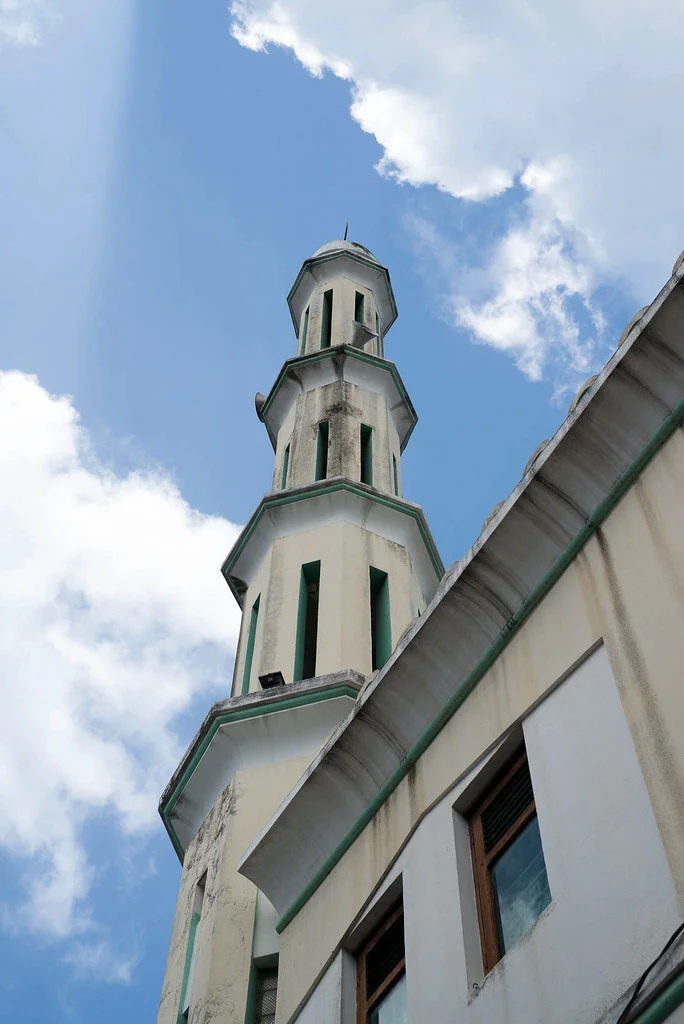
A tower in Stone Town on Unguja Island in the Tanzanian archipelago of Zanzibar. Frans Peeters. CC BY-NC-ND 2.0
Kenya’s Lamu Old Town is the oldest and most well-preserved Swahili settlement on the Swahili Coast. Lamu Old Town is constructed from coral limestone and mangrove timber and has been continuously inhabited for over 700 years. The Stone Town of Zanzibar, on Unguja Island, is another excellent example of Swahili architecture, especially the blending of African, Arabian, Indian and European influences. Both of these towns have been designated as UNESCO World Heritage Sites.
Sudano-Sahelian, Afro-Modernist and Swahili architecture are only three of Africa’s wide variety of architectural styles. Others include Somali, Afro-Federal, Nigerian and Ethiopian. For more stunning pictures of African architecture, visit this Twitter thread.

Rachel Lynch
Rachel is a student at Sarah Lawrence College in Bronxville, NY currently taking a semester off. She plans to study Writing and Child Development. Rachel loves to travel and is inspired by the places she’s been and everywhere she wants to go. She hopes to educate people on social justice issues and the history and culture of travel destinations through her writing.
TANZANIA: The Last Hunter Gatherers
Hunting only with bows, arrows, and their ingenuity, what marked my time with the Hadza was how remarkably happy they seemed. In their language, there is no word for “worry” and by following their ancestral ways, the Hadza truly live in the moment.
Read MoreTANZANIA: Give Your Love Away
Healthcare is neither easily accessible nor affordable for many Tanzanians living in rural villages and poor urban areas. Anika Jeppesen traveled to Arusha, Tanzania to work as a medical volunteer through International Volunteer HQ’s medical placement program. Here is her experience.
LEARN MORE AT VOLUNTEER HQ
TANZANIA: Kwanini
After nine long years in the USA furthering his education Venance is traveling home to Tanzania with Kristen, his close American friend from a vastly differing background. As they journey the countryside they experience the ancient culture, the contemporary poverty, and the eternal spirituality of his motherland. As Venance struggles to blend his newly learned western philosophy with that of tribal life Kristen experiences a life-changing transformation by observing first-hand the daily struggle to survive for many living on the continent.