
Isabelle Ringswald Egan
Explore a firsthand account of Mount Kilimanjaro’s Northern Circuit Route, with its incredible flora and fauna, remarkable people and an unfortunate mountain evacuation.
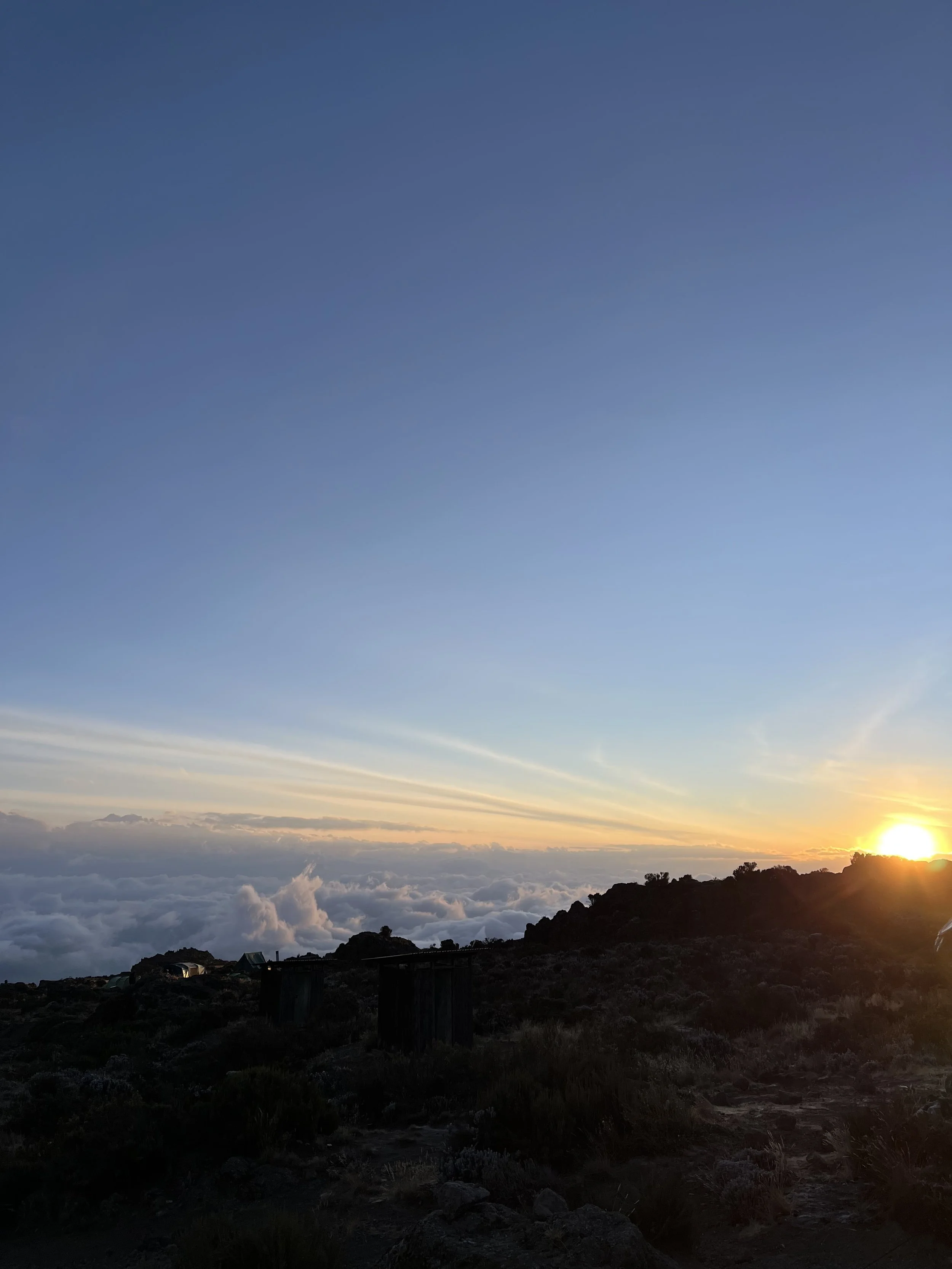
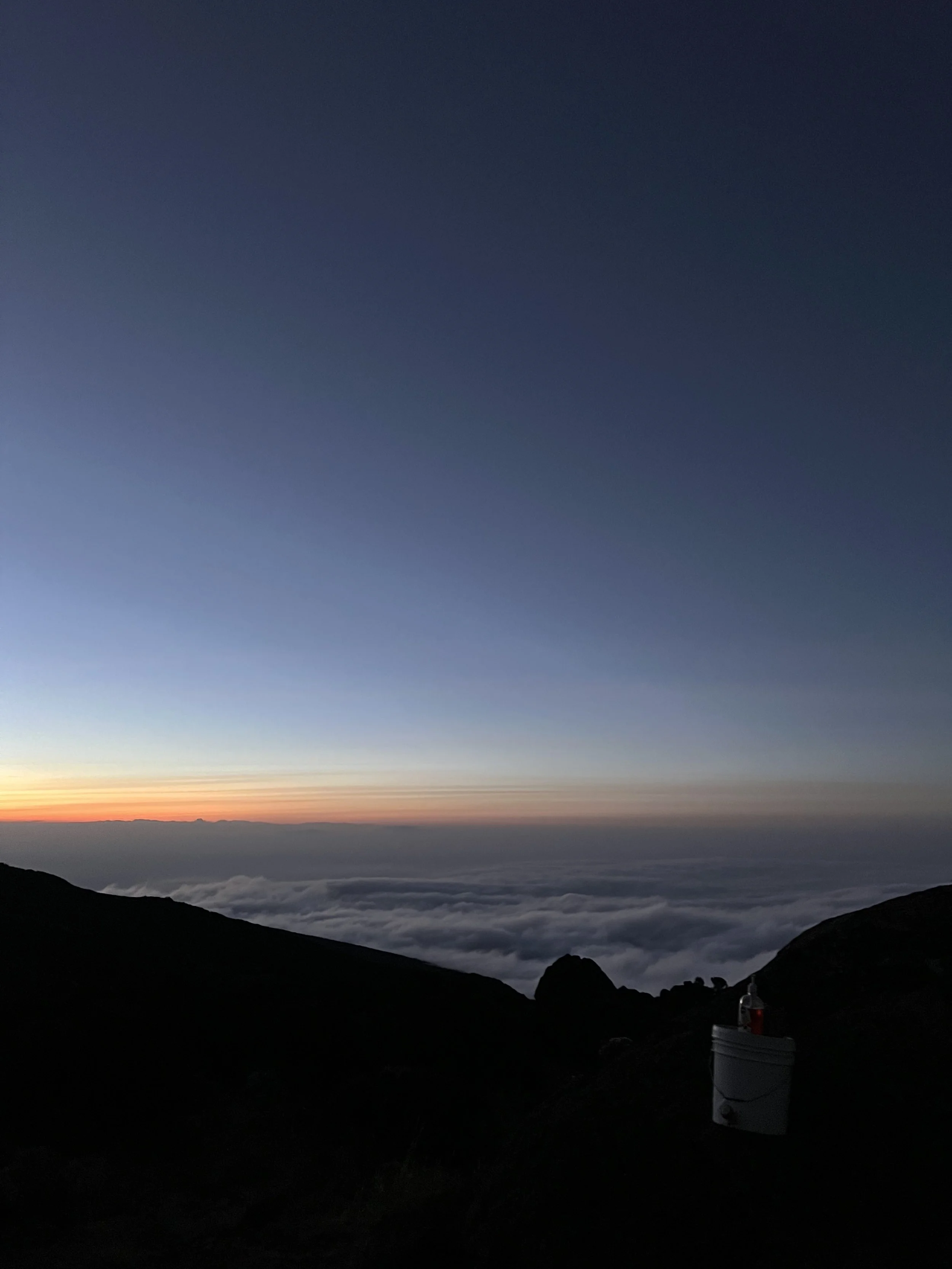
A sunrise at Third Cave Camp. Isabelle RingswaldEgan.
Emerging from my tent, wind buffeted the alpine desert shrubs around me as the sun rose over the cloudline, which stretched out before the camp like a great misty sea. On Mount Kilimanjaro, the mornings and evenings seemed to compound the scale of the mountain, making the camp truly feel as high up as it is. Each day, I watched the sun begin and complete its journey across the world, all as I stood by a tent in a new camp, across a new landscape, over a new sky.
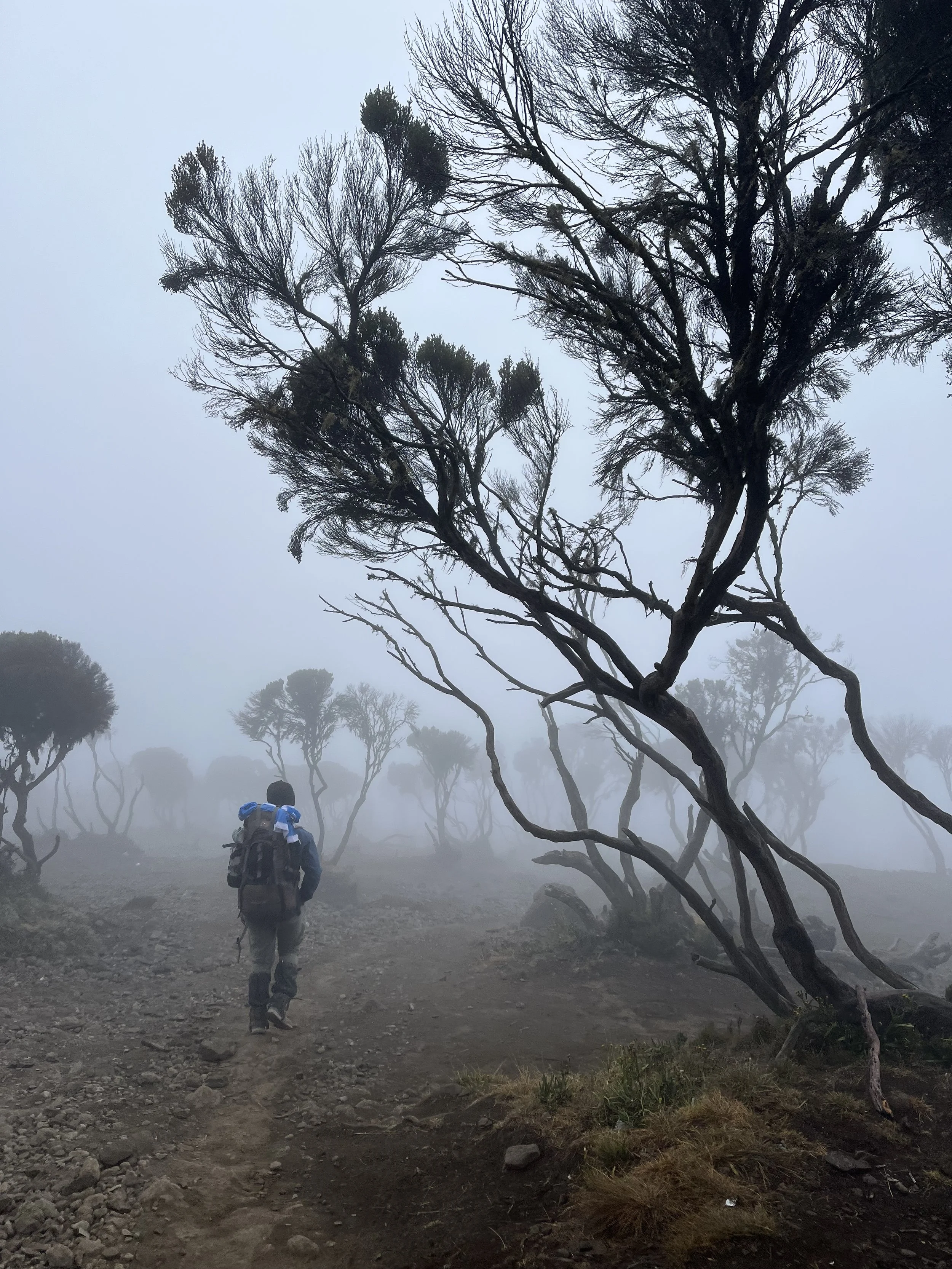
We caught up with the clouds for the first time on the second day. Emerging out of the fog, we reached a crowded clearing full of hikers taking in the view. The spot was also one of a few places on the mountain with cellphone service, so many trekkers, guides and crew alike were contacting their families to let them know they were okay.
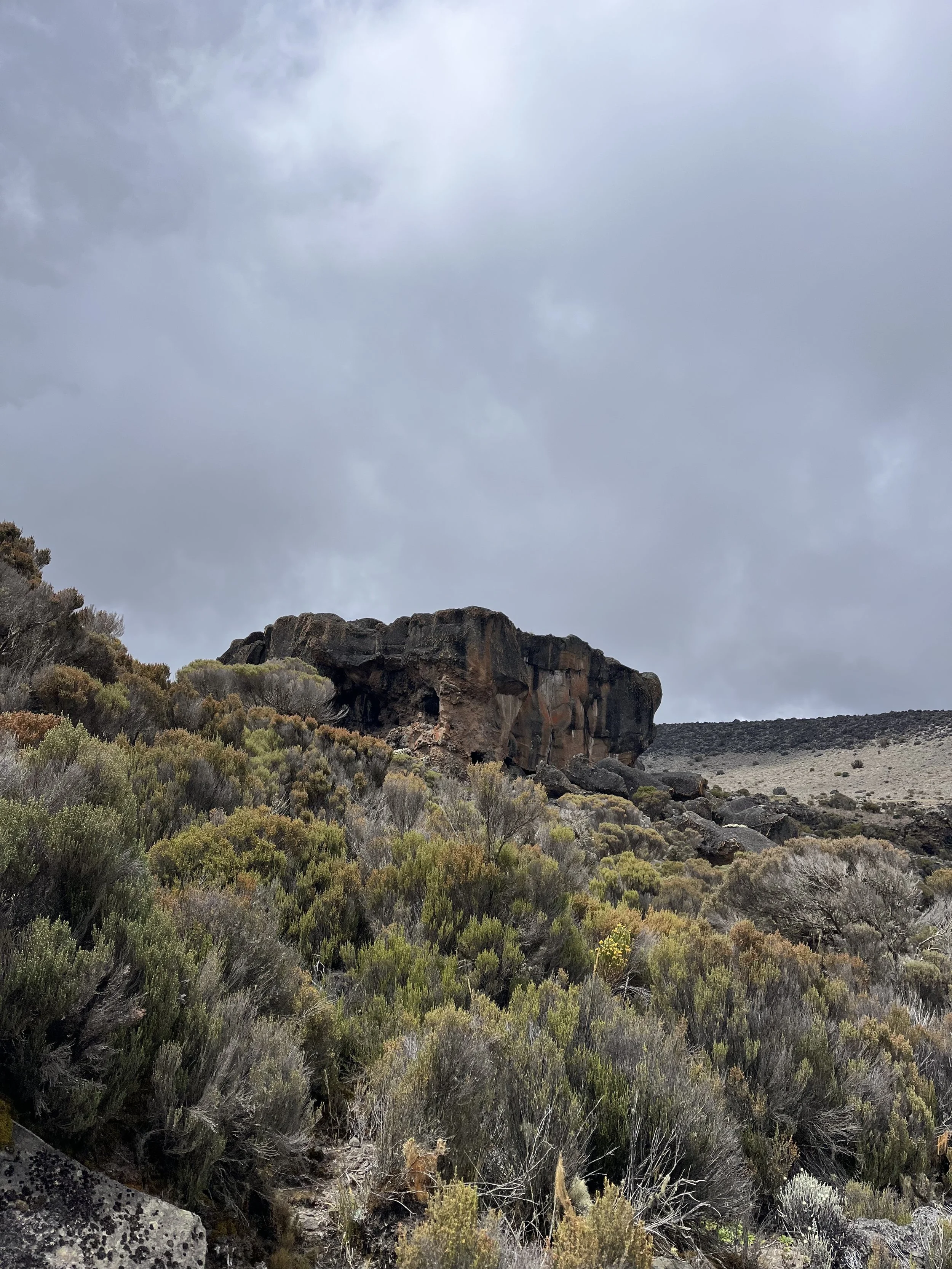
I was fascinated by volcanoes and seismic activity as a child. The idea of movement and dynamism on such a massive and seemingly ancient scale was magical to my young mind, and in truth, it still is. Around the age of 14, I became obsessed with Mount Kilimanjaro. My imagination was captivated by the ancient, free-standing volcano stretching up to 19,341 feet, the tallest mountain in Africa, which is home to five distinct ecological zones and the remnants of lava flows and old eruptions. I decided to figure out how difficult it’d be to climb it, and with plenty of time to save and prepare, I realized it was possible.
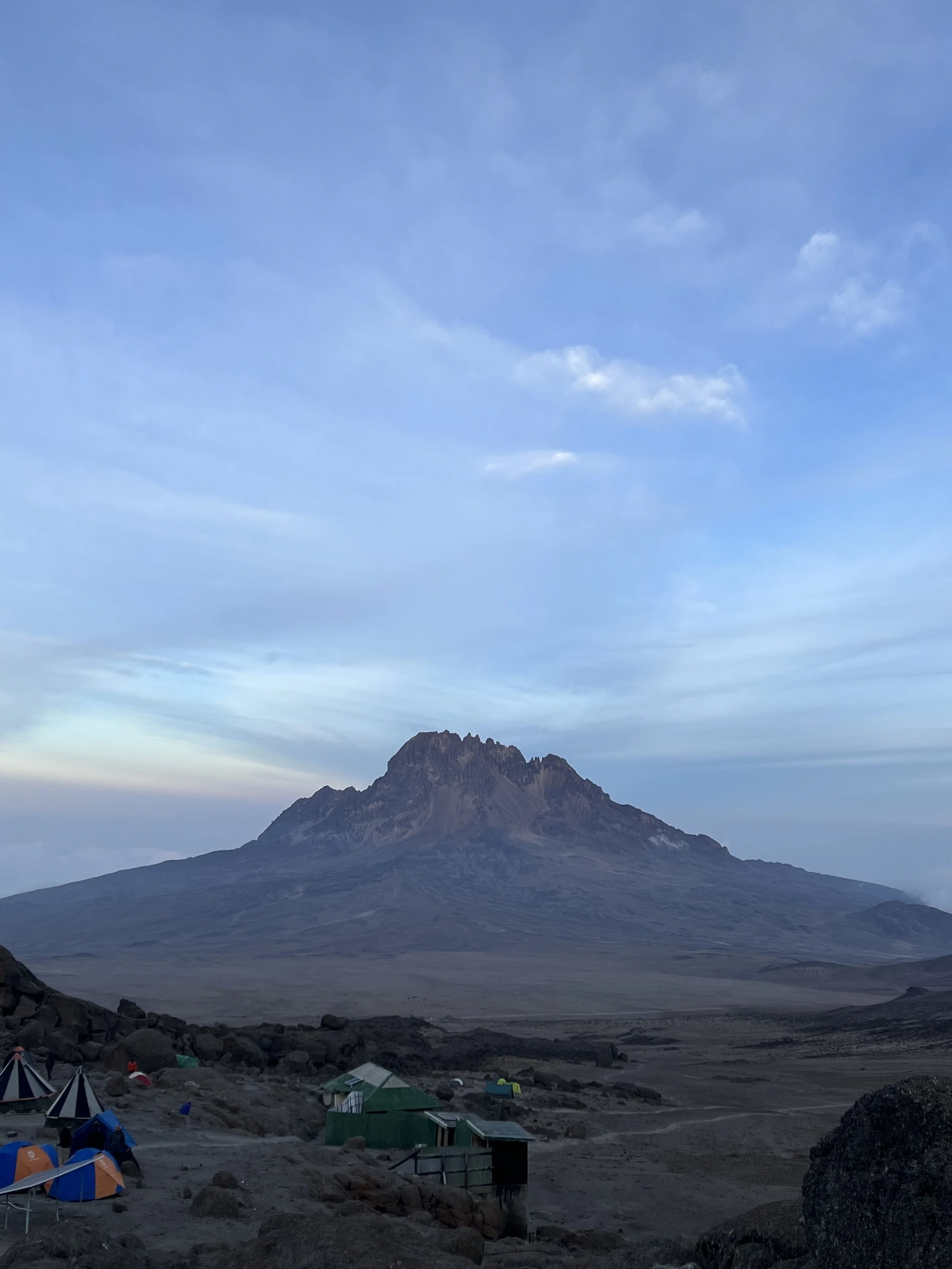
As an adult, I finally found myself there, on the Northern Circuit of Kilimanjaro, making what felt like a pilgrimage to Uhuru Peak. With my father and a multitude of other pilgrims and guides, the trail had a strong sense of camaraderie, with so many individuals from so many places across the world working toward the same goal.
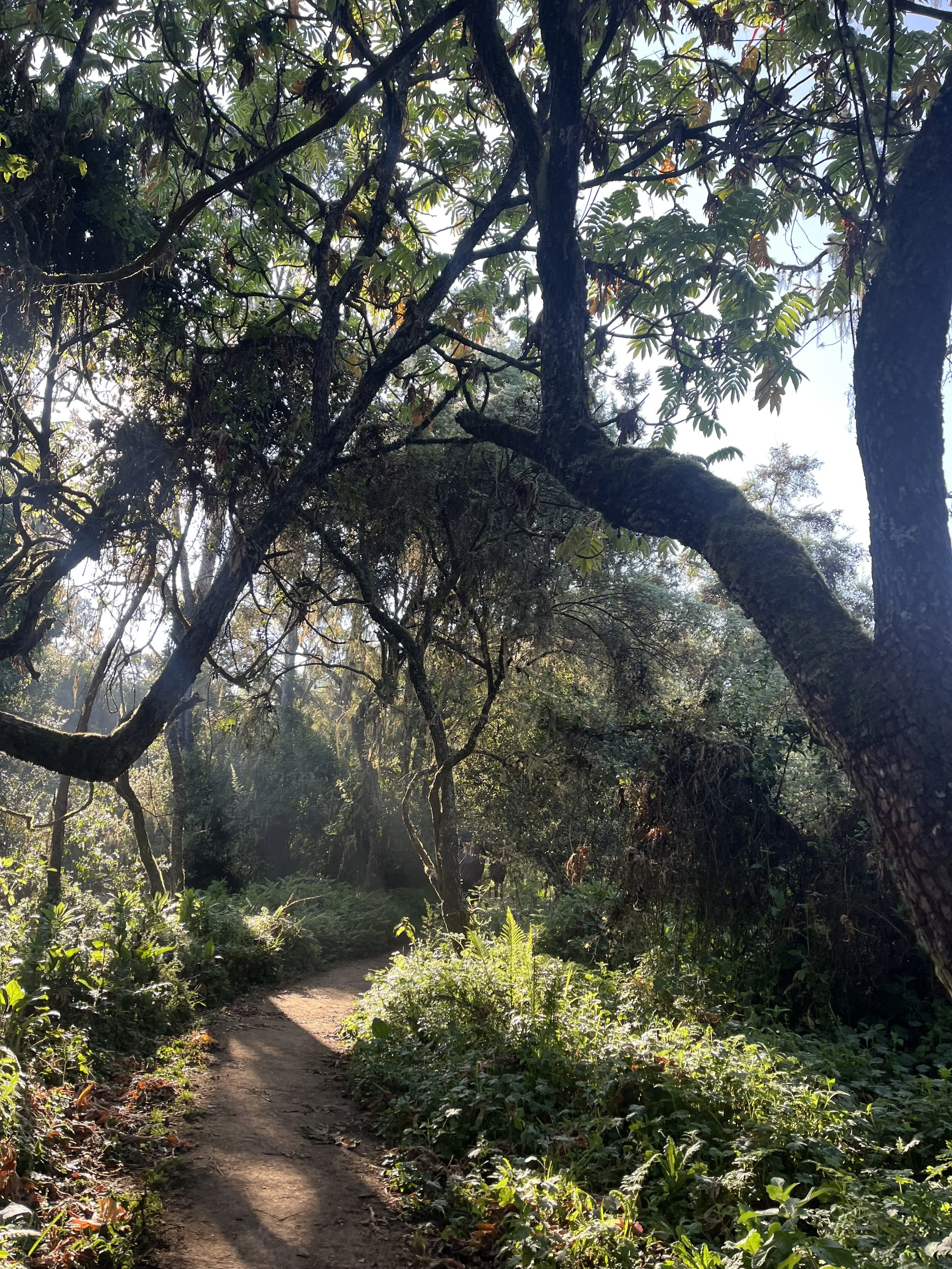
The first two days in the cultivated, or forest, zone were short, light hikes meant helping trekkers acclimatize and make it past a few camps. The forest zone brimmed with life: trees, vines, moss, flowers, monkeys, birds and tree hyraxes that screamed in the night. Each encounter with a new creature or flora was delightful and intriguing, especially with our wonderful guides to elaborate on the medicinal, cultural or ecological significance of natural life, like the African wormwood, the peace plant or the Lobelia deckenii. Each small section of trail overflowed with thousands of forms of life I’d never encountered, all new creatures to meet and acquaint myself with, even if for a short time.
The bulk of the relationships I built were human, however. Saying hello to passers-by on the trail, chatting with new acquaintances while hiking, playing cards with the crew and my fellow hikers during rain, learning bits of Swahili from the guides and, of course, dealing with altitude sickness are all great ways to get close to a group of people in a very short time. Some hours passed with a comfortable silence, only the sound of footsteps and wind, while others were full of friendly chatter and laughter.
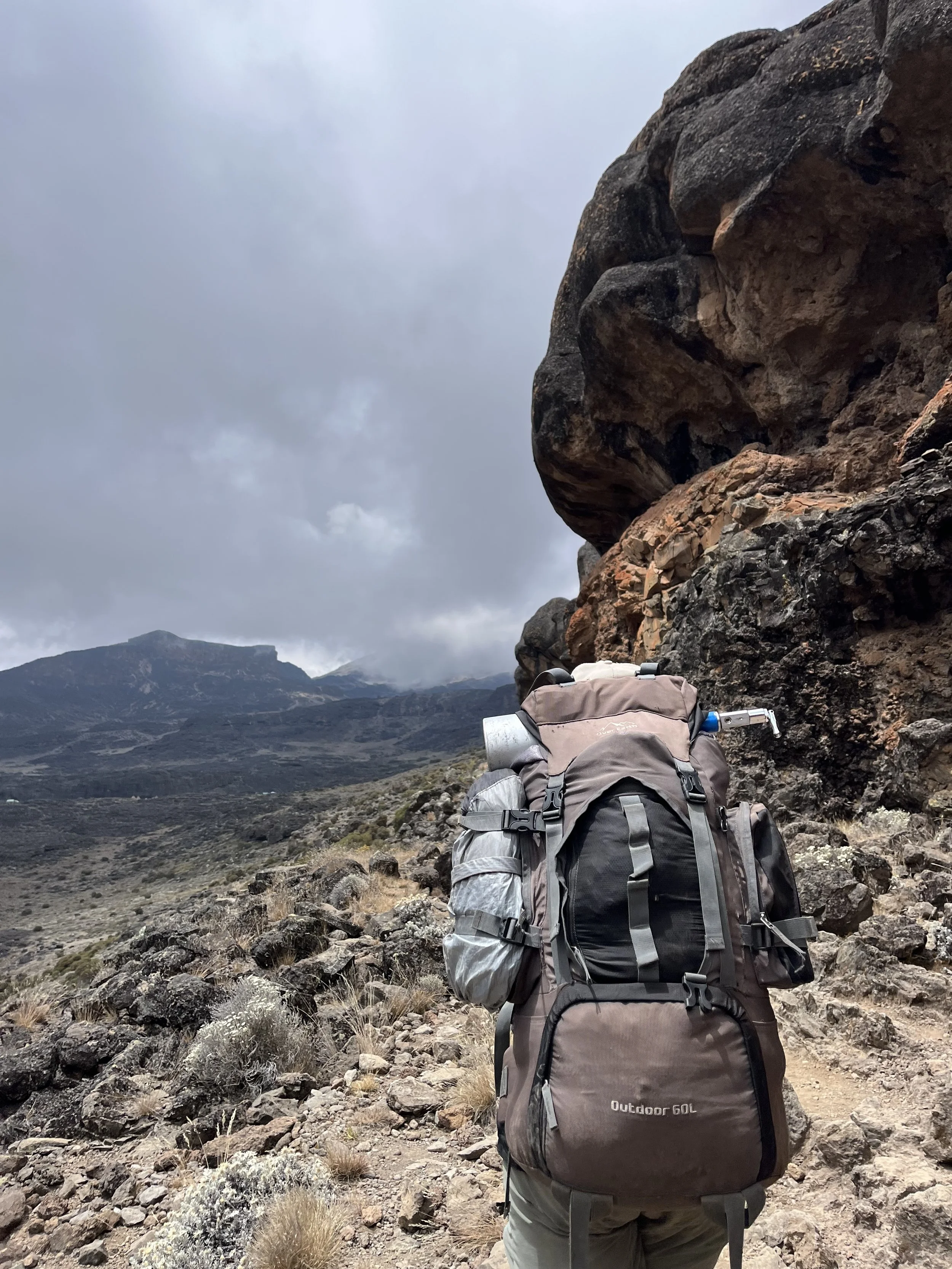
The trek presented many challenges, from altitude sickness to bitter cold to physical exertion, which were strange to experience with a group of mostly relative strangers. Although I experienced no altitude sickness until summit day, distances and elevation gain, which typically don’t feel so challenging for me, seemed a bit more draining. Each day, as we gained more altitude, I could feel my respiration quicken, and my bag felt a bit heavier. While Kilimanjaro isn’t as physically challenging as many other major mountains, like Mont Blanc or the Matterhorn, which require ropes and harnesses, it is still a very serious physical undertaking, and it takes much more of a toll on the body than the average person is prepared for without any training. It is certainly much more physically accessible than many other climbs, but a part of that access is preparation and training. I was very glad that I had spent a few months training, so I could spend my time on the mountain taking in all there was to appreciate or dealing with the new challenge of altitude rather than struggling against my own body. There were a surprising number of climbers who had done little to no training and had foregone bringing any altitude sickness medication, and they expressed regret at their decision. As Kilimanjaro is known as a walk-up, which it is, there were some on the mountain who anticipated less of a challenge. In fact, among my climbing companions was an 11-year-old boy, whose parents had underestimated the difficulty of the climb. He had not trained, and although he was remarkably resilient and positive, the strain of so many consecutive days of hiking at altitude proved detrimental. His blood-oxygen levels dropped dangerously low, and on the sixth day of the trek, he was evacuated by helicopter off the mountain.
I was grateful to have met and made friends with him and his mother, but I was very relieved to see them go, knowing they were going to get much-needed respite from the altitude. His parents and the guide made the official decision to evacuate on day four. However, heavy cloud cover on the mountain prevented immediate rescue. The helicopter crew and guides were cautious but efficient in their work, and the deft landing and takeoff on such an uneven site were remarkable to witness. Kilimanjaro stands at over 19,000 feet, and its climb requires thousands of feet in elevation gain over the course of just a few days. The evacuation reminded me of how serious an endeavor it is and how important it is to prioritize health and well-being, as factors like cloud cover could have presented serious danger if the boy’s health had been in a graver state.
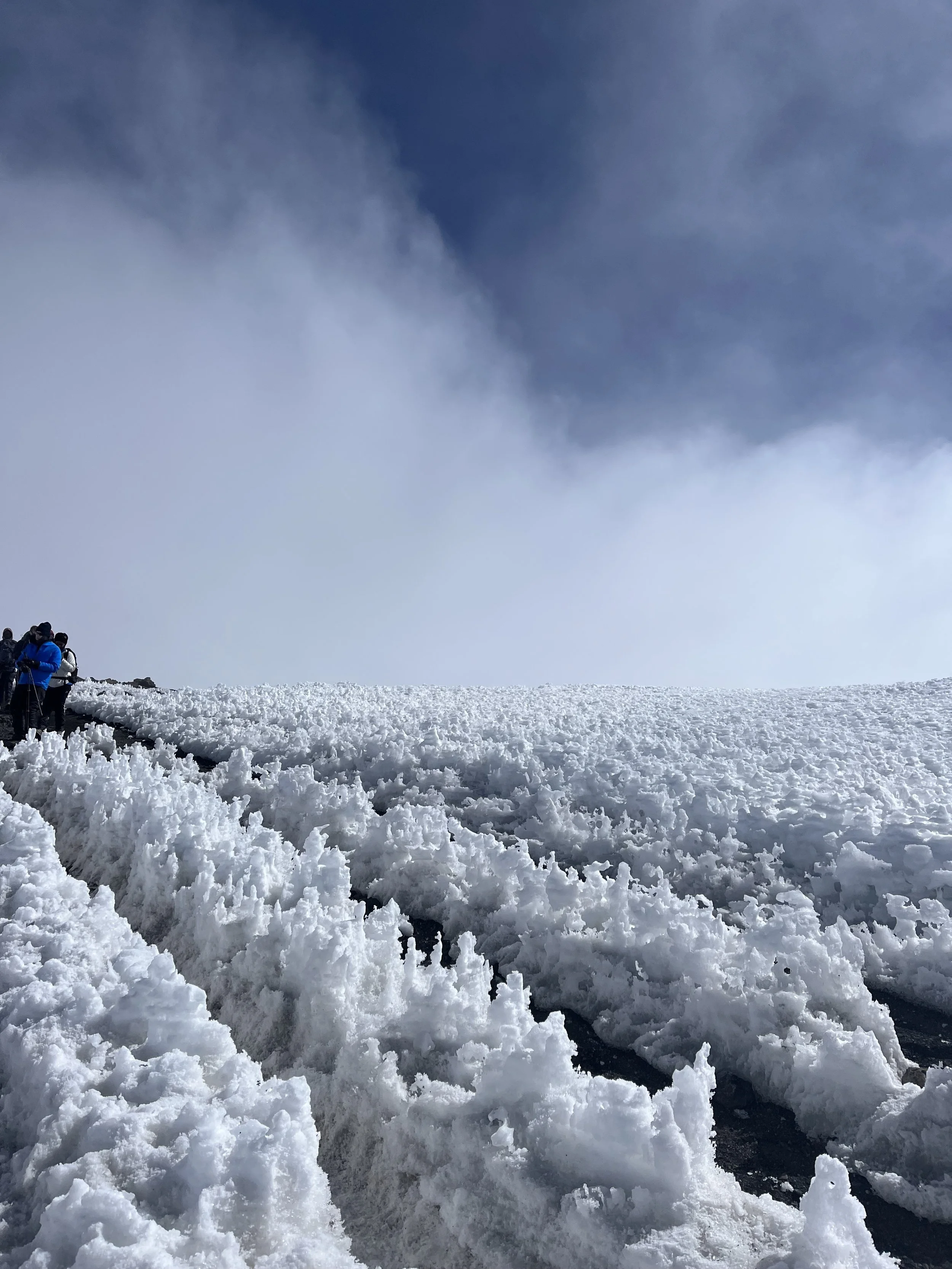
Summit day was undoubtedly the most demanding day of the trek. Our day began at 2 a.m. with a light breakfast and heavy gear. Every warm layer we had was put on, headlamps were primed and water bottles were turned upside down in our bags to prevent the tops from freezing. The majority of the climb was switchbacks on an incline of sand and gravel, which meant our boots sank a bit into each step. At around 17,000 feet, I stopped to vomit, our wonderful guide rubbing my back and comforting me. From then on, I felt each foot gained in the slosh of my stomach and the pounding in my head. I wanted to be present to take in the incredible experience, but I was mostly engrossed in my nausea, my headache and the cold in my hands and feet.
But I couldn’t ignore the beauty of the mountain entirely; the stars were twinkling above me, and at dawn, the sun seemed to crack the sky open over the adjacent ridge, breaking open the world for the new day. Experiencing the misery of my altitude sickness while witnessing some of the most incredible moments I may ever be present for in my life seemed a strange but somehow fitting dichotomy. Maybe the best and worst are meant to go hand in hand.
Experiencing such highs and lows in the same moment was a true privilege. Not only is the experience a once-in-a-lifetime opportunity, but it is also an expensive one, with a standard of care for the climbing companies far above any other camping I have ever done. That said, I had never gone climbing or camping through a comprehensive, guided trip taken care of by a company before, new to having my meals cooked for me, my tent put up and taken down by someone else and the bulk of my gear carried by another person. The guides and crews on the mountain are almost expected to cater to the highest level of convenience possible in an incredibly inconvenient environment that is well outside the average comfort zone.
While it was a camping and hiking trip, it felt in many ways like a luxury travel experience. I was struggling only through the physical exertion and altitude, and not through the typical labor involved in making and breaking camp, cooking outside, managing daily bodily needs in the wilderness and carrying the equipment necessary to do so. I felt grateful for this but also a bit uneasy, considering the guides and crews doing this labor are almost all Tanzanians, and the climbers are by and large white. I had a hard time reconciling how incredible of an experience it was to reach such heights, how fundamentally human it felt to be going somewhere to do something hard that I didn’t have to be doing with a group of people also dedicated to an unnecessary but remarkable goal, with the fact that those able to experience this were largely white in a former British colony. Is the endeavor fundamentally corrupted and colonial in nature? Is it simply an issue of access to these kinds of experiences? How can we factor in the importance of the tourism industry in Tanzania? Many of the guides and crew I chatted with had gone to college for tourism or to become guides, and they were deeply passionate and proud of the profound and inherent beauty of their country. They spoke simultaneously of the difficulty of the job and the pride they felt about the mountain and the beauty around them. I never did answer my questions, but I left the slopes of Kilimanjaro carrying many truths away with me.
The frenetic exertion it took to reach the top existed next to the remarkable stillness of the mornings and nights. The hardship existed next to the unmatched joy. The problems existed next to the beauty. The experience was one of multitudes, of unresolved tension with a passionate love for the overflowing life and emotion that existed on the mountain. The existence of all these things at once was the most valuable thing I brought back with me from the mountain.
Isabelle Ringswald Egan
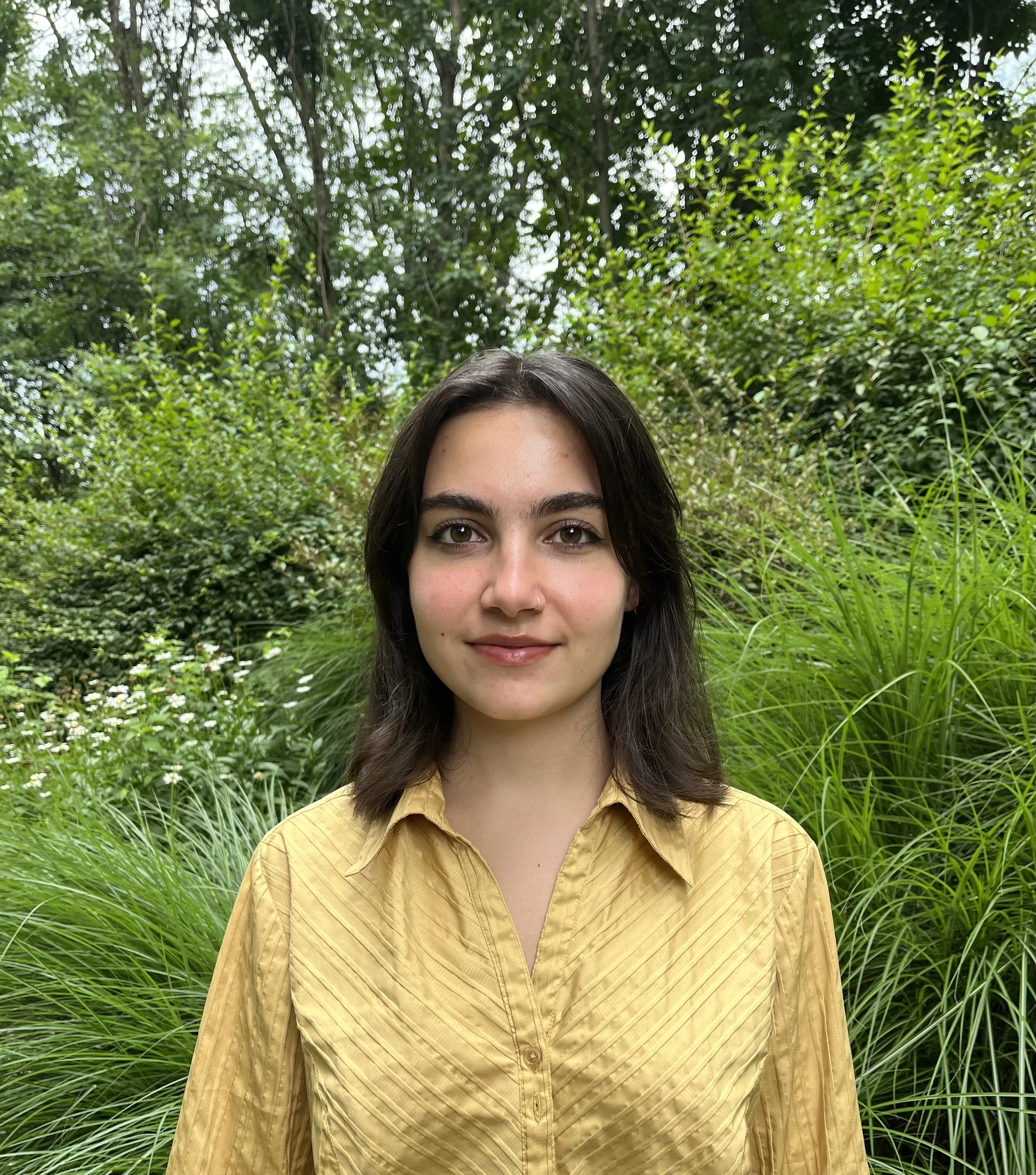
Isabelle RingswaldEgan is a senior at Barnard College of Columbia University studying Anthropology, French, and Environment Science. Her passion for writing and journalism come from her love of life which is so rooted in storytelling and shared experiences. She loves to chat with strangers any chance she gets, do as much of her travel as she can on foot, and listen to and share stories with others.