
Kelcie Lee
Seychelles is an island paradise home to stunning mountains, beaches and marine life.
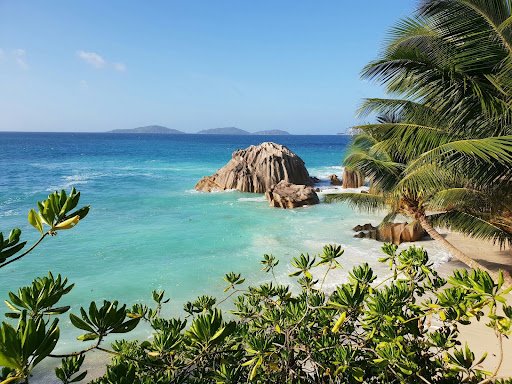
Seychelles coast. Christian Cacciamani. Unsplash.
Lying off the coast of Africa, roughly 700 miles northeast of Madagascar, is Seychelles, a lesser-known tropical paradise with untouched beaches and breathtaking views. Officially named the Republic of Seychelles, it is Africa’s smallest country and an archipelago nation, renowned for its stunning beaches, granite formations, coral reefs and unique marine life.
Despite being one of the world’s smallest countries, Seychelles doesn’t lack in its vast diversity of land and wildlife. The country is divided into two island groups: the mountainous Mahe group, called the Inner Islands, and the flat, coral-filled Outer Islands. The former consists of more than 40 islands that are flooded with rocky hills and towering mountains, overlooking tropical vegetation, silver-white beaches and tranquil lagoons. For the latter, the flat coralline islands hover around sea level and offer elevated coral reefs, with many of these environments largely uninhabited and waterless.
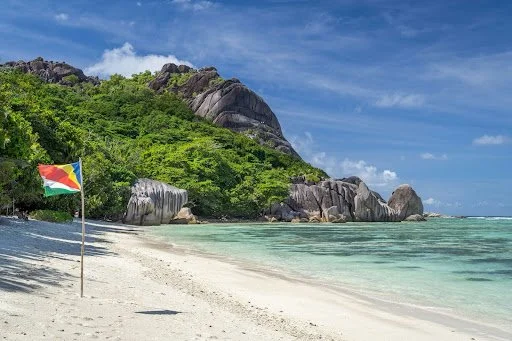
Beach in Seychelles. Pawel Wieladek. Unsplash.
Among Seychelles’ variety of natural beauty is Morne Seychellois National Park on the main island of Mahe. Consisting of mangroves, tropical jungles, extensive hiking trails and tall mountains, this park protects the fragile ecosystem and species diversity that the nation relies on. The national park also carries with it the islands’ history and relics, withcultural sites such as former distilleries and houses that were part of the exploitative systems used to grow cinnamon and coffee. This agricultural past was one of the nation’s primary purposes before its modern-day popularity as a travel destination.
As an archipelago nation, Seychelles also boasts stunning beaches and snorkeling spots. Beau Vallon is one of the islands’ most popular beaches due to its long shoreline and calm waves, which attract those who swim, snorkel, boat, fish or scuba dive. There is also Anse Takamaka, the quintessential picturesque beach that paints unforgettable scenery, crystal-clear water and a vast view of the shoreline.
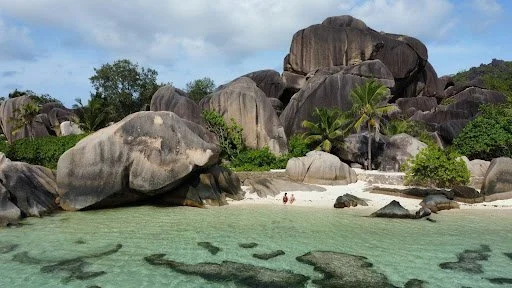
Granite rocks behind beach. Seytales. Unsplash.
The history of Seychelles also presents a unique story. It is generally believed that the islands were discovered during the seventh century by Arab sailors. In 1502, Portuguese mariner Vasco da Gama saw the islands and named them “Tres Irmaos,” or the three brothers. In 1609, the British East India Company landed in Seychelles but decided not to settle there. More than 100 years later, in 1742, French explorers landed and settled on the islands. By 1770, more French settlers and their enslaved Africans had arrived before people from China, India and Malaya arrived in smaller numbers.
The Seychelles currently has a population of multi-ethnicity and mixed descent, which has since created a strong multicultural identity for locals in Seychelles. To this day, Creole, also known as Seselwa, is Seychelles’ mother tongue, while English and French are also recognized as national languages. Seychelles is currently home to approximately 100,000 people who continue to celebrate their unique culture. When it comes to religion, a majority of the population identifies as Roman Catholic, but there are also Anglicans, other Christian denominations, Hindus and Muslims.
Seychelles is also known for its immensely diverse group of wildlife, including over 900 different fish species and more than 1,000 invertebrate species. The country is also unique because of its sea turtles and giant tortoises that roam in and around the islands. Seychelles’ native species include tree frogs, snails, snakes, tiger chameleons, bats and more, which the island strives to continue to protect.
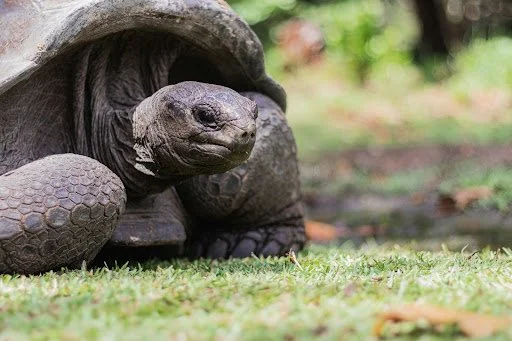
Seychelles tortoise. Dan Maisey. Unsplash.
The variety of life, however, doesn’t stop with the animals. Seychelles is also home to approximately 200 plant species, with about 80 of them unique to the country. Seychelles is famous for its coco de mer trees, which are rare palm trees that can only be found on two of the islands within the republic. The coco de mer produces a large seed fruit known for having medicinal and mystic properties. Due to the rarity of this tree, the Seychellois government regulates harvesting and closely monitors the plants’ health.
While tourism makes up approximately 72% of the country’s GDP, traveling sustainably and responsibly is always a priority for the islands. The Seychelles Sustainable Tourism Foundation recommends visitors be conscious about using plastics and making efforts to use reusable water bottles and bags. Additionally, most cars are petroleum-based and contribute to greenhouse gas emissions. Travelers can instead use affordable and accessible public transport methods, including Tata buses, which are central to the local Seychelles experience.
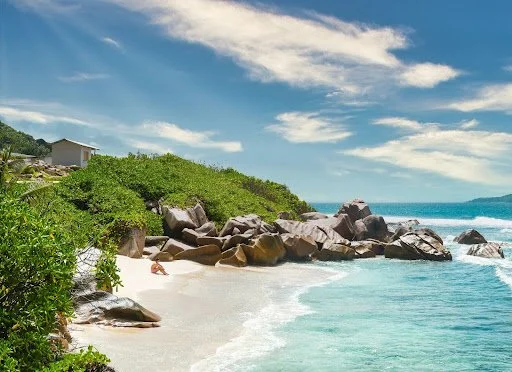
Beach in La Digue, Seychelles. Luka Odak. Unsplash.
To enhance your trip to Seychelles, it is recommended to shop and buy from local businesses, which not only leads to fresher and healthier food but also lower transport emissions. Lastly, it is important to respect the marine ecosystems and creatures that live in and around the islands. When snorkeling or diving, admire the beauty of marine life without disturbing or stirring up sediment that harms the delicate coral reefs surrounding the nation. Rash guards and reef-safe sunscreens are also important for protecting the country’s natural environment.

Kelcie Lee
Kelcie is a second-year student at UC Berkeley majoring in history and sociology, with a minor in journalism. She developed her passion for writing and journalism in high school, and has since written for a variety of news and magazine publications over the last few years. When she isn't writing, Kelcie can be found drinking coffee, listening to music or watching the sunset.