
Carol Khorramchahi
Kidnapping in northern Nigeria is no longer an occasional headline, it’s a daily risk. Here’s what’s fueling the surge, and what it’s costing families.
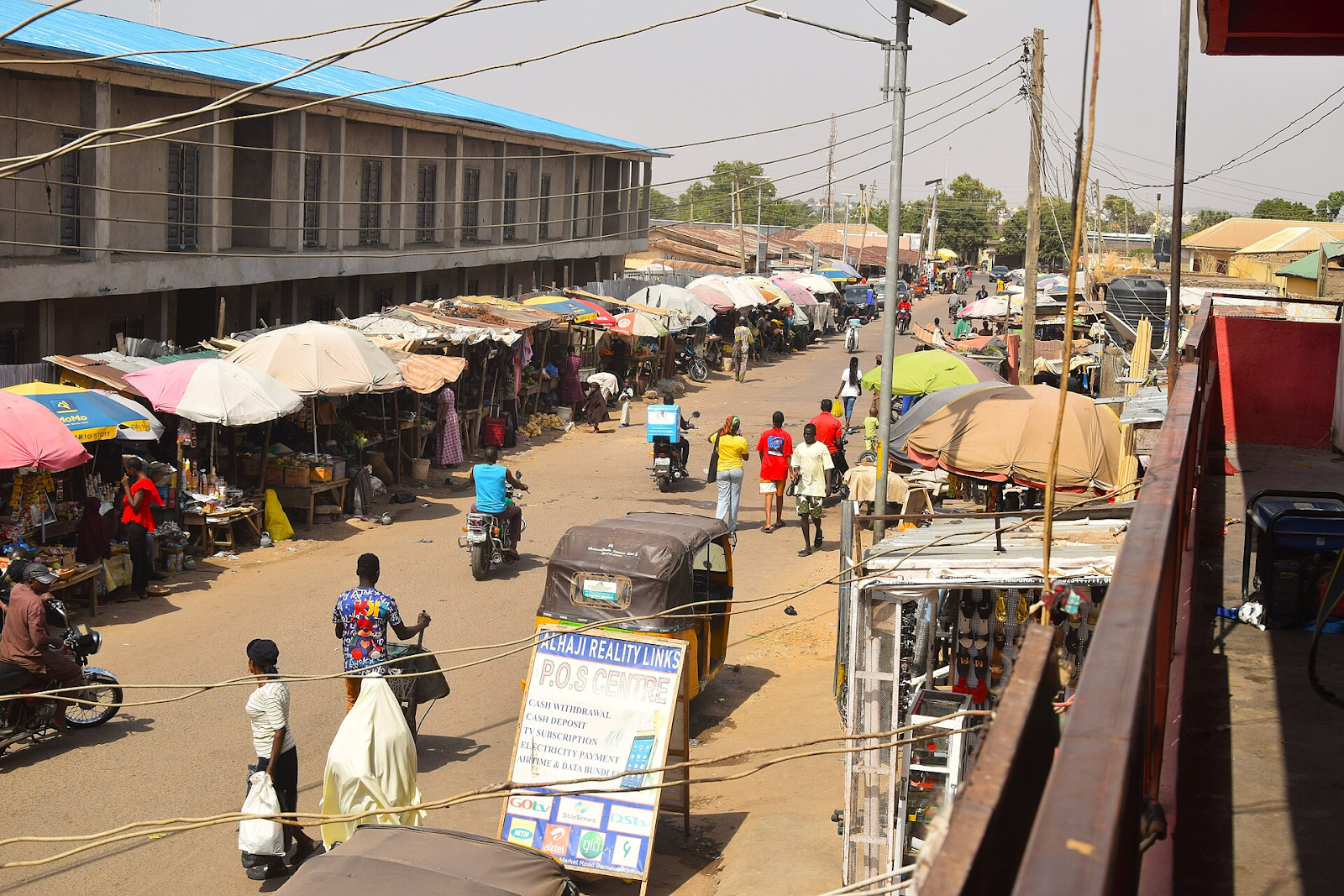
Street around Barnawa market, Kaduna State, Nigeria. Kambai Akau. CC BY-SA 4.0.
In northern Nigeria, kidnapping has stopped feeling like a rare headline and started feeling like a daily risk calculation. Parents think twice about school; travelers avoid certain roads; communities shorten routines, cancel gatherings and stay closer to home. On Feb. 7, 2026, gunmen attacked a village in Kaduna State, killing three people and abducting 11 others, including a Catholic priest. The details were familiar: a pre-dawn raid, multiple victims and a community left waiting for answers.
Just weeks earlier, another Kaduna story showed how mass abductions can shake an entire region. In late January, gunmen kidnapped worshippers during church services; by Feb. 5, 2026, local leaders said those abducted had been freed, with Christian officials crediting security agencies and community efforts. Anadolu Agency reported the release of 166 people abducted from two churches in Kaduna State. But even when people return, the fear doesn’t disappear, because the system that allowed the kidnapping remains in place.
So why does this keep happening? One reason is that kidnapping has become profitable for armed groups operating across Nigeria’s north. A joint brief by ACLED and the Global Initiative explains that armed bandit groups in the northwest have turned to “illicit economies,” including kidnapping, as key revenue streams. The brief puts it bluntly: “Kidnapping has been a major source of revenue” for both extremist organizations in the northeast and bandit groups in the northwest.
The human cost is clearest when children are taken. A decade after the Chibok schoolgirls kidnapping, mass abductions remain a recurring feature of life in several northern states. In a 2024 explainer, Al Jazeera cited the risk consultancy SBM Intelligence in describing how large-scale kidnappings continue to spread, with thousands abducted and billions of naira paid in a single year. The pattern is part of what makes the crime so difficult to contain: once kidnapping becomes a business model, it can expand quickly, especially where poverty is high and security response is stretched thin.
Schools now operate under that shadow. On Jan. 12, 2026, parts of northern Nigeria began reopening schools after months of closures triggered by mass abductions. Reopening is a sign of resilience, but it is also a reminder of what families are being asked to accept: education weighed against safety and normal life rebuilt on top of chronic insecurity.
This is why Nigeria’s kidnapping crisis isn’t only a crime story. It’s a governance story and a community story, about what happens when fear becomes routine, when armed groups are funded by ransom economies and when ordinary people are left to adapt to risks they did not choose.
GET INVOLVED:
Support education and child protection efforts through UNICEF Nigeria and Save the Children in Nigeria. Follow reporting and advocacy on attacks against civilians via Amnesty International Nigeria, and track patterns of political violence and abductions through data and analysis from ACLED.

Carol Khorramchahi
Carol Khorramchahi is a student at Boston University, where she studies English and Psychology and minors in Journalism. She enjoys writing and reporting on stories that bring together culture, identity, and community, and has experience in both newsroom reporting and digital media. She is especially interested in thoughtful storytelling with a global lens.