
Zoe Lodge
Artists, travelers and locals have been rejuvenating Tunisia’s art and travel scene by transforming abandoned villages into eco-art retreats.
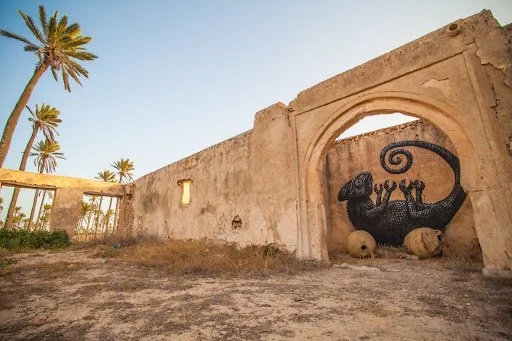
Chameleon artwork in Djerba, Tunisia. Galerie Itinerrance. CC BY-SA 4.0.
Sun-bleached villages in the North African nation of Tunisia have been reclaimed by artists and travelers alike. Collaborative projects flourish, local crafts thrive and sustainable hospitality emerges from a fusion of nature and creativity. The vision behind the new wave of eco-art retreats in Tunisia includes spaces where art, travel and community regeneration intersect.
These abandoned and underused villages, once the shells of economic migration and desertification, are being revitalized through eco-friendly hospitality, local crafts and immersive creative programs. These retreats invite artists, travelers and locals to connect, draw inspiration from the landscapes, host workshops, eat locally grown food and stay in accommodations designed with care for place and planet.
The villages typically skirt the edge of Tunisia’s oases, where palm groves, ancient architecture and remote desert climates dominate. Residencies, murals, workshops, crafts and open-studio visits bring creative energy to the place. One example is the village of Erriadh on the island of Djerba, which began its transformation into the open-air street-art project Djerbahood in 2014, with more than 150 artists from over 30 countries painting 250 murals across village walls. Lodging is built with local materials and links to local artisans and ecosystems in an effort to preserve natural and architectural heritage. Instead of passive tourism, these retreats aim to empower local residents by involving them in the art, craft and economic model of the village. Visitors can expect art workshops, mural walks, craft demonstrations, nature visits, yoga or meditation courses and sustainable meals from locally harvested produce.
The Djerbahood murals now line alleyways and homes, blending contemporary global art with local architecture and traditions. For travelers, this means art is everywhere in the village, with no traditional museum needed. Workshops and interactions with local artists make it especially appealing for those looking to create as well as consume art. Visitors can stay in small hotels such as Dar Ennour to truly immerse themselves in the city’s vibrant art scene. Stays in the Djerbahood area range from $130 to $500, varying based on the luxury of accommodation.
In the palm-grove oasis of Nefta in southern Tunisia, the Dar HI eco-retreat, designed by architect Matali Crasset, offers a more nature and art-oriented stay. The construction of the retreat utilized locally sourced materials, employed local artisans and incorporated self-sufficient agriculture, creating a semi-modern desert retreat. With spa facilities, yoga sessions and small-group creative interactions, it’s ideal for travelers looking to blend wellness, design and local culture. Activities might include desert guided walks, artisan craft demos, spa time and the experience of simple living among palms and dunes. A night at the Dar HI is expected to cost around $200, varying between the seasons.
Tunisia’s eco-art retreats offer travellers a creative doorway into places too often overlooked, villages that once fell silent, now humming again with colour, form and cultural exchange. Whether you’re an artist, a curious traveler or someone seeking mindful connection, a stay in one of these places is an experience like no other.

Zoe Lodge
Zoe is a student at the University of California, Berkeley, where she is studying English and Politics, Philosophy, & Law. She combines her passion for writing with her love for travel, interest in combating climate change, and concern for social justice issues.