
Artists, travelers and locals have been rejuvenating Tunisia’s art and travel scene by transforming abandoned villages into eco-art retreats.
Read More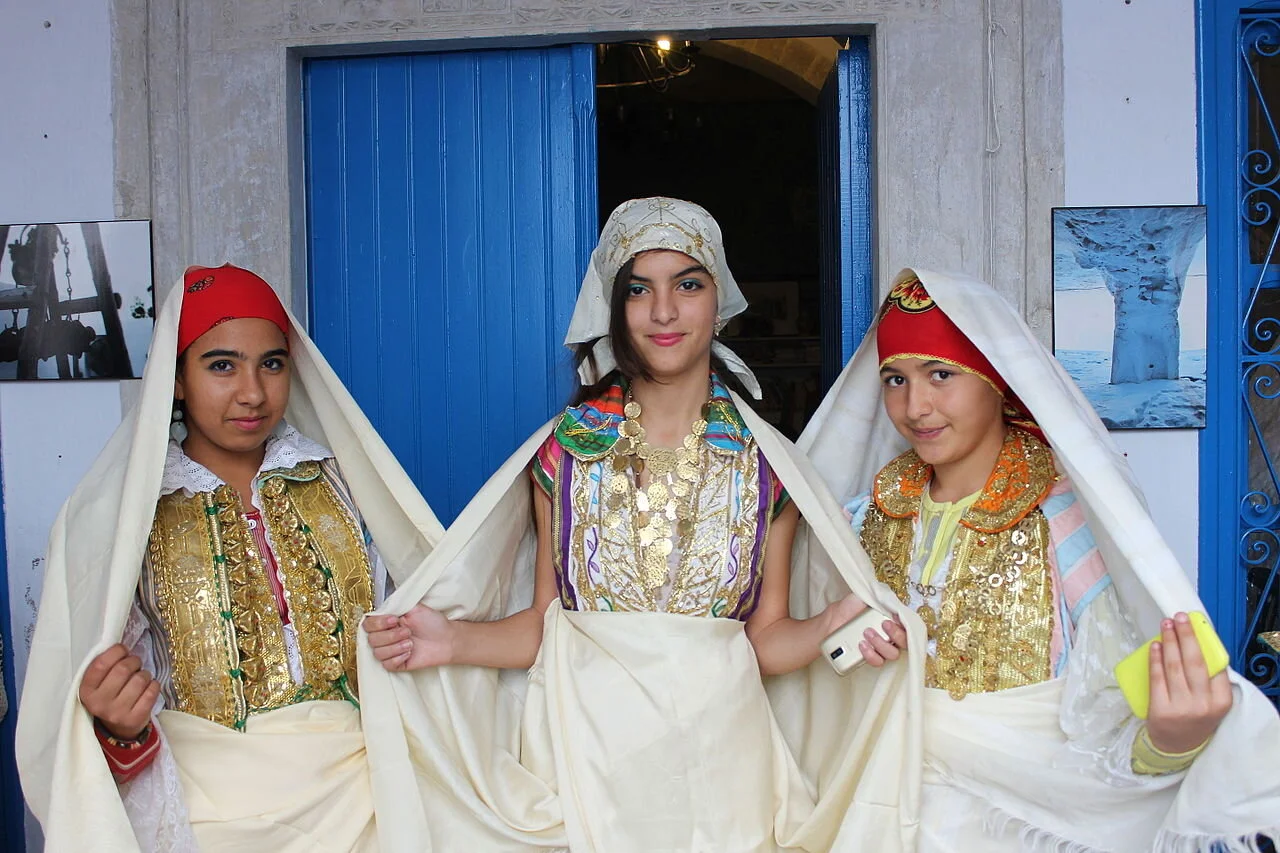
Tunisian girls wearing traditional Tunisian dress including the sefseri, a white veil made of silk or wool. Sami Mlouhi. CC BY-SA 4.0.
6 Treasures of Tunisia, From 'Star Wars' to Desert Oases
Tunisia is a country in North Africa, a region known as the Maghreb, that is similar in culture, history and religion to Morocco and its neighbor, Algeria. Tunisia is one of the most visited countries in Africa – it is a popular vacation destination for Libyans, Algerians, the French, Germans and the British. The country’s official language is Arabic, but the local Tunisian Arabic dialect,darija,, and French are also commonly used. The majority of Tunisians are Muslim, though a small Jewish community lives on Djerba, North Africa’s largest island.
The tiny country offers a variety of landscapes – beaches, mountains, the desert, woods and salt pans – that are sure to appeal to all types of travelers. The museums and ancient Roman ruins are sure to appeal to history buffs, and die-hard “Star Wars” fans will be interested to know that many scenes on the planet Tatooine were filmed in Tunisia. Be ready to enjoy dishes flavored with harissa, a spicy red pepper paste that has recently become popular in the U.S., along with plenty of seafood and Maghrebi staples such as couscous and syrupy doughnut-like bambalouni and zlebia.
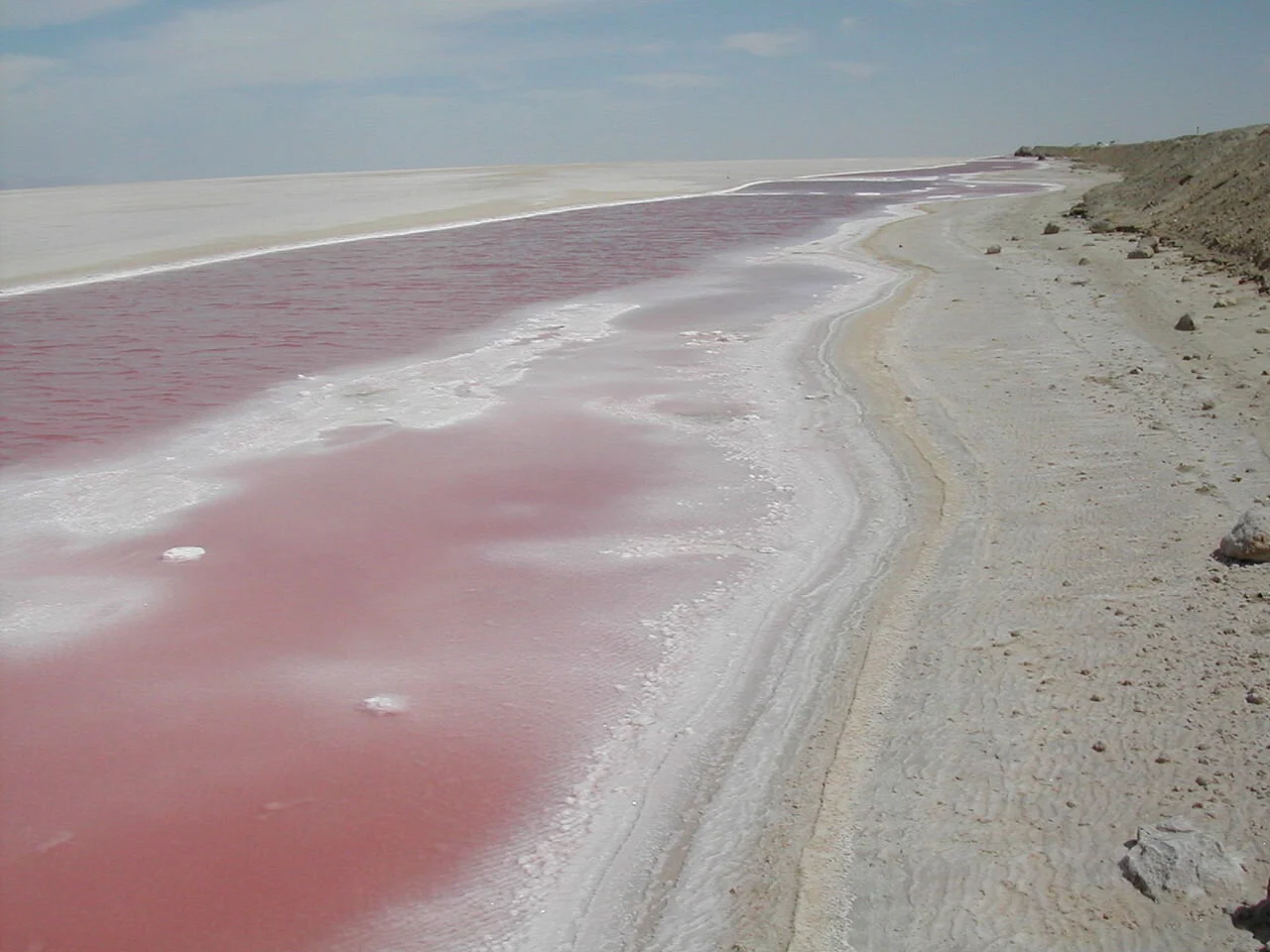
Minerals from Atlas Mountain runoff give Chott el Djerid its pink hue. Vinzenz Mühlstein. Public Domain. CC0
1. Chott el Djerid
The fictional planet Tatooine from the “Star Wars” saga was named after Tataouine, a desert city in Tunisia. Although no scenes were filmed in the real Tataouine, many of the first “Star Wars” film’s scenes were filmed in cities all over Tunisia. One of the most notable scenes of Tatooine is of Luke Skywalker’s home, the exterior of which was filmed in Chott el Djerid, the Sahara’s largest salt pan. A chott, or salt lake, stays dry for the majority of the year but fills intermittently from infrequent rainfall and during the spring thaw when water runoff from the Atlas Mountains floods the basin. The dissolved minerals from the Atlas Mountains give Chott el Djerid its otherworldly cotton candy pink color.
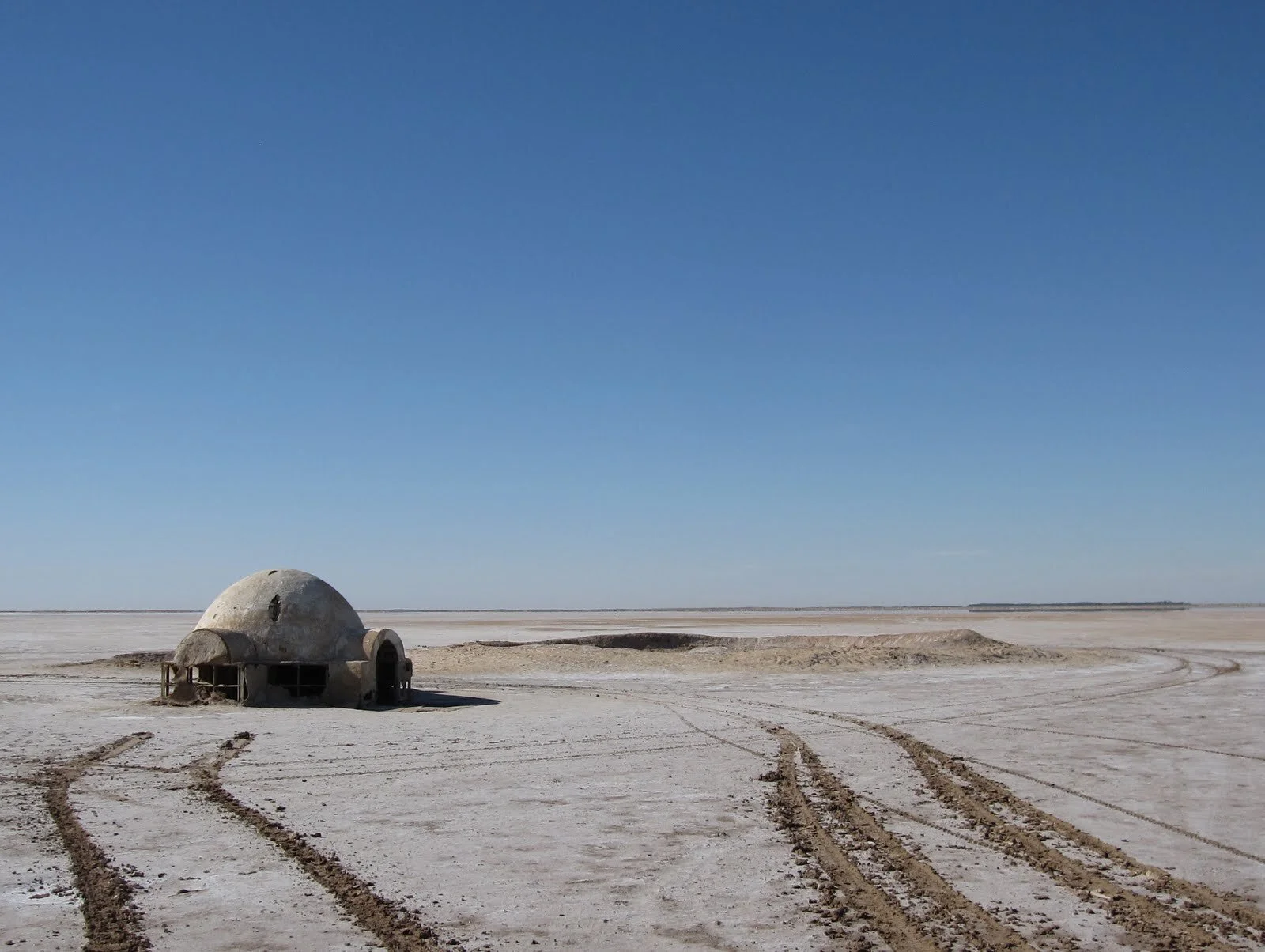
Remains of the Lars Homestead on one of the “Star Wars” movie sets in Chott el Djerid. Stefan Krasowski. CC BY 2.0.
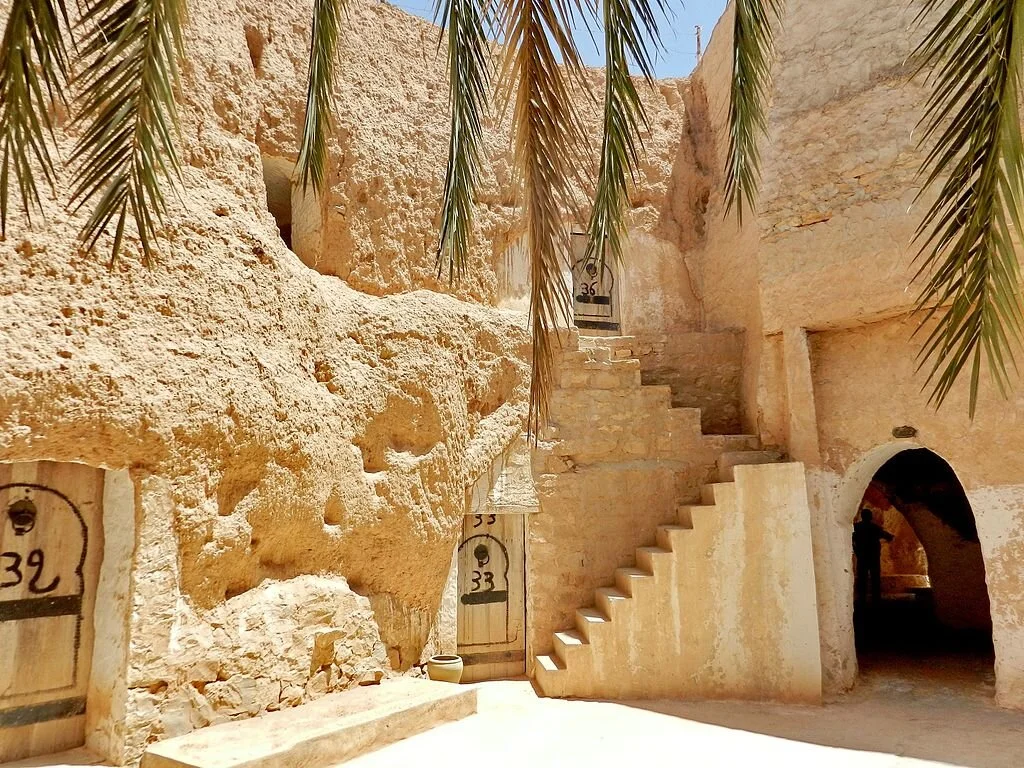
Ancient Berber underground homes in Matmata, Tunisia. Tanya Dedyukhina. CC BY 3.0.
2. Matmata
When “Star Wars: A New Hope” was released in 1977, Matmata, a small Berber village in southern Tunisia, became famous for its underground cavelike homes where some of the local residents still live. (The Berber, or Amazigh, are an ethnic group native to Northwest Africa, particularly the Maghreb.) The interior of Luke Skywalker’s home was filmed in the courtyard of Hotel Sidi Idriss, an underground hotel in Matmata. The hotel is open year-round, and is a must-visit for any die-hard “Star Wars” fan. For those who are not “Star Wars” fans but still want to visit the cave dwellings, the Musée Berbère de Tamezret (about six miles from Matmata) is a great alternative option.
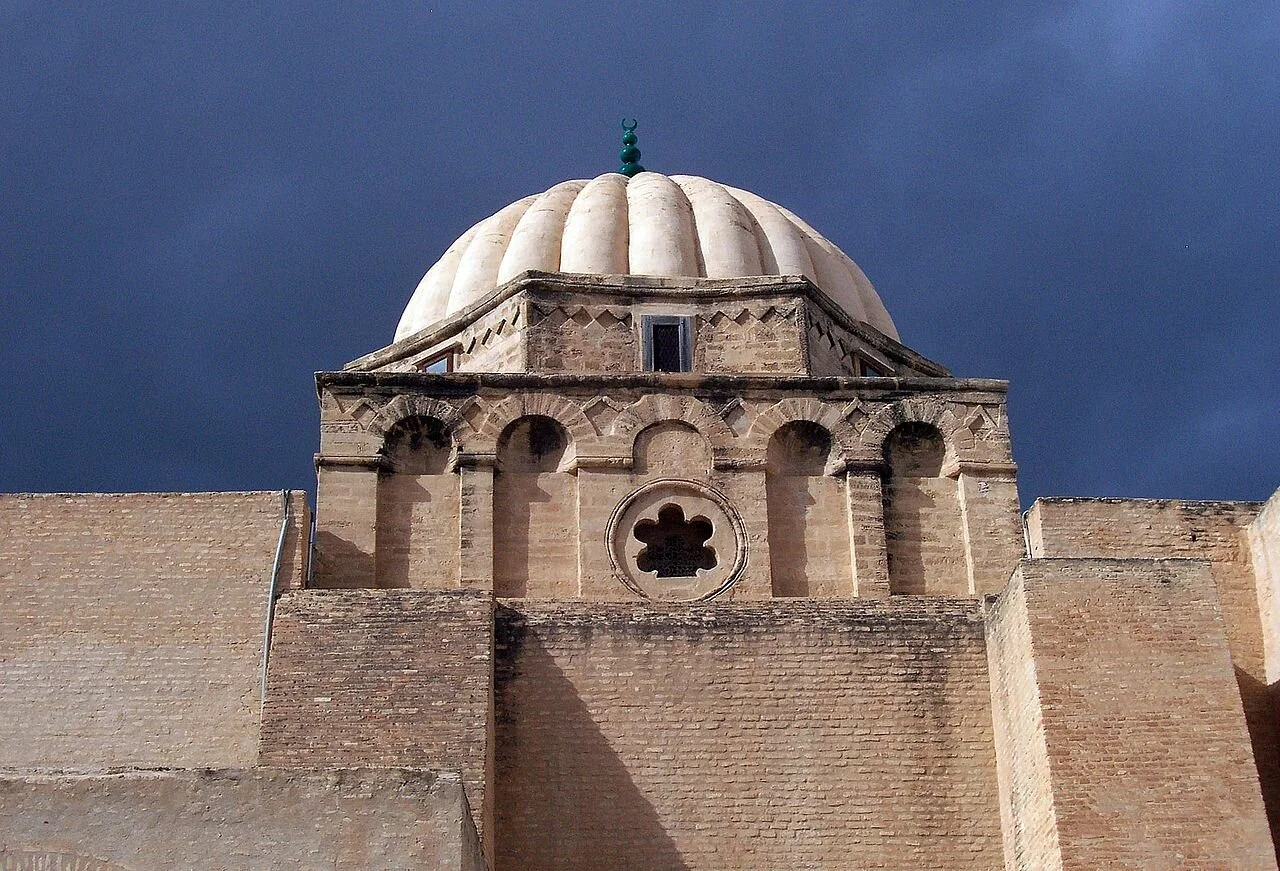
The dome of the Great Mosque of Kairouan houses the mihrab, or structure that points out the direction in which Muslims pray. Colin Hepburn. CC BY-SA 2.0.
3. Kairouan
Kairouan, a UNESCO World Heritage Site, is considered by some to be the fourth holiest site in Islam, after Mecca, Medina and Jerusalem. The city, founded by the Umayyads in 670, is the most ancient Arab-Muslim center in the Maghreb. Kairouan began as a military camp, but soon became an important center for Islamic scholarship, religious sciences, and art. The city contains many mosques, but the most important is the Great Mosque of Kairouan, also known as the Great Mosque of Uqba. The mosque contains a courtyard and a prayer hall, as well as a 105-foot minaret that bears resemblance to a Syrian bell tower or an ancient Roman lighthouse.
Another site that cannot be missed when visiting Kairouan are the Aghlabid Basins, a sophisticated feat of engineering and the largest hydraulic installation of the Middle Ages. Originally, there were 16 pools that provided water for Kairouan, but today only two reservoirs remain. Nearby, Kairouan’s souk has countless vendors who sell everything from snacks and jewelry to carpets and leather goods.
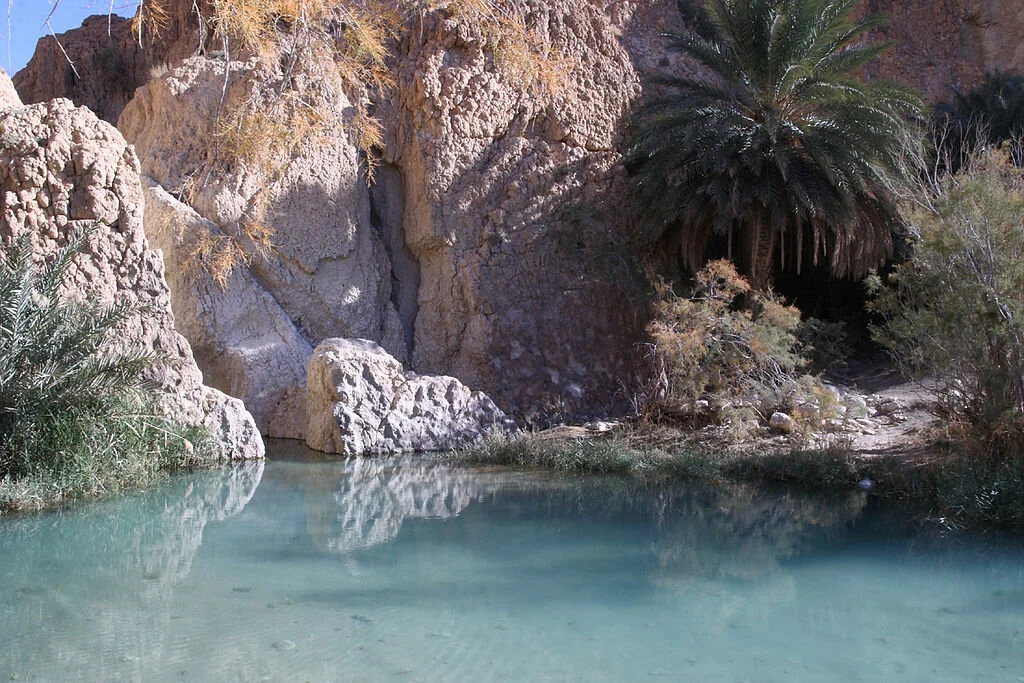
The Chebika oasis lies at the bottom of the Djebel el Negueb Mountains. Remi Jouan. CC BY-SA 3.0.
4. Chebika
Built on what was once a Roman military post, Chebika is a small village that sits right above a palm oasis at the foot of the Djebel el Negueb, which are part of the Atlas Mountains. At the top of the mountain, one can see the oasis, the village, and Chott el Gharsa, a salt lake that lies near the Algerian border (and served as a movie set for “Star Wars: The Phantom Menace” and “The English Patient”). Visitors can hike up the canyon to a small waterfall where they will be greeted by a beautiful view of bright green palm trees standing starkly against the mountainside.
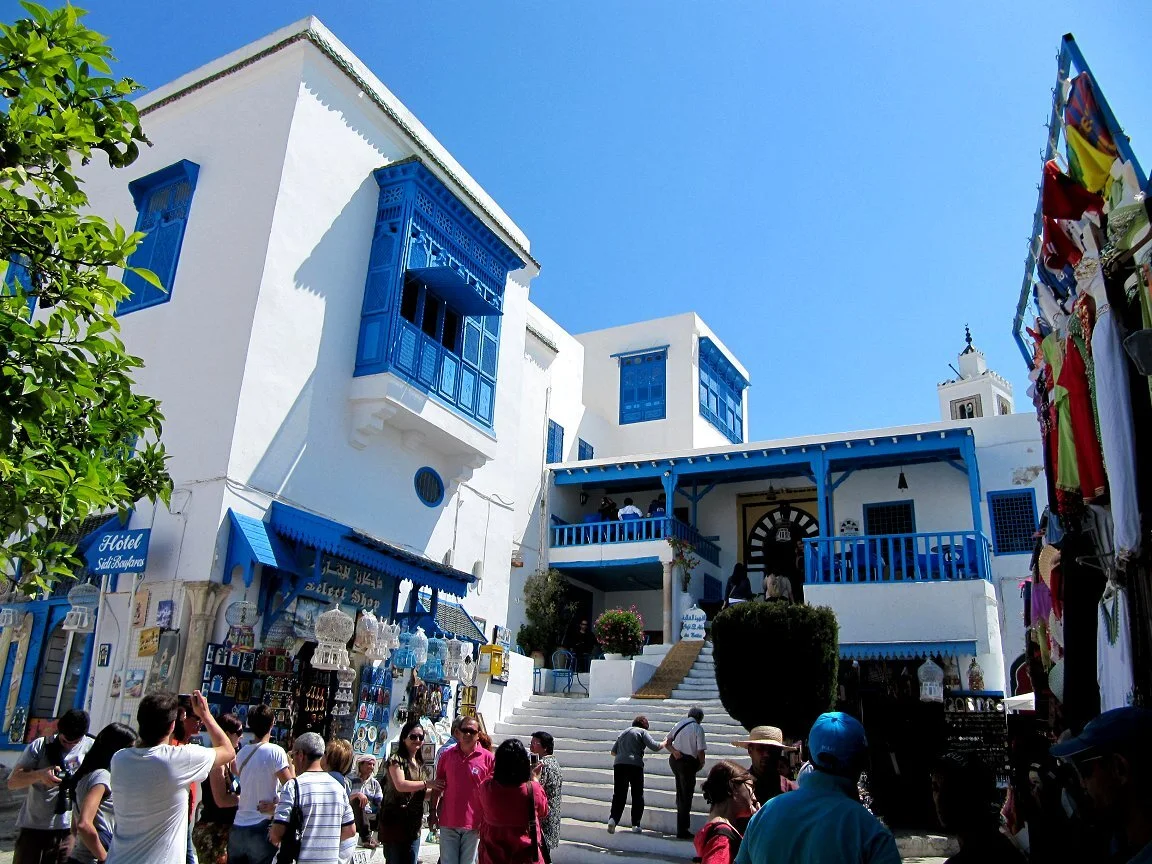
Hôtel Bou Fares and storefront in Sidi Bou Said. Allain Muller. CC BY-SA 2.0.
5. Sidi Bou Said
Sidi Bou Said is known for its blue and white theme, common to other Mediterranean-region cities and towns. The beautiful cerulean doors, shutters, gates and decorative balconies against the whitewashed buildings mirror the bright sky and the Mediterranean Sea which lies below the cliffside town. Sidi Bou Said was established as a religious sanctuary in the 13th century by Abu Said al-Baji, after whom the town was named. The palace Ennejma Ezzahra, finished in 1921 by French painter and musicologist Rodolphe d’Erlanger, is now a museum one can visit to see the beautiful architecture, view paintings by the baron, and see a treasure chest that was reportedly once owned by Suleiman I of the Ottoman Empire. Within the palace is the Centre des Musiques Arabes et Méditerranéennes (Center for Arab and Mediterranean Music), which houses a collection of musical instruments and art, and acts as a concert venue.
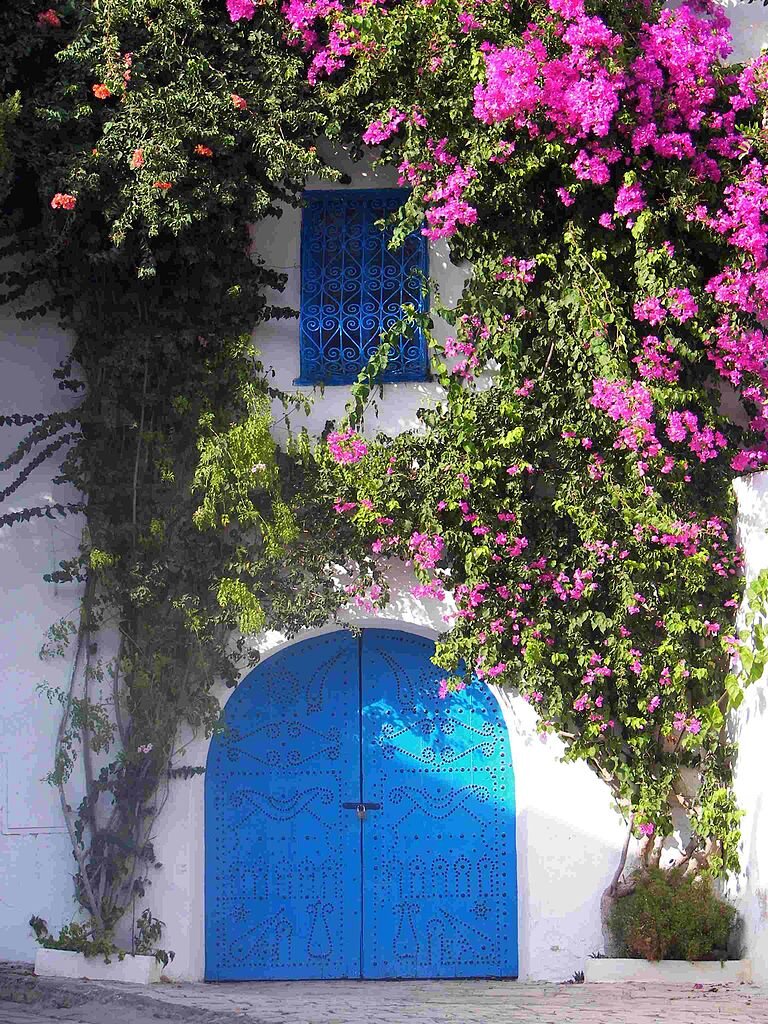
Traditional blue door in Sidi Bou Said surrounded by purple bougainvillea. Benrais. CC BY-SA 3.0.

Korbous was frequented by the ancient Romans of Carthage as a health resort. Patrick Giraud. CC BY 3.0.
6. Korbous
If you enjoy spas and natural hot springs, head for Korbous – a single street clinging to a cliff face on the west coast of Cap Bon. The mineral-rich hot springs of Korbous have been a popular spa and health resort since the time of the ancient Romans of Carthage, as evidenced by an inscription on display in the National Bardo Museum in Tunis. Korbous was not a popular spa destination until the 19th century, when Ahmed Bey, the last Ottoman leader of Constantine, had the hammam, or Turkish bath, built. In addition to the hot springs, mud from Aïn Kanassira, rich with minerals, is used to treat arthritis, various skin diseases and other health issues.
Asiya Haouchine
Asiya is an Algerian-American writer who graduated from the University of Connecticut in May 2016, earning a BA in journalism and English. She was an editorial intern and contributing writer for Warscapes magazine and the online/blog editor for Long River Review. She is currently studying for her Master’s in Library and Information Science. @AsiyaHaou
Tunisia: Discover Ancient Rome in North Africa
Thousands of years later, Tunisia’s rich history as part of the Roman empire is still on display.
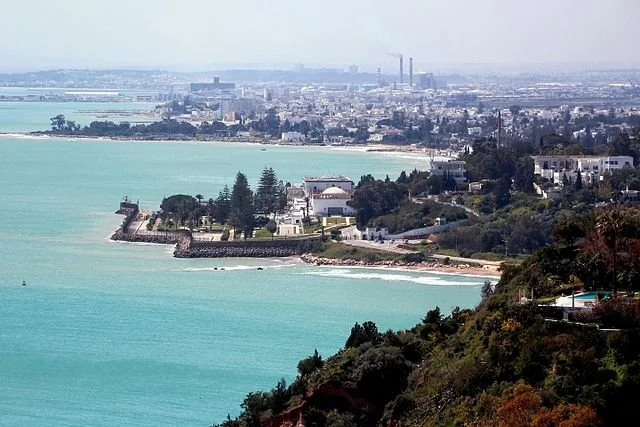
A view of Carthage Palace in Tunisia. Farah Jack Mustaklem. CC BY-SA 4.0
For many, the word “Rome” evokes images of the city in Italy. Its days as the center of one of the largest empires in history ended millennia ago, and today, popular culture has largely moved on, TikTok memes aside. But the Roman Empire was far bigger than many now imagine, stretching well into the modern-day Middle East and across North Africa. Today, the empire’s ruins remain visible in the furthest reaches of its territories.
Tunisia, for instance, is home to a wealth of ancient Roman history. Sitting on the edge of the Sahara Desert, the African nation has found fame with tourists who admire its gorgeous beaches. However, beyond the nation’s natural beauty and high-quality resort towns, Tunisia's territory was once at the very heart of the Roman empire in Africa. Ranging from the remains of villages to the shell of the great city of Carthage, ancient ruins dot the country’s landscape. Almost every major city features ancient Roman artwork, architecture and history. While Tunisia is gorgeous in its own right, the country possesses a richer history than almost anywhere else in the world.
The best-preserved example of Imperial Rome’s presence in Tunisia is El Jem. Estimated to have held up to 35,000 people at once, El Jem is not only the largest amphitheater in Africa but one of the largest in the world. Incredibly, the entire building is supported by stone arches, the edifice resting on a flat plain with no hills or rises for balance. The structure’s underground passages also remain largely intact, and tours are led daily through the entire grounds of the colosseum.
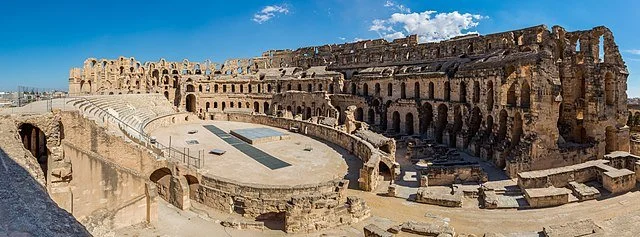
A panoramic view of El Jem. Diego Delso. CC BY-SA 4.0
Another incredible part of history hidden away just outside the Sahara is the ancient city of Sbeitla, home to some of the best-preserved temples from the Byzantine Empire. Outside Sbeitla, visitors can also tour the ruins of Byzantine public baths, a Roman Forum that houses ancient temples to Minerva, Jupiter and Juno, and a series of Catholic basilicas.
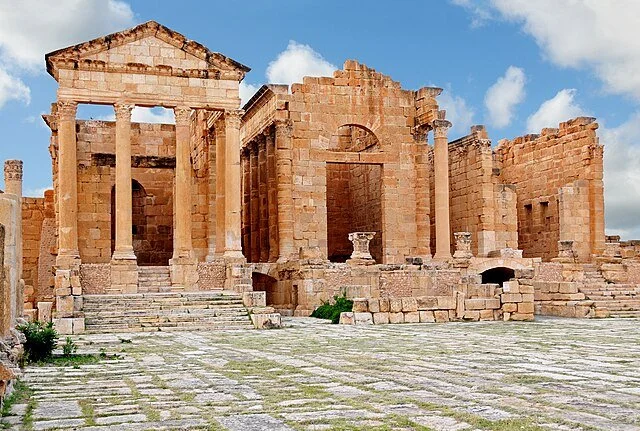
The Roman Forum in Sbeitla. Dennis Jarvis. CC BY 2.0
In addition to its ancient history, Tunisia provides visitors with the unique opportunity to visit the Sahara Desert. Numerous tour companies offer frequent excursions into the desert on camelback. These tours range from day trips to two or more days of camping and bivouacking in traditional Bedouin style. These tours are a once-in-a-lifetime opportunity to experience the lifestyle of the nomadic tribes local to Tunisia.
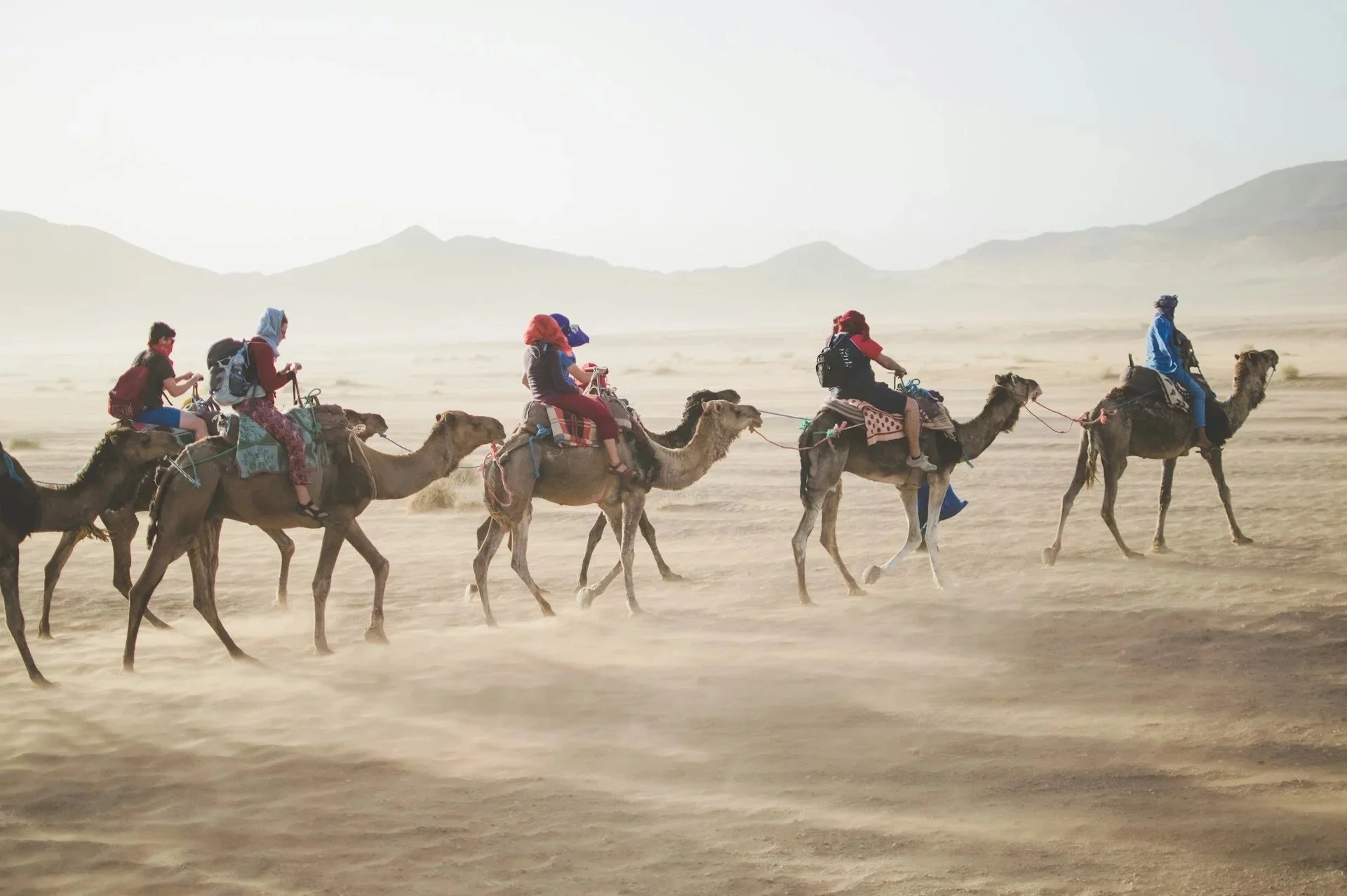
A camelback tour of the Sahara Desert. Vaida Tamošauskaitė. CC0
Despite all of the wonderful experiences that Tunisia presents, there are notable risks to visiting the country as a tourist. As of May 2024, the US Department of State issued a Level 2 travel advisory. This marker warns tourists to avoid certain areas due to increased terrorist activity in countries around Tunisia and the newly declared military zone south of the city of Remada. However, the majority of the country is still considered mostly safe to visit, with only select locations listed at Level 4 or “do not travel.” Tourists should mind the precautions listed in the advisory.
Visitors to Tunisia may be advised to stay in the country’s capital Tunis, a central location which allows easy access to the majority of the destinations listed above. The city offers a variety of hotel options, with prices ranging from $100-300 a night. More affordable options include the Dar Ya hostel in Tunis (priced at around $40 per night) and rentable apartments (from around $35 a night) located just outside the main city.
Ryan Livingston
Ryan is a senior at The College of New Jersey, majoring in English and minoring in marketing. Since a young age, Ryan has been passionate about human rights and environmental action and uses his writing to educate wherever he can. He hopes to pursue a career in professional writing and spread his message even further.
Tunisia
“A montage from Tunisia made after a week-long photography trip.” -James Shannon