
Tunisia: Discover Ancient Rome in North Africa

Thousands of years later, Tunisia’s rich history as part of the Roman empire is still on display.
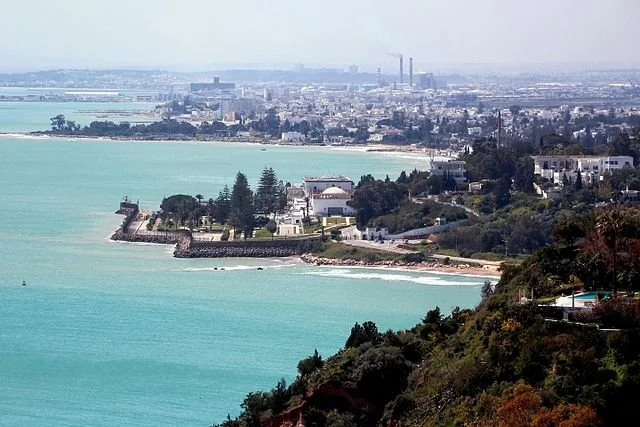
An aerial view of the coastline. A large palace stands on a piece of land jutting out onto bright teal ocean, with the city in sight further in the distance.

A view of Carthage Palace in Tunisia. Farah Jack Mustaklem. CC BY-SA 4.0

For many, the word “Rome” evokes images of the city in Italy. Its days as the center of one of the largest empires in history ended millennia ago, and today, popular culture has largely moved on, TikTok memes aside. But the Roman Empire was far bigger than many now imagine, stretching well into the modern-day Middle East and across North Africa. Today, the empire’s ruins remain visible in the furthest reaches of its territories.

Tunisia, for instance, is home to a wealth of ancient Roman history. Sitting on the edge of the Sahara Desert, the African nation has found fame with tourists who admire its gorgeous beaches. However, beyond the nation’s natural beauty and high-quality resort towns, Tunisia's territory was once at the very heart of the Roman empire in Africa. Ranging from the remains of villages to the shell of the great city of Carthage, ancient ruins dot the country’s landscape. Almost every major city features ancient Roman artwork, architecture and history. While Tunisia is gorgeous in its own right, the country possesses a richer history than almost anywhere else in the world.

The best-preserved example of Imperial Rome’s presence in Tunisia is El Jem. Estimated to have held up to 35,000 people at once, El Jem is not only the largest amphitheater in Africa but one of the largest in the world. Incredibly, the entire building is supported by stone arches, the edifice resting on a flat plain with no hills or rises for balance. The structure’s underground passages also remain largely intact, and tours are led daily through the entire grounds of the colosseum.

An aerial panorama of a massive Roman ampitheater. The walls are still standing in good shape, with some erosion of the tops.

A panoramic view of El Jem. Diego Delso. CC BY-SA 4.0

Another incredible part of history hidden away just outside the Sahara is the ancient city of Sbeitla, home to some of the  best-preserved temples from the Byzantine Empire. Outside Sbeitla, visitors can also tour the ruins of Byzantine public baths, a Roman Forum that houses ancient temples to Minerva, Jupiter and Juno, and a series of Catholic basilicas.

Looking at the front of Roman forum ruins. The area is well-preserved and empty

The Roman Forum in Sbeitla. Dennis Jarvis. CC BY 2.0

In addition to its ancient history, Tunisia provides visitors with the unique opportunity to visit the Sahara Desert. Numerous tour companies offer frequent excursions into the desert on camelback. These tours range from day trips to two or more days of camping and bivouacking in traditional Bedouin style. These tours are a once-in-a-lifetime opportunity to experience the lifestyle of the nomadic tribes local to Tunisia.
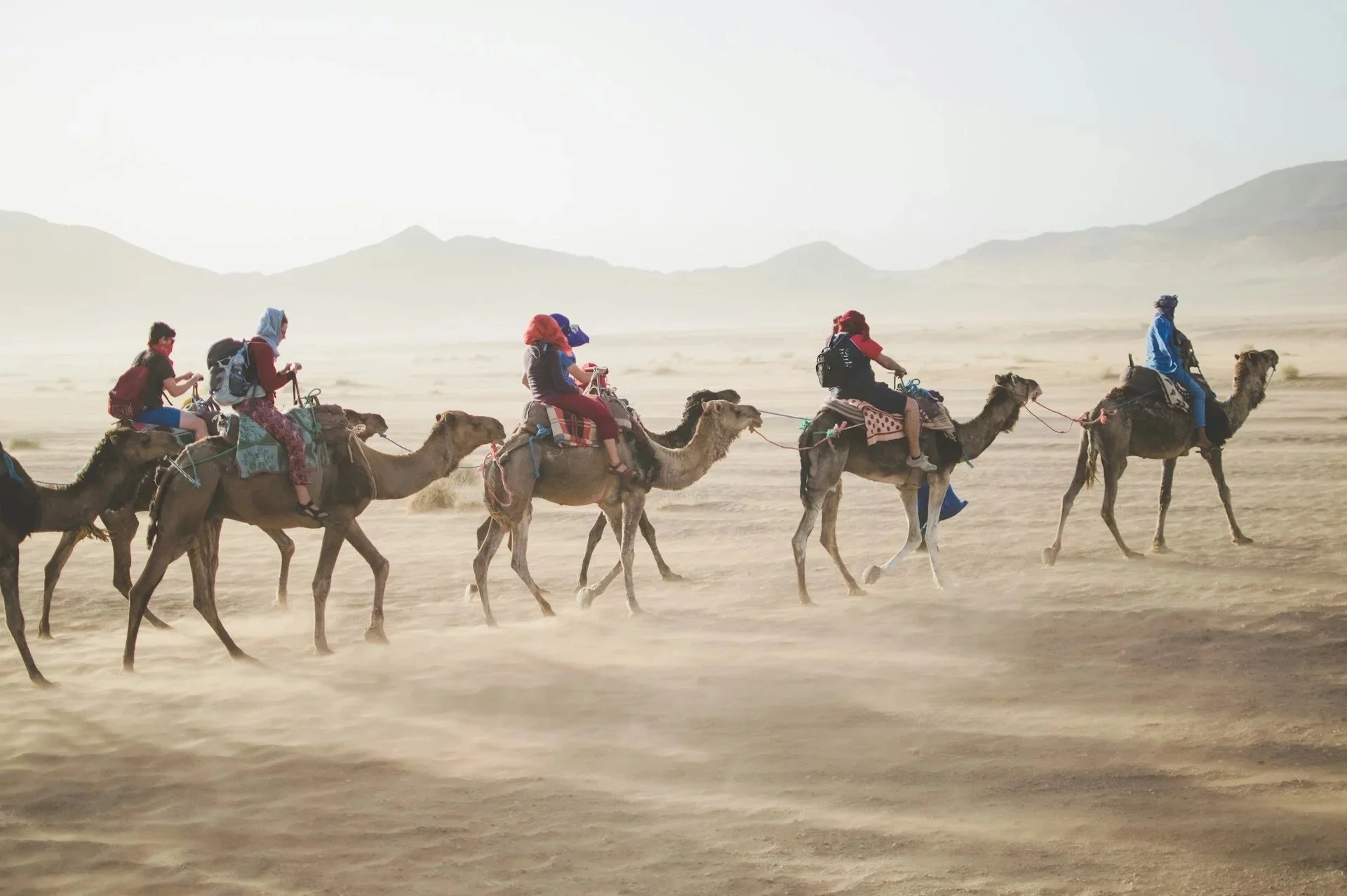
A line of tourists ride camelback through the desert, with dust obscuring the silhouette of mountains in the distance

A camelback tour of the Sahara Desert. Vaida Tamošauskaitė. CC0

Despite all of the wonderful experiences that Tunisia presents, there are notable risks to visiting the country as a tourist. As of May 2024, the US Department of State issued a Level 2 travel advisory. This marker warns tourists to avoid certain areas due to increased terrorist activity in countries around Tunisia and the newly declared military zone south of the city of Remada. However, the majority of the country is still considered mostly safe to visit, with only select  locations listed at Level 4 or “do not travel.” Tourists should mind the precautions listed in the advisory.

Visitors to Tunisia may be advised to stay in the country’s capital Tunis, a central location which allows easy access to the majority of the destinations listed above. The city offers a variety of hotel options, with prices ranging from $100-300 a night. More affordable options include the Dar Ya hostel in Tunis (priced at around $40 per night) and rentable apartments (from around $35 a night) located just outside the main city.


Ryan Livingston

Ryan is a senior at The College of New Jersey, majoring in English and minoring in marketing. Since a young age, Ryan has been passionate about human rights and environmental action and uses his writing to educate wherever he can. He hopes to pursue a career in professional writing and spread his message even further.
The Peranakan: A Unique Southeast Asian Fusion Culture Rooted in Region’s Traditions

The Peranakan culture is defined by its multicultural roots that have long-lasting influences on the Malay Peninsula. From food to fashion, the Peranakan occupy a unique role in the region’s extensive history.

Peranakans heavily influenced the region’s architecture—the iconic shophouse being one of those contributions. Gildardo Saánchez. CC BY-NC-SA 2.0. 

Along the Malacca Strait, an enduring and eclectic culture still survives. The Peranakan is a syncretic minority group mainly found on the Malay Peninsula. Peranakans are descendants of early multicultural unions; southern Chinese traders and settlers would marry local Malay, Thai and Javanese women. Though their origins go back over 600 years, Peranakan culture was at its most influential between the late 19th and 20th centuries. Out of this union came a unique fusion identity that birthed new languages like Baba Malay as well as terms like “babas” and “nyonyas” to describe Peranakan men and women.

The Peranakan have roots in Indonesia, Malaysia, Singapore, Myanmar and even on the Thai island of Phuket. Jpatokal. CC SA 1.0. 

In a 2009 study, former National University of Malaysia professor Lee Su Kim chronicled the niche position that Peranakans inhabited in the region. As children of mixed cultures, the Peranakan were multilingual and acted as intermediaries between different ethnic groups. During the colonial era, these skills entrenched Peranakans as a hierarchical elite. They acquired material wealth, were educated in British schools, and occupied roles such as diplomats and record-keepers.  

A medley of iconic Peranakan foods including rendang and stir-fry kangkong leaves with dehydrated mini shrimp. Tammi Kwok. CC BY 2.0.

Baskets of desserts including the iconic nyonya kuih, coconut confections made from glutinous rice and pandan. Chotda. CC BY-NC-ND 2.0. 

Despite being a minority, Peranakan culture has also infused itself into nearly every plate in the region. From iconic dishes like asam laksa (a spicy seafood noodle soup served with mint and ginger) to chendol (a shaved ice dessert slathered in coconut milk, palm sugar syrup, and other sweet treats), Peranakan cuisine—or Nyonya cooking—has created a unique palette that is representative of the region’s multiethnic populace. Not only is the cuisine widespread within the region, but also proof of the prolific trade that once flourished in the past.

In 2016, the Journal of Ethnic Foods published a study on the historical perspectives of Nyonya cuisine in Malaysia, finding that Peranakan cooking was simply an extension of the “cultural borrowing and cultural innovation through contact with local ingredients.” As a trading hub, Peranakan cuisine evolved to include Thai, Indian, Dutch, Portuguese and English cooking techniques.

Despite these rich contributions, the knowledge of Peranakan culture is fading. In a personal blog, Peranakan descendant Shahan Cheong details how the destruction of World War II all but obliterated history and routine along the Malacca Strait. Although pieces of Peranakan culture survive through architecture, styles of dress, food and decor, few living descendants can actively recount the story behind each historical artifact and site.

Guo Pei’s creations were loosely inspired by Peranakan fashion; they were showcased at the summer 2019 Asian Civilizations Museum exhibition in Singapore. Courtesy of Rhiannon Koh.  

However, there have been efforts to revitalize Peranakan culture. In the summer of 2019, the Asian Civilizations Museum in Singapore housed pieces by renowned designer Guo Pei. Part of the exhibit showcased several dresses and wedding gowns emulating the beads and colors of Peranakan fashion. A few months later in November, Miss Malaysia-Universe donned a Peranakan-themed national costume to symbolize the beauty and multicultural heritage of Malaysia. In 2020, the New Straits Times ran a piece on the enduring legacy of Peranakan fashion; styles like the kebaya dress and the staple cotton sarong are still worn. Ultimately, historical records and other forms of art like cultural plays have been crucial in reviving dusty memories of the Peranakans’ grand past.


Rhiannon Koh

Rhiannon earned her B.A. in Urban Studies & Planning from UC San Diego. Her honors thesis was a speculative fiction piece exploring the aspects of surveillance technology, climate change, and the future of urbanized humanity. She is committed to expanding the stories we tell.

Clean Cookware Used to Improve Women’s Health and Combat Climate Change

Millions of women in developing countries lack access to clean cookware. International organizations are working to change that. 

Women in India testing a solar cooker. United Nations Development Program. CC BY-NC-ND 2.0

Although the Beijing Declaration and Platform for Action in 1995 made groundbreaking strides toward gender equality, one key issue was never addressed: providing households with clean cookstoves. At least 3 billion people across the developing world rely on open fires to cook their food, a task mainly entrusted to women. Cooking on open fires can hold severe environmental and health implications for women and their families. 

According to the Clean Cooking Alliance, cooking over open fires is the second-largest contributor to global warming aside from carbon dioxide emissions. The burning process releases black carbon, or soot, which lowers the reflective quality of glaciers and sea ice, causing them to melt. Additionally, the demand for wood as fuel results in unsustainable harvesting and deforestation. Studies indicate that at least 30% of the wood used in the developing world is unsustainably harvested, negatively affecting the ecosystem’s health, biodiversity and erosion. The absence of trees prevents carbon dioxide from being absorbed from the atmosphere through photosynthesis, further compounding the effects of global warming. 

Cooking on an open fire also exposes women and children to toxic levels of household air pollution, sometimes over 35 times the amount deemed safe by the World Health Organization. Exposure to air pollution can have detrimental effects on one’s health, causing increased risks of childhood pneumonia, lung cancer, strokes and atherosclerosis. In some cases, exposure to high levels of air pollution has led to complications during birth. Health conditions related to smoke inhalation kill over 4 million people each year. 

Access to safe cookware in the developing world remains limited, especially in areas torn apart by humanitarian crises. Women often put themselves in dangerous and even life-threatening situations while searching for cooking fuel. Women collecting firewood near refugee camps and conflict zones face increased risks of gender-based violence. Additionally, children accompanying their mothers to find firewood cannot attend school and miss out on available educational opportunities. The time spent gathering firewood further prevents women from seeking valuable opportunities to generate income for their families and children. 

Empowering Women Through the Clean Cooking Alliance 

Women collecting firewood in the Democratic Republic of Congo. Oxfam International. CC BY-NC-ND 2.0

Founded in 2010, the Clean Cooking Alliance is an U.N.-backed organization focused on gender equality through cooking. The alliance works with a global team to ensure that 3 billion people gain access to clean cookstoves. Its focus is on increasing consumer demand and supporting local businesses while developing a clean cooking industry in seven countries: Bangladesh, China, Ghana, India, Kenya, Nigeria and Uganda. Modern cookstoves have reduced black carbon emissions by 30-60% and help to combat climate change. Additionally, having access to cooking equipment can save women up to 300 hours and $200 per year, giving them more free time to spend with their families or economic pursuits. As the Clean Cooking Alliance expands its reach, hopes are high that women and their families will be empowered across the developing world. 

To Get Involved: 

Check out the Global Cooking Alliance’s initiatives on its website or head to its fundraising page


Megan Gürer

Megan is a Turkish-American student at Wellesley College in Massachusetts studying Biological Sciences. Passionate about environmental issues and learning about other cultures, she dreams of exploring the globe. In her free time, she enjoys cooking, singing, and composing music.

The Ethics of Kelp Farming in Alaska

From food, medicine, climate mitigation and preserving Indigenous traditions, kelp is the shape shifting superhero a polluted world needs.

Kelp with sardines. National Ocean Service. CC By 2.0.

Ethereal and elusive, an unconventional forest grows in the ocean—not full of trees, but of kelp. These captivating, yet occasionally uninviting, greenish tendrils are classified as a type of brown algae that grow as coastal seaweeds; they are typically found in colder waters. In a way, the ethereal kelp borders on the mystical and magical. Kelp is a shapeshifter; a veritable phenomenon that can morph into a variety of forms. Kelp can be used as biofuel, an eco-friendly alternative to fossil fuels derived from renewable biological materials. This multi-talented algae can also be used to make utensils, soap and clothing as well as food—all manner of products people use in their daily lives. 

Beyond biofuel, food and everyday household items, the production and usage of kelp is a key debate amongst climate scientists and environmentalists alike. Farming kelp could be a solution in mitigating negative effects of climate change; it could also bolster coastal locations’ economies and positively affect the livelihoods of communities living in and around these shores. But, on the other hand, farming kelp is also fraught with bureaucratic convolutions and, in the long run, could potentially backfire and end up re-polluting oceans. In short, the implications of kelp farming are complex; they are enigmatic and double-edged, much like the kelp itself.

Alaskan Company Barnacle Foods’ Kelp Products. Josephine S. CC By 2.0.

The Eyak People of Alaska—and particularly one Dune Lankard—understand kelp farming. Lankard is the co-founder of The Eyak Preservation Council as well as the President and Founder of Native Conservancy, both of which are groups that support Alaska Native peoples’ efforts in preserving and conserving land and biodiversity on the Alaskan Coastline. People in Alaska and beyond have begun to farm kelp because of commercial, food security and climate change mitigation possibilities. And, because of its optimal climatic conditions, Alaska has become a hotspot for kelp farming.

But why is kelp—this mysterious, gangly sept of seaweed—so valuable and beneficial for the environment? For humans consuming kelp, the benefits lie within its nutritional content: kelp contains calcium, magnesium, iron, vitamin C and potassium. But, perhaps more importantly, people like Dune Lankard and fellow Alaskan kelp farmers are more concerned with kelp’s ability to mitigate climate change. Kelp’s primary ability to mitigate climate change comes from its ability to sequester carbon dioxide. You may have heard of carbon dioxide because it is a greenhouse gas. But, what you might not know, is that carbon dioxide from the atmosphere can also enter the ocean, resulting in a mechanism called ocean acidification.

pH reference scale — Ocean Acidification lowers pH. Heinrich-Böll-Stiftung. CC by 2.0.

As more carbon dioxide enters the ocean and gets absorbed, the pH of the ocean itself decreases, meaning the ocean becomes more acidic. But, this is where Kelp the superhero rushes in and saves the marine phyla. Kelp require carbon to grow because of photosynthesis—they absorb sunlight as well as carbon dioxide to produce the sugar and oxygen they need to live—and, through their uptake of carbon, they leave oceans less acidic and marine organisms more happy. Additionally, when kelp float out to sea and die, sinking deep beneath the surface of the water, their carbon sinks into the depths along with them
Perhaps it makes sense that kelp, with its bewitching appearance, could be responsible for such intricate—almost magical—climate processes. While there are over 500 species of seaweed in Alaska, the three most-commonly grown species are bull kelp, sugar kelp and ribbon kelp. Bull kelp is strong, almost proud-looking—its thick stalk beholds a sense of authority in the water. Sugar kelp, on the other hand, is more delicately enchanting—its slightly-curled, yellow blades are like rays of sunlight spattering the sea. Ribbon kelp, with its thick spine and greenish appearance, are more reminiscent of a looming forest, or the shifting of willows in the wind.

Bull kelp bulb. James St. John. CC By 2.0.

These kelp, however, represent more than just their life cycle, climate mitigation abilities and appearance. Historically, the Eyak people—located on the Copper River Delta near Cordova, Alaska—have long used kelp for food, medicine and even tools. But, through colonialism and imperialism, some of these traditions were disrupted over decades. Today, however, the Eyak and other Indigenous peoples’ kelp farming has allowed them to reclaim these traditions. Additionally, there are immense economic benefits for any employees involved in kelp farming. The fall-to-spring growth cycle of kelp, as well as the need for regular visitation and observation of kelp farms, offer both seasonal and year-round employment opportunities. The increasing amount of kelp farms subsequently increases the number of job opportunities in Alaska, bolstering the state’s economy. Although mariculture in Alaska is currently a $1.5 million dollar industry, newly awarded $45 million in grants could potentially grow it to more than $1.85 billion in 10 years. 

Kelp farming and consumption, however, is not all sunshine and rainbows. One of the most difficult aspects of kelp farming is getting started in the first place—a kelp farm requires a permit. Most states require multi-step permit application through boards of aquaculture as well as departments of fish, wildlife and game. Luckily, on average Alaska has a lower permit processing time than most states. Beyond the bureaucratic complexities of even getting started, there are also questions being raised by environmental and climate scientists about the future of kelp farming. Although—as is outlined above—kelp farming is believed to help ocean acidification through carbon sequestration, some scientists are questioning the ability for kelp to continue to sequester carbon as ocean temperatures warm as a result of climate change.
While people should be mindful of the ambiguous future of kelp farming, for now it is safe to say that the more immediate outcomes of farming are helping kelp maintain a positive reputation. Kelp—delicate and mysteriously distant—is, in actuality, an aid toward a variety of more tangible, positive outcomes. Kelp is food. Kelp is medicine. Kelp can even represent community and prosperity. Of course, kelp can also be a huge factor in sequestering carbon in a post-industrial society. But, for many people, these scientific processes can feel overwhelming or unimportant simply because they seem intangible. This is why the effects of kelp that people can really see and feel—the sense of community, the positive economic impacts and the reclamation of tradition—are something to celebrate. Despite its unconventionality and elusivity, kelp can be a superhero.


Carina Cole

Carina Cole is a Media Studies student with a Correlate in Creative Writing at Vassar College. She is an avid journalist and occasional flash fiction writer. Her passion for writing overlaps with environmentalism, feminism, social justice, and a desire to travel beyond the United States. When she’s not writing, you can find her meticulously curating playlists or picking up a paintbrush.