
Zoe Lodge
With Australian surf spots under threat from climate change, opportunities arise for civilian activism.
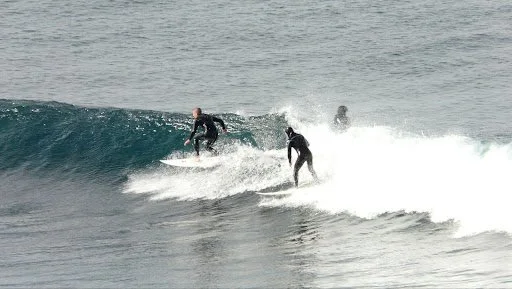
Surfers at Bells Beach, Australia. Chensiyuan. CC BY-SA 4.0.
From Tasmania’s secret surf spots to the Coral Sea's outer reef breaks, Australia’s surf zones are both highly attractive to surfers worldwide and ground zero for marine activism. Whether through paddle-out protests, reef monitoring or community-led resistance, surfers and visitors are proving they care about the future of the seas beneath them.
In southern Tasmania, the iconic Shipstern Bluff, known familiarly as “Shippies,” offers world-class big-wave surfing. Accessible only by boat or skis, this break is rugged and revered, symbolizing the untamed beauty that surfers aim to safeguard. Local communities in Tasmania are equally fierce defenders of their coastline. In July of this year, at the nearby Dodges Ferry, nearly 100 surfers and advocates staged a paddle-out protest against proposed deep-sea mining operations, emphasizing local surf culture’s role in environmental advocacy. Meanwhile, the Reef Life Survey, based in Hobart, invites volunteer divers and other activities to monitor and preserve Tasmania’s marine ecosystems. This citizen science initiative gathers vital data to inform reef and marine conservation efforts across the region.
Australia’s surfing community has a long history of environmental activism, exemplified by the Fight for the Bight campaign. When oil drilling was proposed for the Great Australian Bight, which is a large open bay on Australia’s south coast and a diverse marine environment, surfers organized massive paddle-outs, with thousands gathering on surfboards to protest offshore drilling, sending a clear message about preserving coastal sanctity and protecting ocean environments for locals and visitors alike. As environmental surfer-leader Belinda Baggs says, “I think surfers have a unique take on climate change. We experience it first-hand every day. We’re connected to the ocean. We take its temperature, feel its pulse, and we can see it degrading over time.”
Though surfers rarely ride the reef-close waves, many are instrumental in preserving these critical ecosystems. Projects like Bleach Patrol, led by the World Surf League in partnership with Columbia University, turn surfers and divers into citizen scientists who document coral bleaching patterns via the goFlow app. Bleach Patrol is accessible to Australian citizens, visitors and global concerned parties. The Coral Sea and Great Barrier Reef remain ecologically vibrant but vulnerable. Over 400 coral species and more than 1,500 fish species thrive in the region, but outbreaks of invasive starfish and rising temperatures threaten their survival. The Australian Marine Conservation Society (AMCS) supports these efforts by campaigning for tighter water-quality laws, stronger reef protection and sustainable oceans management. These efforts are largely supported by and popularized among the global surf community, which has a particular sensitivity toward ocean health.
A recent study from Griffith University warns that beloved point breaks like Bells Beach and Byron Bay’s Pass are facing “unprecedented threats” as rising sea levels and erosion alter wave conditions. Narrabeen, once a famed surf break, is already damaged due to coastal armoring. Surfrider Australia’s CEO, Steph Curley, urges localized coastal protection plans, like dune restoration and artificial reefs, and calls on surfing communities in areas like Byron Bay, Bells Beach and the Gold Coast to lead the charge in preserving their coastal heritage.
GET INVOLVED:
Tourists and thrill seekers can ride Shipstern Bluff in Tasmania for extreme surfing with a conservation edge. Australian locals and visitors can support and join local paddle-outs, like those at Dodges Ferry, to protest environmentally risky developments and support AMCS campaigns aimed at protecting Australia’s reefs and coastal communities. Concerned parties around the world can participate in Reef Life Survey dives to help track marine biodiversity, as well as download goFlow and contribute to Bleach Patrol while exploring the Great Barrier Reef region responsibly.

Zoe Lodge
Zoe is a student at the University of California, Berkeley, where she is studying English and Politics, Philosophy, & Law. She combines her passion for writing with her love for travel, interest in combating climate change, and concern for social justice issues.