
Discover the best places to see koalas, kangaroos and more on your next trip to Australia.
Beyond Bondi Beach: What to Do in Sydney During the Winter
Visiting Sydney from June to August (Australian winter) offers the perfect opportunity to experience seasonal festivals and iconic landmarks with fewer crowds.
Read MoreAustralia’s Elders Fight to Save Vanishing Languages
Forty percent of the world’s languages are at risk, and many Indigenous languages in Australia’s Northern Territory face severe threats.
Read MoreTransforming Reef Grief into Action on the Great Barrier Reef
The Great Barrier Reef’s decline is fueling a new kind of climate anxiety and inspiring communities to fight for its future.
Read MoreClimate Change and Australian Surf Culture
With Australian surf spots under threat from climate change, opportunities arise for civilian activism.
Read MoreHow Indigenous Knowledge Supports Conservation in Australia’s Outback
Across the arid regions that define the Australian Outback, Aboriginal groups’ deep connection with the land has led to enduring protection against species loss and environmental decay.
Read MoreExploring Australia’s Remote Untouched Archipelagos
Exploring Australia’s Remote Untouched Archipelagos
The small island archipelagos, Recherche and Buccaneer, are a haven for remote beauty and responsible travel off the Australian coast.
Read MorePreserving Heritage and Habitat: Indigenous Australian Rangers Redefine Ecotourism
Indigenous Australians are blending ancient traditions with modern science to preserve and protect endangered ecosystems and species.
Read MoreIndigenous Australians: Ancient Roots and Modern Struggles
Centuries after British Settlement and mass destruction of their culture, Indigenous Australians continue to be discriminated against by the Australian government.
Read MoreExploring Australia’s Largest Islands
Immerse yourself in the natural environments of Tasmania, Melville Island and Kangaroo Island.
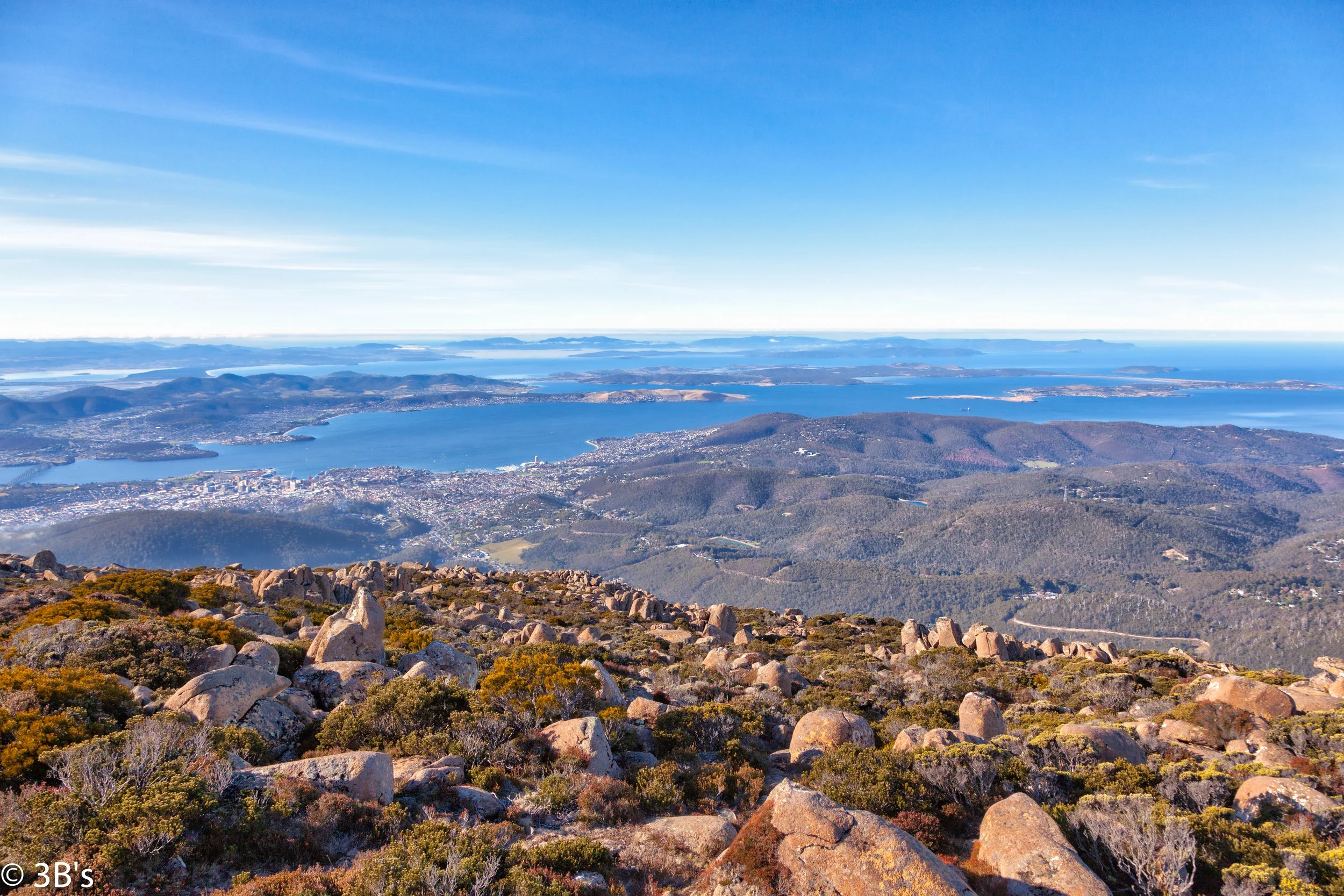
Tasmania CC BY 2.0
Known for its vibrant coral reefs and unique flora and fauna that attract thousands of visitors a year, Australia is an exciting destination for nature lovers and adventurers. In 2022, Australia received more than 1 million visitors despite its strict COVID-19 policies. The country is often referred to as an island continent because ocean water surrounds every state. In the past years, Australia has been pummeled by intense wildfires that affected nearly all parts of the country, and its islands were no exception. The three largest islands of Australia, Tasmania, Melville Island, and Kangaroo Island, offer a plethora of outdoor opportunities and nature unique to the Australian coast. In terms of size, Tasmania is by far the largest at 68,401 square miles, followed by Melville Island which is 5,786 square miles, and lastly Kangaroo Island with 4,405 square miles.
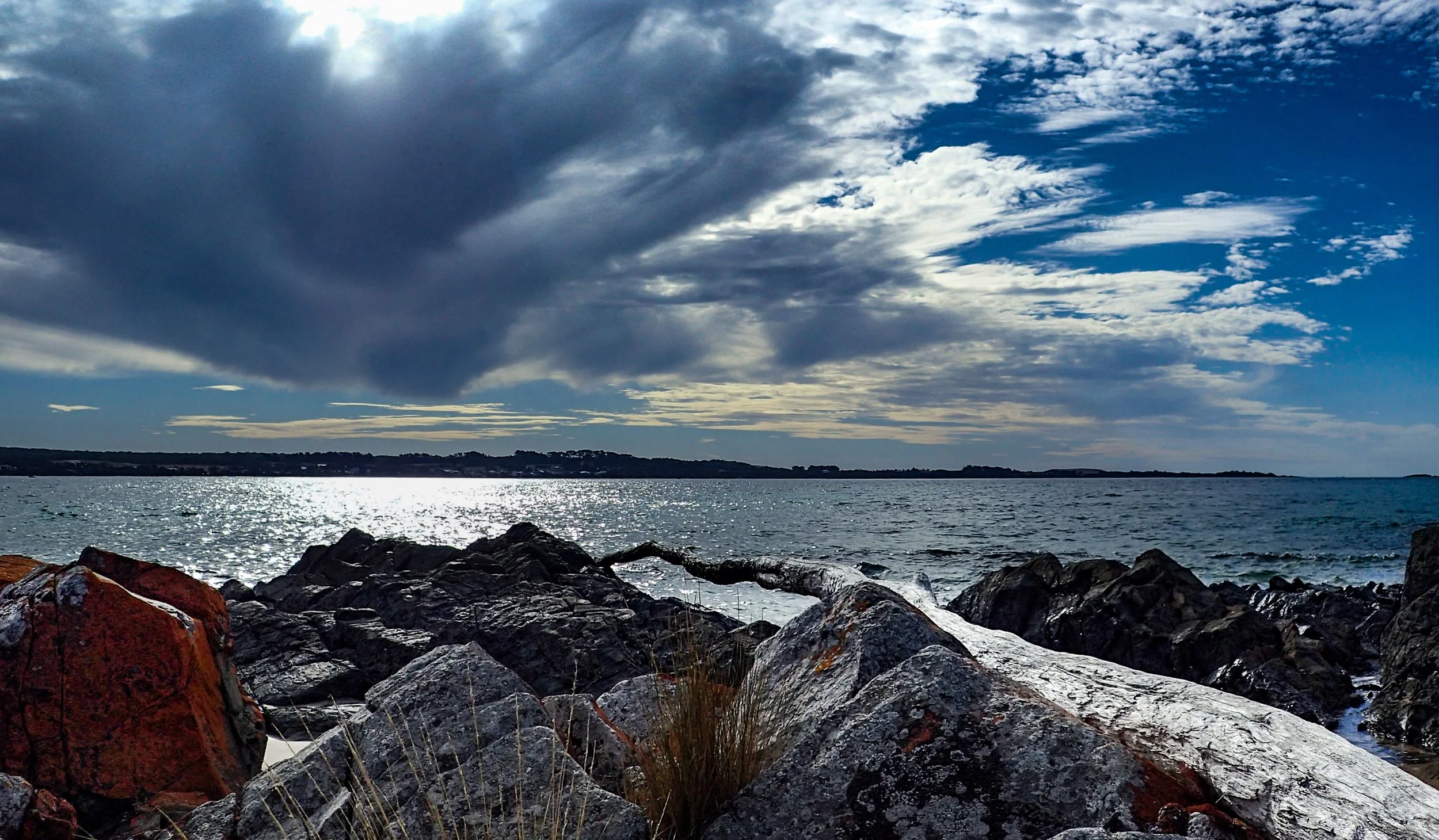
Bakers Beach, Tasmania CC BY 2.0
Tasmania
Tasmania, although the largest island by far, can be crossed in two and a half hours if you start from Hobart and go to Launceston, the other point of the island. It has had an increasing population in recent years, with government statistics reporting a total population of 571,517 people in 2022, and is home to Freycinet National Park. Located on the east coast of the island, its biggest attraction is a curved stretch of sand that is filled with shockingly blue water, known as Wineglass Bay. To avoid large crowds at the park, tourists can escape on one of the many hiking adventures this unique land offers, leading to Mount Amos which is the top of a peak that features stunning views. The trek offers a stunning view of Wineglass Bay, but is a 3 hour return and quite challenging due to the rocky terrain. The best part of this hike? You may make some friends along the way, namely the wallabies, a species of kangaroo-like mammal native to Tasmania, among few other places in Australia, that roam around this area, offering great photographic opportunities.
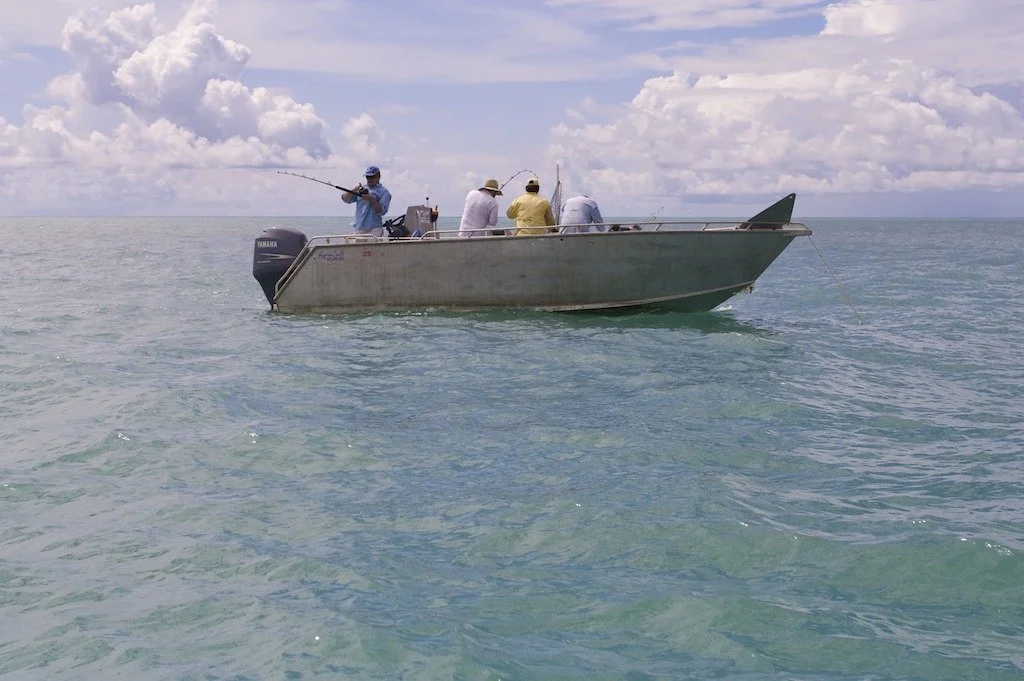
Fishing on Melville Island CC BY-NC-SA 2.0
Melville Island
Located in the eastern Timor Sea, its population is comprised mostly of native Indigenous people, and its biggest settlement is known as Milikapiti with a population of 559 people. Melville Island is known as Yermalner in the Tiwi language, native to this island and the Tiwi Islands that it is a part of. One of the top activities to do at this location is fishing, which operates from March to mid-December. There are two specific locations on the island that are prime for fishing opportunities, and offer lodging for overnight stays and visits. Snake Bay, which is the main fishing lodge, is located in a more remote area of the island but is considered one of the best areas to catch a diverse array of fish, and has comfortable lodging and amenities if you wish to stay there. The second location is considered to be extremely remote, known as Johnson River Barramundi Camp, but worth a stay for the beautiful nature you can experience there. For more information on rules and maps about fishing in Melville, visit this government guide.
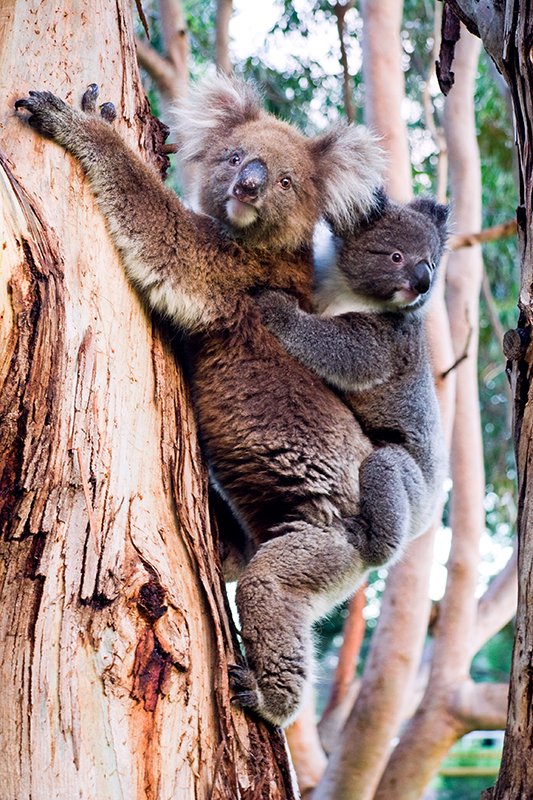
Koalas - Kangaroo Island - South Australia CC BY-NC-ND 2.0
Kangaroo Island
Often called nature’s playground, Australia’s third-largest island, known as Kangaroo Island, offers visitors an escape from the hustle, stress, and tasks of daily life on the mainland, and immerses them in all the best nature has to offer. It is quite easy to drive across one end of the island to the other, taking only about 2 hours or less. “Australia’s zoo without a fence” features three main towns surrounded by plenty of wilderness and animals that inhabit this territory. One of the islands most popular sites is the Remarkable Rocks, which is a cluster of large rocks that you can climb and see the beautiful view of huge cliffs and clear blue swells of waves. If you are seeking turquoise water that you can swim in, go to Vivonne Bay which offers a secluded spot away from typical tourist sites, offering pure white sand, incredible marine life, and many photographic opportunities. To connect with the wildlife, adventure off on a wilderness tour where you can see and interact with koalas and kangaroos and . Kangaroo Island is the perfect spot to visit if you seek adventure within a natural environment.

Kimberly Hidalgo Hernandez
Having obtained a MA in International Policy, Kimberly seeks to bridge the gap between global development and government legislation. Growing up between the United States and Spain, she believes that travel is the best way to discover yourself and understand the world. Her goal is to promote a deeper awareness of the effects of climate change in society and politics.
Australia’s Disappearing Coastlines
With sea levels rising fast, beaches are slowly disappearing as coastal erosion increases due to climate change.
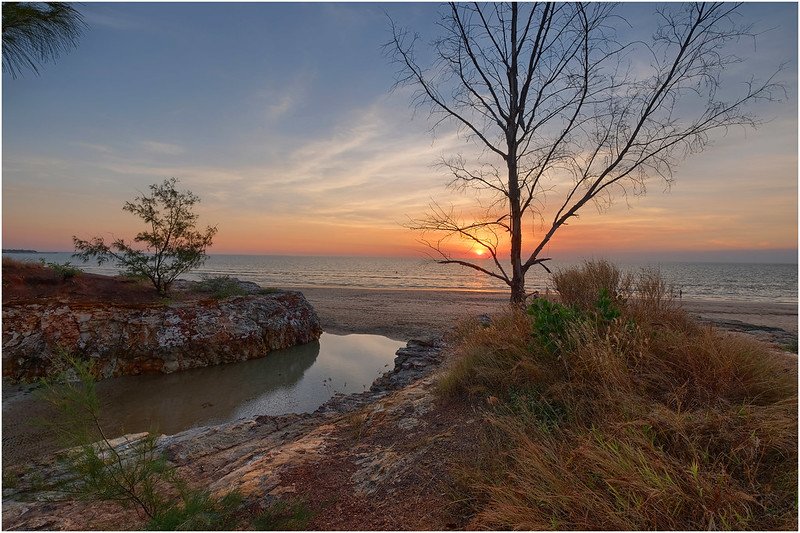
Casuarina Coastal Reserve erosion. Geoff Whalan. CC BY-NC-ND 2.0
As global warming increases and sea levels continue to rise, coastal erosion is becoming more and more of a problem. There are plenty of environmental issues that stem from this problem, like disappearing beaches and natural habitats. Coastal erosion is when rocks, soil, and sand are swept away and disappear because of rising sea levels and strong waves. The erosion of natural features like rocks is a normal part of nature, but global warming and coastal erosion is accelerating that process.
Every country with a coast is already facing this problem, and one country that is really struggling is Australia. Many homes are close enough to the beach, beyond just the people who have second homes there. There are around 700,000 Australians who live either within three kilometers (1.86 miles) of the coast or less than five meters (196.85 inches) above sea level. The country itself has over 30,000 kilometers (18,641 miles) of coastline, and all of it is being affected by this problem. With coastal erosion, the land is being eroded away by the ocean. It can be hard to measure exactly how much land is disappearing, especially since it varies from area to area, but the loss of land can only have negative consequences.
The impact of coastal erosion on human society goes beyond just destroying homes. It could affect the housing market, especially those near the coast. Millions of dollars could be lost from this as people are forced to relocate more inland in order to avoid the rising sea levels. Currently, there are still many people either willing to take the risk of losing their homes to coastal erosion or unaware of the problem, because there are still plenty of people who want to buy a seaside house.

Maslin Beach, Australia. Rene Kisselbach. CC BY-NC-ND 2.0.
The most common solution is to simply replace the sand disappearing beneath the water. The disappearing sand often gets collected nearby, and it is typically the cheapest option to just add more sand to the vanishing beach. However, this is only a temporary solution as replacing the sand doesn’t fix the problem. The rising sea levels will continue to eat away at the coastlines, regardless of whether or not the sand gets replaced. Additionally, it can be harmful to the environment from which the sand was taken. Rock walls are another possible solution, one that is more of a long term solution than replacing sand. These are designed to contain the sand and stop it from being washed away. They act as a buffer against erosion and can reduce the impact from waves, but they can be very dangerous for people. Wet rock is, of course, incredibly slippery and hazardous for the public, and since the rocks have to be of a specific quality and size, it can be more expensive than replacing sand, as well as detrimental to the environment the rocks came from. The third method to prevent coastal erosion is the use of containers known as geotextile sand containers. Essentially, these are sand bags and placing them beneath the sand on beaches can help in a similar manner as building a rock wall. There is no perfect solution to coastal erosion other than preventing global warming and rising sea levels altogether, but Australia has been taking preventative measures and reducing the impact as much as they can.

Katherine Lim
Katherine Lim is an undergraduate student at Vassar College studying English literature and Italian. She loves both reading and writing, and she hopes to pursue both in the future. With a passion for travel and nature, she wants to experience more of the world and everything it has to offer.
Australia’s Underground Town
In the 100-year-old mining town of Coober Pedy, Australia, more than half of the population lives underground, escaping the heat.

An underground bookstore in Coober Pedy, Australia. Smart Encyclopedia. CC BY-NC 2.0
Over half of the few thousand residents of Coober Pedy, Australia, live underground. The town was founded over 100 years ago, in 1915, when a teenage boy out prospecting for gold discovered opals. A settlement was quickly established and miners began to flock to the area. Coober Pedy became one of the largest opal mining operations in the world, producing around 70% of the world’s opal and earning the title “Opal Capital of the World.”
But the settlers of Coober Pedy had a problem: Coober Pedy is hot, with temperatures in the summer rising to over 113 degrees Fahrenheit in the shade. The opposite extreme is true during winter nights when the desert becomes very cold—considering this, life aboveground is greatly impacted by the weather. Rather than moving to a more temperate climate where opportunities for mining work would be more difficult to find, the settlers took inspiration from the mining industry itself, carving underground and hillside dugouts. In these cooler dugouts, the temperature stays at 75 degrees Fahrenheit year-round.

Chimneys rise from underground homes in Coober Pedy. Nicholas Jones. CC BY 2.0
The inhabitants’ subterranean lifestyle earned Coober Pedy its name, a corruption of the Aboriginal phrase “kupa piti,” which is often translated as “white man in a hole.” The name Coober Pedy was made official in 1920, but the settlement was not declared a town until the 1960s, after which it underwent another population boom and further development.
Today, the underground residences have all the amenities that a regular home would on the surface, such as internet, water and electricity, as well as multiple bedrooms, bathrooms and living areas. Some homes, like the one carved by Faye Nayler and two of her friends, even have a swimming pool and bar. A large portion of the population live most of their life underground, and it is a comfortable and relatively normal lifestyle—aside from the lack of sunlight. There are stores, churches and museums underground alongside the residences; the town truly is an underground community. Coober Pedy’s inhabitants do have to venture aboveground for food, however, because both of the town’s grocery stores are located on the surface.

An underground church in Coober Pedy. Werner Bayer. CC BY 2.0
Coober Pedy is still a worldwide hub for precious opal, but mining is no longer its only major industry. The town has become a popular attraction for visitors hoping to experience subterranean life. Visitors can stay in hotels with underground accommodations, like the Desert Cave Hotel. Another lodging option is a homestay in family-operated underground apartment-style accommodations like Di’s Dugouts or the Underground B&B. There are also underground campgrounds available to book.

A hotel in Coober Pedy. Smart Encyclopedia. CC BY-NC 2.0
While the underground lifestyle is Coober Pedy’s main draw, visitors can also explore other attractions such as the Centenary Mosaic Garden; Kanku Breakaways Conservation Park, which is an Aboriginal heritage site; and can even try their hand at mining for opal using a digging technique called noodling. Faye Nayler’s house is now open to visitors as Faye’s Underground Home, where visitors can pay a small entrance fee to receive a guided tour of the house. There are a number of other tours available around Coober Pedy for visitors to learn more about the town’s unique history.

Rachel Lynch
Rachel is a student at Sarah Lawrence College in Bronxville, NY currently taking a semester off. She plans to study Writing and Child Development. Rachel loves to travel and is inspired by the places she’s been and everywhere she wants to go. She hopes to educate people on social justice issues and the history and culture of travel destinations through her writing.
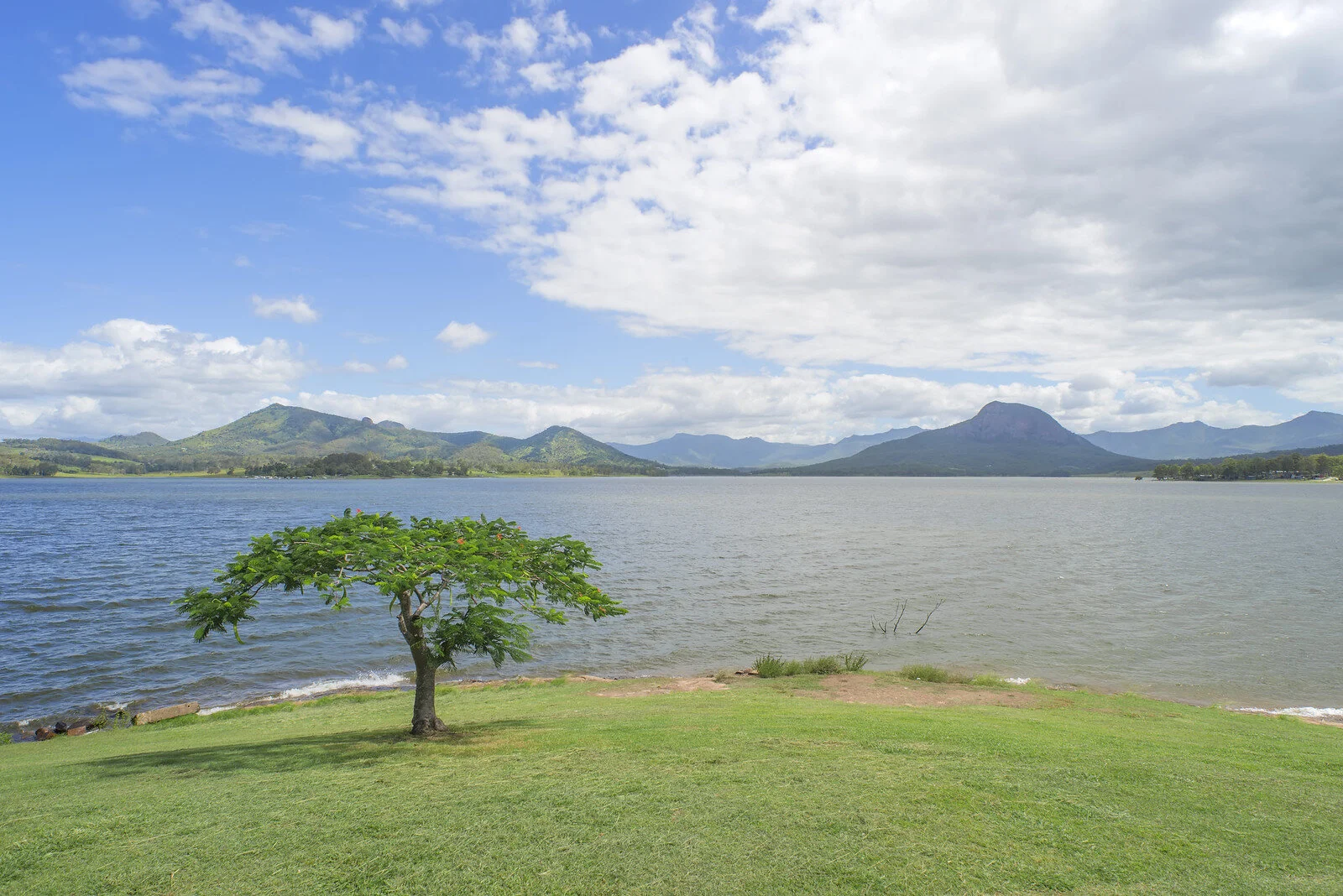
Lake Moogerah in Queensland, Australia. Lenny K Photography. CC BY 2.0.
Australia’s National Parks are Natural Wonders of the World
Australia has long been an escape for those who are seeking to get in touch with nature. While the country is most famous for its semiarid and desert regions, Australia is one of the few countries in the world which can boast a majority of the Earth’s 14 ecoregions—the continent is home to eight.
While Australia is the sixth-largest country in the world, it is one of the most sparsely populated. According to the 2016 census, 23.4 million people call Australia home, with 80% living less than 60 miles from the coast, yielding a population density of 9 people per square mile. This has left the vast majority of Australia’s ecoregions untouched by human development.
Australia’s eight ecoregions range from the very wet tropical and subtropical moist broadleaf forests—found exclusively on the northeast coast of Queensland—to the deserts and xeric shrublands which comprise a majority of the country’s landmass.
This vast diversity in natural habitats makes Australia one of the most biodiverse places in the world. According to the 2009 Numbers of Living Species in Australia and the World report, 147,579 described species had been confirmed, with the estimate for the total number of species which call the continent home at 566,398. A majority of these species are endemic to Australia, ranging from platypi to emus to kangaroos to koalas.
The National Reserve System, Australia’s counterpart to the United States’ National Park Service, is a largely new system of protected areas with the goal of preserving Australia’s vast biodiversity and ecoregions. While the first national park in the country, the Royal National Park in New South Wales, was established in 1879, the National Reserve System did not come into existence until 1992 with the ratification of the Convention on Biological Diversity.
Since then, the National Reserve System has gone on to become a vast network of over 13,000 commonwealth, state and territory protected areas, with a combined landmass of 370 million acres—about 19.75% of the country’s total landmass. Ranging from the expansive Kosciuszko National Park in New South Wales, which includes high summits which regularly see snowfall, to the famous Uluru-Kata Tjuta National Park in the Simpson Desert, Australia’s National Reserve System truly offers something for everyone.
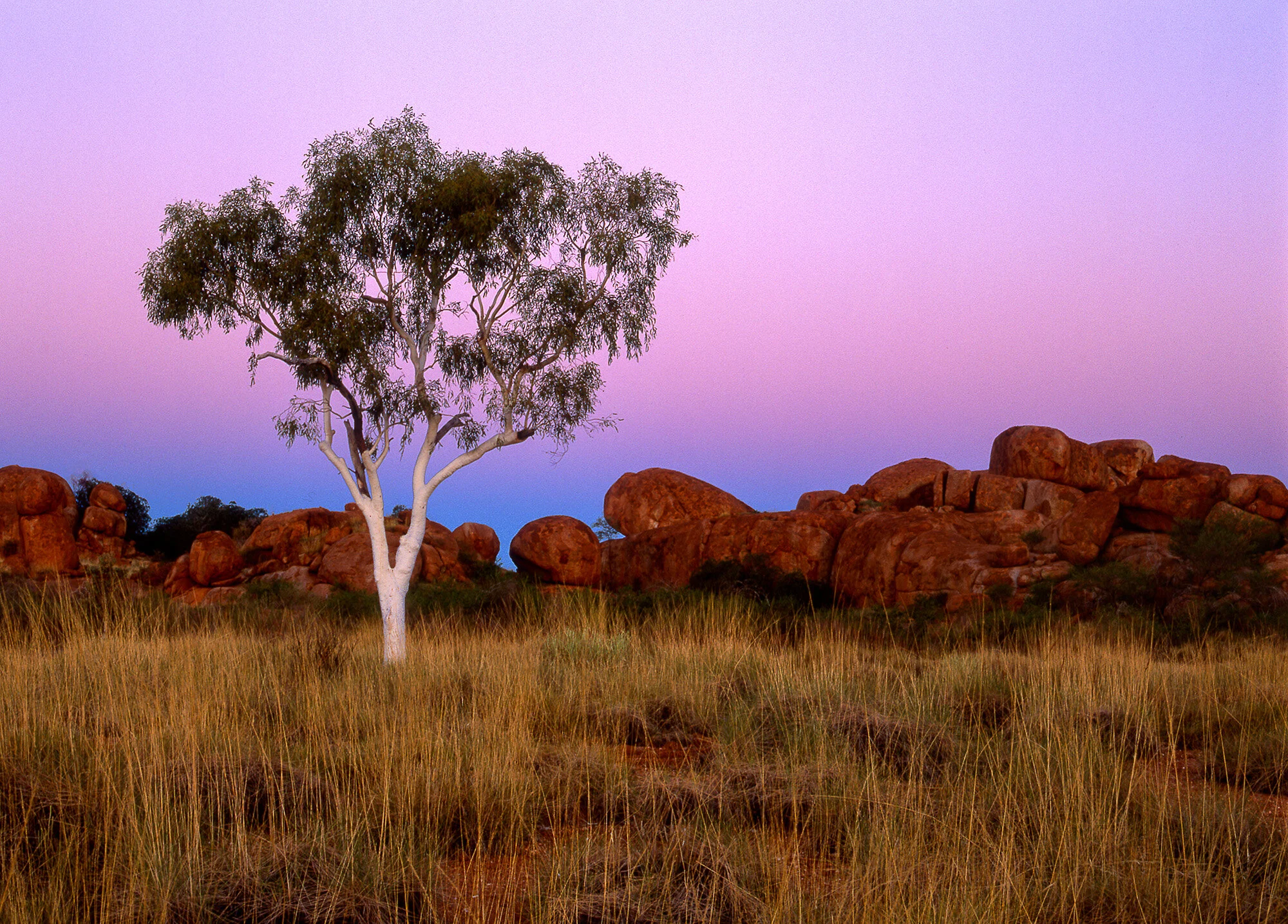
The Devil’s Marbles, a natural rock formation in the Northern Territory. Mark Wassell. CC BY-NC-ND 2.0.
For travelers who are looking to explore the desert and see some unique rock formations, Western Australia’s Nambung National Park cannot be beaten. Located in the Pinnacles Desert, Nambung offers picturesque desert views, beautiful beaches at Kangaroo Point and Hangover Bay, and the aforementioned rock formations called stromatolites. The park can be enjoyed year-round, but the most popular time to visit is in September and October, when its wildflowers are in full bloom.
Located on the southwestern coast of Victoria, Port Campbell National Park is home to breathtaking cliffs which overlook the Southern Ocean and a variety of natural islets, gorges and arches. One of the most famous, the London Bridge, provides the perfect spot to view a population of little penguins come ashore, as well as whale watching in the winter months. Port Campbell can be enjoyed year-round, with different flora and fauna prevalent throughout the various seasons of the year.
For those who can’t get enough of the rainforest, Daintree National Park in Queensland is a popular park for camping and hiking. A part of the Wet Tropics of Queensland, which were designated as a UNESCO World Heritage Site in 1988, the park is home to a variety of unique species, including 430 birds, 23 reptiles and 13 amphibians. While the park is open year-round, the best time to visit is during the drier, cooler months from May to September.

Jacob Sutherland
Jacob is a recent graduate from the University of California San Diego where he majored in Political Science and minored in Spanish Language Studies. He previously served as the News Editor for The UCSD Guardian, and hopes to shed light on social justice issues in his work.
Pretty in Pink: Australia’s Mysterious and Vibrant Lake Hillier
Australia’s Lake Hillier is a vibrant shade of pink enticing adventurous travelers. But to this day there has been no solidified scientific explanation why its color is so intense and it remains a great mystery.
Read MoreExploring the Wonders of Australia’s Wild and Remote Kimberley
The Kimberley region of Western Australia boasts a spectacularly diverse landscape offering both biodiversity and impressive geological formations.
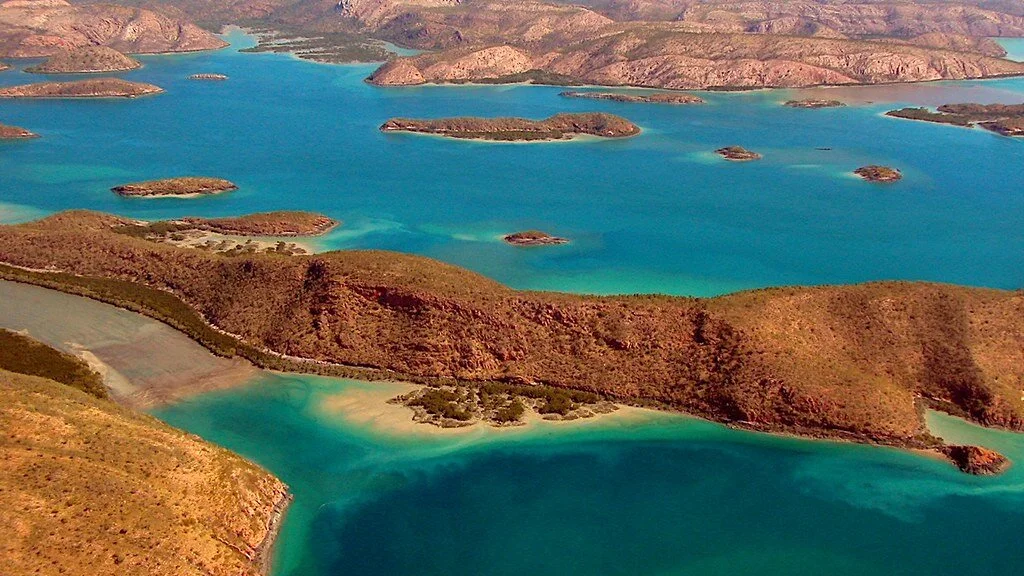
Aerial view of the Kimberley. Drumsara. CC-BY-SA 2.0.
Although Australia provides plenty of examples of nature’s extraordinary beauty, few compare to the Kimberley region. Situated in Western Australia’s northernmost corner, the Kimberley is a grandiose territory teeming with rich ecosystems. A plethora of microcommunities sprinkle across its sundry landscapes while towering hills spill into vast canyons neighboring pristine swimming holes.
The region covers over 150,000 square miles, with only about 40,000 residents inhabiting the area. Perhaps the most famous part of the Kimberley is Broome’s Cable Beach, ranked as one of the world’s most gorgeous stretches of sand and sea. The beach displays nearly 14 miles of fine sand meeting glassy waters. The beach itself has an interesting history; the name “Cable Beach” comes from the telegraph cable placed there in 1889. For adventurers more daring, Tunnel Creek National Park houses the oldest cave system in Australia. Again, the history of the stop is fascinating; Aboriginal leader Jandamarra hid in the cave system but was later caught and killed at its opening.
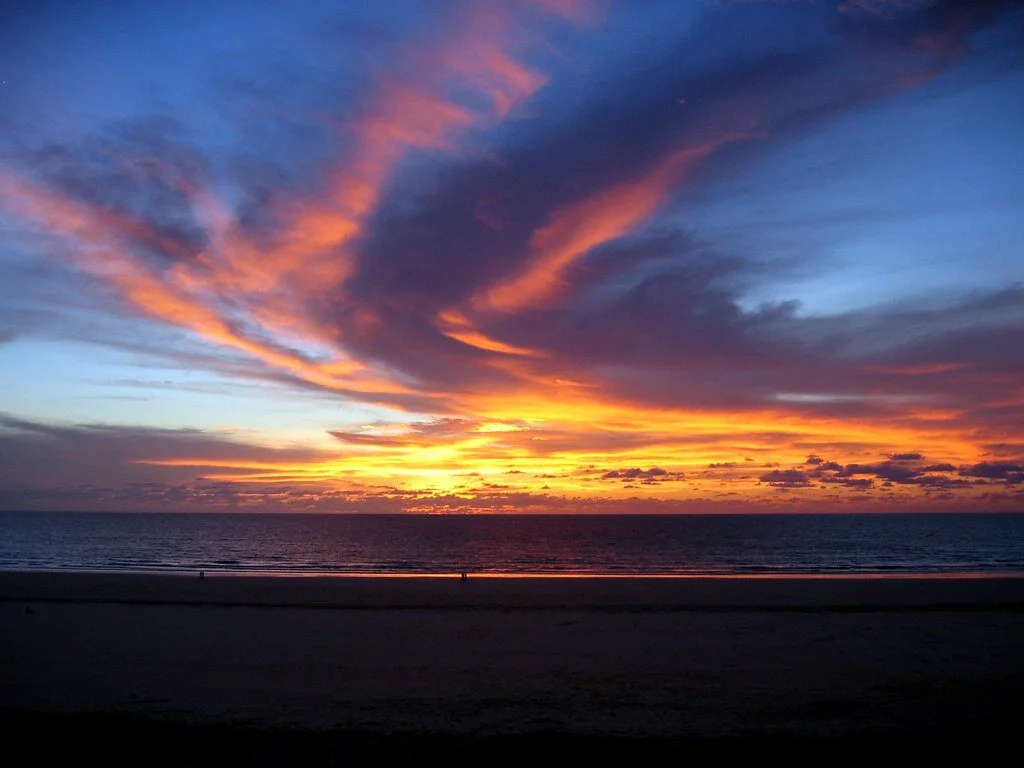
The swirling sky at Cable Beach in Broome. hmorandell. CC BY-NC-SA 2.0.
However, the history of the land tells a story drastically different than the extravagant serenity the region now boasts.
Exploration of the Kimberley by Europeans was initiated in 1879 by government surveyor Alexander Forrest, who explored much of Western Australia. Upon arrival, Forrest made note of the region’s vast landscape which made it ideal for cattle grazing. From this point on, the resources of the land quickly became tied to conflict; diggers struck gold which led to a quickly fleeting gold rush, and conflicts over cattle grazing raged between the Indigenous population and newly arrived Europeans. In the mid-20th century irrigation projects led to the rise of extensive farming, primarily that of sugar cane and rice. Oil drilling and diamond mining are now conducted in the region.
Today, the Kimberley contains residents as diverse as its wildlife; there are over 100 Aboriginal communities that share the region’s unmatched tranquility as well as its bustling economic opportunities. Due to the region’s iconic landscape, nearly 300,000 travelers visit every year, producing over $300 million annually.
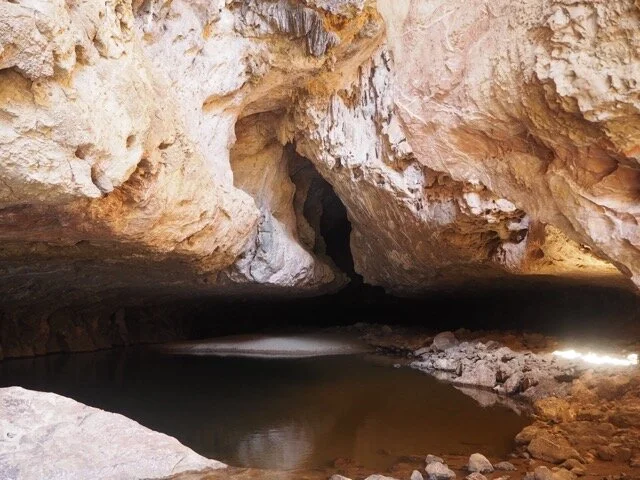
Tunnel Creek National Park. Nievedee. CC BY-SA 4.0.
As with most dazzling spectacles of nature, the region boasts pristine weather that complements the untouched wilderness. The wet season extends from November to April and is characterized by heavy rain and humid, sticky air. From May to October is the dry season, which is characterized by sun-drenched days and cloudless, baby blue skies.
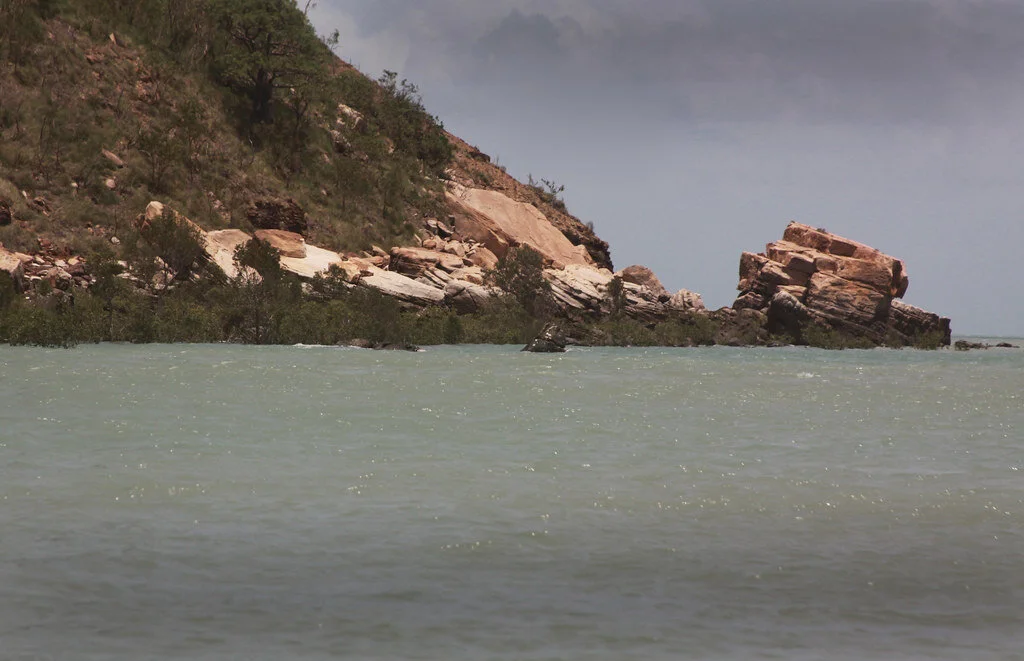
Raft Point. Johnny. CC BY-NC 2.0.
An exciting history and a dazzling landscape make Australia’s Kimberley region a powerfully adventurous destination. Surely any visitor will find their imagination stretched by the area’s countless wonders.

Ella Nguyen
Ella is an undergraduate student at Vassar College pursuing a degree in Hispanic Studies. She wants to assist in the field of immigration law and hopes to utilize Spanish in her future projects. In her free time she enjoys cooking, writing poetry, and learning about cosmetics.
Take a Video Tour Through Australia’s Underground Homes
Many societies are moving away from the typical household structure as overcrowding, climate concerns, and high maintenance costs incentivize people to create housing that works in tandem with the environment instead of against it. Coober Pedy, located in the remote South Australian desert, is one such community. Instead of building infrastructure in the scorching heat above ground, residents have repurposed old mine shafts into living spaces. The town’s primarily subterranean location makes it difficult for a passerby to spot, but it boasts underground restaurants, churches, and even nail salons. This video, narrated by one of Coober Pedy’s residents, takes you through some of the most interesting underground homes in the town while providing more information about its complex history.
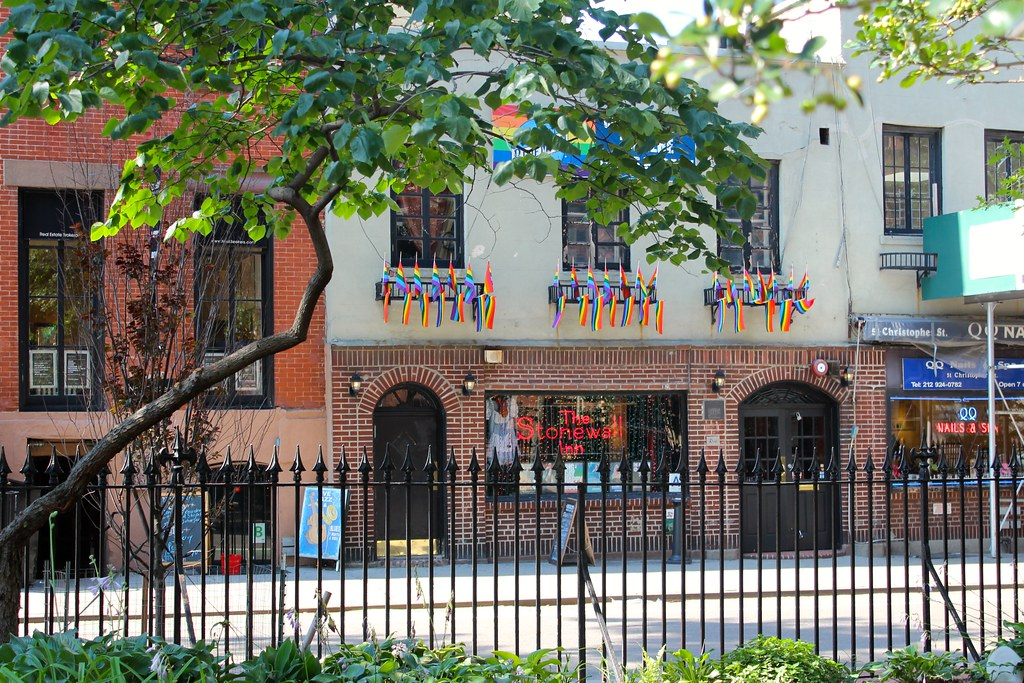
The Stonewall Inn in New York City’s Greenwich Village. The 1969 Stonewall riots are credited with starting the modern gay liberation movement. NPCA Photos. CC BY-ND 2.0
Discover These 8 Gay Villages from Around the World
Gay villages, or “gayborhoods,” are neigbhorhoods within cities that provide safe spaces for LGBTQ+ people to express themselves openly and form communities. Many gay villages feature bars and restaurants, vibrant nightlife and boundless queer history. Wherever one may find themselves, there is likely a gay village just around the corner waiting to be discovered. Here are eight gay villages from across the world.
1. Shinjuku Ni-chome, Tokyo
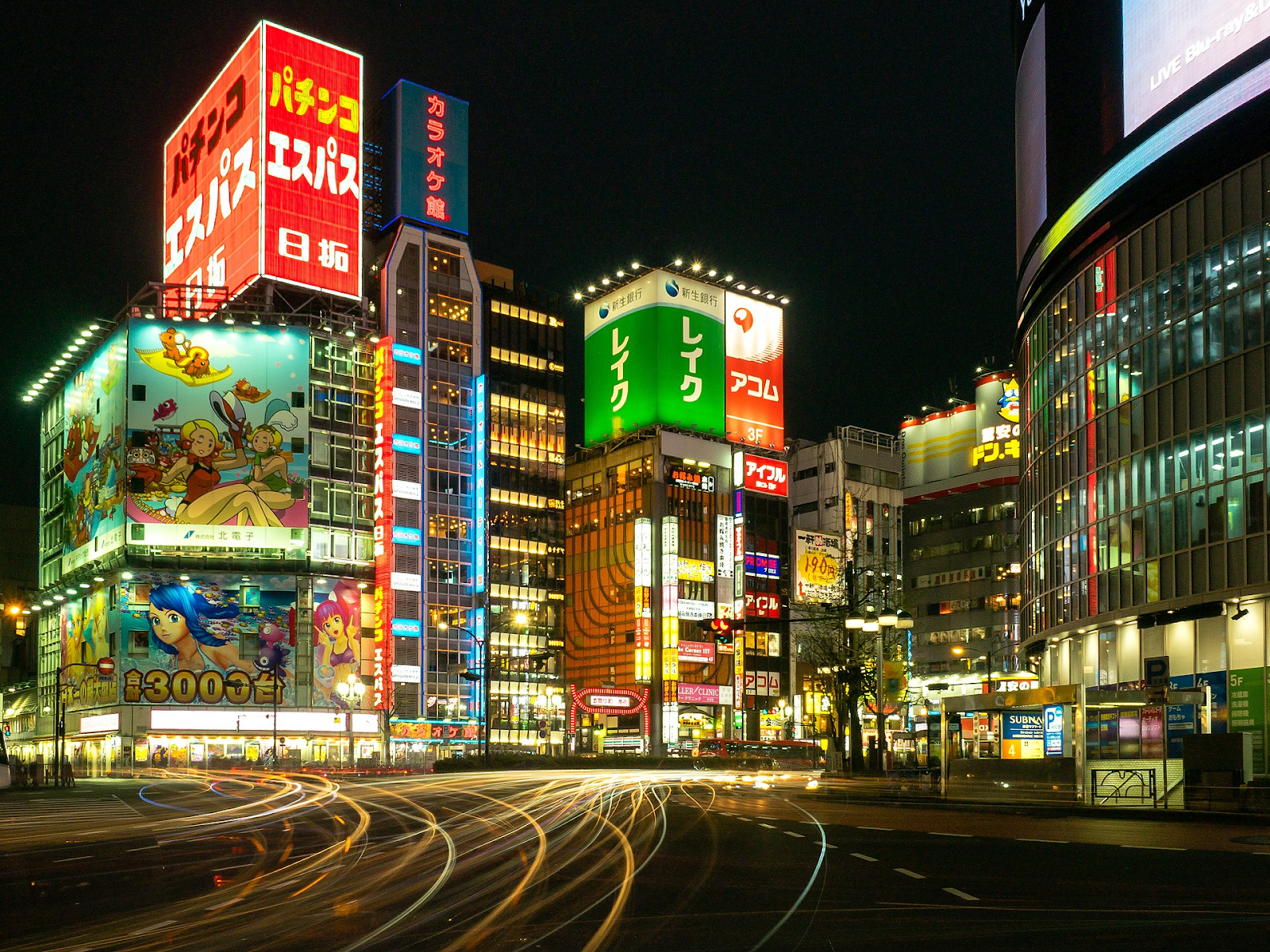
Buildings and neon lights in Tokyo’s Shinjuku ward. Andy Miller. Unsplash
In the heart of Shinjuku ward in Tokyo, between modern skyscrapers and dazzling neon-lit billboards, hides one of Asia’s most vibrant gay villages. Shinjuku Ni-chome, shortened to just Ni-chome, has the highest concentration of gay bars in the world. Ni-chome was once Tokyo’s red-light district, but when prostitution became illegal in Japan in 1956 it became Tokyo’s gay village. In a city known for its nightlife, Ni-chome is home to fusion restaurants and nightclubs open late into the night. Many of Ni-chome’s gay bars are small and personal, fostering their own tight-knit community within the city. Ni-chome was the location of Japan’s first gay pride parade in 1994, and is where the country’s first permanent LGBTQ+ center opened in 2020.
2. Oxford Street, Sydney

A brightly colored building near Taylor Square, Sydney. Ted McGrath. CC BY-NC-SA 2.0
Located in the Darlinghurst neighborhood of Sydney, Oxford Street is known for its nightlife, shopping and dining venues. It is also the heart of Sydney’s LGBTQ+ community, playing host to the annual Syndey Gay and Lesbian Mardi Gras. Unlike other Pride events, which usually occur around June, Mardi Gras is held in March, drawing over half a million attendees. The first Gay and Lesbian Mardi Gras was held in 1978. The organizers of the event were arrested and outed by the police, which garnered national attention. The next year in 1979, another event was held to commemorate the 10th anniversary of the Stonewall riots in New York City, as well as to bring attention to the events of the previous year. Every year since then, queer Australians have gathered along the western end of Oxford Street to socialize, party and remind Australia and the world that they will not be silenced.
3. Chueca, Madrid
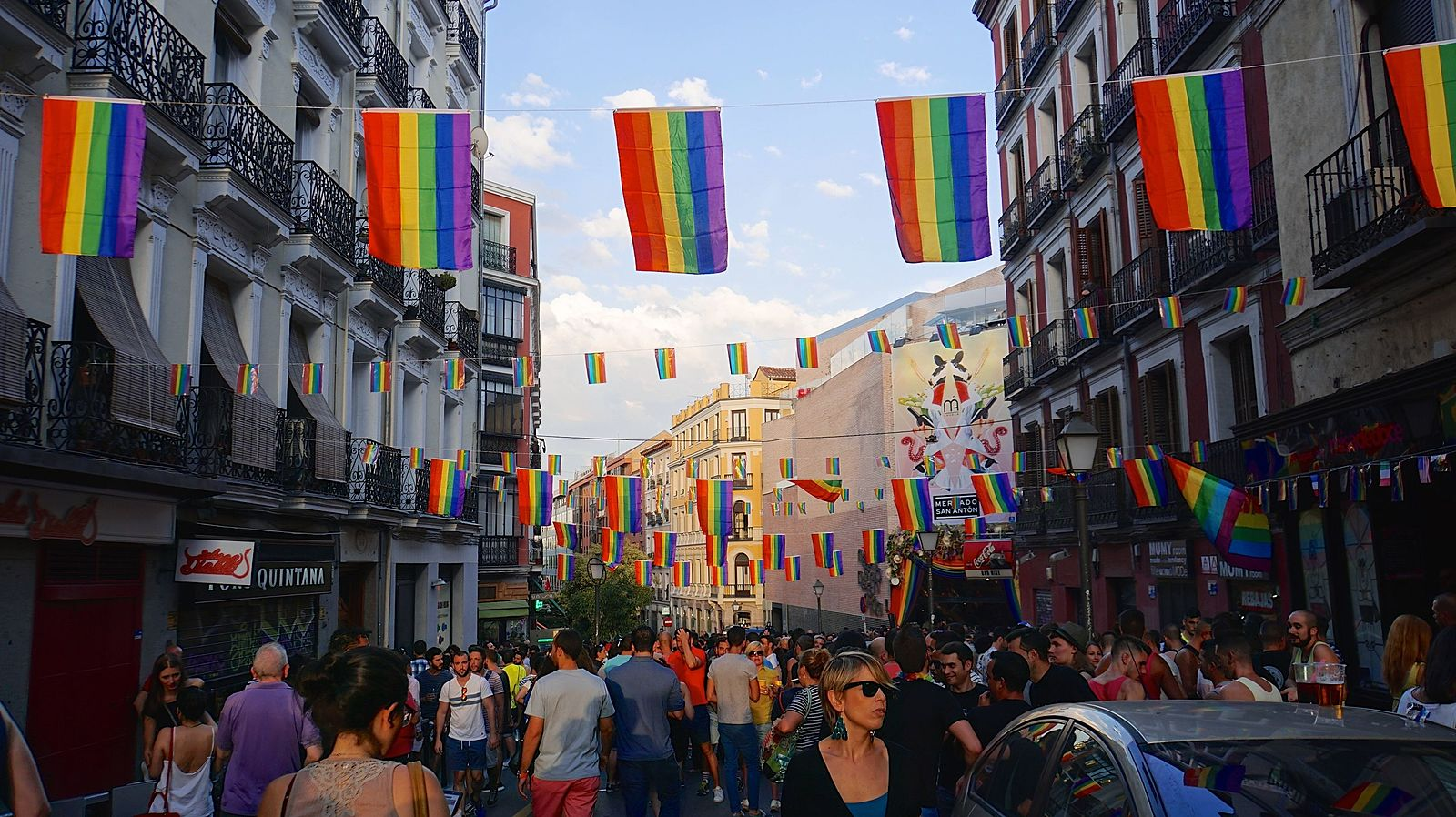
Pride flags hang over a crowded street in Chueca, Madrid. Ted Eytan. CC BY-SA 2.0
Chueca is a timeless neighborhood in an already historic city. Located in the heart of Madrid, this gay village is defined by its lively crowds as much as by its many cafes and boutiques. Chueca’s annual gay pride event, known as Madrid Pride, is the largest in Europe with an average crowd of over 2 million people each year. The neighborhood also hosted WorldPride Madrid 2017, an international Pride event that promotes LGBTQ+ issues globally. WorldPride 2017 was one of the largest Pride events in history, attracting an estimated 3.5 million attendees. Chueca has more to offer than just shops and festivals. For those with a love for romance and history, one can visit the Church of San Anton, where visitors will find the bones of St. Valentine himself.
4. Buenos Aires, Argentina
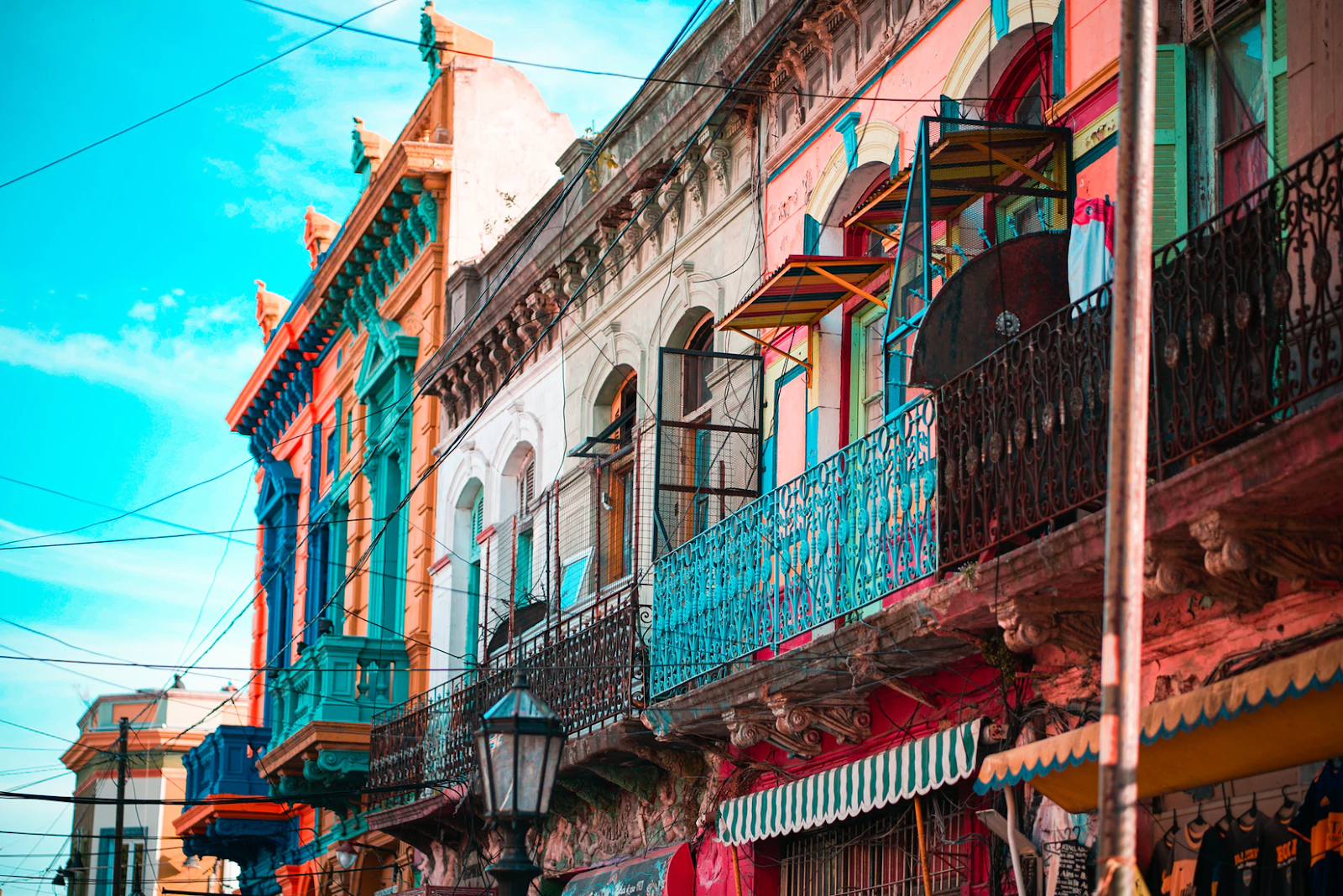
Colorful buildings in Caminito, Buenos Aires. Barbara Zandoval. Unsplash
Unlike other major cities, Buenos Aires lacks a specific gay village. However, this doesn’t mean that Buenos Aires isn’t a gay-friendly city, or that there isn’t a queer community in the Argentine capital. Rather, LGBTQ+ travelers will find pockets across the city’s many barrios that cater to gay and straight patrons alike. San Telmo, Bueno Aires’ oldest barrio, is known for its historic streets and contemporary art installations. In the city’s largest barrio, Palermo, one can find both stunning botanical gardens and the city’s largest collection of gay bars and clubs. The belle epoque buildings of Barrio Norte can instantly transport travelers to the streets of Paris. None of these neighborhoods are explicitly Buenos Aires’ gay village. Rather, visitors and locals alike will find a queer-friendly environment all across the city. Argentina is a leader of LGBTQ+ rights in the region, becoming the first country in Latin America to legalize same-sex marriage in 2010. Regardless of where travelers find themselves in Buenos Aires, they will find a progressive city paving the way for gay rights and liberation.
5. Gay Village, Montreal
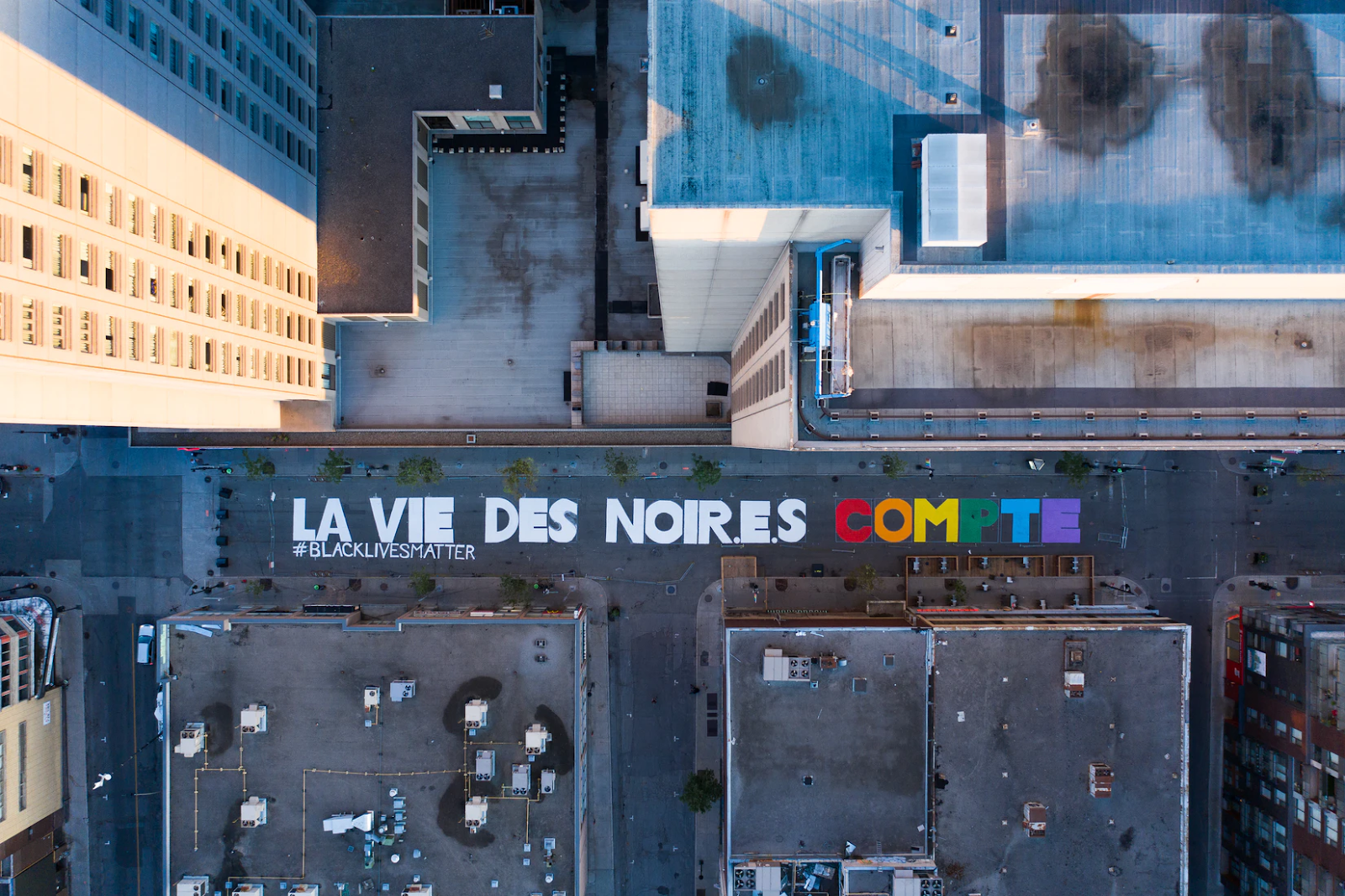
A Black Lives Matter street mural in Montreal’s Gay Village. Martin Reisch. Unsplash
Montreal’s Gay Village is one of the most prominent of its type in the French-speaking world. Known as “Le Village Gai” in French, the community had to overcome decades of oppression before becoming one of the most well-known gayborhoods in the world. During the 1970s, gay businesses in the city were regular targets of the police, who often raided bars and other establishments. Police violence didn’t deter Montreal’s LGBTQ+ population. Rather, Montreal’s gay residents formed a series of demonstrations to fight injustice against their community. Now the area is one of Montreal’s most popular neighborhoods. It draws visitors from all over the world, and hosts the largest Pride in Canada. Fierte Montreal, literally “Montreal Pride,” drew more than 3 million attendees in 2019, which also makes it the largest Pride in a French-speaking city (sorry Paris!). In classic Montreal fashion, two gay villages technically exist in Montreal: an English one located near downtown, and a French one on Saint Laurent Boulevard.
6. Canal Street, Manchester, England
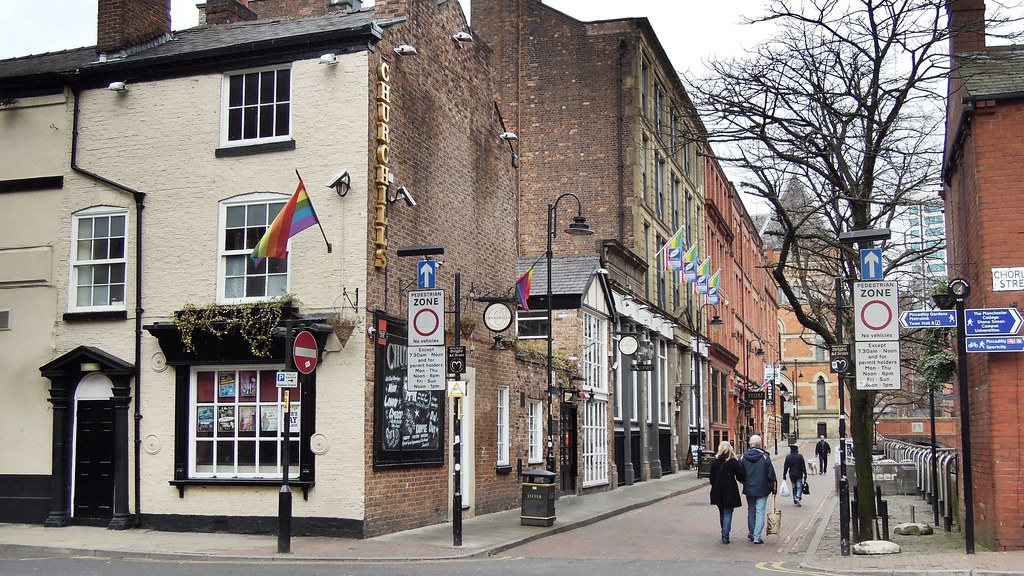
Canal Street in Manchester, England. David McKelvey. CC BY-NC-ND 2.0
When one thinks of cosmopolitanism in the U.K., most think of London. However, travelers shouldn’t count out the city of Manchester. Canal Street easily competes with London’s Soho for the center of Britain’s queer scene. The street dates back to the early 1800s as a transportation hub, when Manchester was rapidly growing as a major industrial center. Canal Street derives its name from the Rochdale Canal which runs alongside it. By the 1950s, the neighborhood was facing urban decline. This was around the same time that Canal Street became Manchester’s main gayborhood. Like many gay villages around the world, the community faced hostility from police during the 1980s. It wasn’t until the 1990s that Canal Street was able to thrive openly as a gay village. Now the street is a proud and open community, drawing locals and travelers from both the U.K. and across the world. It is home to the annual Manchester Pride, the second-largest Pride event in Britain after London’s.
7. Ximending, Taipei, Taiwan
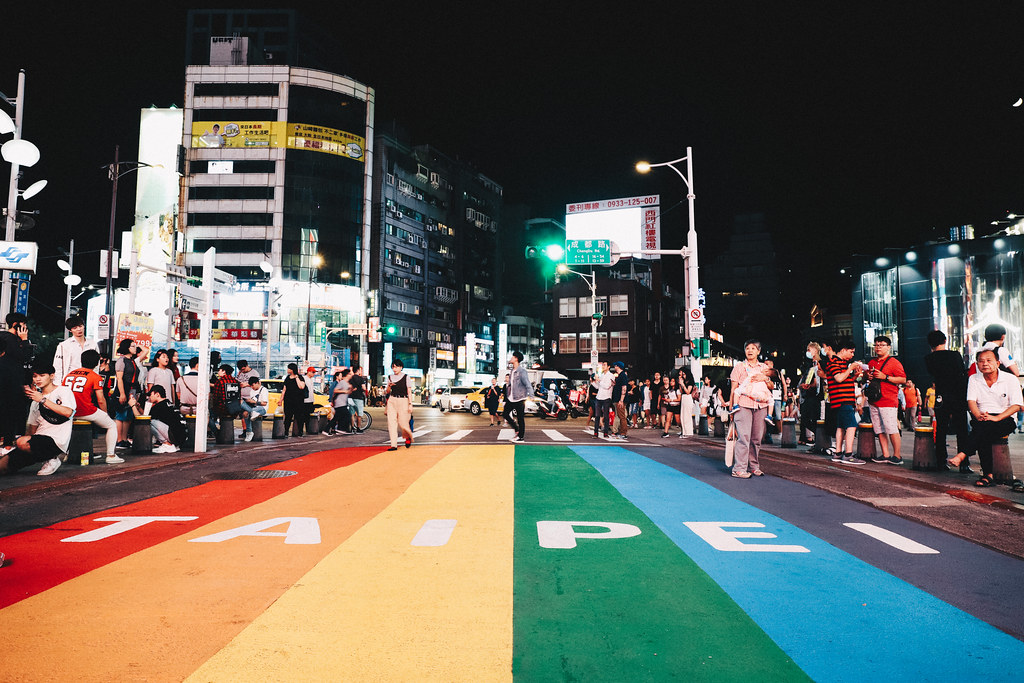
A rainbow-colored street in Taipei’s Ximending district. waychen_c. CC BY-NC-ND 2.0
Known for night markets and traditional temples, Taipei should be near the top of anyone’s list when traveling in Asia. It is also one of the most gay-friendly cities in the world, and a leading example of equal rights in the region. In 2019, Taiwan became the first and only country so far in Asia to legalize same-sex marrriage. This makes Taipei not only the center of gay culture in Taiwan, but a perfect example of what LGBTQ+ equality could look like in Asia. The city’s gay village is located in Ximending, a shopping area of the historic Wanhua district. Situated near the famous Red House Theater, Ximending offers a plethora of gay bars and nightclubs open late into the night. In a city like Taipei, you don’t need to be a local to enjoy what this friendly city has to offer travelers of all kinds. However, you might need to be a night owl to fully experience this gayborhood.
8. Schoneberg, Berlin
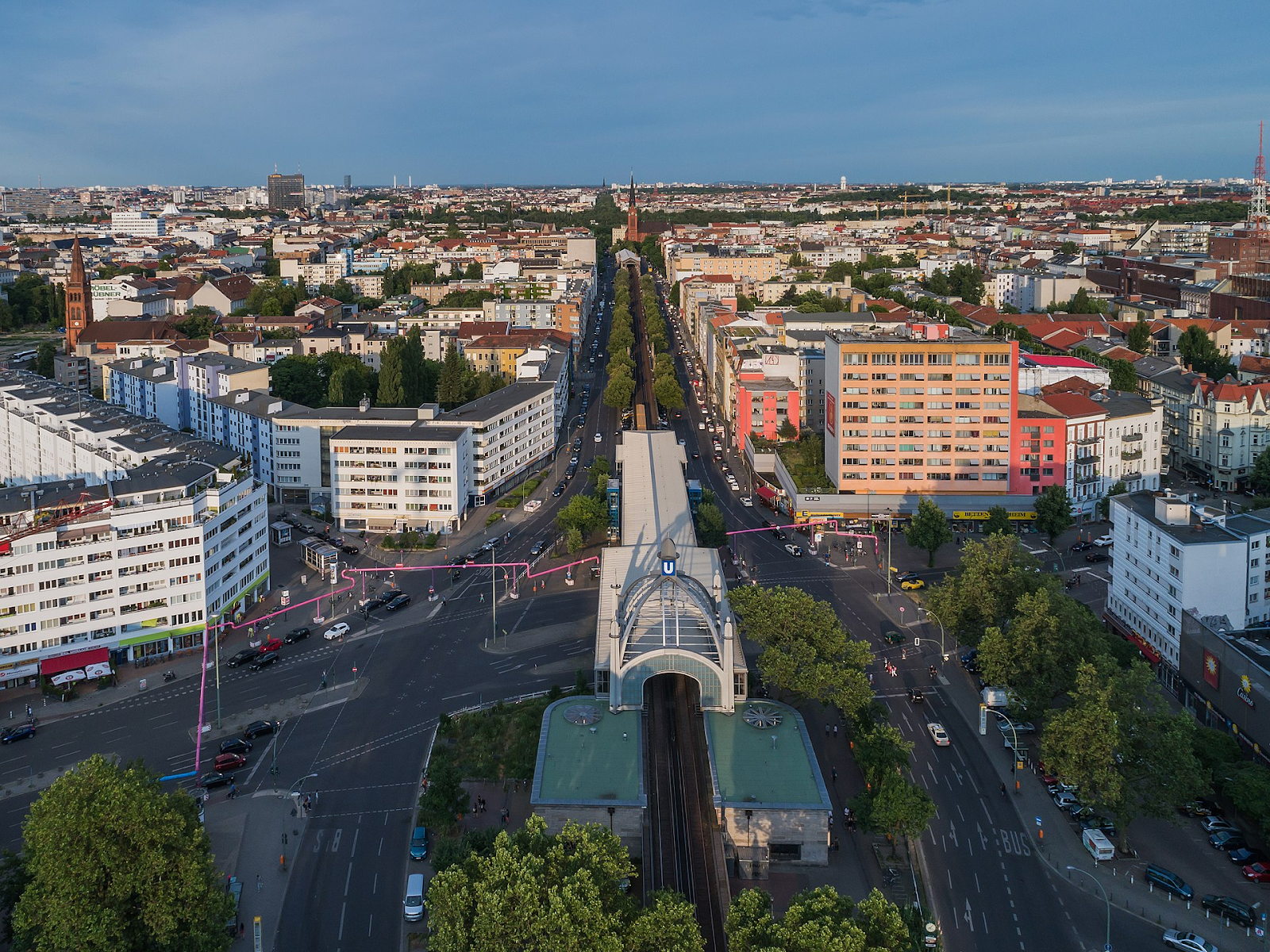
Nollendorfplatz in Berlin’s Schoneberg neighborhood. Schoneberg is the oldest gay village in the world. Oh-Berlin.com. CC BY 2.0
Located in the western part of Berlin, Schoneberg’s history as a gay village spans nearly a century. The neighborhood’s roots lie as a village in the Middle Ages, all the way back in the 13th century. In the 1920s, as Berlin grew in size, Schoneberg became a part of the German capital. That is around the same time the area became the center of the city’s emerging queer scene. Gay nightclubs and other venues flourished during the Weimar Republic, before almost all of them were shut down when the Nazis seized power in 1933. Now, Schoneberg is once again a proud gay village. Much of the gay life in the neighborhood is centered around Motzstrasse, a street that goes right through the center of Schoneberg. The street is where Berlin’s Lesbian and Gay City Festival is held each year, one of the largest of its kind in Europe. Whether one comes for its history or its nightlife, Schoneberg is a constant reminder that queer people have always been a part of Berlin life, just as they have been a part of communities around the world.

Aerex Narvasa
Aerex is a current student at Occidental College majoring in Diplomacy and World Affairs with a minor in East Asian Studies. He is passionate about sharing people’s stories through writing, and always strives to learn about new places and cultures. Aerex loves finding new music and exploring his hometown of Los Angeles in his free time.
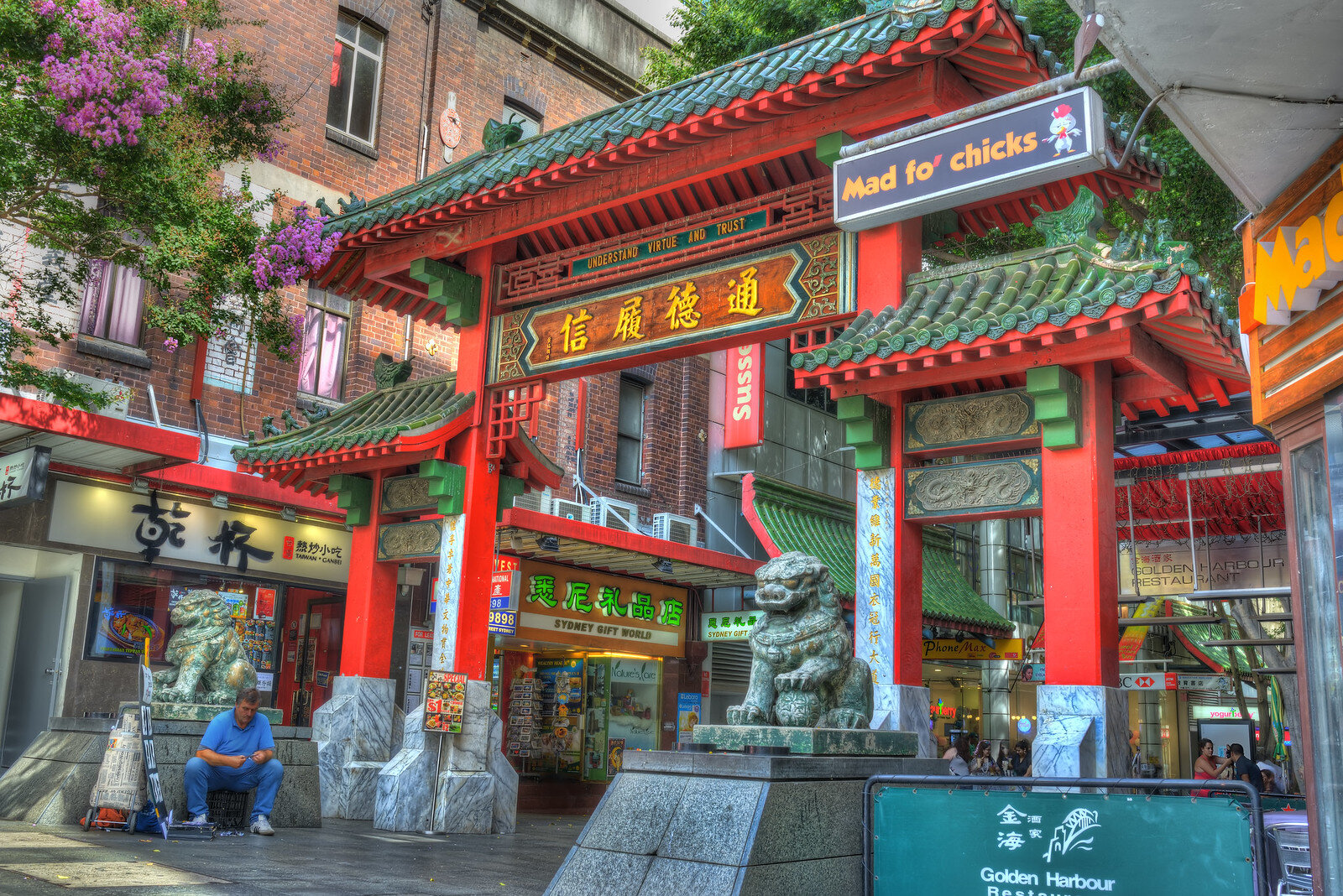
The entrance to a Chinatown in Sydney. Lenny K Photography. CC BY 2.0.
Explore 4 Chinatowns from Around the World
Travel to any of the inhabited continents and you will find Chinatowns, historical and contemporary ethnic enclaves of Chinese people outside of mainland China, Hong Kong, Macao and Taiwan. While there is no conclusive count as to how many Chinatowns exist, they will often be found in any community with a history of Chinese immigration.
The first Chinatown is considered to be Binondo, a neighborhood in the Philippines’ capital of Manila that developed in 1594. Since then, Chinatowns have developed around the world, most recently with Tijuana, Mexico’s La Mesa neighborhood in 2012.
The United States is home to some of the most famous Chinatowns, including those in San Francisco, New York City, Chicago and Los Angeles. That said, for those looking to travel abroad, here is a list of some of the most unique Chinatowns to be found.
1. El Barrio Chino, Havana
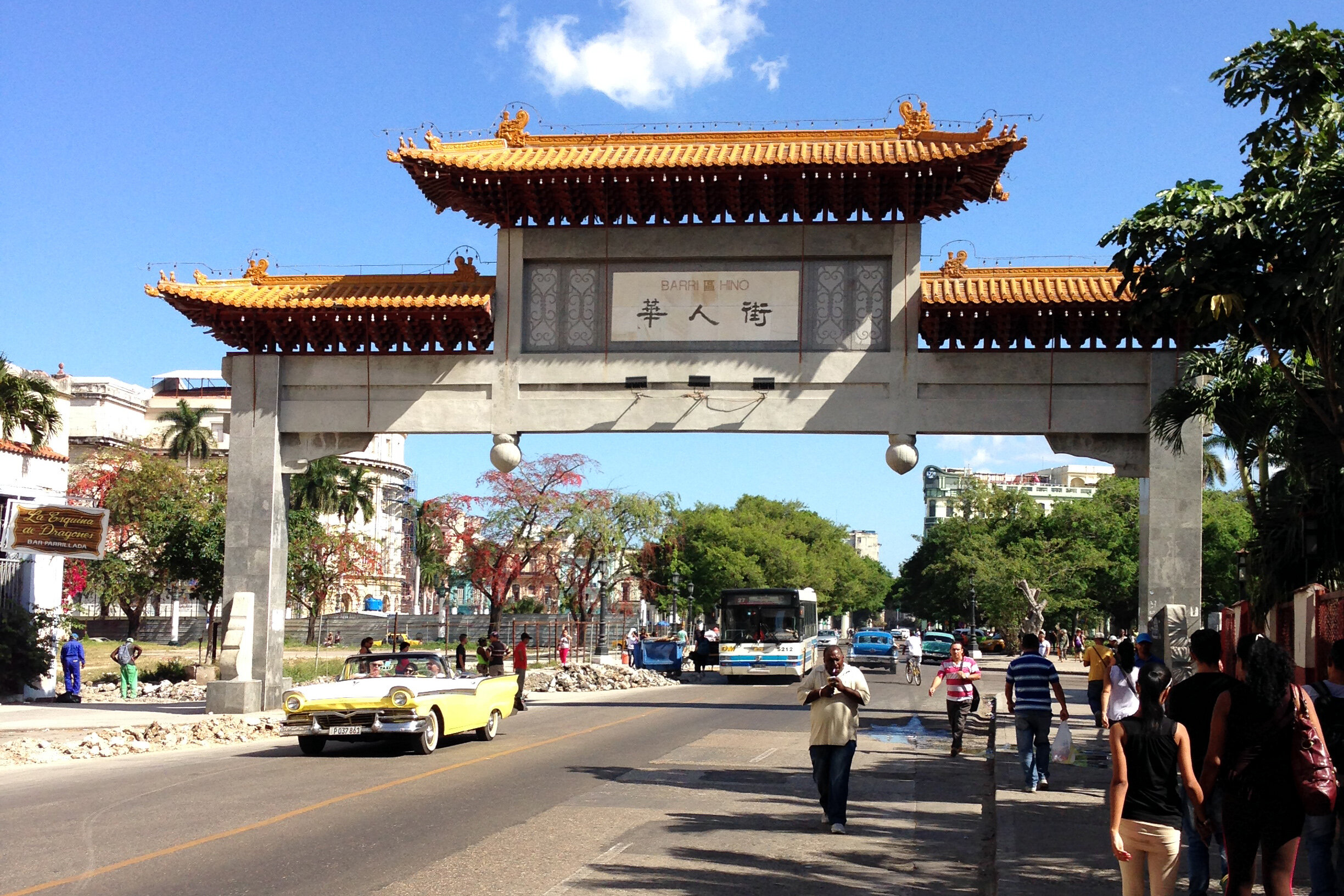
The paifang marking the entrance to Havana’s Chinatown. Kaldari. CC0.
Located just three blocks away from the Cuban capitol building, Havana’s Chinatown is a relic of prerevolutionary times. The neighborhood, which began to develop in the 1840s with the arrival of the first Chinese immigrants to the island, became the largest Asian ethnic enclave in all of Latin America by the 1920s.
Following the 1959 Cuban revolution led by Fidel Castro and the 26th of July Movement, during which the country became communist, the vast majority of Chinese-Cubans fled to neighboring countries like the United States. However, beginning in the 1990s, the Cuban government began the process of revitalizing the neighborhood centered around its historical roots.
Today, the Chinese-Cuban population in Havana is small. However, visitors to El Barrio Chino have a variety of restaurants and shops to visit, most of which are centered around Calle Cuchillo. Popular favorites include Restuarante Guang Zhou, whose menu offers a blend of Cuban and Chinese cuisine, Sociedad China Chang, which centers its food around a buffet, and Restaurante Tien Tan, whose menu includes fish and pork dishes which utilize the best ingredients from the Chinese and Cuban kitchens.
2. Chinatown, Singapore
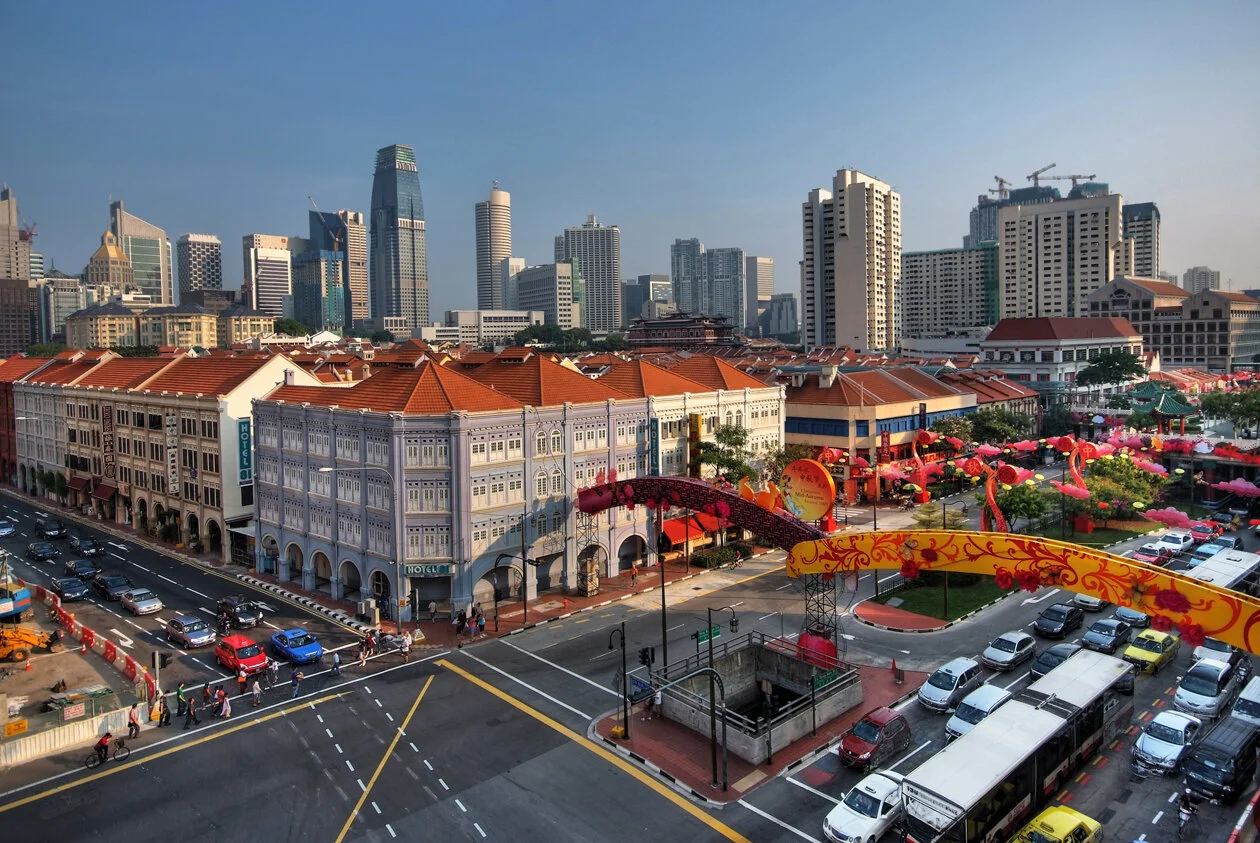
An aerial view of Singapore’s Chinatown with the city skyline in the background. William Cho. CC BY-NC-SA 2.0.
While not necessarily an enclave in the traditional sense given that the majority of Singapore’s population is ethnic Chinese, Singapore’s Chinatown is one of the most historically and culturally significant neighborhoods of the city-state. While the appearance of a Chinese community has been documented in Singapore as early as 1330, the neighborhood was not officially designated as a Chinatown until 1822 when British colonizer Sir Stamford Raffles allocated the area west of the Singapore River as such.
Today, Singapore’s Chinatown is one of the most popular in the world. The neighborhood includes historically preserved sites such as the Sri Mariamman Temple, as well as more recent cultural icons like the Buddha Tooth Relic Temple. Likewise, given that the city-state is world-renowned for its food culture, Chinatown is no exception. Popular spots for street food include the Chinatown Street Market, a pedestrian outdoor mall, and the Maxwell Food Centre, which features some of the best hawker center food including oyster cakes, peanut soup and chicken rice.
3. Quartier Asiatique, Paris
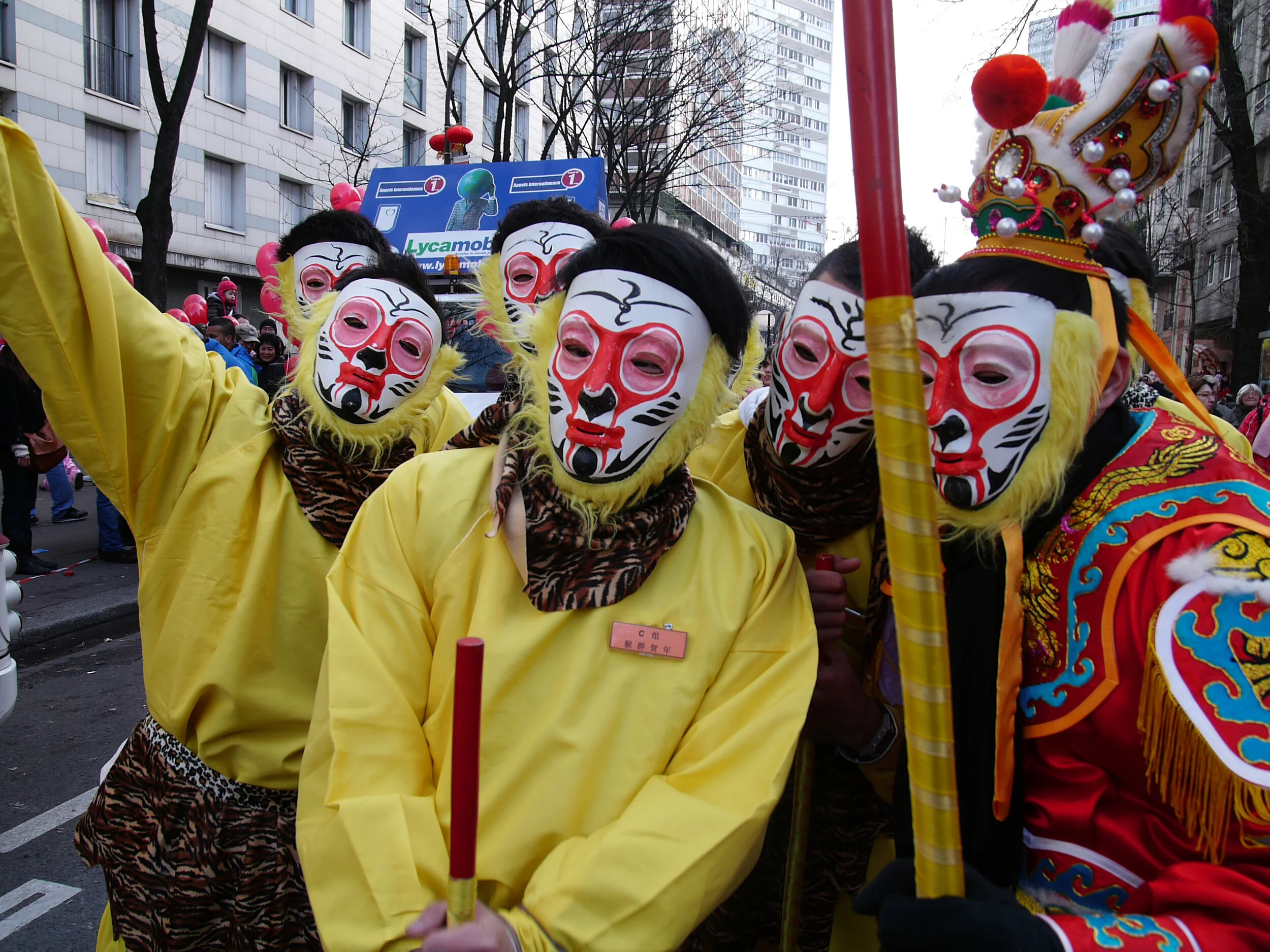
A group of performers at Paris’ Chinese New Year parade. Passion Leica. CC BY-NC-ND 2.0.
While many Chinatowns around the globe have been around for centuries, Paris’ Quartier Asiatique is much more recent. In the late 1970s, many refugees from the Vietnam War settled in the 13th arrondissement. This was followed by later waves of ethnic Chinese immigrants coming from Vietnam, Laos and Cambodia. Many of the ethnic Vietnamese immigrants later moved to other parts of France, leaving the neighborhood with a distinct Chinese presence.
Today, Paris’ Chinatown is considered to be the largest by population in Europe. Visitors to the neighborhood have a number of places to visit. The popular Asian supermarket chain, Tang Freres, is based in the neighborhood and offers a number of foods and goods shipped in directly from China. Restaurants such as Noodle Bar and Les Jardines de Mandchourie have some of the best Chinese food in the whole city. Likewise, the neighborhood has an annual Chinese New Year parade in February which is the largest parade in all of Paris.
4. Chinatown, Sydney
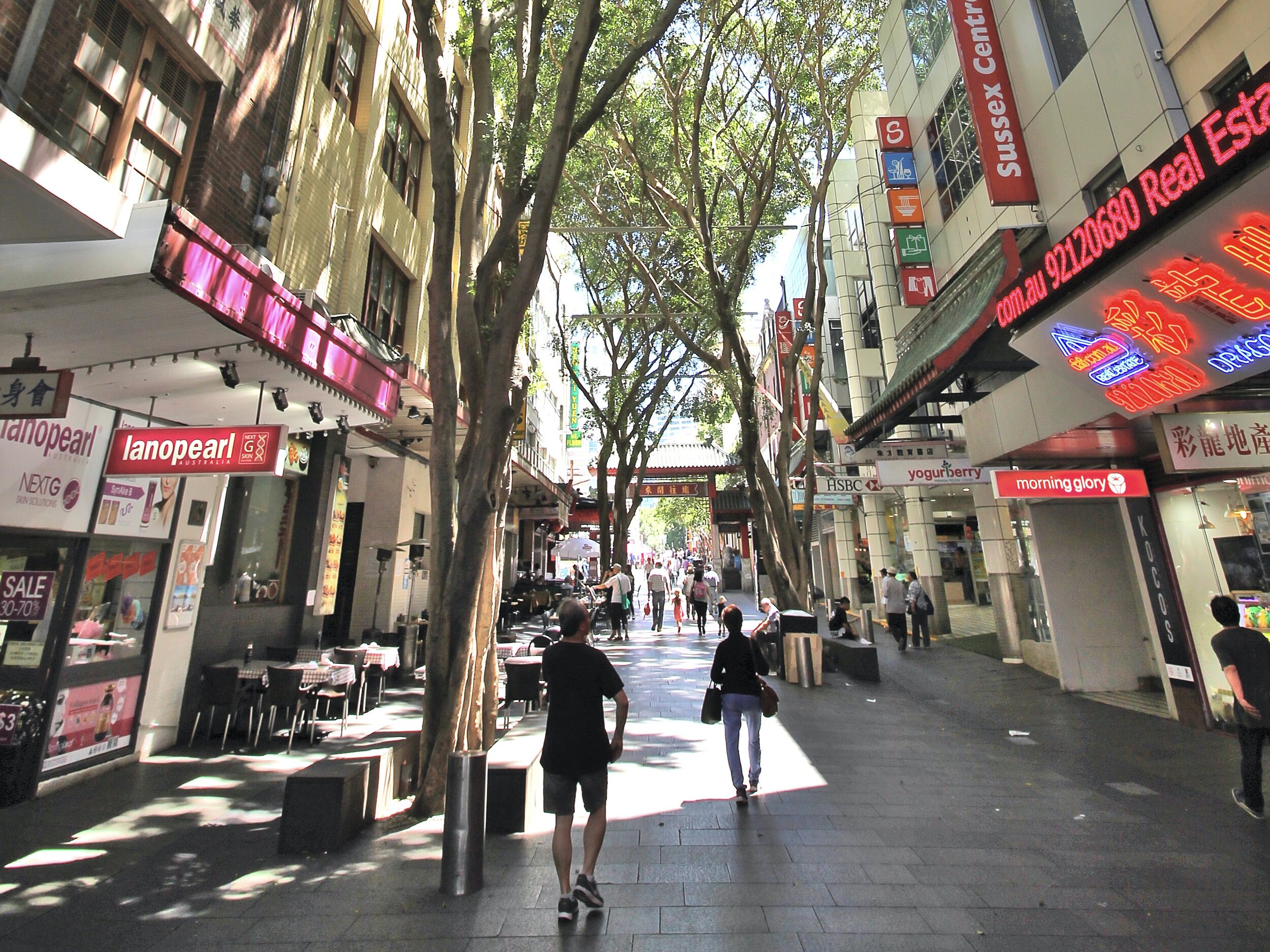
People walking in Sydney’s Chinatown. blairwang. CC BY 2.0.
Sydney’s Chinatown has a history rooted in movement. Many Chinese immigrants in the 1850s were drawn to Australia and settled in The Rocks, a neighborhood that gained the colloquial nickname “Chinese Quarter.” However, due to growing anti-immigrant sentiment and racism beginning in the late 1880s, Sydney’s Chinatown transitioned away from The Rocks to Campbell Street in the 1920s, before relocating again to Dixon and Hay streets, where the current Chinatown lies.
Today, Sydney’s Chinatown is world-renowned for its food and attractions. The Chinese Garden of Friendship, located just a block away from Dixon Street in Darling Harbour, was designed in conjunction with Sydney’s sister city of Guangzhou, China, and features carefully cultivated flora and beautiful architecture. Likewise, every Friday at 4 p.m., Dixon Street is taken over by the Chinatown Night Market. The stalls in the market feature everything from street food staples like dumplings and kebabs, to clothing and jewelry imported directly from China.

Jacob Sutherland
Jacob is a recent graduate from the University of California San Diego where he majored in Political Science and minored in Spanish Language Studies. He previously served as the News Editor for The UCSD Guardian, and hopes to shed light on social justice issues in his work.
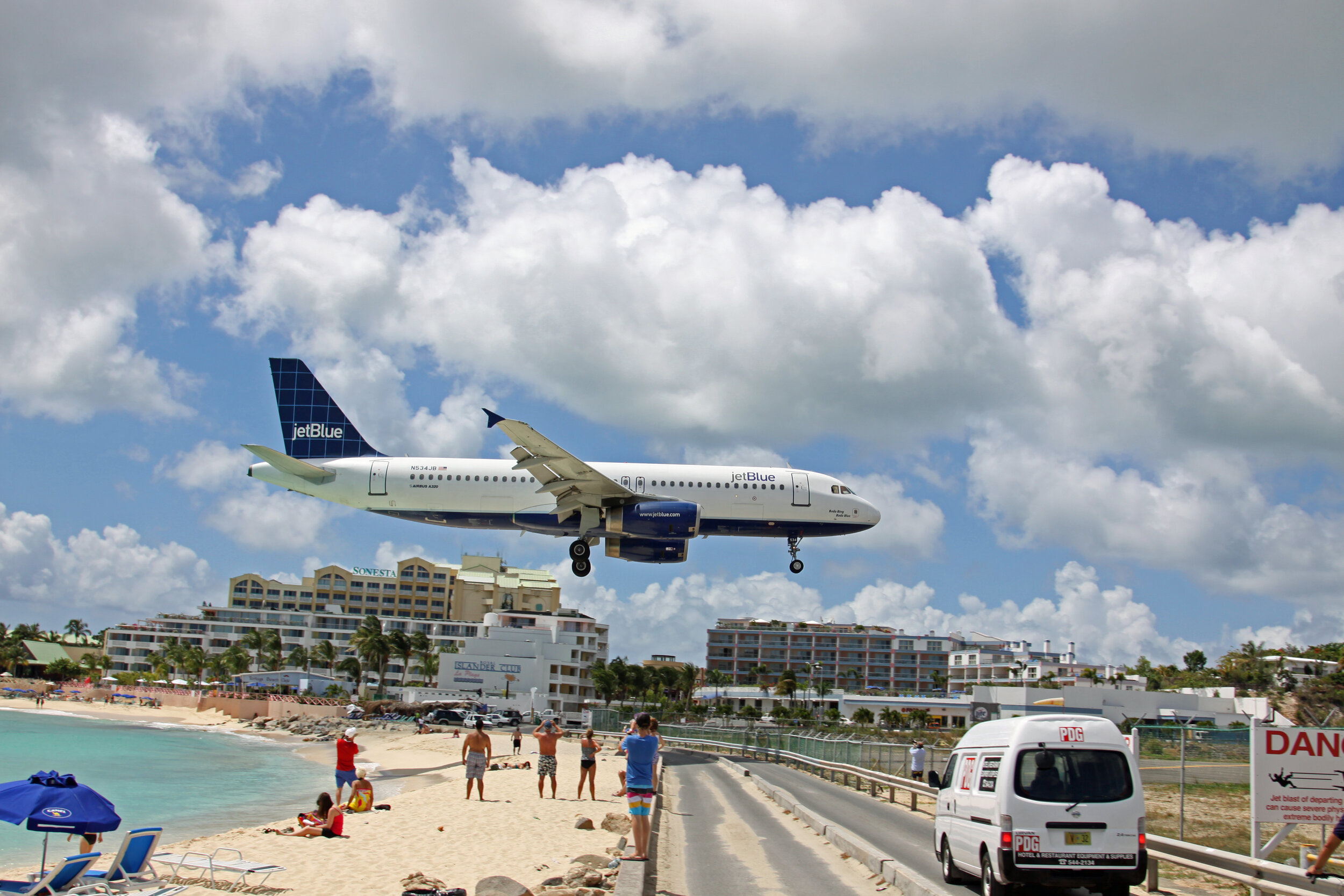
A plane landing in St. Martin. Steven Conroy. CC BY 2.0.
An 8-Day Tour Around the World, Virtually
The ongoing COVID-19 pandemic has caused many to experience FOMO, or the fear of missing out, for travel plans which have otherwise been canceled. That said, with a little creativity and a socially distanced trip to the supermarket, not all travel plans have to be lost.
If you’re interested in taking a more in-depth virtual visit to an international destination, check out our guide on international staycations. However, if you’re looking for a DIY brunch in Milan, a virtual afternoon in Cape Town, or an evening in Singapore, then continue reading on for a list of eight international destinations that you can (briefly) visit from the comfort of your home.
Day 1. Have Brunch in Milan
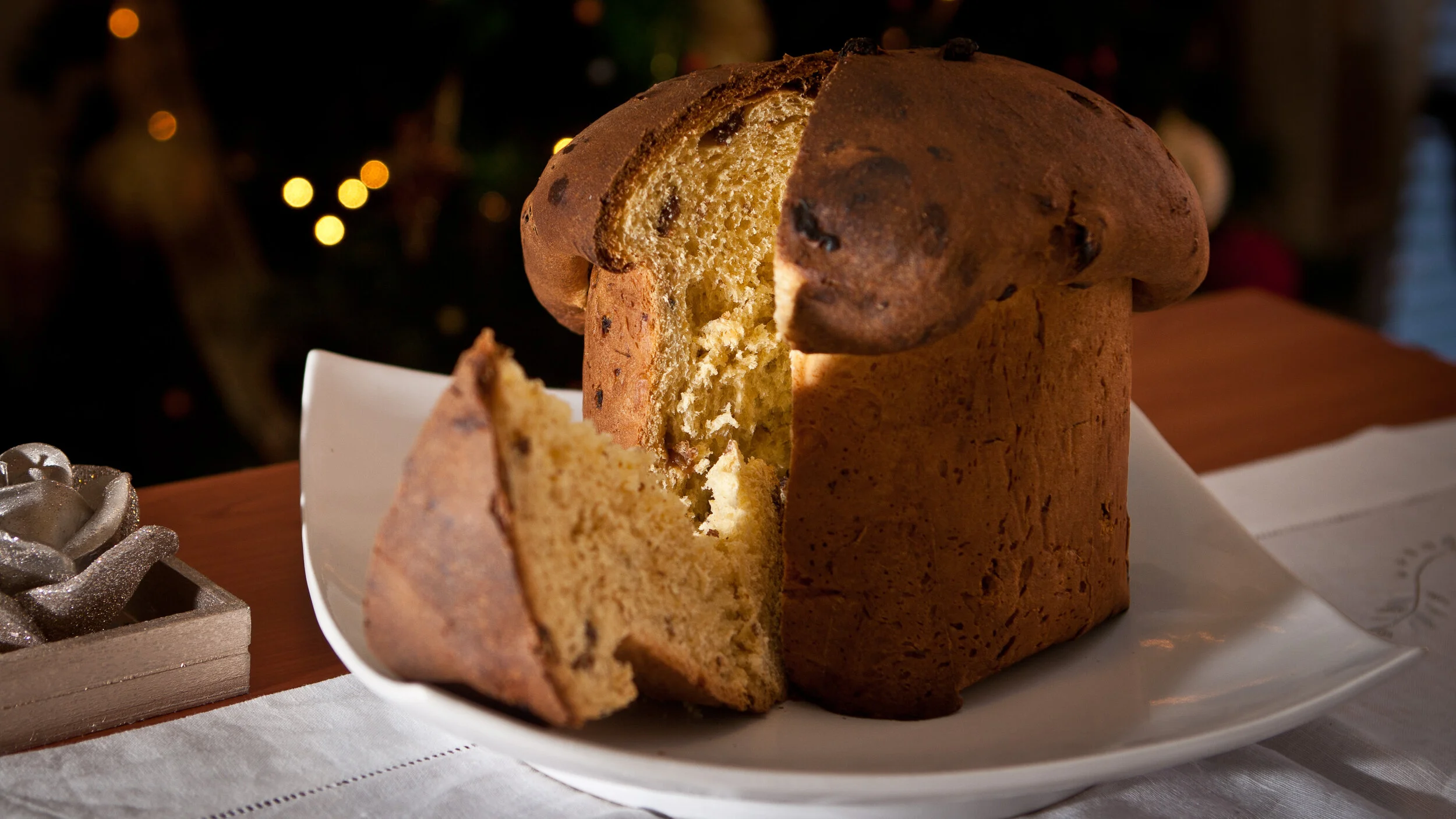
Homemade panettone, a popular Milanese sweet bread. Nicola. CC BY 2.0.
Milan is truly an international city. The capital of Italy’s Lombardy region boasts an eclectic blend of Milanese cuisine, innovative fashion, and museums which are second to none. In planning a stay-at-home brunch in Milan, one need look no further than the numerous menus of the city’s 8,785 restaurants for inspiration.
Consider making Sarpi oTTo’s famous quadrotti, the Italian equivalent of avocado toast; one just substitutes avocado for any number of toppings from their menu including hummus, chicken pate, or ricotta and asparagus. Or try your hand at making some pastries like vegan almond and carrot cake, chocolate croissants, or a homemade brioche inspired by the California Bakery. Likewise, taste coffees inspired by Biancolatte with recipes including bicerin, an Italian-style mocha espresso, caffe shakerato, or a simple caffe americano.
Day 2. Visit the Museums of Cape Town
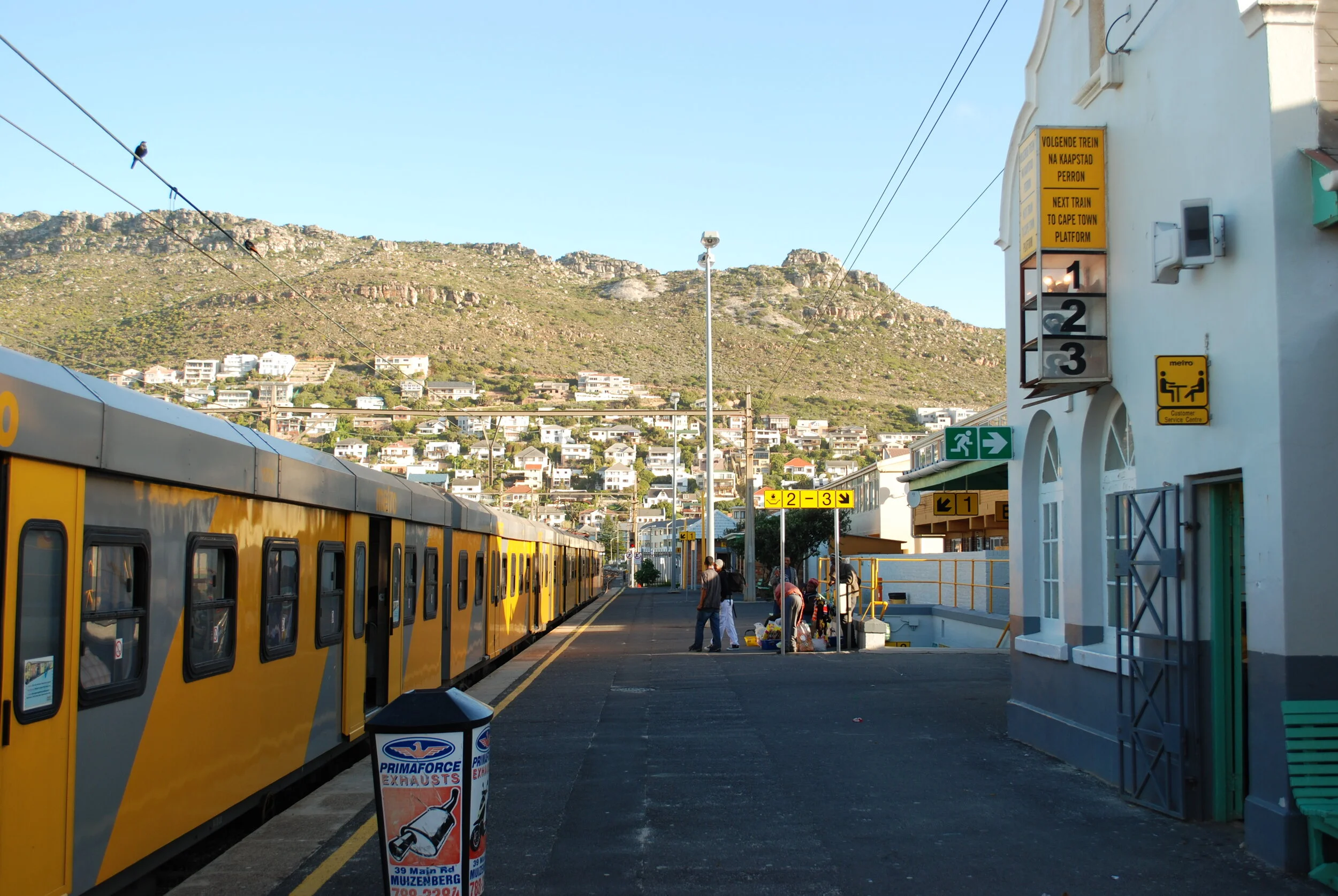
A train pulling into a station in Cape Town. George M. Groutas. CC BY 2.0.
Cape Town, the legislative capital of South Africa, is one of the most historically rich and culturally diverse cities in all of Africa. The second-most populous city in the country, Cape Town is home to a number of popular destinations such as Table Mountain, Cape Point, and world-renowned beaches.
Another popular attraction of the city that can be enjoyed virtually is its excellent museums. The Iziko South African National Gallery is known for its contemporary South African, Dutch, British and French paintings, and offers several virtual tours from exhibits within the Iziko museum system. Likewise, the District Six Museum is home to collections documenting and memorializing the forced removal of 60,000 residents from the District Six region of Cape Town during apartheid in the 1970s. Offering a number of virtual educational resources, one can learn more about the history of apartheid and the movement for restitution.
Day 3. Dine at a Hawker Center in Singapore
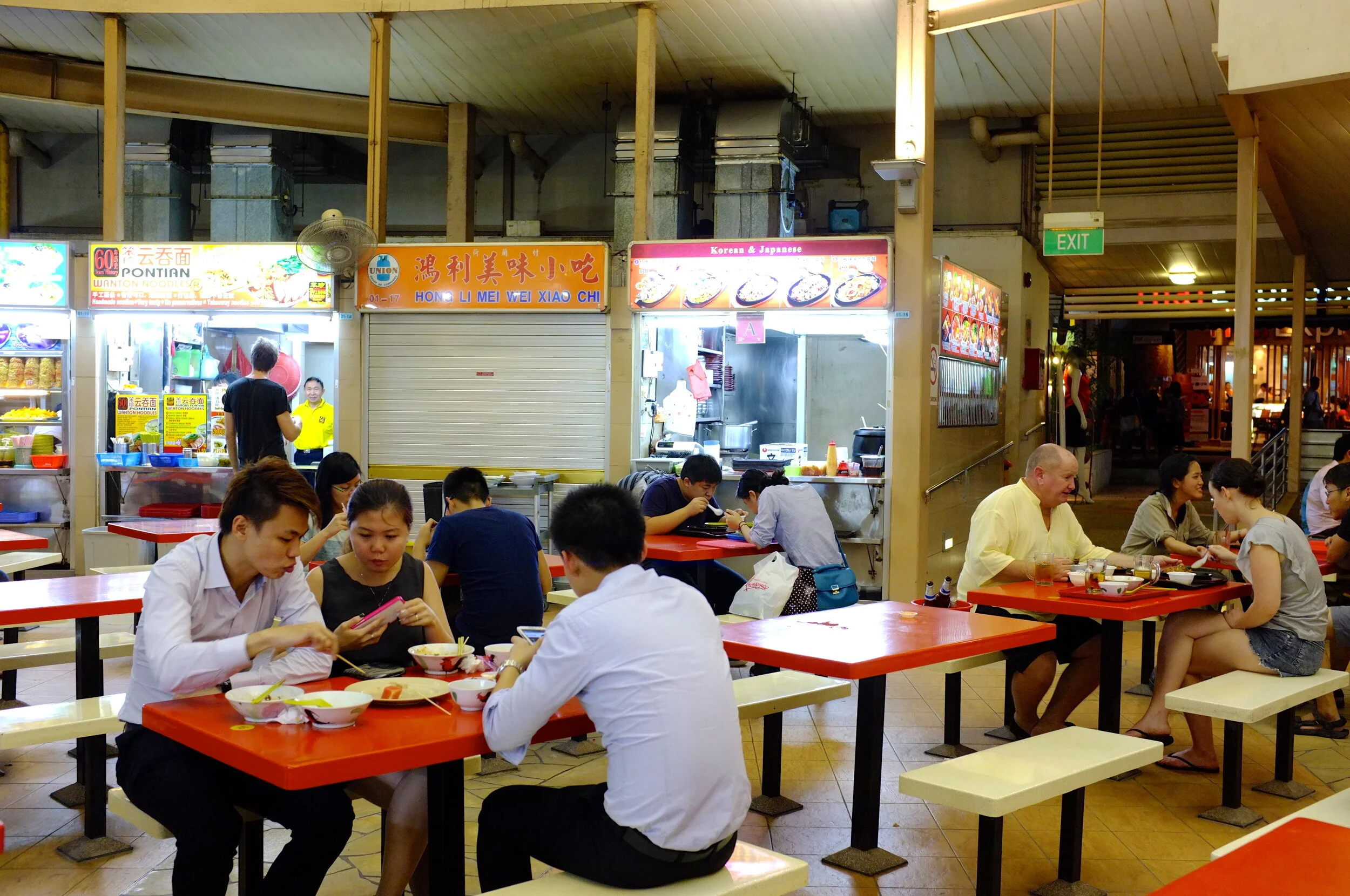
Diners eating at the Holland Village Hawker Centre. Premshree Pillai. CC BY-NC-SA 2.0.
Hawker centers are food markets featuring a blend of cuisines reflective of Singapore's status as a global city. Known for their unique food culture, they draw millions of tourists to the country annually. Famous food halls include the Newton Food Centre, which was featured in “Crazy Rich Asians,” the Chinatown Food Complex and the Tai Hwa Eating House. The latter two are home to the first and second street food locations to ever receive Michelin stars.
For those curious to try out some of the best that Singapore’s hawker centers have to offer, Spice N’ Pans has a list of 20 recipes with how-to videos straight from the city-state’s food stalls. Popular favorites on the list include Hainanese chicken rice, chicken satay, and Teochew fish porridge.
Day 4. Travel Throughout the Middle East
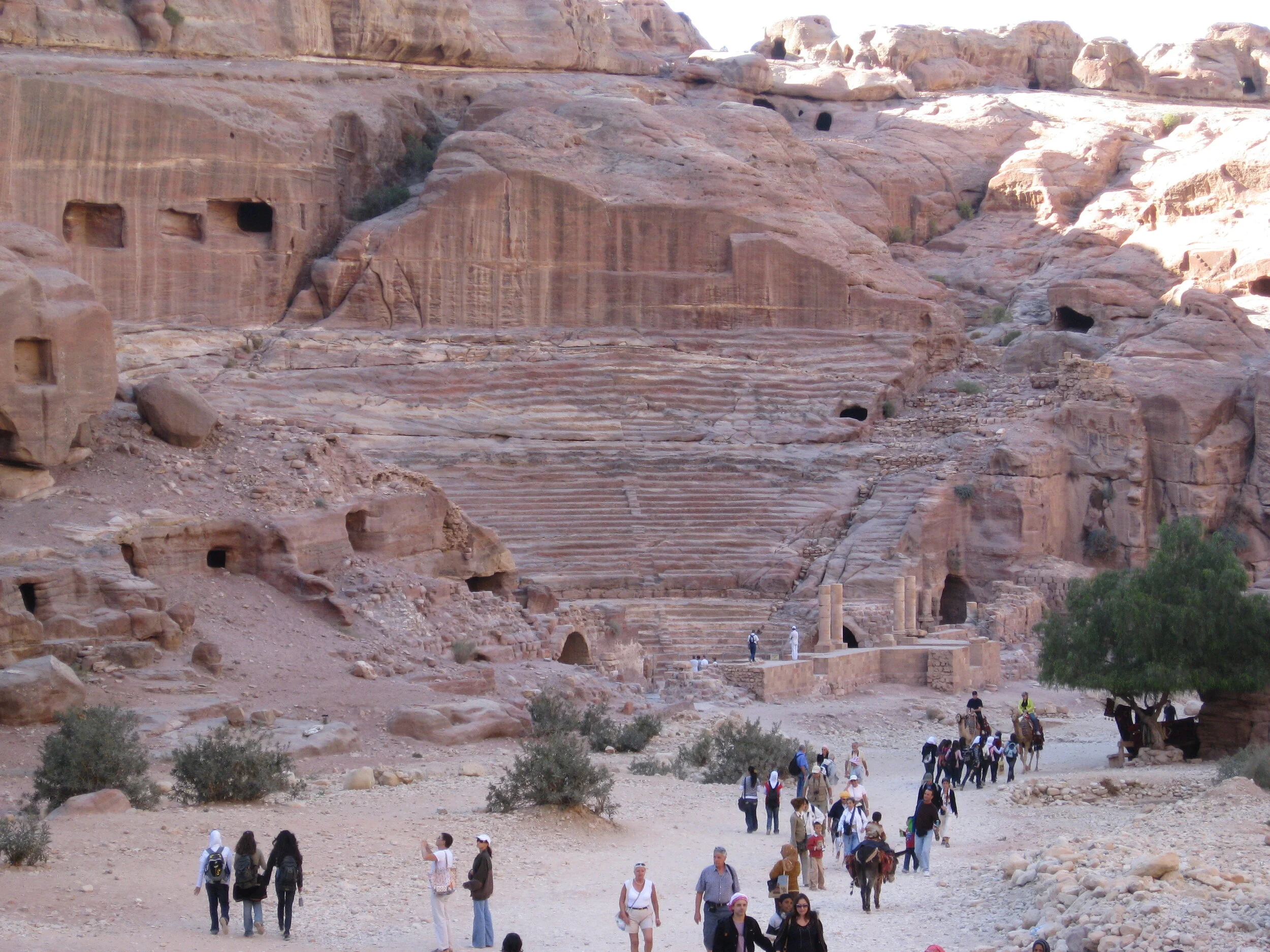
Visitors walking through Petra, Jordan. Chris Yunker. CC BY 2.0.
In the Western world, the Middle East is often overlooked as a travel destination. However, this region is home to a variety of diverse cultures that would be a pity to overlook. Sites such as Petra, Jordan, the Isfahan mosque in Iran, and the Kadisha Valley in Lebanon continue to captivate audiences to this day.
To get a taste of what the Middle East has to offer, consider taking a virtual tour in one of the 16 countries in the region. The travel and culture blog Where Sasha Went offers a great guide to a variety of tours available to anyone. The ancient port city of Jaffa in Israel, flashy Dubai in the United Arab Emirates and the rugged country of Tajikistan are just a handful of locations which can be toured from your computer.
Day 5. Experience Australia’s Natural Diversity
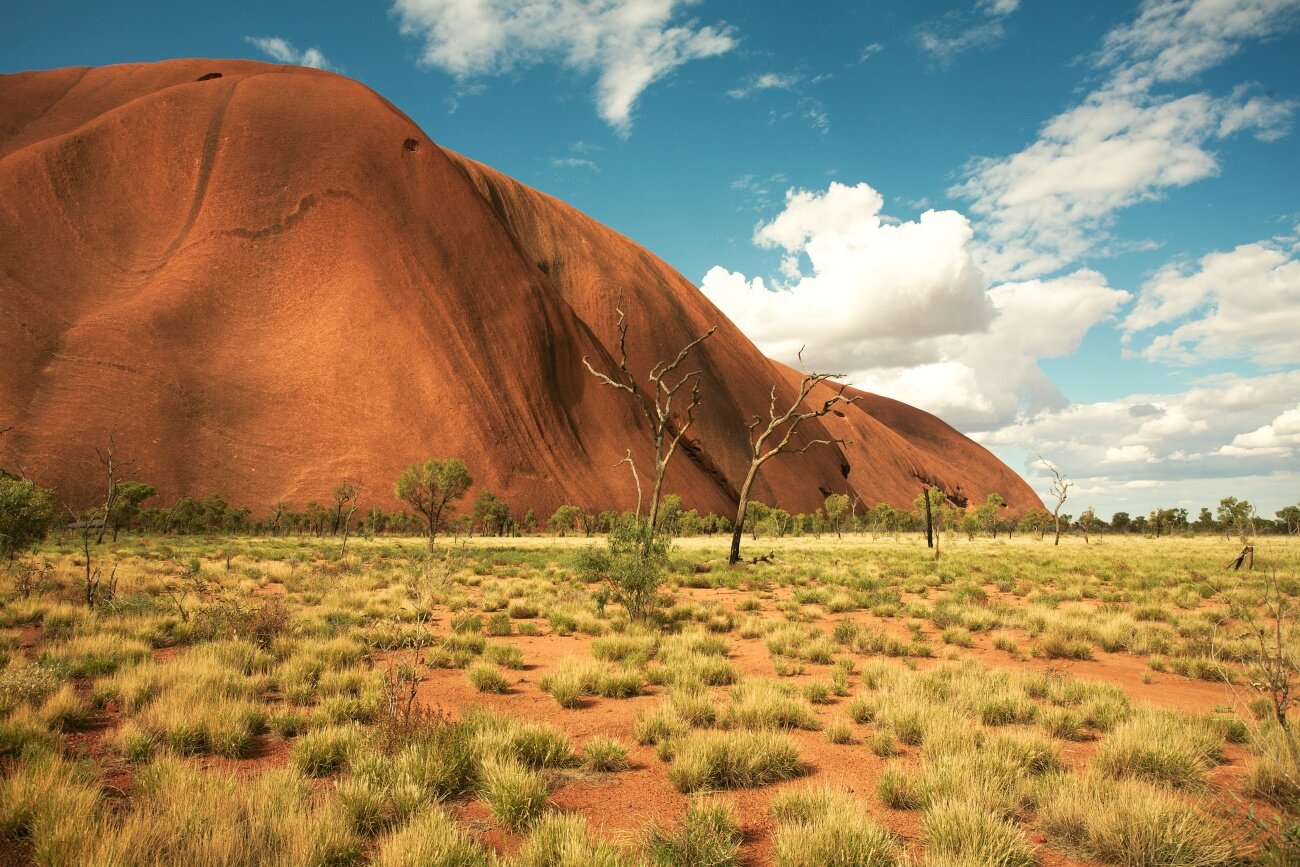
A view of Uluru, also known as Ayers Rock. Angelo Failla. CC BY-NC-SA 2.0.
The land down under is home to some of the most unique and beautiful natural landscapes in the world. Whether it be the Great Barrier Reef off the eastern coast, the vast desert regions of the interior, or the tropical forests in the far north, Australia is truly home to something for every nature lover, regardless of what they may be interested in.
To get a glimpse into the biodiversity of the region, a number of virtual experiences are available for free. The famous Uluru-Kata Tjuta National Park has a number of 360-degree views of the most popular sites in the park. Likewise, one can tour the Great Barrier Reef with David Attenborough, one of the world’s most famous natural historians. Additionally, the Lone Pine Koala Sanctuary offers 18 live webcams so viewers can get up close and personal with the sanctuary’s koalas, dingoes and collection of reptiles.
Day 6. Taste the Tacos of Mexico
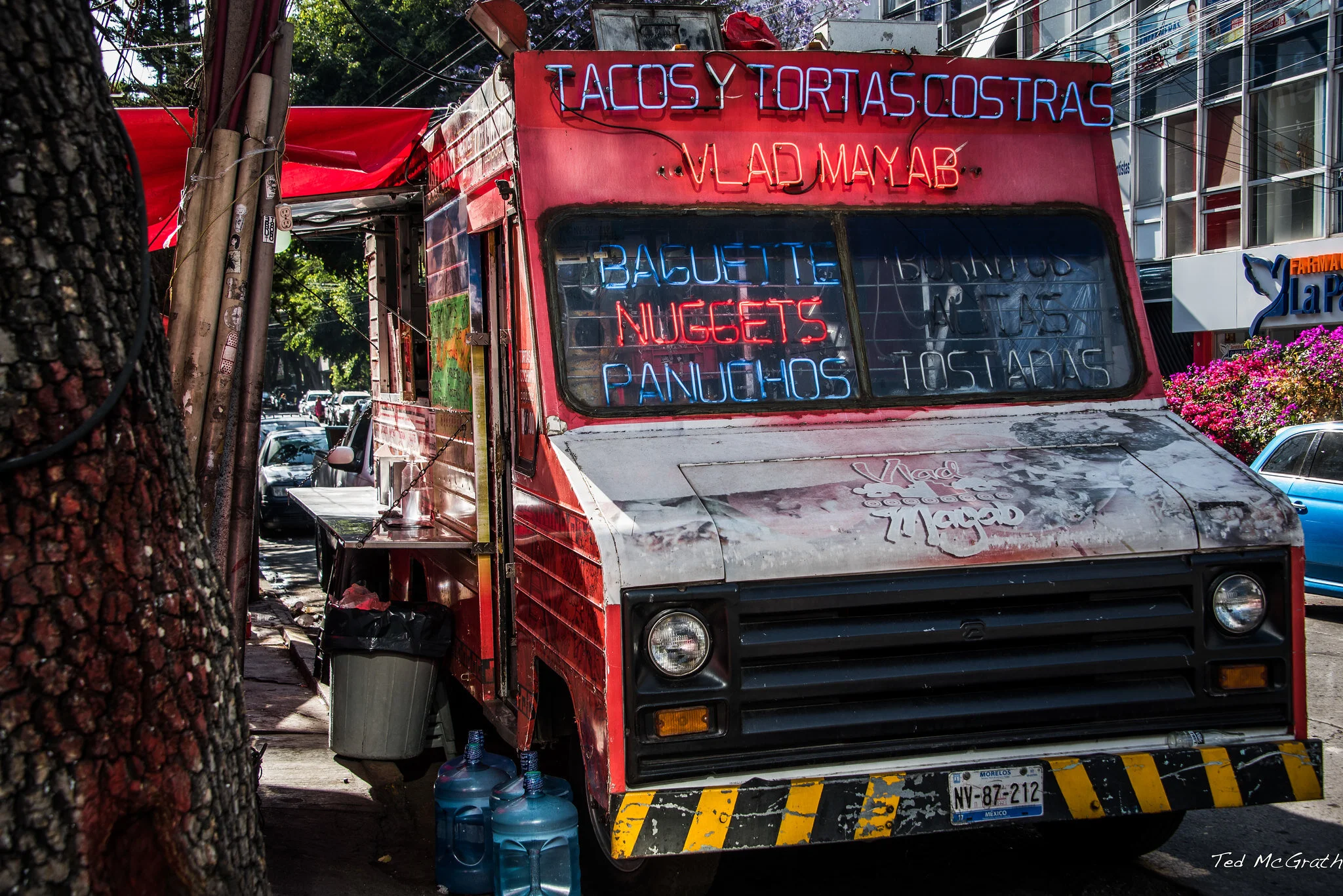
A taco food truck in Mexico City. Ted McGrath. CC BY-NC-SA 2.0.
Mexican food, and more specifically tacos, have been a staple of the American food canon for decades. However, what is often lost when one visits their local taqueria is the history behind the recipes, culture and heritage of favorites such as tacos al pastor and pescado.
Enter “Taco Chronicles,” a visually engaging docuseries on Netflix which centers around the history, traditions and varieties of tacos found throughout Mexico. Each episode highlights a type of taco, then showcases interviews with families, experts, food writers and restaurant owners as they discuss the process and history of their personal recipes. If you are going to sit down for a couple episodes, it is highly recommended that you have a taco in hand; the stunning cinematography and in-depth descriptions make any mouth water for guisado and carnitas.
Day 7. Visit the Best Museums of Europe
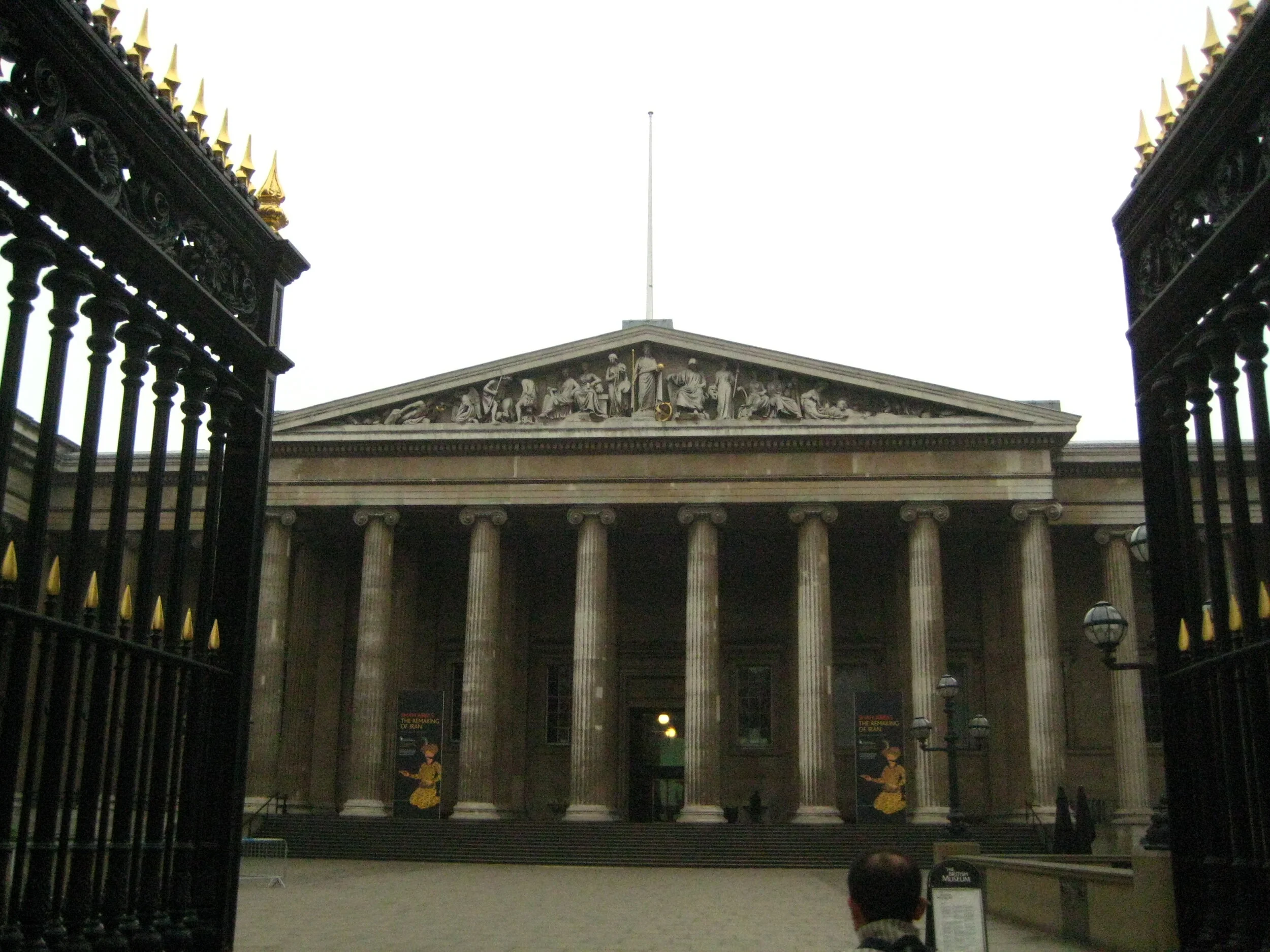
The front entrance of the British Museum. David Woo. CC BY-ND 2.0.
Europe is world renowned for its museums. Each country on the continent can boast its own collections of art, history, science, technology and cultural innovation. Several of these museums, like the Prado Museum in Madrid and the Galileo Museum in Florence, Italy, have been featured in the article, “8 Museums from Around the World to Visit Virtually from Home.”
That said, countless other European museums are deserving of recognition and worth your time if you have a couple of free hours. The British Museum currently offers the Museum of the World digital collection, self-described as an “experience through time, continents and cultures, featuring some of the most fascinating objects in human history.” The Vatican Museums offer virtual tours of a number of rooms from the Holy See, including the iconic Sistine Chapel and the halls of the Chiaramonti Museum. Finally, the State Hermitage Museum in St. Petersburg, Russia, offers an extensive online catalog of art and cultural artifacts from Europe’s largest country.
Day 8. Viva La Habana
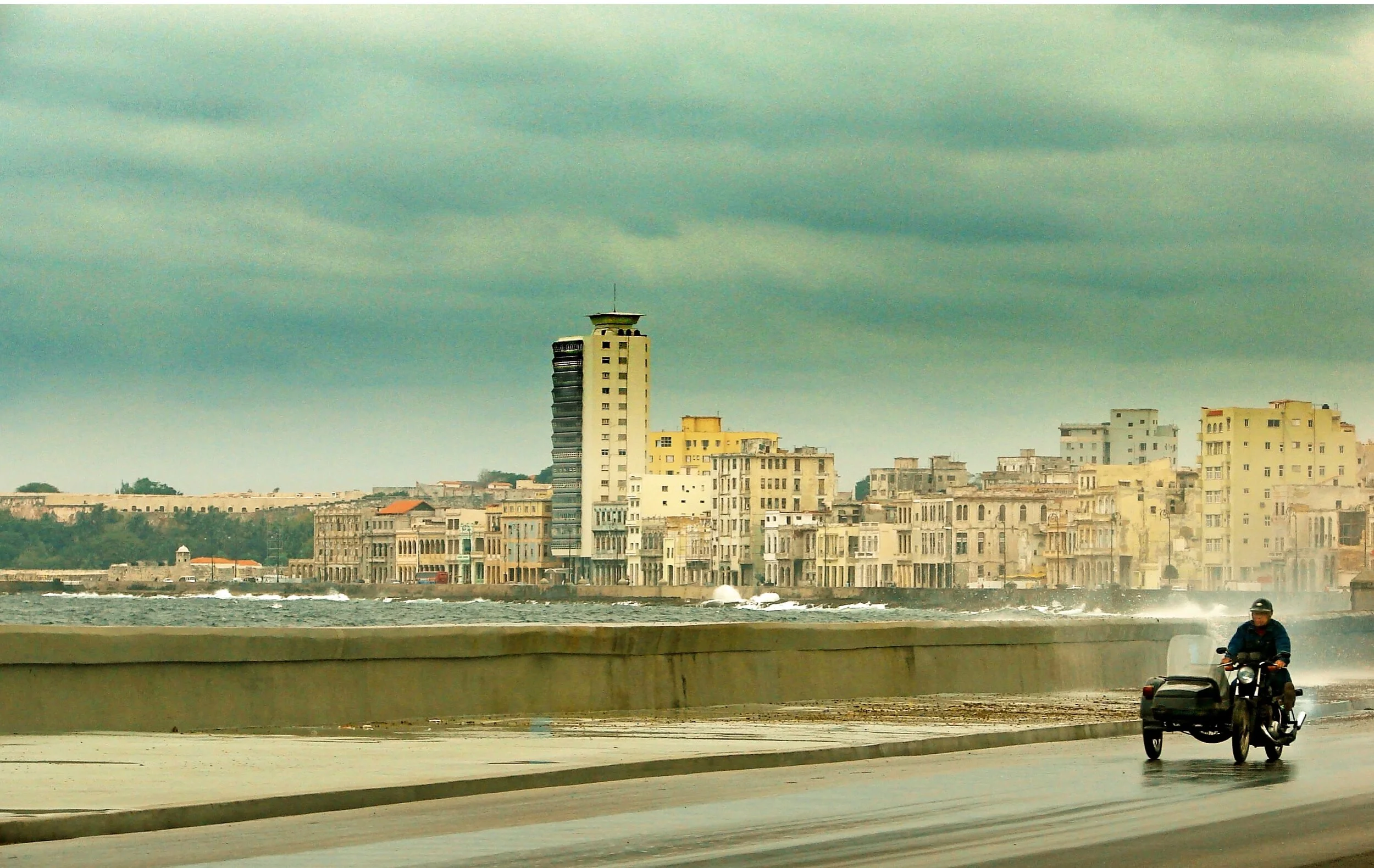
A view of Havana from the Malecon. Nick Kenrick. CC BY-NC-SA 2.0.
For many, the sights and sounds of Cuba’s capital city are lost, largely due to the ongoing tensions between the island nation and the United States. That said, Havana’s unique history has shaped it to be one of the most fascinating and culturally vibrant cities in the world. Featuring sites like the Paseo del Prado, institutions such as the International School of Havana, and foods like fried sweet plantains and cafe cubano, the city holds something for everyone.
To enjoy Havana from the comfort of your home, consider trying your hand at cooking Cuban recipes. Saveur offers a great starting point for recipes, including popular favorites such as ropa vieja, a Cuban-style shredded beef, fricase de pollo, a type of chicken stew, and the ever-famous cubano sandwich. Additionally, a budding film industry has begun to take hold in Havana, offering films that showcase beautiful shots of the cityscape. Movies like “Four Seasons in Havana” and “Wasp Network” are both available on Netflix.

Jacob Sutherland
Jacob is a recent graduate from the University of California San Diego where he majored in Political Science and minored in Spanish Language Studies. He previously served as the News Editor for The UCSD Guardian, and hopes to shed light on social justice issues in his work
The 10 Best Museums You’ve Never Heard Of
The world’s most popular museums are often overcrowded and overwhelming. Here are 10 of the world’s best museums that are less known but just as impactful.
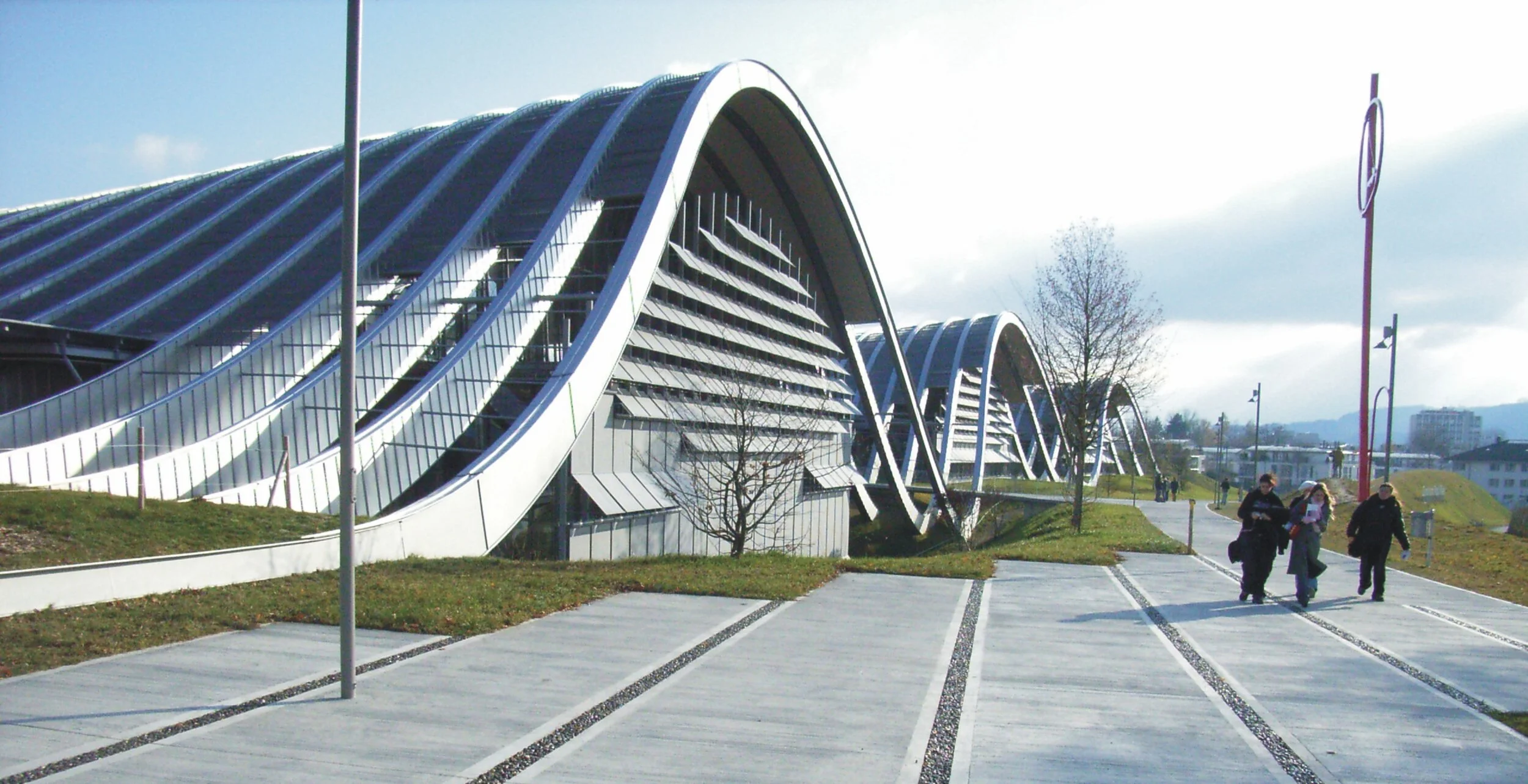
People walk by Zentrum Paul Klee in Bern, Switzerland. Lys Ippos. CC BY 3.0.
The most popular museums in the world—the Louvre, the Met, the Tate Modern—offer an incredible breadth of art, but are often crowded, congested and overwhelming. Lesser-known museums can offer exceptional art, culture and history, all without the lines and high volumes of other visitors. Here are 10 of the best museums around the world that fly under the radar and are home to unique and fascinating collections.
1. Louisiana Museum of Modern Art
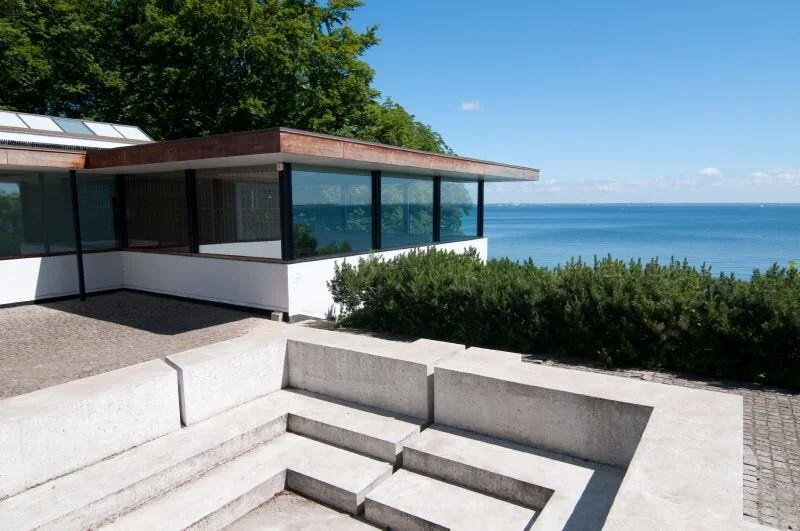
The exterior of the Louisiana on the Oresund Sound. CC BY 4.0. Kim Hansen.
The Louisiana, located outside of Copenhagen, Denmark, is home to one of the most immersive modern art collections in the world. In response to Danish museums turning away modern art, founder Knud W. Jensen created the Louisiana in 1958. The museum’s integration of indoor, outdoor and digital space allows visitors to move through art dynamically, fulfilling Jensen’s goal of a truly integrated art experience. This museum is also one of the only in the world with a permanent light installation from Yayoi Kusama, whose temporary installations in cities such as New York are almost impossible to get tickets for.
2. Museum of Broken Relationships
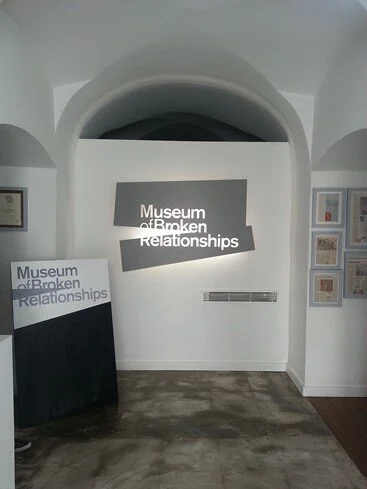
The Museum of Broken Relationships. CC BY 2.0. Pros Opee. CC BY 2.0.
This museum, created by artists Olinka Vistica and Drazen Grubisic, is located in Zagreb, Croatia, with a second gallery in Los Angeles. The museum’s mission is to create a shrine of symbolic possessions that commemorate and treasure humanity’s ability to love and to lose. While the Museum of Broken Relationships is a physically stunning museum, the heart of this project stems from its global engagement. The museum’s online component has space for everyone to share the story of their heartbreak. View the online portion of the museum here.
3. Pitt Rivers Museum
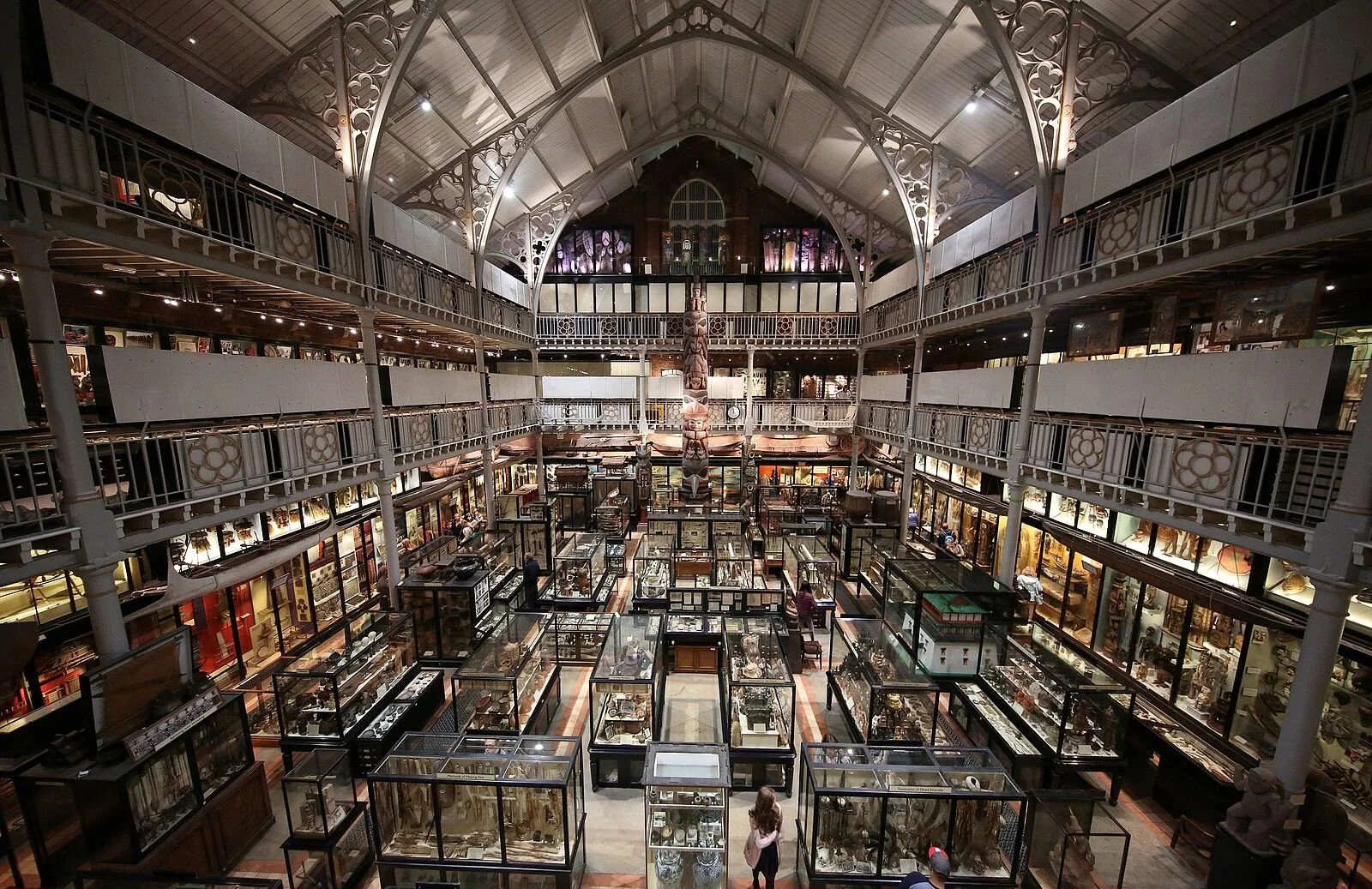
Interior of the Pitt Rivers Museum. Geni. CC BY 2.0.
The Pitt Rivers Museum in Oxford, England, is home to over half a million artifacts from around the globe. A fascinating collection of anthropological and archaeological items, the Pitt Rivers Museum is unique because of its organizational system for displays. Rather than grouping items together by period or people, the Pitt Rivers Museum groups items together by type, illustrating the commonalities between different peoples and histories throughout the world. You can visit the museum virtually today.
4. Tenement Museum
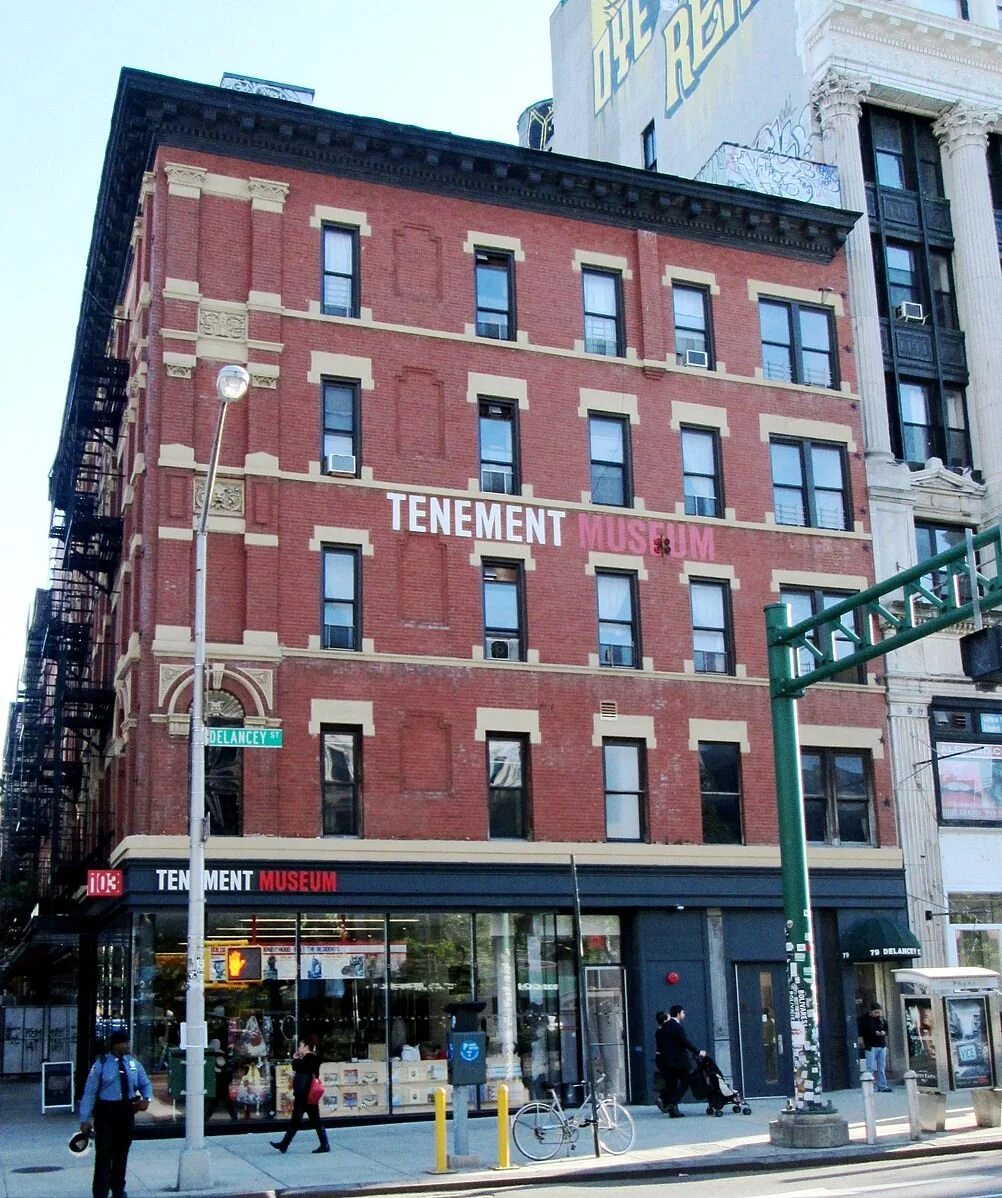
The Tenement Museum exterior. Beyond My Ken. CC BY 2.0.
The Tenement Museum in New York City is devoted to the history of immigration and migration to the United States. Located in a formerly dilapidated tenement building that was home to immigrant families between 1860 and 1930, historian Ruth Abram and social activist Anita Jacobsen built their museum around the stories of these families. In connecting public policy, oral history and immigrant narratives, the Tenement Museum offers a moving and topical exploration of recent history.
5. The Kunstkamera
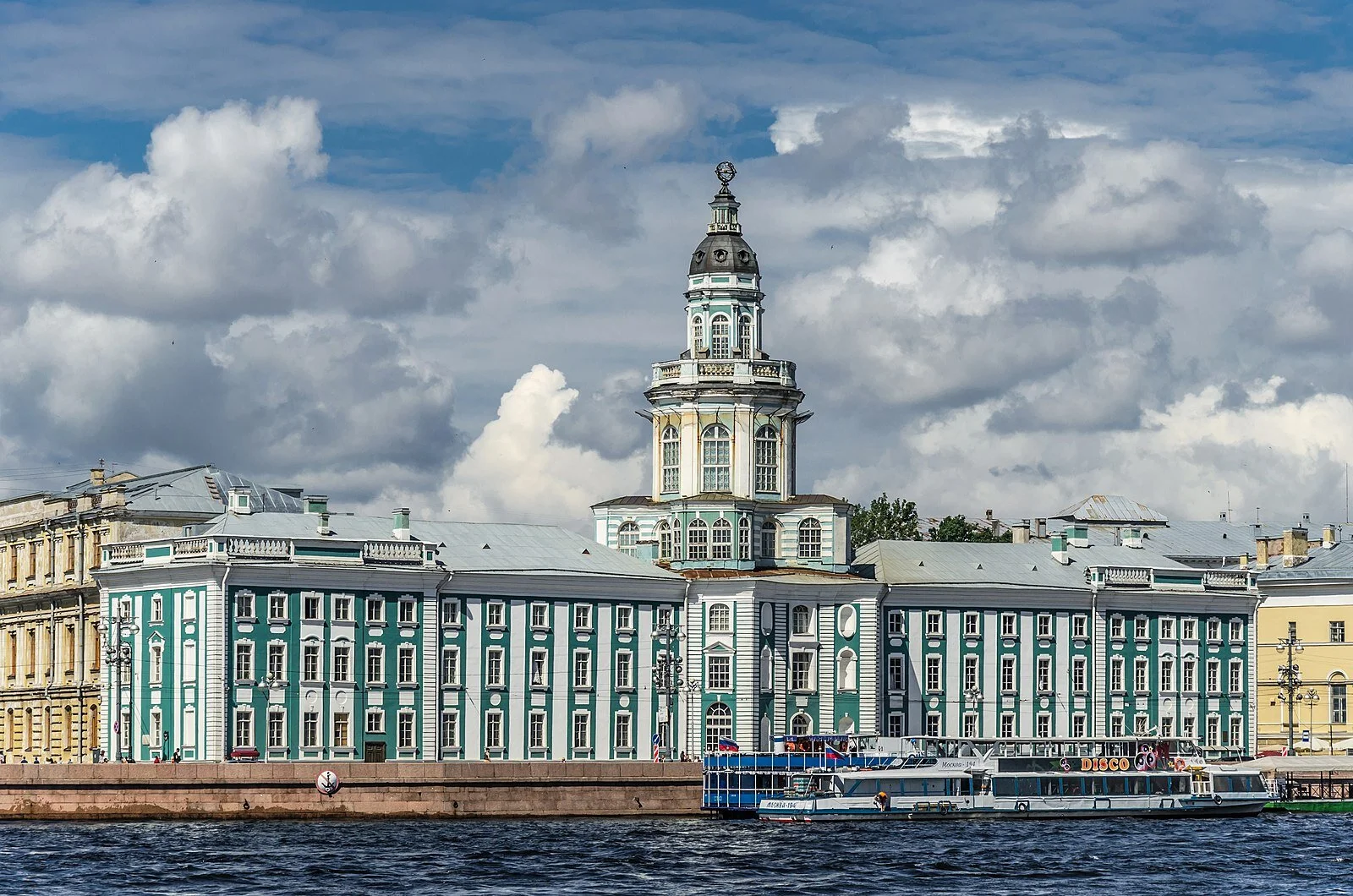
The Kunstkamera in St. Petersburg, Russia. Flor Stein. CC BY 4.0.
Established by Peter the Great at the beginning of the 18th century, the Kunstkamera’s collection comprises nearly 2 million oddities. Located in St. Petersburg, Russia’s first museum was founded with the goal of containing all of the world’s knowledge in one building. This massive collection remains relatively unknown outside of Russia, but offers one of the world’s most vast displays of global anthropology and ethnography.
6. Castello di Rivoli
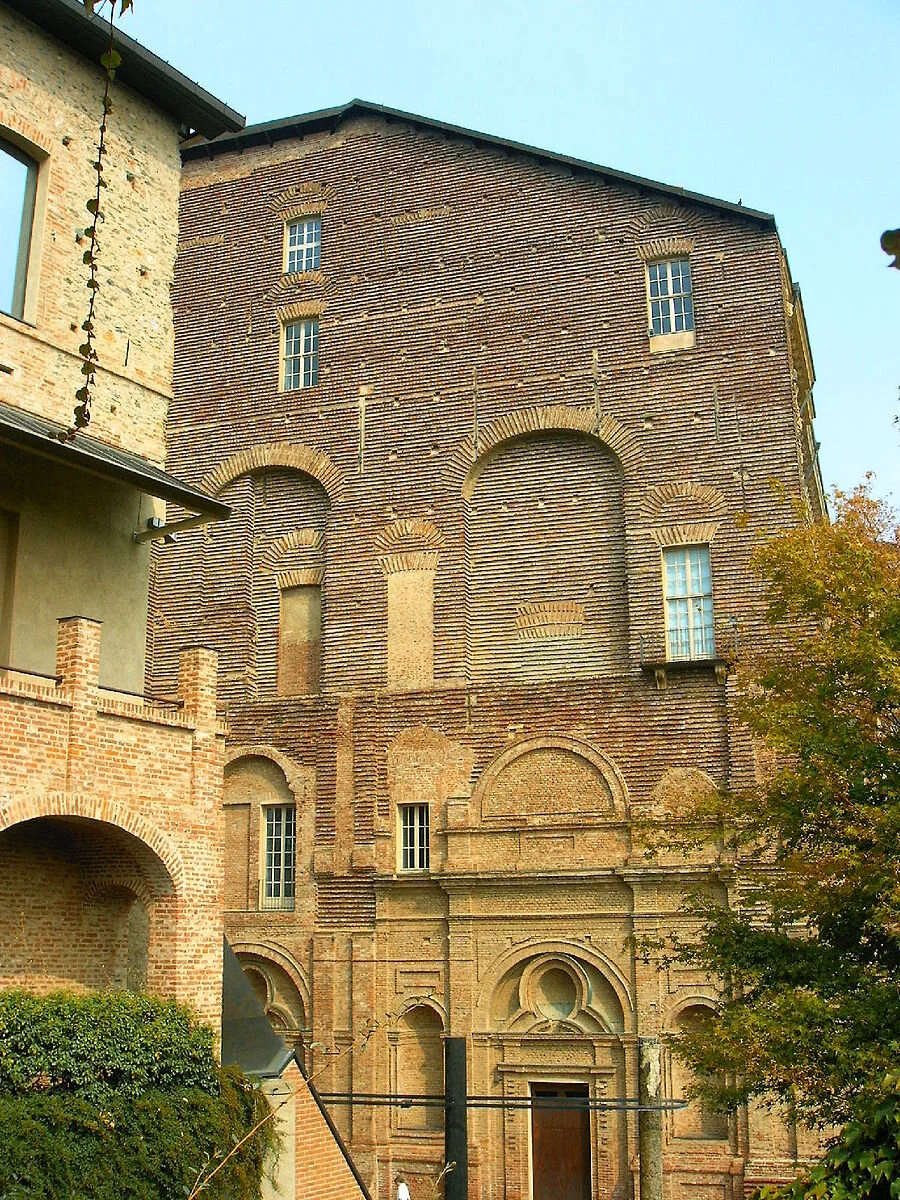
The facade of Castello di Rivoli. M. A. CC BY 2.5.
In 1984, the Castello di Rivoli became the first museum in Italy completely devoted to contemporary art. Located just outside of Turin, this museum is located in a UNESCO World Heritage Site. The castle buildings are open to the public and the modern art exhibitions within the castle walls are world-class, with the Castello di Rivoli also serving as one of the world’s premier art history research centers.
7. Zentrum Paul Klee

Zentrum Paul Klee exterior. Krol K. CC BY 3.0.
This museum, located in Bern, Switzerland, is dedicated to the work of artist Paul Klee. Klee’s artistic collection is remarkable in its own right with his groundbreaking exploration of color theory, but the draw of this museum is also the physical building. Designed by Italian architect Renzo Piano in 2005, the iconic building integrates the natural hilly landscape with metallic swoops and arcs that mirror Klee’s art. Check out the online exhibit, “Mapping Klee,” at this link.
8. Museum of Old and New Art
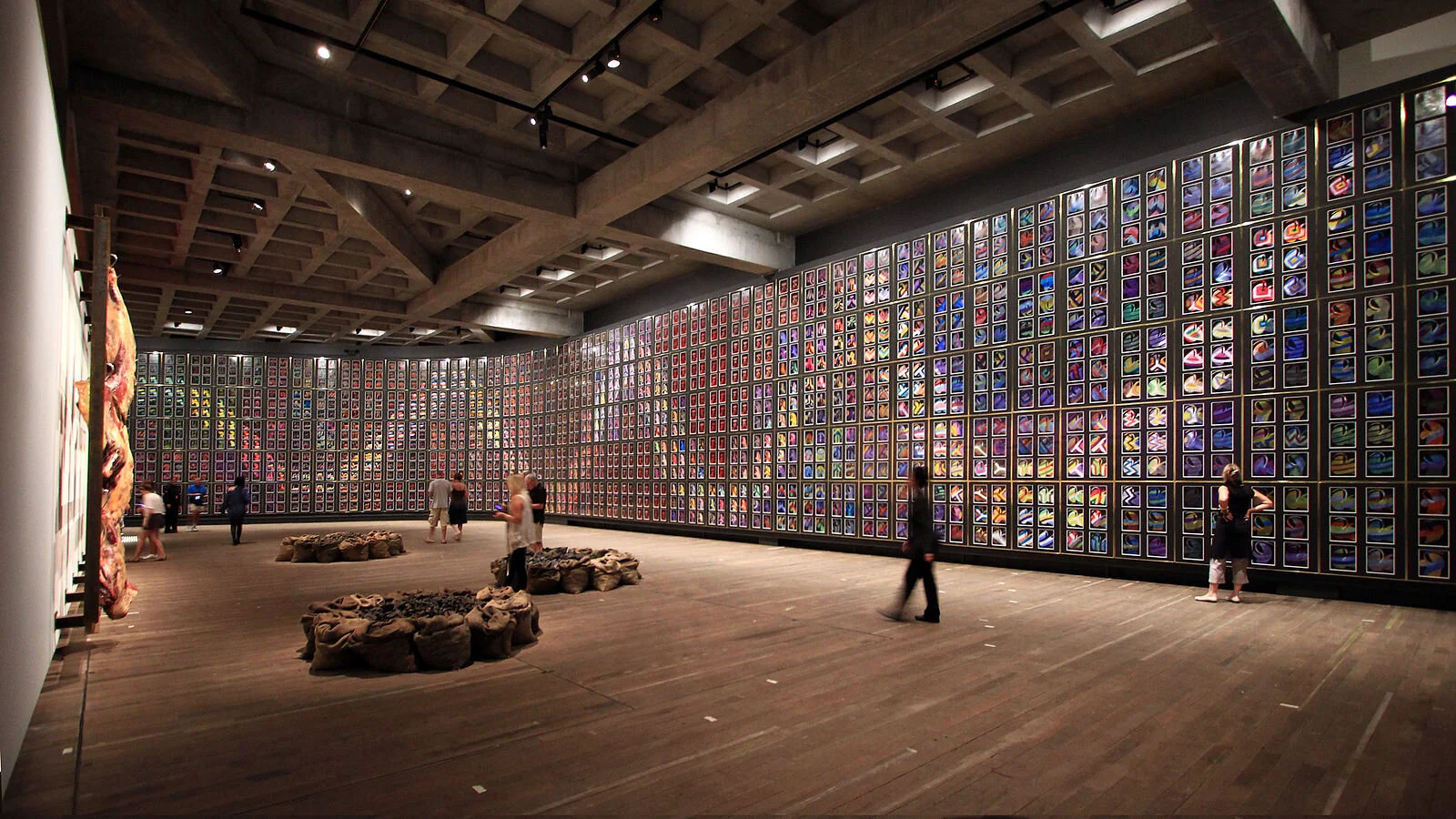
“Snake” by Sidney Nolan in MONA. Jeff Owens. CC BY 2.0.
MONA, the Museum of Old and New Art, is an ever-changing collection of ancient, contemporary and modern art. Located in Hobart on Australia’s island of Tasmania, the museum is built into a cliff and prioritizes multimedia installations, engagement with community-based art, and live performances. MONA elevates the museum experience by operating a winery, hotel and restaurant on-site that all mirror the museum’s ethos: fun.
9. Museum Willet-Holthuysen
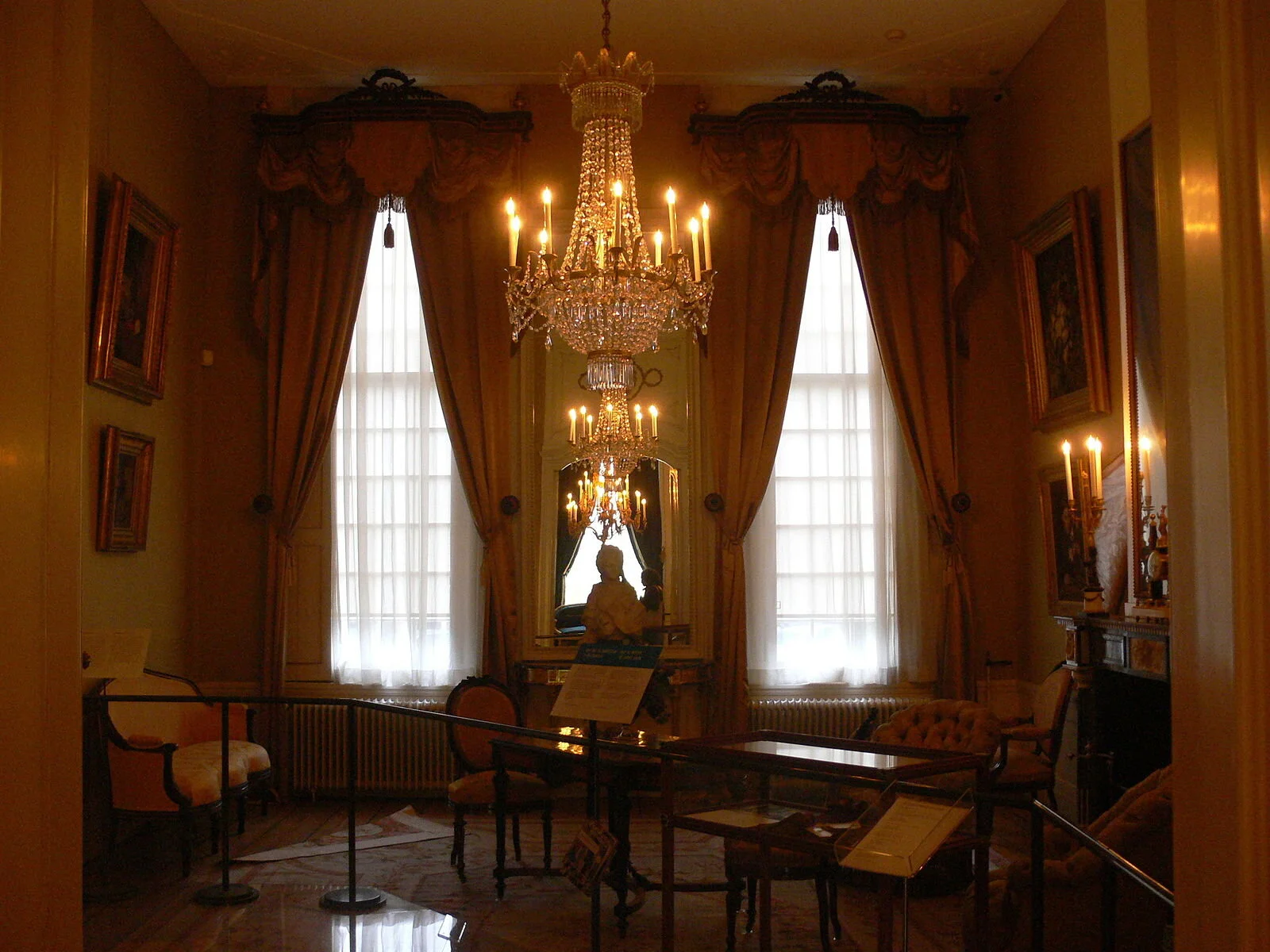
Interior of the Museum Willet-Holthuysen. Remi Mathis. CC BY 3.0.
The Museum Willet-Holthuysen is a homage to Amsterdam’s golden age. Built in 1687, this canal house was donated to the Dutch city in 1895. The 18th- and 19th-century room decor is still in its original condition, and the gallery walls are lined with paintings from the Willet-Holthuysen private collection, allowing many of the paintings to be displayed in their original historic setting. View part of the collection online here.
10. The Neon Museum
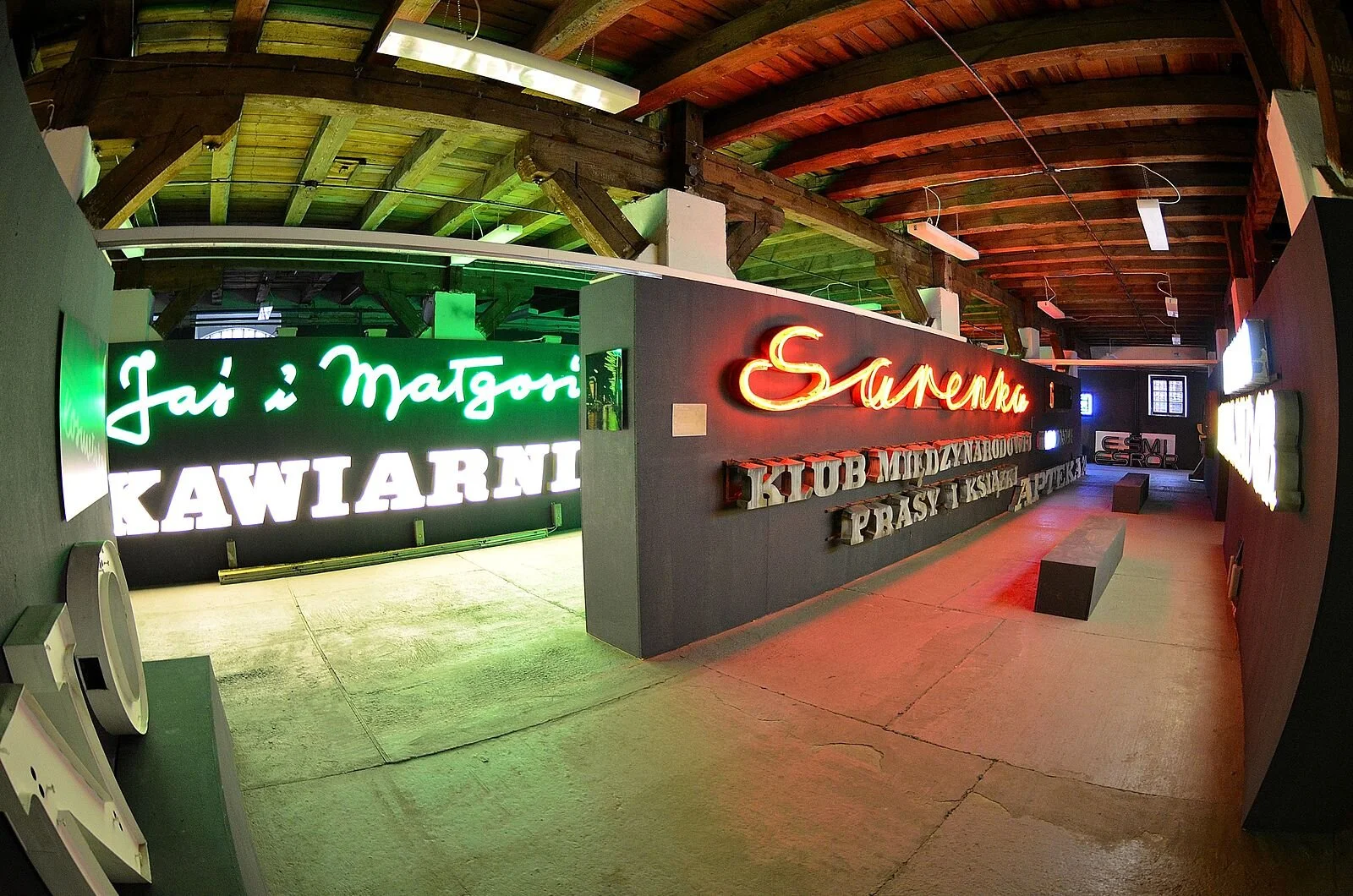
Signs in the Neon Museum. Adrian Grycuk. CC BY 3.0.
Since 2005, this museum in Warsaw, Poland, has been dedicated to the preservation of Cold War-era artifacts; namely, neon signage from the Soviet Union. In the Eastern Bloc, which included Poland, there was an official effort from the 1950s to the 1970s to “neonize” the state. The Soviet attempt to bring Western aesthetics to Eastern Europe has been preserved at the Neon Museum, where gallery walls are lined with an array of colorful relics.

Sarah Leidich
Sarah is currently an English and Film major at Barnard College of Columbia University. Sarah is inspired by global art in every form, and hopes to explore the intersection of activism, art, and storytelling through her writing.