
UNESCO unveiled 25 new World Heritage Sites in late July 2026, bringing global attention to lesser-known ecosystems and raising questions about the ethics of tourism.
Read MoreThe Galápagos Drug Route
By Carol Khorramchahi
A UNESCO wildlife sanctuary is being pulled into the Pacific cocaine trade, putting conservation and community life on the same collision course.
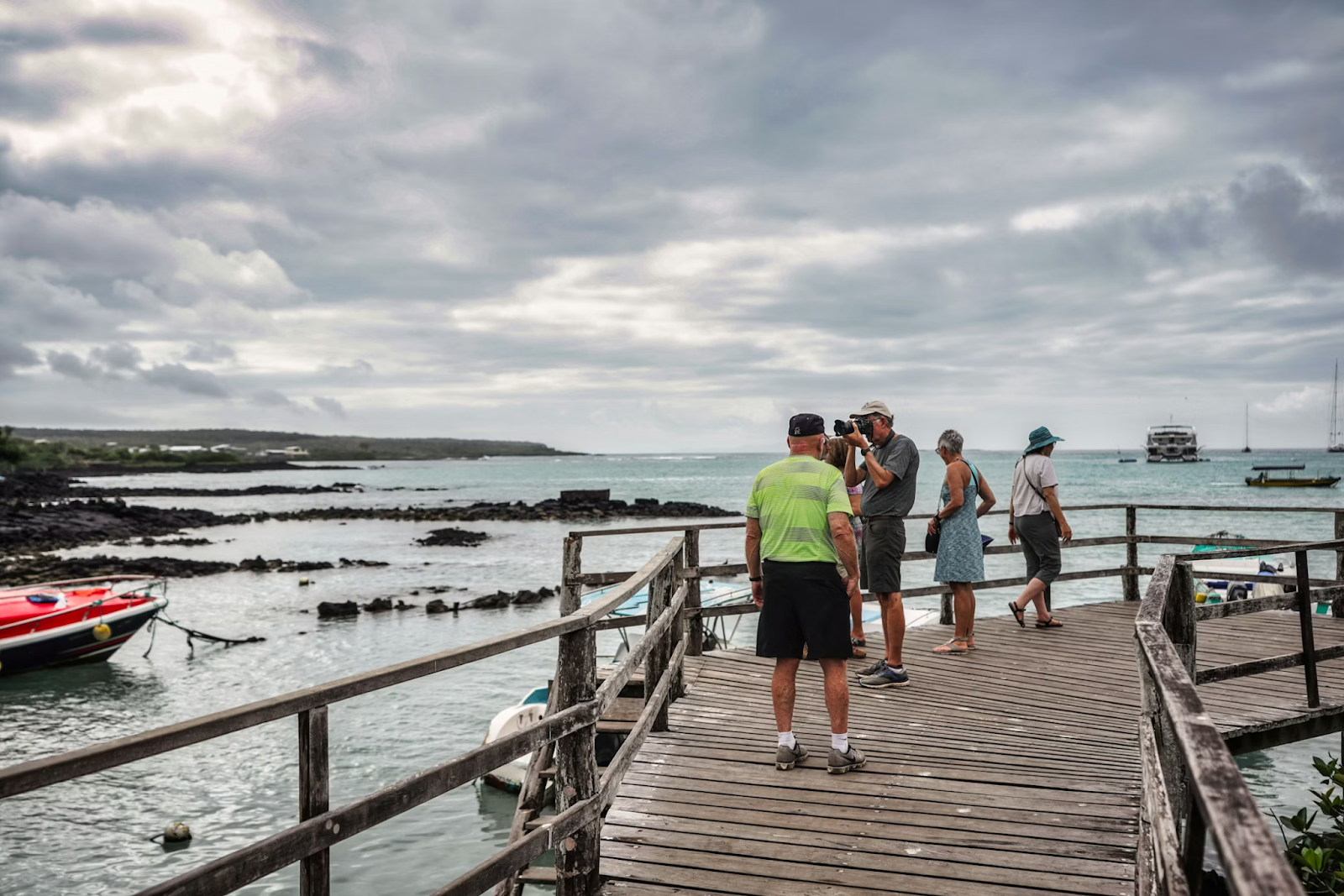
Boats docked in Santa Cruz, Ecuador. Andres Medina. Unsplash.
The Galapagos are marketed as a place outside the modern world, featuring blue water, strict park rules and animals that seem to have missed the memo about humans. UNESCO calls the islands a “living museum and showcase of evolution.”
That is the Galapagos most travelers recognize. But there is another Galapagos, quieter and more recent, shaped by the same geography that makes the islands famous. The archipelago sits deep in the eastern Pacific, far enough from the mainland to feel remote and close enough to ride along lengthy maritime routes that move north toward Central America and beyond. Trafficking networks do not need the Galapagos to be a city; they need it to be a waypoint.
In early 2026, Al Jazeera reported that the islands are increasingly being used as a refueling and staging zone for cocaine shipments moving through the Pacific, with authorities intercepting boats and searching for hidden storage points. The story lands hard because the Galapagos economy depends on tourism and regulated fishing, not on the shadow economy of organized crime. When trafficking pressure rises, the damage is not only criminal: It is social.
Part of the pull is simple distance. Long routes require fuel and logistics, and isolated stretches of ocean provide cover. A Pacific trafficking analysis by the U.N. Office on Drugs and Crime describes expanding transnational organized crime in the region and the importance of maritime routes for moving illicit drugs.
Another part is Ecuador’s wider security crisis, which is pushing criminal networks to innovate and spread. The International Crisis Group warns that Ecuador’s organized crime surge is tied to the country’s role in global cocaine flows and violent competition among criminal groups. That shift does not stay on the mainland: It radiates outward, including into strategic maritime zones.
The consequences in the Galapagos do not always look like those in Hollywood. They can look like corruption pressure on small businesses; fishermen being approached to sell information, fuel or services; authorities trying to police an enormous marine area with limited assets while also protecting one of the most sensitive ecosystems on Earth.
Officials are taking the threat seriously. In March 2025, the U.S. Embassy in Ecuador said Ambassador Art Brown visited the Galapagos and discussed security challenges, including illicit trafficking and illegal fishing, as part of coordination with local and national authorities. The U.S. Embassy has also emphasized the scale of maritime interdictions more broadly. The country’s Ministry of Defense said Ecuador seized 135 tons of drugs at sea in 2025, a record it framed as a major blow to trafficking networks.
The larger lesson is uncomfortable: Trafficking routes shift like water. When enforcement tightens in one corridor, networks test another. The Galapagos are now part of that map, and the challenge is no longer only protecting wildlife; it is protecting a community and a global treasure from being turned into infrastructure for a drug economy.
GET INVOLVED:
Support conservation and community protection efforts through the Galapagos Conservancy and the Charles Darwin Foundation. Follow organized crime and security analysis through the International Crisis Group Ecuador page and regional trafficking research through the UNODC

Carol Khorramchahi
Carol Khorramchahi is a student at Boston University, where she studies English and Psychology and minors in Journalism. She enjoys writing and reporting on stories that bring together culture, identity, and community, and has experience in both newsroom reporting and digital media. She is especially interested in thoughtful storytelling with a global lens.
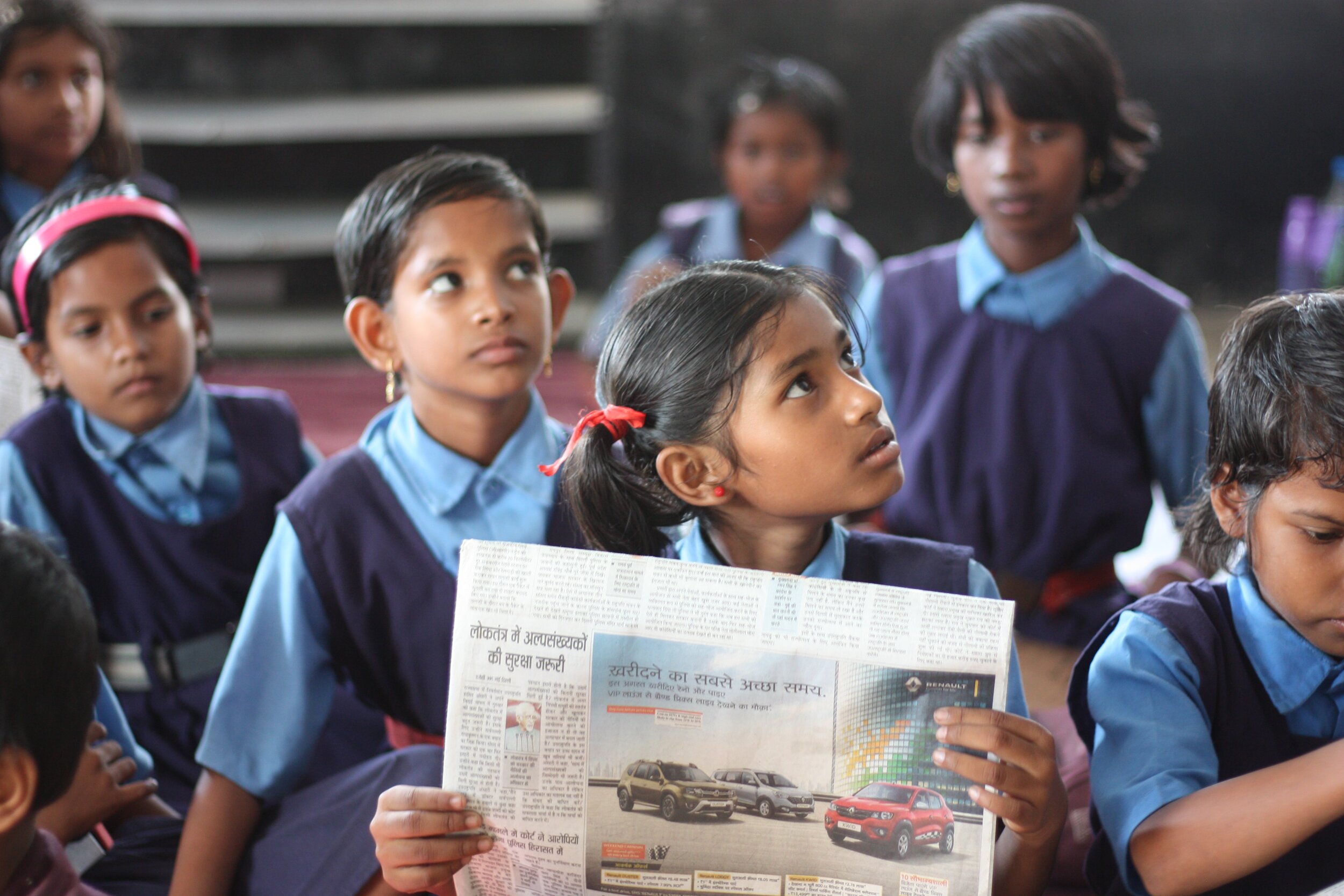
As education increases, more women in rural areas are able to access schooling. Here, young girls in India’s Chhattisgarh state attend government school in their uniforms. Jaikishan Patel. Unsplash.
The Gender Education Gap is Narrowing. Here’s How You Can Help Close It
More girls are enrolling in education than ever before, and the gap between educated women in men is narrowing. Based on a report given by UNESCO, 180 million more girls have enrolled in primary and secondary education since the Beijing Declaration and Platform for Action, a commitment signed in 1995 by 189 countries in which they pledged to advance the rights of girls and women. The report shows that the global enrollment rate for girls in school increased from 73% to 89%, and the biggest improvements are seen in sub-Saharan Africa and South Asia, especially in India. The reasons behind this inequality are historical, social and economic, as barriers like poverty and rigid gender roles place large burdens on accessing schooling.
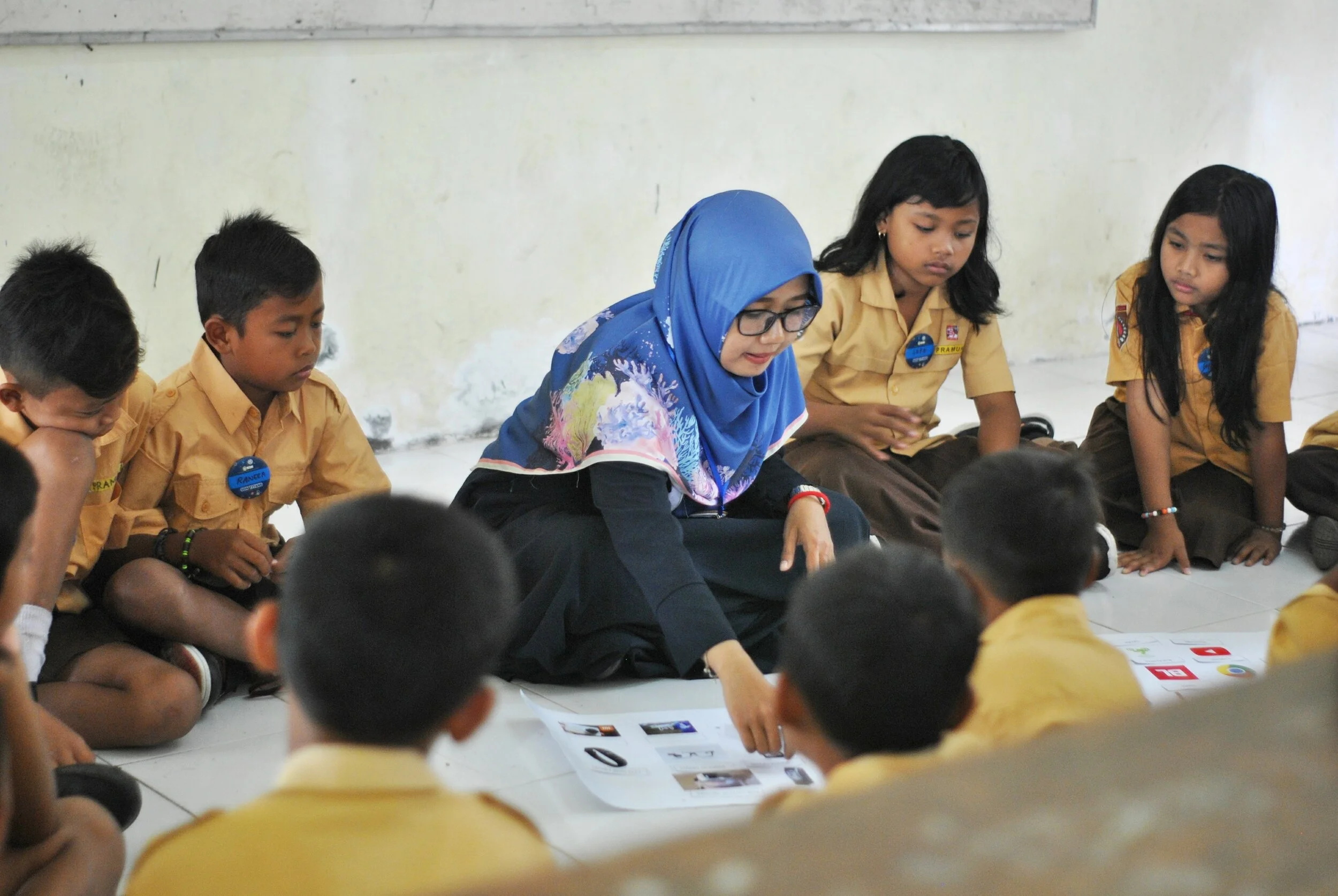
Young men and women studying in the classroom in Klaten, Indonesia. Husniati Salma. Unsplash.
This push for women’s education did not stop at the primary level, with three times more women enrolling in universities than 25 years ago, and the most significant progress is seen in North Africa and Western Asia. Morocco has particularly excelled, reaching enrollment parity in 2017 after more than 20 years of the rate of enrollment being just 30 women for every 100 men. The report found that although women are present in the classroom more frequently, there is still a culture of dismissal revolving around women’s education, so the efforts toward educating women are now focusing on representation and validation.
Ways You Can Get Involved:
In relation to the report, a personal way to involve yourself is to participate in the #Iamthe1stGirl campaign, started by the Global Education Monitoring (GEM) sector of UNESCO. This campaign asks women and girls who were the first of their family to graduate from high school and/or university to share their own stories of education and success. By sharing your own story, you can inspire women and girls to continue fighting for their right to be educated. The stories have been shared on Instagram and Twitter by the GEM account, and while the campaign did not go viral, the social media interactions show girls being inspired to continue their education in real time.
There are several ways to get involved financially, and most involve the direct sponsoring of a woman in the process of getting her education. World Vision has a simple and effective sponsoring process, and your money goes toward not only providing school supplies, but also ensuring that proper sanitation and transportation is offered to women at school.

Malala Yousafzai speaking on the creation of a shared future through education and empowerment. World Economic Forum. CC BY-NC-SA 2.0.
A fund with a story you may be familiar with is the Malala Fund, started by Pakistani girls’ education activist Malala Yousafzai in 2013 “to champion every girl’s right to 12 years of free, safe, quality education.” The money in the fund goes toward their board along with the leadership council and staff, championing “the creation of a more equal world by making sure all girls can go to school.”
On a smaller scale, you can ensure the girls and women in your community do not face barriers to their education by creating or participating in school supply and sanitary product drives and by sharing your own story about education.

Donations collected during a 2015 school supply drive in Tallahassee, Florida. flguardian2. CC BY-NC-SA 2.0.
There are several ways to get involved in closing the gap. To donate towards causes that sponsor women’s education through providing instructors and supplies, you can visit World Vision or Malala.org.
In order to make sure that menstruation does not interfere with learning, you can donate money and time to several organizations that supply period products like, DoSomething.org. Two other organizations that also supply products are, DayForGirls.org and BintiPeriod.org. Days for girls is a women’s equality organization so it provides other avenues of involvement as well.
To donate school supplies you can visit, Kinf.org to help students in the United States. Another school supply organization, Classroom Central, finds local schools in need of donations. For international involvement, you can directly donate to UNICEF USA.
For those who want to learn more information and sign petitions, Plan International provides both on their website, Plan International. Another petition to sign can be found on One.org where you can pledge to support the closing of the gender education gap. Lastly, you can even start your own fundraiser for school supplies and education funding at Room to Read.

Renee Richardson
Renee is currently an English student at The University of Georgia. She lives in Ellijay, Georgia, a small mountain town in the middle of Appalachia. A passionate writer, she is inspired often by her hikes along the Appalachian trail and her efforts to fight for equality across all spectrums. She hopes to further her passion as a writer into a flourishing career that positively impacts others.
Jeju: South Korea’s Largest Island
Jeju-do, known as Jeju Island, is the largest island in South Korea, and is home to beautiful natural scenery and an interesting community of women divers known as haenyeo.
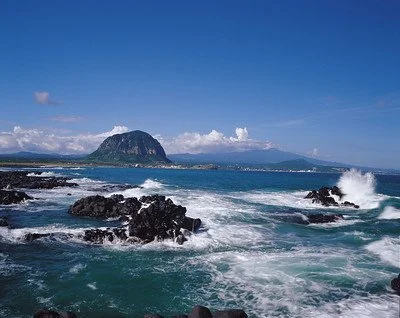
Jeju Island. Republic of Korea. CC BY-SA 2.0
South of the Republic of Korea lies Jeju Island, a volcanic island famous for its beautiful beaches, resorts and landscape. The volcano on the island is a shield volcano called Hallasan, and it is the largest mountain in South Korea, standing at 1950 meters tall. Its status is considered active, but there are some who disagree since the last time it erupted was in 1007 AD. Also, the volcano does not smoke, and there is no fire coming out, so it appears to be dormant, hence the disagreement. Jeju Island is both the largest and only island in South Korea that governs itself. It is home to the World Heritage Site Jeju Volcano Island and Lava Tubes, and it is one of the new 7 wonders of nature alongside areas like South America’s Amazon Rainforest, Indonesia’s Komodo Island, South Africa’s Table Mountain and others.
Beyond the volcano, the island also has a network of lava caves and tunnels. The beaches, too, are beautiful, and there are walking trails called Olle, which means “a winding path to your front door” in the local dialect. They cover almost the entire island, and along their route people can see the sea, rock formations, caves and more. There are interesting rock sculptures known as Dol Hareubang, which are statues carved from the volcanic rock all over the island. The name translates to “grandfather made of stone”, and they get this name because they all have elderly features. They are also considered to be guardians of the island that ward off evil spirits and demons.
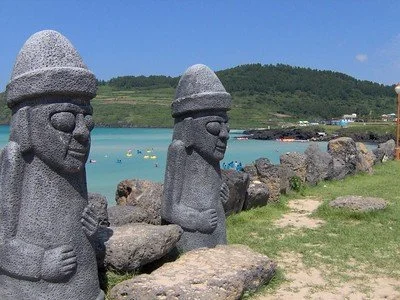
Dol Hareubang. Charity Davenport. CC0 1.0
Beyond the natural beauty of the island and the stone statues, Jeju Island is home to a community of women, known as Haenyeo. They are all divers that gather food from the sea like oysters, sea urchins and abalone. The thing that makes them truly unique, however, is the fact that they don’t use oxygen masks. They free dive down to as deep as 30 feet below the surface and can hold their breath for minutes. Girls start learning how to swim, dive and help the women from as young as 8 years old, and there are women still diving who are in their 80s. The women have been the ones to do this for many years, in part because there were a lot more of them than men on the island. The Korean War also caused an increase in women being more economically engaged.
Haenyeo are considered to be the first working mothers of South Korea and have made diving their profession. There are no men participating in the dives and harvesting of seafood. Like many places, South Korean society has been typically male dominated, so the women on Jeju Island are very different. They have been diving for the past 1700 years, but after an increase in the demand for seafood the haenyeo were doing well and they started trying to provide better education and other career options. As a result, many women choose to not follow the diver tradition and the number of haenyeo has decreased since then. A lot of them are also older women who have been doing it for their entire lives, while the younger and middle-aged women chose to follow career paths. The women’s work and contributions have led to them being mentioned in UNESCO’s list of Korea’s cultural heritage in 2016.

Katherine Lim
Katherine is an undergraduate student at Vassar College studying English literature and Italian. She loves both reading and writing, and she hopes to pursue both in the future. With a passion for travel and nature, she wants to experience more of the world and everything it has to offer.
The Downside of Ecotourism
The term ecotourism has been around for decades but the misunderstanding and overuse of the term has led to a lack of environmental success in a CO2 sucking industry. Places like Machu Picchu now receives over 6,000 visitors a day during peak season, making it hard to properly conserve the historical site.
According to the World Travel and Tourism Council, tourism as a whole makes up 10% of global GDP and supports over 319 million jobs. That is a huge industry but it also has a huge environmental impact. Air traffic alone accounts for 5% of CO2 emissions globally and the number of air passengers is expected to only grow, reaching 13 billion by 2030. In addition, tourists often use more resources than locals, eating at restaurants, using more water, generating more waste, and driving rental cars. Often desired tourist destinations are ones of natural beauty, with high densities in coastal, mountain, and lake areas. These environments are more susceptible to environmental degradation and increased traffic to protected areas can affect conservation efforts. A potential solution: eco-tourism.
Ecotourism was defined in 1990 by the The International Ecotourism Society (TIES) with a focus on, “responsible travel to natural areas that conserves the environment and improves the well-being of local people”. It has good intentions: natural conservation and benefiting locals. Often eco-lodges do have greener accommodations but they can often be in remote locations, therefore requiring more carbon emissions to get there. Human presence in isolated areas will always have effects on the local land and wildlife no matter how much it is tried to be controlled. The more popular eco-tourist destinations become, the harder it is to limit the impact.
A great example of this is Machu Picchu. Tourism is the second largest industry in Peru. Machu Picchu specifically is a highly sought-after tourist destination. The tourism there has had a huge impact on the environment. UNESCO recommended the Peruvian government to limit numbers to 2,000 a day to reduce the degradation. Instead, the government switched the ticketing process to half-day tickets, effectively increasing daily numbers from 2,500 to over 6,000, with an additional 500 a day on the Inca Trail. The lack of infrastructure supporting these numbers leads to an even higher impact. There is only one bathroom at the entrance and human waste is a huge problem. The closest village, Aguas Calientes, has resorted to pumping human waste into the Urubamba River. Increases in garbage, especially plastic water bottles, on the Inca Trail also contributes to uncontrolled waste. Jobs provided to locals are seasonal, often poorly paid, and have a huge physical cost. Machu Picchu had the potential to be a great eco-tourist site but overcrowding and mismanagement has led to a lack of conservation and hurting local communities. Yet, it still viewed and even advertised as eco-tourism.
The term ecotourism is now over used. It has been stretched from its original purpose to encompass any nature-related travel and to many is synonymous with sustainable. This is far from true and with companies using greenwashing, consumers are not sure what they are paying for. Greenwashing is when organizations falsely advertise through an environmentally-friendly lens. In tourism this is often increased by inconsistencies in certifying bodies. Or in something as simple as have a sign in the bathroom promoting water conservation. This has a huge impact on the effectiveness of ecotourism when people who are trying to be environmentally conscious end up supporting the wrong businesses. Eco-tourism also tends to draw from a wealthier demographic, with 57% of people making over $150.000 saying they would book an eco-tourist trip, compared to 16% at $34,000. This is largely influenced by the higher price of eco-tourist trips. If ecotourism is to decrease the large environmental impact of tourism as a whole, it has a lot of work to do to limit greenwashing, overcrowding, and transportation effects while increasing affordability, minimizing local impact and supporting local communities.
DEVIN O’DONNELL
Devin’s interest in travel was cemented by a multi-month trip to East Africa when she was 19. Since then, she has continued to have immersive experiences on multiple continents. Devin has written for a start-up news site and graduated from the University of Michigan with a degree in Neuroscience.
The Inca’s Sacred Site of Machu Picchu
Machu Picchu has turned into one of the most visited sites in South America. It’s deep history and architecture draw enthusiasts in.
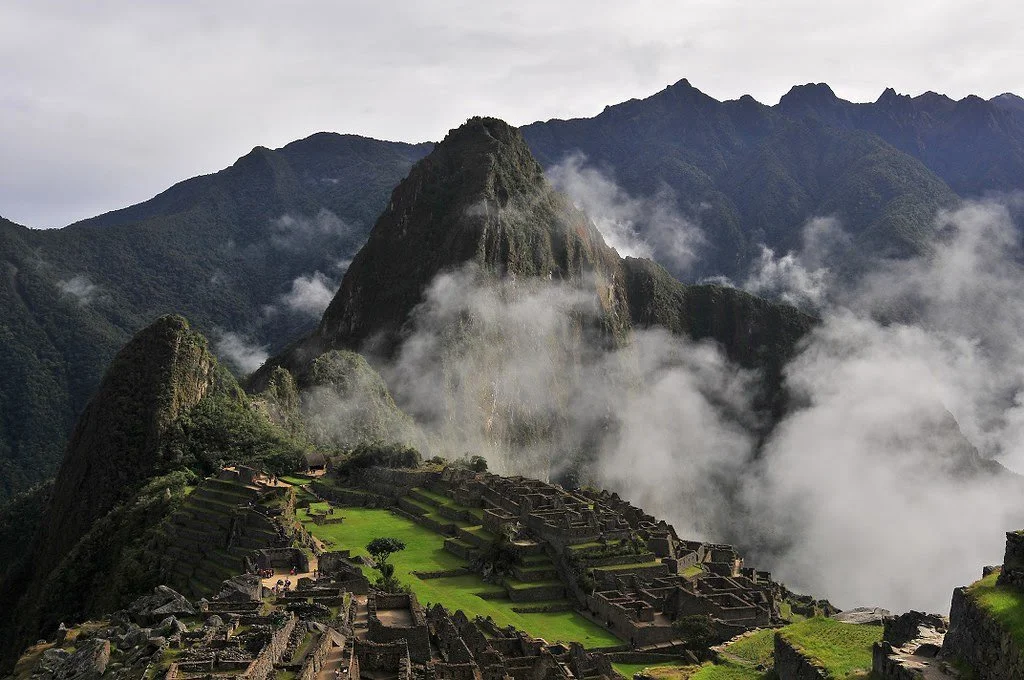
Located in the Andes Mountains of Peru, Machu Picchu is believed to have been a royal estate or a sacred religious site. It sits at 7,970 feet above sea level overlooking the Urubamba river and covers 80,000 acres. It’s been estimated to have been built and inhabited in the mid 14th to mid 15th century by the Incas. This archeological site is one of the few well-preserved remnants of the Inca civilization.
The Incas were very skilled builders; they constructed Machu Picchu using a technique called “Ashlar.” This involves cutting stone so precisely that mortar, a material often used to bind stones together, was unnecessary. Not only did they not use mortar, but they did all of it without the help of metal to cut the stones. With no record of wheels being used, the stones were likely pushed up the steep mountains by strong men over the years. Built on land frequented by seismic activity, the site has been able to stay intact despite being built atop two fault lines. The stones are called “dancing stones” as they do not break but rather move in rhythm to the earth’s motion when an earthquake occurs. Thus, demonstrating the Incas were intentional when building Machu Picchu.
Archeologists have identified different sections of the site, making up Machu Picchu: a residential neighborhood, a royal district, a sacred area, and a farming zone. It is believed that the inhabitants harvested potatoes, coca leaves and corn. However, the most appreciated of the three was corn. It was seen as a symbol of power and a sacred state crop. The Inca people grew their food between mountain peaks due to freezing temperatures and uneven terrain. Agriculture terraces were efficient and built as steps into the slopes of the mountain.
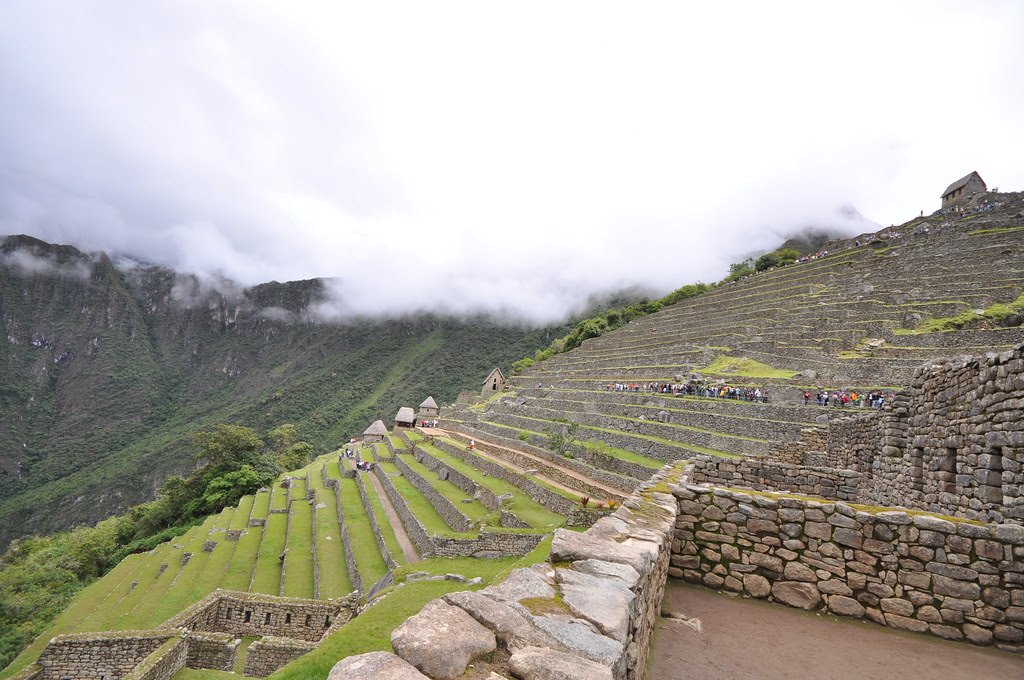
Discovered in July 1911, Machu Picchu was found by Yale graduate and American explorer Hiram Bingham III. Bingham was in search of Vilcabamba, a secret stronghold mountain used against Spanish rule. However, after many failed attempts at locating it, he arrived in Cusco. He was met by Melchor Arteaga, a Quechua-speaking resident who led Bingham to the ruins of Machu Picchu, which were hidden under vines. The following year, Bingham returned to lead in the excavation of the ruins. While excavating, he was sure that Machu Picchu was Vilcabamba. Still, it wasn’t until the mid-20th century that this theory was disputed.
Historians estimate that the population in Machu Picchu was about 1,000-1,200 Inca people. The Incas are believed to have only inhabited the historic site from 1438-1471 and abandoned it a century later due to the Spanish conquest. While escaping to safer locations, the people destroyed any trails and evidence that connected Machu Picchu to the Inca Empire. The site was left untouched for centuries until Bingham discovered it again in 1911 in the dense jungle of Peru.
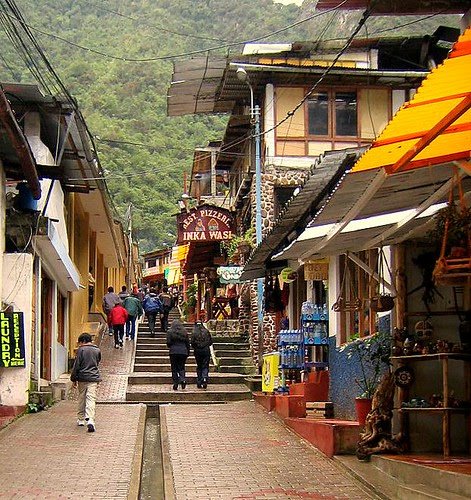
Machu Picchu is Peru’s most visited attraction and one of the most well-preserved examples of Inca architecture. It has been named a UNESCO World Heritage Site since 1983 and one of the Seven Wonders of the World in 2007. The adept engineering of the Incas can be seen throughout Machu Picchu and continues to bring in visitors from around the world.

Jenn Sung
Jenn is a Communications Studies graduate based in Los Angeles. She grew up traveling with her dad and that is where her love for travel stems from. You can find her serving the community at her church, Fearless LA or planning her next trip overseas. She hopes to be involved in international humanitarian work one day.
Tibetan Worship and Culture at Lhasa’s Jokhang Temple
Take a visual visit to Jokhang Temple in Tibet, one of the holiest destinations for Tibetan Buddhists, with this magnificent photo essay by Carol Foote. See traditional dress and culture on this pilgrimage route.
Read More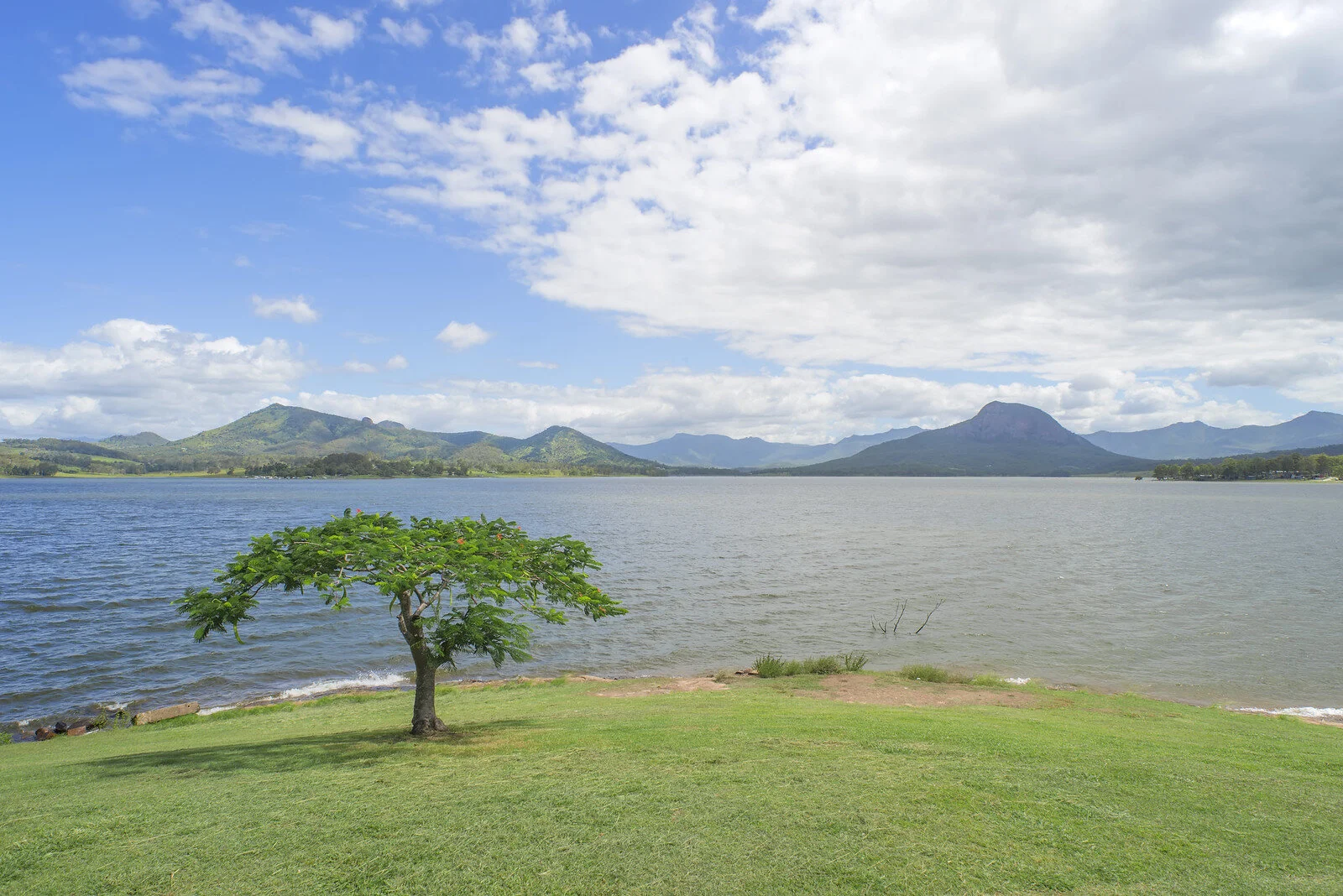
Lake Moogerah in Queensland, Australia. Lenny K Photography. CC BY 2.0.
Australia’s National Parks are Natural Wonders of the World
Australia has long been an escape for those who are seeking to get in touch with nature. While the country is most famous for its semiarid and desert regions, Australia is one of the few countries in the world which can boast a majority of the Earth’s 14 ecoregions—the continent is home to eight.
While Australia is the sixth-largest country in the world, it is one of the most sparsely populated. According to the 2016 census, 23.4 million people call Australia home, with 80% living less than 60 miles from the coast, yielding a population density of 9 people per square mile. This has left the vast majority of Australia’s ecoregions untouched by human development.
Australia’s eight ecoregions range from the very wet tropical and subtropical moist broadleaf forests—found exclusively on the northeast coast of Queensland—to the deserts and xeric shrublands which comprise a majority of the country’s landmass.
This vast diversity in natural habitats makes Australia one of the most biodiverse places in the world. According to the 2009 Numbers of Living Species in Australia and the World report, 147,579 described species had been confirmed, with the estimate for the total number of species which call the continent home at 566,398. A majority of these species are endemic to Australia, ranging from platypi to emus to kangaroos to koalas.
The National Reserve System, Australia’s counterpart to the United States’ National Park Service, is a largely new system of protected areas with the goal of preserving Australia’s vast biodiversity and ecoregions. While the first national park in the country, the Royal National Park in New South Wales, was established in 1879, the National Reserve System did not come into existence until 1992 with the ratification of the Convention on Biological Diversity.
Since then, the National Reserve System has gone on to become a vast network of over 13,000 commonwealth, state and territory protected areas, with a combined landmass of 370 million acres—about 19.75% of the country’s total landmass. Ranging from the expansive Kosciuszko National Park in New South Wales, which includes high summits which regularly see snowfall, to the famous Uluru-Kata Tjuta National Park in the Simpson Desert, Australia’s National Reserve System truly offers something for everyone.
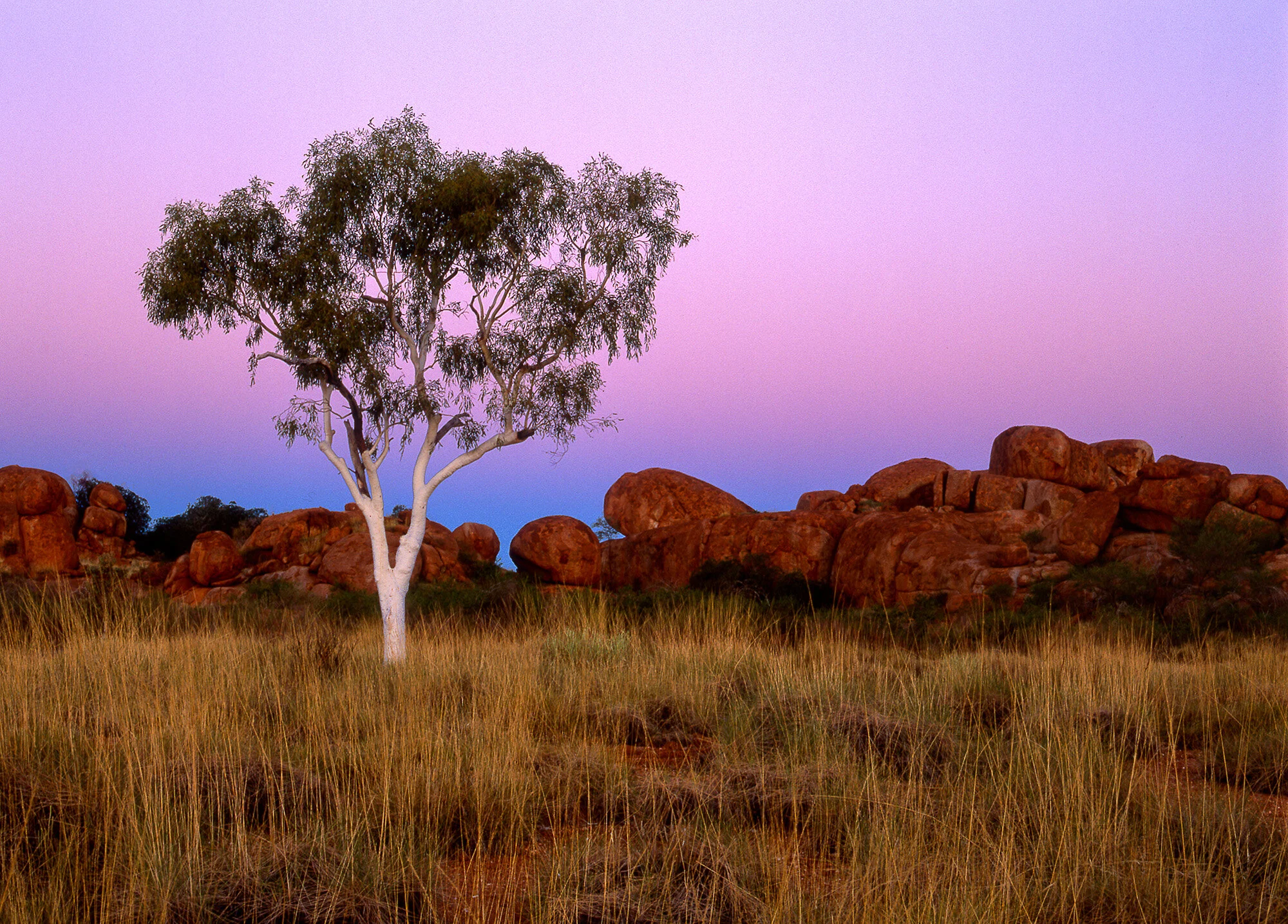
The Devil’s Marbles, a natural rock formation in the Northern Territory. Mark Wassell. CC BY-NC-ND 2.0.
For travelers who are looking to explore the desert and see some unique rock formations, Western Australia’s Nambung National Park cannot be beaten. Located in the Pinnacles Desert, Nambung offers picturesque desert views, beautiful beaches at Kangaroo Point and Hangover Bay, and the aforementioned rock formations called stromatolites. The park can be enjoyed year-round, but the most popular time to visit is in September and October, when its wildflowers are in full bloom.
Located on the southwestern coast of Victoria, Port Campbell National Park is home to breathtaking cliffs which overlook the Southern Ocean and a variety of natural islets, gorges and arches. One of the most famous, the London Bridge, provides the perfect spot to view a population of little penguins come ashore, as well as whale watching in the winter months. Port Campbell can be enjoyed year-round, with different flora and fauna prevalent throughout the various seasons of the year.
For those who can’t get enough of the rainforest, Daintree National Park in Queensland is a popular park for camping and hiking. A part of the Wet Tropics of Queensland, which were designated as a UNESCO World Heritage Site in 1988, the park is home to a variety of unique species, including 430 birds, 23 reptiles and 13 amphibians. While the park is open year-round, the best time to visit is during the drier, cooler months from May to September.

Jacob Sutherland
Jacob is a recent graduate from the University of California San Diego where he majored in Political Science and minored in Spanish Language Studies. He previously served as the News Editor for The UCSD Guardian, and hopes to shed light on social justice issues in his work.
7 Stunning Spots in Bangladesh, South Asia’s Most Verdant Country
Known for its lush greenery and fascinating sites, Bangladesh offers many exciting opportunities to travelers.

The Sundarbans in Bangladesh. USAID Biodiversity and Forestry. CC BY-ND 2.0
Bangladesh is a South Asian country that borders India and Myanmar. Originally referred to as East Pakistan after the partition of India in 1947, Bangladesh eventually gained independence from Pakistan in 1971. Although the country is not on many visitors’ radars, Bangladesh boasts both spectacular natural beauty and a rich culture. Here are seven destinations that travelers should check out when visiting Bangladesh.
1. Sundarbans Mangrove Forest

A Bengal tiger in Bangladesh’s Sundarbans mangrove. Anindya Majumder. CC BY-NC-ND 2.0
If one could only visit only a single attraction in Bangladesh, this would have to be it. The Sundarbans mangrove forest is located where the Brahmaputra and Ganges rivers meet the Bay of Bengal. It is the largest mangrove forest in the world and became a UNESCO World Heritage Site in 1997. The forest is well-known for its variety of flora and fauna, most notably the endangered Bengal tiger. Other animal sightings that travelers can look forward to on their visit include spotted deer, rhesus macaque monkeys and a variety of waterbird species, including egrets and herons.
2. Dhaka
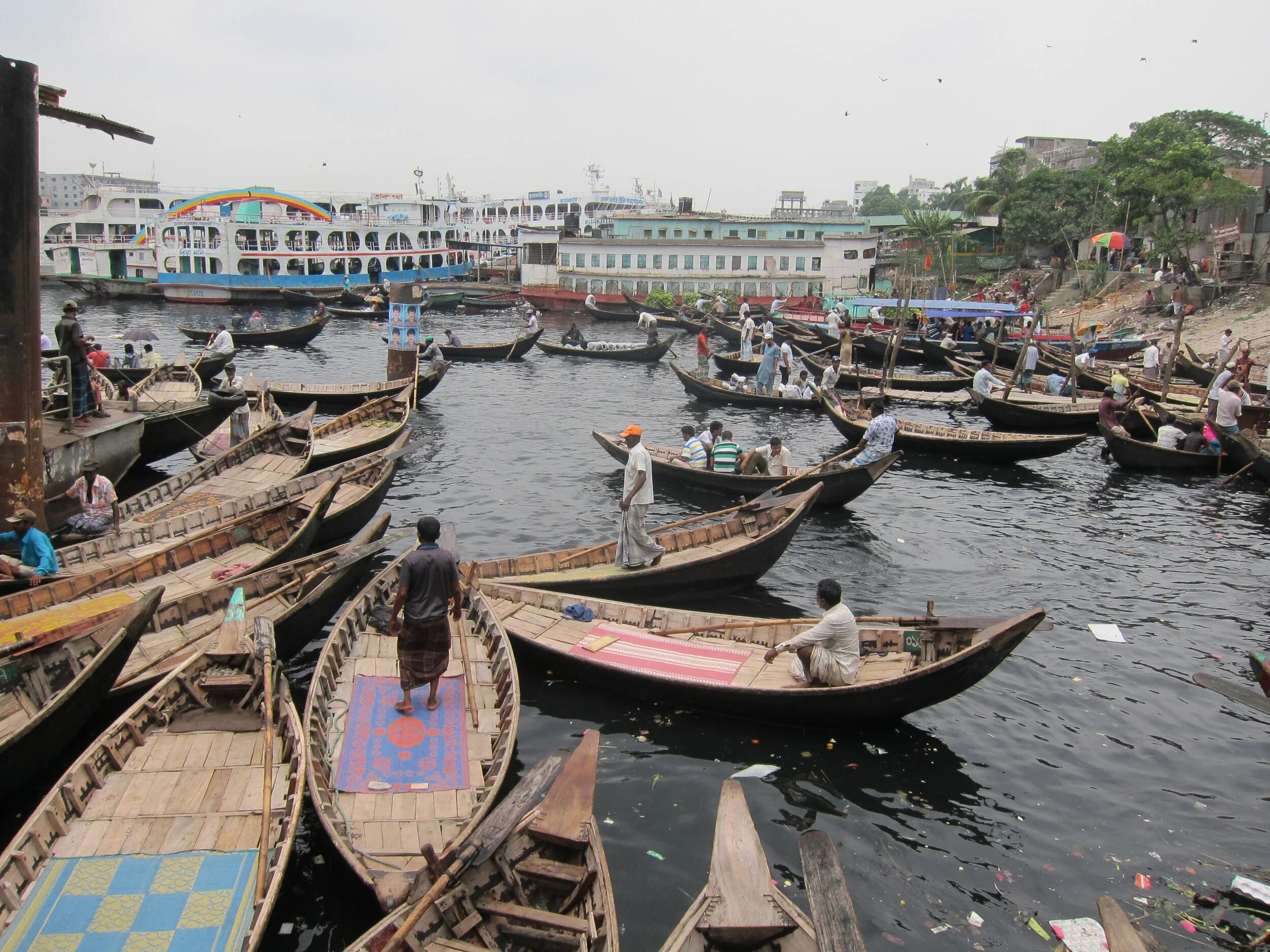
Boats in Bangladesh. Kuruman. CC BY 2.0
Travelers are likely to spend some time in Dhaka, as it is Bangladesh’s capital, largest city and travel hub. The city is a densely populated metropolis with some of the worst traffic in the world. Beyond the hectic rickshaw-filled streets, there are many exciting activities in the Bangladeshi capital, including watching boats dock at the Sadarghat river port, paying a visit to the Ahsan Manzil palace and museum, and touring the Baitul Mukarram Mosque, one of the largest in the world. Dhaka is also a wonderful place to explore traditional markets and sample Bangladeshi cuisine.
3. Cox’s Bazar Beach
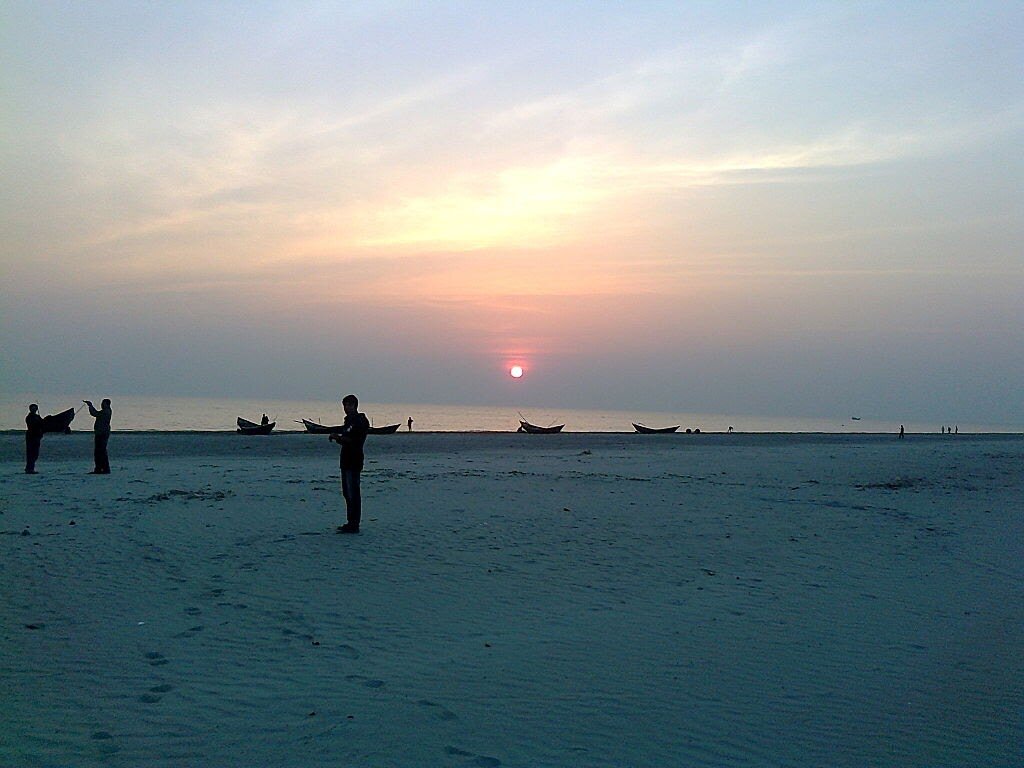
A beach sunset in Bangladesh. Lonely explorer. CC BY 3.0
This is one of Bangladesh’s most beautiful beaches. Stretching over 75 miles, Cox’s Bazar is the longest uninterrupted sea beach in the world. The beach becomes less crowded the farther south one travels down its banks. Off the coast of Cox’s Bazar Beach is Maheshkhali Island, a pilgrimage point for Muslims, Hindus and Buddhists alike. Another nearby location is St. Martin’s Island, the only coral island in Bangladesh. Located at the southernmost tip of the country, St. Martin’s Island provides wonderful swimming and snorkeling opportunities.
4. Panam Nagar

The ghost town of Panam Nagar. Nurul Amin Russel. CC BY-NC-ND 2.0
Located 18 miles southeast of Dhaka, this town was well known for its textile production and Hindu merchant community. Panam Nagar was destroyed in a fire and the town remains deserted to this day. Although the exact dates and cause of the fire are still unknown, the large number of textiles stored in the town’s buildings could likely have caused it.
5. Paharpur

The Somapura Mahavihara monastery in Paharpur, Bangladesh. Stefan Krasowski. CC BY 2.0
Paharpur is one of three UNESCO World Heritage Sites in Bangladesh and was added to the list in 1985. Located in the northern part of the country, Paharpur contains the most important archaeological site in Bangladesh, an ancient Buddhist monastery called Somapura Mahavihara. The monastery is the second-largest structure of its kind south of the Himalayas and contains 177 monastic cells with a large shrine located in the middle. The monastery was a center of learning where the practice of Mahayana Buddhism flourished from the seventh to 12th centuries. It was further known for influencing Buddhist architecture in other parts of Asia, including Cambodia’s Angkor Wat temple. Paharpur is also one of the best examples of pre-Islamic architecture in Bangladesh.
6. Srimangal

A woman picking tea in Bangladesh. Mariusz Kluzniak. CC BY-NC-ND 2.0
Srimangal is a small town located in the northeast of Bangladesh. Well known throughout the country for its tea production, a visit to Srimangal makes an excellent opportunity to learn about one of Bangladesh’s largest industries. Travelers can explore some of the 163 tea plantations that dot Srimangal’s hilly landscape and enjoy local brews straight from the source.
7. Bagerhat

The Shait Gumbad Mosque with 77 domes in Bagerhat. Joe Coyle. CC BY-NC 2.0
The Bagerhat district in the southwestern part of Bangladesh is home to the ancient city of Khalifatabad, which was founded by Turkic general Ulugh Khan Jahan in the 15th century. A UNESCO World Heritage Site, the city contains excellent examples of an early Islamic architectural style known as Khan-e-Jahan. The site includes 360 buildings such as mosques, public buildings, mausoleums, bridges and more. Unfortunately, the city’s location at sea level makes it vulnerable to rising seas, making cultural preservation a huge priority.
From its beautiful beaches to a fascinating history, Bangladesh makes a wonderful destination for travelers ready to visit a less-discovered piece of South Asia.

Megan Gürer
Megan is a Turkish-American student at Wellesley College in Massachusetts studying Biological Sciences. Passionate about environmental issues and learning about other cultures, she dreams of exploring the globe. In her free time, she enjoys cooking, singing, and composing music.
All the Way to Timbuktu: Exploring the Cultural Riches of Mali
Look beyond what the Western media says to appreciate Mali’s rich cultural heritage.
WARNING: As of February 2021, the U.S. Department of State advises against all travel to Mali due to risk of crime, terrorism and kidnapping. For the time being, enjoy the country from your computer screen. Do not visit Mali.
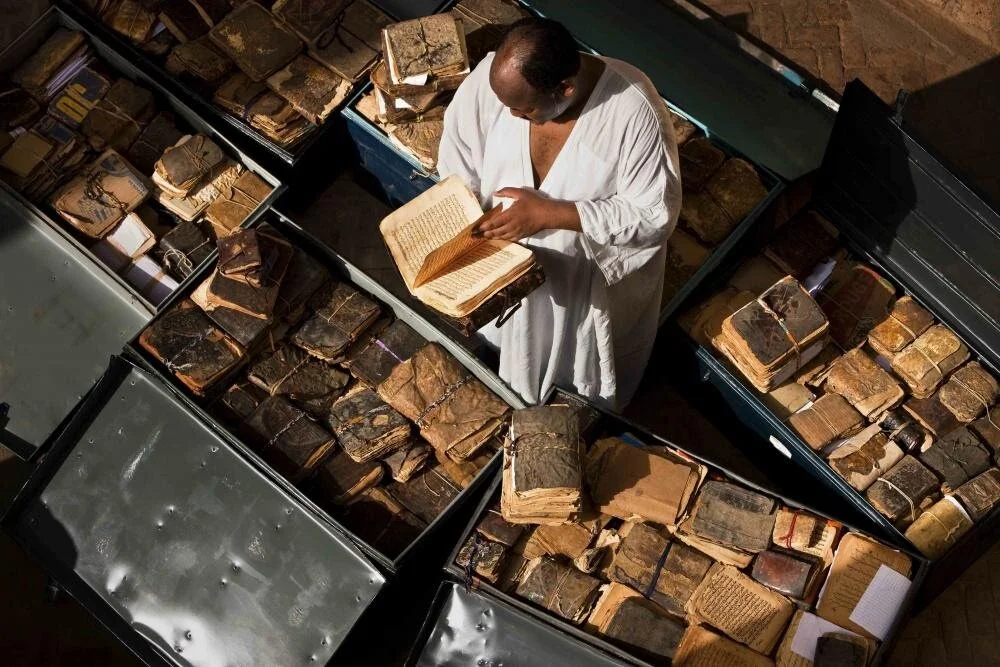
A man reading historical manuscripts from West Africa. Jermaine Johnson. CC2.0
Mali is a landlocked country located in the heart of West Africa. Mali’s rich history dates back to the 11th century, when the empire of Mali controlled vast swaths of the Niger River valley. Known as a beacon for Islamic scholarship and trade from the 13th to the 16th century, things took a turn when the French colonized the country in 1898. Since achieving independence in 1960, Mali has suffered from coups, droughts, corruption and insurgencies by Islamic extremists in the country’s north.
Despite Mali’s negative reputation in Western media coverage, the country has a fascinating history and vibrant culture that deserves to be celebrated—from afar, until safety returns. Here are some of the stunning historical and cultural sites in Mali:
Djenne
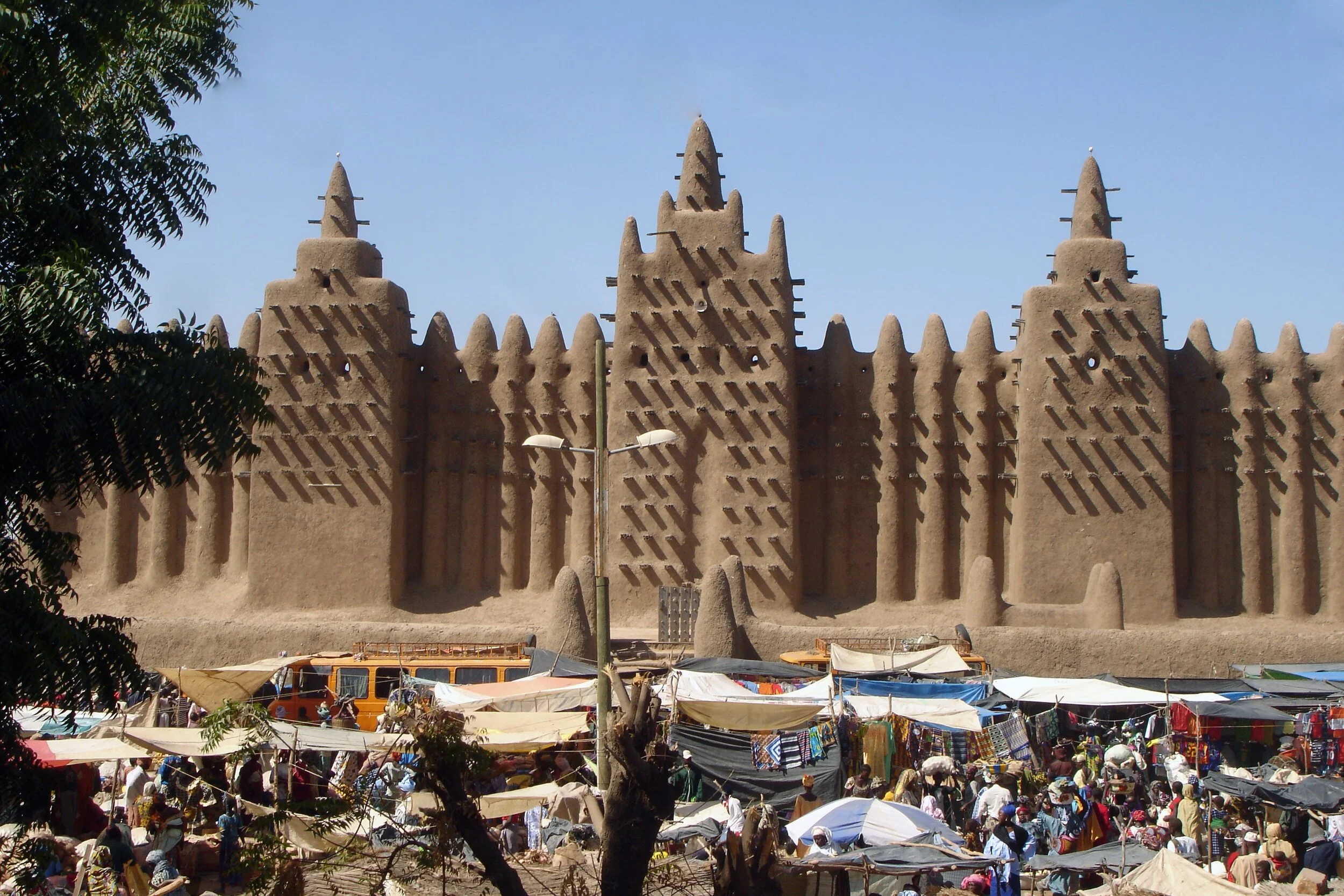
The Great Mosque and market in Djenne, Mali. Carsten ten Brink. CC2.0
Located in central Mali on a seasonal island in between the Niger and Bani rivers, Djenne is one of sub-Saharan Africa’s oldest towns and has been inhabited since 250 B.C. The town was a stopping point for traders in the trans-Saharan gold trade and was known as a hub of Islamic learning during the 15th and 16th centuries. The stunning Great Mosque in Djenne is the world’s largest adobe structure, containing three turrets. Interestingly, adobe structures are very common in Mali due to the lack of wood in the desert. The area in front of the mosque makes a great spot for people-watching and is the site of a colorful market every Monday.
Cliffs of Bandiagara
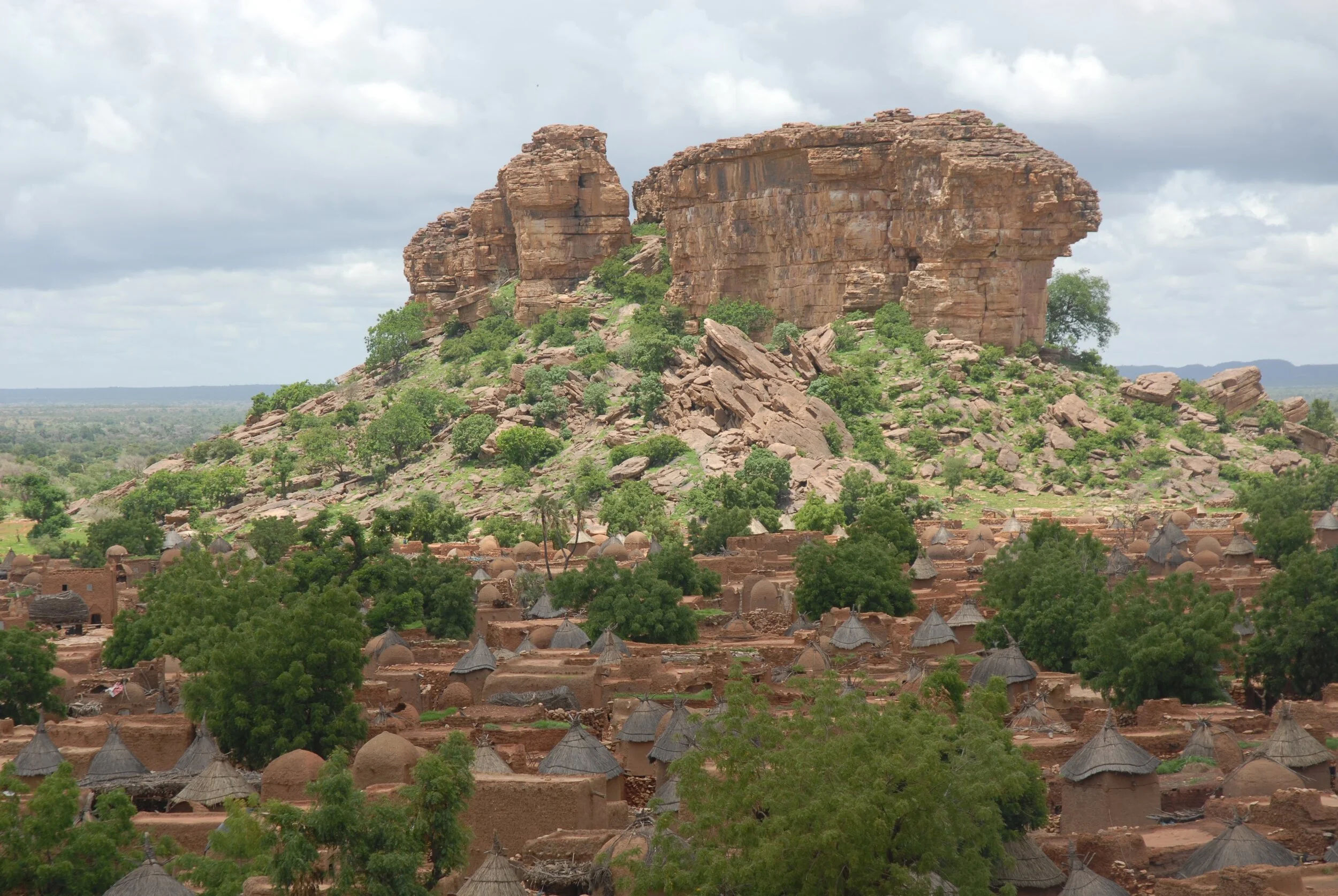
A village in Mali’s Dogon region. Emilio Labrador. CC2.0
A UNESCO World Heritage Site, the cliffs of Bandiagara are home to the Dogon people, who continue to carry on age-old traditions. Carved into tall sandstone cliffs, the Dogon region stretches for over 125 miles and provides a fascinating place for travelers. Due to the region’s remote nature, the culture of the Dogon people has been mostly left unchanged for centuries. Dogon cultural festivals take place from April to May and contain beautiful Dogon masks, dance and art. Travelers in the Dogon region often stay overnight in Mopti, a town located along the Niger River.
Timbuktu
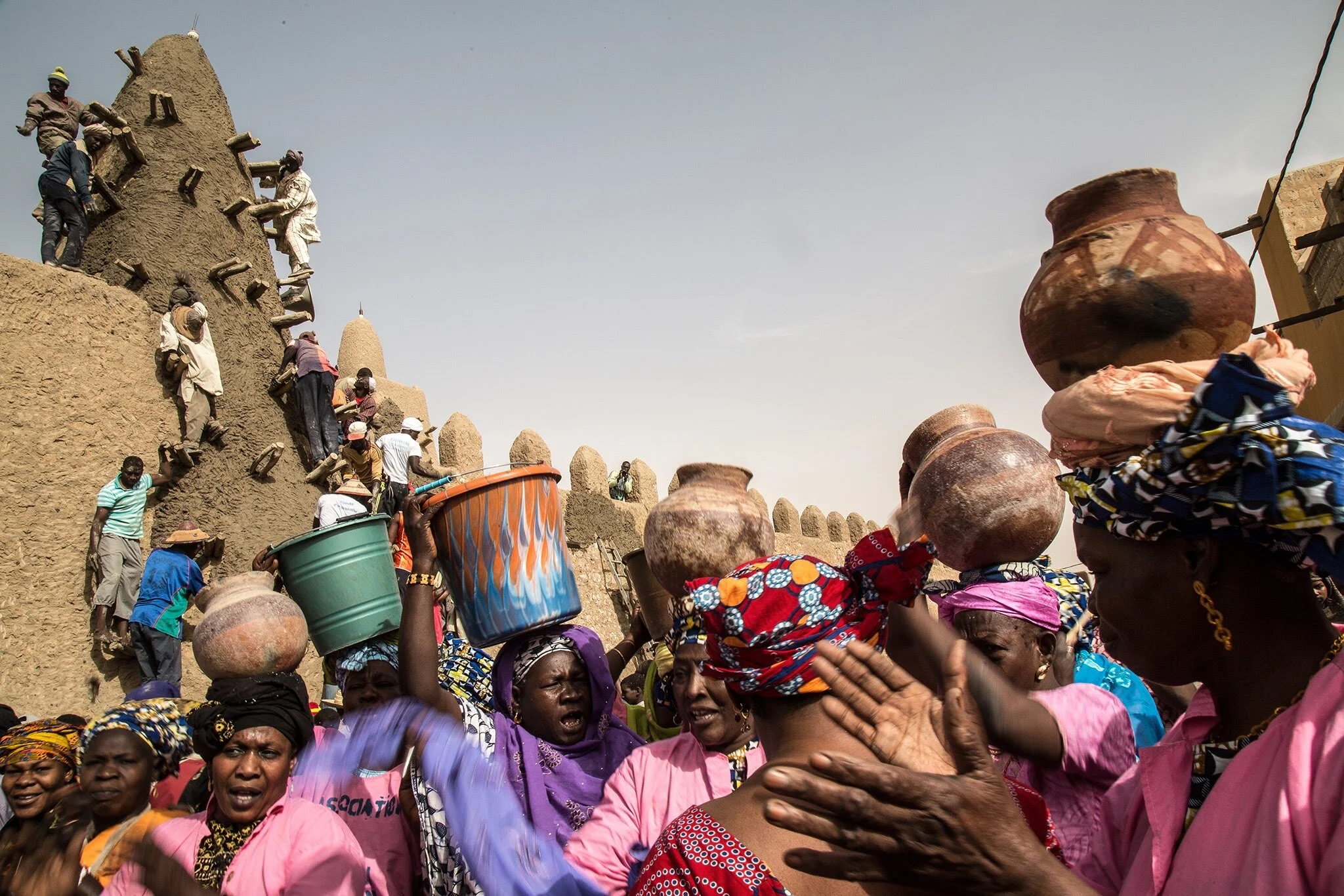
Conducting maintenance at Djingareyber Mosque in Timbuktu. United Nations. CC2.0
A city fabled for its rich heritage as a trading center, Timbuktu is still a crucial point for salt caravans traveling across the Sahara desert. From the 13th to 16th centuries, Timbuktu was a center of Islamic scholarship, with its teachings and sacred texts disseminated across the Muslim world as far as Cairo, Persia and Baghdad. The city was home to a 25,000-student university and several magnificent mosques, including Djingareyber, Sankore and Sidi Yahia. Many manuscripts are now in danger of falling apart or being sold on the black market. Due to recent conflicts in northern Mali, Timbuktu was proclaimed an endangered World Heritage Site by UNESCO in 2012. Thus, preserving Timbuktu’s historical legacy is of utmost concern.
Bamako
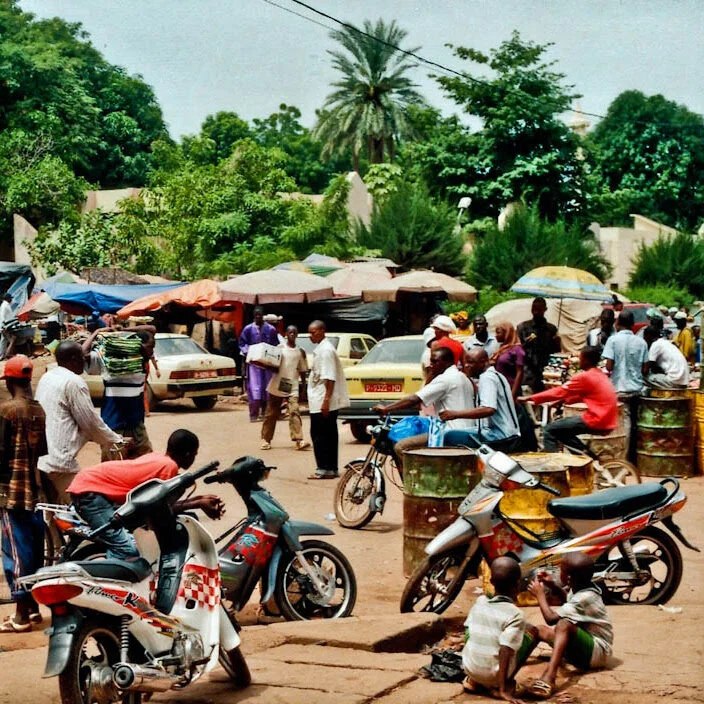
A market in Bamako. Aene gespinst. CC2.0
Mali’s capital is a vibrant city located on the Niger River in the southern part of the country. Translated as “crocodile river” in the Bambara language, it is an exciting place to acclimate to Malian life and culture, whether by trying the local cuisine, visiting bustling markets or exploring Mali’s music scene, which is well known throughout Africa.
Mali’s rich historical legacy is often overshadowed in the Western media by stories of violence caused by religious extremists, but there is much more to the story. One must be willing to look beyond the country’s negative portrayal to appreciate Mali’s true cultural heritage.

Megan Gürer
Megan is a Turkish-American student at Wellesley College in Massachusetts studying Biological Sciences. Passionate about environmental issues and learning about other cultures, she dreams of exploring the globe. In her free time, she enjoys cooking, singing, and composing music.
7 Virtual Trips to Take in 2021
Getting restless at home? Check out these 7 free virtual tours. 2021 is the perfect time to travel like never before, getting up and personal with animals on African safari, climbing Mt. Everest, hiking the Inca Trail and more
Read More‘Malaysia’s Banksy’ Brings Art Lovers—and Overtourism—to Penang
Ernest Zacharevic is a Lithuanian-born artist who made his mark creating iconic street murals on the island of Penang in Malaysia. Despite good intentions, Zacharevic’s work prompted the rise of tourist attractions that lack the soul and authenticity that made Penang a UNESCO World Heritage Site in the first place.

The iconic “Little Children on a Bicycle” mural in Penang. Yaopey Yong. Unsplash.
Penang’s historical capital, George Town, was officially inscribed as a UNESCO World Heritage Site in 2008. Since the 18th century, this Malaysian city has been a prolific hub of cultural and commercial exchange. Today, it remains a multicultural hot spot. George Town is also home to a unique layout of mixed architecture that also reflects the region’s history. From its colonial-style British office buildings to its rustic Chinese shophouses, George Town’s mismatched grid of alleyways and side streets bolsters the place’s almost stuck in time sentiment. To further enhance George Town and its diverse history, the George Town Festival was launched in 2010 as a platform for dance, theater and other regional artistic endeavors.
In the midst of this budding art movement, Lithuanian-born artist Ernest Zacharevic began to make his literal mark on the walls of George Town. As an experimentalist known by some as “Malaysia’s Banksy,” Zacharevic’s style revolves around ever-changing concepts, manifesting in his preference for outdoor art. Zacharevic’s primary interest lies in the relationship between art and the urban landscape. Consequently, he mainly flits between stencil, spray and other types of tools conducive to dynamic and public pieces.
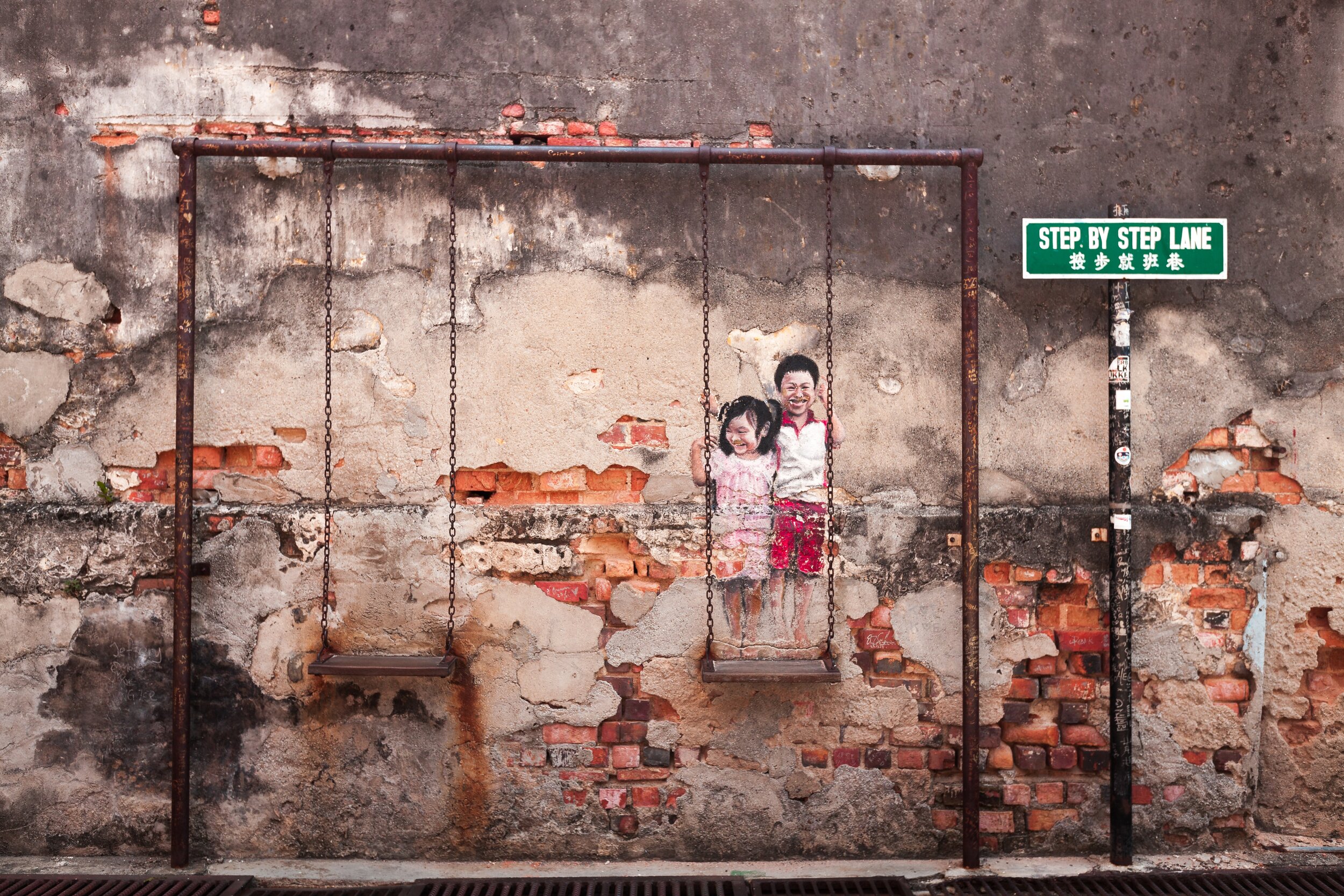
One of the more famous interactive pieces. Yaopey Yong. Unsplash.
Although local pieces funded by Sculpture At Work also grace the walls of George Town, Zacharevic’s pieces are the main attraction thanks to the George Town Festival 2012 project “Mirrors George Town.” His iconic and sometimes interactive pieces like “Little Children on a Bicycle” and “Brother and Sister on a Swing” became hot-ticket items for both visitors and locals alike to experience. The open-air exhibitions became so popular that various travel blogs offered the best walking maps for viewing the murals.
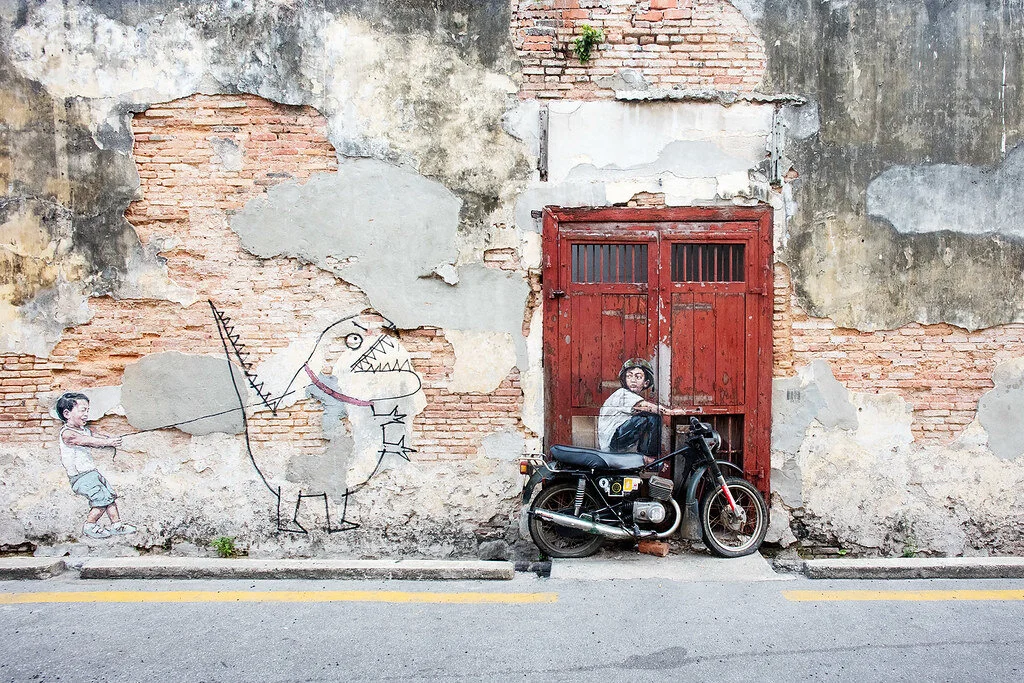
“The Little Boy with Pet Dinosaur” and “Boy on a Bike” murals side by side. Travelationship. CC BY-NC-ND 2.0.
In 2013, Chairman of Penang Global Tourism Ooi Geok Ling felt that Ernest Zacharevic “captured the essence of Penang. I know he spent a lot of time here, soaking it all in when he was visiting. He could translate that into his murals.” Ling also believed that Zacharevic’s influence would also help to expand the reach of local artists and small galleries in the city. Indeed, most of Zacharevic’s pieces are reflective of the city and country’s diverse populace. Murals portray children cycling through the city, a painter attending to a pair of clogs, and even more modern scenes of phone booths and curious cats.
Since the creation of these murals, Penang has experienced an influx of “Instagram tourists” and the subsequent boom of businesses that cater to them. The town’s soul, as the South China Morning Post wrote, has been “warped.” Before the worldwide lockdown, older buildings in George Town had begun renovating in a way that catered to foreign tastes. Cookie-cutter coffee shops, museums and art galleries began lining the centuries-old landscape, sapping away at the gritty authenticity of the once safely obscure town.
In response to this commercialization, Ernest Zacharevic made a statement on his Instagram in July 2019. He lamented, “Myself and many others blame my work for Armenian Street being a center of [the] tourist route in Penang.” He called the construction of Instagram-friendly places a “circus” and a threat to George Town’s status as a UNESCO World Heritage Site.
Since the worldwide lockdown, however, locals have made it back into the spotlight. Though the Penang economy today is largely devoid of tourist dollars, the city is also free of the overtourism and traffic jams that congested its streets. Nikkei Asia reports that locals now have the chance to reclaim spaces that gentrification took away. Hawker stalls and other peddlers are also refocusing on the needs of residents and the smaller but more consistent business they provide. Local shopkeepers feel that the lockdown has provided the city an unexpected but much-needed reset button. In the wake of this worldwide pause, locals are starting to explore more sustainable possibilities—ones that don’t compromise the historical integrity of George Town or the well-being of its residents.

Rhiannon Koh
Rhiannon earned her B.A. in Urban Studies & Planning from UC San Diego. Her honors thesis was a speculative fiction piece exploring the aspects of surveillance technology, climate change, and the future of urbanized humanity. She is committed to expanding the stories we tell.
The 10 Best Museums You’ve Never Heard Of
The world’s most popular museums are often overcrowded and overwhelming. Here are 10 of the world’s best museums that are less known but just as impactful.
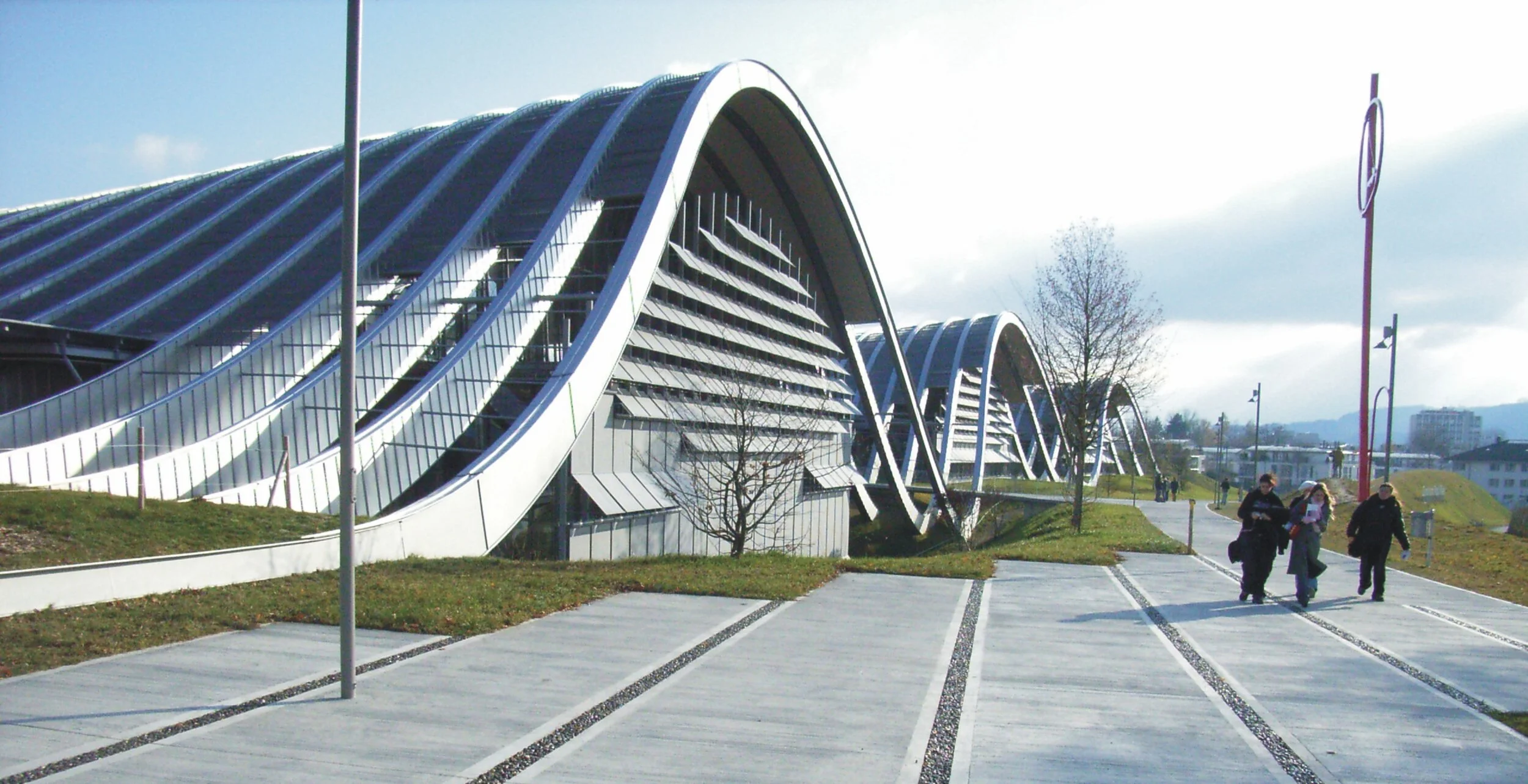
People walk by Zentrum Paul Klee in Bern, Switzerland. Lys Ippos. CC BY 3.0.
The most popular museums in the world—the Louvre, the Met, the Tate Modern—offer an incredible breadth of art, but are often crowded, congested and overwhelming. Lesser-known museums can offer exceptional art, culture and history, all without the lines and high volumes of other visitors. Here are 10 of the best museums around the world that fly under the radar and are home to unique and fascinating collections.
1. Louisiana Museum of Modern Art
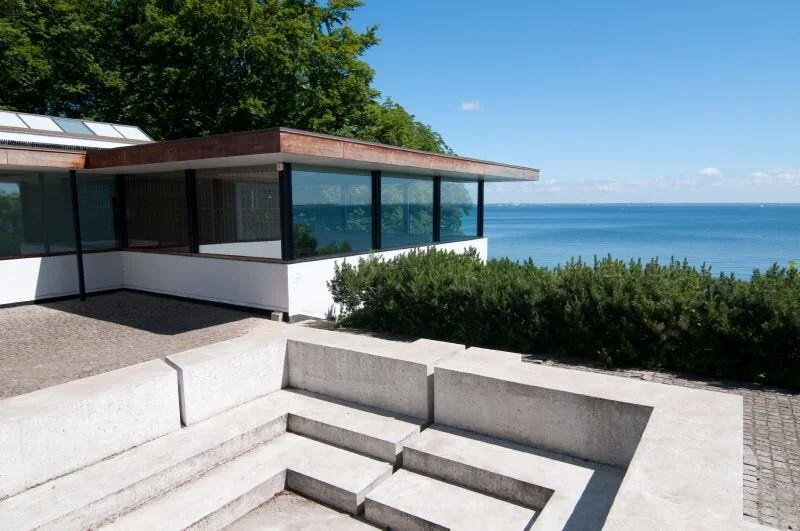
The exterior of the Louisiana on the Oresund Sound. CC BY 4.0. Kim Hansen.
The Louisiana, located outside of Copenhagen, Denmark, is home to one of the most immersive modern art collections in the world. In response to Danish museums turning away modern art, founder Knud W. Jensen created the Louisiana in 1958. The museum’s integration of indoor, outdoor and digital space allows visitors to move through art dynamically, fulfilling Jensen’s goal of a truly integrated art experience. This museum is also one of the only in the world with a permanent light installation from Yayoi Kusama, whose temporary installations in cities such as New York are almost impossible to get tickets for.
2. Museum of Broken Relationships
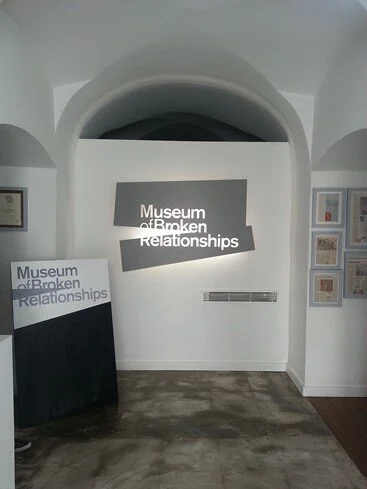
The Museum of Broken Relationships. CC BY 2.0. Pros Opee. CC BY 2.0.
This museum, created by artists Olinka Vistica and Drazen Grubisic, is located in Zagreb, Croatia, with a second gallery in Los Angeles. The museum’s mission is to create a shrine of symbolic possessions that commemorate and treasure humanity’s ability to love and to lose. While the Museum of Broken Relationships is a physically stunning museum, the heart of this project stems from its global engagement. The museum’s online component has space for everyone to share the story of their heartbreak. View the online portion of the museum here.
3. Pitt Rivers Museum
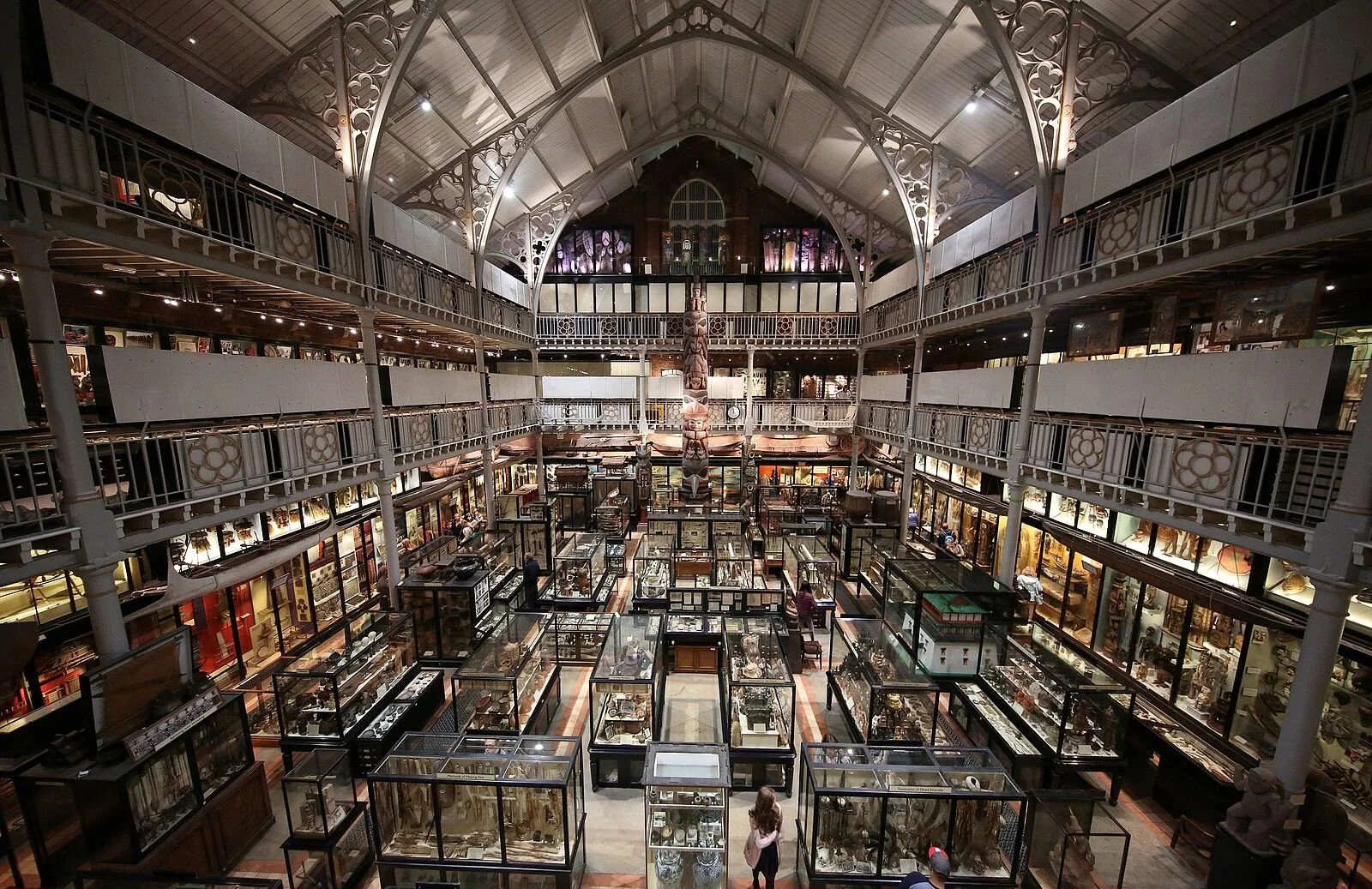
Interior of the Pitt Rivers Museum. Geni. CC BY 2.0.
The Pitt Rivers Museum in Oxford, England, is home to over half a million artifacts from around the globe. A fascinating collection of anthropological and archaeological items, the Pitt Rivers Museum is unique because of its organizational system for displays. Rather than grouping items together by period or people, the Pitt Rivers Museum groups items together by type, illustrating the commonalities between different peoples and histories throughout the world. You can visit the museum virtually today.
4. Tenement Museum
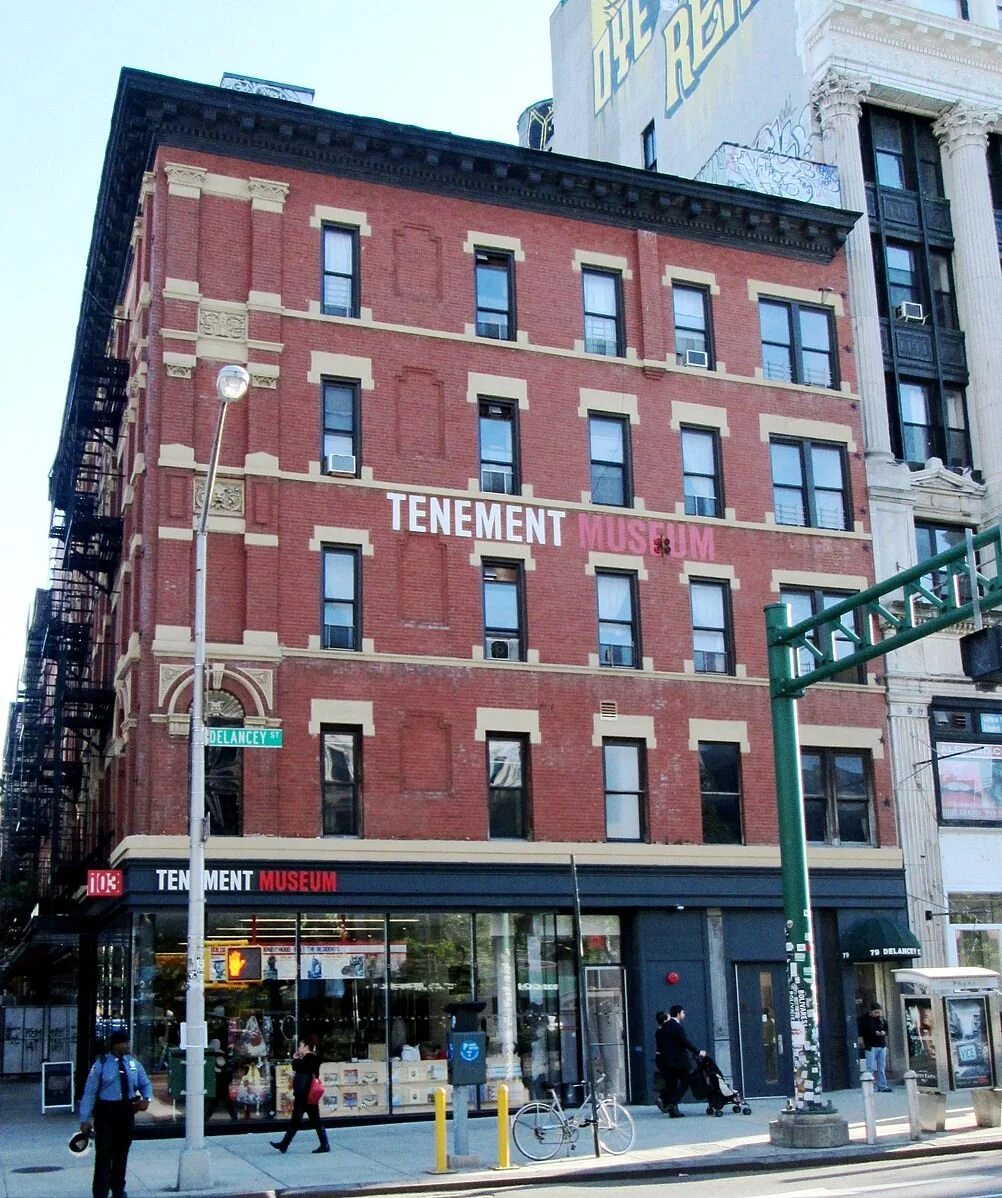
The Tenement Museum exterior. Beyond My Ken. CC BY 2.0.
The Tenement Museum in New York City is devoted to the history of immigration and migration to the United States. Located in a formerly dilapidated tenement building that was home to immigrant families between 1860 and 1930, historian Ruth Abram and social activist Anita Jacobsen built their museum around the stories of these families. In connecting public policy, oral history and immigrant narratives, the Tenement Museum offers a moving and topical exploration of recent history.
5. The Kunstkamera
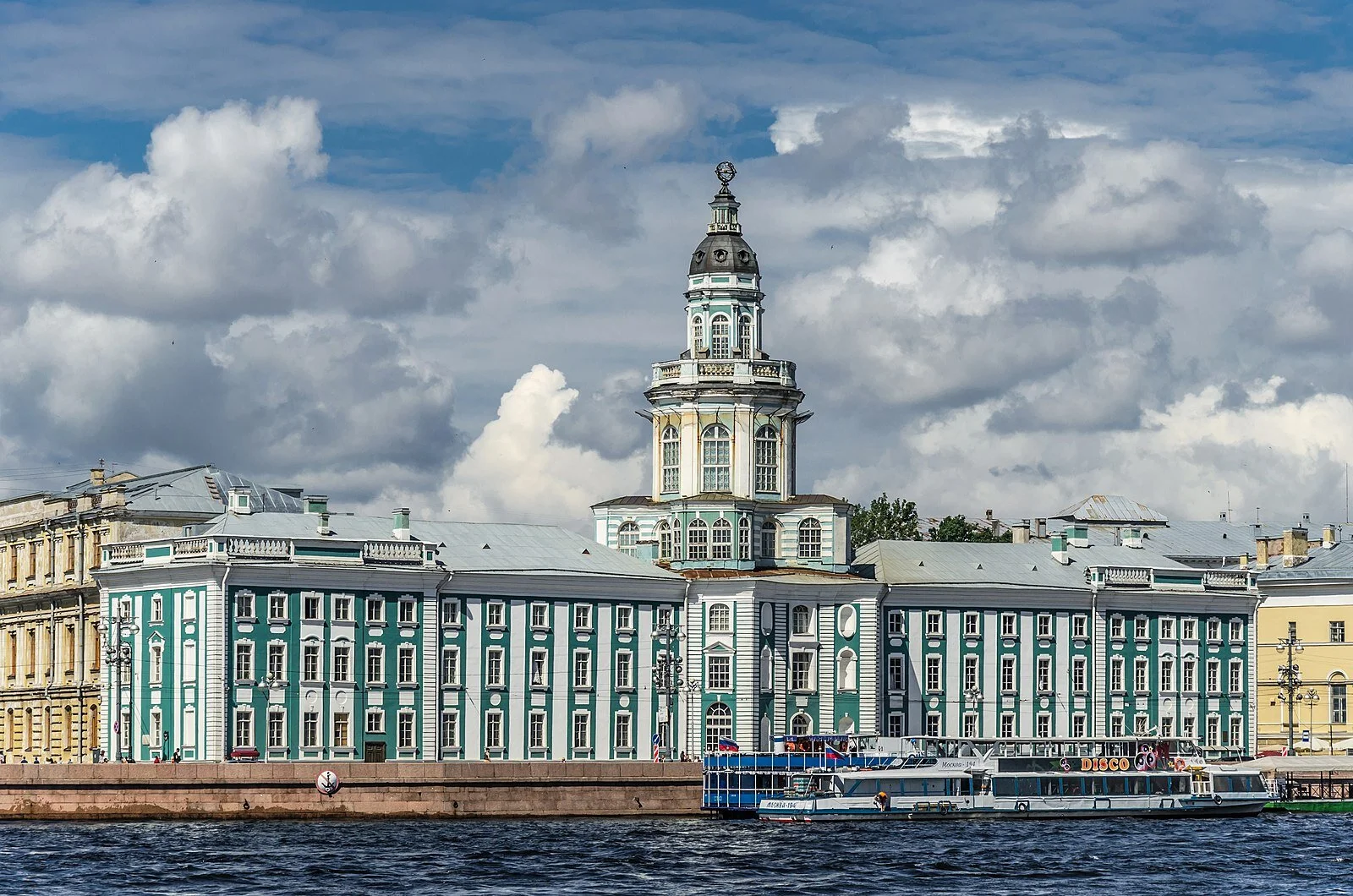
The Kunstkamera in St. Petersburg, Russia. Flor Stein. CC BY 4.0.
Established by Peter the Great at the beginning of the 18th century, the Kunstkamera’s collection comprises nearly 2 million oddities. Located in St. Petersburg, Russia’s first museum was founded with the goal of containing all of the world’s knowledge in one building. This massive collection remains relatively unknown outside of Russia, but offers one of the world’s most vast displays of global anthropology and ethnography.
6. Castello di Rivoli
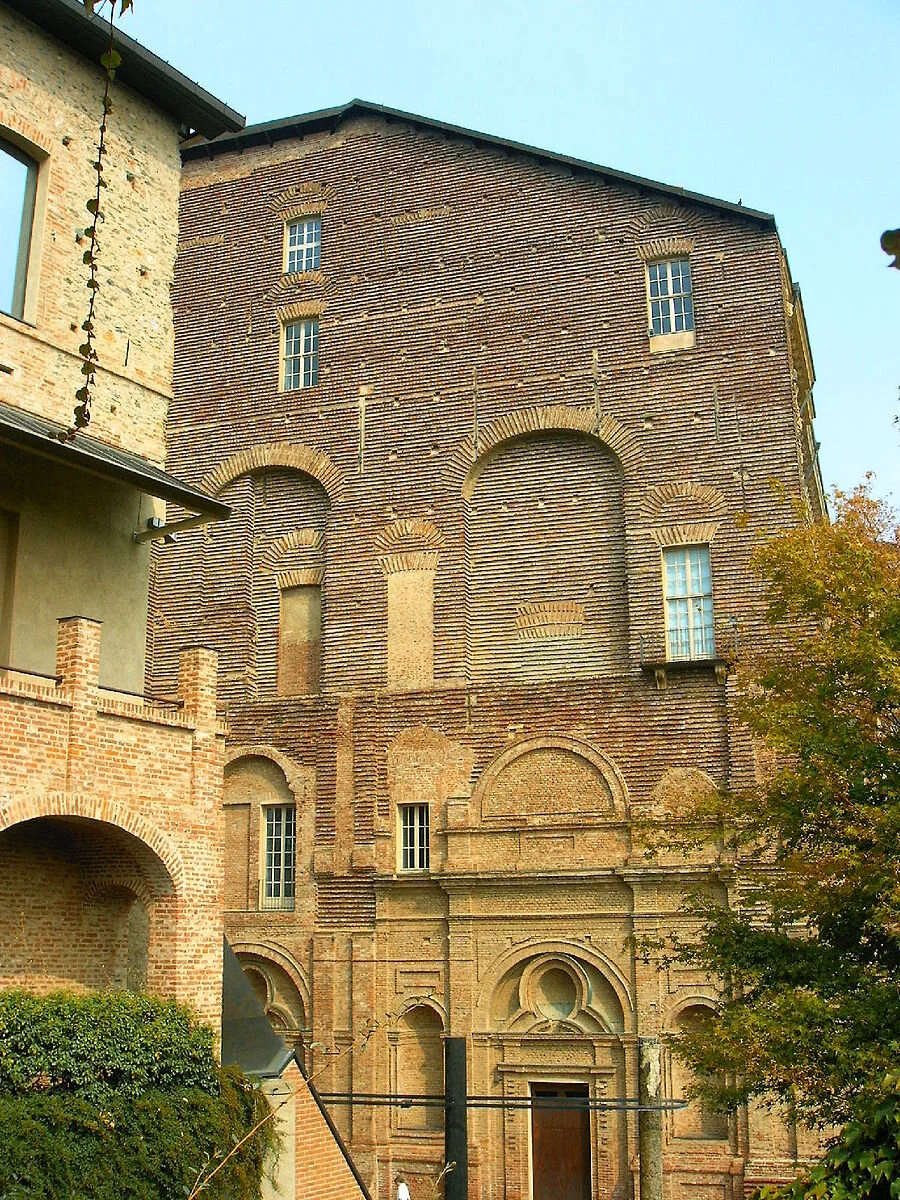
The facade of Castello di Rivoli. M. A. CC BY 2.5.
In 1984, the Castello di Rivoli became the first museum in Italy completely devoted to contemporary art. Located just outside of Turin, this museum is located in a UNESCO World Heritage Site. The castle buildings are open to the public and the modern art exhibitions within the castle walls are world-class, with the Castello di Rivoli also serving as one of the world’s premier art history research centers.
7. Zentrum Paul Klee

Zentrum Paul Klee exterior. Krol K. CC BY 3.0.
This museum, located in Bern, Switzerland, is dedicated to the work of artist Paul Klee. Klee’s artistic collection is remarkable in its own right with his groundbreaking exploration of color theory, but the draw of this museum is also the physical building. Designed by Italian architect Renzo Piano in 2005, the iconic building integrates the natural hilly landscape with metallic swoops and arcs that mirror Klee’s art. Check out the online exhibit, “Mapping Klee,” at this link.
8. Museum of Old and New Art
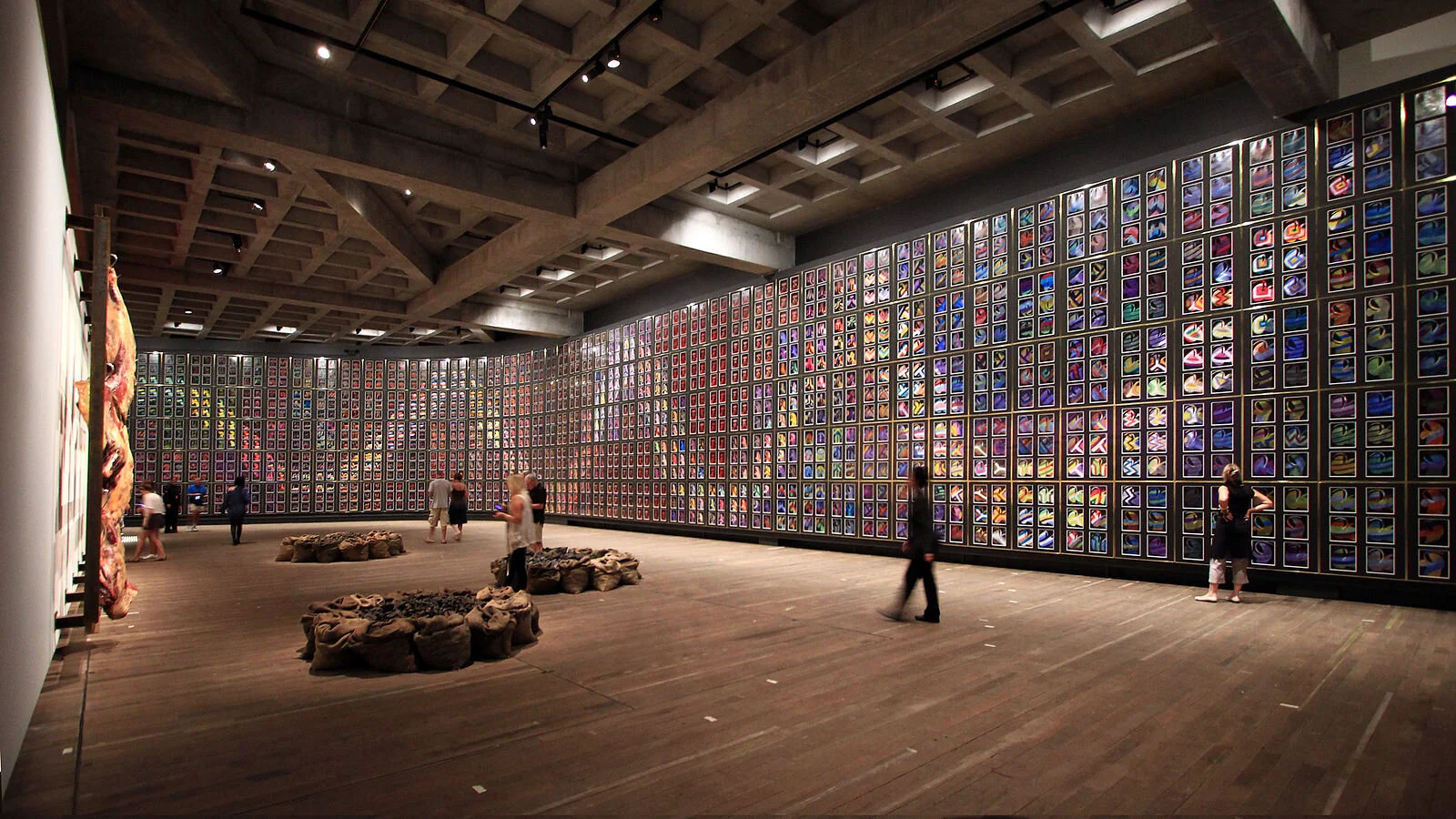
“Snake” by Sidney Nolan in MONA. Jeff Owens. CC BY 2.0.
MONA, the Museum of Old and New Art, is an ever-changing collection of ancient, contemporary and modern art. Located in Hobart on Australia’s island of Tasmania, the museum is built into a cliff and prioritizes multimedia installations, engagement with community-based art, and live performances. MONA elevates the museum experience by operating a winery, hotel and restaurant on-site that all mirror the museum’s ethos: fun.
9. Museum Willet-Holthuysen
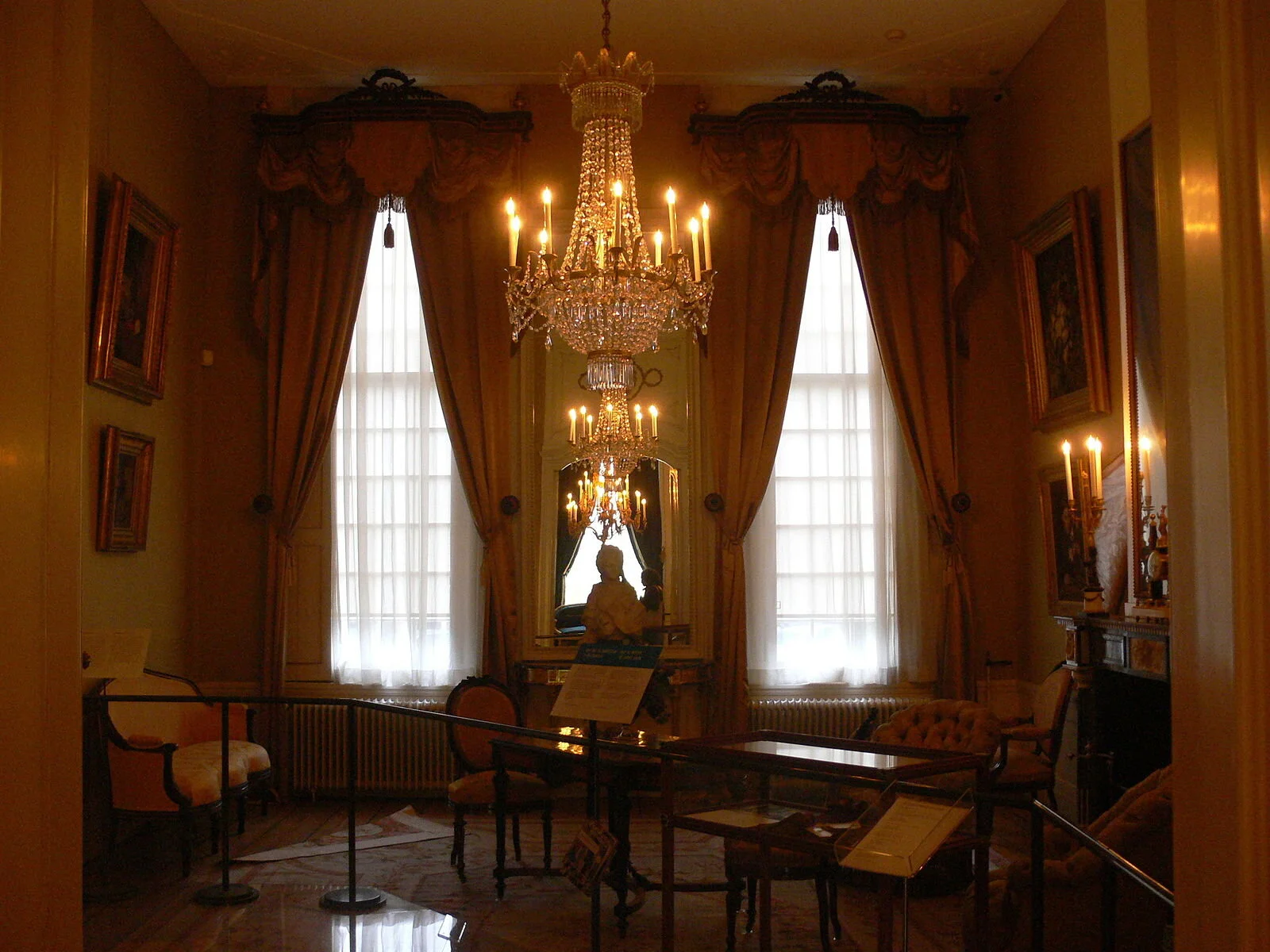
Interior of the Museum Willet-Holthuysen. Remi Mathis. CC BY 3.0.
The Museum Willet-Holthuysen is a homage to Amsterdam’s golden age. Built in 1687, this canal house was donated to the Dutch city in 1895. The 18th- and 19th-century room decor is still in its original condition, and the gallery walls are lined with paintings from the Willet-Holthuysen private collection, allowing many of the paintings to be displayed in their original historic setting. View part of the collection online here.
10. The Neon Museum

Signs in the Neon Museum. Adrian Grycuk. CC BY 3.0.
Since 2005, this museum in Warsaw, Poland, has been dedicated to the preservation of Cold War-era artifacts; namely, neon signage from the Soviet Union. In the Eastern Bloc, which included Poland, there was an official effort from the 1950s to the 1970s to “neonize” the state. The Soviet attempt to bring Western aesthetics to Eastern Europe has been preserved at the Neon Museum, where gallery walls are lined with an array of colorful relics.

Sarah Leidich
Sarah is currently an English and Film major at Barnard College of Columbia University. Sarah is inspired by global art in every form, and hopes to explore the intersection of activism, art, and storytelling through her writing.
10 Isolated Travel Destinations in the US
Thinking about your next trip once the pandemic eases? This year, try one of these remote spots where isolation will be the theme. From Maine to Montana, explore nature free from crowds.
Read More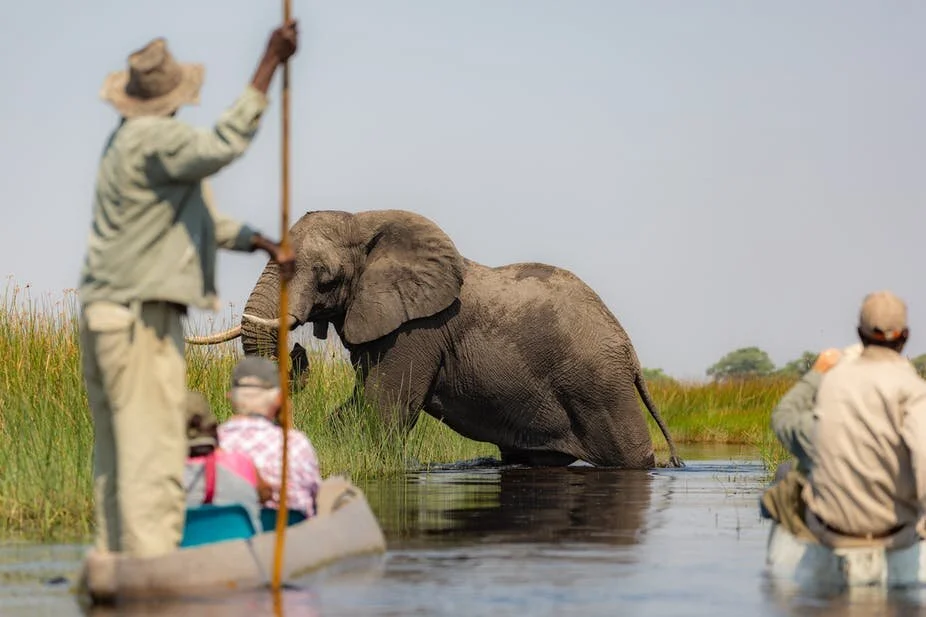
The Delta’s rich array of wildlife makes it a popular tourist destination. Ger Metselaar/Shutterstock
Botswana’s Okavango Delta is Created By a Delicate Balance, But For How Much Longer?
The Okavango Delta in northern Botswana is a mosaic of water paths, floodplains and arid islands. The delta sits in the Okavango river basin, which spans three African countries: Angola, Namibia and Botswana.
Because it’s an oasis, in a semi-arid area, it hosts a rich array of plants and attracts a huge variety of wildlife.
As a unique ecosystem, in 2014 it was placed on UNESCO’s World Heritage list and it is an iconic tourist destination, which generates 13% of Botswana’s GDP.
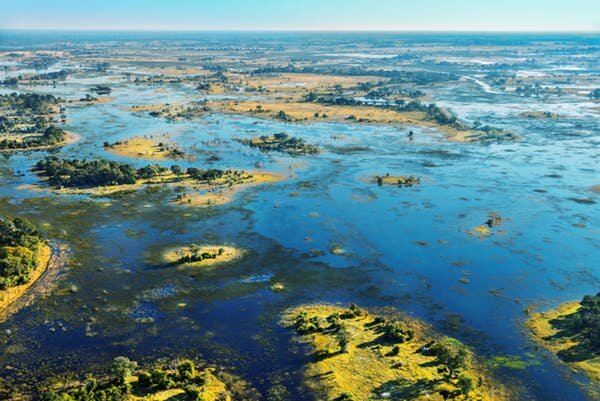
Aerial view of the Okavango Delta. Vadim Petrakov/Shutterstock
But it’s a fragile natural area. It’s controlled by deformations of the Earth’s crust over a long time (thousands to millions of years) and by annual water flows and evaporation. The size of the flooded delta from year to year varies between 3,500km² and 9,000km² because of weather fluctuations which control its water supply.
Any change to the processes that form the delta will have an impact on the wildlife and local economic activities. Its grassy floodplains are food for grazing animals in the dry period. Losses of this habitat will cause declines in wildlife and livestock. It’s therefore imperative to understand what creates and sustains the delta for the future management of the system.
We have conducted several studies that cover how the Okavango basin was formed and the way dissolved chemicals are withdrawn from the delta’s surface.
The dynamic history of the Okavango Delta’s waterways and floodplains tells us that the interplay between geology, water and plants makes the delta resilient, but vulnerable.
Some imminent changes are expected that are of concern. One is higher temperatures, which will boost evaporation and transpiration. Another is the pumping of water for irrigation in Namibia. Both of these changes will reduce the water needed to sustain the delta’s floodplains.
An oasis
The Okavango Delta is a generally flat area which is under constant change with phases of flooding and drying. A variety of geographical and natural processes have formed it and sustain it.
It’s in a depression which was created by fault lines cutting the Earth’s surface. This means water flows into it. The fault lines are created by the spread of the East African Rift – a major fracture, created over millions of years, which crosses the eastern part of Africa.
The origin of the islands in the delta is attributed to two mechanisms: the construction of termite mound spires; and formation of elevated ridges where former channels deposited sand. Both act as the starting point for vegetation to take root.
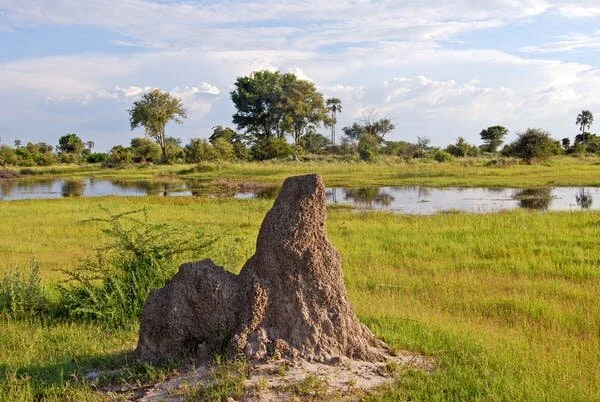
Termite mound in the delta. PIXEL to the PEOPLE/Shutterstock
The water supply comes from the Cubango and Cuito rivers in Angola. This reaches the delta between March and June and peaks in July. There’s also local rainfall in the Okavango area from November to February (about 450mm a year) which adds to this.
About 98% of the water that goes into the delta is eventually lost through evaporation and plant transpiration, when water moves through the plant and evaporates from leaves, stems and flowers.
Even though the subtropical sun generates intense evaporation, the delta’s water is fresh, not salty. This is surprising because water samples from the middle parts of the islands have very high chemical and salt concentrations. This chemical concentration occurs in thousands of islands.
The reason the water is fresh is that trees on the edges of the islands have created a barrier of natural filters between the inner part of the islands and the floodplain.
Possible changes
The Okavango Delta is continually being shaped by complex interactions of natural processes. If something happens to change the balance of these processes, it could destabilise the system.
The most important dynamic for the delta is inflowing water. The two main rivers in Angola, the Cubango and the Cuito, join to form the Okavango river, which feeds the delta. These two rivers are hydrologically quite different. The Cubango, to the west, first flows rapidly down steep, narrow paths characterised by incised valleys, rapids, waterfalls and valley swamps. The Cuito, to the east, with shallow valleys and large floodplains, gets its water from groundwater seepage.
The manipulation of these rivers – in the form of dams and irrigation – will affect the water flow and change its annual distribution. Both of these form part of current and future development planning in Angola and Namibia.
A decrease in water supply will affect the vegetation growth and the wildlife. An increase in water would inundate the islands and could dissolve the salts at the centre of them, releasing chemical elements that would change the water quality.
In addition to declines in water flow induced by global warming and human activities, ground deformation is also happening because of shifting continental plates. This could change the paths of the water flowing by changing the ground slopes. Measurements of ground deformation with Global Positioning Systems displays reveal very slight changes in local slopes that can modify the paths of the water flowing to the delta.
To sustain the Okavango Delta it’s imperative that management integrate all the components of the system. All governments are involved and must integrate scientific expertise, from upstream catchment to downstream Delta.
Michael Murray-Hudson is a Senior Research Fellow, Okavango Research Institute, University of Botswana
Olivier Dauteuil is a Directeur de Recherche au CNRS, Université Rennes 1
THIS ARTICLE WAS ORIGINALLY PUBLISHED ON THE CONVERSATION
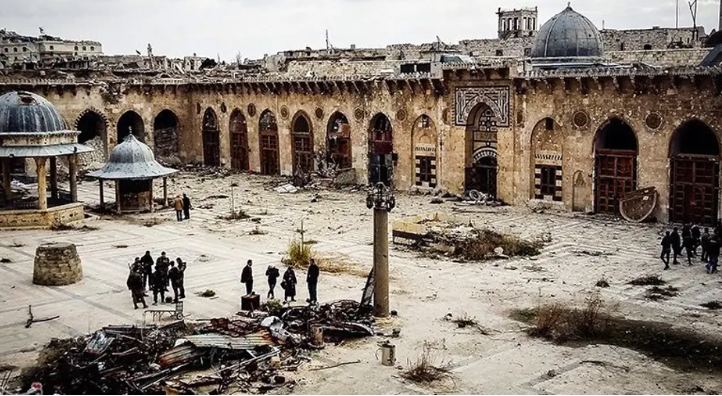
The Great Mosque of Aleppo, Syria, was destroyed in December 2016. Fathi Nezam /Tasnim News Agency, CC BY-NC-SA
Destroying Cultural Heritage Is an Attack on Humanity’s Past and Present – It Must Be Prevented
Since Sun Tzu wrote The Art of War in China in the sixth century BC, military writers have argued that to destroy the cultural heritage of your enemy is bad military practice. Many international agreements since have banned the destruction of cultural heritage in war. That is why there was a horrified reaction to President Trump’s recent threat to Iran’s cultural heritage following the assassination of General Soleimani.
Read More