
Women in Nepal are redefining the climbing industry and offering women-led treks.
Read MoreHow Conflict in Sudan Is Impacting Women and Girls
By Cove Johnson Rabidoux
Gender violence and limited access to healthcare have left Sudanese women increasingly vulnerable as war continues.
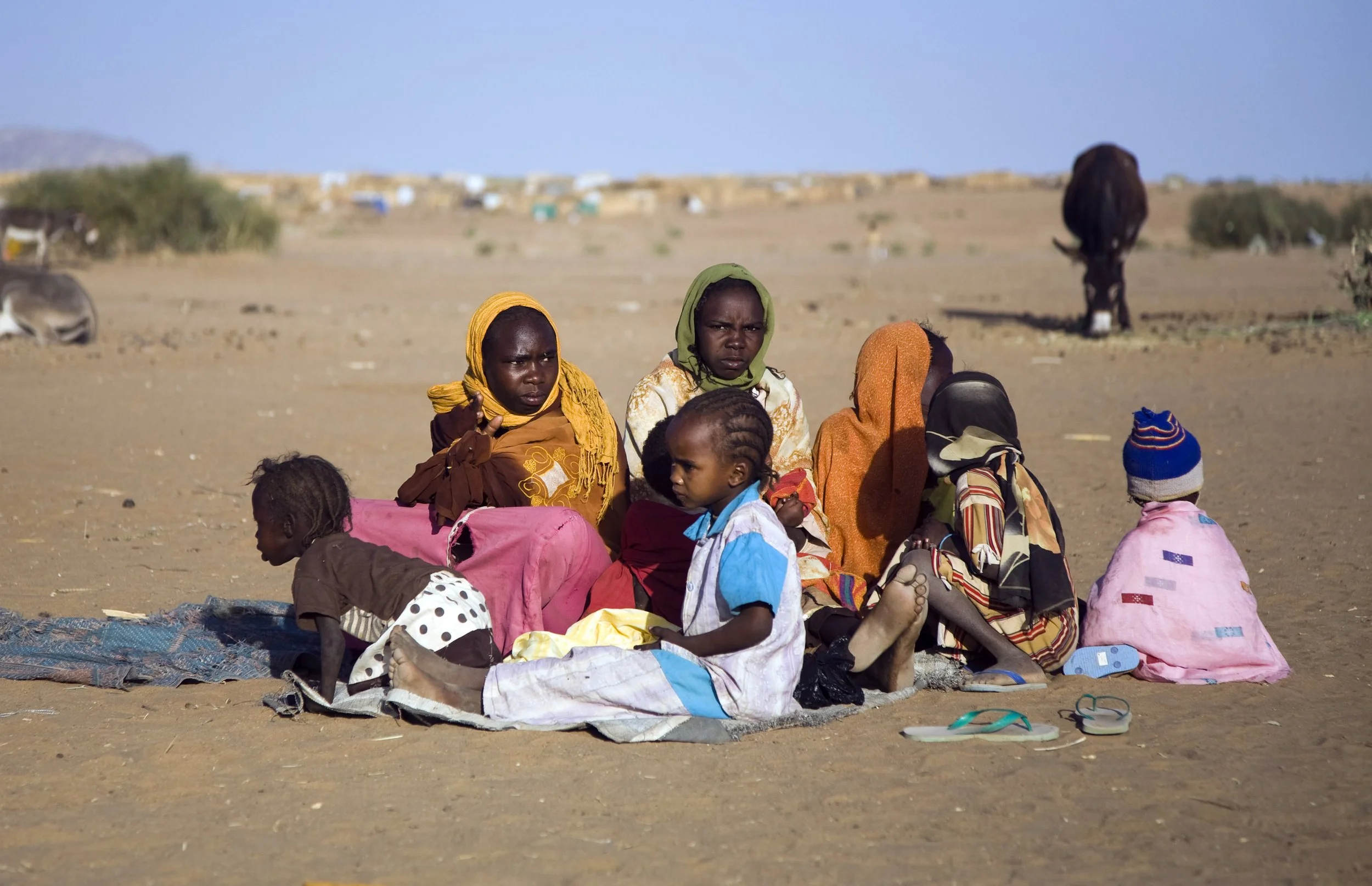
Sudanese women and children. Albert Gonzalez Farran. CC BY-NC-ND 2.0.
Civil war in Sudan started in April 2023 following the collapse of negotiations between the Sudanese Armed Forces (SAF) and the Rapid Support Forces (RSF). Since then, the country has been decimated by violence, widespread famine and a crumbling healthcare system, all of which make it nearly impossible for humanitarian support organizations to provide aid.
According to the United Nations, the situation in Sudan is the world’s worst humanitarian crisis, with more than 33 million people in need of support. Women and girls have been disproportionately affected, facing alarming rates of food insecurity and displacement.
Millions of women have had to relocate to refugee and displacement camps, where they face shortages of food, clean water and medical supplies. At these camps, they experience the additional risk of gender-based violence, both by fellow civilians and members of the SAF and RSF themselves.
The United Nations described rape, sexual slavery and violence as common war tactics used throughout the country. They report that sexual violence has not only been used to exert control over communities but to instill fear and deepen the psychological trauma of survivors and their families. One woman told Human Rights Watch, “Every time I try to sleep, I see how my parents and husband were killed, and I remember all the things they did to me. It is torturing me.”
Her experience is far from unique. Survivors of sexual violence, especially that which is war-related, often experience long-term trauma, including depression, post-traumatic stress disorder and sleep disturbances. Many also face social stigma within their communities, which can lead to further isolation. In Sudan, these challenges are compounded by the deterioration of the healthcare system and limited humanitarian access. With little international aid, survivors are left without medical care, counseling or legal assistance.
Additionally, without reliable healthcare, pregnant women and new mothers are unable to receive adequate maternal support. This often increases the likelihood of preventable complications for both mothers and infants.
Yet despite these conditions, Sudanese women are committed to protecting their communities. Across the country and within displacement camps, women-led groups have helped distribute food, protect children from violence and provide midwifery and other medical assistance.
But as fighting persists across the country, humanitarian groups argue that greater international attention is crucial in addressing the crisis. Sudan has received comparatively limited international coverage compared to other global conflicts. Experts suggest this is partially because more “geopolitically influential countries” are often prioritized in media coverage, leaving other large-scale humanitarian crises underreported.
In the case of Sudan, Tom Perriello, former U.S. special envoy to Sudan, said, “I don’t think I’ve ever seen as big of a disconnect between the scale of a crisis and the scale of media coverage in my life, and that is both because the scale of the suffering in Sudan is so high and because the [media] coverage is abominably low.”
The statement reflects ongoing concerns about the visibility of the crisis and its impact on its civilians. For many Sudanese women and girls, support remains uncertain as they continue to navigate the world’s worst humanitarian emergency.
GET INVOLVED:
Sign Amnesty International’s petition to demand an arms embargo in Sudan. Spread the word about the atrocities facing women in Sudan today. Support female protection and aid by donating to UN Women. For updates and additional information, follow UNICEF and ReliefWeb.

Cove Johnson Rabidoux
Cove is an English student at the University of California, Los Angeles. Her writing can be found in the Daily Bruin, The Teen Magazine, Piece of Cake Magazine, and other publications. In her free time, she enjoys reading and traveling.
The Unflattering Truth of Asian Women’s Fetishization
Claire Park
The fetishization of Asian women is a reinforcement of the late 19th century’s imperialistic practices and mindsets, stripping them of their individuality and complexity.
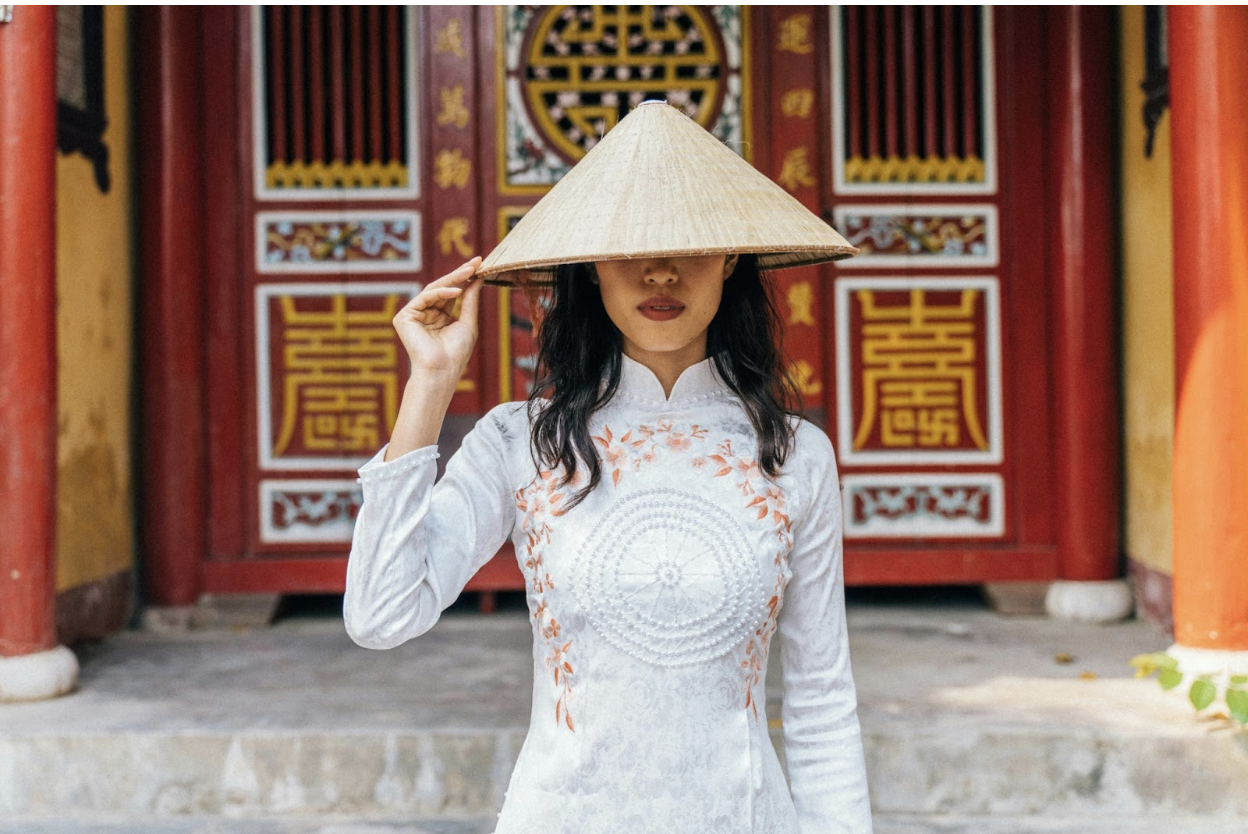
Asian woman in traditional Vietnamese dress. Anna Tarazevich. Pexels.
During the early to mid-20th century, in the midst of Western imperialism, the United States’ formal occupations of Asia left many soldiers leveraging their domination of a more specific subject: Asian women. When white soldiers arrived in countries like Japan and Vietnam with Western beliefs of supremacy, they viewed the local women as weak, submissive and demure individuals who could easily be controlled. With the plight, despair and poverty of the wars, namely World War II and the Vietnam War, this representation materialized in the form of sex and prostitution, with Asian women’s “submissiveness” catering to soldiers’ needs for outlets of rest and recreation. The rape and degradation of these women birthed the symbol of Asian women being hypersexual, docile playthings, subservient to white superiority.
As soldiers made their way back to America, they brought this fantasized Orientalism with them. These characterizations of Asian women as sexually compliant have since been reinforced through contemporary arts, literature and media. Novels like “Madame Chrysantheme” and stage productions such as “M. Butterfly” and “Miss Saigon” have perpetuated the stereotype of Asian women as mere objects dependent on white males for validation and existing only for sex. These “love” stories have romanticized the idea of forced prostitution, the struggle of Asian people during times of war and the white-savior story. Alternatively, other media, such as the film “Kill Bill,” have used Asian women’s alluring foreignness to establish the Dragon Lady stereotype, portraying them as mysterious and dangerous figures who tempt men for their own gain.
The recent popularity of anime in the West often appeals to large male audiences by combining both of these racialized stereotypes of meekness and enticement. While some female anime characters may be powerful heroines, a good portion of them are scantily clad with youthful, childlike features, which undermines those more optimal portrayals and exalts the objectification, hypersexuality and infantilization of Asian women. This depiction is not only harmful to Asian women and their perceptions of self but also completely disrespects Japanese and Asian culture by bastardizing it.
The misrepresentation of Asian women, their racial characteristics and their stories crafted through the Western gaze has conditioned people to view them as a type of fantasy rather than as individuals. While it may initially feel flattering to be desired for certain attributes one possesses, this fetishized attraction is rooted in a longstanding power imbalance, denying Asian women complexity and respect. The development and promotion of the acquiescent yet provocative racial label for Asian women has not only created external harm through harassment but has also fostered an internal pressure to perform a certain kind of sexuality or look a certain way.
Many Asian women feel othered with this emphasis on their “exotic” qualities. The constant questioning of how they’re perceived and the historical and media evidence confirming that they’re valued for certain racial traits rather than who they are as a whole person can deeply affect how they understand their self-worth. Moreover, Asian women’s racial and sexual objectification has been linked to health issues related to body image and eating disorders in pursuit of fitting the petite litheness associated with the idealized Asian woman. These uncertainties and pressures are not only harmful to Asian women’s self-esteem but also inhibit the development of their sense of self, at times making them resort to alignment with the fetishization in order to feel safe and accepted.
While the fetishization of Asian women has persisted and evolved, actively working toward dismantling its enablement starts with education. Rather than accepting racial misrepresentations as something entrenched in society, media portrayals and their origins should be questioned, individuals should examine personal biases and Asian voices should be central in storytelling. In doing so, the authenticity and individuality of Asian women as people can finally be championed.
Claire Park
Claire Park is a sophomore at the University of California, Berkeley, studying English and Media Studies with a minor in Music. Her experience writing lifestyle content for UC Berkeley's The Daily Californian newspaper has inspired her to expand her scope to the realm of travel, pursuing her aspirations of becoming a travel journalist. When not writing, Claire can be found singing, reading romance books, journaling at the beach, or acquiring a sweet, caffeinated beverage.
The Women of Zanzibar’s Fishing Industry
Women in Zanzibar are redefining the country’s narrative surrounding fishing and sustainability.
Read MoreGender-Based Violence in Papua New Guinea
With exacerbated poverty rates post-COVID, Papua New Guinea continues to experience heightened gender-based violence and domestic abuse.
Read MoreTraditional Gender Roles in South Korea Maintain Inequality
As South Korean women suffer under the inequality facilitated by traditional gender stereotypes, many call for change through feminist movements and passionate demands for political reform.
Read MoreThe History Behind Japan’s Women-only Trains
With the need to address transit safety and security, these pink-labeled train cars are Japan’s solution.
Read More6 Matriarchal Societies Around the World
In stark contrast to male-dominated structures that found the majority of the world’s civilizations, several matriarchies continue to thrive, with women, rather than men, at the head of society.
Read MoreThe Mother Activists Searching for Justice in Mexico
In response to drug cartel violence and lack of government action, the Madres Buscadoras, “searching mothers”, of Mexico have taken an imperative step forward in searching for their disappeared loved ones.
Read MoreRefusing Silence: Afghan Women Fight Back Through Prose
In the face of censorship and exile, Afghan women are creating new paths to keep their writing alive.
Read MoreComfort or Cruelty? The Buried Truth of Imperial Japan’s Sexual Slavery
Thousands of women were forced to work in “comfort stations” during World War II and their persistent fight for justice continues today.
Read MoreThe Truth about Geisha Tourism in Japan
Japan’s geisha have survived war and the turn of the century — unruly travelers may be the dying art’s final blow.
Read MoreCasting Lines and Breaking Barriers: Women Redefining Fishing
Creating global change by empowering women through fishing.
Woman holding a fish she caught offshore fishing in Rhode Island, USA. Courtesy of Take Me Fishing.
Many of us have nostalgic memories of learning to fish with our grandparents. They took us to the pond, put the bait on our hook, and gave us our first casting lesson. However, there is a noticeable disparity between male and female children who continue their fishing experiences. According to a study by The Recreational Boating & Fishing Foundation (RBFF), only 19% of female anglers between the ages of 13-17 continue fishing after age 12 opposed to 30% of their male counterparts. Additionally, the RBFF found that only 19% of women “see themselves” represented in the fishing industry. As of 2024, 37% of all anglers in the United States are female-identifying—the highest number on record.
In August 2024, I proudly joined those numbers. I was lucky enough to accompany a crew of fisherwomen on an excursion with Take Me Fishing (TMF) in Rhode Island. TMF is a nonprofit that creates opportunities to introduce women to fishing by providing resources and hosting educational events.
My time on the water was spent learning the ropes of offshore and flyfishing. After cruising ten nautical miles out to sea to try my hand at offshore fishing, I learned some valuable lessons in resilience. Admittedly, I spent a good portion of the day leaning across the vessel, seasick. However, the excitement and upbeat spirit of other eager fisherwomen made it all worth it. By the end of the day, I could confidently set up my own pole, bait a hook, and even handle some of the gnarly-looking sea creatures we caught.
The next day, I swapped my action rod for a fly rod. With instruction from a kind guide, I began getting the hang of flyfishing's active nature. Mimicking the motions of an insect on the water, there was something both peaceful and powerful about handling a rod. I felt I truly could have spent days out on the shore. When it was time to pack up, I realized I could easily see flyfishing becoming a regular part of my life.
After two days on the water, I felt more confident and mentally rested than I had in weeks.
A young girl fishing in Rhode Island. Courtesy of Take Me Fishing.
Studies provided by the RBFF found that female anglers were 25% more likely to feel that they were in good health than non-anglers. Additionally, 1 in 5 women anglers believed that fishing has allowed them to accomplish anything they put their mind to. Women being excluded from traditionally male-dominated sports has a direct effect on their health and confidence. Nonprofit organizations like Take Me Fishing help to bridge this gap by offering inclusive fishing opportunities for those new to the sport.
Women on a fishing boat in Rhode Island. Courtesy of Take Me Fishing.
It would be remiss to ignore the fishing disparity between races. Of the 57.7 million Americans who went fishing in 2023, only 5.2 million identified themselves as Black and 6.3 million as Hispanic.
While these numbers are pulled from data taken within the United States, the lessons are transferable worldwide. Women experience inequality in sports around the world. Having personally experienced the immediate benefits of fishing as a woman, I can attest that getting young girls and women out on the water can have a lasting effect on our world. When organizations work to bring opportunities and awareness to these communities, it will help create change on a global scale.
To Get Involved:
Take Me Fishing provides fishing opportunities and events throughout the United States. Further resources can be found with the Recreational Boating & Fishing Foundation, Outdoor Foundation and Sports Fishing Restoration.
Cait Kontalis
Cait is a Chicago-based Greek-American but spends most of her year floating around the globe. She holds a B.A. in Communications and a M.A. in Nonprofit Management. Her favorite destinations include visiting her homeland in Greece and the Black Hills of South Dakota. Cait is also a powderhound, taking to ski slopes in the Rocky Mountains and around the globe.
Fighting FGM: Meet the Woman Activist Standing Up to Mutilation
Meet Ifrah Ahmed, the brave woman taking a stand against a brutal practice that still affects millions of women.
Ifrah Ahmed speaking at a training workshop in Mogadishu, Somalia. AMISOM Public Information, CC0
FGM, or female genital mutilation, is the violent and forcible removal of the external female genitalia. This practice usually takes place at a young age, as the belief systems of those who promote FGM believe it to be the best way to preserve a woman’s “purity.” Although modern medicine has proven that there are no benefits of any kind connected to the practice, women around the world continue to suffer from the procedure.
FGM opens the door to a variety of immediate and long-term health complications, including infections, diseases and potential complications during childbirth. The mental effects are also damaging; according to the limited number of studies investigating the psychological impact of FGM, the vast majority of women who have been mutilated by the procedure exhibit symptoms of depression, anxiety and PTSD, among other disorders.
Although FGM has been condemned as a violation of human rights and globally banned by the World Health Organization (WHO), as of 2012 a number of countries still engage in the practice. While cases of FGM are concentrated mostly in the Middle East and sub-Saharan Africa, instances have also been documented in Latin America, Asia and eastern Europe. Since 2012, the WHO has been working with local organizations to devise more effective ways to enforce the global ban. In the meantime, however, over 230 million women have undergone FGM, with more being mutilated every day. The victims of this procedure have started to take action into their own hands.
Enter Ifrah Ahmed. As a young girl in Mogadishu, Somalia, Ahmed was subjected to FGM. In 2006, she escaped from the Ethiopian War and made her way to Ireland, where her doctor struggled to understand what had happened to her. In the following years, Ahmed discovered that FGM, despite its near ubiquity in Somalia, was entirely absent in Ireland. This drove her to begin speaking out against FGM, becoming one of the first women to publicly share her experience with the mutilation.
In 2010, Ahmed established the Ifrah Foundation, an NGO devoted to the total elimination of FGM around the world. There are many misconceptions regarding FGM (groups who practice it make use of parents’ ignorance to sell the procedure), such as the belief that it provides benefits for the woman or that it is required under Islamic law. Ahmed, through the Ifrah Foundation, has worked tirelessly to deconstruct these misunderstandings.
The Ifrah Foundation has collaborated with several international nonprofits such as UNICEF, UNFPA and Amnesty International. The organization has also formed partnerships with various governmental agencies on legislation addressing FGM. Additionally, in 2018, Ahmed collaborated with the Global Media Campaign to end FGM to release a short documentary detailing a 10-year-old girl’s death as a result of complications from FGM.
Today, Ahmed works to promote her cause in her home country of Somalia, where she was appointed the Gender Advisor to the Prime Minister in 2016. She is also the Human Rights advisor to the Somali government. In these positions, and with the help of the Somali prime minister and the Ifrah Foundation, Ahmed managed to implement an FGM abandonment program across the entire country.
How You Can Help
Readers who wish to contribute to the Ifrah Foundation can do so here. The Foundation has recently begun a new campaign titled “Dear Daughter," which focuses on educating and empowering women against genital mutilation. Interested readers can visit the campaign and make donations here.
Ryan Livingston
Ryan is a senior at The College of New Jersey, majoring in English and minoring in marketing. Since a young age, Ryan has been passionate about human rights and environmental action and uses his writing to educate wherever he can. He hopes to pursue a career in professional writing and spread his message even further.
Italian Women Take Action Against Femicide
A family tragedy turns into a political movement in Italy, a country that saw over 100 femicides in 2023.
Statement for the femicide of Giulia Cecchetin and for all women victims of femicide. "Instead of protecting your daughter, educate your son." Anna Massini. CC BY-SA 4.0
Giulia Cecchettin was 22 years old and only days away from attaining her college degree when her life was brutally ended by her ex-boyfriend, Filippo Turetta. Turetta was enraged that Cecchettin had decided to end their romantic relationship. He had been controlling while the two were together, to the extent that he had installed a spy app on Cecchettin’s phone to monitor her movements. On November 11th, 2023, Cecchettin disappeared after going to buy her graduation outfit with Turetta. After a search that lasted a week, her body was found wrapped in black plastic bags and covered in more than twenty stab wounds. A week later, Turetta was arrested near Leipzig, Germany. He was extradited to Italy to face trial for the murder and is now serving time in prison.
The murder gained international coverage thanks in part to the efforts of Giulia’s sister, Elena Cecchettin, who turned her family tragedy into a political movement. The day that Turetta was extradited from Germany, Elena posted a letter on social media. In the letter, Elena condemned the culture of violence against women that pervades Italy. “Turetta is often referred to as a monster, but he is not a monster,” she says in the letter. "A monster is an exception, a person outside society. The ‘monsters’ are not sick, they are healthy children of patriarchy, of rape culture. Don't take a minute's silence for Giulia, burn everything for Giulia.”
Poster for Giulia Cecchettin in Naples, "For you we will burn everything." Rebecca Pitcairn.
A video of Elena reading her statement received millions of views. Elisa Ercoli, director of Differenza Donna, a women’s rights organization, told BBC that the killing was "the last straw, after a string of high-profile cases of femicides,” and that “Italy is a deeply patriarchal country.” Until 1981 honor killings were punished less stringently than other murders, and only in 1996 did rape start to be considered a crime against the person assaulted rather than a crime against “public morality.” As of 2024, only 58 percent of Italian women own a bank account, and in 2022, 44,669 women left their jobs due to the challenge of reconciling working and family life. According to statistics, a woman is murdered in a femicide every 72 hours. Giulia Cecchettin’s murder was the 105th of 120 femicides that occurred in Italy in 2023.
After Giulia’s murder, women took to the streets and the piazzas of Italy in massive numbers to defend their right to live and to create awareness about Italy’s epidemic of violence against women. More than 500,000 people attended a protest in Rome by the Non Una Di Meno, (Not One Less) women’s rights movement, which hosted marches all across Italy in 2023. Students at the University of Padua (where Giulia studied), when asked to hold a minute of silence in Giulia’s honor, instead spent the minute making noise, clapping, reading poetry and singing.
Protest Organized by Non Una di Meno, Firenze, "Neither God, nor husband, nor master." Valentina Ceccatelli. CC BY-NC-SA 2.0
Feminists and student collectives in other cities organized torchlight walks and “angry walks” in response to the moments of silence requested by schools in a culture where insidious silence already envelops the topic of violence against women. Non Una di Meno led students from multiple universities and hundreds of thousands of protestors across Italy in a “moment of noise” for Giulia on November 25, 2023, the International Day for the Elimination of Violence Against Women.
Many women, inspired by Elena Cecchettin, adopted the poem “Si manana me toca, quiero ser la ultima” (“If it's my turn tomorrow, I want to be the last”) by Peruvian poet and activist Cristina Torres Cáceres. The poem was written in 2011 to honor women and the victims of violence in Latin America after the murder of Mara Castilla. “If tomorrow it’s me, if I don’t come back tomorrow, mother, destroy everything./If it’s my turn tomorrow, I want to be the last,” Castilla wrote.
Thousands attended Giulia’s funeral, which was broadcast live on television. In a eulogy delivered by Giulia’s father, Gino Cecchettin, he called for men to stand against patriarchy. “We should be the first to show ourselves as agents of change against sexual violence,” he said as he addressed the crowd, “Let us speak to other men we know, let us challenge the culture that tends to play down violence by men who appear to be normal.” As Giulia’s coffin was taken out of the church, members of the crowd shook their keys in a symbolic call for violence against women to not be tolerated in silence.
TO GET INVOLVED
Non Una di Meno: This organization’s website has information about demonstrations and campaigns against violence against women that are currently active in Italy.
Differenza Donna: This organization provides legal assistance, a hotline and shelter for victims of gendered violence. Their website includes a link to donate to their fight to protect women.
Centro Antiviolenza Artemesia: A shelter for victims of domestic abuse that accepts donations and volunteers.
Rebecca Pitcairn
Rebecca studies Italian Language and Literature, Classical Civilizations, and English Writing at the University of Pittsburgh. She hopes to one day attain a PhD in Classical Archeology. She is passionate about feminism and climate justice. She enjoys reading, playing the lyre, and longboarding in her free time.
Gambia's Controversial Bid to Reverse FGM Ban
In 2015, female genital mutilation was made a criminal offense in Gambia, but in March of 2024, a bill was introduced to overturn the ban.
Jaha Dukureh, Gambian Anti-FGM Activist, Speaks at UNHQ. Ryan Brown. CC BY-NC-ND 2.0
Female genital mutilation, or FGM, refers to the practice of partially or completely removing the external female genitalia for non-medical and often religious reasons. In addition to psychological trauma, the procedure can cause a variety of medical issues for the victim, including bleeding, problems with urination, cysts, infections, complications in childbirth, and shock or death. According to the World Health Organization, as of 2024 more than 230 million women have undergone FGM. It is most often practiced on girls between infancy and age 15. Data collected by UNICEF in 2024 reveals a 15% increase in the number of survivors compared to data released eight years ago.
Gambia has one of the highest rates of FGM worldwide. Around 46% of girls age 14 and younger and 73% of girls and women between ages 15 and 49 have undergone FGM in the country, according to UNICEF. In 2015, Gambia passed the Women’s (Amendment) Act, which criminalized FGM. The law did little to end the practice, however. Only two case of FGM have been prosecuted since the law was passed, and the first conviction for performing FGM was not made until August of 2023.
Calls to overturn the ban on FGM began in earnest after the 2023 conviction, in which three women were indited. Many supporters of the practice were outraged by the womens’ fate. One of Gambia’s most vocal religious leaders, Islamic cleric Imam Abdoulie Fatty, who believes that FGM is prescribed by Islam, raised funds to pay the womens’ fines. From that point on the movement began to gain traction.
A bill proposing to overturn the ban was officially introduced to Gambia’s parliament in March of 2024. Of the 58 members of Gambia’s parliament, 4 legislators voted to preserve the ban, 42 legislators voted to legalize FGM and one abstained. Although it passed by a majority, the bill still needs to be approved by a final committee before it becomes law. Notably, only five of Gambia's parliamentary seats are currently held by women.
Activists fear that the bill represents a threat to more than just the ban on FGM; it is representative of a broader struggle for gender equality in Gambia. The widespread support that the bill has received suggests that many Gambians still hold deeply patriarchal values, a revelation that could embolden religious conservatives to take advantage of the moment to set back other steps that have been taken towards gender equality. It could also inspire other countries in Africa, especially Muslim-majority West African countries like Kenya or Guinea, to repeal their bans on FGM, says Satang Nabaneh, a human rights law professor at the University of Dayton. “There has been an uptick in [attempts to reverse] anti-FGM laws within the continent,” she told TIME, “and what happens in the Gambia will be a signal to other West African countries or conservative actors to roll back women’s sexual and reproductive rights, as well as to allow for gender-based violence.”
Gambian President Adama Barrow said in June that his government would abide by the ban, though he faces increasing pressure from traditionalists as a parliamentary commission considers the new bill. "While awaiting its outcome, government remains committed to enforcing the prohibition of FGM in The Gambia," Barrow said in a statement, although he has yet to suggest a plan for preventing the ban from being overturned if the bill is passed.
GET INVOLVED
The Five Foundation: The Five Foundation was established to combat FGM. They have launched multiple projects aimed at supporting women all across Africa who have been affected by FGM.
Safe Hands for Girls: This organization is dedicated to ending FGM and child marriage in Africa. Their website offers a link for donations and information on their various initiatives.
Rebecca Pitcairn
Rebecca studies Italian Language and Literature, Classical Civilizations, and English Writing at the University of Pittsburgh. She hopes to one day attain a PhD in Classical Archeology. She is passionate about feminism and climate justice. She enjoys reading, playing the lyre, and longboarding in her free time.
Abstinence-Only Feminism: Exploring South Korea's 4B Movement
The 4B Movement in South Korea aims to fight discrimination and decenter men by leaving them behind entirely.
Women’s protest in Seoul for sex worker’s rights, South Korea. Rita Willaert. CC BY-NC-SA 2.0
The 4B movement comprises four strategies that de-center men in an attempt to advance gender equality and women’s rights in South Korea. They include abstaining from bihon (marriage), bichulsan (childbirth), biyeonae (dating), and bisekseu (sex) with men.
Since the 4B movement was sparked by a Twitter user in 2018, the fertility rate in South Korea has dropped significantly, and the country now has the lowest fertility rate in the world. There are predictions that by 2065 over half of South Korea’s population will be over the age of 65.
Feminists in South Korea have been fighting against traditional gender roles, gender-based violence, and discrimination for years. South Korea’s gender income disparity ranking is one of the highest among Organisation for Economic Co-operation and Development (OECD) members, with a 31% gap between the average pay of men and women. This is particularly striking in contrast to the OECD average wage gap of 11.9%.
Discrimination and violence against South Korean women are not limited to the workplace. A 2021 survey found that a third of South Korean women have experienced gender-based violence in their lifetimes, while 80% of South Korean men admitted to abusing romantic partners in another survey. Most of the perpetrators do not face consequences.
In South Korea, feminist movements have recently been faced with significant resistance and anti-feminist rhetoric. President Yoon Suk Yeol’s political platform focused on men’s grievances regarding feminism and called for the abolition of South Korea’s Ministry of Gender Equality.
This rhetoric includes the notion that feminism and misandry are synonymous and that, because of feminism, men are now the victims of gender discrimination. These tensions have further stigmatized the discussion of women’s rights and gender equality, with the government going so far as to remove the term “gender equality” from textbooks.
While President Yook Suk Yeol has yet to be successful in getting rid of the Ministry of Gender Equality, his appointment of Kim Hyunsook as Gender Equality Minister has been condemned by feminists and activists who claim Hyunsook has failed to fulfill the mission of the ministry by ignoring cases of discrimination and gender-based violence.
To address the demands of the 4B movement, international affairs experts have several policy recommendations. These initiatives include increased support and advocacy for advancing South Korea’s Ministry of Gender Equality, enforcing laws against gender-based discrimination, and requiring gender equality training for the Gender Equality Minister.
Feminist organizations such as Haeil and the Korean Women’s Associations United continue to organize protests and advocate for women’s rights. This persistence combined with the tangible impact the 4B Movement has had on the South Korean fertility rate has inspired feminists around the world.
GET INVOLVED
Those who wish to support the 4B Movement can use social media to raise awareness. To financially support feminism in South Korea, donations or sponsorships can be made with South Korean feminist organizations such as the Seoul International Women’s Association or the Korean Women’s Association.
Madison Paulus
Madison is a student at George Washington University studying international affairs, journalism, mass communication, and Arabic. Born and raised in Seattle, Washington, Madison grew up in a creative, open-minded environment. With passions for human rights and social justice, Madison uses her writing skills to educate and advocate. In the future, Madison hopes to pursue a career in science communication or travel journalism.
Fighting Femicide in Turkey
Turkey has long struggled to prevent violence against women, and Erdoğan’s withdrawal from the Istanbul Convention only worsened matters.
Protests after the murder of Turkish student Özgecan Aslan. 2015. Hilmi Hacaloglu. CC0
Femicide is a massive problem for women in Turkey. According to data from the women’s rights group We Will Stop Femicide, 338 women were murdered by a man between March 2023 and March 2024. The same data reports that the large majority of these women were killed by a close male relation, with the most common motive being their refusal to marry or have a relationship with their murderers.
Recep Tayyip Erdoğan at the 2017 G-20 Hamburg summit. Пресс-служба Президента Российской Федерации. CC-BY-4.0
In March 2021, Turkish President Erdoğan announced his decision to withdraw Turkey from the Istanbul Convention, itself named after Turkey's largest city. The convention obligates political parties to “develop laws, policies and support services to end violence against women and domestic violence.” It also included clauses aimed at protecting members of the LGBTQ+ community from violence.
The decision was met with outrage and criticism from activist groups, lawyers and politicians. Following the decision, thousands took to the streets to protest. Amnesty International Secretary-General, Agnès Callamard, spoke against the decision, expressing her concern that “the withdrawal sends a reckless and dangerous message to perpetrators who abuse, maim and kill: that they can carry on doing so with impunity.”
International Day for the Elimination of Violence Against Women, 2019. Neslihan Turan. CC0 1.0
We Will Stop Femicide was founded in 2012 in response to the murder of an 18-year-old high school student, Münevver Karabulut, and has been one of the leading advocates of women’s rights in Turkey ever since. The group began an initiative to collect, analyze and publicize data on femicide in Turkey in response to claims from the government that no such data existed. They gather their data from cases reported to the public and cases reported directly to the group by associates of the victims. “Patriarchy is the reason behind the loss of so many lives,” the group states on its website. “The lack of efficient policies that secure equal existence and rights of women is also encouraging men who are prone to violence.”
A lawyer working with the women’s rights group We Will Stop Femicide, Esin İzel Uysal, stated that there has been a significant increase in femicides as a result of Turkey’s withdrawal from the Istanbul Convention, with authorities refusing to take action in the face of violations of women’s rights. As of 2024, almost 2,000 women have either been murdered by men or died under suspicious circumstances since Turkey’s withdrawal in 2021.
Women’s rights groups in Turkey such as We Will Stop Femicide continuously face opposition and oppression from the government. On December 2nd, 2021 the Intellectual and Property Rights Investigation Bureau of the Istanbul Public Prosecutor’s Office filed a lawsuit against We Will Stop Femicide aimed at shutting the group down, citing “illegal and immoral actions.” On September 13th, 2023, the court rejected the lawsuit.
Women in Turkey continue to fight for their rights and their lives despite government opposition and police violence. In March 2024, thousands of women defied a ban against protests on International Women’s Day, seeking to draw attention to the rise of femicide in Turkey and voice their discontent with Turkey’s withdrawal from the Istanbul Convention.
TO GET INVOLVED
We Will Stop Femicide: We Will Stop Femicide’s website lists several ways to support their cause, including producing visual materials for their social media and participating in the collection of data on violence against women.
Women for Women’s Human Rights: Another Turkish feminist group, WWHR initiated a Human Rights Education Program for women in 1995 that seeks to educate women about their rights and help them exercise those rights. Information about participation in the HREP program can be found here.
Rebecca Pitcairn
Rebecca studies Italian Language and Literature, Classical Civilizations, and English Writing at the University of Pittsburgh. She hopes to one day attain a PhD in Classical Archeology. She is passionate about feminism and climate justice. She enjoys reading, playing the lyre, and longboarding in her free time.
Family Planning or Ethnic Cleansing in Peru?
In the 90s, hundreds of thousands of impoverished and often Indigenous Peruvian women were forcibly sterilized. Now, they seek justice.
Quechua Women and Children. Josh Walczak. CC BY-NC-SA 2.0.
In December of 2023, a fight that has spanned decades was dealt two major blows when former Peruvian President Alberto Fujimori was released from prison on the same day that Peru’s Supreme Court annulled an investigation into state-sponsored sterilizations. Fujimori, who oversaw the sterilization program during his presidency, had been serving time in prison after being found guilty of crimes against humanity by Interpol. Peru’s Constitutional Court authorized his release on humanitarian and health grounds less than two years after the Inter-American Court of Human Rights had overruled his pardon in 2022. Elected in 1990 during a period of great economic and political unrest in the country, Fujimori presided over an administration fraught with corruption, controversy, and human rights abuses. Most notoriously, he oversaw the Barrios Altos Massacre, for which he was charged and sentenced.
Although their cases are the most widely publicized, political dissidents were not Fujimori’s only victims. After his re-election in 1995, the President introduced the National Reproductive Health and Family Planning Program (also known as the National Population Program) to address issues of poverty, economic instability and overpopulation. Fujimori presented the program as a feminist undertaking that would assure the reproductive rights of Peruvian women. Prior to the implementation of the program in 1996, women could only be approved for sterilization if they met a number of prerequisites, such as age or health risk factors. The National Population Program did away with the majority of those prerequisites. As a result, 272,028 women were sterilized by the government. Many of those women, however, have since come forward to say that they were subjected to the procedure against their will.
In what has been called a genocide or ethnic cleansing Fujimori’s administration mainly targeted women from impoverished backgrounds for sterilization, many of whom were members of Peru’s Indigenous communities. The sterilization program utilized policies developed by the Peruvian military in their Plan Verde, a military operation initially conceived as part of a coup against Fujimori’s predecessor. In one volume titled "Driving Peru into the 21st Century," the plan emphasized the convenience of sterilizing “culturally backward and economically impoverished groups.” Fujimori’s government employed unethical practices to manipulate and downright coerce women into undergoing the sterilization procedure, including by luring women to clinics under false pretenses, locking women inside the clinics, refusing essential healthcare unless they consented to the procedure, and holding the women down and injecting them with anesthesia. Doctors employed abusive language, accusing women with large families of acting like animals and of being useless. Even women who were already using other birth control methods, such as a Copper IUD, were subjected to sterilization. Many Indigenous women spoke Quechua rather than Spanish as a first language and did not understand what they were agreeing to, raising issues of informed consent.
“The Quipu Project,” developed in collaboration with MIT, is an online, interactive documentary that seeks to record and share the stories of women who were forcibly sterilized. Testimonies from Peruvian women document the suffering inflicted by the National Population Program. Many women were promised support and treatment during the recovery stage, only to be sent home immediately after the procedure, swollen, covered in rashes, with a variety of lasting medical issues. Some women, such as Celia Edith Ramos Durand, passed away from medical complications following the procedure. One woman from San Juan described the impact the operation has had on her life, saying “I don’t know if I will ever get better. I don’t believe I will ever heal … My whole body hurts. We are all in pain. Even my vagina hurts.”
Rather than serving as a remedy to economic woes, the program National Population Program has devastated vulnerable impoverished and Indigenous communities. “Ever since I was sterilized, I haven’t been able to work as before,” one woman confessed to the Quipu hotline. “We want justice,” another says, “We have been suffering for so many years. There’s not even a doctor to check our health.”
Peru’s Supreme Court decided to annul the investigation into government-sponsored forced sterilization in December following a lawsuit filed by Fujimori’s Minister of Health, Alejandro Aguinaga, citing the statute of limitations as well as lack of evidence. This is not the first time the investigation has been impeded. For decades, the fight has been an uphill battle, as the investigation has been opened, closed and reopened many times. In 1999, various human rights groups collaborated to bring the case of Mamerita Mestanza Chavez, another woman who died following the sterilization procedure, before the Inter-American Commission on Human Rights. In 2001, the Truth and Reconciliation Commission was established to investigate human rights abuses that occurred under Fujimori’s administration. Maria Isabel Cedano, a lawyer with the nonprofit organization DEMUS, is representing over one thousand plaintiffs before the IACHR. Unfortunately, none of these efforts have yet to yield results for the victims as the Peruvian government continues to dismiss cases and throw up legal roadblocks in an incredibly complex case that encompasses issues surrounding the definitions of consent, sexual violence and genocide. It is now up to the Attorney General’s office to demonstrate that the crimes committed represent an extreme violation of human rights in order to negate the statute of limitations.
TO GET INVOLVED
Quechua Benefit: Quechua Benefit is a nonprofit organization that aims to empower Quechua people in Peru’s highlands. It provides education, economic support and medical services.
DEMUS: DEMUS is a Peruvian Feminist Organization that focuses on protecting women’s sexual and reproductive rights. One of their campaigns, “Somos 2074 Y Muchas Mas,” seeks reparations for the victims of Peru’s forced sterilization program.
Rebecca Pitcairn
Rebecca studies Italian Language and Literature, Classical Civilizations, and English Writing at the University of Pittsburgh. She hopes to one day attain a PhD in Classical Archeology. She is passionate about feminism and climate justice. She enjoys reading, playing the lyre, and longboarding in her free time.
Women Tuk-Tuk Drivers in Cambodia Fight Discrimination
Women in Cambodia fight discrimination to become Tuk-Tuk drivers as global corporations, such as Uber and Lyft, implement initiatives to promote the safety of female and non-binary drivers and passengers.
Read More