
This mining town’s rustic charm belies its dark past.
Read MoreCombatting Anti-Roma Hate in Czechia
The Romani People continue to face discrimination in the Czech Republic.
Read MoreCesky Krumlov: The Heart of South Bohemia
This town in the Czech Republic feels frozen, but not lost, in time.
7 Must-See Natural Wonders of the Czech Republic
Alongside the renowned architecture, the Czech Republic has an array of natural wonders that nature-loving travelers can explore.
Read MoreThe Dark Side of Czechia's Thriving Sex Industry
Legal but unregulated, the Czech sex industry leaves workers vulnerable to exploitation, abuse and trafficking.
Read MoreIn the Czech Countryside, a City Eaten Alive by Its Own Beauty
Since the fall of communism, Český Krumlov has transformed from relic to hotspot—but has it lost its authentic appeal along the way?
The Czech capital of Prague is known the world over for its storybook beauty, manifesting most dramatically in the towering gothic facade of the St. Vitus Cathedral and the sprawling tableau of red rooftops visible from atop Petřín Hill. Yet just over 100 miles away is another sparkling jewel in the Czech Republic’s crown: Český Krumlov, a city of only 13,000 residents whose 13th-century castle and picturesque riverbanks have brought it not only recognition as a UNESCO World Heritage site but also an increasing influx of tourists that now threatens its very identity.
Former Czechoslovakia’s communist regime, which lasted from 1948 to 1989 before it was ushered out by the Velvet Revolution, left much of Český Krumlov in disrepair. Yet the city’s neglected state lent it a sense of mystery and charm. In the years since, Krumlov—much like the country’s capital, Prague—has been transformed into a tourist wonderland, with historic buildings being renovated and revitalized and ensuing increases in tourist income bolstering the city’s economy.
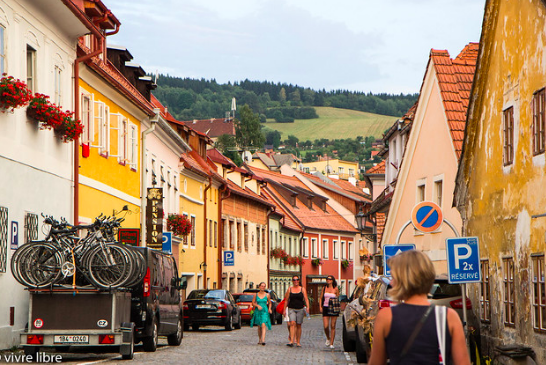
City streets. Hindol Bhattacharya. CC BY-SA 2.0
As the city has changed, so have the demographics of its visitors. In an interview with Radio Praha, Krumlov’s mayor, Dalibor Carda, explained that an initial boom of Austrian and German tourists after 1989 gave way to an influx of Americans, many of whom settled in the city indefinitely. Today, for locals—whether native-born or transplants—the off-season is a thing of the past, with tour groups flooding the city on a year-round basis. “[I]f you want to have a pristine Krumlov,” writes Jan Velinger in a piece for Radio Praha, “you have to get up very early to ever have its romantic streets, or overlooking castle, ramparts to yourself.” Fed up with the unrelenting crowds, locals have largely migrated to the outskirts of the city, resulting in an exodus of local businesses: Bakeries, hardware stores, and family-owned shops are now difficult to find, having been replaced with bars, restaurants, and hostels catering to short-term visitors.
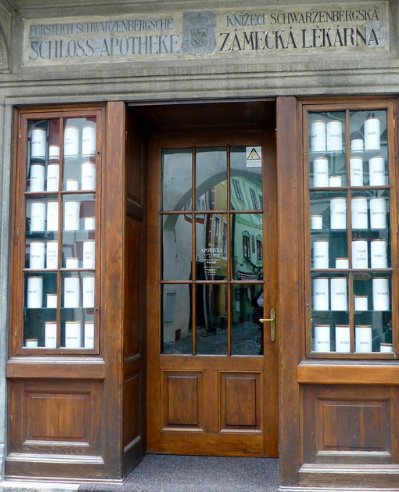
One of Český Krumlov’s bars, popular among tourists. kellerabteil. CC BY-NC 2.0
In some respects, Český Krumlov has moved to mitigate the encroaching tendrils of tourism, notes reporter Chris Johnstone, pointing to a ban on advertising and the exclusion of cars and buses from the city center. Moreover, just this June, the city established a tariff on buses in an effort to regulate the influx—up to 20,000—arriving each year. The plan is the first of its kind in the Czech Republic, although Salzburg and other Austrian cities have imposed similar measures. Now, all buses rolling into Krumlov must book in advance, navigate to one of two designated stops, and pay the toll of CZK 625, approximately $28.
Tourism has inspired not only legislative changes, but also works of art—as in the case of “UNES-CO,” a 2018 project by renowned conceptual artist Kateřina Šedá. Responding to the profound impact of visitors on the distribution of local populations, Šedá conceived of a work that involved relocating a group of individuals and families to the heart of Český Krumlov for three months at the height of the tourist season. The participants were provided with starter apartments and jobs “on the basis of what Krumlov most needs,” which Šedá deemed to be “the pursuit of normal life.” The title played on the city’s status as a UNESCO World Heritage site and on the Czech words “unést” and “co,” meaning “take away” and “what,” as in “What do visitors get out of this place?” Šedá, whose work often involves social themes and who is famed for relocating an entire Czech village to London’s Tate Modern in 2011, stressed that the project was not intended to be a show for tourists, but rather a social experiment.
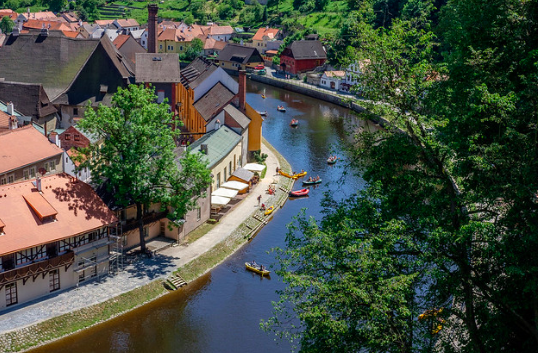
Houses along the banks of the Vltava River. P. N. CC BY-SA 2.0
On the opposite side of the artistic spectrum, Huawei—the Chinese electronics behemoth currently facing scrutiny from the U.S. for potential security issues—announced in January that it would build an exact facsimile of Český Krumlov at its headquarters. The Huawei campus, which lies just outside of Shenzhen in the city of Dongguan, will also count Granada, Verona, Paris, Budapest, and Bruges among its plethora of reconstructed European cities. “I heard about it when they started preparing it,” commented Cardo. “The fact that they [are] building it without at least contacting the city does not sit well with me.”
The Krumlov replica may well draw more Chinese tourists, who already represent the largest segment of visitors to the historic city. Yet for embittered locals, the mini-city could be a grimly apt representation of what their home has become: a mere palimpsest of its original iteration, and a cautionary tale depicting how capitalism and tourism can spur unwelcome transformation.

Talya Phelps
Talya hails from the wilds of upstate New York, but dreams of exploring the globe. As former editor-in-chief at the student newspaper of her alma mater, Vassar College, and the daughter of a journalist, she hopes to follow her passion for writing and editing for many years to come. Contact her if you're looking for a spirited debate on the merits of the em dash vs. the hyphen.
9 Beautiful Houses of Worship Around the World
Different religions have different ways of showcasing their houses of faith.
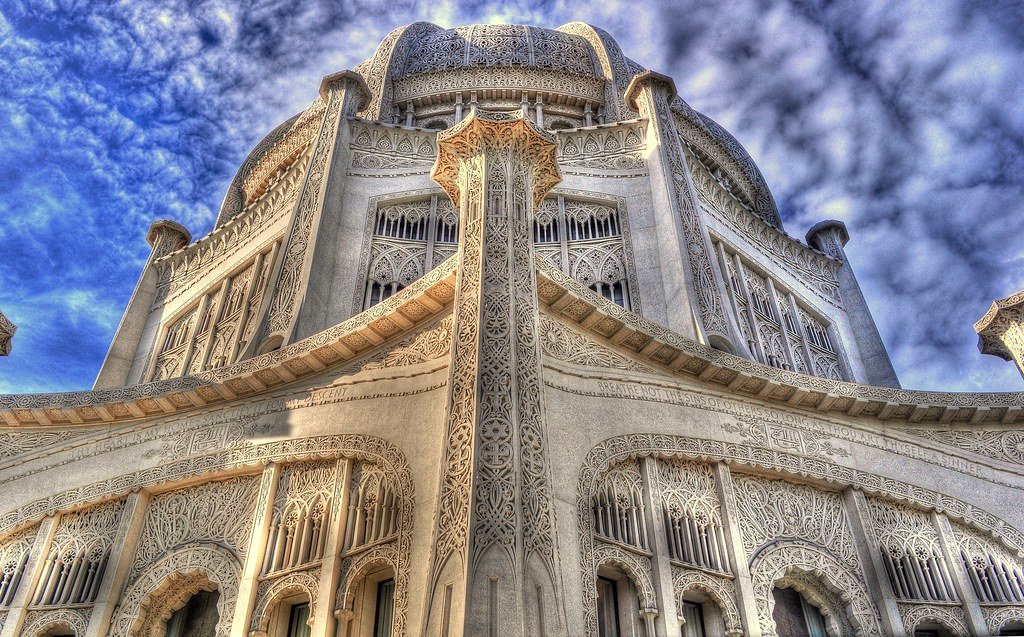
For many centuries across the globe, people have built houses of faith to honor the higher power(s) they worship. Below is a list of different architectural representations of these sacred spaces.
1. Borgund Stave Church
Borgund, Norway
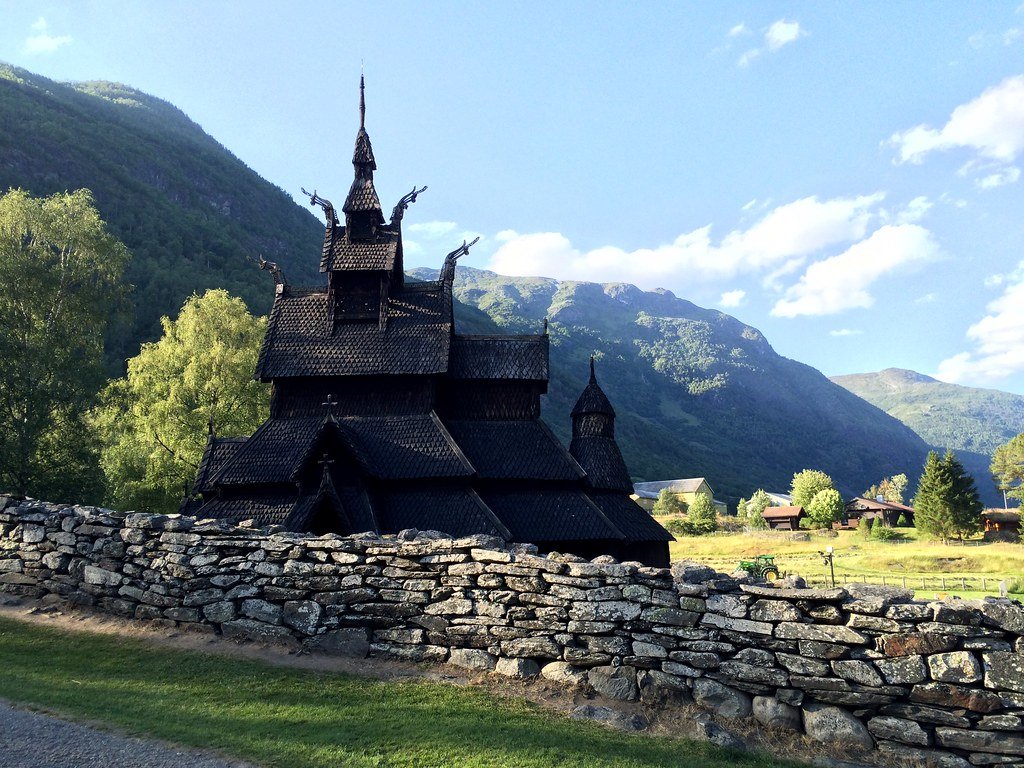
The portrayal of dragon heads on the roof of the Borgund Stave Church in Norway was built to ward off spirits in 1180. The church was dedicated to Apostle Andrew and has been incredibly preserved. The medieval church received certification in 2010 for being an environmental lighthouse. The church is set to reopen to visitors on April 15.
2. Golden Temple
Amritsar, India
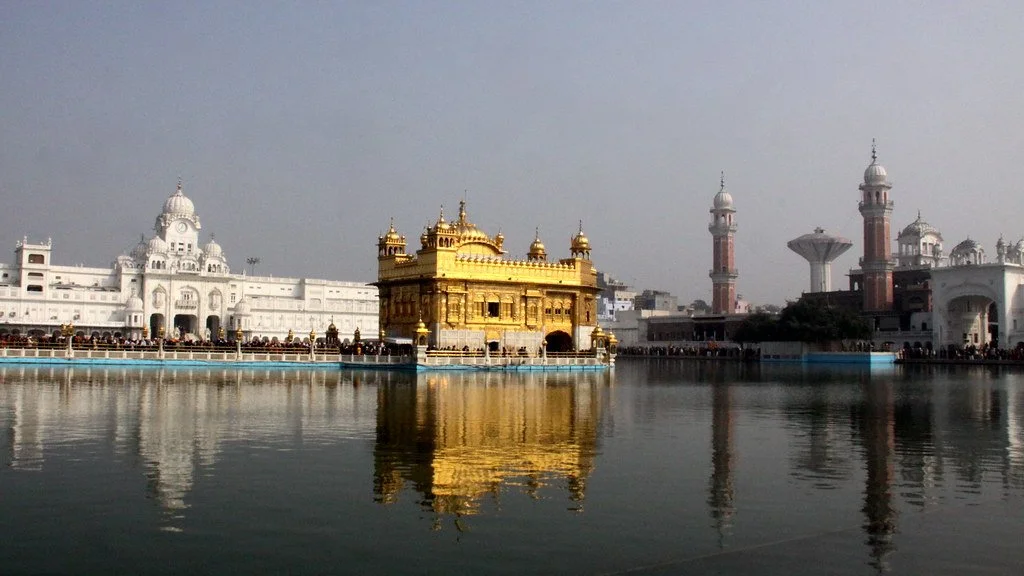
Named the holiest temple in the Sikh faith, the Golden Temple’s upper floors are covered in 750 kilos of pure gold. It was built by Guru Arjan in 1604 and is located in the Northwest of India, near the border of Pakistan. It is said that the waters surrounding the temple in the river Ganga cleanse one’s bad karma when taking a dip. It is visited by 100,000 worshippers daily.
3. Hallgrímskirkja
Reykjavik, Iceland
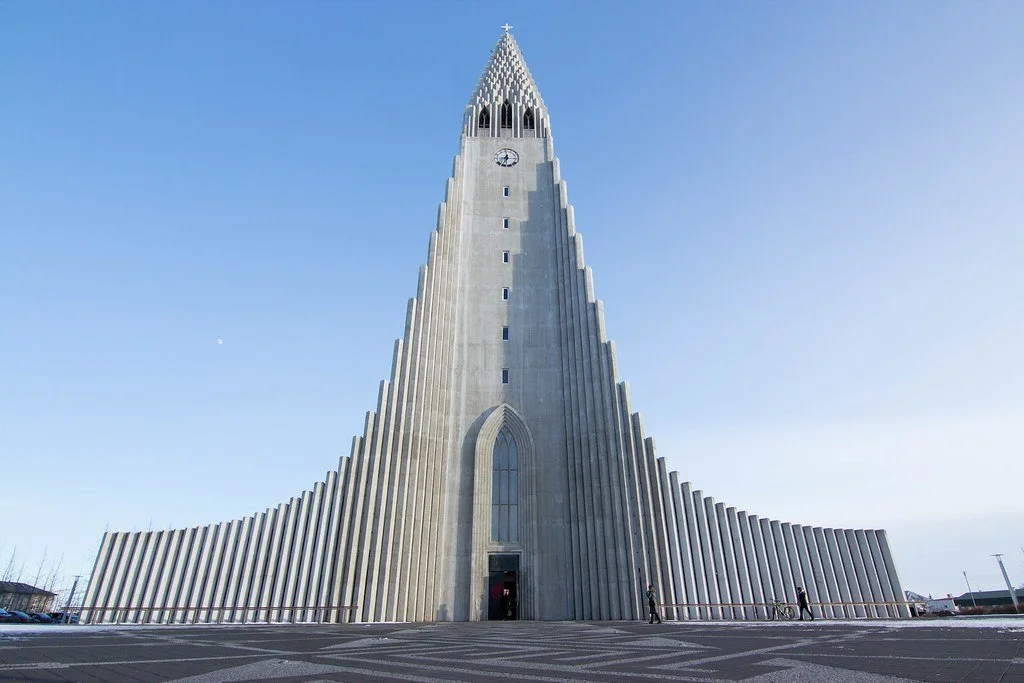
This Lutheran Icelandic church was built by architect Guðjón Samúelsson and, at 240 feet, stands as the tallest building in the capital and the second tallest in all of Iceland. The design is influenced by the country's volcanoes and the natural surroundings that inhabit the nation. Visible from almost any point in the city, the church is known as one of Iceland’s landmarks and largest church.
4. Kizhi Pogost
Kizhi Island, Russia
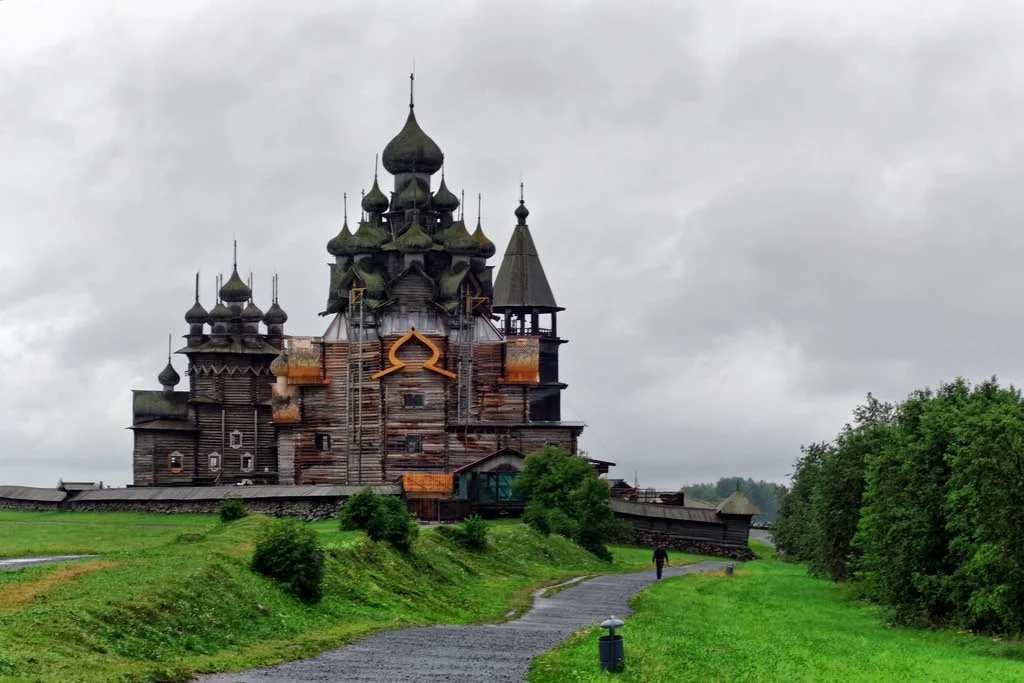
Kizhi Pogost. Alexxx Malev. CC BY-NC 2.0
Set on Kizhi Island in Russia’s Lake Onega, Kizhi Pogost is a UNESCO World Heritage site consisting of two wooden churches and a bell tower built in 1714. What makes this an incredible architectural structure is that it was made completely of wood, with no metal or nails involved. Today, the churches are an open air museum.
5. Wat Rong Khun
Chiang Rai Province, Thailand
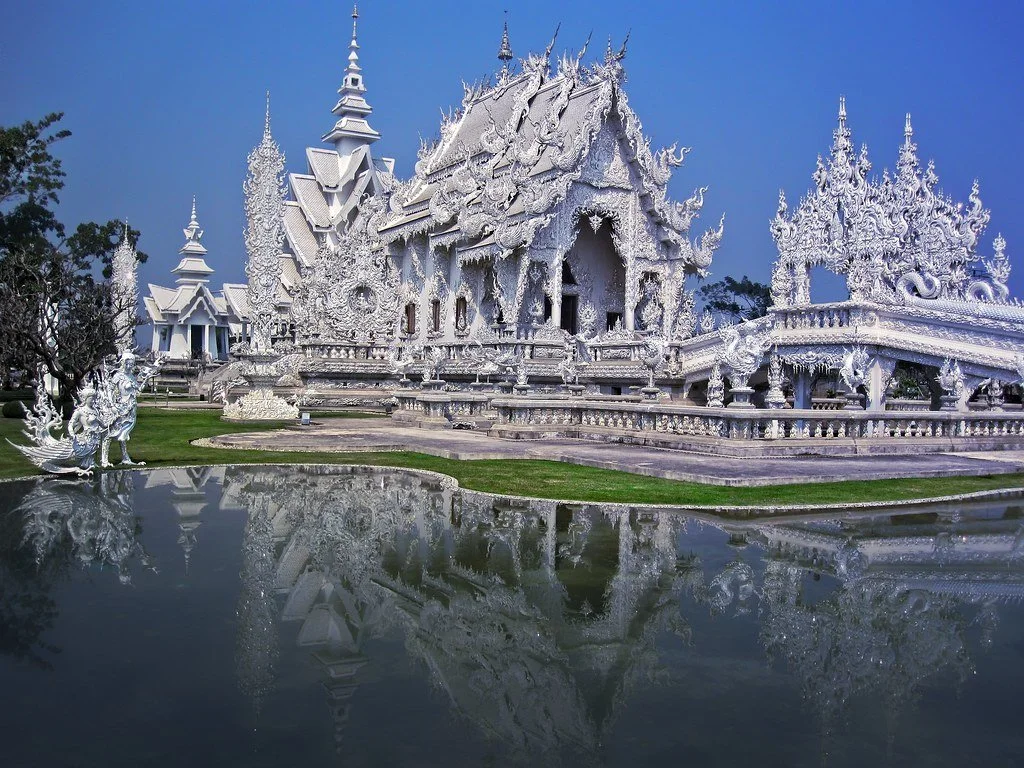
Designed by Thai visual artist Chalermchai Kositpipat, Wat Rong Khun (also known as The White Temple) was created to honor Buddha’s purity. There are many intricate details in the space, including carvings of monkeys, people and hands among other things. Today, Kositpipat has only completed three of the nine buildings he has plans for. The temple entrance cost is $1.50, Kositpipat will not accept more because he does not want large donors to influence his art. The temple is being run by a team of volunteers.
6. Las Lajas Sanctuary
Ipiales, Colombia
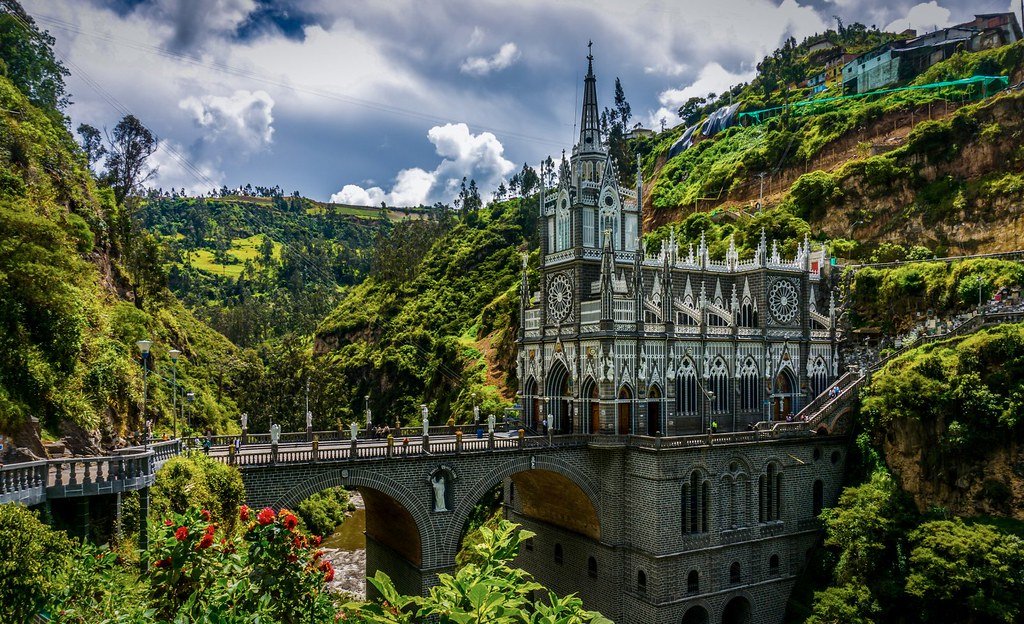
Las Lajas Sanctuary. BORIS Gt. CC BY-NC-ND 2.0
Located less than seven miles from the Ecuadorian border, Las Lajas Sanctuary sits over the Guaitara River. The Roman Catholic basilica has three iconic features. First, the bridge has statues of angels playing instruments on each side. The second is the stained glass by Italian artist Walter Wolf. Lastly, there is an image of the Virgin Mary painted on the back stone wall. The neo-Gothic basilica is surrounded by lush vegetation and was named the most beautiful church in 2015 by The Telegraph.
7. Great Mosque of Djenné
Djenné, Mali
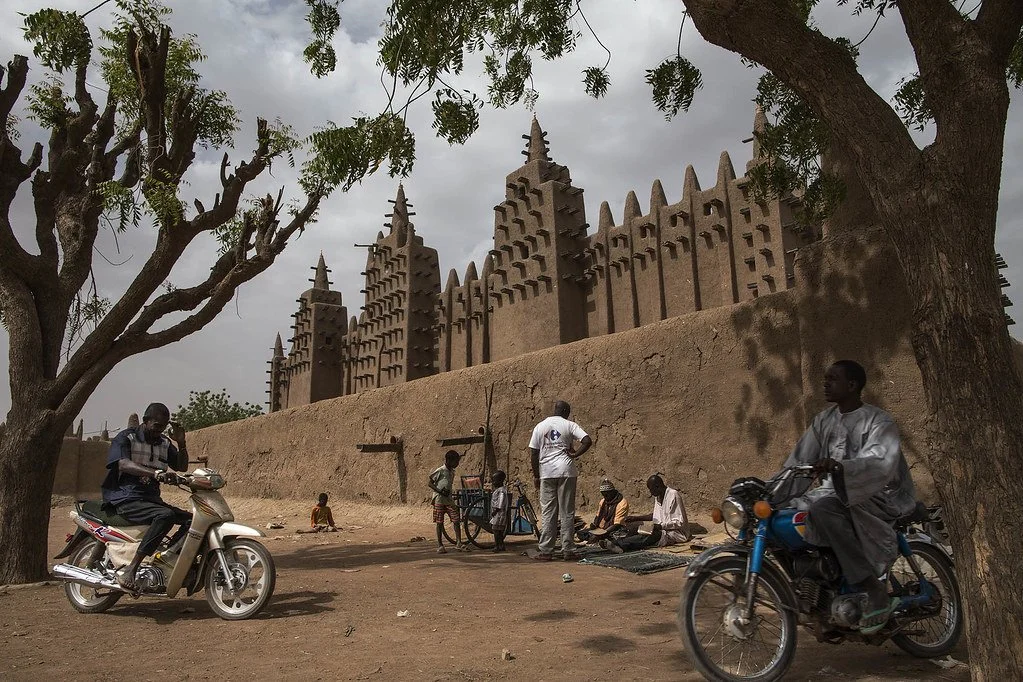
Great Mosque of Djenné. Mission de l'ONU au Mali. CC BY-NC-ND 2.0
Globally known as an example of Sudano-Sahelian architecture and one of Africa’s most famous structures, the Great Mosque of Djenné was built in 1907 from mud and brick, which needs regular replastering to keep its form. Today, the Great Mosque is a UNESCO World Heritage Site and a sacred destination for Muslims.
8. Jubilee Synagogue
Prague, Czech Republic
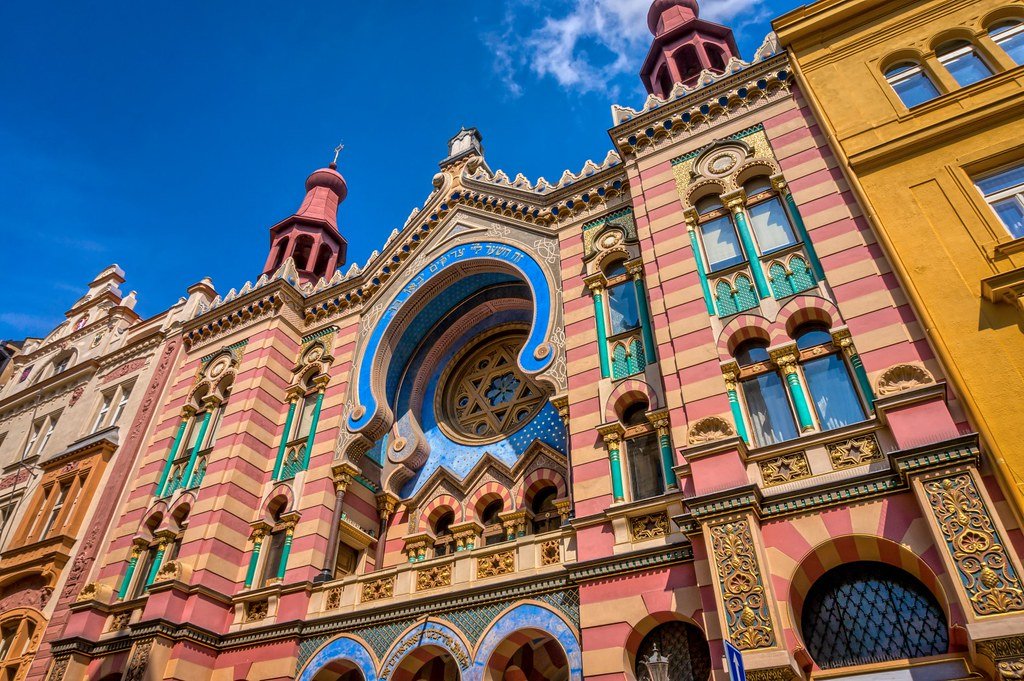
Jubilee Synagogue. BORIS G. CC BY 2.0
The colorful and intricate Jewish Jubilee Synagogue, also known as the Jerusalem Street Synagogue, was built in 1906 by architect Wilhelm Stiassny to commemorate the Emperor Franz Joseph I’s ascension to the throne. A preserved organ by composer Emanuel Stephen Peter is played for visitors. Today, it is open to the public and used for Orthodox prayer services.
9. Szeged Synagogue
Szeged, Hungary
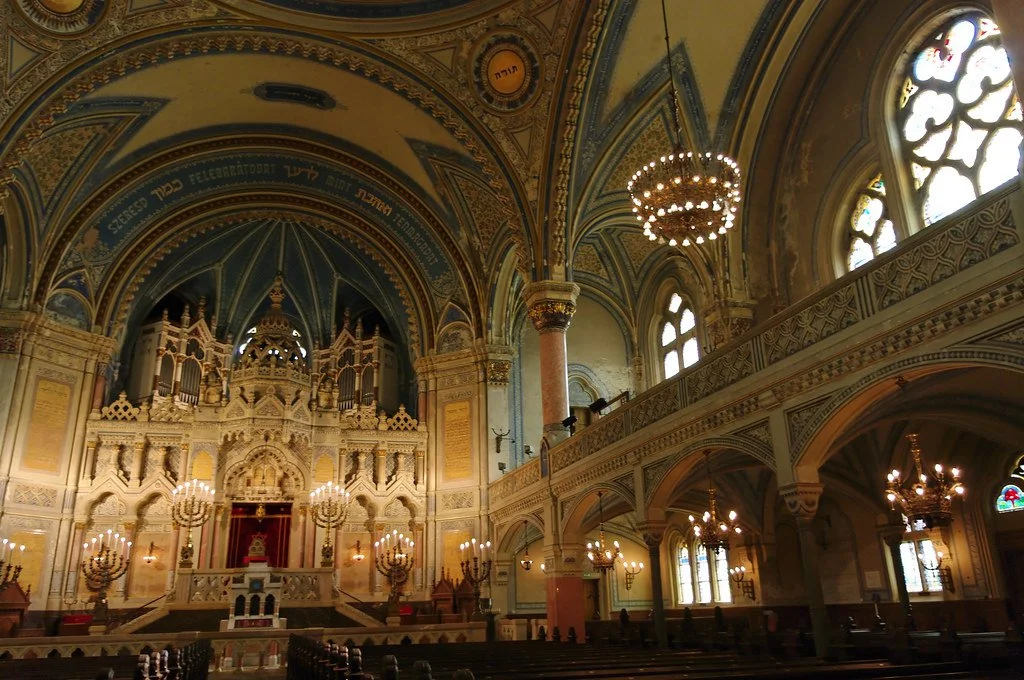
New Synagogue. Emmanuel Dyan. CC BY-NC-SA 2.0
The second largest synagogue in Hungary, Szeged Synagogue merges Art Nouveau with Gothic, Moorish, Byzantine, Roman and Baroque interior design. The sanctuary’s seating faces a Torah ark made with wood from the banks of the Nile River. The triumphal arch of the building displays the biblical commandment, “Love your neighbor as yourself" in both Hebrew and Hungarian.
10. Temple of Heaven
Beijing, China
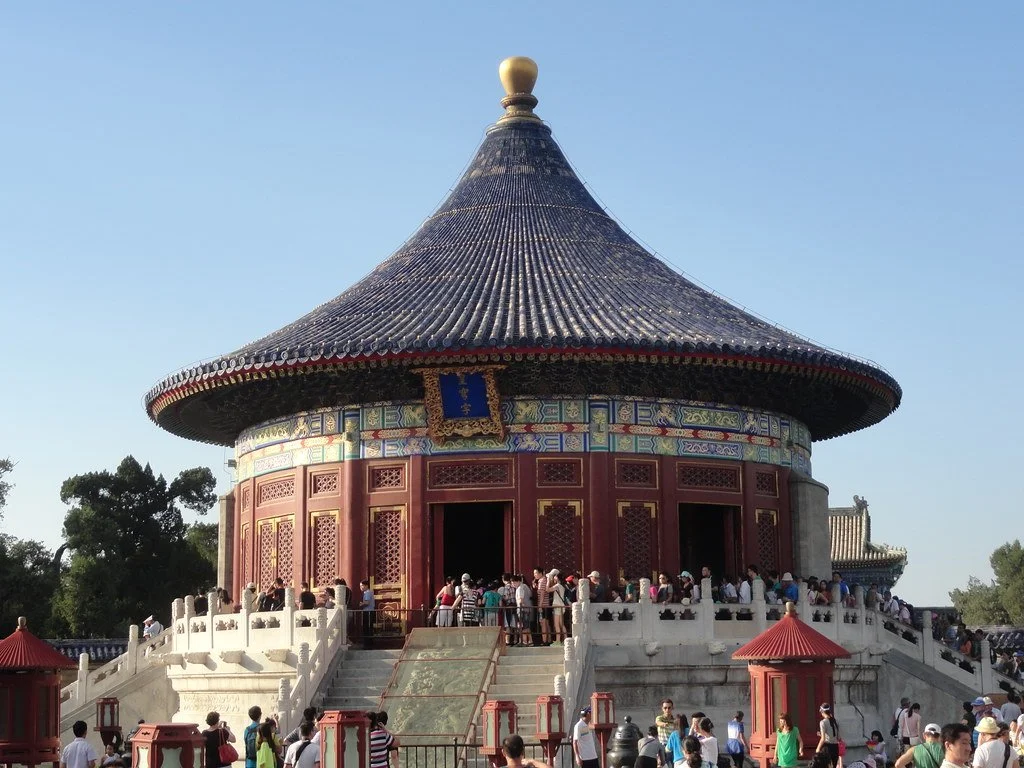
Temple of Heaven in Beijing. Fabio Achilli. CC BY 2.0
An imperial sacrificial altar, the Temple of Heaven in Dongcheng District, Beijing is considered the “supreme achievement of traditional Chinese architecture.” It is 273 acres and located in a large park, measuring 38 meters high and 30 meters in diameter, built on three levels of marble stones. It was completed during the Ming dynasty in 1420 and used to pray for harvest and for worship. In 1998, it was named a UNESCO World Heritage Site.

Jennifer Sung
Jennifer is a Communications Studies graduate based in Los Angeles. She grew up traveling with her dad and that is where her love for travel stems from. You can find her serving the community at her church, Fearless LA or planning her next trip overseas. She hopes to be involved in international humanitarian work one day.