
Visit these incredible places to see diverse wildlife, including tigers, lions, rhinos, birds and turtles.
Read MoreHow India’s Cockroach Movement is Capturing a Generation of Frustration
A word intended to dismiss India’s frustrated youth has instead become the name of a growing political movement.
Read MoreEat Like a Local in Jaipur, India
From freshly fried kachoris to lassi served in earthen cups as it has been for 80 years, the city's food traditions run deep in these 7 eating establishments.
Read MoreBarefoot College Trains Unschooled Women to Power Entire Villages
This college turns women who have never held a textbook into solar engineers who power entire villages.
Read MoreMeet the People on the Frontlines of India’s Conservation Movement
See who is redefining the narrative behind India’s vast ecosystems and conservation efforts.
Read More7 Forts in Rajasthan That Will Take Your Breath Away
From one inside a tiger sanctuary to another where 4,000 people still live, these are the most memorable forts in Rajasthan, India.
Read MoreWhere Traffic Meets Trafficking: Inside India’s Child Begging Rackets
Children are being kidnapped, maimed and drugged as trafficking networks force them onto India's streets to beg.
Read MoreThe Indian Dowry Death: A Commodified Marriage and Clandestine Death
Despite continued legal action barring the practice, thousands of Indian women die each year as dowry-giving practices evolve.
Read More7 Climate Activists Under Age 35
While Greta Thunberg may be the most well-known young climate activist, here are 6 more from around the world.
Read MoreTruth in Fiction: Understanding India’s Class Struggle Through “The White Tiger”
The 2008 Booker Prize recipient, Aravind Adiga, and his book “The White Tiger” highlight and critique the reality of social disparity in India.
Read More7 Must-See Sites in India's Golden Triangle
Experience historical sites, architectural wonders, natural landscapes, lively markets and unique cuisine in Jaipur, Delhi and Agra.
Read MoreKashmir’s Climate Crisis: Where Environmental Stress Meets Political Tension
As glaciers melt and weather patterns shift, Kashmir and surrounding regions face increasing risks to water, agriculture and peace.
Read MoreDhobi Ghat: The World’s Largest Open-Air Laundry
This massive outdoor wash yard continues to serve Mumbai’s hotels, hospitals and homes after more than a century of operation.
Read MoreCartoonists Under Fire: The Fight for Free Expression in India
Political cartoonists in India are facing legal threats and online abuse for criticizing the government, revealing how satire itself is now under siege.
Read MoreNorth-East India’s Women-Only Market
Manipur’s Mothers’ Market is a world of resilience and resistance, where tradition, activism, and community converge in unexpected ways.
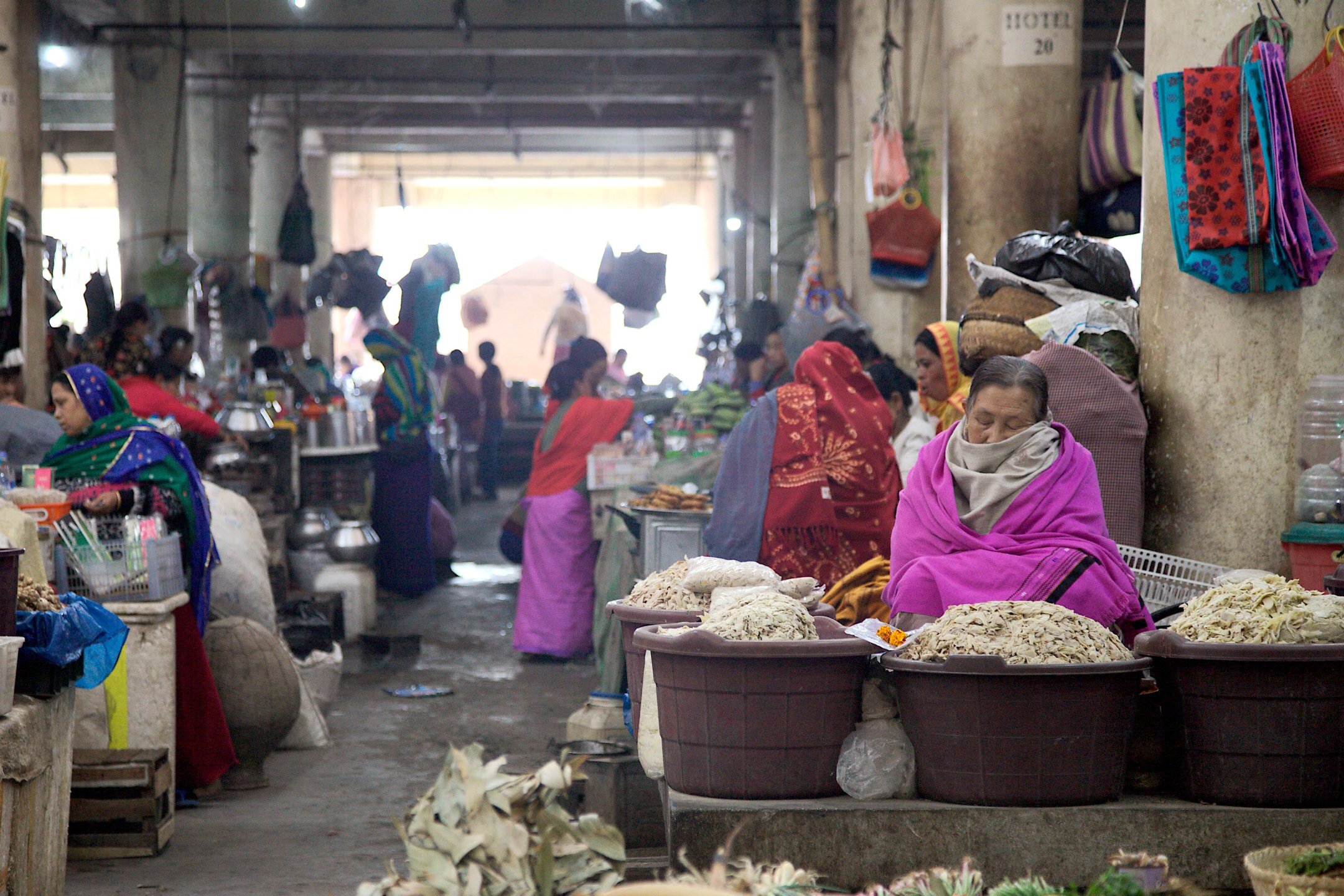
I decide on the Ima frying whiteish dough balls over a stand-alone stove and gas canister. ‘Aloo,’ she smiles and gestures to the wooden bench next to a young man slurping a leafy soup. Seconds later, this plump woman serves me a lunch of grilled fish, unidentifiable green veg, those fried potato balls, banana leaf, rice, and then, despite my protests, several second helpings.
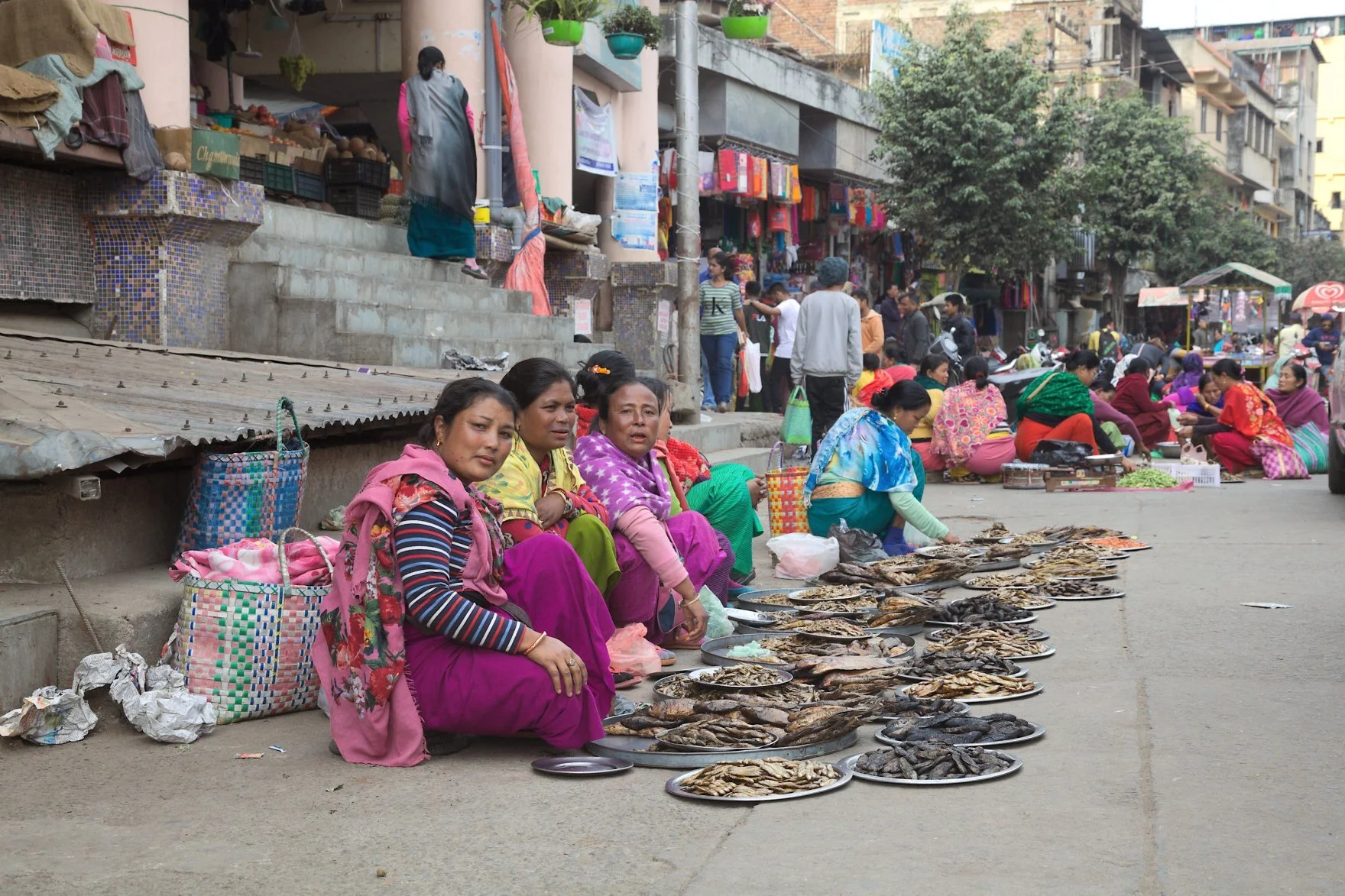
The Imas are lined up behind their gas stoves, enticing the locals with their jokes and salty fish dishes. Sitting opposite, in front of stacked ceramic pots, are two more, warming their hands over the burning embers of a square metal pot. My host, Suporna Devi, is one of over 4000 women who congregate daily, in Ima Keithel, Manipur’s main market, selling everything from temple paraphernalia to locally-caught eels.
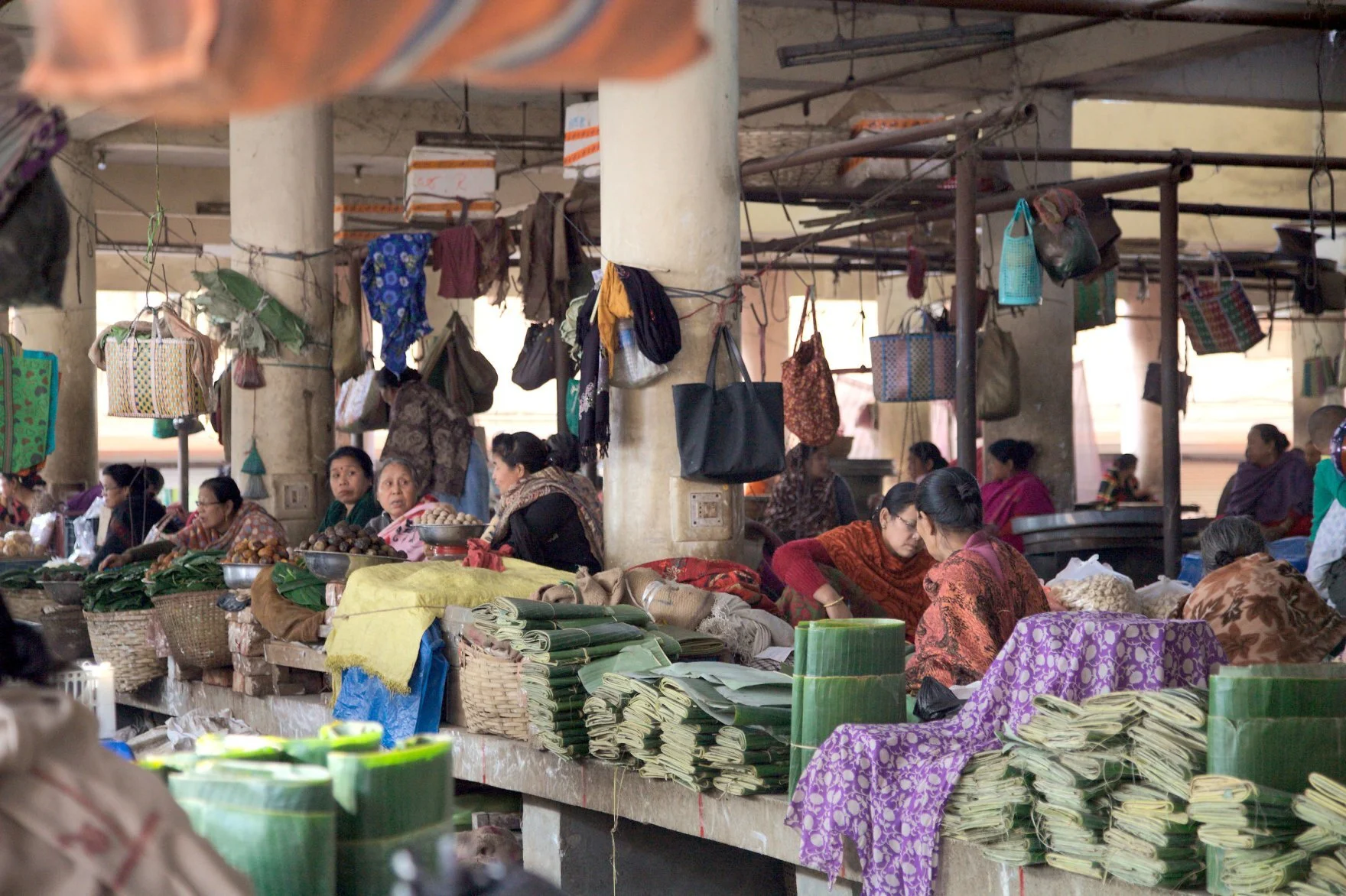
But, unlike the rest of India, here men are forbidden from trading. Passed down the generations, a stall at Ima Keithel, meaning ‘Mothers’ Market’, is highly coveted and provides the local Imas with an important source of income. Spilling out of the market buildings, encroaching on the roads, under the concrete flyovers, women are everywhere, selling produce. Some are eating, some reading, some sleeping. Many are chatting.
Believed to date back to the 16th century, the origins of Ima Keithel are unclear. Sandwiched between Myanmar and the Indian state of Assam, Manipur has long been forced to fight the Burmese and Chinese to retain its autonomy. A forced labour system, called Lallup Kaba, sent the men far from home to fight these wars, leaving the women at home to cultivate the land and sell the produce, possibly fostering this peculiar phenomenon.
For thousands of years Manipur remained an independent kingdom and a crossroads of trade and cultural exchange until it was conquered by the British in 1891. The golden, oval valley fringed by misty blue hills was famously called ‘the Jewel of India’ by India’s first prime minister. It is home to a diverse mix of tribes, who ethnically share more with groups in Burma than with the rest of India. Several hard day’s travel from Delhi, Manipur feels like a faraway land compared to India I’ve come to know; somewhat familiar, but yet not. A unique language and alphabet add to my disorientation.
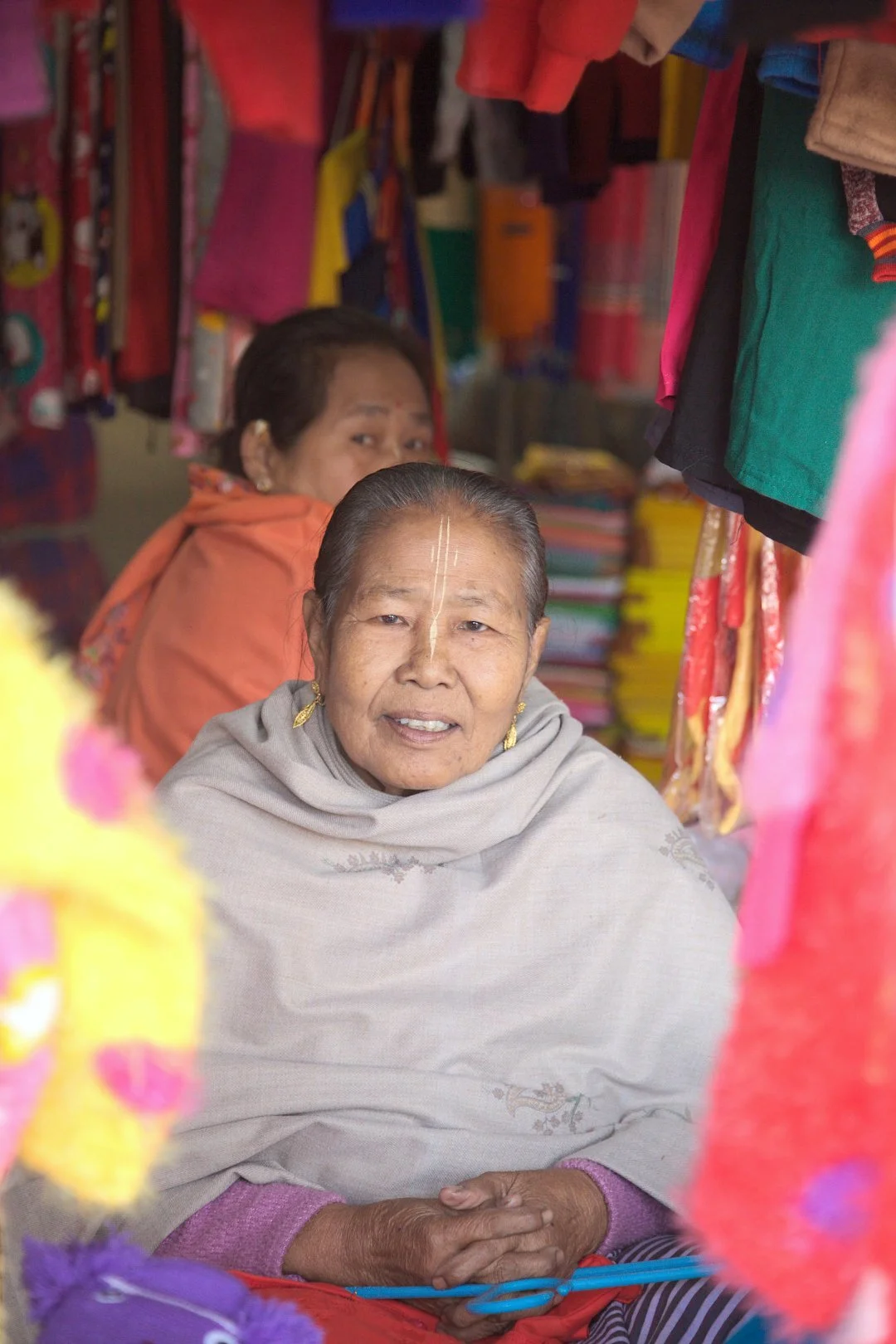
The two large market buildings sit in the commercial heart of Imphal, a dusty, grey city, home to as many motorbikes as people. Mornings see the city enveloped in a heavy, December mist, which she usually manages to shed by lunchtime. Most ladies are sitting under bright shawls: many baring two pale vertical lines on their foreheads, meeting on the nose: the mark of local Hindus. I feel the weight of eyes as I circle the floor. But smiles are soon reciprocated with smiles, and many proudly remove their glasses to strike a poise for my camera. Before long, I fall foul of the sly sales pitch of an unassuming mother and daughter. Several tea-towels later, I note to myself this is still India.
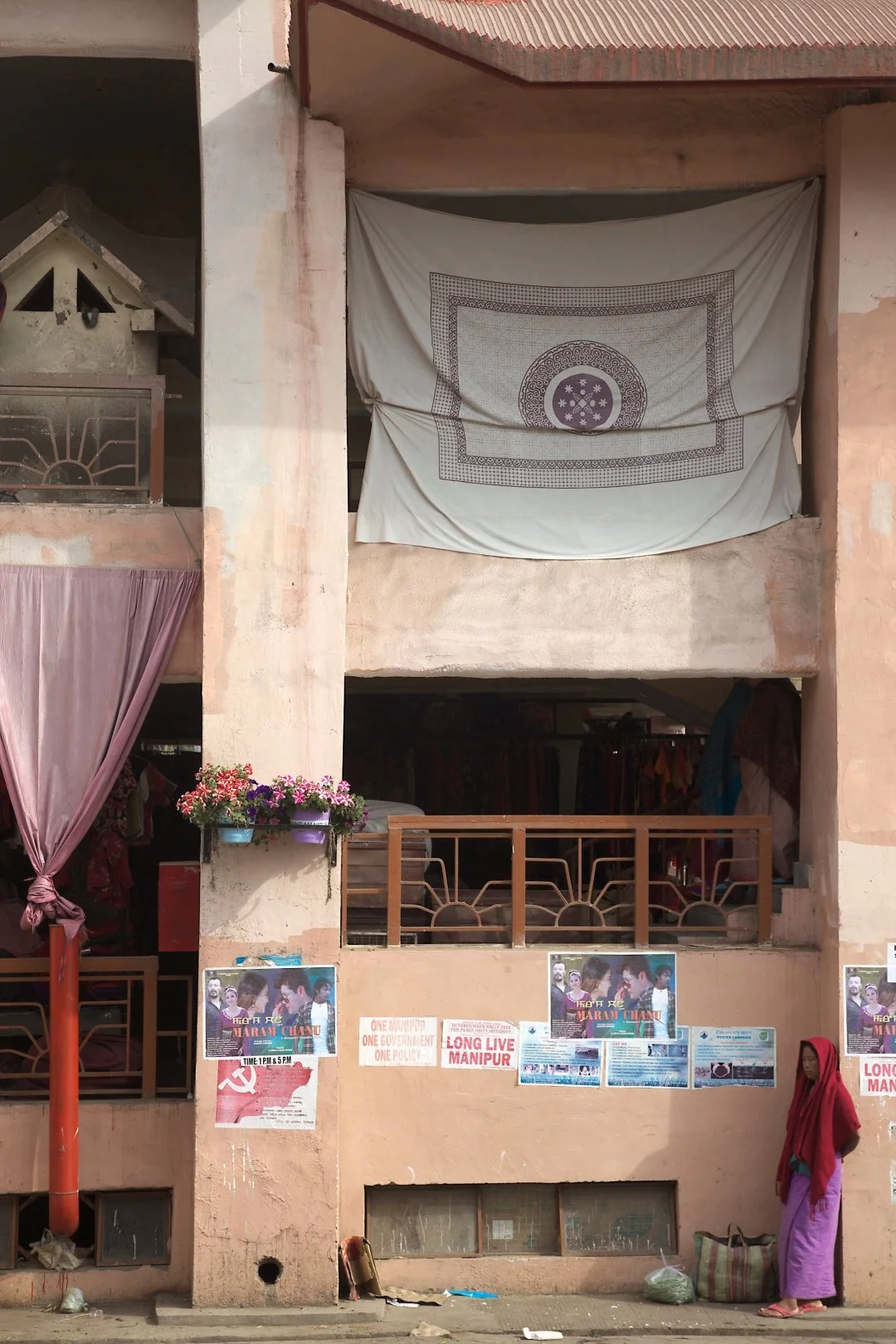
When I reach Suporna Devi’s stall, I am thankful for the rest, and we are soon conversing, in a broken fashion, through Hindi, her third language. She has worked here for over 20 years, she tells me, inheriting the pitch from her aunt. Pointing to a poster, emblazoned with hammer and sickle, she exclaims, “this is not just a marketplace, but also a place of protest!”
The revolutionary slogans spray-painted to the outer walls point to a more complex story, and I have started to research Manipur’s matriarchal society. Since at least the early 20th century, the Manipuri women have been wielding a strong influence over political and social matters of the state, with Ima Keithal at the centre of the movement. The market developed as a place not only of trade, but as a centre for gathering, a source of the latest news, a place to discuss ideas. The mothers of Ima Keithel started credit unions, lending to women who wanted to started businesses, and mentored them in the process.
As she ladles yet more rice onto my plate, Suporna suggests I visit the Nupi Lal (Women’s War) monument in another part of central Imphal. This is a memorial to Imas who fought the British rulers in the 1930s over attempts to export local rice to British battalions in other territories. Locally rice became scarce, the price spiralled and the Manipuris began to suffer. The Imas protested, peacefully, but were met with attempts to sell the market buildings. They refused to relent and eventually military and police forces were unleashed against the unarmed females. Although the export policy was eventually repealed, many women lost their lives in the struggle.
During the Second World War, Manipur became a battleground for the war between the British and Japanese: this part of India is scarred with war graves. With the independence of India, a ravaged Manipur was absorbed into the new country, unleashing a seemingly indefinite cycle of violence and insurgency as anti-Indian and ethnic groups fought over differing visions for the state’s future. From 1980 until today, most of the state has been classified as a ‘disturbed region’ by the Indian government, a ruling designed to give the Indian Army additional powers to help them maintain public order. In practice, it has granted them immunity from prosecution for a range of heinous crimes.
Despite the departure of the British, for the Imas of Manipur, the oppression continues and their imaginative responses evolve. From torching liquor stores and fining drunk men, to protesting, naked, outside an Indian army base against a case of rape and murder by the armed forces, their actions are undoubtedly radical in a country where the majority of women have little say in domestic or societal affairs. Today, they are continuing to hold out against the talons of globalisation: recent attempts by the local government to replace the market with a modern supermarket were derailed by round-the-clock sit-ins by the Imas. Again they succeeded.
After a few days of loitering around Imphal, chatting and drinking chai, I decide it is time to leave the Imas. Several check where I am going, who with, and most importantly, have I eaten yet? I gesture to the fish section at the back of the market and they nod approvingly. After my last meal, I ask Suporna if she enjoys her work in the market. She smiles and says, “This is not just my work. This is my life.” I tell her I am leaving. “Vapis ana,” (come again) she says, and goes on frying her potato balls. I heave on my backpack and head for the bus.
How to get there: I took the bus from Guwahati, Assam. It was an uncomfortable, although beautiful journey that crossed through the hills of Nagaland on the way. There are also direct flights from Delhi, Calcutta and Guwahati. Imphal makes a convenient stop if travelling overland from North-East India into Myanmar through the recently opened Moreh-Tamu border crossing.
Where to stay: The Hotel Nirmala has decent rooms starting at 850 INR. Aheibam Homestay is a good budget option.
Where to eat: The stalls of Ima Keithel, of course. And the Luxmi Kitchen does a mean thali.

Eileen McDougall
After a decade working in London, Eileen swapped flashy buildings for a notepad and camera and set off for Asia. She fell in love with India, and it was here she started to write about her travels and the culture she was becoming immersed in. She is at her happiest on a bus alone heading off to somewhere new but seems to spend most of her time near mountains, mainly the Himalayas.
Redefining Tourism in India
A Canadian shares the untold story of ecotourism in India’s state of Meghalaya.
Read MoreMeet the Women in Pink Saris Fighting Gender Discrimination in India
Pink sari-wearing and bamboo stick-wielding feminists are fighting against a culture of rape and gender inequality in India.
Sampat Pal Devi, founder of the Gulabi Gang. Iecercle. CC BY-NC-SA 2.0
India’s rape crisis was brought to light back in December 2012 when a 23-year-old female student was raped and beaten to death by five men and a teenage boy. Protesters flooded India’s capital of New Delhi and forced authorities to seek the death penalty for the perpetrators. But the crisis lingers as cases of rape and neglect by corrupt government officials still plague India, especially in rural areas.
Approximately 70% of India’s population lives outside of major cities in the rural areas where it is even harder to seek out justice in the name of the law. Uttar Pradesh state is notorious for its high rate of sexual violence against women, even being named the “rape capital of India.” According to the National Crime Records Bureau, crimes against women in Uttar Pradesh increased by 20% from 2016 to 2019.
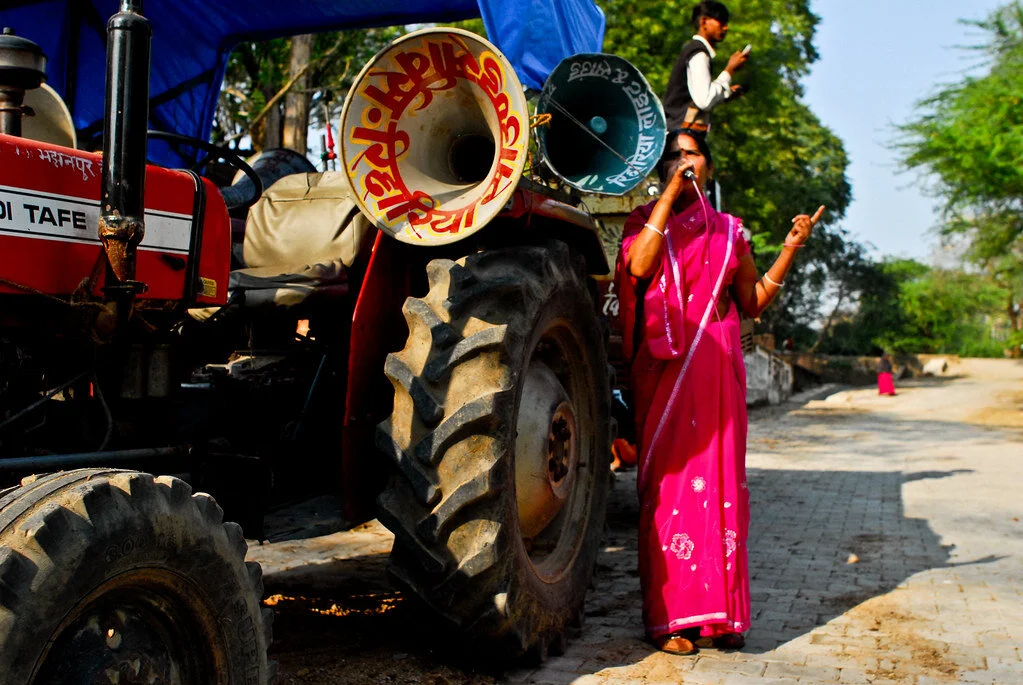
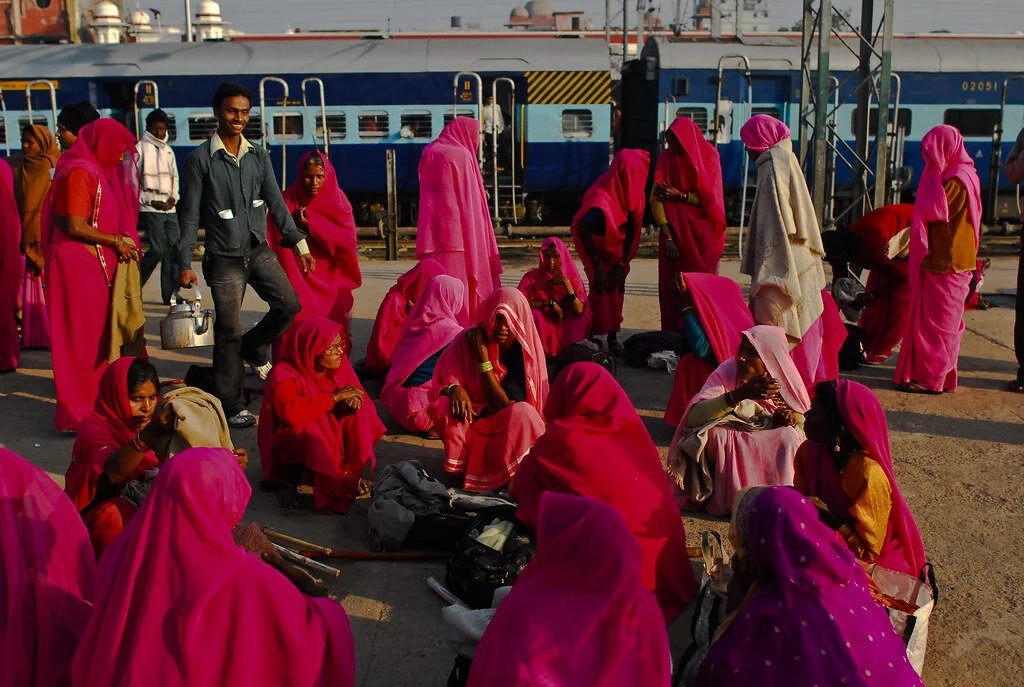
But there is hope for Uttar Pradesh, and it comes in the form of women wearing hot pink saris and wielding large bamboo staffs called lathis. Sampat Pal Devi is the founder and was the first leader of the Gulabi Gang, which translates to the “Pink Gang.” Their pink saris represent sisterhood and unity as they come together in droves to fight corruption and to ensure the basic rights of women and poor people in rural areas.
Devi’s story began when she was a single woman living in Uttar Pradesh’s Banda district and witnessed a man savagely beating his wife. She attempted to help, but he beat her as well. She returned a few days later with five other women and beat him with lathis. The story quickly spread throughout the town and more women came to Devi for help. In 2006, after the selection of the pink sari as their uniform, they officially established the Gulabi Gang. Their initial intention was to punish abusive men and combat domestic violence, but it has expanded into a much larger movement of feminism. The Gulabi Gang now fights for socioeconomic, cultural and political equality in order to enhance the basic skills of women to develop confidence and protect themselves from abuse through sustainable livelihoods.
Gulabi Gang resting during a protest. Iecercle. CC BY-NC-SA 2.0
Fast forward 14 years since its establishment and the Gulabi Gang has grown exponentially. Almost 100,000 women and men have banded together to join what is now a mass movement in northern India. In an interview with Vice News, Devi stated that, “The purpose of the Gulabi Gang was to unite women, because until women unite, we will never get what we believe are our rights.” She spent a great deal of her time intimidating and shaming government officials into making the correct choices and abiding by the law.
Although she made many achievements, Devi was removed from her position as leader of the Gulabi Gang for alleged self-promotion at the cost of the organization’s mission. Her removal caused quite a stir until the group’s assistant commander, Suman Singh Chauhan, was elected as its next leader. Even with the change in leadership, the Gulabi Gang stands strong as the organization continues to emphasize its mission.
The Gulabi Gang not only leads and protects but also teaches women a variety of skills necessary to be independent. Through its website, the group has raised enough money to build a school in an impoverished area. In the school, girls learn how to sew in order to earn money and delay the chance of their parents marrying them off. The group’s leaders teach new members how to defend themselves with lathis in free self-defense courses. Finally, they teach the world that through common sense and compassion one can start a revolution, even when the soldiers are wearing pink.

Yuliana Rocio
Yuliana is currently a Literature/Writing major at the University of California San Diego. Yuliana likes to think of herself as a lover of words and a student of the world. She loves to read, swim, and paint in her free time. She spent her youth as part of a travel-loving family and has grown up seeking adventure. She hopes to develop her writing skills, creating work that reflects her voice and her fierce passion for activism.
What India’s Successful Moon Landing Means for Space Exploration
India is now the fourth country to land on the moon, and its lunar rover is making some big waves in space exploration.

The Chandrayaan-3 lunar exploration craft was launched from the south of India on July 14. Sky News. CC BY-SA-NC 2.0
On August 23, the Indian Space Research Organization (ISRO) landed its Chandrayaan-3 craft near the moon’s south pole, marking both the country’s first ever moon landing and the world’s first on that specific lunar region. Not only has this achievement finally placed India among the ranks of other space exploring nations, but has also made it one of only four countries to land a craft on the moon. The location of the craft’s landing near the unexplored south pole is significant given the multiple failed attempts by other nations to do just that in the past and stake a claim to lead future research in the area. Chandrayaan-3’s successful landing will hopefully cement the credibility of the ISRO on the international playing field and allow for continued collaboration with other foreign space agencies. During its two-week lifespan, the rover investigated the existence of frozen water deposits beneath the surface of the moon, and has made a number of surprising discoveries that orbiting crafts were unable to.

A digital rendering of the Chandrayaan-3 craft and its lunar rover. NDTV. CC BY-NC 2.0
While India’s space program was first established in 1962, it took another decade or two for the ISRO to really pick up steam. Many of the first projects involved sending satellites up into Earth’s orbit in order to map and survey the country from above, bringing telemedical and communication services to communities in remote regions. Chandrayaan, a Sanskrit term meaning “mooncraft,” is the name of India’s lunar exploration program, which made its debut between 2008 and 2009 with the Chandrayaan-1 lunar space probe, which found water deposits on the moon using various mapping techniques and reflection radiation. The next craft, launched in 2019, was comprised of an orbiter, moon lander and rover, and was actually intended to be the first to land on the south pole of the moon, but after successfully entering lunar orbit, the ISRO lost communication with the landing craft and rover before touchdown.
Chandrayaan-3 is therefore the culmination of more than a decade of scientific research and technological development and is undoubtedly the crown jewel in India’s space program. The probe was launched on July 14 from Sriharikota Range, the country’s largest launch site located in the southern state of Andhra Pradesh, and successfully touched down on the moon on August 23. Unlike its recent predecessor, the Chandrayaan-3 traveled without an orbiter module, further cementing its intention to land on the moon and conduct experiments in situ. Additionally, while this craft was unambiguously an Indian project and creation, some of the technology on board resulted from various collaborations between the ISRO, NASA and the European Space Agency (ESA), proving once again the importance and benefits of scientific collaboration.

Students in India watch a video explaining the lunar mission. Al Jazeera. CC BY-NC-ND 2.0
Aside from proving that landing on the south pole of the moon is indeed possible, the information sent back by the Chandrayaan-3 rover has already resulted in some groundbreaking discoveries about the moon. One such finding has to do with understanding the temperature of lunar soil, an important factor when considering building long-lasting structures or even settlements on the moon. The Indian rover is equipped with a temperature probe that can reach nearly four inches (10 cm) beneath the surface, and found that the temperature drops 140ºF (60ºC) at a depth of just roughly 3.14 inches (8 cm). This has provided an updated and more accurate reading as compared to the data currently in use from NASA’s 2009 Lunar Reconnaissance mission, which lacked precision because it was an orbiter and therefore not actually on the lunar surface. Another interesting discovery took place in the form of a series of strange vibrations detected by the rover’s seismograph: scientists have suspected it as being a minor moonquake, although further exploration and longer-term observations would need to confirm this.
While these scientific discoveries are of course extremely significant and promising for the future of lunar exploration and research, the Chandrayaan-3 project also set a historic precedent in terms of the budget they used to complete this mission. The ISRO has a long held reputation amongst international space research circles for their ability to work on limited funds, at least compared to other major space exploration agencies. NASA, for example, has a $25.4 billion budget for the current fiscal year, while the ISRO received a measly $1.5 billion from the Indian government for the fiscal year ending this March by comparison. If that wasn’t enough, the ISRO actually spent 25% less than what it had been allocated. The Chandrayaan-3 mission cost a total of $74.3 million USD, ironically less than half of the budget that director Christopher Nolan had to make Interstellar, his award winning film about space travel.

The actual Chandrayaan-3 craft before it was launched into space. The Week. CC BY-SA 2.0
In addition to finally taking its place amongst the other lunar landing nations, Chandrayaan-3 has opened countless doors for both the ISRO and the space exploration community as a whole. Going forward, the example that this mission has set with regards to the resources it used as well as through the international collaboration it benefitted from. The moon’s south pole has now been unequivocally proven accessible and investigable, new information about lunar composition has been brought to light, and like all other missions into space, has helped to deepen our understanding of both the universe and ourselves.

Tanaya Vohra
Tanaya is an undergraduate student pursuing a major in Public Health at the University of Chicago. She's lived in Asia, Europe and North America and wants to share her love of travel and exploring new cultures through her writing.
An LGBTQ+ Wedding in India Challenges Sikh Tradition
Criticism of a same-sex Indian wedding in Punjab inspires advocacy for LGBTQ+ rights.
LGBTQ+ Protest in India. Ramesh Lalwani. CC BY 2.0
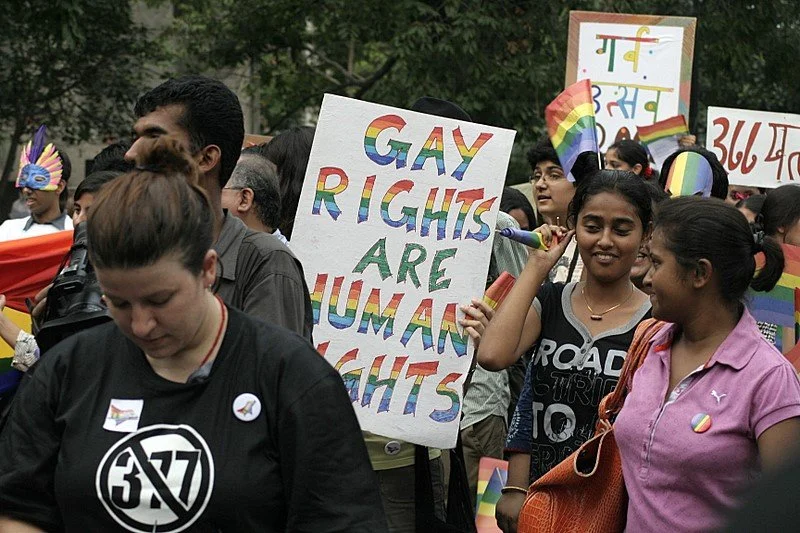
On 18 September, Dimple and Manisha — a same-sex couple — were married in a Sikh temple in the northern state of Punjab, India. Currently, same-sex marriages are not recognized by the Indian legal system because of the country’s laws that define marriage as the union between a man and woman. Because of this, the wedding has been declared, “unnatural and contrary to Sikh ethics,” by priest Giani Raghbir Singh, despite adherence to all the traditional Sikh rituals between a bride and groom. The event has made headlines in the northern state of Punjab, where it has resonated with those advocating for LGBTQ+ rights.
The wedding has been criticized by some religious leaders who believe that despite a commitment to Sikh traditions, the union is ultimately a “severe moral and religious violation.” This has sparked controversy with LGBTQ+ activists who, in the last decade, have made significant advances in extending LGBTQ+ rights. In 2018, India’s highest court overturned the criminalization of same-sex relations, a major milestone for the LGBTQ+ community that helped to reduce both legal and social discrimination. However, the central government still remains opposed to same-sex marriage, and is supported in this by many of the country’s major religious lobby groups — Hindu, Muslim, Christian and Sikh. Important Sikh religious leaders in the past have described homosexuality as, “against the Sikh religion,” and “totally against the laws of nature.”
Echoing these beliefs, Sikhism’s highest priest, Giani Raghbir Singh, found that the union between the two women was in violation of the religious code of conduct. Priest Hardev Singh, who conducted the marriage, has been removed from his position and may face more punitive measures for his involvement. However, Dimple, as a practicing Sikh, insisted he marry following Sikh rituals. The couple had a traditional wedding; Dimple dressed in traditional Sikh garb with customary flowers on his turban while Manisha wore a tunic, salwar bottoms, a silk scarf and red bangles. Because of the dedication of the couple to being married in a traditional Sikh ceremony, the reaction that they’ve received has left a bit of a blurred line between whether there is opposition to the LGBTQ+ community or traditions that it deviates from.
The overturning of section 377, a colonial-era law that categorized gay sex as an “unnatural offense,” was been most contested by religious groups. The judges involved in overturning this judgment have made statements reading that, “Criminalizing carnal intercourse is irrational, arbitrary, and manifestly unconstitutional,” while religious organizations have found the ruling to be shameful. Similar to India, Uganda has similar laws that date back to the colonial period. More recently, Ugandan president Yoweri Museveni signed the Anti-homosexuality act criminalizing same-sex conduct, which punishes offenders with life imprisonment or the death penalty for “aggravated homosexuality.” At All Saints’ Cathedral in Kampala, homosexuality is viewed as a sin that is against the “order of God.” Museveni, rooted in his Anglican faith, says the law prescribes rehabilitation for homosexuals to change their sexual orientation. Unlike Uganda, India appears to be more progressive in its approach to LGBTQ+ rights, especially in the marriage of Dimple and Manisha. Their wedding has not been deemed a felony, and although it is being investigated on the basis of religious violations that may invalidate the legitimacy of the marriage, the couple will not be condemned to prison or death.
Currently in the process of hearing arguments in favor of same-sex marriage, India has seen petitions regarding the Special Marriage Act of 1954. This act was amended to allow for marriage between couples from different castes or religions and petitioners have argued that it can be extended to LGBTQ+ citizens. However, the Modi government still argues that same-sex marriage represents an “urban elitist view” and has to keep in mind the views of religious denominations before making a decisive decision. The influence of religious traditions in India has been a significant factor contributing to the issues faced in the process of legalizing some LGBTQ+ rights, highlighting the indistinct line drawn between beliefs and social progress.

Mira White
Mira is a student at Brown University studying international and public affairs. Passionate about travel and language learning, she is eager to visit each continent to better understand the world and the people across it. In her free time she perfects her French, hoping to someday live in France working as a freelance journalist or in international affairs.
Filming "Beyond the Surface" in India
“Unite those with positive minds and compassionate hearts and good things happen…” I thought to myself, after meeting Emi Koch in San Diego and chatting with Crystal Thornburg-Homcy about her idea to make a unique surf film in India.
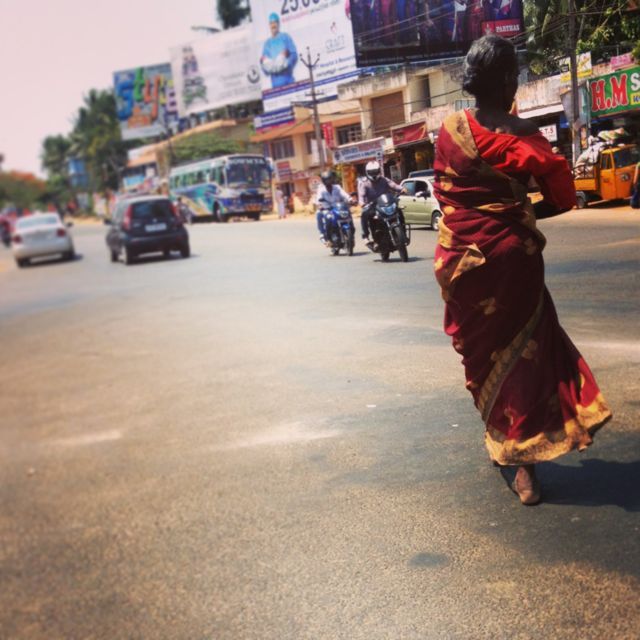
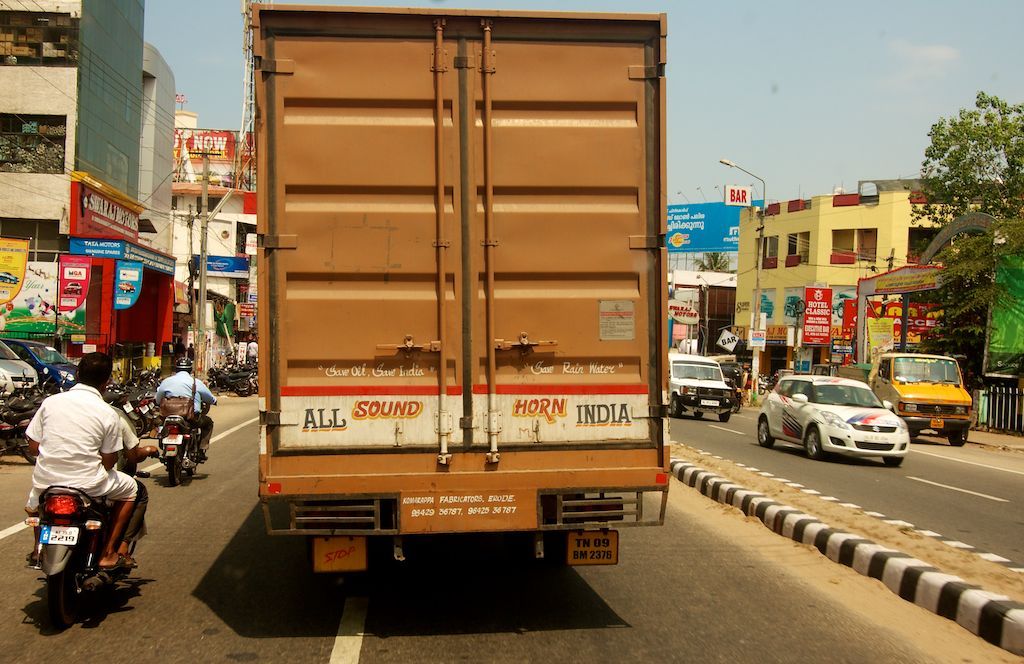
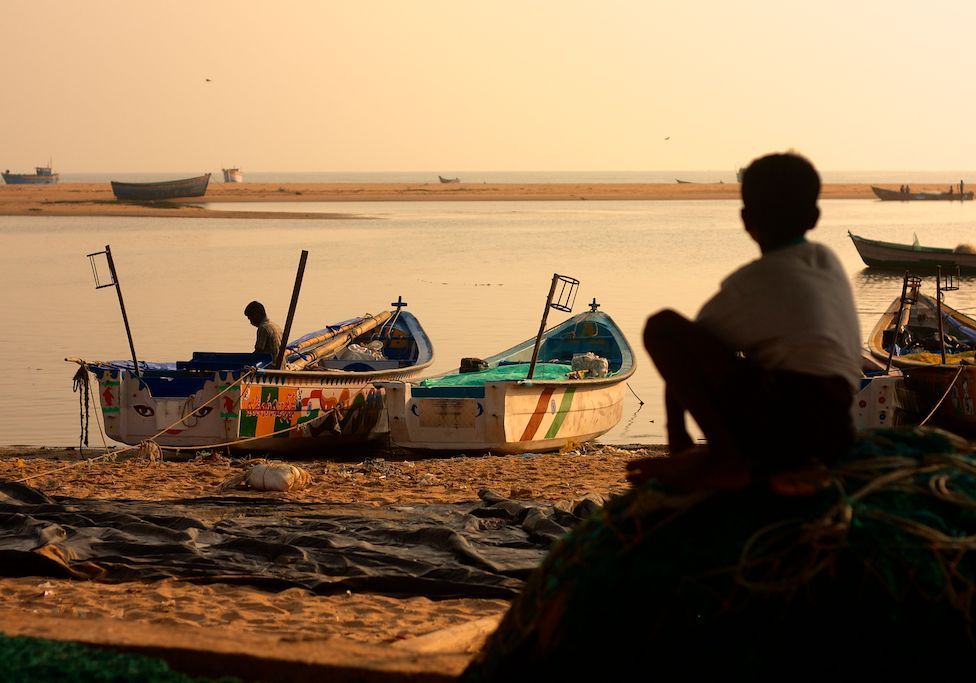
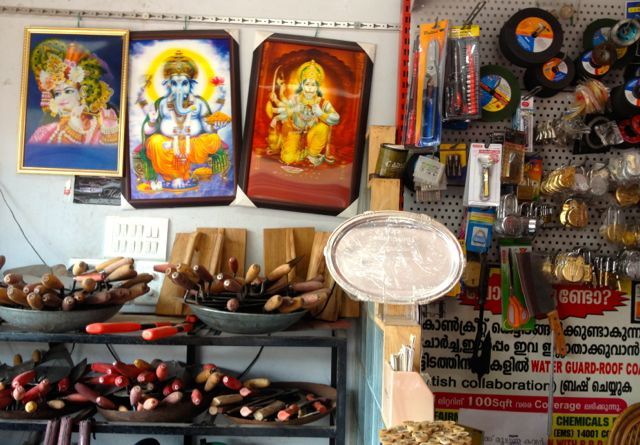
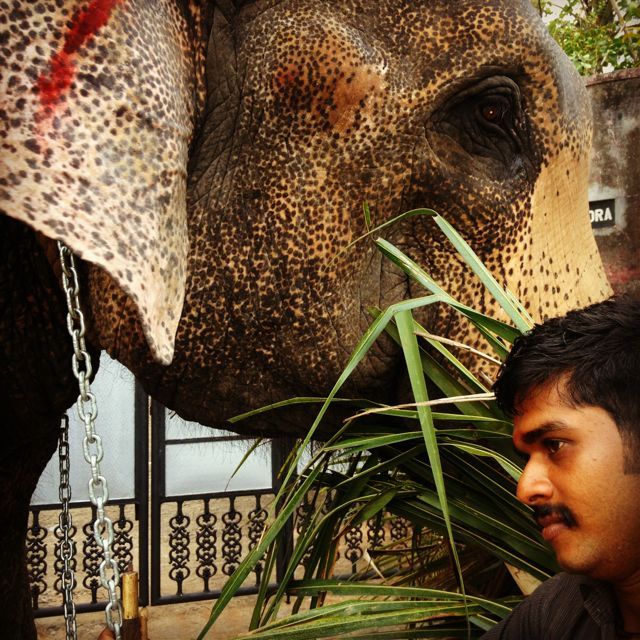

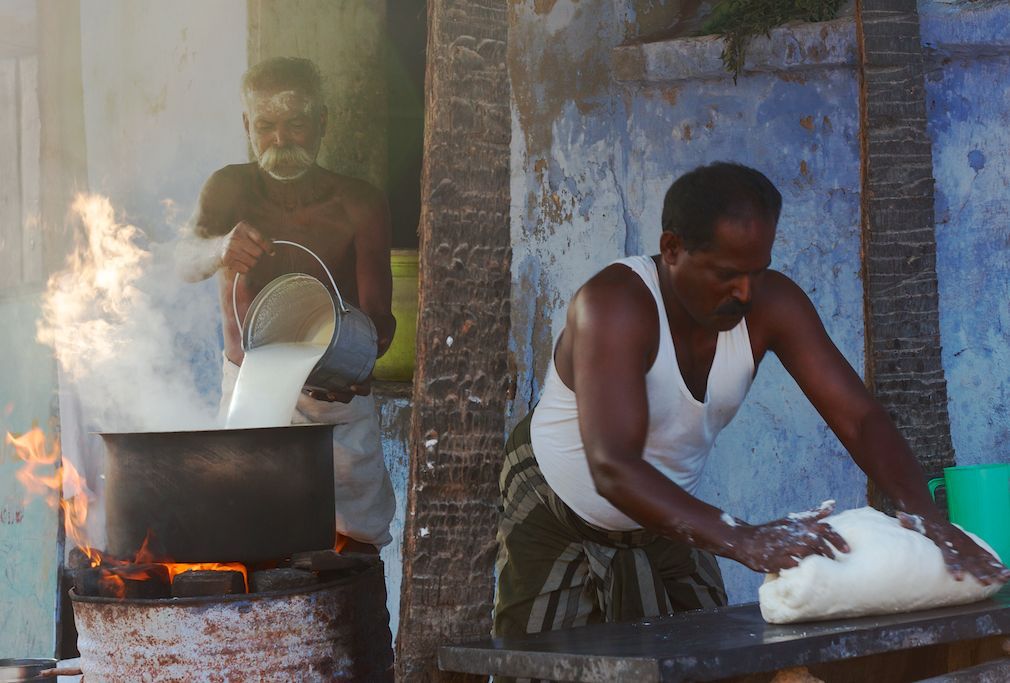
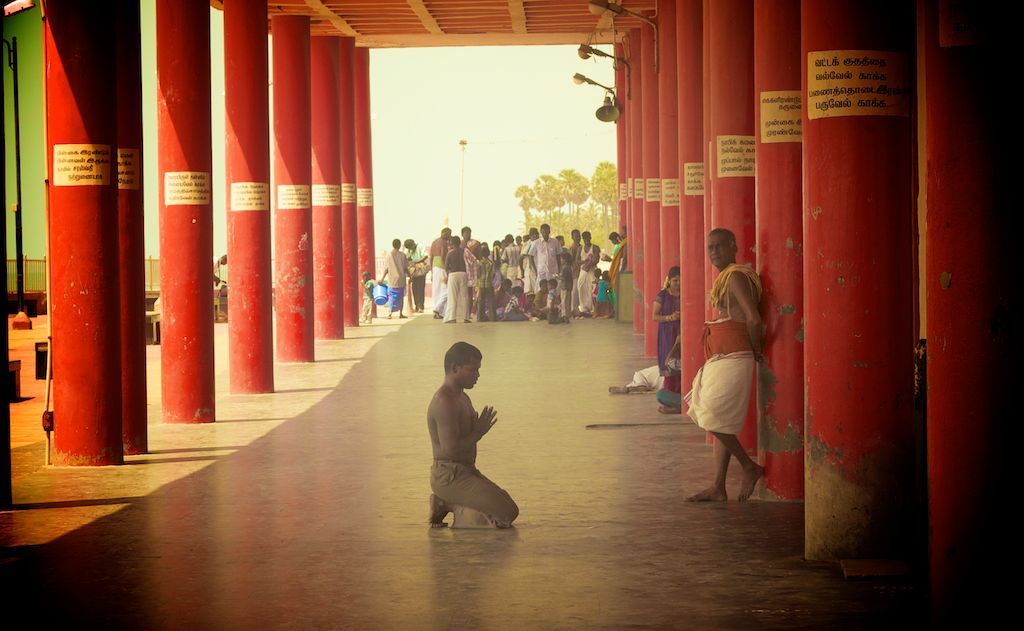
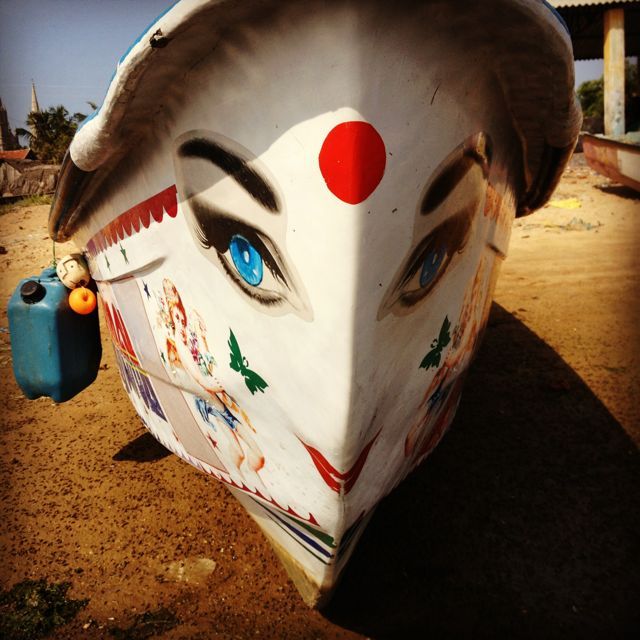
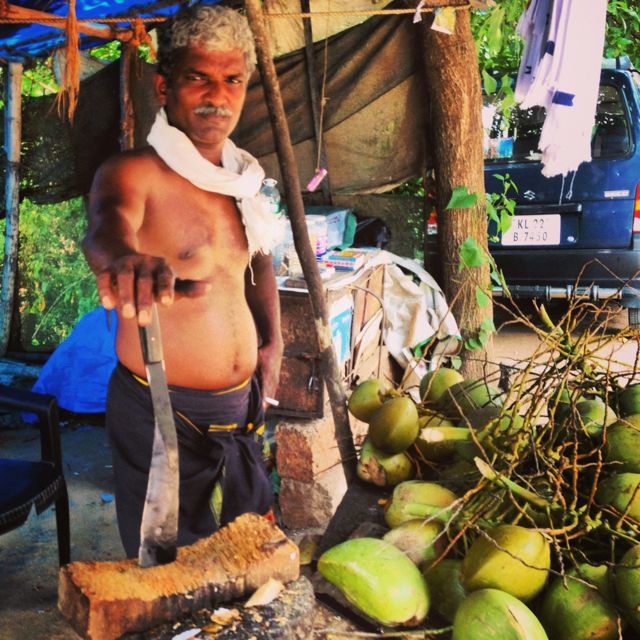
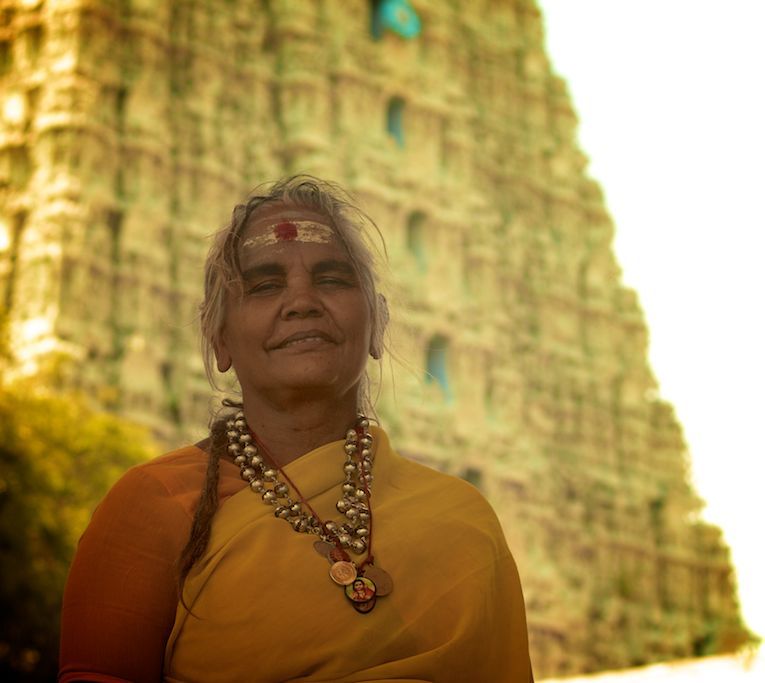
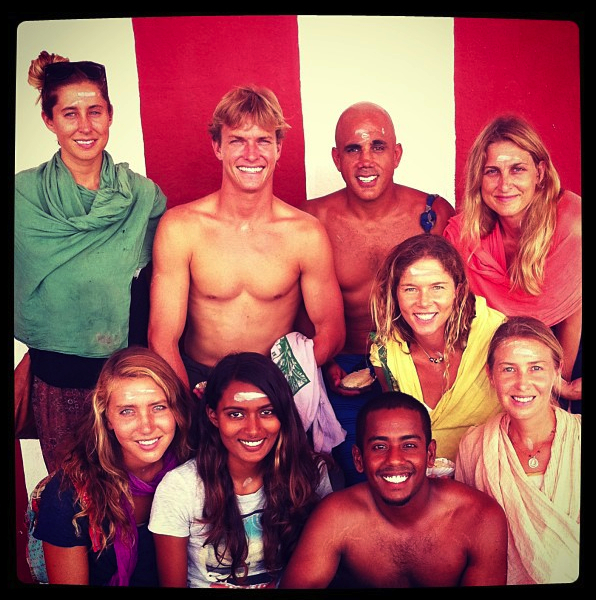
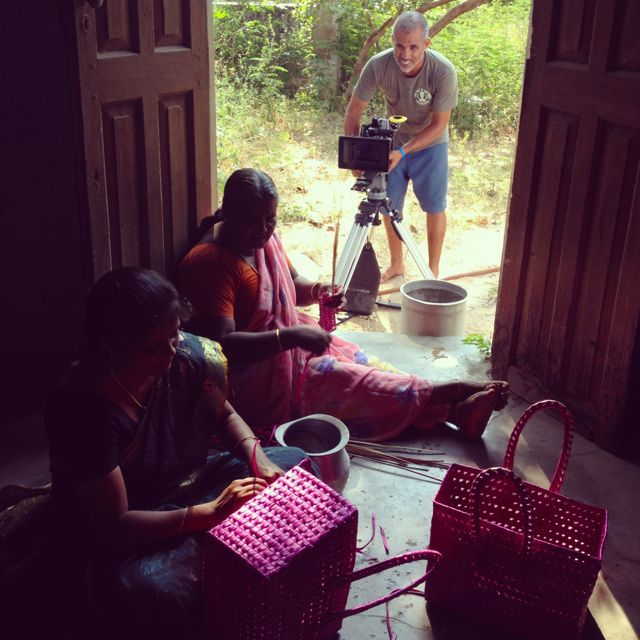
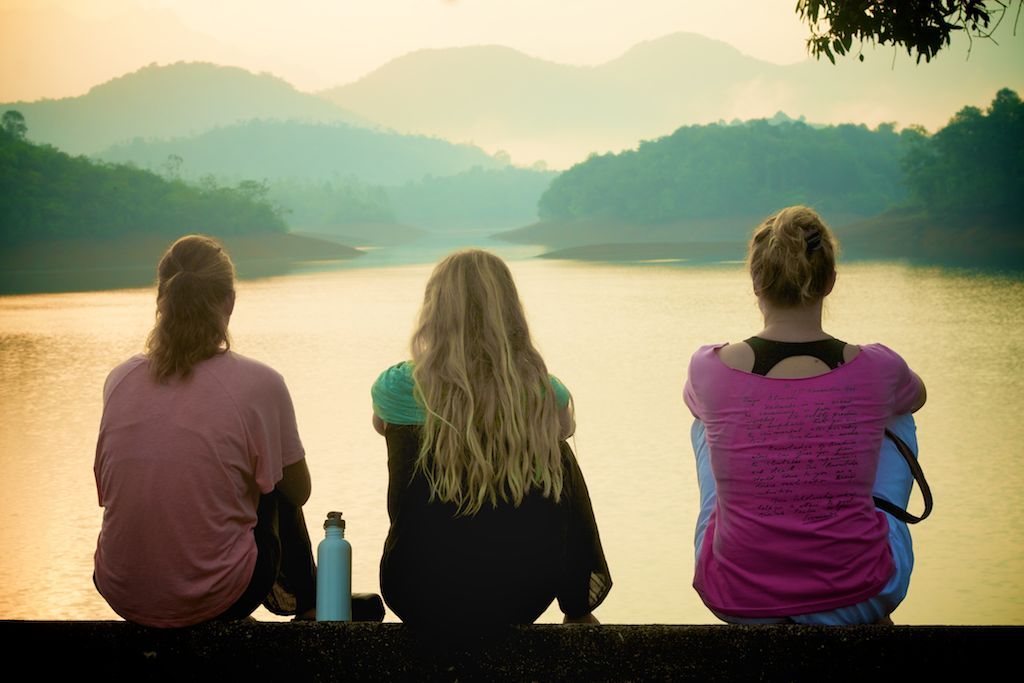
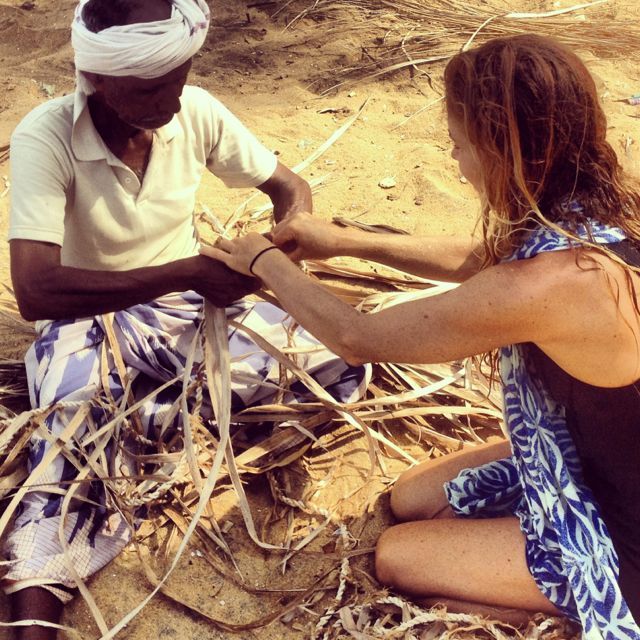

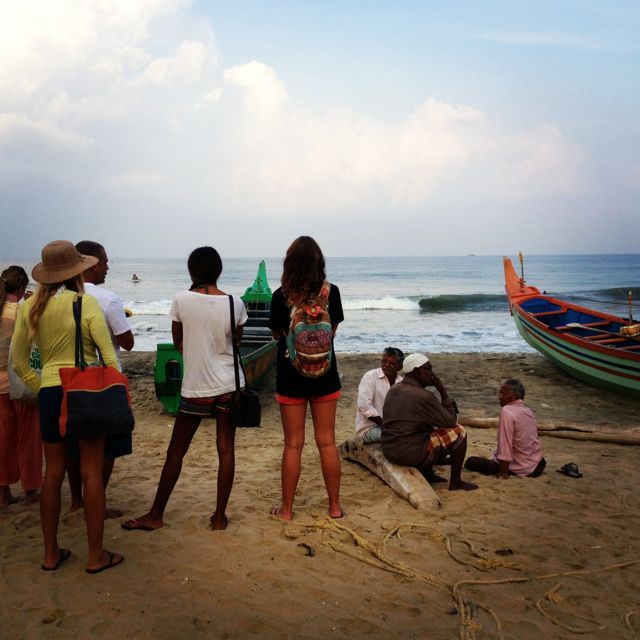








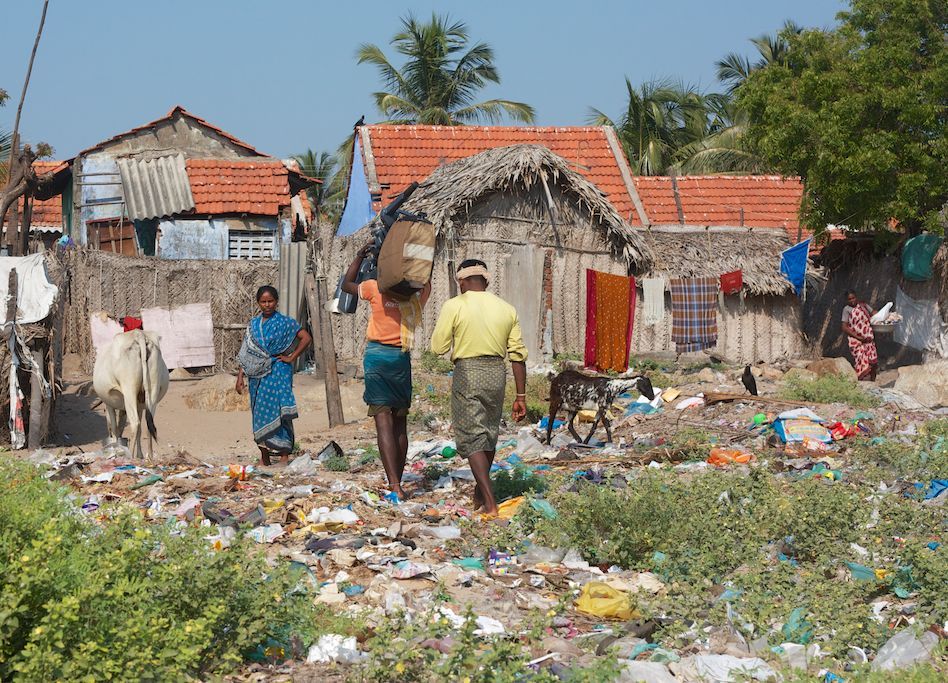
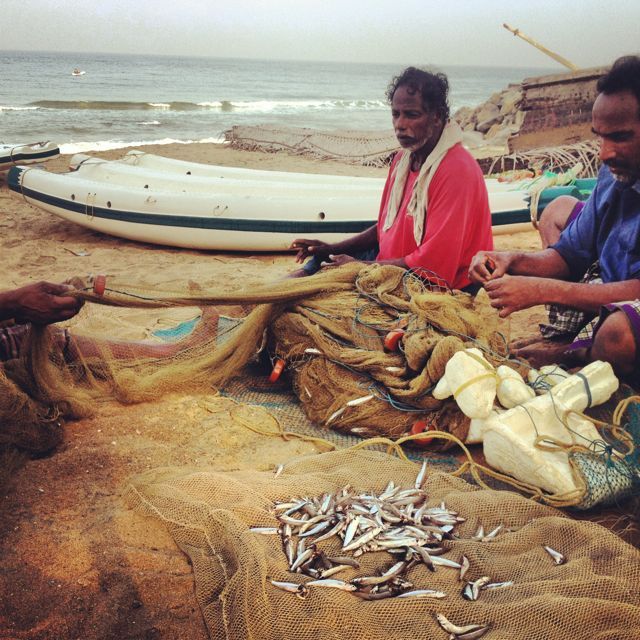

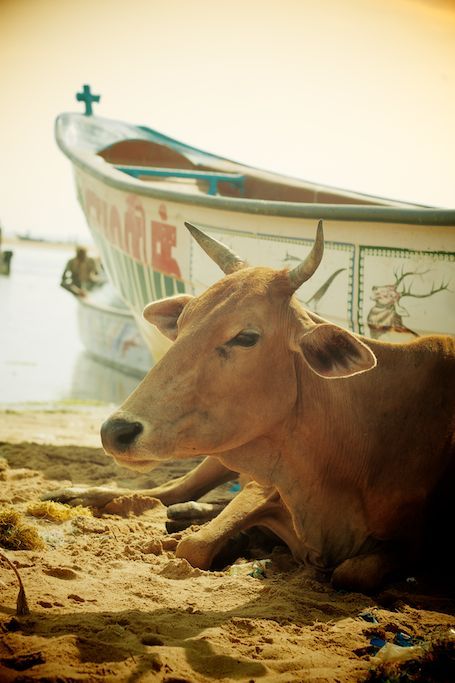

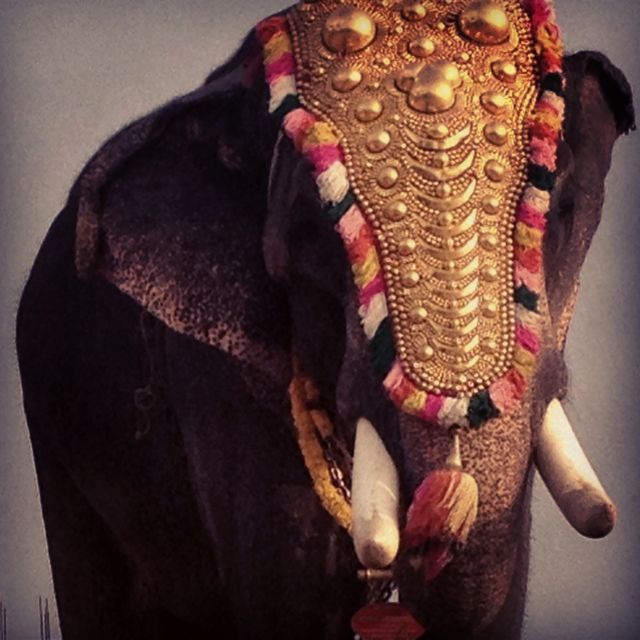

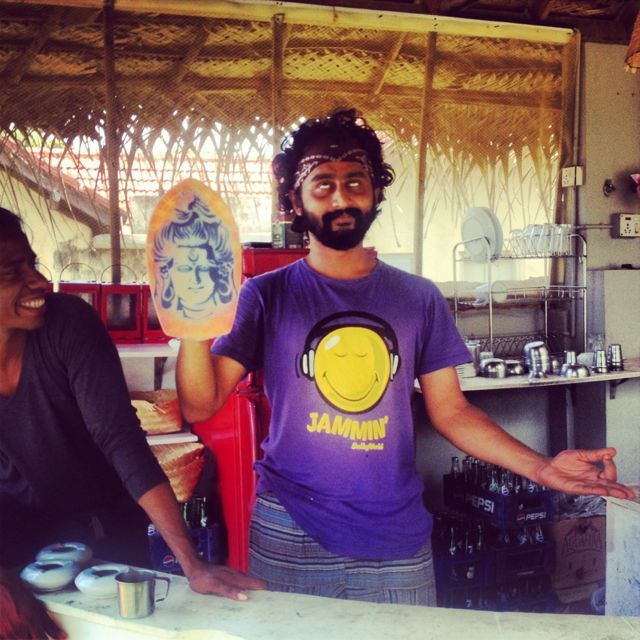
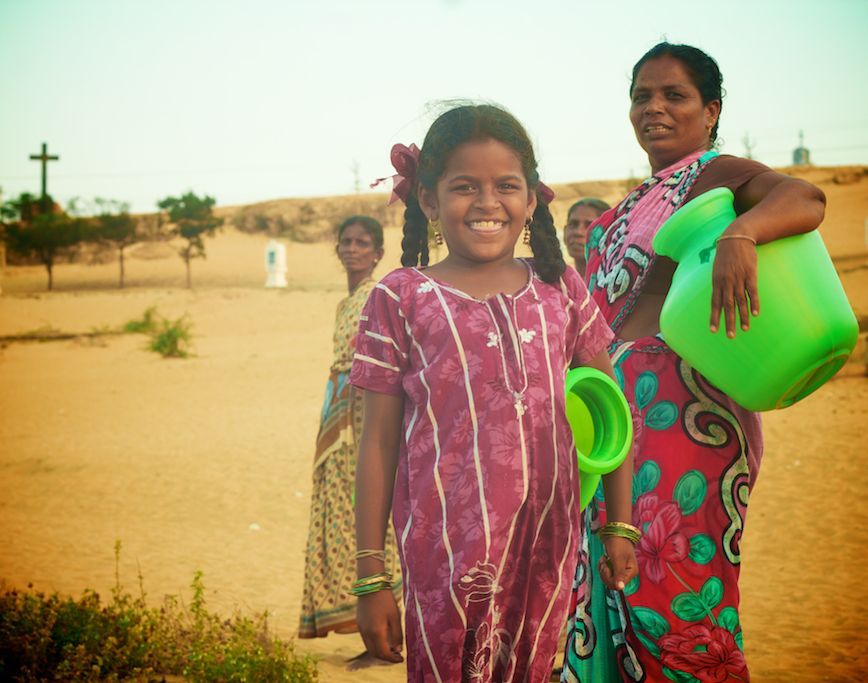
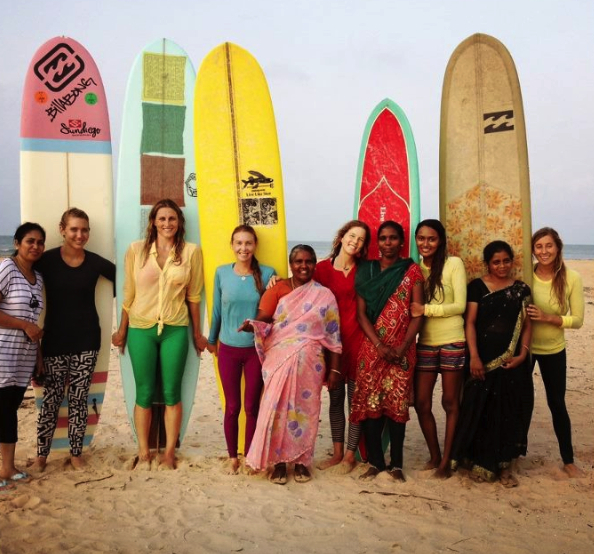
She and her husband, renowned filmmaker, Dave Homcy, planned to document Emi’s work in India under her NGO, Beyond the Surface International, and other inspiring cases of youth and women’s empowerment through surfing, yoga, and ecological creativity.
On a scouting mission, they serendipitously met Ishita Malaviya, India’s first female surfer and a powerful voice for Indian women, who happily agreed to accompany us on the adventure. Shortly after, Damian Handisides of Free Theo Productions joined the team and the project’s momentum became unstoppable. I was honored to be a participant, along with Lauren Hill who is the founder of The Sea Kin, and Kate Baldwin, yogini extraordinaire.
We all met in India from our various points on the globe this past April with the hope of exchanging light and love with the people we met along the way, especially those facing poverty, gender inequality, and social disparity. At the same time, the adventure would be a platform of growth for our own individual paths of self-realization. Our three unforgettable weeks were abound with surprises, beauty, surf, and new friendships while touring and filming in southern India. We explored together in search of a deeper connection to our fellow humans and Mother Nature.
Learn more about Beyond the Surface here.

Liz Clark
Liz is a professional free surfer, writer, environmental activist and adventurer who has captained her 40ft sailboat, Swell, over 18,000 miles on a surfing expedition in the Pacific since 2005. Through her website/blog, she shares her journey with the world in an effort of inspire people to live out their passions, spend more time in nature, engage in self-awareness and personal growth, and develop a consciousness of their everyday planetary impact.