
By Hafsah Khanam
Visit these incredible places to see diverse wildlife, including tigers, lions, rhinos, birds and turtles.
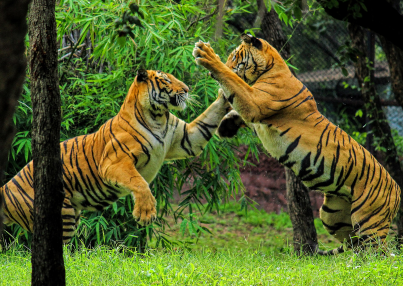
Royal Bengal tigers. Karthik Easvur. CC BY-SA 4.0.
India is home to over 45,000 plant species, 91,000 animal species and more than 100 national parks. It owes this richness to its diverse physical features and climatic conditions, which have given rise to forests, wetlands, grasslands, deserts and coastal and marine ecosystems. The Bengal tiger remains the top draw for travelers, with the country accounting for 75% of the world's tigers. Here’s a guide to seven must-visit national parks and when to plan your trip for the best experience.
1. Kaziranga National Park, Assam
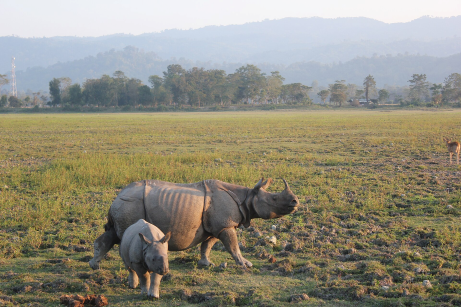
One-horned rhinoceros in Kaziranga National Park. Joli. CC BY-SA 4.0.
A UNESCO World Heritage Site, Kaziranga National Park is a sanctuary of elephant grass meadows, swampy lagoons and dense forests. It is best known as a major stronghold of the endangered greater one-horned rhinoceros, sheltering over 2,600 of them, nearly two-thirds of the world’s population. The park is also home to elephants, wild water buffalo, swamp deer and tigers. Recognized by BirdLife International as an Important Bird Area, it draws migratory birds from Central Asia each winter, including the lesser white-fronted goose, ferruginous duck and Baer’s pochard duck.
When to visit: Kaziranga stays closed to visitors from May 1 to October 31 every year. November to February is the best stretch to visit, with mild weather and better chances of spotting rhinos.
2. Jim Corbett National Park, Uttarakhand
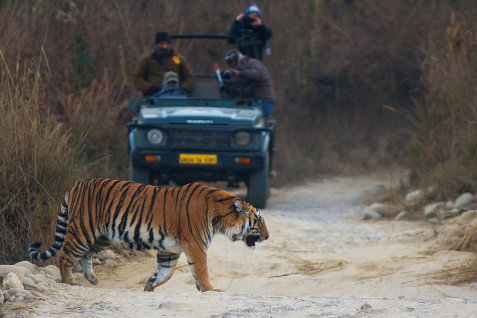
A tiger in Jim Corbett Park. Soumyajit Nandy. CC BY-SA 4.0.
Jim Corbett National Park is India’s oldest national park and is named after Edward “Jim” Corbett, a British hunter-turned-wildlife conservationist. Set in the foothills of the Himalayas, it encompasses dense forests, mountains and rivers along with around 600 plant species. It is best known for the Royal Bengal tiger and was the first park included in Project Tiger, a conservation initiative to protect the endangered species. It is also home to the Asiatic elephant, Asiatic black bear and hog deer.
When to visit: November to February is the best time to visit due to the cool weather and better visibility.
3. Gir National Park, Gujarat
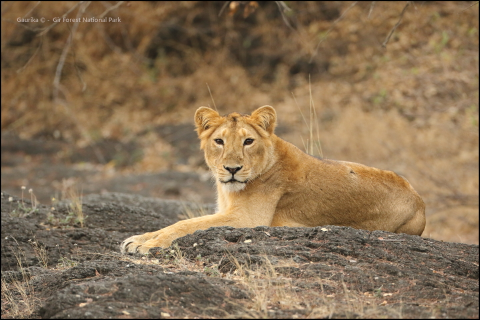
An Asiatic lion in Gir. Gaurika Wijeratne. CC BY-NC-ND 2.0.
Gir National Park in Gujarat is the only place outside Africa where lions roam free in the wild. Its Asiatic lions differ from their African cousins in having bushier elbow tufts, a larger tail tassel and more prominent belly folds. The park also shelters about 40 mammal species, including hyenas and foxes, and 425 bird species, such as the pygmy woodpecker and brown fish owl.
When to visit: Gir stays closed from June 15 to October 15 every year. November to March is the best time to visit, when the weather is cool and the wildlife is easy to spot.
4. Keoladeo National Park, Rajasthan
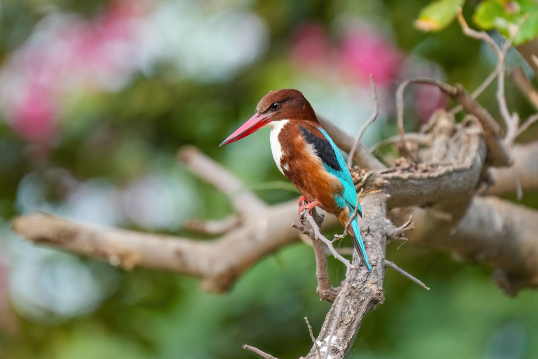
A white-throated kingfisher in Keoladeo National Park. Giles Laurent. CC BY-SA 4.0.
Once a duck-hunting ground for maharajas, Keoladeo National Park is now a UNESCO World Heritage Site and an ornithologist’s dream, thanks to its over 350 bird species. Its location on the Central Asian Flyway, along with abundant water, draws migratory waterfowl from locations as far as China, Afghanistan, Turkmenistan and Siberia. The park was historically the primary wintering site for the endangered Siberian crane and remains one for the greater spotted eagle and imperial eagle.
When to visit: Keoladeo is open all year. August to November is ideal for spotting resident breeding birds, while October to February is best for viewing migrant species.
5. Hemis National Park, Ladakh
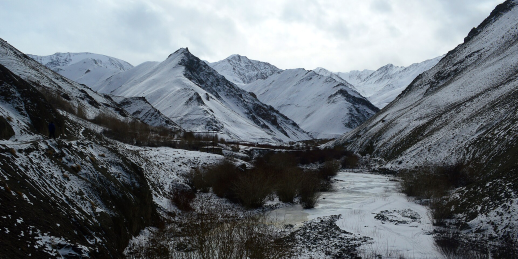
Hemis National Park. Prithwiraj Dhang. CC BY-SA 4.0.
Perched high north of the Himalayas, Hemis National Park encompasses snow-covered peaks and alpine tundra. It was established to conserve the fragile Himalayan ecosystem and protect local wildlife. It is globally renowned for the endangered snow leopard, often called the “gray ghost” for its elusiveness. The park is also home to rare species such as the Tibetan wolf, Eurasian brown bear and blue sheep. Beyond its wildlife, Hemis contains several Tibetan Buddhist monasteries, including the ancient Hemis Monastery.
When to visit: Visit between May and early October, as jeep safaris and most trekking routes shut down afterward due to heavy snowfall. If visiting in June or July, time your trip with the Hemis Festival for a vibrant dose of art and culture alongside wildlife viewing.
6. Ranthambore National Park, Rajasthan
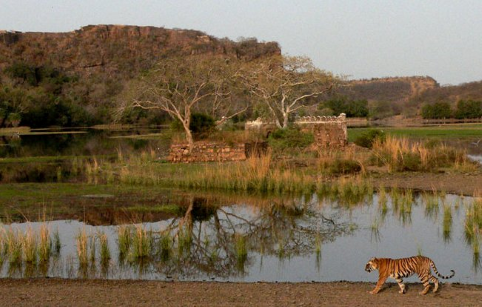
A tiger in Ranthambore. Sanjay Tiwari Khamore. CC BY-SA 4.0.
Once the hunting grounds of the maharajas of Jaipur, Ranthambore National Park is now a major wildlife destination known for Bengal tigers. Unlike most wild tigers, which are nocturnal to avoid heat and human contact, Ranthambore’s tigers can often be seen during daylight. Accustomed to safari vehicles, they are often spotted hunting or sunbathing in broad daylight. Adding to the park’s charm is the Ranthambore Fort, a UNESCO World Heritage Site within its boundaries.
When to visit: The park stays open from October to June. The winter months, from October to March, are best for pleasant weather. May and June, though extremely hot, offer a higher chance of spotting animals as they visit waterholes to stay hydrated.
7. Mahatma Gandhi Marine National Park, Andaman Islands

A clownfish in the marine park. Sirsendu Gayen. CC BY-SA 4.0.
Mahatma Gandhi Marine National Park protects the rich marine ecosystem of the Andaman Islands. Spread across 15 islands, it provides a haven for coral reefs and critically endangered sea turtles. Visitors can snorkel among vibrant corals, watch turtles nesting, scuba dive among schools of fish and rays, spot rare island birds and take boat rides past turquoise waters and secluded beaches.
When to visit: October through February is the best time to visit. Most activities shut down from June to August due to the monsoon.
Opening dates and access may vary, so visitors should check official park information before traveling.

Hafsah Khanam
Hafsah is an English grad student from India. When not curled up with a book and a steaming cup of chai, she can be found traveling, inhaling the nearest snack, and spending time with friends and family. She aspires to pursue a PhD.