
By Mia Gooch
Despite its reputation for environmental stewardship, Sweden is at risk of losing its beloved reindeer and an important part of its cultural heritage.
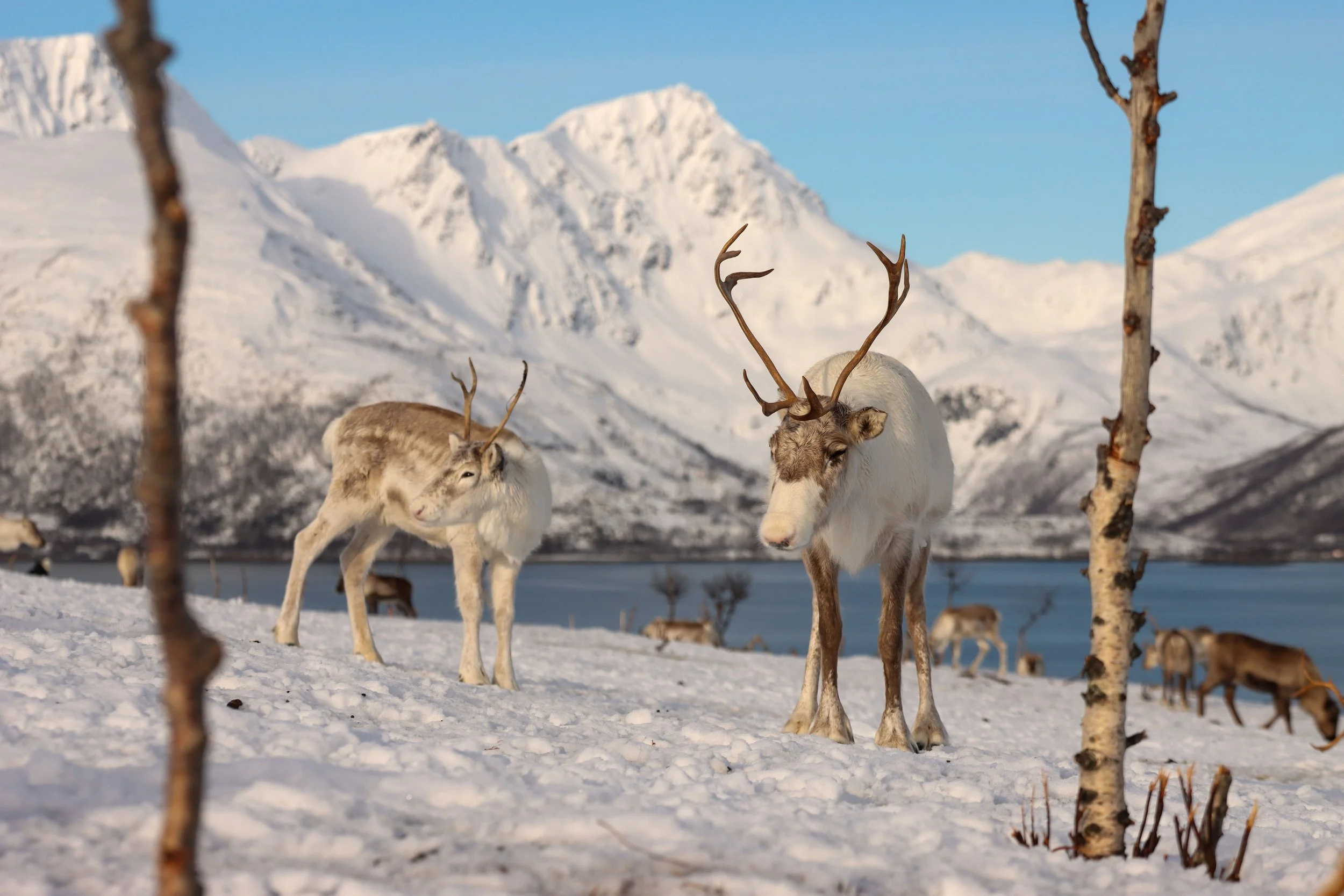
A reindeer herd in a northern Norwegian landscape. Efrem Efre. Pexels.
Across the Swedish Arctic, many reindeer are facing starvation. For their Sámi herders, the crisis marks the gradual loss of a centuries-old way of life. Logging companies are stripping away old-growth forests while rising temperatures seal remaining tree lichen beneath sheets of ice. These threats are leaving reindeer with less food each winter, endangering a relationship that has existed for generations.
The Sámi are an Indigenous people of northern Scandinavia, with many families continuing the historical tradition of reindeer herding across Sweden, Norway, Finland and Russia’s Kola Peninsula. Reindeer are sacred symbols for Sámi herders, representing great strength and adaptability. For centuries, Sámi herders ate reindeer meat and fashioned warm clothing from their pelts during the coldest months. The Sámi have long viewed reindeer as much a part of their culture as the people themselves, doing their best to protect the animals as they’d roam across the tundra.
As Scandinavian taxation systems changed during the late 17th century, Sámi herders relied on their understanding of reindeer behavior and herding practices to meet tax obligations. Throughout centuries of political change, the Sámi people's devotion to reindeer never ceased.
Today, Mikael Kuhmunen, a member of a Swedish reindeer herders' group, says he “can't imagine life without his herd.” He believes that “the worst day outdoors in the company of reindeer is miles better than any day without them.”
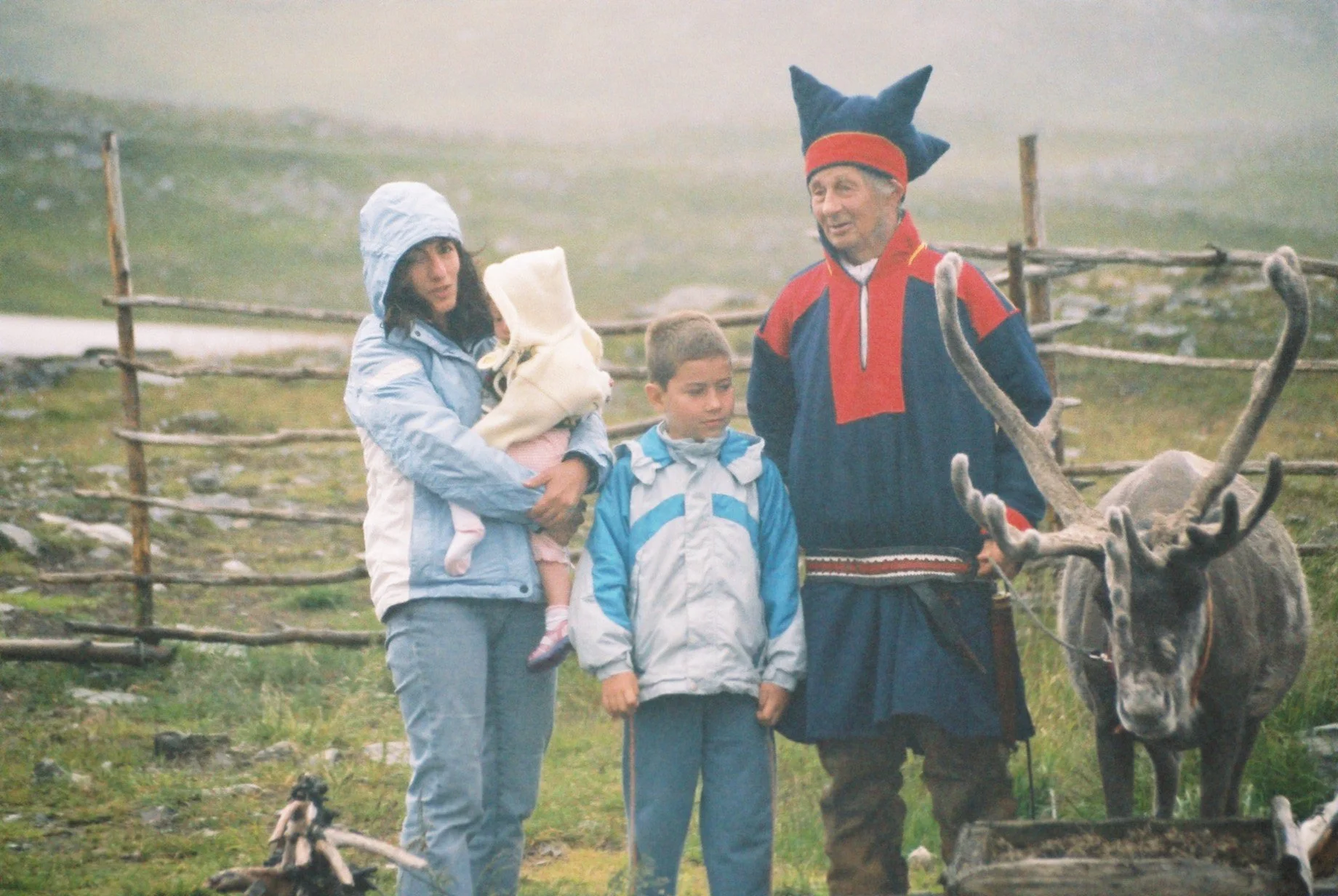
Sámi people with a reindeer. JensANDMarian. CC BY-SA 1.0.
For generations, that relationship has been dependent on the health of Scandinavia’s old-growth forests.
These forests provide the tree lichen that reindeer depend on during winter. The bark and rocks within these habitats are naturally covered with lichen, the animals' primary food source during the coldest months. Reindeer nose around branches and scuff their way through foliage, peeling the lichen from tree bark and crunching on it to obtain its nutrients.
Surviving an Arctic winter on minimal resources is what reindeer do best. But the presence of loggers is threatening these habitats, shrinking one of the animals' most precious resources.
Despite Sweden’s reputation for sustainable forestry and environmental stewardship, old-growth forests have been lost at a rate of about 1.4% per year since 2003. Logging removes these woodlands, stripping down lichen-coated trees by the acre. As these forests disappear, so does the reindeer's food. These woodlands can take centuries to recover, and by then, the herds that once depended on them may be gone.
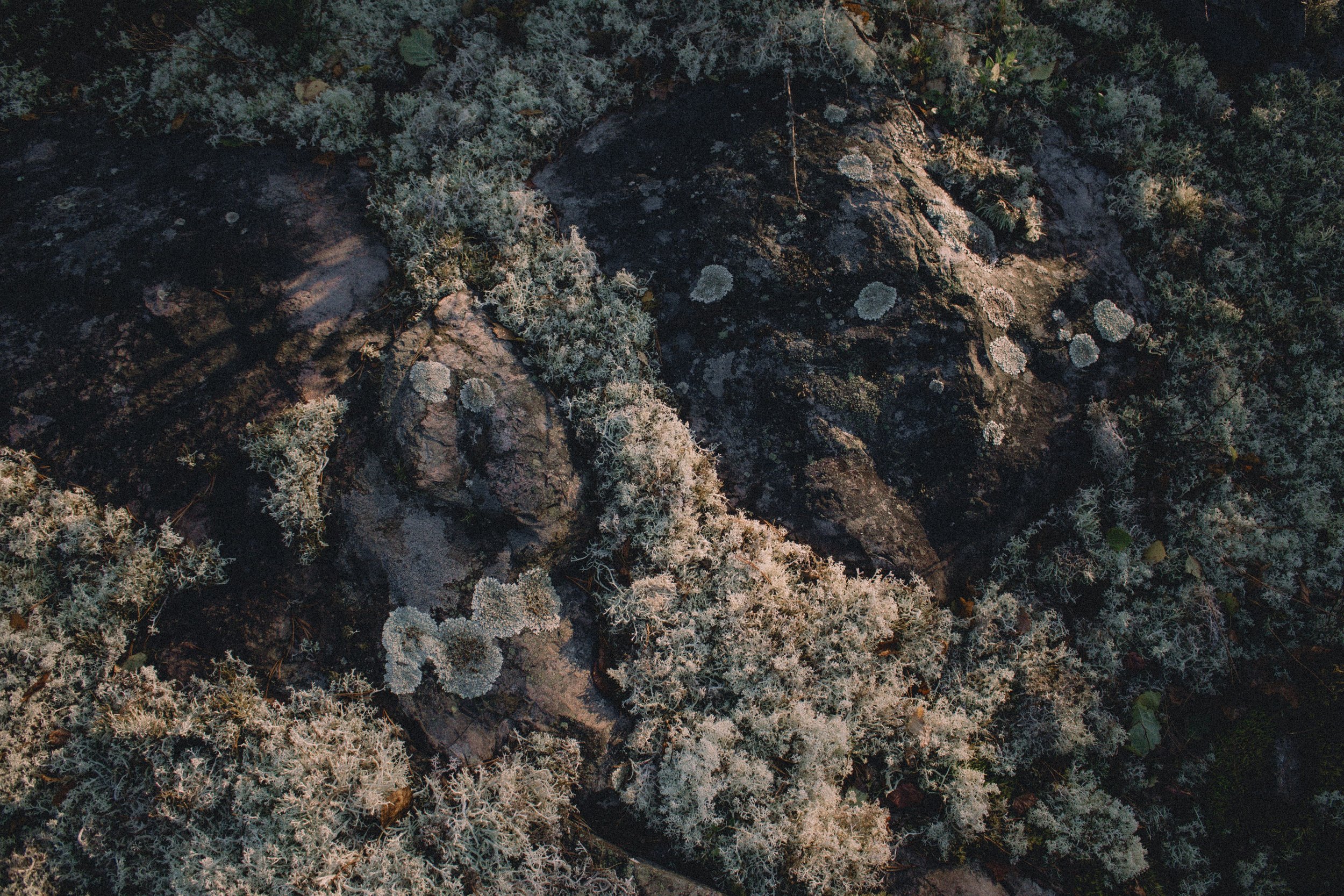
Lichen growing on a stone in Sweden. Klara Foldys. Pexels.
Nila Jannock, a local Sámi herder, said, “Reindeers have survived here since the Ice Age. But only sixty years of clear-cutting have put them on the verge of starvation.”
In the forests that remain, warmer weather has increased the amount of rainfall across the tundra. When temperatures fall during winter nights, the rain freezes into sheet ice over the snow-frosted lichen. Known as basal ice, this ice crust blocks lichen access, leaving reindeer hungry and isolated.
Finnish researcher Jouko Kumpula explained that these cycles are becoming more common because of climate change. Working in Lapland, he said, “Usually this kind of winters were earlier experienced once in a 30-year period but it seems that they are probably becoming more and more common due to the ongoing climate change.”
As these conditions occur more frequently, reindeer are found wandering farther in search of food. This disruption makes migration prediction increasingly difficult for Sámi herders, especially when other forests are being cleared by loggers. Sometimes, these displaced reindeer starve to death in the freezing Arctic, and their herders struggle to recover from these losses.
Reindeer herding is more than an occupation or a historical means of meeting tax obligations; it is a central part of Sámi culture. Protecting their migration rhythm helps preserve traditions alongside Arctic ecosystems. Without the forests and lichen that sustain reindeer herds, one of the Arctic’s oldest living traditions faces an incredibly uncertain future.
GET INVOLVED:
Rewilding Sweden works directly with Sámi herders to identify critical migration paths and restore areas damaged by logging and industrial forestry. They collaborate with nature-driven landowners, businesses and individuals to pursue restoration projects and funding initiatives.
The Reindeer Herding website is run by the International Centre for Reindeer Husbandry. It offers resources, research and connections to advocacy groups supporting Sámi villages.

Mia Gooch
Mia a student at the University of North Carolina at Chapel Hill, majoring in Media & Journalism with a double minor in Education and Social & Economic Justice. She’s passionate about informal education and creating fun experiences where people of all ages can explore new perspectives and develop new skills. When she’s not in the classroom, she loves contemporary dance classes, spending time with friends and family, baking, and being outdoors!