
In response to increased violence in the West Bank, the UK imposed sanctions on Israeli settlements. Ten European countries and Canada followed suit.
Read MoreThe US Is the Only UN Country to Vote Against More Accurate World Maps
The General Assembly voted to phase out the traditional Mercator map, which diminishes the size of Africa, Latin America and Southeast Asia.
The Shrine Keeping Japan's Wartime Past in the Present
Yasukuni Shrine remains a controversial, painful reminder of Japan’s wartime history for East Asian countries.
Read MoreFrom TikTok to the Border: How Social Media Is Driving Migration from Morocco
Social media is amplifying migration from Morocco by turning economic frustration and misinformation into pressure at Spain’s border.
Read MoreThe Muslim and Communist Conflicts in the South Philippines
Explaining the decades-long issues that surround Mindanao Island.
Read MoreBali Is Getting Sick of All the Digital Nomads
Two Dutch nationals were barred from re-entering Indonesia after holding a running event that excluded Indonesians.
A City Overwhelmed in 24 Hours: 60,000 Moroccans Swim to Spanish Coast
Nearly 60,000 migrants entered Ceuta, a Spanish territory on the North African coast, as a sudden border surge strained the city and left dozens dead.
Read MoreThe Gaza Peace Plan Faces Major Setbacks
Hamas’s decision to relinquish its civilian governing responsibilities marks the latest attempt to revive the stalled peace process in Gaza.
Read MoreRussian Mercenaries Have Built a Drug Empire in the Heart of Africa
Remnants of the Wagner Group have used tramadol, a prescription opioid, to seize control of the Central African Republic.
Read MoreAfrica’s Population Is Notably Young. Its Leaders are Remarkably Old.
Zimbabwe becomes the latest nation to alter its constitution, allowing its 83-year-old president to stay in power until 2030.
Read MoreUganda's Media Crackdown Signals More Than an Attack on the Press
Uganda’s latest media shutdown is about more than press freedom: it offers a glimpse into how power is being exercised, and perhaps transferred, in one of Africa’s longest-serving governments.
Read MoreThe Venezuela Earthquakes Could Not Have Come at a Worse Time
Over 1,700 people were killed by massive 7.2 and 7.5 magnitude earthquakes striking within one minute of each other.
Read MoreWho Owns Chinese Celebrity Culture in Taiwan?
Actor Zhang Linghe’s opening speech at the 18th Straits Forum caught widespread attention with his call for improved cross-strait exchanges.
Read MoreMEGA: Make England Great Again
The rise of populism in Great Britain marks a search for national renewal.
Read MoreTwo Different Koreas on Two Different Paths
As South Korea sentences its former president to life in prison, North Korea’s Kim Jong Un becomes the most powerful leader in the country’s history.
Read MoreWhy Ceasefires Fail
From Gaza to Lebanon to Iran, ceasefire agreements meant to halt conflict have been met with continued airstrikes and targeted killings.
Read MoreHaiti Forced to Change World Cup Jerseys After FIFA Rejects ‘Political’ Imagery
FIFA’s order for Haiti to redesign its 2026 World Cup jerseys and remove their revolutionary symbolism sparks questions over history, race and political neutrality.
Read MoreAs the World Cup Nears, Reboot FIFA Challenges Football’s Governing Body
By Sehr Khosla
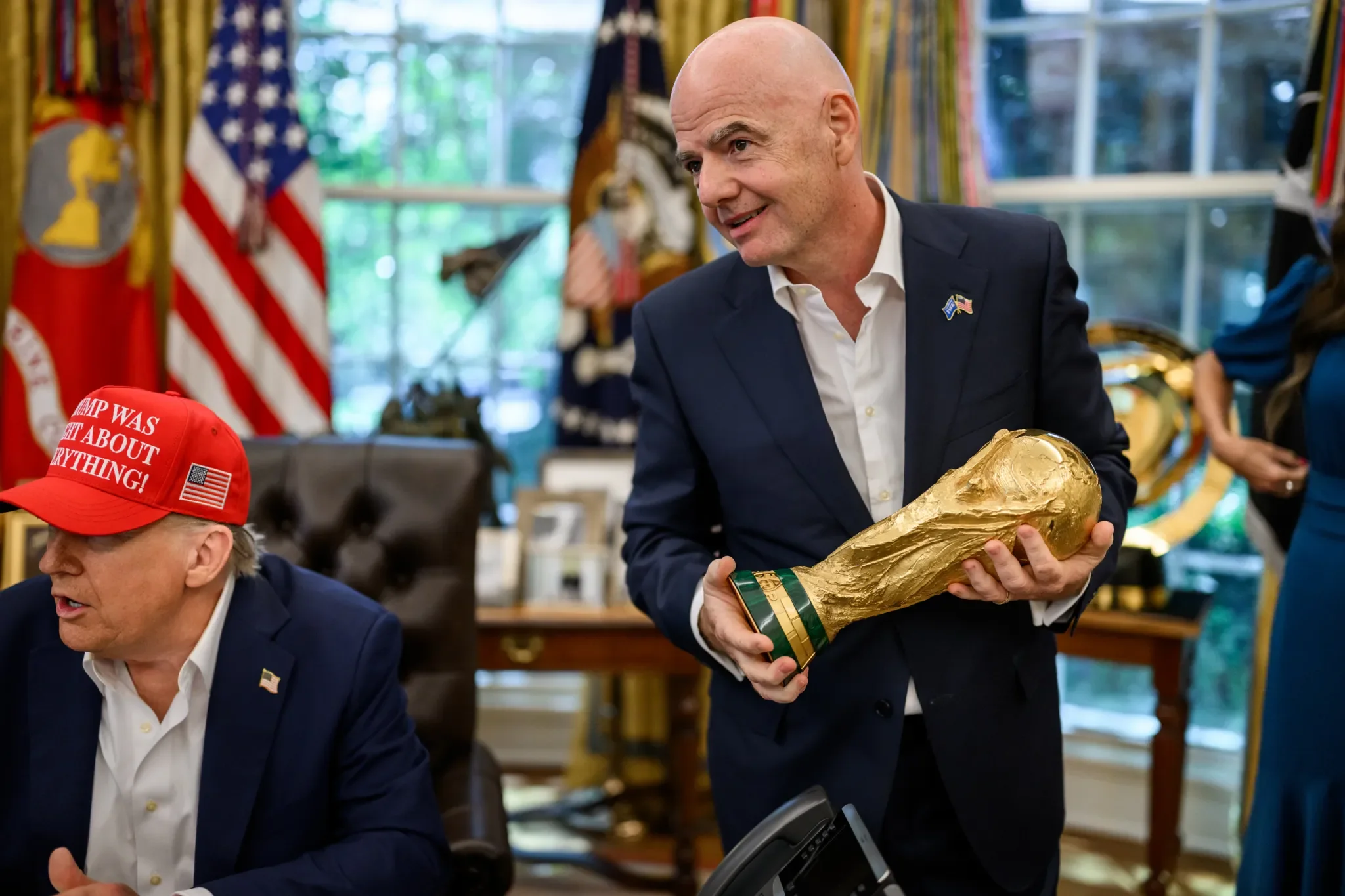
President Donald Trump and FIFA President Gianni Infantino announce Kennedy Center as FIFA World Cup 2025 draw location. The White House. CC0.
One week before the start of the 2026 FIFA World Cup, advocacy organization FairSquare launched Reboot FIFA, a public campaign urging supporters to join what it hopes will become the largest ethics complaint ever filed against the association. The complaint accuses FIFA President Gianni Infantino of repeatedly violating the organization’s political neutrality rules through his public support for U.S. President Donald Trump and argues that the allegations reflect deeper governance problems within football’s governing body.
Launched early this June, Reboot FIFA invites members of the public to add their names to an updated ethics complaint originally submitted by FairSquare in December 2025.
FairSquare argues that Infantino’s appearances alongside Trump, including his involvement with the FIFA Peace Prize awarded to the president and subsequent cooperation with Trump’s Board of Peace initiative, violated FIFA’s requirement that officials remain politically neutral. FIFA has not publicly accepted that characterization and maintains that its governance reforms have strengthened accountability and oversight.
With global attention turning toward the World Cup, the campaign highlights that the tournament provides a rare opportunity to pressure FIFA over issues of accountability and transparency.
For many supporters, the controversy recalls FIFA’s 2015 corruption scandal, when U.S. prosecutors charged dozens of football officials in a sweeping investigation into bribery, racketeering and money laundering. The scandal forced the departure of longtime FIFA President Sepp Blatter and prompted promises of far-reaching institutional reform.
Under Infantino, FIFA has repeatedly pointed to increased transparency measures, independent audits and billions of dollars invested in football development worldwide. Following “deep-rooted governance and management reforms,” as a FIFA spokesperson told The Guardian, the organization insists that it is now more accountable than ever.
For FairSquare, however, the persistence of controversy suggests otherwise. The NGO argues that FIFA’s problems are structural rather than personal.
“FairSquare has long argued that FIFA’s structural problems cannot be fixed from within and that external reform is critical,” the organization wrote in launching the campaign.
More significant to fans than the complaint itself is what it reveals about FIFA’s governance model, with FairSquare arguing that the organization simultaneously acts as football’s regulator and commercial powerhouse, creating conflicts of interest. Among the reforms proposed by the campaign are stronger auditing of FIFA’s finances, greater transparency in decision-making, and a clearer separation between its commercial operations and governance functions.
The campaign has also received support from the Norwegian Football Federation, whose president, Lise Klaveness, has called for the complaint to be properly assessed by FIFA’s ethics committee. This backing matters for fans because it suggests that concerns about governance are not limited to activists and watchdog groups but are increasingly being voiced by member associations themselves.
Whether Reboot FIFA succeeds in forcing change remains uncertain, especially considering that previous reform efforts have often struggled against an institution whose leadership is ultimately accountable to the same internal structures that elect it. Nonetheless, the campaign’s significance lies less in the fate of a single ethics complaint than in the question it raises. Years after FIFA’s most serious corruption crisis, football's governing body continues to face accusations of weak accountability and conflicts of interest. If FIFA wishes to claim it represents the global game, critics argue, it must do more than organize tournaments. Now, it must convince players, supporters and member associations that it is answerable to them as well.
Readers can learn more about the Reboot FIFA campaign and add their names to the ethics complaint through FairSquare's campaign website: https://rebootfifa.com/sign/
Sehr Khosla
Sehr is a student at Georgetown University studying Classics and Government with a minor in Journalism. In the future, she hopes to combine her passion for social justice with communications to advocate for change. Outside of writing, she enjoys travelling and reading murder mysteries.
The Galápagos Drug Route
By Carol Khorramchahi
A UNESCO wildlife sanctuary is being pulled into the Pacific cocaine trade, putting conservation and community life on the same collision course.
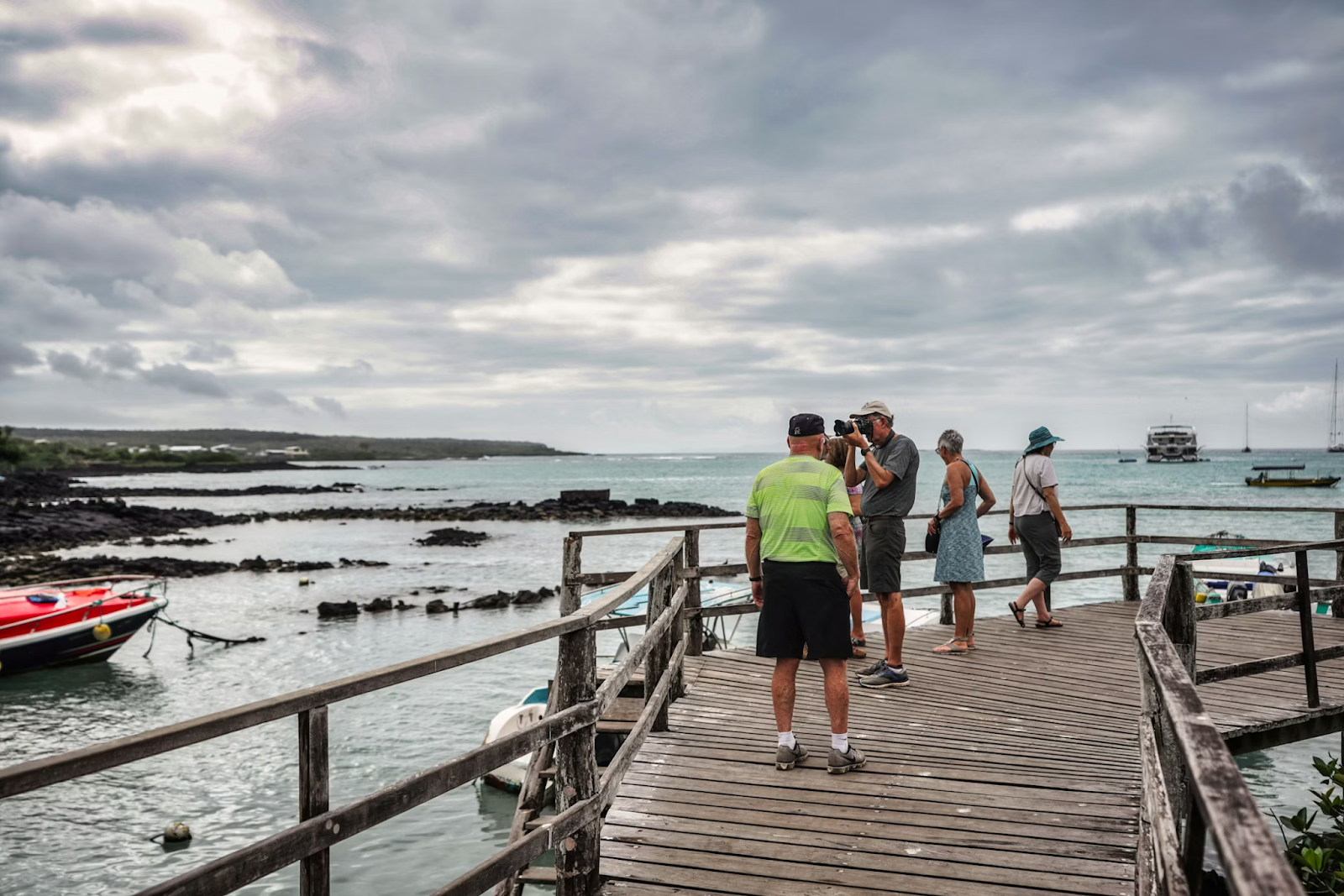
Boats docked in Santa Cruz, Ecuador. Andres Medina. Unsplash.
The Galapagos are marketed as a place outside the modern world, featuring blue water, strict park rules and animals that seem to have missed the memo about humans. UNESCO calls the islands a “living museum and showcase of evolution.”
That is the Galapagos most travelers recognize. But there is another Galapagos, quieter and more recent, shaped by the same geography that makes the islands famous. The archipelago sits deep in the eastern Pacific, far enough from the mainland to feel remote and close enough to ride along lengthy maritime routes that move north toward Central America and beyond. Trafficking networks do not need the Galapagos to be a city; they need it to be a waypoint.
In early 2026, Al Jazeera reported that the islands are increasingly being used as a refueling and staging zone for cocaine shipments moving through the Pacific, with authorities intercepting boats and searching for hidden storage points. The story lands hard because the Galapagos economy depends on tourism and regulated fishing, not on the shadow economy of organized crime. When trafficking pressure rises, the damage is not only criminal: It is social.
Part of the pull is simple distance. Long routes require fuel and logistics, and isolated stretches of ocean provide cover. A Pacific trafficking analysis by the U.N. Office on Drugs and Crime describes expanding transnational organized crime in the region and the importance of maritime routes for moving illicit drugs.
Another part is Ecuador’s wider security crisis, which is pushing criminal networks to innovate and spread. The International Crisis Group warns that Ecuador’s organized crime surge is tied to the country’s role in global cocaine flows and violent competition among criminal groups. That shift does not stay on the mainland: It radiates outward, including into strategic maritime zones.
The consequences in the Galapagos do not always look like those in Hollywood. They can look like corruption pressure on small businesses; fishermen being approached to sell information, fuel or services; authorities trying to police an enormous marine area with limited assets while also protecting one of the most sensitive ecosystems on Earth.
Officials are taking the threat seriously. In March 2025, the U.S. Embassy in Ecuador said Ambassador Art Brown visited the Galapagos and discussed security challenges, including illicit trafficking and illegal fishing, as part of coordination with local and national authorities. The U.S. Embassy has also emphasized the scale of maritime interdictions more broadly. The country’s Ministry of Defense said Ecuador seized 135 tons of drugs at sea in 2025, a record it framed as a major blow to trafficking networks.
The larger lesson is uncomfortable: Trafficking routes shift like water. When enforcement tightens in one corridor, networks test another. The Galapagos are now part of that map, and the challenge is no longer only protecting wildlife; it is protecting a community and a global treasure from being turned into infrastructure for a drug economy.
GET INVOLVED:
Support conservation and community protection efforts through the Galapagos Conservancy and the Charles Darwin Foundation. Follow organized crime and security analysis through the International Crisis Group Ecuador page and regional trafficking research through the UNODC
Carol Khorramchahi
Carol Khorramchahi is a student at Boston University, where she studies English and Psychology and minors in Journalism. She enjoys writing and reporting on stories that bring together culture, identity, and community, and has experience in both newsroom reporting and digital media. She is especially interested in thoughtful storytelling with a global lens.
Iran at War: A Day in Tehran
Carol Khorramchahi
For civilians in Tehran, war isn’t a headline; it’s the sound of strikes at night, the scramble for safety and the fear of what comes next.
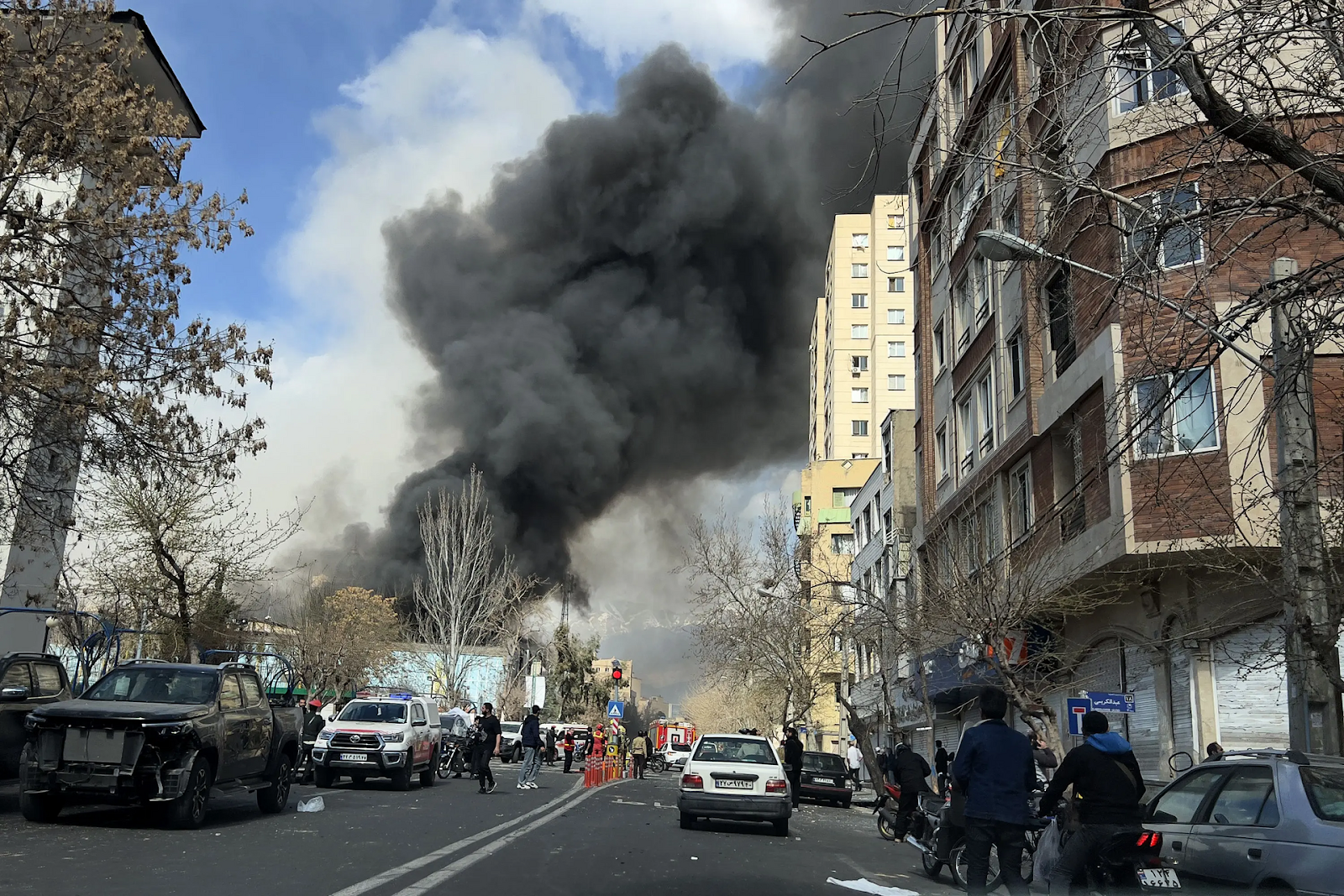
War in Tehran. Muhammad Ali Burno. CC BY 4.0.
For people in Tehran, war is not experienced through maps or military briefings. Instead, it’s felt in nights that don’t feel safe to sleep through, in the sudden rush to a hallway or bathroom when blasts shake the building, in the moment the lights flicker, and you don’t know if it’s a blackout or something worse.
In recent days, the scale of loss has been staggering. Iran’s U.N. ambassador said at least 1,332 Iranian civilians have been killed so far in the conflict, with thousands more injured. And while numbers can’t capture fear, they do show what Tehran residents already know: This is not a distant front line. This is a war reaching into neighborhoods, hospitals, schools and daily routines.
Iran’s Red Crescent reported that about 20,000 civilian buildings have been affected, along with over 70 healthcare facilities. In Tehran, that’s not just damage on paper; it’s what determines whether families can return home, whether clinics can operate and whether ambulances can move quickly when streets are congested or unsafe.
Some of the clearest snapshots of war in Tehran come from the voices of residents themselves. In one report, several Tehran residents described bright flashes turning night “into day,” and one woman told Al Jazeera that “the ground and the windows and our hearts were shaking,” adding that her family sheltered in the bathroom and asked not to be named for security reasons.
Hospitals are still running, but they are under strain. Tehran’s Gandhi Hospital was damaged after strikes hit nearby, and officials said medical facilities and schools had been impacted in multiple places. When healthcare sites are hit or even shaken by nearby blasts, the ripple effects are immediate: Patients get moved, surgeries are delayed and staff are forced to work in uncertainty.
Schools, too, have become part of the story. Reports described strikes that hit schools near Tehran and a wider pattern of attacks affecting education sites. Many parents now face a question that shouldn’t exist: Do you send your child to class when the situation can change overnight?
Even communication, something people rely on to find family, confirm safety and understand what’s happening, has become unreliable. NetBlocks has posted repeated social media updates showing Iran’s wartime internet blackout reaching extreme levels, with connectivity around 1% of ordinary levels during parts of the shutdown. When the internet collapses, it not only silences communities but also cuts off payment systems, disrupts work and makes it harder for people inside and outside Iran to reach each other.
As the threat grows, displacement has become another measure of fear. A U.N. estimate said 3.2 million Iranians have been displaced since the war began, alongside wrenching decisions families face, like whether to flee, where to go and whether leaving might mean not being able to return.
Underneath all of it is a question Iranians are likely arguing about quietly, even when they can’t say it publicly: What comes after this? Some will hope war brings political change. Others will fear that it brings only deeper repression and instability. Some will rally around the state. Others will blame it. Those divisions are visible in glimpses, like demonstrations framed as “defiance and resilience,” even as fear and exhaustion spread.
What’s certain is that for Tehran, war is no longer something “out there.” It is an atmosphere, felt in the noise overhead, the tension in ordinary errands, the uncertainty of school and hospital access and the desperate need to stay connected to the people you love.
GET INVOLVED:
Follow humanitarian updates through ReliefWeb and civilian protection statements from the International Committee of the Red Cross. Track internet shutdown reporting via NetBlocks and digital rights advocacy through Access Now. For human rights documentation, see the U.N. Human Rights Office and Amnesty International.
Carol Khorramchahi
Carol Khorramchahi is a student at Boston University, where she studies English and Psychology and minors in Journalism. She enjoys writing and reporting on stories that bring together culture, identity, and community, and has experience in both newsroom reporting and digital media. She is especially interested in thoughtful storytelling with a global lens.