
Zoe Lodge
The International Criminal Court and wartime tribunals are large figureheads for global justice, offering questionable accountability.
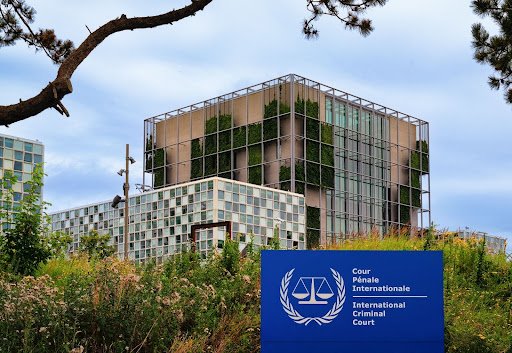
The International Criminal Court in The Hague, Netherlands. Tony Webster. CC BY 2.0
When atrocities take place on a global scale or outside any apparent jurisdiction, such as alleged Russian war crimes in Ukraine or Myanmar’s violence against the Rohingya, there is often no place to turn to other than The Hague. The Hague is home to the International Criminal Court (ICC), which was established in 2002 with the intent to prosecute genocide, crimes against humanity and war crimes that domestic courts do not have the ability or will to take on. The U.N. has also held ad hoc tribunals, which are temporary judicial bodies tasked with a single issue, to handle concerns in Rwanda and Yugoslavia. With these efforts, the courts work to close the gap between atrocity and justice.
To a certain degree, the ICC and similar courts have been successful and produced notable breakthroughs. The International Criminal Tribunal for Rwanda (ICTR) was the first court to convict individuals for genocide, setting a historic international precedent. The International Criminal Tribunal for Yugoslavia successfully prosecuted former Presidents Slobodan Milosevic and Radovan Karadzic, proving that heads of state could be held accountable. The ICC recognized and convicted Congolese warlords Thomas Lubanga and Bosco Ntaganda of using child soldiers and sexual violence as agents of war. Beyond providing convictions, these courts also serve as a forum to immortalize testimony and survivor stories in history.
However, these courts are not a perfect solution to crimes against humanity, as they often fall short in terms of enforcement. The courts do not have a police force or enforcement body within their jurisdiction and must rely on member states to make arrests, which requires political will and cooperation by member states and non-member states alike. Some indicted leaders, like Sudan’s Omar al-Bashir, have traveled internationally without arrest, undermining the ICC’s credibility. The ICC issued multiple arrest warrants for al-Bashir for genocide in Darfur, but it never received cooperation with the warrants. Critics have also been vocal about the ICC’s focus points and how they tend to disproportionally target African nations. The ICC has hardly touched powerful non-signatories such as the United States, Russia and China and has largely ignored conflict in the Middle East, from Western military campaigns to the highly contentious Israel-Palestine conflict. Critics claim that the ICC focuses more on victories than universal accountability.
These issues become even further complicated when said non-signatories begin to interfere with the operation and intended purpose of the international courts. In June 2025, the Trump Administration in the United States placed sanctions on four ICC judges for “illegitimate and baseless actions targeting America [and]…Israel,” according to Secretary of State Marco Rubio. These actions include investigations into actions taken by the United States in Afghanistan in 2020, as well as the issue of an arrest warrant for Israeli President Benjamin Netanyahu. These presidents of judicial panels and prosecutors have had U.S. assets frozen and are barred from entering the U.S., a move critics argue is a direct attempt to intimidate the court and compromise its independence. The United States has also delegitimized the ICC’s rulings by permitting individuals with arrest warrants to travel freely within the U.S., like with Netanyahu’s White House visits in early 2025 and Vladimir Putin's visit to a summit in Alaska in August. Without international cooperation from powerful players, the legitimacy of the ICC and other international courts remains in serious jeopardy.
Even upon the launch of investigations, progress remains slow. The case investigating the Rohingya genocide in Myanmar through the ICC has lasted years, enabling Myanmar’s military regime to remain in power. In Syria, allegations of mass atrocities have stalled in part because Security Council referrals, which are a necessary step when states are not ICC members, can be vetoed by Russia or China. For victims, these procedural and political delays exacerbate the sense that international justice is more aspirational than actionable.
The tribunals’ mixed appeal is best captured by the Rwanda case. The ICTR secured landmark convictions and played a role in shaping modern human rights law, but it also faced criticism for its limited scope, high costs and glacial pace. Similarly, the Myanmar case demonstrates how international courts can investigate and document crimes but struggle to enforce real-world consequences without state cooperation. These instances are examples of how international justice can create legal and symbolic accountability, but it often falls short of stopping mass atrocities or delivering swift punishment. However, despite frustrations, there is no argument that the world would be better off without international courts. Their existence sets a global standard for justice, one that may need adjustments to meet its fullest potential.

Zoe Lodge
Zoe is a student at the University of California, Berkeley, where she is studying English and Politics, Philosophy, & Law. She combines her passion for writing with her love for travel, interest in combating climate change, and concern for social justice issues.