
In response to increased violence in the West Bank, the UK imposed sanctions on Israeli settlements. Ten European countries and Canada followed suit.
Read MoreThe US Is the Only UN Country to Vote Against More Accurate World Maps
The General Assembly voted to phase out the traditional Mercator map, which diminishes the size of Africa, Latin America and Southeast Asia.
The Shrine Keeping Japan's Wartime Past in the Present
Yasukuni Shrine remains a controversial, painful reminder of Japan’s wartime history for East Asian countries.
Read MoreFrom TikTok to the Border: How Social Media Is Driving Migration from Morocco
Social media is amplifying migration from Morocco by turning economic frustration and misinformation into pressure at Spain’s border.
Read MoreBali Is Getting Sick of All the Digital Nomads
Two Dutch nationals were barred from re-entering Indonesia after holding a running event that excluded Indonesians.
A City Overwhelmed in 24 Hours: 60,000 Moroccans Swim to Spanish Coast
Nearly 60,000 migrants entered Ceuta, a Spanish territory on the North African coast, as a sudden border surge strained the city and left dozens dead.
Read MoreAfrica’s Population Is Notably Young. Its Leaders are Remarkably Old.
Zimbabwe becomes the latest nation to alter its constitution, allowing its 83-year-old president to stay in power until 2030.
Read MoreThe Venezuela Earthquakes Could Not Have Come at a Worse Time
Over 1,700 people were killed by massive 7.2 and 7.5 magnitude earthquakes striking within one minute of each other.
Read MoreWho Owns Chinese Celebrity Culture in Taiwan?
Actor Zhang Linghe’s opening speech at the 18th Straits Forum caught widespread attention with his call for improved cross-strait exchanges.
Read MoreMEGA: Make England Great Again
The rise of populism in Great Britain marks a search for national renewal.
Read MoreTwo Different Koreas on Two Different Paths
As South Korea sentences its former president to life in prison, North Korea’s Kim Jong Un becomes the most powerful leader in the country’s history.
Read MoreHaiti Forced to Change World Cup Jerseys After FIFA Rejects ‘Political’ Imagery
FIFA’s order for Haiti to redesign its 2026 World Cup jerseys and remove their revolutionary symbolism sparks questions over history, race and political neutrality.
Read MoreThe Galápagos Drug Route
By Carol Khorramchahi
A UNESCO wildlife sanctuary is being pulled into the Pacific cocaine trade, putting conservation and community life on the same collision course.
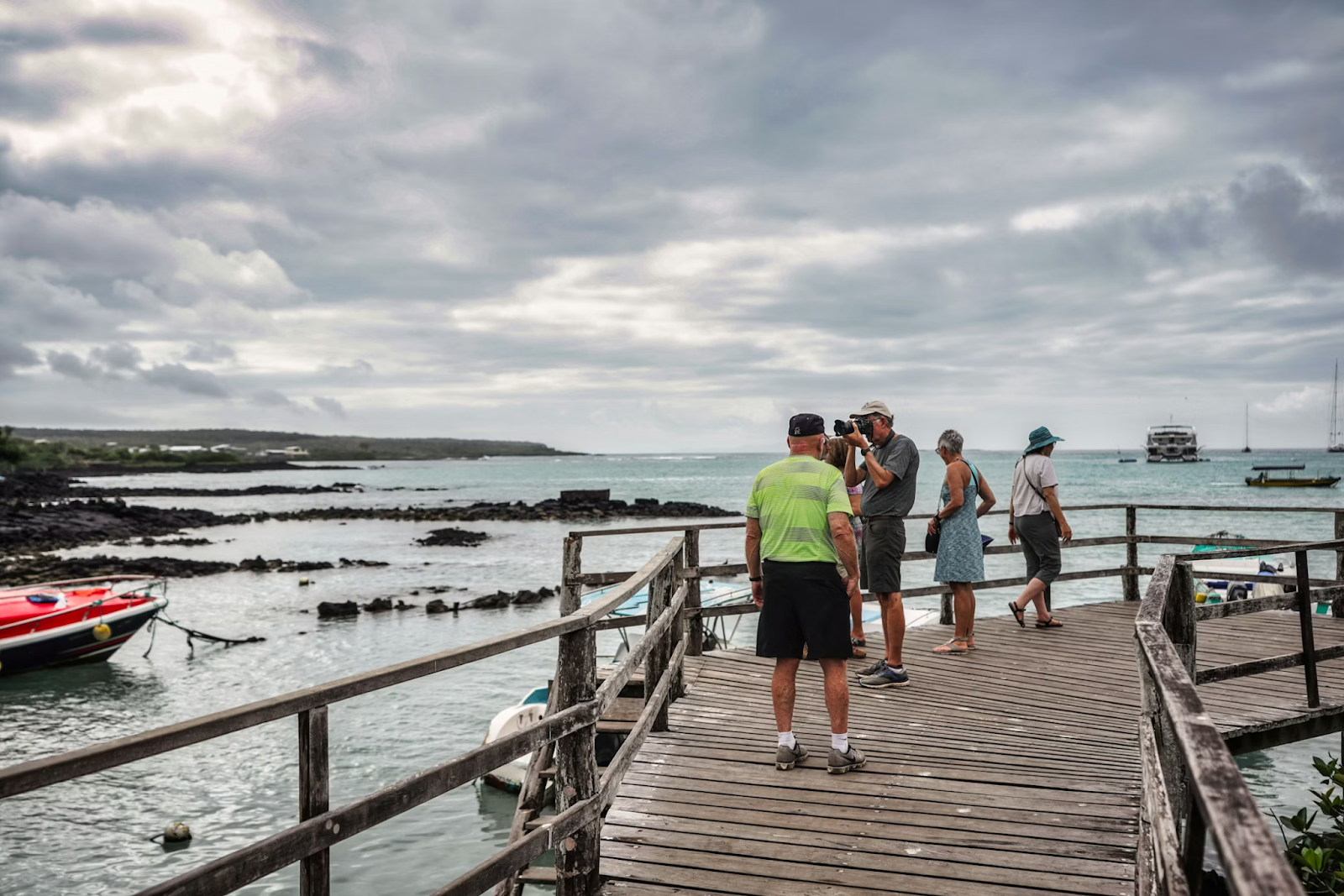
Boats docked in Santa Cruz, Ecuador. Andres Medina. Unsplash.
The Galapagos are marketed as a place outside the modern world, featuring blue water, strict park rules and animals that seem to have missed the memo about humans. UNESCO calls the islands a “living museum and showcase of evolution.”
That is the Galapagos most travelers recognize. But there is another Galapagos, quieter and more recent, shaped by the same geography that makes the islands famous. The archipelago sits deep in the eastern Pacific, far enough from the mainland to feel remote and close enough to ride along lengthy maritime routes that move north toward Central America and beyond. Trafficking networks do not need the Galapagos to be a city; they need it to be a waypoint.
In early 2026, Al Jazeera reported that the islands are increasingly being used as a refueling and staging zone for cocaine shipments moving through the Pacific, with authorities intercepting boats and searching for hidden storage points. The story lands hard because the Galapagos economy depends on tourism and regulated fishing, not on the shadow economy of organized crime. When trafficking pressure rises, the damage is not only criminal: It is social.
Part of the pull is simple distance. Long routes require fuel and logistics, and isolated stretches of ocean provide cover. A Pacific trafficking analysis by the U.N. Office on Drugs and Crime describes expanding transnational organized crime in the region and the importance of maritime routes for moving illicit drugs.
Another part is Ecuador’s wider security crisis, which is pushing criminal networks to innovate and spread. The International Crisis Group warns that Ecuador’s organized crime surge is tied to the country’s role in global cocaine flows and violent competition among criminal groups. That shift does not stay on the mainland: It radiates outward, including into strategic maritime zones.
The consequences in the Galapagos do not always look like those in Hollywood. They can look like corruption pressure on small businesses; fishermen being approached to sell information, fuel or services; authorities trying to police an enormous marine area with limited assets while also protecting one of the most sensitive ecosystems on Earth.
Officials are taking the threat seriously. In March 2025, the U.S. Embassy in Ecuador said Ambassador Art Brown visited the Galapagos and discussed security challenges, including illicit trafficking and illegal fishing, as part of coordination with local and national authorities. The U.S. Embassy has also emphasized the scale of maritime interdictions more broadly. The country’s Ministry of Defense said Ecuador seized 135 tons of drugs at sea in 2025, a record it framed as a major blow to trafficking networks.
The larger lesson is uncomfortable: Trafficking routes shift like water. When enforcement tightens in one corridor, networks test another. The Galapagos are now part of that map, and the challenge is no longer only protecting wildlife; it is protecting a community and a global treasure from being turned into infrastructure for a drug economy.
GET INVOLVED:
Support conservation and community protection efforts through the Galapagos Conservancy and the Charles Darwin Foundation. Follow organized crime and security analysis through the International Crisis Group Ecuador page and regional trafficking research through the UNODC

Carol Khorramchahi
Carol Khorramchahi is a student at Boston University, where she studies English and Psychology and minors in Journalism. She enjoys writing and reporting on stories that bring together culture, identity, and community, and has experience in both newsroom reporting and digital media. She is especially interested in thoughtful storytelling with a global lens.
Do Greenlanders Really Need Saving?
Salome Liptak
Trump's continued pursuit of annexing Greenland has complicated international discussions of the territory's relationship with Denmark.
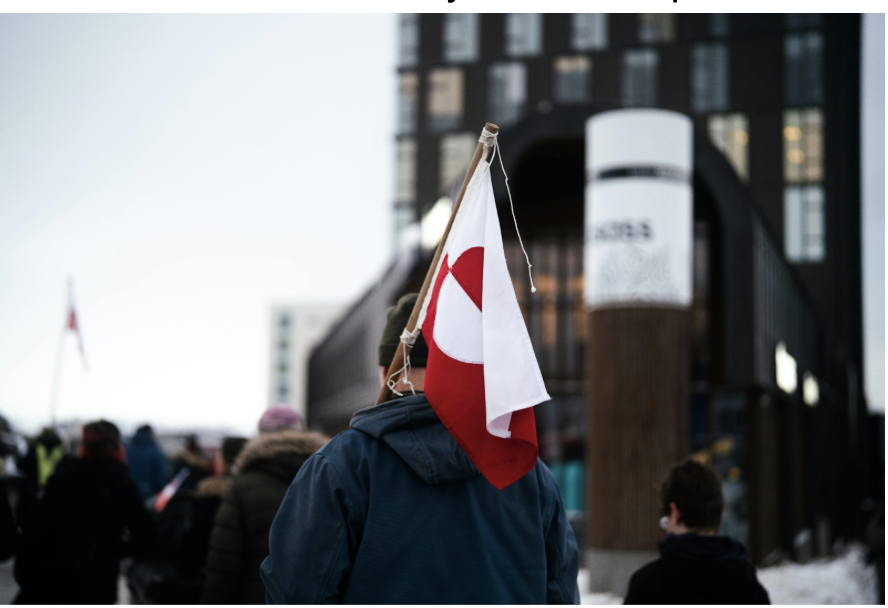
Protester holding Greenland’s flag. Peter Platou. Pexels.
Greenland, the autonomous territory of Denmark that is home to about 56,000 people, has been the subject of international debate during the second Trump administration. Trump first expressed interest in purchasing Greenland from Denmark in 2019, but now he has escalated to threats of tariffs against Denmark and its European allies, as well as military action against Greenland.
Greenland has had its own parliament for domestic governance since the 1979 Home Rule Act, and it achieved self-rule in 2009, when legislation outlining Denmark’s legal pathway to voluntary independence was passed. Current polls show that Greenlanders hope to utilize this pathway to complete independence from Denmark, but Greenland’s vast, remote landscape and low population make economic independence presently impossible. This is also a major factor for the healthcare access issues that concern Greenlanders of all viewpoints, since the most remote community clinics are typically understaffed and underresourced.
Several European leaders have expressed their disapproval of Trump’s threats and emphasized their solidarity with Greenland against foreign intervention. Greenland’s unique status as a territory has required careful wording when defending the island’s right to self-determination, including U.K. Prime Minister Keir Starmer’s affirmation that “the future of Greenland is for the people of Greenland and the Kingdom of Denmark alone.” French President Emmanuel Macron made a similar statement, choosing to affirm Greenlanders’ sovereignty while speaking in Indigenous Greenlandic.
Greenland’s post-colonial relationship with Denmark, as is true for many Indigenous groups around the world, remains complicated. Greenland, whose population is majority Inuit, bears several national wounds from Danish colonial rule, which only ended in 1953. These include social experiments that separated Inuit children from their families and put them in Danish foster families to assimilate in 1951, as well as the forced sterilization of Inuit women throughout the 1960s. While Denmark has made strides toward reparations with public apologies and payouts for those involved, this painful history has left its mark, and systemic discrimination continues to be an issue in Greenland’s healthcare, education and social services, all of which are funded by Denmark.
Trump’s current push to annex Greenland has taken a different tone than that of his first term, utilizing the Kingdom of Denmark's present sovereignty over Greenland to justify U.S. intervention. On Truth Social, he announced his plan to send the U.S. hospital ship USNS Mercy to Greenland “to take care of the many people who are sick, and not being taken care of there.” The post’s unsubstantiated claim, along with its AI-generated image of the Mercy, caused widespread confusion. It appears this plan may have originated with Jorgen Boassen, a Greenlandic Trump supporter who has been vocal about issues of healthcare access in Greenland’s rural clinics. In response, Greenland’s Prime Minister, Jens-Frederik Nielsen, noted that Greenland currently has a “public healthcare system where treatment is free for citizens,” providing more access to services than the current U.S. healthcare system, despite being flawed.
This new attempt at a humanitarian claim to Greenland only further complicates international discourse on Greenland’s sovereignty. For the majority of Greenlanders who oppose American acquisition of Greenland, Trump's threats of intervention on their behalf have only increased the obstacles they face in establishing independence, as they are reliant on Denmark for defense; if Greenland were to leave the realm of Denmark, it would likely be unable to defend itself from unwanted intervention. Many Greenlanders have expressed humor at the ironic effect Trump’s actions have taken, such as one viral video from the Danish public broadcast DRP3, where a man tells the camera, “Yes, Mr. President! You are a true peacemaker. Because your threats have actually brought Denmark and Greenland closer together than ever!”
While Denmark’s control leaves much to be desired for many Greenlanders and complete sovereignty remains a political goal, it is clear that intervention from Trump is both unwarranted under international legal norms and unwanted by the majority of Greenlanders.
Salomé Liptak
Salomé is a student at Sarah Lawrence College studying literature and writing. She is passionate about storytelling (both true and fictional) and its power to reflect the world as it is, or imagine what could be.
Gen Z Protests: Social Media and Pop Culture in the Fight for Reform
Spreading across Asia, Africa and Europe, youth-led protests have quickly risen over recent months through the use of social media and pop culture symbols, rattling governments in a passionate call for change.
Read MoreWhy a Russia-India-China Alliance May Not Be Sustainable
While recent meetings show warmth and unity among the countries’ leaders, the possibility of a sustained alliance seems complex and difficult.
Read MoreThe Complex Sovereignty Claims Over the Amazon
When it comes to the rights over the Amazon rainforest, international governments and Indigenous communities don’t always agree.
Read MoreThe Efficacy of International Courts: What Do They Do?
The International Criminal Court and wartime tribunals are large figureheads for global justice, offering questionable accountability.
Read MoreGen Z Protests Topple Nepal’s Government
After years of government instability and censorship, Nepal’s Gen Z led an uprising that not only dissolved a corrupt parliament but also paved the way for political reconstruction.
Read MoreUnderstanding The Tensions Between the U.S. and Venezuela
U.S. warships head toward Venezuela amid increased tensions, but what’s truly behind the feud between Washington and Caracas?
Read More