
By Jeremy Gordon
As South Korea sentences its former president to life in prison, North Korea’s Kim Jong Un becomes the most powerful leader in the country’s history.
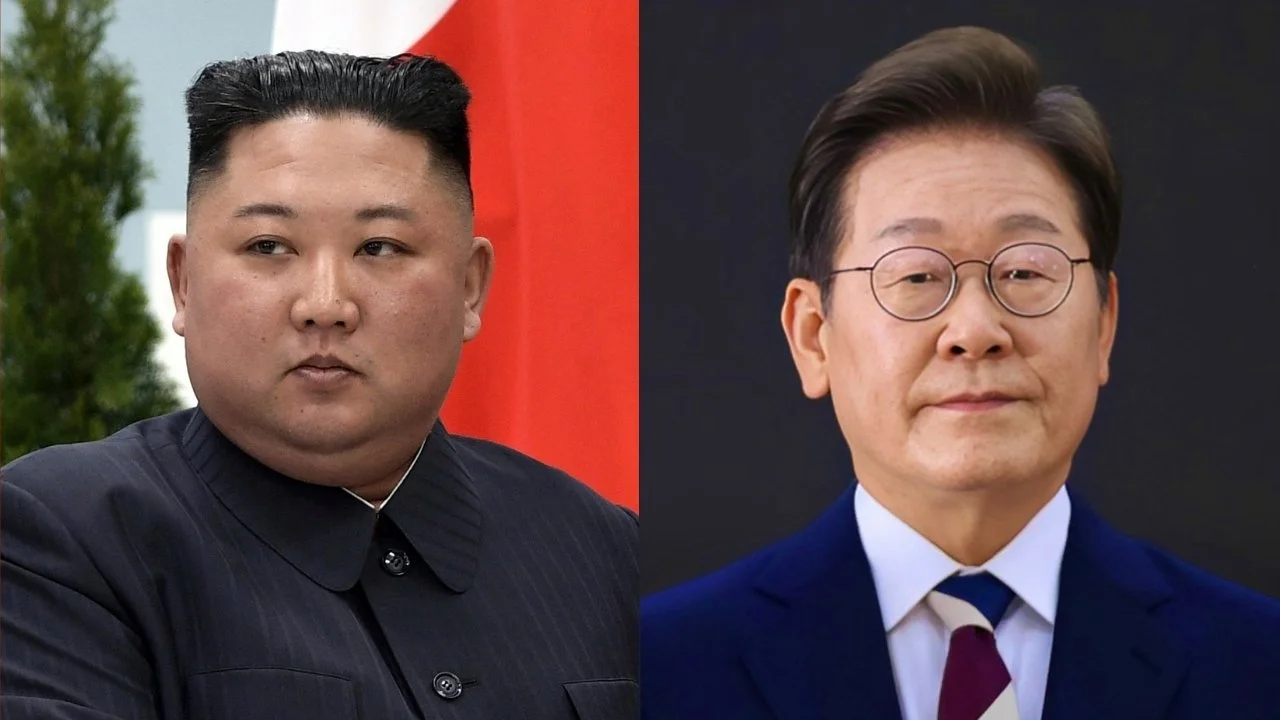
Left: North Korean leader Kim Jong Un. Kremlin.ru. CC BY 4.0. Right: Current South Korean President Lee Jae Myung. Korea.net. CC BY-SA 2.0.
There are few places on earth more perpetually tense than the Korean peninsula. South Korea is a pluralistic democracy with a president elected every five years (for one term only), a parliament of 300 members and an independent judiciary. North Korea is a totalitarian dictatorship under the absolute rule of the Kim family, beginning with Kim Il-sung in 1948 and leading to his grandson Kim Jong Un, who took over in 2011. The two nations, separated by a heavily fortified border known as the Korean Demilitarized Zone, have been at ideological odds since their violent divorce at the end of World War II. And as the 2020s pass their midpoint, both nations find themselves on sharply mirrored paths, heading in opposite directions, grappling with parallel issues.
On Friday, June 12, former South Korean President Yoon Suk Yeol was sentenced to 30 years in prison by the Seoul Central District Court. He was convicted, along with his ex-defense minister Kim Yong-hyun, of ordering drones into North Korea to deliberately stoke tensions before a whirlwind coup attempt in 2024. Yoon was already given life in prison by the same court in February for leading that ill-fated insurrection.
In December 2024, seeking to wrest control from the Democratic Party of Korea, which holds a parliamentary majority, Yoon initiated martial law. Under the guise of rooting out “anti-state” forces within the government, labeling Parliament a “den of criminals,” Yoon sent troops to the National Assembly to arrest his rival Lee Jae Myung and other opposition lawmakers. Thousands of citizens rose up, allowing lawmakers to break through the blockade of soldiers, enter the National Assembly and vote to overturn martial law, forcing Yoon’s cabinet to rescind it. The whole messy affair lasted six hours, leaving Yoon defeated and humiliated, and now imprisoned for life.
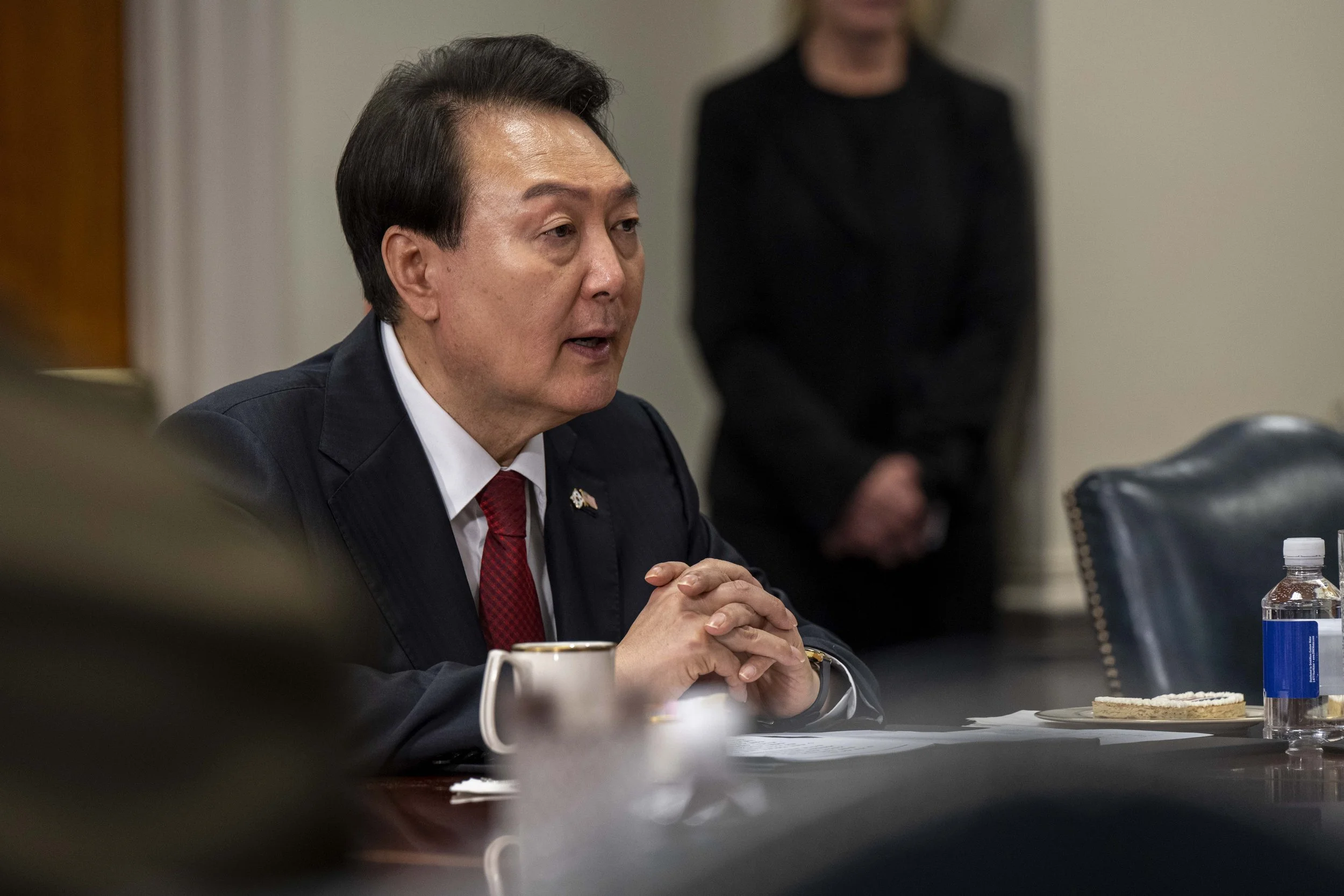
Former President Yoon Suk Yeol. U.S. Secretary of Defense. CC BY 2.0.
This is not the first dramatic ousting of a South Korean president in recent times. In 2016, it was revealed that the country’s first female president, Park Geun-hye, had granted unprecedented access and influence to her advisor, Choi Soon-sil, daughter of a pseudo-Christian cult leader dubbed “the Korean Rasputin.” Through her relationship to the president, Choi was able to extort millions of dollars from giant conglomerates, including Samsung, to funnel into two non-profits she controlled. The revelation of the scandal triggered nationwide protests, leading to Park’s impeachment, removal and imprisonment.
This year’s conviction of former president Yoon represents a step toward political stability. Six months after the insurrection, the country held a snap election, in which the opposition leader Lee Jae Myung won the presidency, an office he currently holds. But such chaos has a way of reverberating through the minds of the populace. South Korea’s liberal democracy remains on wobbly footing as it awaits the next existential threat.
Meanwhile, north of the 38th Parallel, North Korean leadership has achieved stability of a different kind. The country has bounced back since its 2020 low point, during which food shortages, sanctions and economic turmoil caused Kim Jong Un, the country’s latest dictator, to issue a tearful mea culpa (my fault) on national television. In the televised apology, Kim vowed to get the country back on track.
He did so with startling speed and efficiency, becoming the country’s most powerful leader in history, surpassing his father and even grandfather, who had been ascribed divine properties. Using the pandemic as a pretext, Kim Jong Un cracked down on smuggling and black markets, forcing citizens to rely on domestic products. He clamped down on outside cultural influence, publicly executing those accused of distributing K-pop and K-dramas. He completed numerous construction projects, including luxury seaside, ski and spa resorts. He revived the economy by smuggling coal and gold into China and enlisting an army of hackers to steal billions in cryptocurrency. He expanded the country’s nuclear arsenal and capabilities, advancing ballistic missile and submarine technology.
These last two achievements, the economic and military expansion, he managed by shrewdly taking advantage of Russia’s floundering war effort in Ukraine. Increased munitions manufacturing, along with other revenue streams, allowed the North Korean economy to grow by 3.7% in 2024, the largest jump in 8 years. Through a mutual defense and cooperation treaty, North Korea has supplied Russia with troops and weapons, receiving technological advancements in exchange.
All of this has resulted in an emboldened North Korea, led by an emboldened Kim Jong Un. The man who once cast himself as a “people-first” leader, who once invited Dennis Rodman and other former NBA players to play an exhibition game in Pyongyang, now seems poised to confront the United States. And he has become increasingly capable of doing so. This has not escaped the notice of China, which sent President Xi Jinping over for a two-day summit, his first visit in seven years, to shore up relations and keep an eye on their volatile neighbor. The prospect of confrontation is worrisome to China, bound to the country’s defense through the 1961 Treaty on Friendship, Cooperation and Mutual Assistance.
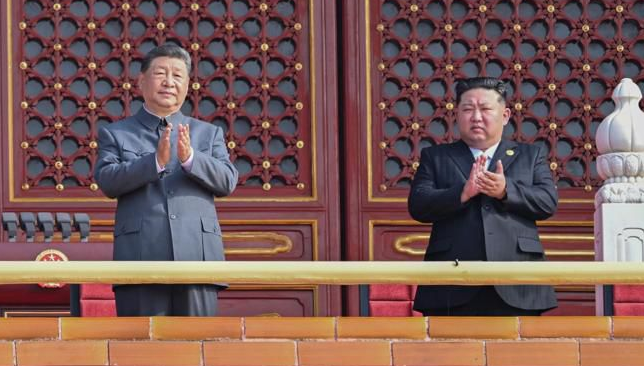
Chinese President Xi Jinping (left) and Kim Jong Un (right) attending China’s Victory Day Parade in 2025. Biro Pers. CC0.
In the 70-plus years since their divorce, the two Koreas have tread on starkly different paths. While the South has become a hub of big business and democracy, the North has remained an isolated, mercurial dictatorship. The events of this June have offered simultaneous glimpses into the directions both countries seem to be heading. By sentencing its former president to life in prison for a failed insurrection, South Korea seeks to shed its recent political turmoil and regain its democratic footing. And by meriting a state visit from the leader of its most powerful ally, North Korea has validated its newfound confidence, cohesion and military capability. With the world running at peak unpredictability, where the two nations head from here is a mystery. Though as the decade moves further into its latter half, tensions seem primed to ignite.

Jeremy Gordon
Jeremy is a graduate student at Johns Hopkins University studying Creative Writing. He graduated from the University of Maryland with a bachelor's in Criminology and Criminal Justice and worked for four years as an Investigative Specialist with the Public Defender Service for DC.