
By Julia Sassaman
From Stephens Island to the Houtong Cat Village, local communities address cat populations differently based on their economic and environmental impacts.
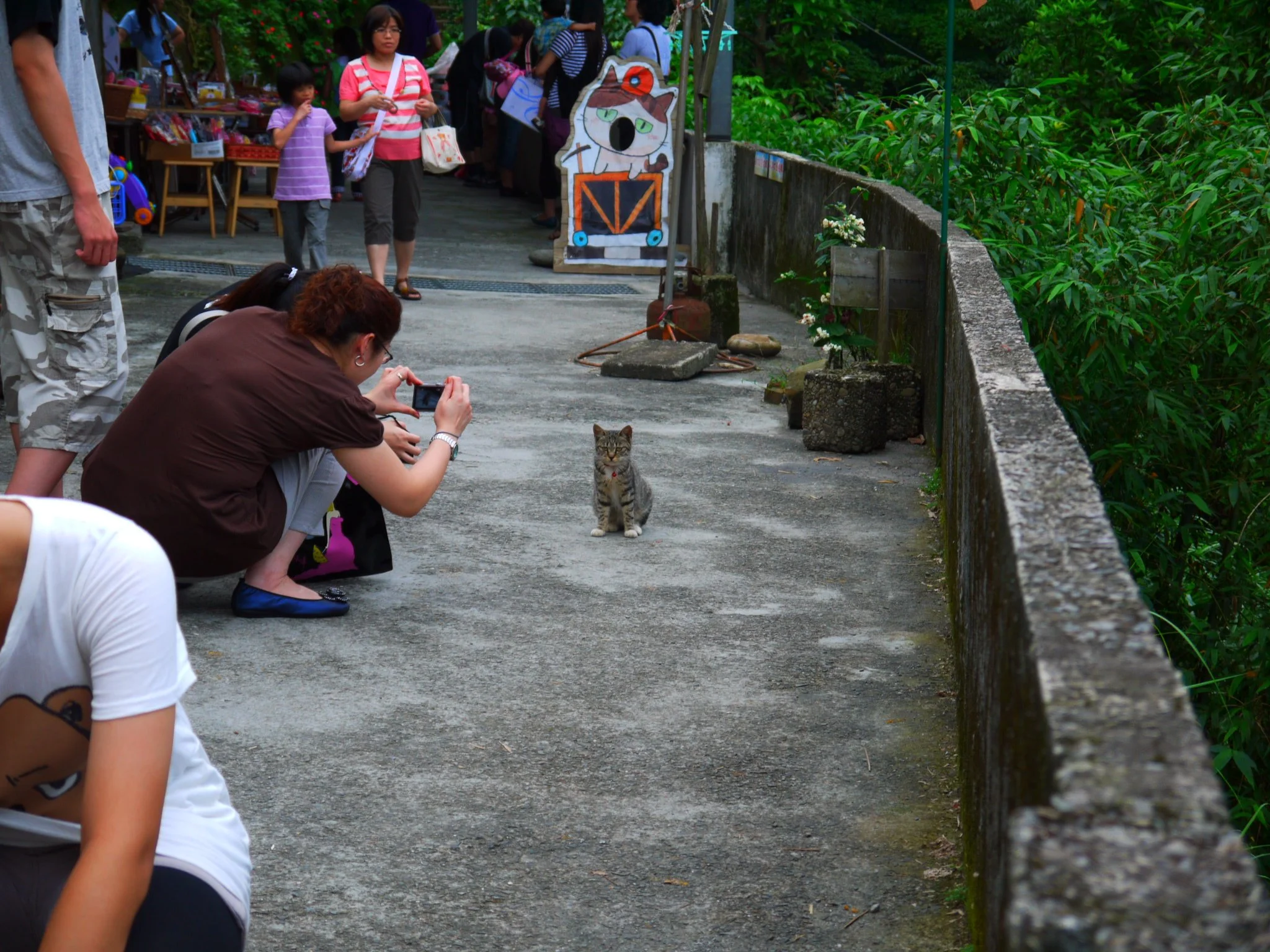
Visitors stop to photograph a cat in Houtong. Kaurjmeb. CC BY-SA 2.0.
In the small Taiwanese village of Houtong, cats have revitalized the local economy, which had been dormant since the decline of its coal production in the late 20th century. Houtong is popular for a variety of reasons; its name directly translates to “monkey cave,” referring to the cave of monkeys that once resided near the mountainous village. In the 1920s, Houtong was one of the primary coal-producing villages in Taiwan during the Japanese colonial period. This success did not last, as Taiwan nationally phased out coal production by the 1990s due to its high cost and frequent mining accidents. Without coal to stimulate the local economy, residents left to pursue better work opportunities. As a result, the village’s population fell from 6,000 to fewer than 100 residents.
While the human population declined, the cat population grew to about 200 stray and abandoned domesticated cats. These cats originally served as a method to suppress the local rat population. In 2008, local photographer Peggy Chien featured the felines in a Yahoo photo series that garnered millions of views, pulling Houtong out of its dormancy and generating an influx of visitors. Since then, the village has capitalized on its cat community, with the creation of painted murals, souvenir shops and themed restaurants.
In recent years, spay and neuter initiatives led by local organizations have diminished the stray cat population. Today, residents continue to search for ways to sustain their cat-centered identity, proposing the introduction of more cats into the village.
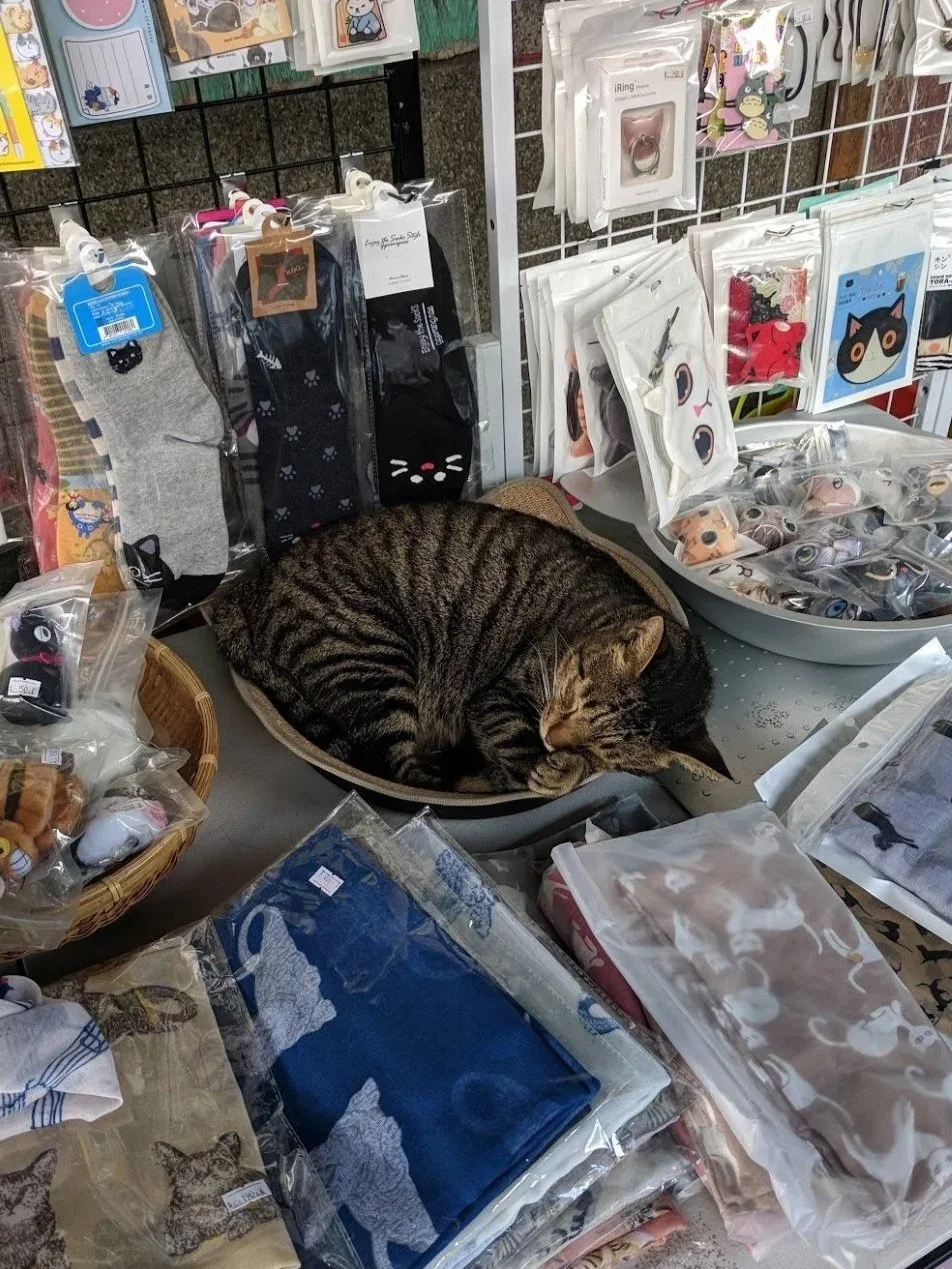
One of Houtong’s strays sleeping on a table of cat-themed merchandise. Mario Menti. CC BY-NC-SA 2.0.
The cats of Houtong are generally considered strays, living in human-built environments and often relying on the community for food and shelter. Feral cats, by contrast, survive independently and hunt native wildlife, while companion cats depend primarily on their owners.
Located over 5,000 miles away, Takapourewa, also known as Stephens Island, lies within the Marlborough Sounds, a network of sunken river valleys in New Zealand. Connected to Maori communities through ancestral and cultural ties, the island is home to a diverse range of endemic and rare species, including birds, reptiles, bats and insects. Prior to human influence, no mammalian predators were native to the island, but its ecosystem was disrupted in the late 1890s, when cats introduced by lighthouse keepers established a feral population. Within a few years, these predators drove the Stephens Island wren to extinction. Like many of the island’s native bird species, the wren was flightless, nested on the ground and reproduced slowly, traits that left it highly vulnerable to predation by cats.

Bird's eye view of the Marlborough Sounds, New Zealand. Phillip Capper. CC BY 2.0.
The ongoing impact of introduced predators is evident along the Clarence River, south of Stephens Island in the Marlborough Sounds. In December 2024, a single feral cat attacked a colony of 95 nests belonging to the nationally endangered Black-fronted tern, killing nearly all of the birds.
In response to the estimated 2.5 million feral cats inhabiting New Zealand’s offshore islands and diverse ecosystems, the country expanded its Predator Free 2050 commitment to include feral cats. This plan aims for complete eradication by 2050 to prevent repopulation. Strays and companion cats are not included in this target. In a November 2025 statement, Conservation Minister Tama Potaka stated, “Including feral cats in the Predator Free 2050 goal means stronger protection for local wildlife, better tools for communities, and less impact on farmers, whanau [extended families] and our economy.” While supporting efforts to reduce the ecological impact of feral cats, organizations such as the National Cat Management Group and the Society for the Prevention of Cruelty to Animals advocate for humane remediation tactics, including trap, neuter and return programs alongside microchipping, as alternatives to total extermination.
The effects of cats on human and ecological communities vary dramatically around the world. In Houtong, a managed population of stray cats has become the foundation of its tourism-driven economy. In contrast, on Stephens Island and throughout the Marlborough Sounds, feral cats have contributed to species declines and prompted a national eradication effort. These cases demonstrate how the impacts of cats depend largely on the environments they inhabit and how humans interact with them.

Julia Sassaman
Julia is a fourth-year student at the University of Michigan studying political science and international studies. She recently studied abroad in Geneva, Switzerland, researching post-conflict tourism and international human rights law. After graduation, she hopes to move to Europe to pursue a career centered on global human rights. In her free time, she enjoys painting, baking, journaling, and reading.