
By Ellison Wolk
Sea turtle hatching tours are often marketed as ecologically beneficial experiences, but choosing the wrong one could prioritize visitor entertainment over animal welfare and effectively haunt hatchlings for the rest of their lives.
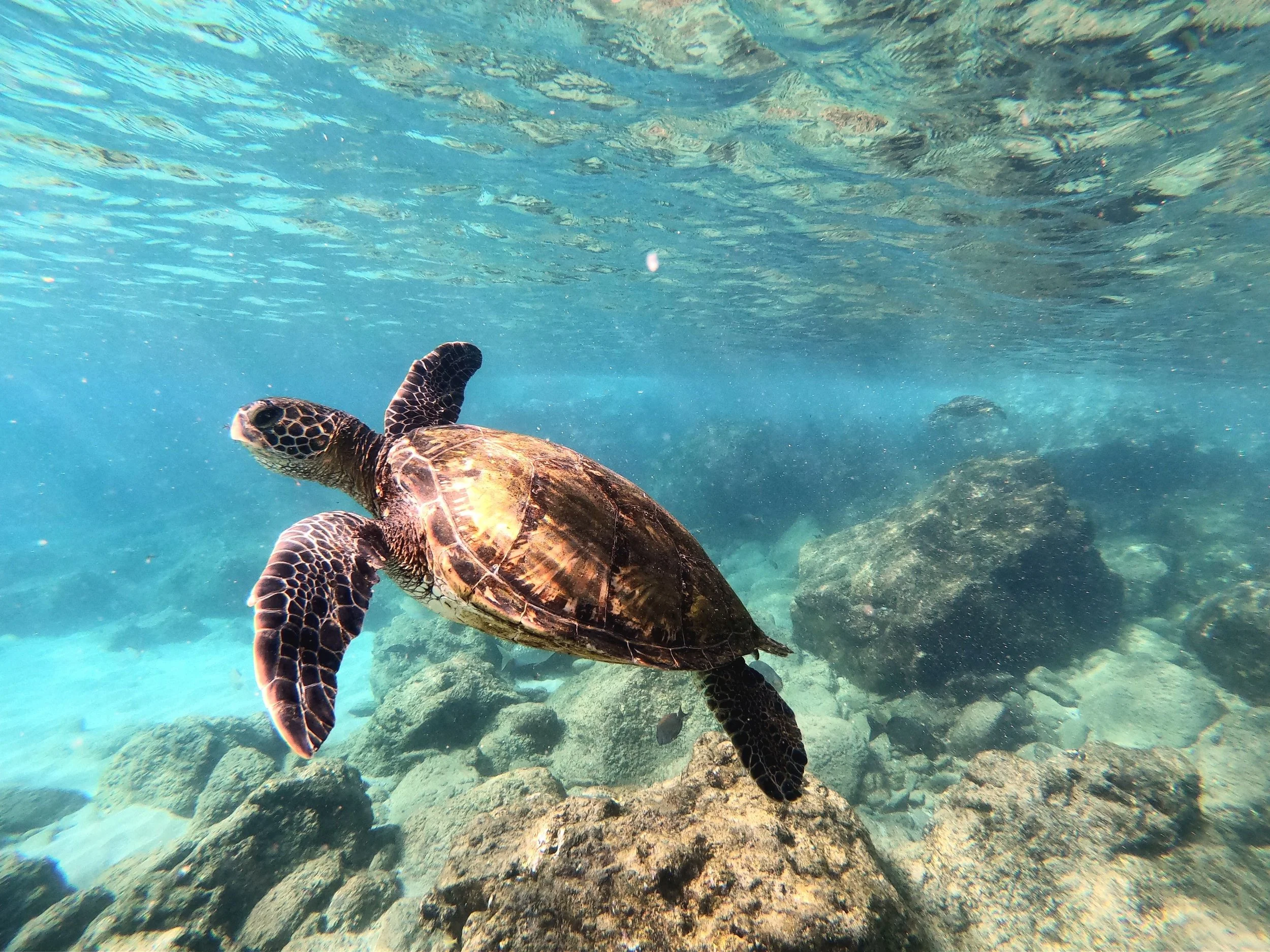
Sea turtle swimming. David Willis. Pexels.
When we think of sea turtles as a general collective, what comes to mind is the ‘spokesanimal’ for wildlife conservation. They are beloved worldwide, but they actually have a much more extensive history than many may realize. In the 17th and 18th centuries (centuries much attributed to an era of empire and expansion), sailors looking for places to settle colonies, mostly coming from Europe, depended on turtles as transportable and plentiful food sources that could remain aboard ships without the need for salt-curing or refrigeration. This practice led to the commodification of turtles more generally throughout European and particularly English society, as turtles were introduced into the global markets. They began to be treated as both a material item and a culinary dish of distinction throughout the upper ranks of the social hierarchy of the time.
Soon after, due to declining population numbers, the wave of conservation support caught on. Sea turtles are still highly protected to this day. Paradoxically, while the rhetoric around turtles is that they must be safeguarded, one of the most alluring tourist attractions actually works against their well-being: turtle hatching tours. Located globally, but with a significant presence in Costa Rica, turtle hatching tours allow tourists to observe and sometimes even help baby sea turtles emerge from their nests and subsequently release them into the ocean.
These tours are broadly marketed as sustainable and conservation-focused activities that can also appeal to a travel agenda, as they are entertaining and family-friendly. And some of them are just that. But it’s important to be diligent in choosing one that is ecologically responsible and expert-driven. One of the biggest problems with aiding in hatching is that it messes with a newborn turtle’s ability to geomagnetically imprint, which is what allows for its succeeding navigational skills. The sea turtles must crawl from their nest to the ocean unassisted in order to imprint the chemical characteristics of the path, which they will then use to return to the same nest many years later. ‘Helping’ turtles from the nest to the ocean by intervention eliminates this necessary developmental phase. This biological function is heavily backed by science, including one study that says that “[t]urtles derive long-distance navigational information from the Earth’s magnetic field by detecting the intensity and inclination angle,” and that “each area of coastline is typically marked by a different isoline of inclination and a different isoline of intensity and thus has a unique magnetic signature.”
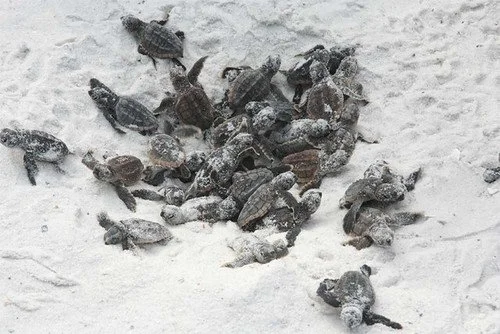
Newly hatched nest of sea turtles. mypubliclands. CC BY 2.0.
Another consideration is the time of day that these excursions occur. Natural hatching typically occurs at night. Thus, if a tour is marketed solely toward tourists rather than through the lens of conservation, it runs the risk of exposing the turtles to immediate predators by releasing hatchlings during the daytime. Additionally, when people interfere with the hatchlings, it depletes their energy. Sea turtles have a window of high energy after they hatch to assist them in getting to the ocean and enhance their ability to survive once there. If this window is wasted to amuse tourists, it allows them to become easier prey.
For travelers to Costa Rica, seeing turtles hatch can be an incredibly rewarding and rare privilege. However, such a privilege comes with responsibility. Tourists should keep in mind that the best tours allow visitors to feel involved and watch the turtle hatching experience without interrupting it. The best way to do that is to ask yourself the following questions when considering an excursion: Is the tour led by experts? Does the tour take place at the turtles’ natural hatching time? Does the experience allow turtles to hatch and reach the ocean naturally? And most importantly, does it prioritize the well-being of turtles over the entertainment of visitors? If the answers to these questions are yes, the tour can be an incredibly meaningful and memorable adventure and contribution to conservation. If not, it may be worth considering whether it is worth potentially harming the animal that the tour claims to protect.

Ellison Wolk
Ellison is a student studying international relations and Russian and Eurasian studies at Colgate University. She has an interest in languages and has been lucky enough to travel extensively throughout her lifetime.