
Following the earthquakes on June 24, organizations are mobilizing to provide food, water, medical care and relief services to Venezuela.
Read MoreThe Venezuela Earthquakes Could Not Have Come at a Worse Time
Over 1,700 people were killed by massive 7.2 and 7.5 magnitude earthquakes striking within one minute of each other.
Read MoreUnderstanding The Tensions Between the U.S. and Venezuela
U.S. warships head toward Venezuela amid increased tensions, but what’s truly behind the feud between Washington and Caracas?
Read MoreVenezuela’s Drowned Church of Potosi
The Drowned Church of Potosi in Uribante remains a powerful reminder of the historical resilience of the Venezuelan people and the challenges they endure today.
Read More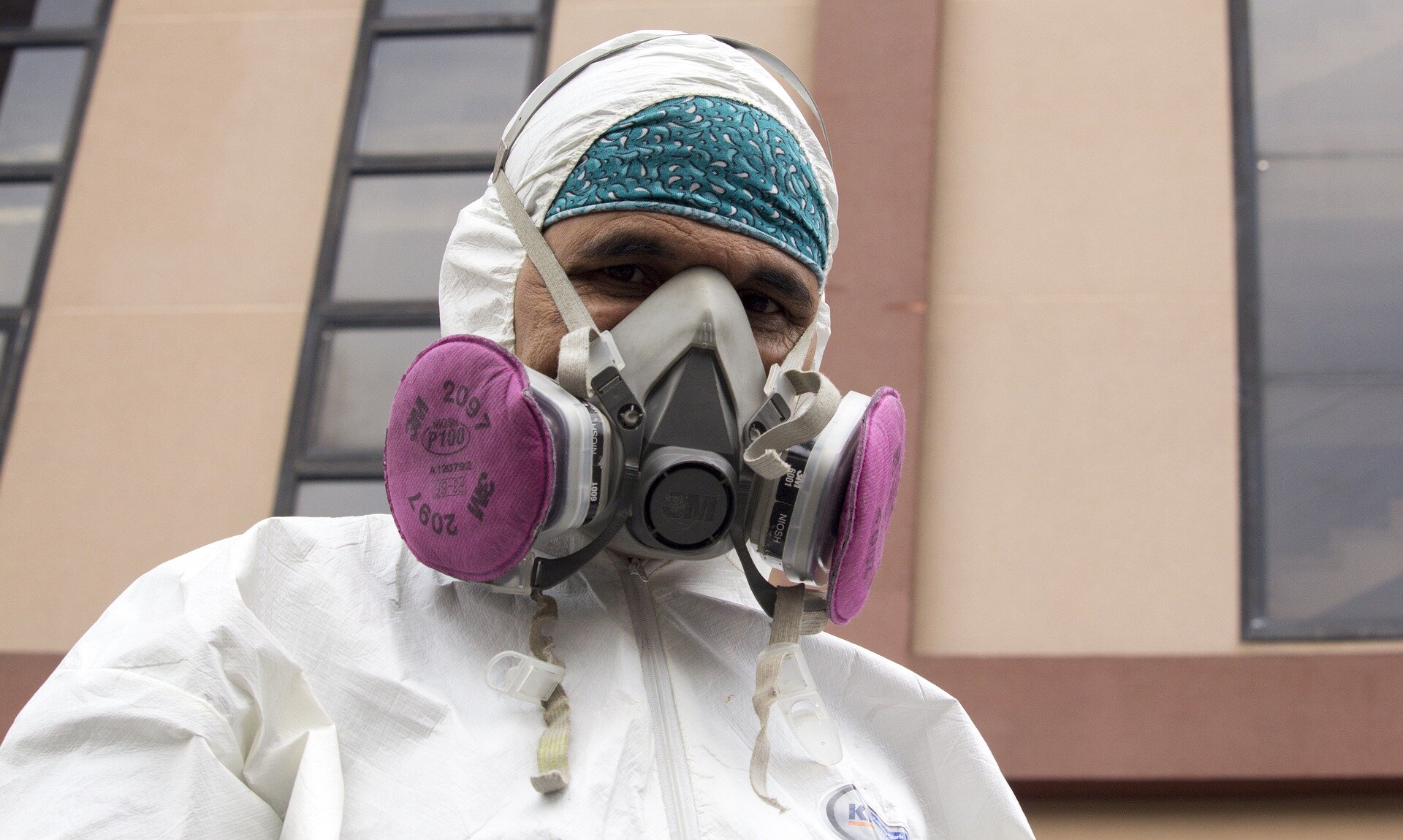
A military coronavirus relief worker in Venezuela. modovisible // pixabay.
Venezuela Labels Coronavirus-Infected Citizens as ‘Bioterrorists’
Venezuelan President Nicolas Maduro has implemented harsh measures throughout the COVID-19 pandemic to arrest, detain and punish those infected with the virus and citizens who have broken quarantine measures. These authoritarian measures mark a stark contrast with the relief efforts of neighboring countries, as Maduro has labeled those suspected of coming in contact with the virus as “bioterrorists.”
The government was initially quick to respond to the virus, suspending all flights from Europe and Colombia and banning all public gatherings on March 12, before the country had officially reported any cases. However, cases in Venezuela have since risen, with experts suggesting that the current tally of 42,898 infections is much lower than the actual case number due to an insufficient amount of testing materials.
Infected Venezuelan citizens have been subjected to inhumane treatment, leading many to defy the government’s orders. According to a taxi driver from Caracas who was forced into a state-run isolation facility, the government treats infected citizens in an inhumane manner.
“I spent three days sleeping on an aluminum chair,” the driver said in an interview with Bloomberg. “They fed us cold rice, lentils and arepas. The place was controlled by armed militias and Cuban doctors.”
Venezuela’s approach to the pandemic is a result of its failing health care system and Maduro’s resistance to internal reforms advocated for by activists over the past decade. The country’s sociopolitical system, which at one time was hailed by some as one of Latin America’s best, was brought to its knees after oil prices plummeted in the early 2010s. This just exacerbated shortages of basic food staples that began under the presidency of Hugo Chavez.
Using drastic anti-protest tactics which became commonplace in the mid-2010s, Maduro has authorized security forces to impose punishments for violating social distancing protocol such as sitting under the hot sun for hours, intense physical exercise and beatings.
In response to citizens evading testing facilities for fear of being subjected to harsh punishments, the Venezuelan military has encouraged citizens to turn in neighbors who they suspect have come into contact with the virus throughout the summer.
“Defense for the health of your family and community,” one tweet by the military stated in Spanish. “[Someone who helps others hide their infections] is a bioterrorist, which puts everyone’s health at risk. Send [us] an email with their information and exact location. #ReportABioterrorist.”
Maduro has largely ignored calls to reform his response to the pandemic, dismissing claims that those infected have been treated inhumanely.
“[In Venezuela] you’re given care that’s unique in the world, humane care, loving, Christian,” Maduro said in an Aug. 14 national address.
In response to calls for aid from organized opposition groups, on Aug. 21 the United States granted activists access to millions of dollars of previously frozen Venezuelan assets to be used to support health care workers. However, it is unclear how these funds will be accessed by opposition-supported health care workers, or if the Venezuelan government will be able to interfere with their distribution.
As of this article’s publication, Maduro has not responded to calls for pandemic relief reform, nor have efforts been made to test in a more humane manner.
Jacob Sutherland
is a recent graduate from the University of California San Diego where he majored in Political Science and minored in Spanish Language Studies. He previously served as the News Editor for The UCSD Guardian, and hopes to shed light on social justice issues in his work.
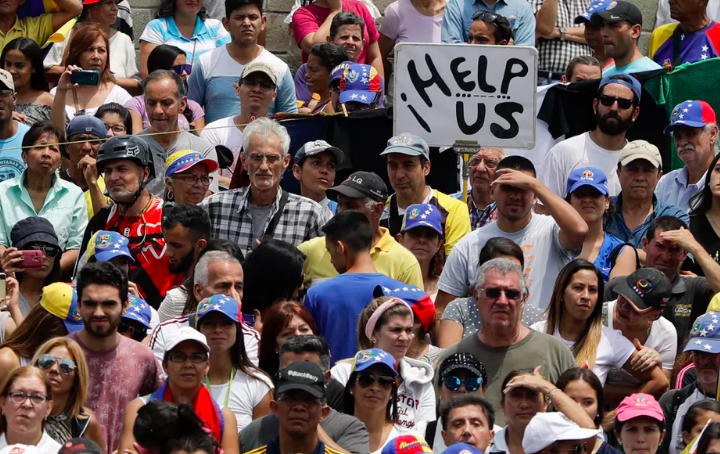
Venezuelans have faced food and medicine shortages since late 2015. Now power outages have cut off water supplies, too. AP Photo/Natacha Pisarenko
Venezuela’s Power Struggle Reaches a Tense Stalemate, as Human Suffering Deepens
Even in a country where crisis has become the norm, the past month has been eventful for Venezuela.
On April 3 Juan Guaidó, the Venezuelan National Assembly president who is leading an effort to remove President Nicolás Maduro from office, was stripped of his parliamentary immunity. Arrest seems increasingly likely. Guaidó’s chief-of-staff was jailed on March 22, on charges of organizing a “terrorist cell.”
Two days later, two Russian military planes carrying 35 tons of unspecified equipment and 100 soldiers landed at the international airport in Caracas.
Meanwhile, three blackouts left over 90 percent of the country in the dark. Since water pumps need electricity to run, neighborhoods and families were forced to organize water rationing systems or fetch water from polluted rivers and streams.
Maduro blames the blackouts on “sabotage” by Guaidó and the United States. The opposition blames government corruption and neglect of Venezuela’s energy grid.
Thousands of Venezuelans protesting the power outages on March 30 were met with violent repression. Counter-protestors came out to support the Maduro government.
These extraordinary events may give the appearance that armed conflict is on the horizon. But having researched Venezuela for over 25 years, I believe a prolonged deadlock – and deeper human suffering – is the more likely result.
International conflict
Each side in Venezuela’s political struggle has powerful international backers.
Guaidó has been coordinating with the Trump administration since before assuming the interim presidency, and Trump has made regime change in Venezuela a foreign policy priority. Over 50 countries now recognize Guaidó as Venezuela’s legitimate president.
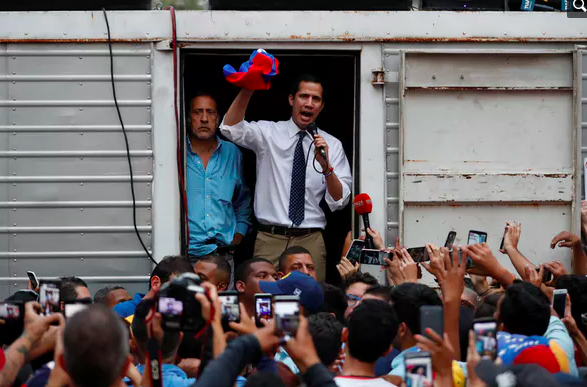
Venezuelan opposition leader Juan Guaidó at a rally in Caracas, March 29, 2019. Reuters/Carlos Garcia Rawlins
Maduro’s government retains important support from Cuba, Turkey and China – though China, which has loaned Venezuela some $60 billionover the last 12 years, has diminished its public backing of Maduro.
Russia has become Maduro’s most important ally. The Russian military equipment and personnel sent in March will likely help maintain and operate Venezuela’s sophisticated Russian-made S-300 air defense system, which protects the capital and key military bases from air attack.
The missile defense system may have been damaged in recent power outages, or left understaffed by desertions from Venezuela’s military.
In a March 29 press statement, White House national security adviser John Bolton called Russia’s military assistance to Venezuela a “direct threat to international peace and security in the region” that will “perpetuate the economic crisis that has destroyed Venezuela’s economy.”
Russian officials retorted that the deployment is part of a prior bilateral arms trade agreement with Venezuela.
“The United States is present in many parts of the world and no one is telling it where it should or shouldn’t be,” said Russian President Vladimir Putin’s spokesman Dmitry Peskov at a March 28 Kremlin press conference.
Regime change stalled
Venezuela’s opposition coalition and its allies in the U.S. appear to have thought that global rejection of Maduro’s re-election and Guaidó’s assuming the interim presidency – coupled with threats of a U.S. military invasion and sanctions on Venezuelan oil – would lead Venezuela’s armed forces to turn against Maduro. That would then usher in a democratic transition.
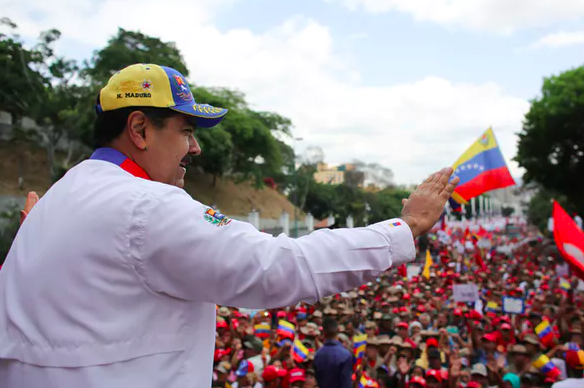
Eighty percent of Venezuelans oppose Maduro, but he retains some popular support – and the power of the Venezuelan armed forces. Miraflores Palace via Reuters
Recent events have shown that this strategy was simplistic.
More than 500 Venezuelan soldiers have defected to Colombia and Brazil. But most have stayed loyal, as have the generals who hold high positions in Maduro’s government. And Maduro has shown himself quite adept at using dispersed violence to discourage dissent.
Despite President Donald Trump’s repeated mentions of a “military option” for dealing with Venezuela, it’s become clear in recent weeks that the U.S. has no actual plans for military action. Indeed, it does not have significant military assets in position near Venezuela.
Venezuela’s armed forces are the fifth most powerful in Latin America, according to Global Fire Power, which ranks military strength. It has around 200,000 troops, a volunteer militia, plus paramilitary forces and a fleet of Russian Sukhoi fighter jets.
The presence of Russian troops in Venezuela further complicates any plans for U.S. intervention. Russia is a nuclear power, so incurring Russian casualties is probably too big of a risk for the U.S. to take.
Adam Isacson, a defense expert at the Washington Office on Latin America, a human rights organization, suggests that removing Maduro by force would not only kill thousands of people on the ground, it would likely require tens of thousands of U.S. troops to occupy Venezuela for years in order to stabilize it.
Outside of south Florida, where some 200,000 Venezuelan exiles are clamoring for Maduro’s ouster, few Americans would have an appetite for such a prolonged operation.
U.S. economic sanctions – which are now targeting Venezuelan oil – appear to be hurting the Venezuelan people more than Maduro’s government.
That will only make a democratic transition more elusive. Depriving the Venezuelan government of cash and credit will impede it from fixing the electrical grid by preventing the purchase of new equipment. And without electricity and water, Venezuelans, who in their vast majority oppose Maduro, will be concentrating on survival rather than protest.
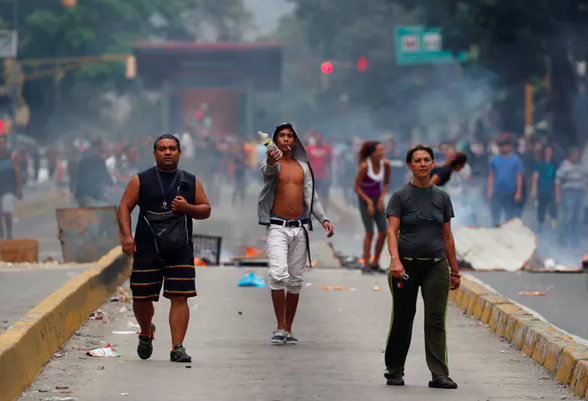
Venezuelans protest water shortages in Caracas on March 31, 2019. Reuters/Carlos Garcia Rawlins
Working for peace
An international effort led by the European Union, Uruguay, Ecuador and Costa Rica is seeking to negotiate new elections. Calling itself the International Contact Group, this coalition has sent technical teams to Caracas twice to meet with the Maduro government and the opposition.
The International Contact Group has not actually found much interest on either side.
The opposition and its allies in the Trump administration still believethat their strategy of political pressure and economic punishment will lead to the government’s collapse. Maduro, it appears, thinks he can hunker down and wait out the storm.
There is one glimmer of hope.
After years of political wrangling over humanitarian aid, on March 29 the International Committee of the Red Cross announced that it had brokered agreements with both the Maduro government and the opposition. They will allow the Red Cross to distribute food and medicine to Venezuelans, who have suffered severe shortages of both since 2015.
The United Nations estimates that 94 percent of Venezuela’s population now lives in poverty, and a quarter of its people urgently need humanitarian assistance.
The Red Cross deal shows what can be achieved with “satellite diplomacy” – that is, negotiations that engage with rival factions independently rather than requiring them to meet face to face.
This is significant. It is the first time that this diplomatic technique has succeeded in Venezuela’s conflict.
In the best-case scenario, the humanitarian aid agreement will stick. And it could serve as a model for how international actors can facilitate a democratic transition in Venezuela.
DAVID SMILDE is a Professor of Sociology at Tulane University.
THIS ARTICLE WAS ORIGINALLY PUBLISHED ON THE CONVERSATION
VENEZUELA : A Country in Darkness
And why the lights were flickering in the first place.
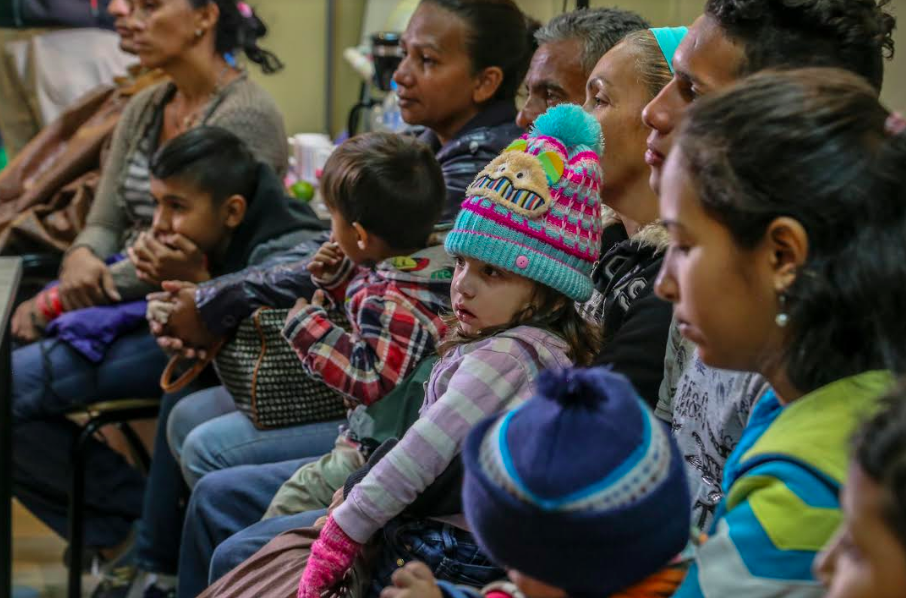
Venezuelan migrants wait at the Columbian boarder to join the millions who have already fled the country. UNICEF Ecuador. CC2.0
The streets are littered with planks of wood and broken glass from storefronts destroyed by looters. The smell of rotting food from useless refrigerators fills the air of the city’s neighborhoods. At the local hospital, groans can be heard from patients in pain without medicine and the dead appear to be multiplying.
This was Venezuela for six days in the lucky towns, and eight days in cities on the edge of the electric grid such as Maracaibo. The city of Maracaibo, about 200 miles west of Caracas, regularly experiences power outages as a result of its high energy consumption and position on the power grid.
The country’s economy has struggled throughout the past few years, and hyperinflation plagues Venezuelans’ day to day lives. Food is often scarce, and basic items such as toiletries can be costly. According to United Nations statistics, three million Venezuelans have left the country since 2014 when the economic crisis started to worsen. The blackout highlighted the systemic nature of Venezuela’s problems.
Venezuelans all over the country didn’t just lose power- they also lost the assurances that come under living in a country with rule of law. Storefronts were plundered as food became an even greater concern in a country already going hungry. “The shop owners were trying to defend their stores by opening fire, not to kill, but I think there were many dead,” Omar Chavez, a citizen of Maracaibo, told New York Times. “No one was controlling this mob.”
In Caracas, citizens resorted to drinking the heavily polluted water of the river that runs through the capital. Without electricity, hospitals had problems running equipment and suffered from shortages of medication. Citizens of the oil rich country lined up around blocks waiting for gasoline.
The blackout, while a nightmare for the citizens, has become a political battlefield for the two men who claim to be in charge of the country. Maduro, the unpopular incumbent, was first elected in 2013. In 2014, oil prices plummeted worldwide and Maduro failed to deal with the economic catastrophe that followed. Most of the county wants him out of office; according to a Gallup survey, 3 out of 4 Venezuelans view the government as corrupt. However, last May, Maduro was reelected. Many citizens claimed this election was an obvious fraud and took to the streets in protest.
Enter opposition leader Juan Guaido. In January 2019, Guaidó declared himself interim president on the grounds that the elections were rigged. Guaidó, as leader of the National Assembly, would become interim President if the role of President was vacant. The European Union and most of Latin America recognized Guaidó as the President of Venezuela. President Trump also threw his support behind Guaido, tweeting: “The citizens of Venezuela have suffered for too long at the hands of the illegitimate Maduro regime.” The US’ recognition of Juan Guaidó as the interim president led Maduro to call Guadió a Washington puppet intended to undermine Venezuelan sovereignty.
Maduro also claimed the blackout was the result of American cyber sabotage. He called the blackout an “electric war” started by “US imperialism.” But Venezuela has had problems with power since before Maduro came to the presidency. In 2010, Hugo Chavez called an “electricity emergency” after a drought caused water levels at the Guri Dam, a major hydroelectric plant, to fall dangerously low. Localized power cuts are normal, and electricity rationing comes as no surprise to the citizens. Experts say that this blackout was due to a key section of the country's national grid being taken out, possibly by a bush fire. The power system of Venezuela has also suffered from neglect as a result of years of underinvestment in infrastructure. The highest positions at Corpoelec, the state owned power company, are occupied by government loyalists. In reality, the power grid is run by soldiers instead of technicians.
Many skilled engineers have joined the three million Venezuelans who have fled to countries where lunch doesn’t cost a month’s salary. More are due to leave soon, as the power still flickers on and off. According to a Gallup survey, 36% of remaining Venezuelans said they would leave if they could. This number has more than doubled from the 13% who reported they would leave before Maduro took office.
Those who stay will have to deal with the aftermath of the devastating blackout. Pharmacies have few supplies, and grocery store shelves are sparse. In Maracaibo alone, vandals destroyed 562 businesses. Pharmacy owner Marianela Finol spoke to El País after the blackout. He compared the power outage to a natural disaster. “I feel like a tornado has passed,” he remarked. His pharmacy, robbed by a mob of strangers, remains in splinters.
EMILY DHUE is a third year student at the University of Virginia majoring in media. She is currently studying abroad in Valencia, Spain. She's passionate about writing that makes an impact, and storytelling through digital platforms.
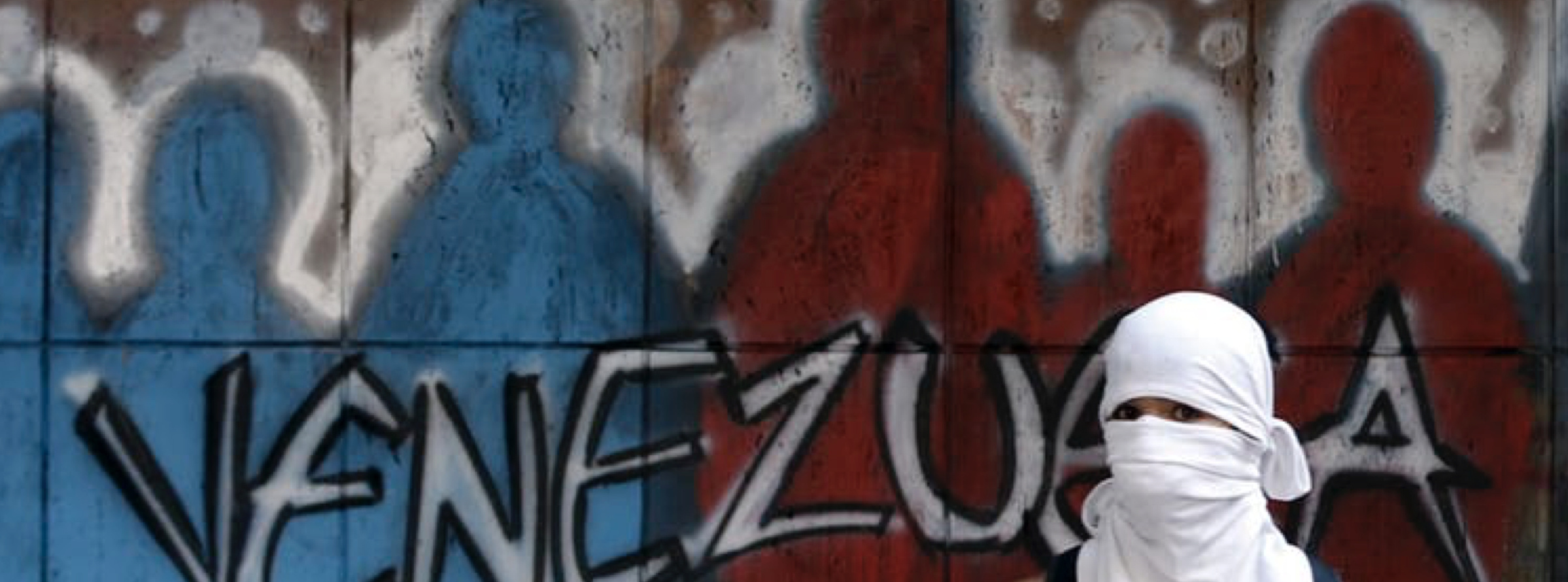
Venezuelans were once among the world’s happiest people. Then the country descended into economic chaos and humanitarian crisis. Jorge Silva/Ruters
Why Venezuelans are some of the Unhappiest People in the World
Venezuelans used to be among the happiest people on the planet.
In 2012, they voted themselves into fifth place in a global Gallup survey on happiness. In 2013, this South American country ranked 20th out of the 156 countries included in the United Nations’ annual World Happiness Report, which assesses well-being worldwide based on measures like wealth, life expectancy and corruption.
My home country used to be a prosperous, cheerful place. People were proud to be from Venezuela – a place known for its friendly citizens and beauty queens: Venezuela has produced six Miss Worlds and seven Miss Universes.
Not anymore. This year, Venezuela plunged to 102nd place of 156 countries in the World Happiness Report. By comparison, Denmark topped the list and the United States came in 18th.
What happened?
Terrible leadership
Venezuela has changed dramatically in recent years.
President Nicolás Maduro – who was elected to succeed the popular late leader Hugo Chávez in 2013 – has turned out to be a kind of King Midas in reverse. Everything he touches seemingly turns to garbage.
Venezuela’s economy was already going south in Chavez’s last years. But under Maduro it has collapsed. Venezuela is drowning in debt, with annual inflation of 15,565 percent.
Once poor people are now starving. On average, Venezuelans have lost 24 pounds each since food shortages began in 2015.
Meanwhile, the middle class is disappearing. According to the labor union UNETE, 75 percent of Venezuelan workers no longer earn enough to support their families.
Maduro’s government censors crime data, but citizen groups estimate that 28,479 Venezuelans were killed in 2016, up from 16,549 in 2014. Those are conflict zone-level casualties.
Fleeing these unbearable living conditions, thousands of Venezuelans have begun pouring across the border into neighboring Colombia and Brazil every day.
Rigged elections
Amid all this, Venezuelans must choose their next president on May 20 in an election that international democracy monitors consider a farce.
Maduro has systematically persecuted his opponents, sending them to jail or into exile. The regime has also used the state apparatus to boost its electoral prospects, trading food for votes, suppressing turnout in dissident districts and crushing anti-regime protests.
As a result, this wildly unpopular president is running for reelection without meaningful opposition and is likely to win.
Despair
Venezuelans live in terror. People fear falling ill, because medicine is scarce. They fear being murdered. They fear political repression.
It’s hard to be happy under a dictatorship.
Many Venezuelans have lost any hope of political change. Maduro has crippled Venezuela’s independent institutions, stacking the Supreme Court with loyalists and stripping the National Assembly of its legislative powers. Freedom of speech is long gone.
And if all that’s not bad enough, the 2018 Miss Venezuela pageant has been suspended after allegations of prostitution among its contestants.
MIGUEL ANGEL LATOUCHE is an Associate Professor at Universidad Central de Venezuela
THIS ARTICLE WAS ORIGINALLY POSTED ON THE CONVERSATION
The Band Bringing Venezuela’s Best Dance Party to the World
El Clavo is a small village in Venezuela with a proud musical heritage. There, Afro-Venezuelans—many of whom are descendants of slaves brought from Africa—continue a cultural tradition known as “parranda.” Part community jam session, part dance party, parranda is a festive performance that involves rhythmic percussion and singing. El Clavo’s lead vocalist Betsayda Machado is a renowned singer throughout Venezuela. She and her band have been given the opportunity to bring their traditional dance music on tour to North America and Europe. We caught up with them in New York City to get lost in the endless rhythms of parranda.