
Daud Azfar
U.S. warships head toward Venezuela amid increased tensions, but what’s truly behind the feud between Washington and Caracas?
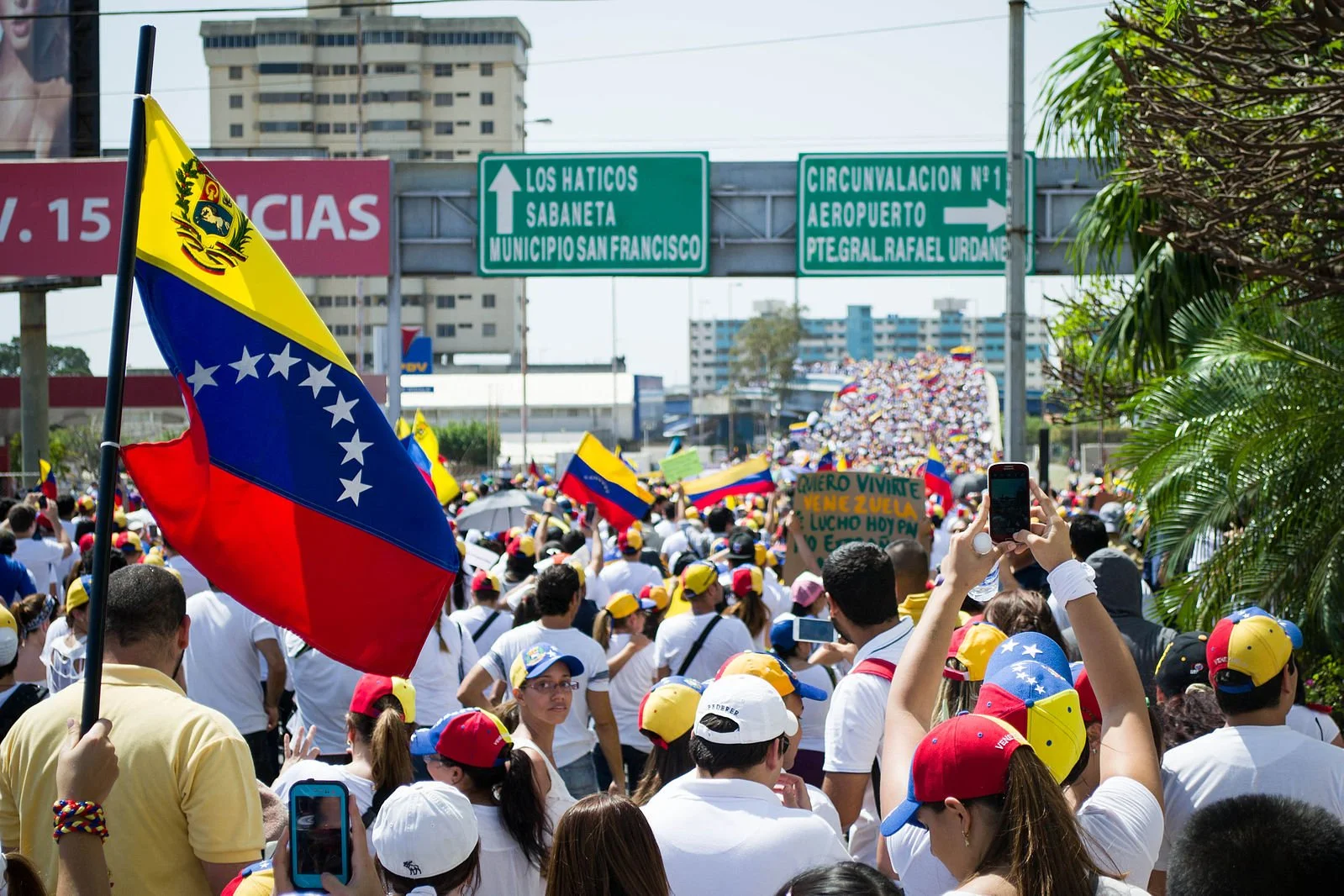
Opposition protests in Maracaibo, Venezuela, in 2014. Maria Alejandra Mora. CC BY-SA 3.0
For the past two decades, the relationship between Venezuela and the United States has been hostile and unstable. Venezuela is heavily sanctioned by the United States and its allies, and it is suffering from intense hyperinflation and economic instability. Its President, Nicolas Maduro, is widely criticized as an authoritarian figure who has cracked down on political opposition, committed human rights abuses and assumed control over government institutions. The U.S. has not recognized Maduro’s government since 2019 and has even charged the Venezuelan President with crimes of “narco-terrorism,” with the Trump administration recently doubling the reward for his arrest to $50 million. How then did U.S.-Venezuelan relations get so bad?
Interestingly, the United States enjoyed a strong relationship with Venezuela across much of the 20th Century, underpinned by the U.S. being Venezuela's primary oil customer. When the country first discovered major oil reserves in the 20s, the President granted U.S. companies concessions that gave them access to much of these vast reserves, leading to a quick transformation from an underdeveloped, agrarian country to the world’s top oil producer. The volatility of oil, though, was a source of instability and a wake-up call to how dependent Venezuela was on its top exporter. This pushed successive governments to move toward nationalization; however, since this was becoming common and Venezuela compensated U.S. firms as well as kept the export supply steady, this didn’t sour relations between the two countries. All leaders of Venezuela, democratically elected and authoritarian, largely retained a strong anti-communist, pro U.S. stance. It wasn’t until the advent of Hugo Chavez that things really changed.
The Latin American debt crisis of the 1980s and the very controversial and rigid Washington Consensus, which centered around neoliberal economic policy and was supported by the U.S. to deal with the crisis, led to steep inflation, high unemployment and rising income inequality. The mass public discontent as a result of this economic difficulty, as well as the sitting government’s corruption, led to mass protests and rocketed to stardom the military officer behind a failed coup attempt in 1992, Hugo Chavez. Chávez, an anti-imperial populist who modeled himself after South America’s liberator, Simon Bolivar, won the presidency in 1998 and drastically changed the political landscape of Venezuela.
His 14-year reign put heavy emphasis on social welfare programs, like minimizing inequality, making healthcare and education far more accessible and reducing poverty. On the other hand, Chavez concentrated power in his own hands, cracked down on the media and opposition and nationalized important industries. He became a notoriously vocal critic of the U.S. and tried to curtail its strong influence in the region, becoming a sort of leader of the left-wing government in America.
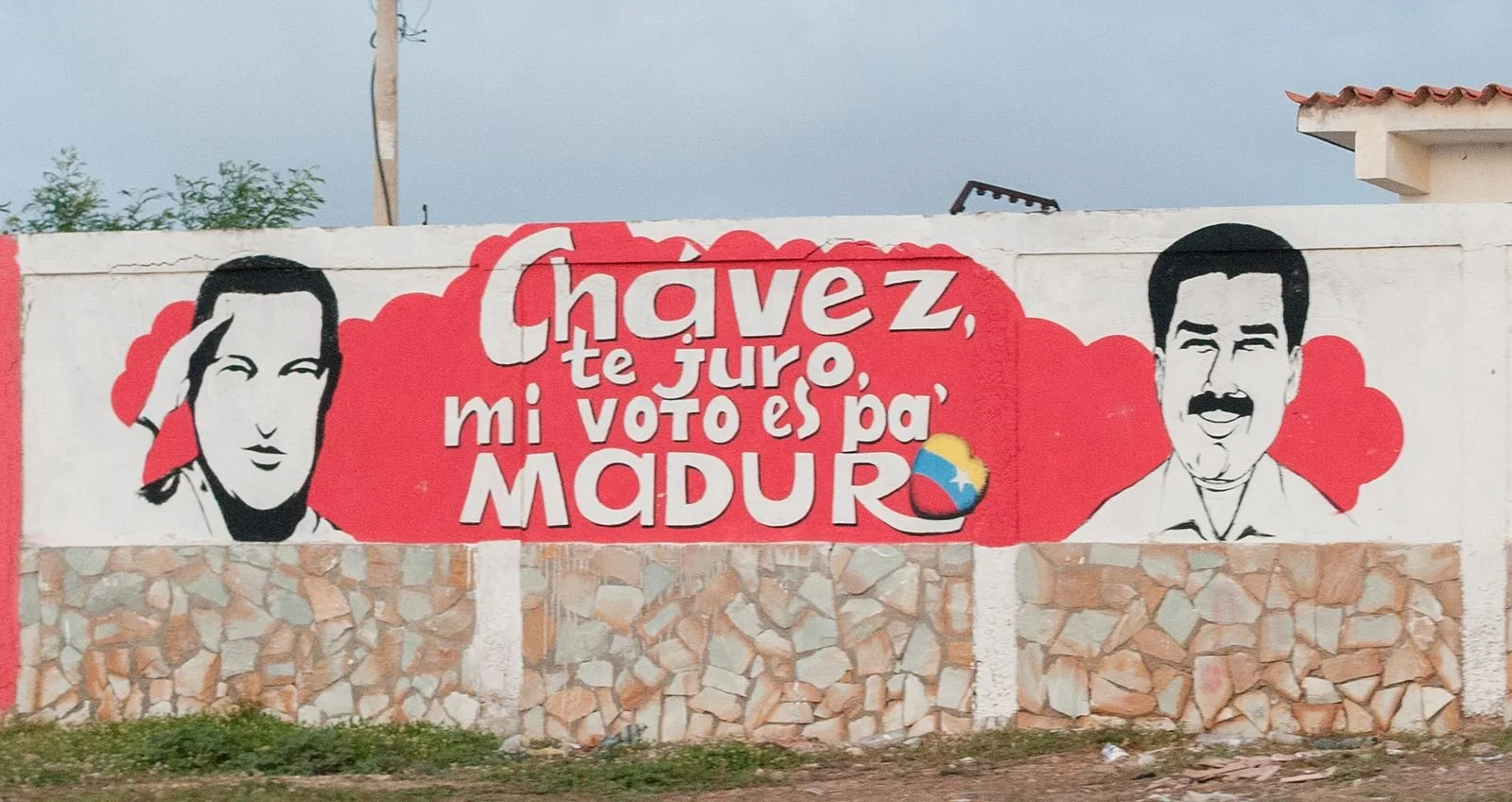
Mural of Chavez and Maduro, Wilfredor. CC0.
While President Bush was confrontational in his policy toward Venezuela, supporting the opposition and imposing sanctions, President Obama focused more on diplomatic pressure and targeted sanctions on rights abuses. Chavez’s successor, Nicholas Maduro, who doesn’t enjoy the same popular support his predecessor did, became intensely autocratic and doubled down on excessive money printing, dampening political freedom and crashing the economy. The Trump administration adopted a policy of maximum pressure against Venezuela, which the Biden administration largely continued, that involved sanctions on the oil industry, recognizing the opposition candidate as the victor of the 2019 elections, as well as formally indicting Maduro by accusing him of involvement in narco-terrorism.
Upon his return to office, President Trump has continued his maximum pressure campaign against Venezuela, imposing a broad array of sanctions and accusing the government of supporting drug trafficking. In early September, 11 people were killed in a strike that Secretary of State Marco Rubio said targeted “a drug vessel which had departed from Venezuela.” Experts have questioned the legality of this strike under international law, and others have pointed out that Venezuela has a relatively minimal, or at least indirect, role in the South American drug trade. The Trump administration has, in recent weeks, been deploying troops and naval assets, including warships near Venezuelan waters, and has made clear that further action against Venezuela is not off the table. Maduro has responded harshly to this escalation, warning against armed struggle, accusing the U.S. of fabricating the drug trafficking allegations as an excuse for regime change and saying, “Venezuela is always ready for dialogue, but we demand respect.”
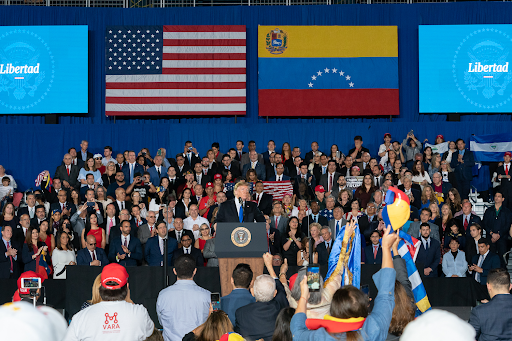
Trump gives remarks to Venezuelan Americans in 2019. The White House. PD.
Analysts see the military buildup as an attempt to put political pressure on Maduro, but many see an actual intervention by the United States as unlikely, especially given Maduro's strong hold on power and the U.S. public’s disinterest in foreign military intervention.

Daud Azfar
Daud is a second-year student at the University of Virginia, planning on majoring in Politics and Economics. Having grown up in Pakistan, he’s very passionate about the importance of education and social justice. Outside of school, he enjoys spending time with his friends, playing pickleball, and exploring new coffee shops.