
Sofia Stidham
An August plane strike reveals a silent Emirati push for regional dominance, leaving Sudan’s starving civilians and “forgotten war” in the hands of external powers.
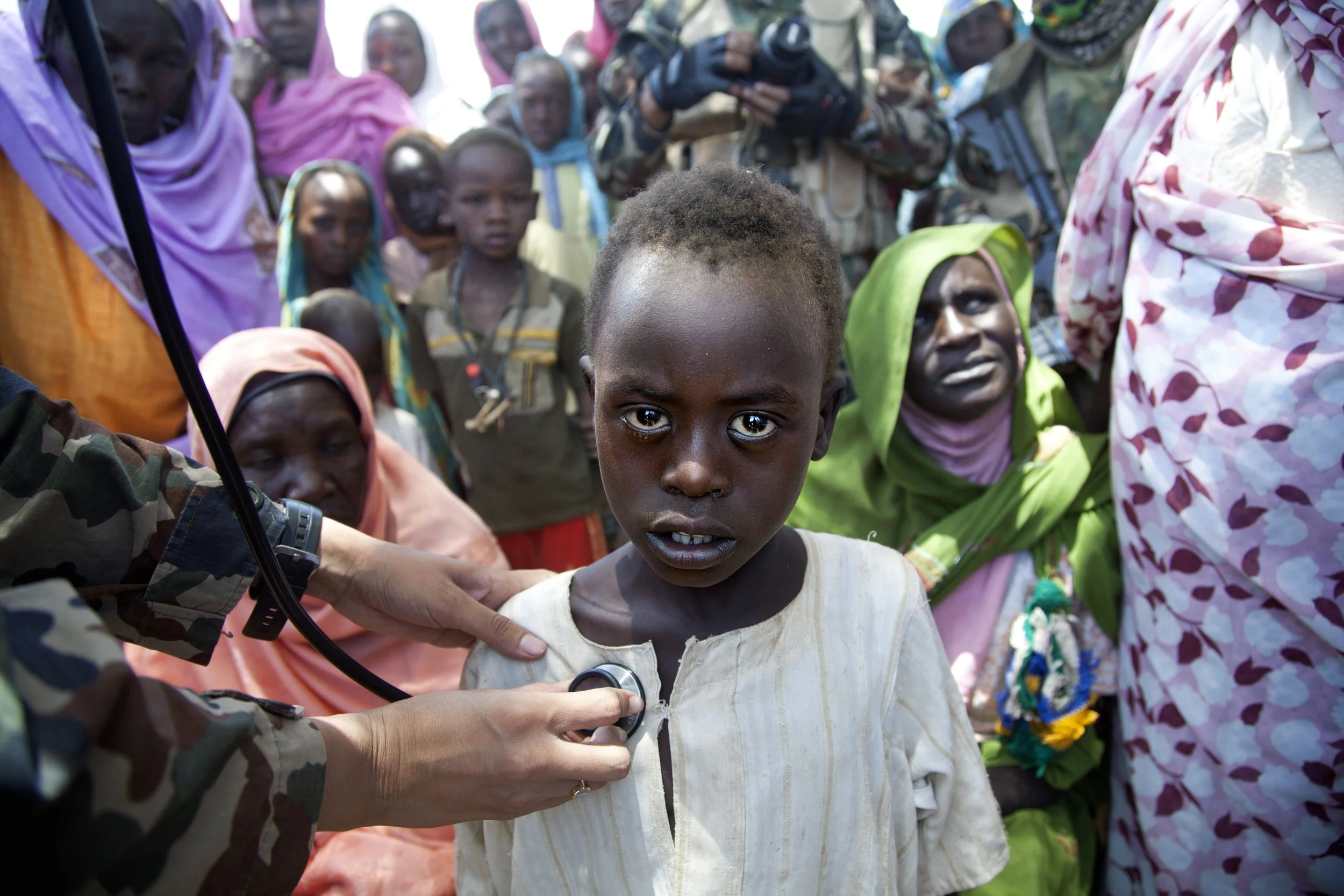
Support reaching remote Sudanese villages. Albert Gonzalez Farran. CC BY-NC-ND 2.0.
Officials have reported that late on Aug. 6, the Sudanese Armed Forces “completely destroyed” an Emirati aircraft carrying 40 suspected Colombian mercenaries and weapons for their rivals, the Rapid Support Forces (RSF). The RSF have not commented, while the United Arab Emirates’ Ministry of Foreign Affairs denied supplying the paramilitary group, calling claims “part of a calculated pattern of deflection – shifting blame to others to evade responsibility.”
Thus, it was a military source who disclosed details about the UAE plane strike to the Agence France-Presse on the condition of their anonymity for safety reasons. Admitting to supplying the RSF with arms and soldiers would be more than a mere blunder; it would render the UAE complicit in the genocide of war-struck Sudanese citizens, which the United States recognized in January. This genocide, however, is not only denied by the UAE but also disregarded by the West, leading SAF Colonel Hassan Ibrahim to label it as the “forgotten war.”
The Sudan war began in 2023 when a control feud between leader Abdel Fattah al-Burhan and his deputy, Mohamed Hamdan Dagalo, commonly known as Hemedti, escalated into violence. On April 15 that year, Hemedti’s RSF attacked the capital Khartoum, targeting al-Burhan’s SAF headquarters. Fueled by many motives, such as ethnic cleansing and economics, both sides are recognized to have committed war crimes. The past 28 months have seen at least 150,000 people die, many suffer sexual violence and 14 million people displaced.
The Emirati role in this war has drawn continuous scrutiny, and on Aug. 4, the Sudanese government accused the UAE of recruiting and funding Colombian fighters for the RSF. A U.N. report noted that the first Colombian mercenaries, hired through a private firm, appeared in the Darfur region in late 2024.
Since April 2024, Yale satellite imaging has displayed the RSF’s complete siege of El-Fasher, the last Darfur city under Sudanese army control, dropping living conditions to dangerous lows. As a result, famine has swept the area, forcing civilians to survive on animal fodder. In the first six months of this year, 239 children in El-Fasher died of hunger. Spokesman of the El-Fasher Zamzam displacement camp, Mohamed Khamis Douda, told the AFP that Colombian mercenaries are directly involved. “Civilians in areas near Zamzam have reported their belongings and vehicles stolen by mercenaries," he said.
The plane strike, however, was only one of many incidents where the UAE denied arming the RSF. However, the Interministerial Commission on Export Control and flight tracking has documented bomb exports several times a week to Sudan through hubs like Bosaso Airport in Somalia and into Amdjarass in Chad under the guise of humanitarian aid.
As a result, many see denial as an instrument for the UAE to silently impose its ambitions of regional hegemony. Analysts argue that the UAE’s aims exceed acquiring gold and food, seeking to counter Islamist influence from opposing countries such as Turkey and Qatar, which are funding the SAF.
The denial of foreign involvement in Sudan neglects the power imbalance between soldiers and civilians. Furthermore, international engagement remains limited. The U.S. has only sent one diplomat to Sudan since this civil war began, and the Trump administration’s cuts to foreign aid have further reduced civilian support. Volker Perthes, a former U.N. official, however, told The Atlantic that Americans “do have clout if they want to use it.” The UAE plane strike responses have shown that the true fate of Sudan quietly lies in the hands of wealthy countries outside of it.
Sofia Stidham
Sofia is a rising fourth-year English Literature student at the University of Edinburgh, having recently completed a year-long exchange at the University of Virginia. Outside of writing, she enjoys spending time with family and friends, going to concerts, curating her wardrobe, and zoning out on long walks. She hopes to pursue a career that allows her to channel her passion for writing into intersectional feminist advocacy.