
An activist self-immolates outside the U.N. headquarters to protest Chinese control of Tibet.
Read MoreWho Owns Chinese Celebrity Culture in Taiwan?
Actor Zhang Linghe’s opening speech at the 18th Straits Forum caught widespread attention with his call for improved cross-strait exchanges.
Read MoreChina’s City of the Future
Discover how Chongqing has become a modern mountain city, known for its tall buildings, bright riverfront skyline and lively hot pot culture.
Read MoreFinding Community in China’s Underground Churches
Despite the threat imposed by the Chinese government, underground Chinese Christian communities continue to find hope.
Read MoreThe Fight to Preserve Cantonese Language and Culture
Despite pressure from the Chinese government, the will to preserve the Cantonese language remains strong in China and around the world.
Read MoreChina’s Waste Revolution: Turning Garbage into Energy
With waste-to-energy plants booming, the nation faces an unexpected garbage shortage.
Read MoreVanishing Archives: Hong Kong Artists Resurrect Protest
In the wake of censorship and arrests, Hong Kong’s artists are quietly preserving protest materials through informal and digital means.
Read MoreThe Cage Home Crisis in Hong Kong
Hong Kong's reputation as one of the most expensive housing markets in the world has led to more than 200,000 people living in cage homes, bedspace apartments likened to coffins for the living.
Read MoreBuddhism in Tibet and the Sacred Dzogchen Caves
Julia Kelley
Spotting the landscape of Eastern Tibet are the Sacred Dzogchen Mountain Caves, natural formations that have been revered for centuries as sites of historic Buddhist enlightenment.
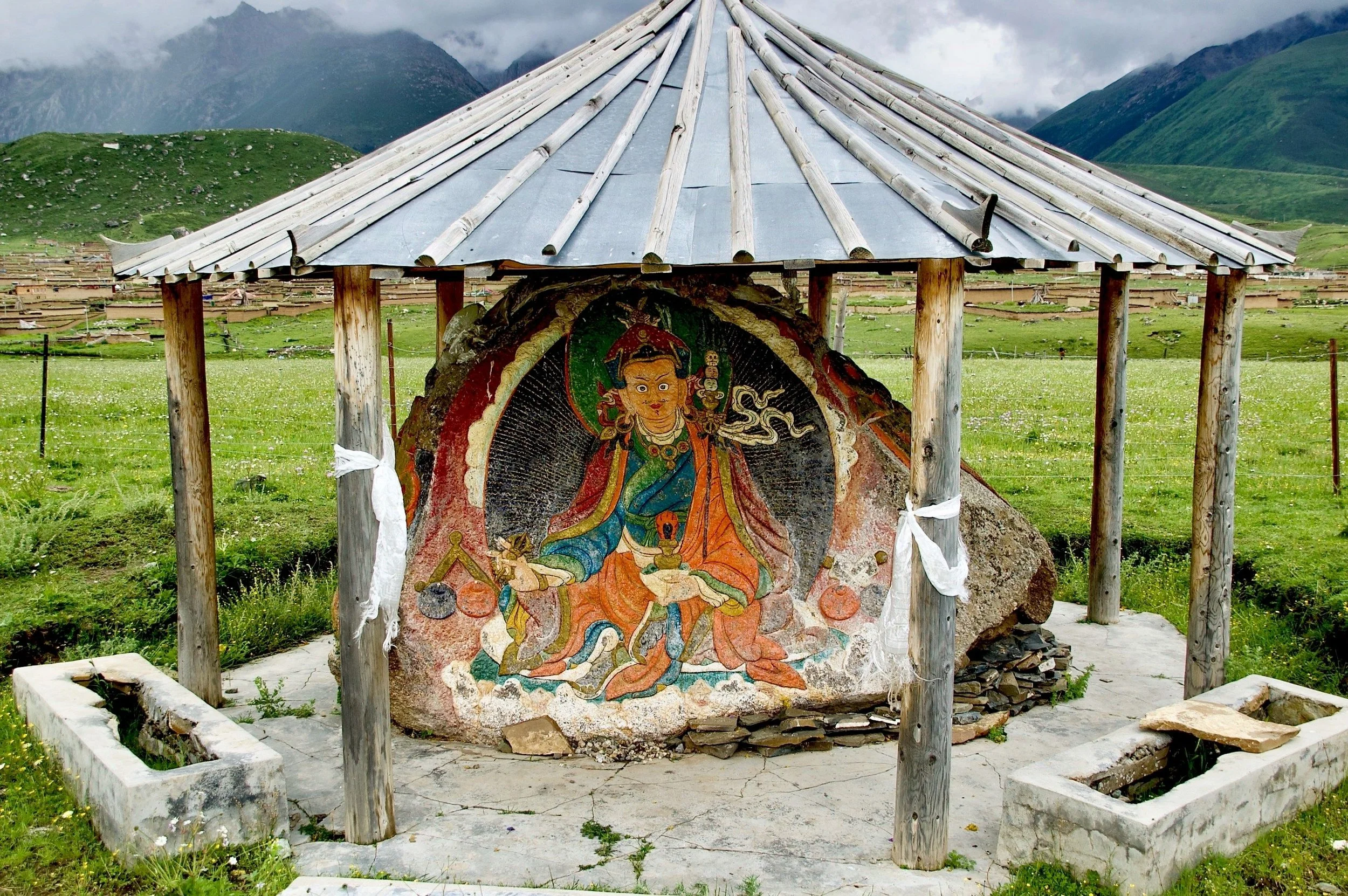
Entrance to Pilgrimage Road in Dzogchen Monastery. Mario Biondi. CC BY-SA 4.0.
Found in the mountains of Eastern Tibet, also known as Kham, is the Rudam Valley. Here, 4,000 meters (13,123 feet) above sea level, plateaus imprinted with lakes and waterfalls are home to a population of more than 850,000 people. Tibetan Buddhist monasteries dot the landscape, reflecting the valley’s religious significance and contributing to its diverse culture. Most notably, in the Holy Dzogchen Area, surrounding communities have their own cultural expressions marked by distinct seasonal ceremonies and local traditions. The population in the Holy Dzogchen Area widely practices Vajrayana Buddhism, a form of Tantric Buddhism that emphasizes one’s potential to achieve enlightenment in a single lifetime rather than through many. This doctrine is taught in the Dzogchen Monastery, which offers a religious education to young people who desire a monastic life and serves as the main monastery for hundreds of branches throughout Tibet.
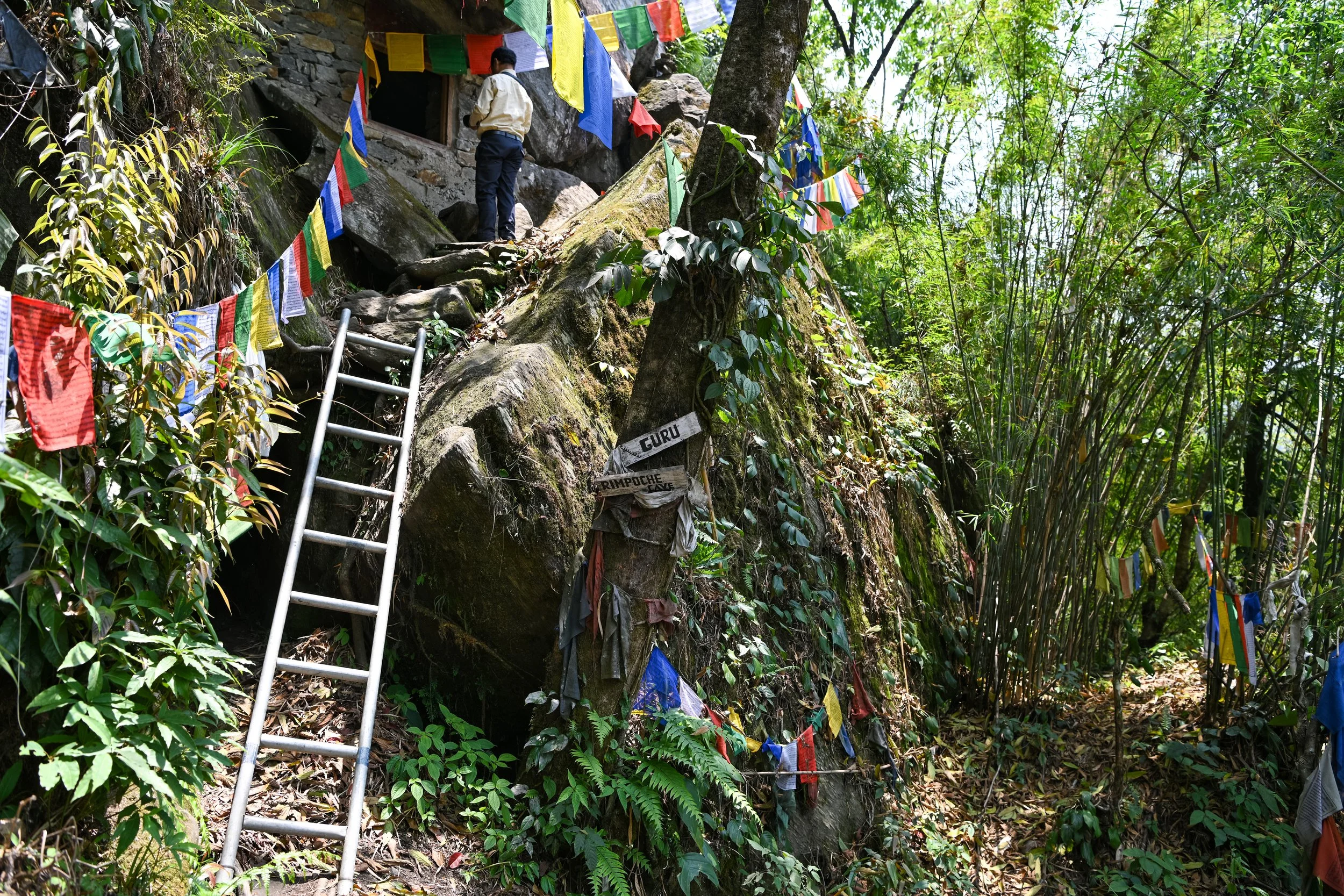
Guru Rimpoche Cave. Anjan Kumar Kundu. CC BY 4.0.
The Holy Dzogchen Area’s beauty and devout culture are further exhibited through its natural cave complex, known as the Sacred Dzogchen Mountain Caves. From mountains to valleys, the thousands of caves that make up this system are a powerful feature of the local religious practice. The significance of these natural formations can be traced back to a series of influential Dzogchen Vajra masters who lived in them to reach enlightenment. Buddhism was first introduced to Tibet in the 7th century C.E., and was not translated until 641 C.E., when Tibetan king Songtsen Gampo unified the region and converted to Buddhism with his marriage to two Buddhist princesses. The king also invited important Buddhist masters, Padmasambhava and Shantarakshita, to teach the doctrine throughout the country. This included instruction in Dzogchen, an advanced system of meditation that gives the Holy Dzogchen Area its name. These leaders and their students utilized the isolated and serene nature of the surrounding caves to facilitate their enlightenment. The Snow Mountain caves, Shinje and Senge Druppuk caves, and Canyon caves are only a few of the sites that have become revered for their religious history, as Vajra masters such as Shri Singha and Padmasambhava lived and meditated in their solitude to achieve high realization.
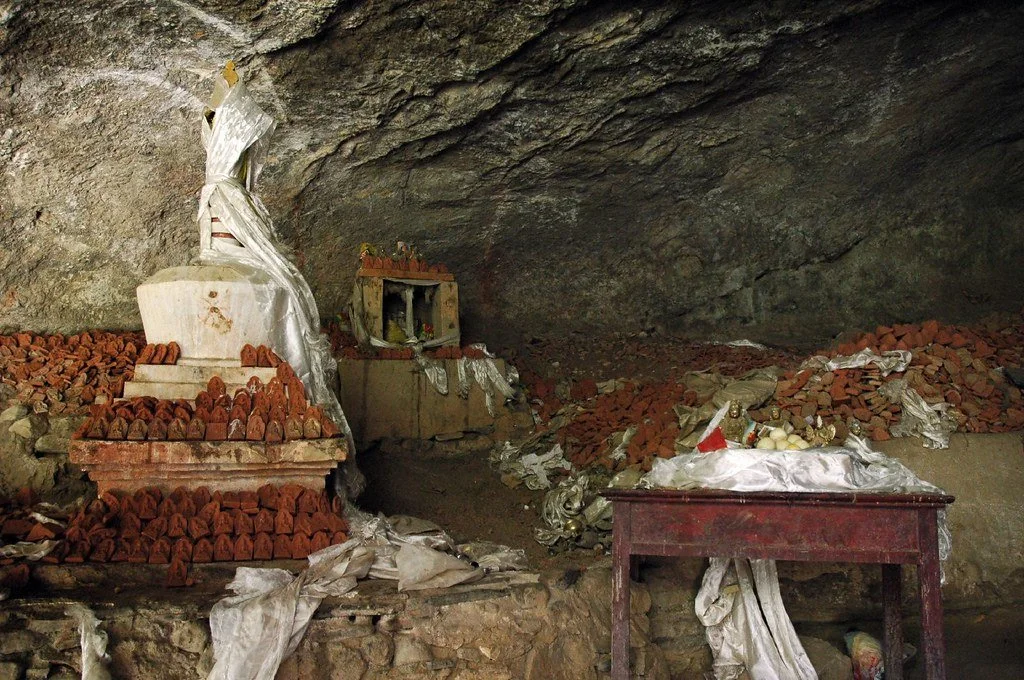
Sacred Cave Interior. slobo486. CC BY-NC-SA 2.0.
This long history as a Buddhist religious symbol has made the Dzogchen cave system a common pilgrimage route. Beyond the caves, the entirety of the Dzogchen Area has become associated with enlightenment due to these countless sacred sites. Many pilgrims first journey to the Dzogchen Monastery, where they can practice retreats and meditations in the monastery’s retreat center. From there, devotees travel to surrounding temples and sacred caves, walking in the footsteps of Buddhist leaders. On their blog, Yowangdu Experience Tibet, travelers Lobsang and Yolanda write about their personal experience with the pilgrimage. They describe one of the caves as “a sacred spot where the great Buddhist master had honed his wisdom and compassion in decades of meditation” and where “he had written the text that had moved and inspired” them, echoing Dzogchen followers’ continued belief and devotion to these holy spaces.
Julia Kelley
Julia is a recent graduate from UC San Diego majoring in Sociocultural Anthropology with a minor in Art History. She is passionate about cultural studies and social justice, and one day hopes to obtain a postgraduate degree expanding on these subjects. In her free time, she enjoys reading, traveling, and spending time with her friends and family.
Forced Uyghur Labor in China’s Seafood Industry
Uyghur people in China are subjected to forced labor in the seafood industry, enduring brutal conditions and human rights abuses on fishing vessels and in processing plants.
Read MoreCelebrating Lunar New Year Across China
Falling on Jan. 29, 2025, the Lunar New Year is a time of celebration across China, commemorated by unique traditions found in each of its culturally diverse regions.
Read MoreNanjie: A Living Memory of Maoist China
In the small Chinese village of Nanjie, residents live in a time capsule of the Cultural Revolution.
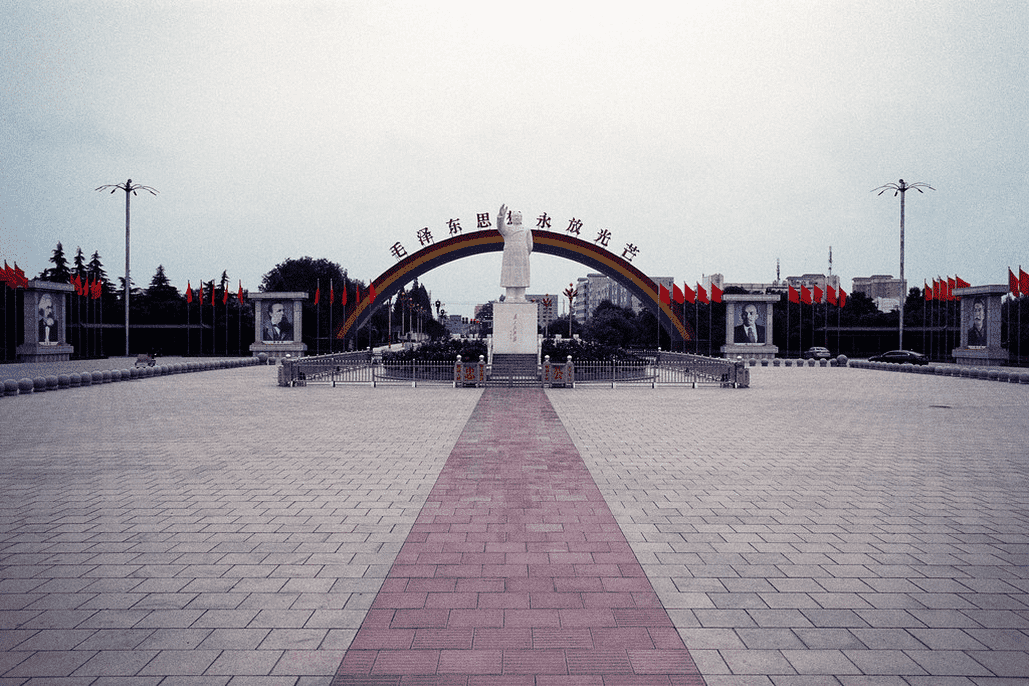
The East is Red Square. Nicolas Oddo. CC BY-ND 2.0
While China’s Cultural Revolution officially ended in 1976 with the death of Chairman Mao Zedong, the more than 3,000 residents of Nanjie, in Central China’s Henan province, continue to live by the principles of Maoism. While the village is reportedly one of China’s wealthiest, having grown its economy by nearly 2,000 fold in just ten years, workers in the village’s factory have agreed to accept a monthly salary of only about $400. In the 1980s, when the rest of China was opening up to the capitalist market, Nanjie chose to revert to the system of collective ownership taught by Mao.
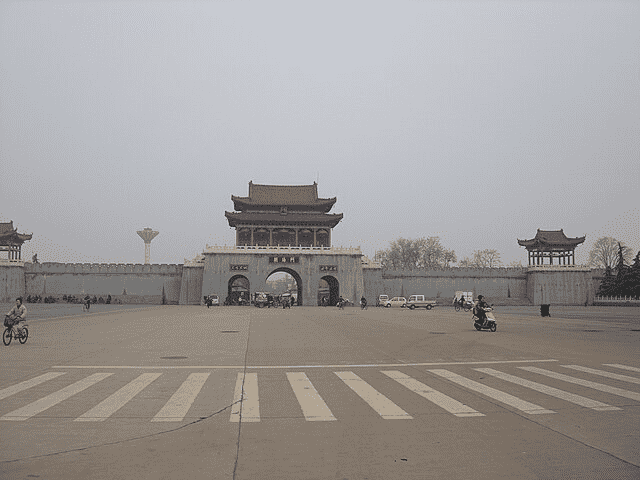
Nanjie Commune Gate. Gary Lee Todd. CC0 1.0
Nanjie is small, comprising about two dozen factories and several main streets. Mao Zedong’s face is displayed all over the village in the form of billboards, posters and framed portraits. A giant statue of the Cultural Revolution’s late leader can be found in the middle of the town’s main square, the “East is Red” Square. On each side of the looming statue are portraits of four other famous communists: Karl Marx, Friedrich Engels, Vladimir Lenin and Joseph Stalin. North of the square stands the traditional-style Chaoyang Gate, decorated with a portrait of Sun Yat-sen.
In the square, a speech from Mao is played on a perpetual loop. New party members take their oaths in the square. On National Day, all couples in the village get married in a single collective ceremony and bow to the statue of Chairman Mao. As a wedding gift, they receive copies of Mao’s “Little Red Book.”
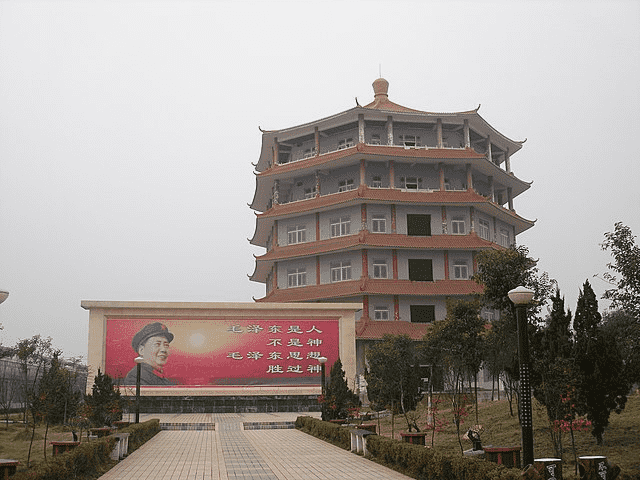
Nanjie Commune. Gary Lee Todd. CC0 1.0
The village's economy is dominated by collective ownership and management of all production and rationing supplies like coal, cooking oil, candy and even cigarettes. Residents are awoken each morning by “Dongfang Hong” (“The East is Red”), the de facto anthem of the Cultural Revolution, playing over loudspeakers. While some residents have chosen to leave the village in pursuit of capitalist success, many prefer the commune lifestyle free from the stress of higher living costs and housing loans.
Exterior of Nanjie Commune Apartments. Gary Lee Todd. CC0
Interior of Nanjie Commune Apartment. Gary Lee Todd. CC0 1.0
Since the 90s, almost all village inhabitants have been living in collectively built apartments, with rent often funded by welfare. Every month, each resident receives vouchers of about $13 to cover the cost of food and groceries at the village’s commune-style supermarket. Locals also receive free healthcare and education.
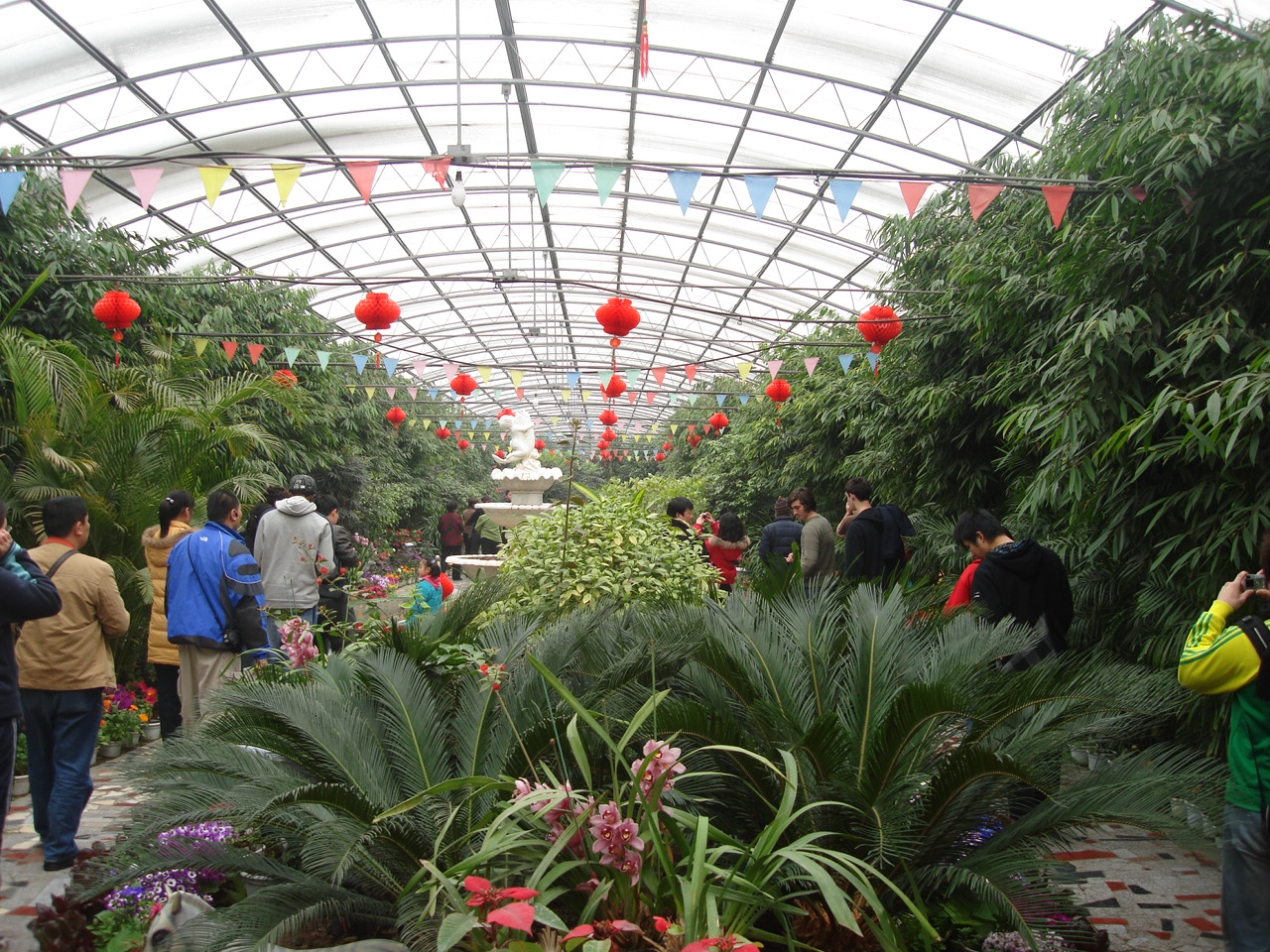
Nanjie Commune Greenhouse. Gary Lee Todd. CC0
Nanjie even has a theme park dedicated to the history of the Chinese Communist Party, featuring re-creations of significant historical events and a $1.2 million greenhouse. The garden houses more than 500 flower species and 10,000 plants, as well as sculptures of animals like kangaroos and dinosaurs. Aside from the theme park and the greenhouse, the village also houses five parks, a zoo, a small artificial mountain set with bridges over a moat, a large swimming center and a grand mosque. While the village itself might be small, its historic, almost museum-like preservation, unique cultural heritage and the pride that locals take in their way of life make for a fascinating window into a bygone era.
GETTING THERE
Traveling to the collective is not difficult. From Zhengzhou, the capital of Henan province, buses (Y31; two hours) run south to Linying every hour between 6:40 am and 6:10 pm local time. From Linying it is a 1.2-mile walk south to Nanjie on the east side of the road. Taxi cabs are also available. Hotels are available in Nanjie and the surrounding areas.

Rebecca Pitcairn
Rebecca studies Italian Language and Literature, Classical Civilizations, and English Writing at the University of Pittsburgh. She hopes to one day attain a PhD in Classical Archeology. She is passionate about feminism and climate justice. She enjoys reading, playing the lyre, and longboarding in her free time.
Big Brother is Watching: China’s Social Credit System
The nuanced nature of China’s social credit system has sparked global debate.
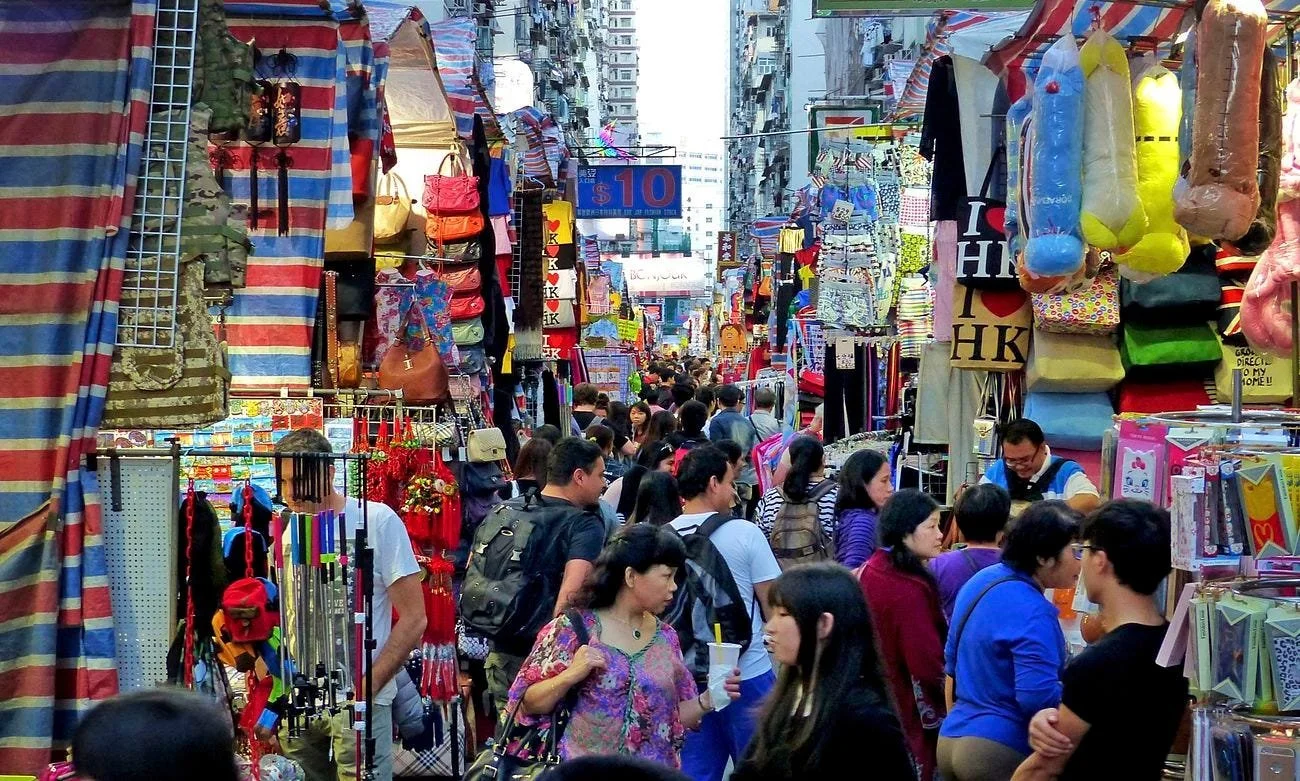
People walking through crowded streets in Shanghai. Rawpixel. CC0 1.0
Amid social and political turmoil, many are fascinated by order, hierarchy and control. One of China’s long-term goals is technological self-reliance, reflected in the country’s controversial social credit system. Millions of citizens are defined by and reduced to a numeric value, which is generated as their daily interactions and purchases are closely monitored. The system was predominantly economic—similar to a FICO score—until 2004, when President Jian Zemin expanded the system by adding a social aspect. The current social credit system was formally introduced in 2014, and by 2022, 80% of China’s cities, counties and regions had instituted some version of it.
The social credit system varies geographically. Some citizens receive a numeric score between zero and 1,000, while others are marked by a letter score from A to Z. The system is divided into four categories: business, social, government, and judicial. It operates punitively, rewarding citizens for good behavior and punishing them for bad behavior. A drop in one's score can come from traffic violations, littering and gossiping, while good deeds like donating to charity and assisting the elderly can increase it. The more points accrued, the more preferential treatment one receives, including discounts and travel perks. However, if a citizen's score is too low, they can be prevented from traveling or landing work. In 2019, millions of Chinese citizens were banned from buying plane tickets due to low social credit scores. China’s social credit system has been compared to the Black Mirror episode "Nosedive," which depicts dystopian society in which one’s worth is defined in relation to their portrayal on social media.

Surveillance equipment. Rawpixel. CC0 1.0
The government claims that the social credit system was instituted to “build trust” amongst citizens. However, the lack of privacy and blacklist perpetuated by the system has sparked global concern. Even by criticizing the government, your social credit score is lowered, and in some cities, the government pays citizens to report good or bad behavior. Recent studies suggest that the portrayal of China’s social credit system in the media is exaggerated. According to the MIT Technology Review, the system primarily functions as a comprehensive record of data, documenting companies’ financial histories. It is therefore less important as a single score than as a record.
The social credit system is only one aspect of government surveillance in China. The country’s firewall limits internet searches, and there are at least 200 million surveillance cameras installed that can use facial recognition software. China’s government operates without rule of law, leading to the abuse of power. Surveillance capitalism ultimately poses a threat to individual autonomy and democratic governance. The question remains as to how far it will spread in the coming years.

Agnes Volland
Agnes is a student at UC Berkeley majoring in Interdisciplinary Studies and minoring in Creative Writing, with a research focus on road trip culture in America. She currently writes for BARE Magazine and Caravan Travel & Style Magazine. She is working on a novel that follows two sisters as they road trip down Highway 40, from California to Oklahoma. In the future, she hopes to pursue a career in journalism, publishing, or research.
China’s Rainbow Mountains
Eons of time and colossal tectonic plates have shaped China's most colorful national treasure.
Read MoreThe Extensive Cuisine of Chinese Muslims
From pita bread to lamb, halal Chinese food’s influences stretch from the Mediterranean to Russia and from China to the Middle East.
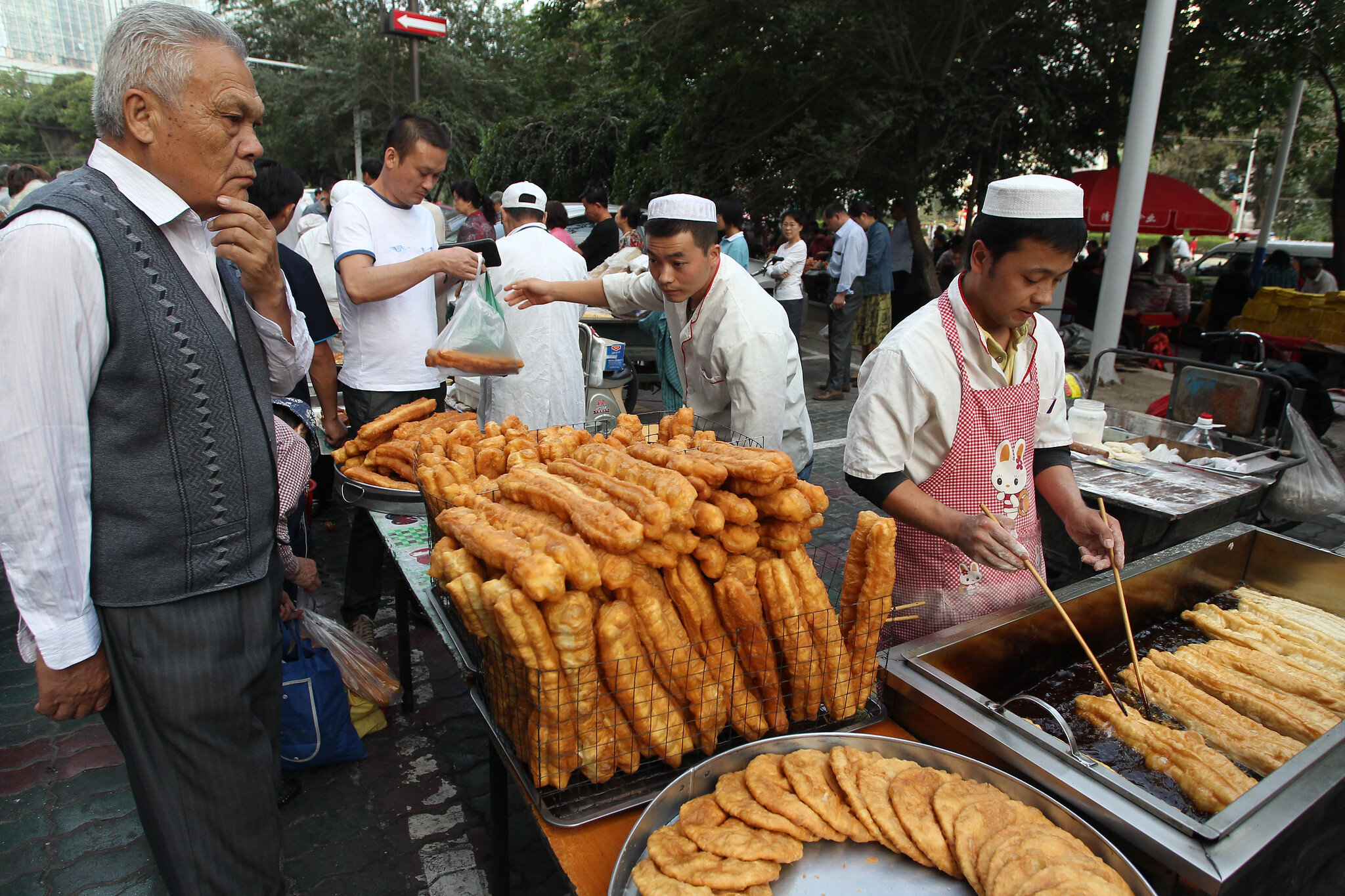
Street vendors feed crowds with a doughy treat in Urumqi, the capital of China’s Xinjiang Uyghur Autonomous Region. People’s Development Bank. CC BY-NC-ND 2.0.
China has around 23 million Muslims, predominantly made up of the Hui and the Uyghur ethnic groups. Chinese Islam began in 651 A.D., when Islam was first introduced to the country by Arab traders under the Tang dynasty. A diverse array of religions and cultures were brought to Tang China, including Islam, Judaism and Zoroastrianism. However, Islam was the only religion of these to make a lasting impression on the Chinese population. Chinese Islam expanded to different regions and soon developed its own local traditions and foods. The culinary wealth that sprang from Chinese Islamic heritage progressed into popular street foods and dishes still consumed by Chinese people today.
Hui Cuisine
Hui Muslims mostly occupy areas in the Ningxia autonomous region in China’s northwest. Their cuisine is called “qingzhen cai,” loosely meaning “pure truth” in Mandarin. This reflects the widely associated cleanliness of qingzhen restaurants due to their prohibition on smoking and drinking alcohol. Hui cuisine quickly spread across China due to its unique and much-loved flavors.
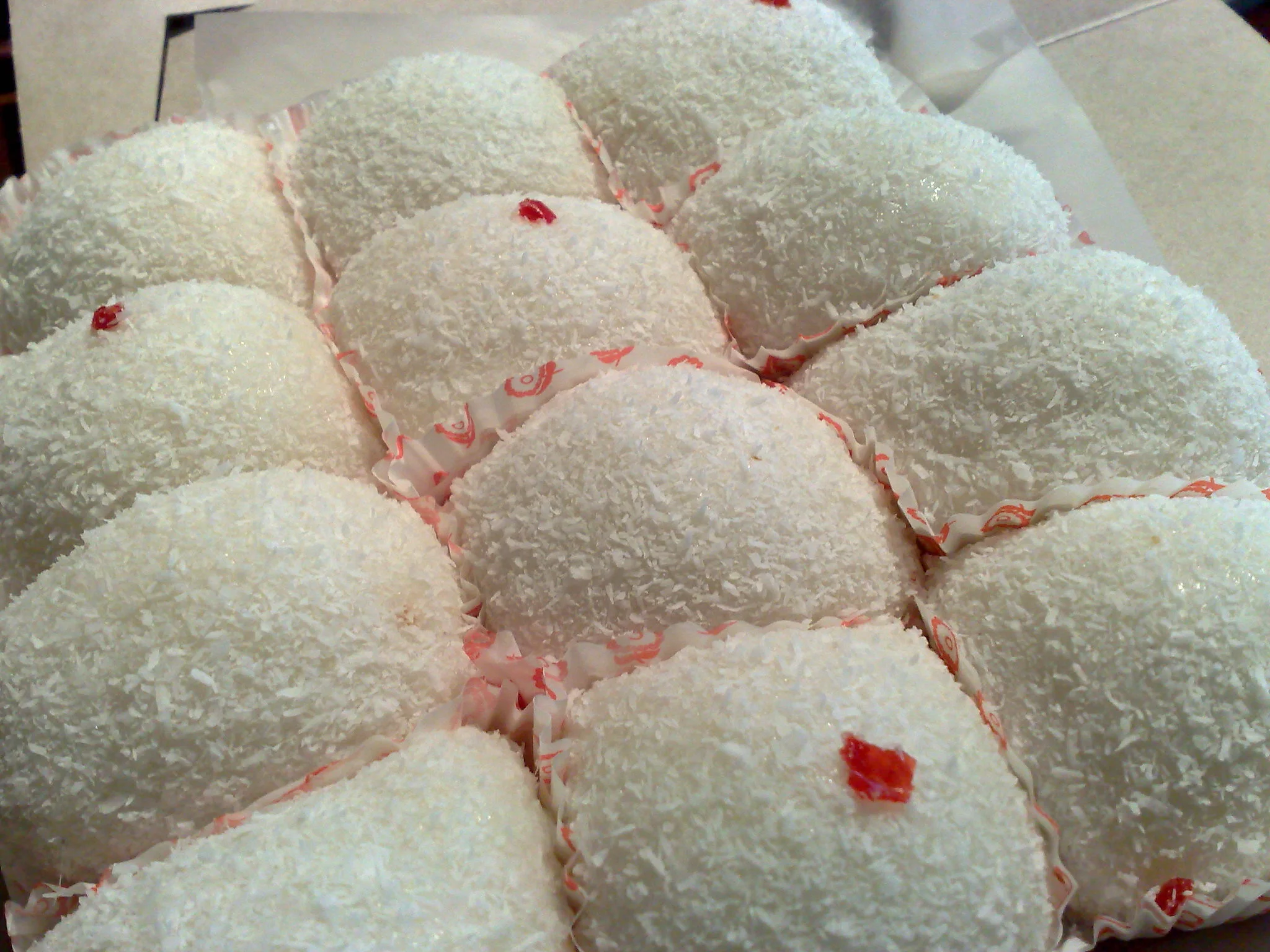
Close-up shot of aiwowo. Dozen Dessert. CC BY 2.0.
A decadent Hui dessert that remains popular among street vendors is aiwowo, or “love drops.” These small round buns are made of sweet glutinous rice flour and are dusted with a blend of sesame seeds, sugar and walnut kernel chips. Though aiwowo’s inspiration is from Hui cuisine, the snack has become a popular roadside treat in Beijing.
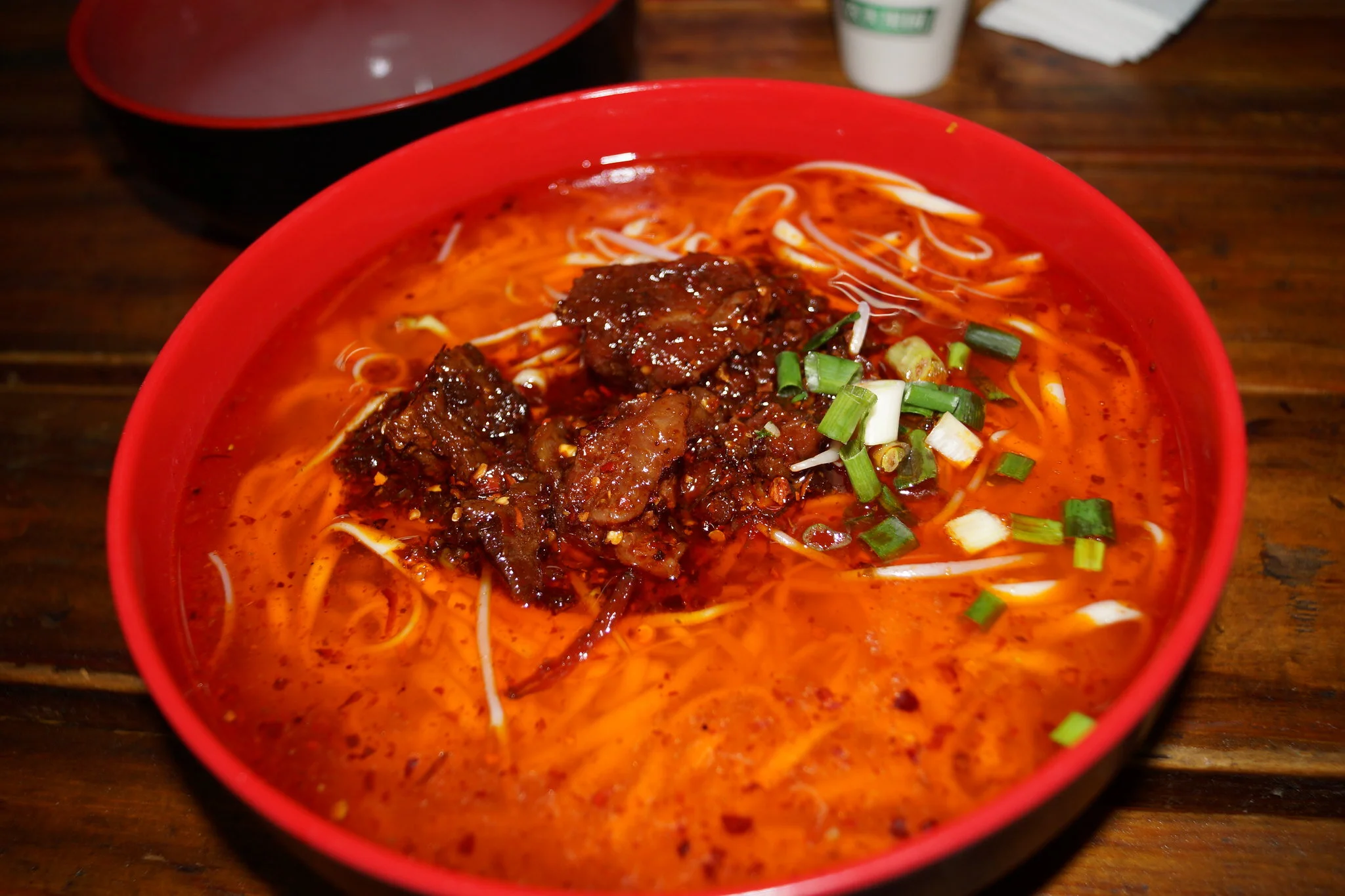
Lanzhou beef noodles in a hot and earthy broth. Language Teaching. CC BY 2.0.
Another seminal dish of the qingzhen cai tradition is Lanzhou beef noodle soup. Many consider this soup to be the most famous noodle dish in all of China. The base of this hearty dish is an aromatic beef broth boiled with cumin seeds, Sichuan peppercorns, onions, ginger, star anise and cinnamon. The fresh, chewy hand-pulled noodles are placed in the broth on a bed of beef slices and chili oil.
Uyghur Food
Uyghurs first came to China around the 3rd century A.D., and ruled over their own kingdom in the 8th century in present-day northern Mongolia. Today, Uyghur populations are concentrated in the Xinjiang Autonomous Region in far northwest China. The Chinese government has recently gained notoriety for setting up large-scale prison camps in Xinjiang, with critics calling it a “genocide” and an attempt to entirely wipe out the Uyghur populace.
Uyghurs tend to draw flavors from Central Asian, Middle Eastern and Chinese cuisines. Both the Hui and the Uyghurs base their dining experience around beef and lamb, avoiding pork due to religious purposes.
However, Uyghur foods draw far more on their Turkish influence: baked goods such as girda naan, similar to bagels, are central to their cuisine.
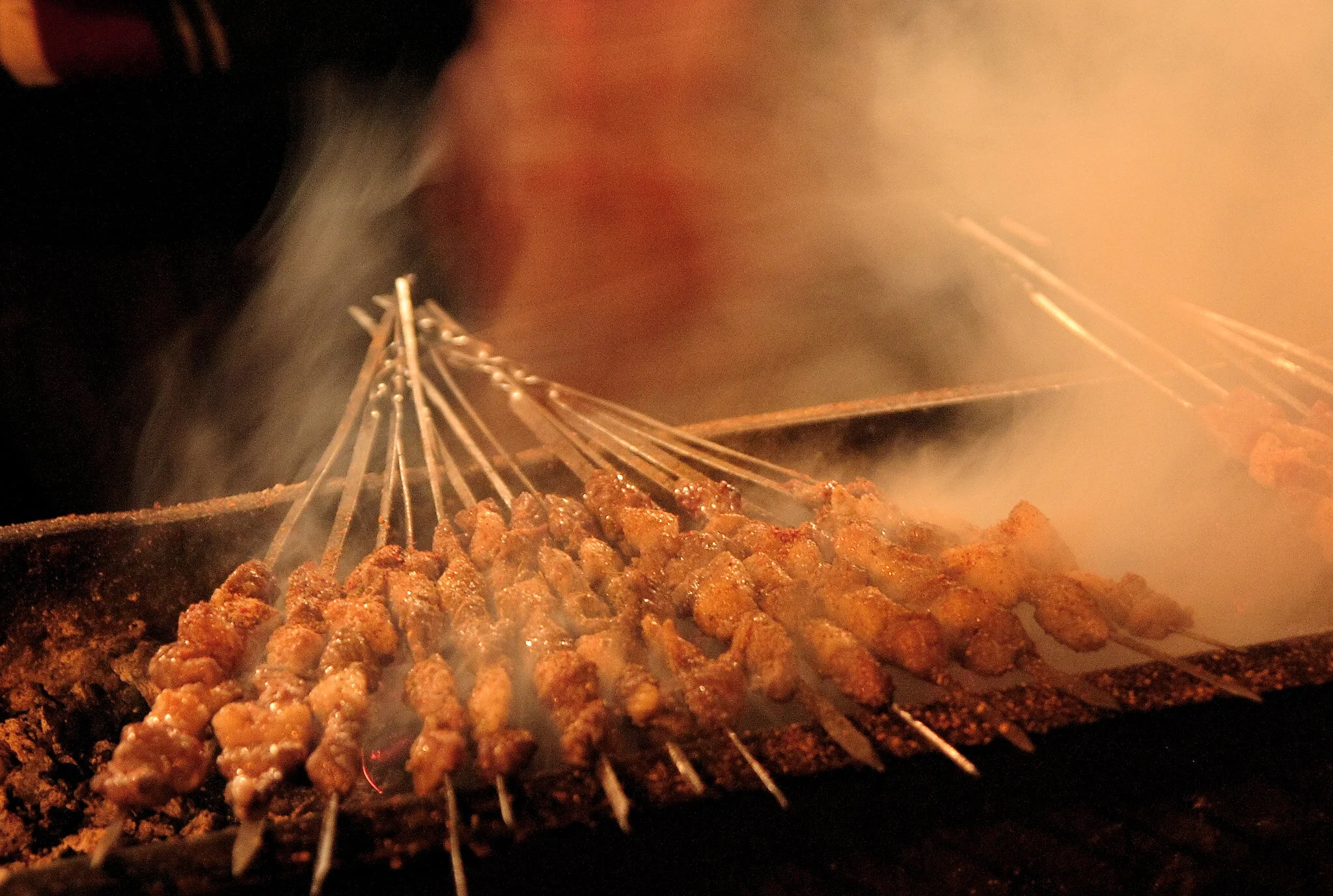
A vendor prepares lamb kebabs on a coal-fired barbecue for a busy night in Xinjiang. S. Tsui. CC BY-NC-ND 2.0.
In Xinjiang’s capital of Urumqi, visitors can find local vendors selling mutton kebabs, which are pieces of sheep flavored with cumin, paprika, salt and pepper, placed on a skewer and seared over smoky charcoal.
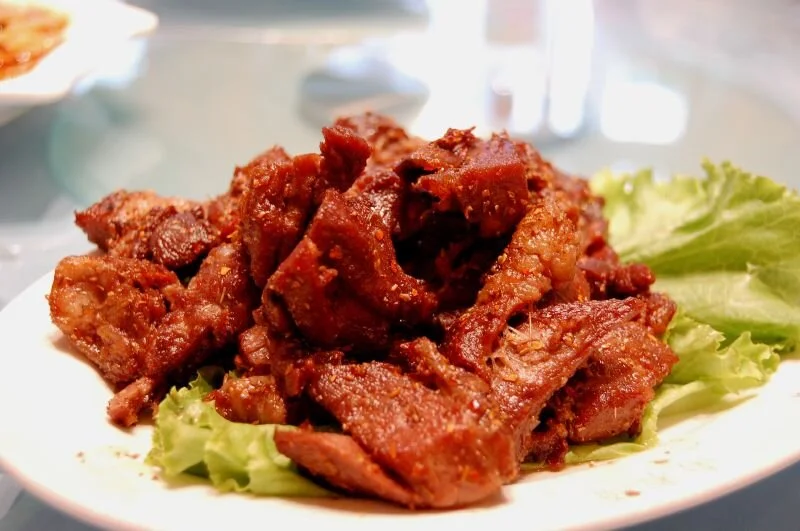
Roasted lamb from a halal restaurant in Beijing. Ulterior Epicure. CC BY-NC-ND 2.0.
Perhaps the most famous Uyghur-inspired dish is roasted whole lamb. Rubbed with a spicy menagerie of cumin, salt, ginger and pepper, the lamb is coated with a flour and yolk batter and baked in a special oven for an hour. This dish is considered a luxury that deserves only the highest-quality meat.
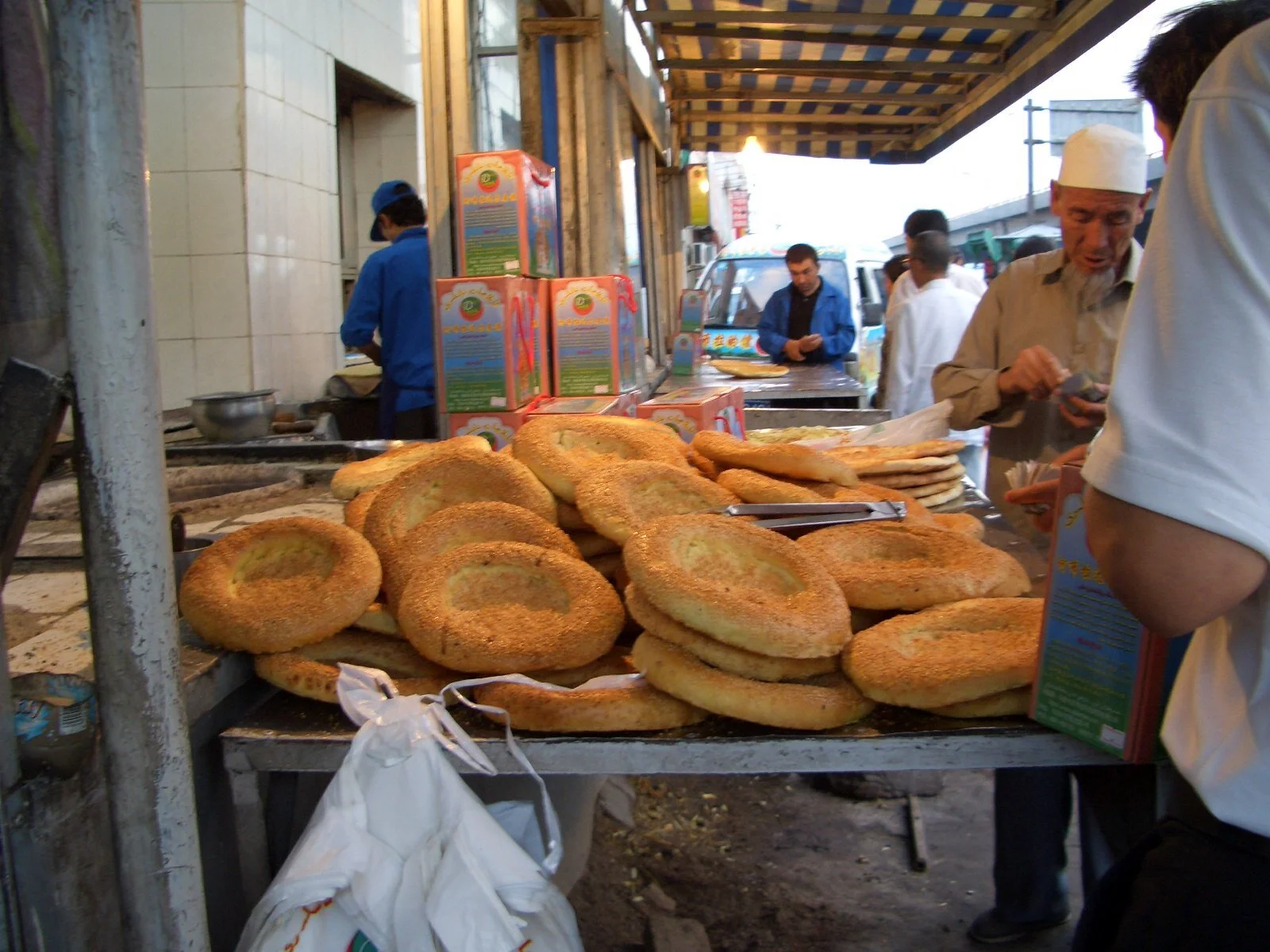
Pile of nang in Xinjiang. Umami. CC BY 2.0.
Another famous Uyghur staple is nang, which is reminiscent of naan bread: a flat pancake-like bread made of corn flour, wheat flour or sorghum flour. This is a building block of Uyghur cuisine, as it comes in a multitude of flavors and seasonings, from a savory sesame coating to a buttery sweet glaze.
Chinese halal food is embraced all over China today, as it continues to combine influences from around the world into culinary treats. With the expansion of Hui and Uyghur influences into Chinese food culture, the intermingling of various flavors will only broaden the appeal of this special cuisine.

Heather Lim
recently earned her B.A. in Literatures in English from University of California, San Diego. She was editor of the Arts and Culture section of The Triton, a student-run newspaper. She plans on working in art criticism, which combines her love of visual art with her passion for journalism.
Off The Beaten Path in Shanghai
From cultural collections to ancient architecture, here are 6 of Shanghai’s esoteric sites.
Read MoreART REVIEW: Ai Wei’s New Exhibit Highlights Activism and Mass Production
Not one to shy away from political statements, Chinese artist and activist Ai Weiwei’s recent exhibition questions mass production and highlights human rights tragedies around the world.
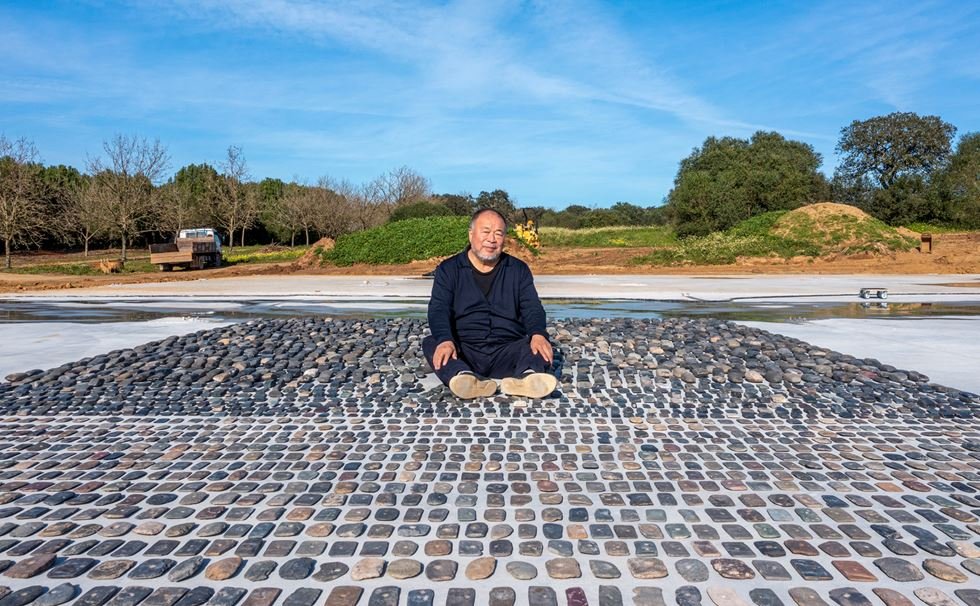
Ai sits atop “Still Life,” one of the works presented in Making Sense consisting of 1,600 tools from the late Stone Age. Ai Weiwei Studio. CC BY-NC 2.0
Internationally renowned Chinese artist Ai Weiwei is known for his ability to present political opinions and insights through artwork that relies heavily on everyday objects, and his latest exhibit is no different. Titled “Making Sense,” the exhibit, which has been on display at London’s Design Museum since April 7 and will remain there until July 30, includes a number of Ai’s decommissioned artworks as well as a handful of new pieces. This exhibit marks the first time Ai has offered commentary on the practice of design and what it means for the value society places on objects.

Ai Weiwei pictured talking to reporters outside of his studio soon after his release from detainment in 2011. Getty Images. CC BY-SA 2.0
While Ai is most widely known as an artist, he is also an internationally recognized human rights activist due to the strong political statements he makes both through his art and his speech. He has long been openly critical of the Chinese government’s stance on the democratic process and human rights, which led to a stint under house arrest in 2010. The government claimed that he had built his Shanghai studio illegally and scheduled it to be demolished, although many believed that this was simply an excuse to further crackdown on dissent.
Ai has also regularly conducted investigations into government corruption and scandals which were covered up, resulting in his arrest in April of 2011 due to “economic crimes”. He was detained for a total of 81 days without ever being charged, and upon release, was hailed as the father of modernism in China. His clashes with the Chinese government have meant that freedom of expression and free speech are central themes to a lot of his work, and he often tries to draw parallels between his experiences in China with what he sees happening in the US, Europe, and elsewhere.
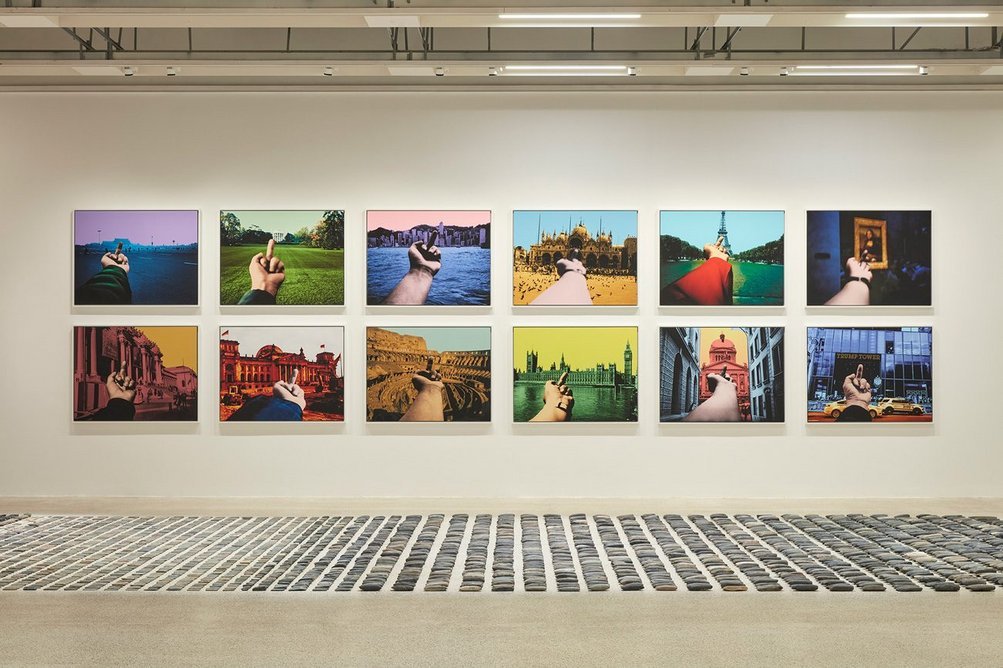
Photographs from the “Study of Perspective” collection are displayed above the stone age tools. Ed Reeve. CC BY-NC-ND 2.0
In “Making Sense,” many of the works are large collections of objects both ordinary and rare, meant to probe his audience’s views on mass production and consumption, from lego bricks to stone-age tools, pottery shards to porcelain cannonballs from the Song dynasty (960 - 1279 CE). True to his activism, there are also a number of works highlighting various human rights and social justice issues, such as the poor response of the Mainland Chinese government after the Sichuan earthquake in 2008 and the ongoing refugee crisis in Southern Europe.
Among the decommissioned works in the exhibit is a collection of photographs titled “Study of Perspective,” in which only Ai’s hand is seen emerging from behind the camera, holding up his middle finger before a variety of backgrounds including the Eiffel Tower, Tiananmen Square, and the White House. Shot between 1995 and 2017, these photographs were meant to mimic those taken by tourists in front of these popular landmarks, while simultaneously presenting a sharp statement of opposition to the political institutions they represent.

A sea of donated lego bricks makes up the “Untitled (Lego Incident)” Work in the exhibit. Ed Reeve. CC BY-NC-ND 2.0
Another work, “Untitled (Lego Incident),” comprises hundreds of Lego pieces donated to Ai after Lego refused to sell him any of their products in 2014. He had been previously been using Lego bricks to create portraits of imprisoned human rights activists to display as part of his “@Large” exhibit displayed in the infamous prison on Alcatraz Island, but Lego blacklisted Ai, announcing that their products are not meant to be used for political messages. His response on social media resulted in these donations, with this exhibition the first time the Legos will be part of a formal production. This field of bricks lies in front of another Lego based artwork in which Ai has reinterpreted the famous Monet painting of water lilies, using over 650,000 individual bricks to create a wall piece which stretches for almost 50 feet (roughly 15.2 meters).

Some of the works are of a much more personal nature, such as “Left Right Studio Material,” a carpet of blue glazed pottery shards leftover from when the Chinese government raided Ai’s studio in 2018 demolishing everything they could find. At the time Ai had been experimenting with the ceramics, trying to create the largest possible sphere that would fire in his kiln without shattering. One such bubble is visible to the right of the shards, a lone survivor of the studio raid. This work is one of a handful that speak to Ai’s fascination and appreciation of artisanal Chinese craftwork, porcelain making being among many that are quickly dying out thanks to automated mass manufacturing processes.

A close-up view of the porcelain teapot shards that comprise “Spouts”. Ian Mansfield. CC BY-SA 2.0
In this vein, the two works “Untitled (Porcelain Balls)” and “Spouts” also pay homage to Chinese porcelain, the former a field of over 200,000 porcelain cannonballs from the Song Dynasty; Ai was shocked by the use of such a delicate material to make ammunition. The latter is a collection of over 250,000 porcelain spouts broken off of teapots that were not perfect enough to be sold. These massive collections have been curated by Ai himself since the 90s and aim to question how we decide what objects are worthy of value: each of the cannonballs or stone age tools could be placed in a museum given their historical significance, but Ai was able to find them for next to nothing in Chinese flea markets.

“Backpack Snake” (left) and “Life Vest Snake” (right) adorn the back wall of the exhibit. Ed Reeve. CC BY-NC-ND 2.0
Conversely, the two winding snakes on the back wall of the exhibit are dedicated to the victims of the Sichuan earthquake in 2008 and the refugees who lost their lives making the journey to Europe from Syria. Titled “Backpack Snake” and “Life Vest Snake” respectively, each work uses items the artist found at the site of both crises: children’s backpacks collected from the rubble of the earthquake and life jackets left on shores of Lesbos by Syrian refugees. Ai painted over and repurposed these objects into the two 55 feet (roughly 16.8 meters) long serpents, which, to Ai, symbolize the complexity and unpredictability of crises both natural and man-made.
As of 2021, Ai has been living in Portugal and is still working in his new home in Montemor-o-Novo, a small countryside town near the Southwest Coast. His new work continues to draw inspiration from his Chinese roots as he collaborates with local ceramicists and porcelain makers to produce new art.
Tanaya Vohra
Tanaya is an undergraduate student pursuing a major in Public Health at the University of Chicago. She's lived in Asia, Europe and North America and wants to share her love of travel and exploring new cultures through her writing.
Free Airline Tickets To Hong Kong?
To bring back tourism, 3 airlines are offering 500,000 free air tickets.
Read MoreLife is Getting Harder For LGBTQ+ in China
China has had its reservations about the LGBTQ+ community in its recent history, but under Xi Jinping’s rule only traditional heterosexual values are accepted.
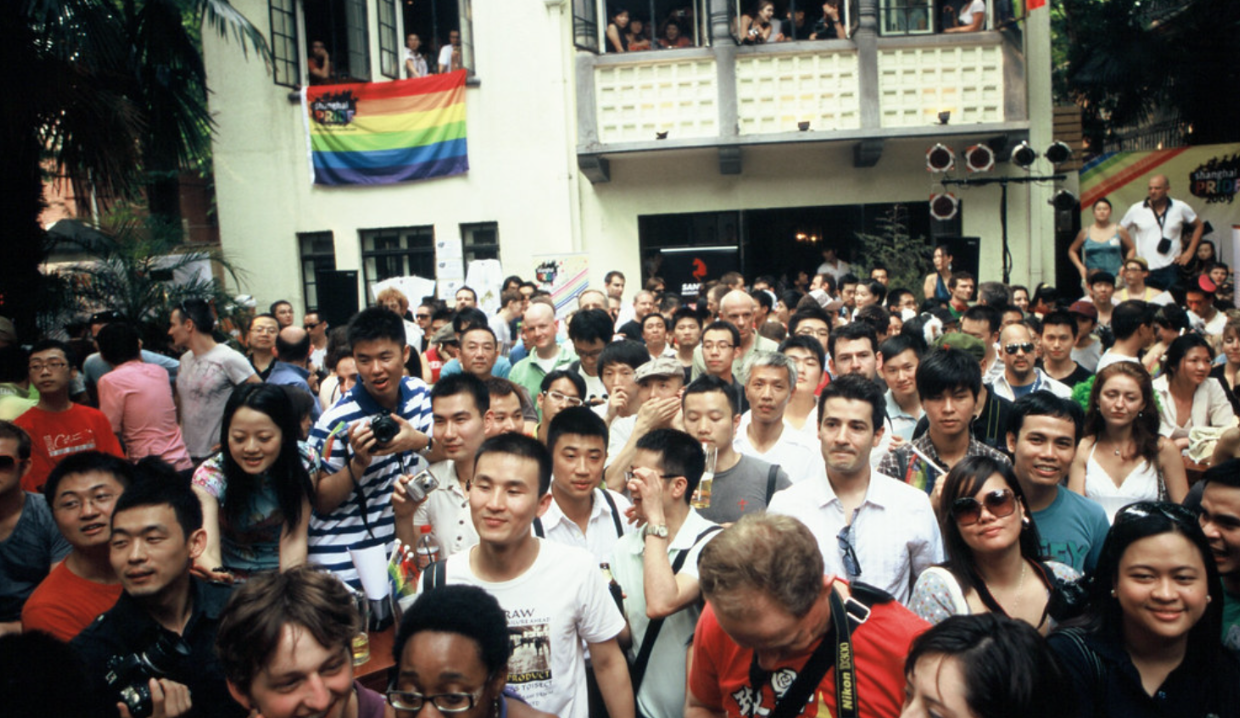
Shanghai Gay Pride 2009. Kris Krug. CC BY-SA 2.0
The LGBTQ+ community has never had it easy in China — from constant surveillance and intimidation to censorship and even police detention, the community has been met with constant repression.
There was a period in the early 2000s, however, when it seemed as if things might have been changing. Gay clubs were flourishing, and there was a feeling of acceptance that came along with increased social services. Those days are gone, and the reality has become quite different under the rule of President Xi Jinping as China slowly becomes a more conservative country.
But it hasn’t always been like this. While many believe heterosexual traditions have been a hallmark of Chinese culture throughout history, this was not the case before the 19th century: centuries ago homosexuality wasn’t just accepted, but celebrated. One text entitled, “Passions of the Cut Sleeve” depicted an emperor and a servant sharing a bed. The emperor wanted to get out of bed, and to avoid disturbing the servant’s sleep, the emperor cut the sleeve the servant was resting on. While this act could be interpreted differently, the standard interpretation is that it was done out of love.
This work was celebrated by scholars and is proof that the intolerance of homosexuality has never been a traditional aspect of Chinese culture. But when Communist Party Chairman Mao Zedong rose to power later on in the 20th century, there was a sudden shift in attitude.
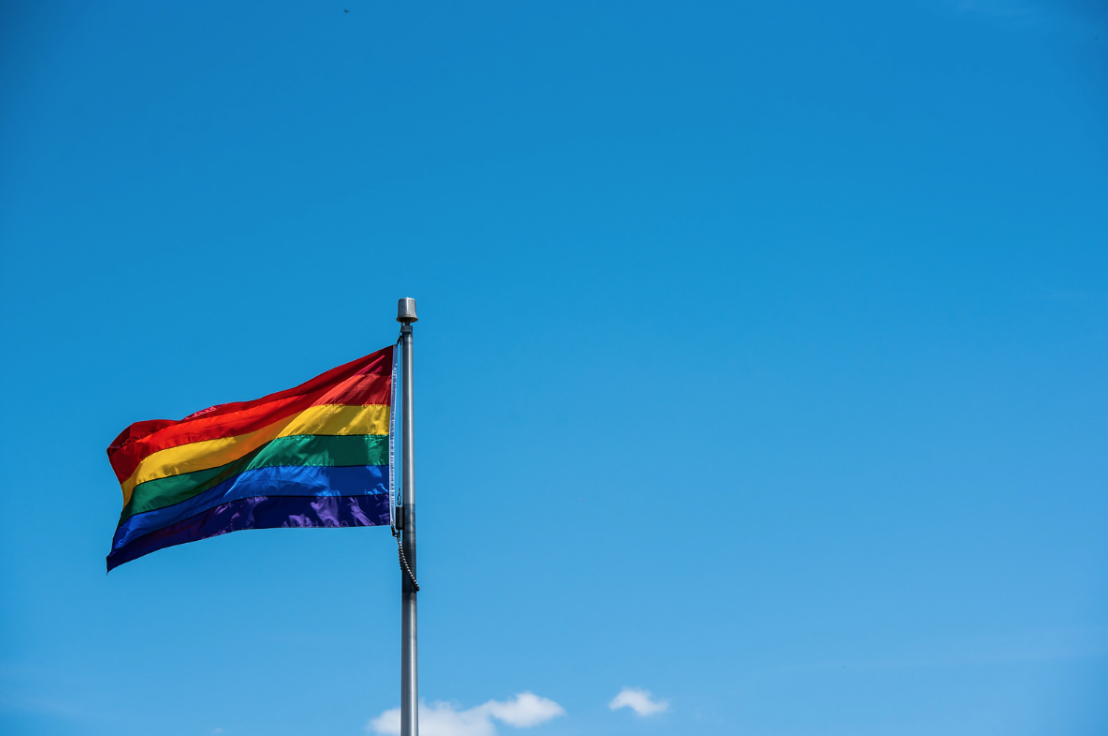
LGBTQ Flag. Pacific Northwest National Laboratory - PNNL. CC BY-NC-SA 2.0
He encouraged China to embrace modernity. That meant exposing the country to Western culture, which also included exposure to Western concepts of sexuality and, therefore, Western homophobia. Mao imported the notion that homosexuality was an illness and that same-sex attraction was a mental disorder that needed to be cured. Up until 1997, men caught engaging in homosexual acts could be persecuted with charges of “hooliganism,” a crime that that offended against public order.
Today being gay is not illegal in China, but that doesn’t mean the negative stigma around homosexuality has changed. When Xi Jinping became president in 2012, the old Western-inspired values on what a family should look like have come to dominate society once again, to the point where the pressure to remain in the closet became almost unbearable.
There are many people in the Chinese LGBTQ+ community who refuse to fake their “straightness” and have therefore left their homeland. This is known as “sexual migration” and mostly occurs due to both external and internal pressures.
Internet platforms have also stepped in to enforce the party line. The popular TV show “Friends” had a plotline involving main character Ross’ lesbian ex-wife which has been censored in China, along with any other mentions of the LGBTQ+ community and sex. The gay-dating service app Grindr has also been removed from China’s Apple app store.
China is growing more suspicious and even hostile to homosexuality, labeling it as a “Western influence.” Being bisexual, gay, or trans is ironically seen as a Western import and is increasingly not accepted. Homosexuality may have been decriminalized in 1997, but is still very much confined to the shadows.
Michelle Tian
Michelle is a senior at Boston University, majoring in journalism and minoring in philosophy. Her parents are first-generation immigrants from China, so her love for different cultures and traveling came naturally at a young age. After graduation, she hopes to continue sharing important messages through her work
Will Bougainville Become the World’s Newest Country?
98% of the Bougainville population voted for independence from Papua New Guinea in 2019, but the quest for nationhood remains uncertain.

A view of Bougainville. Jeremy Weate. CC BY 2.0.
In 2019, Bougainville, an island that is politically part of Papua New Guinea (PNG) but culturally and linguistically separate, voted overwhelmingly for independence. Around 98% of the population voted to leave PNG to form their own country. With such a large majority supporting independence, the government of PNG cannot ignore the demands of Bougainville, and negotiations are currently underway to devise a peaceful path to independence that satisfies both parties involved.
Located around 160 kilometers from the island of New Ireland and 1,000 kilometers from Port Moresby, the capital of PNG on the island of New Guinea, Bougainville is geographically part of the Solomon island chain. Due to its remote location from the rest of PNG, it has a unique history. A part of the German Empire until 1946, PNG was then transferred to Australian administration. When Australia granted independence to PNG in 1975, Bougainville was to be included in the new country, against the protests of the people there.
The people of Bougainville made several attempts at independence over the years, including in 1975. In the late 1980s, the region got plunged into a civil war due to the disagreements over the operation of the Panguna mine, one of the largest and most profitable mines in the world. To the residents of Bougainville, the mine, which was supported by the PNG government, represented another imperial imposition to their land. As part of the peace settlement that established Bougainville as an autonomous region in 2001, the residents of Bougainville were to be entitled to an independence referendum every 10 to 15 years. That first referendum happened in 2019, which resulted in overwhelming support for independence.
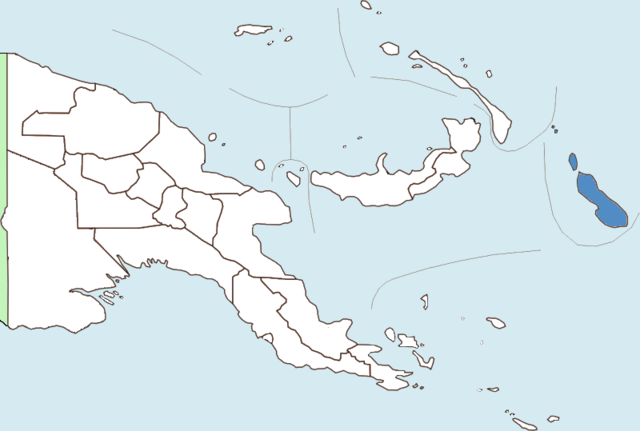
The location of Bougainville relative to the rest of PNG. Mr Accountable. CC BY-SA 3.0.
The next steps are uncertain. It is not feasible for any entity to gain complete independence overnight so there will be a transition period before Bougainville becomes a fully sovereign country. The agreement between Bougainville and the rest of PNG stipulates that independence shall be attained no later than 2027. Both parties are now trying to figure out the best way forward.
PNG is generally reluctant to grant independence to Bougainville, as their prime minister James Marape is worried that giving independence to Bougainville will set a precedent for other secessionist parts of the country. He insists that the parliament of PNG must approve independence. The government of PNG also points out that the referendum is non-binding.
The Bougainville side, however, says that the role of the parliament is only to ratify the actual results of the referendum or the outcome of the post-ratification consultations. After over a year of negotiations, both parties, in 2021, agreed to have a political settlement “no earlier than 2025 and no later than 2027.” Most governmental powers will also be transferred to Bougainville by 2023, with the rest to follow by 2027.
However, challenges remain. Today, Bougainville has a GDP per capita of $1,100, which is around the same level as the Democratic Republic of the Congo, Niger and Somalia, all of whom face notable challenges in poverty, health and political stability. It remains to be seen whether Bougainville will be able to secure recognition by other nations, as well as become a member of the United Nations, usually considered one of the benchmarks of independence. Ensuring a peaceful transition that results in a stable government that does not depend on foreign aid will be essential in the future success of Bougainville. While not there yet, the world could welcome a new country by 2027.
Bryan Fok
Bryan is currently a History and Global Affairs major at the University of Notre Dame. He aims to apply the notion of Integral Human Development as a framework for analyzing global issues. He enjoys hiking and visiting national parks.