
Kelcie Lee
Despite the threat imposed by the Chinese government, underground Chinese Christian communities continue to find hope.
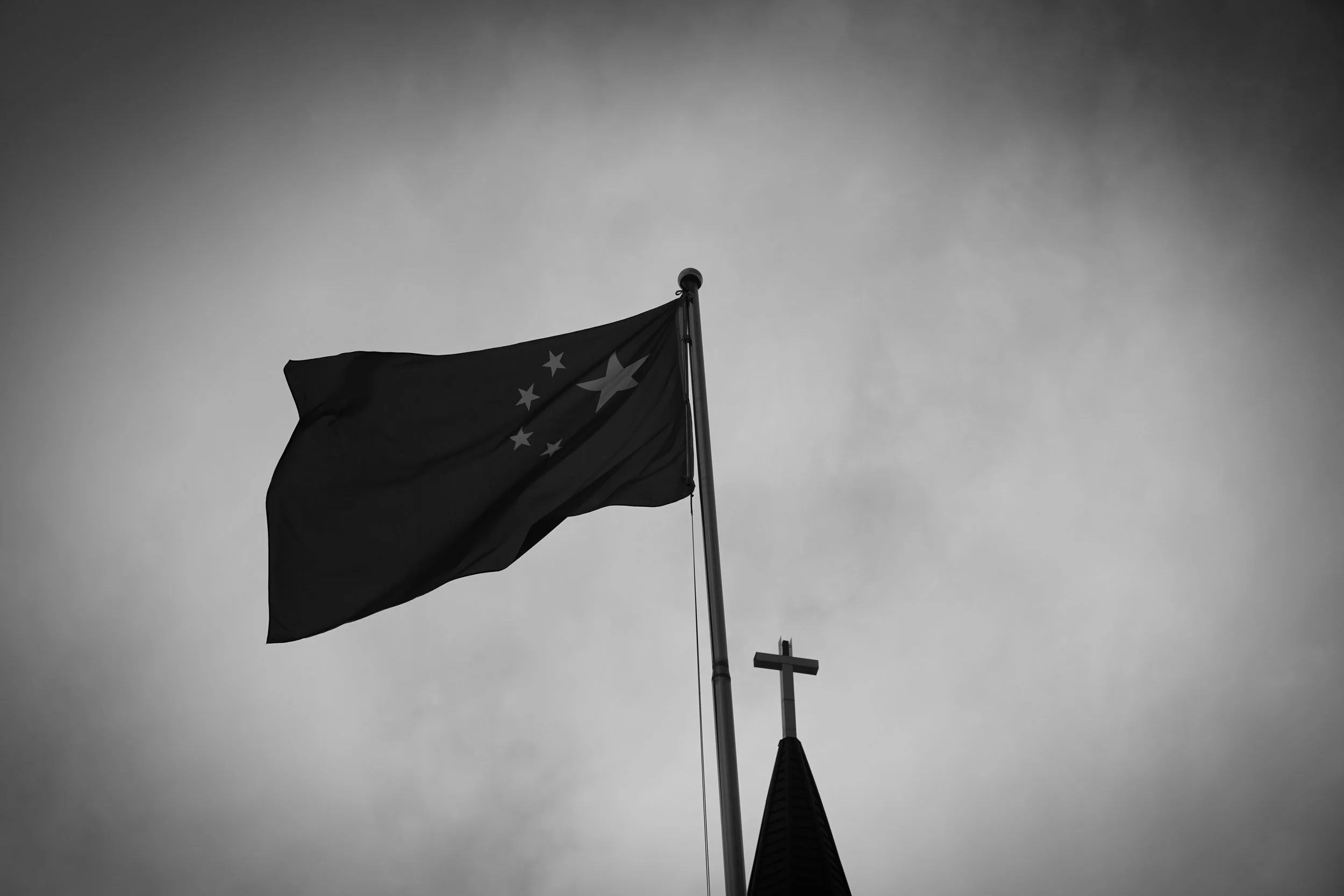
Chinese flag and Christian cross. Randy Lu. Unsplash.
Under the rule of the Chinese Communist Party (CCP), China’s religious scene appears few and far between. Among imminent threats from the government, as well as the CCP’s promotion of ideals like socialism and atheism, religious activity is scarcely explicit. But still, multiple Christian faith communities continue to exist in secret, and they do so “underground.”
While the Chinese government recognizes five religions, those being Buddhism, Islam, Catholicism, Protestantism and Daoism, the CCP is officially an atheist government. Since 2007, the Pew Research Center has consecutively ranked China among the world’s most restrictive governments. All religions must adhere to Chinese traditions and show ultimate loyalty to the state, which has led to many churches molding their beliefs and theology in a way that is acceptable to the government.
“The Chinese government’s crackdown on religious practice is tied to its efforts to tighten ideological control, both at home and abroad,” said Yalkun Uluyol, China researcher at Human Rights Watch. “Governments should ensure the Chinese government is held accountable for such violations and press for religious freedom in China.”
The legal recognition of China’s “official churches” subjects them to constant oversight and restriction. For churches that have refused to register, the government has shut them down and arrested their leaders, with some being reportedly held in internment camps. Christians who defy this surveillance decidedly worship in “underground” or “home” churches, which are independent, unregistered faith communities operating in secret.
In order to avoid government monitoring, some underground churches create self-imposed attendance restrictions, limiting sizes to some 10 people. When they surpass their set number, they split into smaller groups to avoid attracting attention. But still, the community continues to grow.
“We couldn’t stop the people from coming,” one Chinese pastor said. “Many of them would rather be arrested than to stop meeting in slightly larger fellowships.”
Despite the intimidation, risk of detention and persecution from the government, the underground church community continues to thrive, seeking and finding hope in their faith. These Christians also remain resilient under looming threats from the Chinese government’s high-technology security and monitoring systems. China has one of the most advanced surveillance systems in the world, allowing the government to track private communication and online resources. With this, Chinese Christians have minimized explicit online communication, instead using code phrases in text messages to disguise their conversations.
China is also not the only country with a flourishing faith community despite its restrictive government. Christians in Iran and North Korea, for instance, have developed valuable communities worshiping their beliefs. Despite facing intense oppression and persecution from the Iranian government, Christian Iranians have a thriving underground church system. In fact, it’s one of the fastest-growing churches in the world. Similarly, in North Korea, Christianity is outlawed, and owning a Bible is illegal. This has made meeting, even in private, nearly impossible, leading people to hide their faith from even their own family. As a result, North Korean Christians often worship in isolation, either by themselves or with a few others.
Through meetings, singing, reading and preaching, these communities continue to thrive in the face of many potential dangers. People find identity, hope and personal connection within these communities, allowing them to continue worshiping their religion in a society that forbids it.

Kelcie Lee
Kelcie is a second-year student at UC Berkeley majoring in history and sociology, with a minor in journalism. She developed her passion for writing and journalism in high school, and has since written for a variety of news and magazine publications over the last few years. When she isn't writing, Kelcie can be found drinking coffee, listening to music or watching the sunset.