
Zimbabwe becomes the latest nation to alter its constitution, allowing its 83-year-old president to stay in power until 2030.
Read MoreZimbabwean Teens Kick Away Child Marriage with Taekwondo
One town in Zimbabwe has learned to bear the weight of history by “kicking” child marriage customs away.
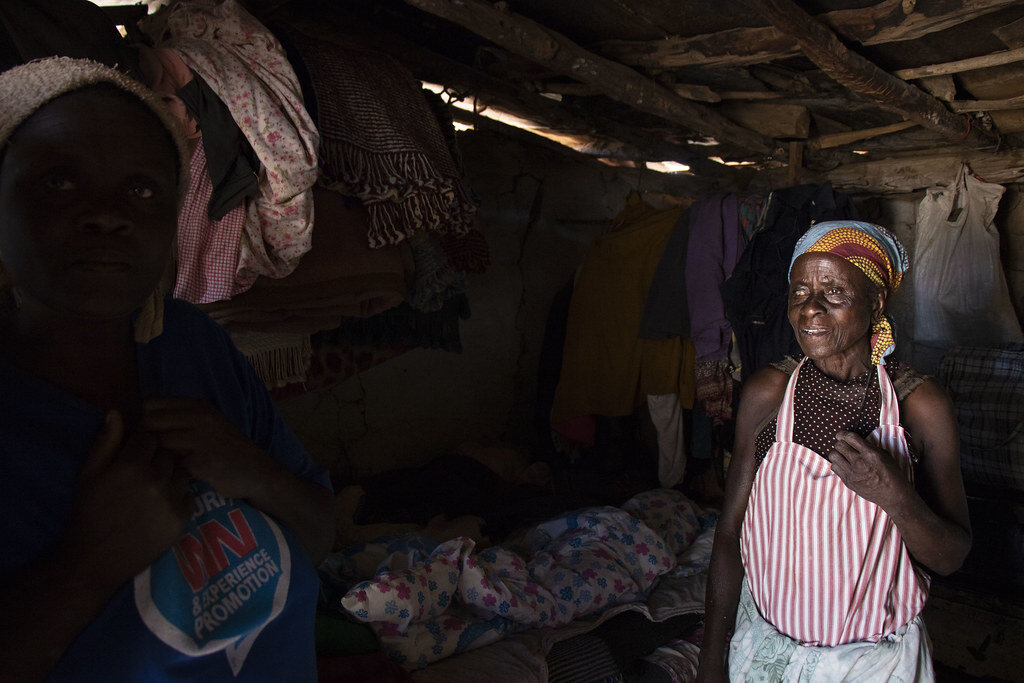
Zimbabwean woman. ScotchBroom. CC BY-NC 2.0.
In the small settlement of Epworth southeast of Harare, Zimbabwe’s capital, is a growing community of taekwondo enthusiasts. One member, 17-year-old Natsiraishe Maritsa, has taken it upon herself to organize taekwondo classes for the girls of her community. The participants of her classes are underage girls, some as young as 10, who have been subjected to the harrowing practice of child marriage that plagues Zimbabwe.
The Statistics
Child marriage is a tradition practiced all around Zimbabwe, but it runs particularly rampant in rural areas. The Zimbabwean countryside was found to have a child marriage rate of about 40% compared to the urban areas that show a rate of 19%.
In Zimbabwe, 34% of girls are married off before the age of 18, while another 5% are married before the age of 15. The issue of child marriage, although an occurence involving mostly underage women, affects more than just women. About 2% of boys are forced into the practice before the age of 18.
Complications of Elimination
The task of eliminating child marriage has proven to be especially difficult due to the many conditions and societal beliefs that worsen girls’ ability to escape the practice. There are four main reasons that girls are easily trapped in the tradition:
First, gender inequality ranks women as inferior to men, thereby allowing the men of the family to force the women into submission.
Second, and a particularly large piece of the problem, is poverty. The practice of child marriage is often used as an economic tool; the price for a bride is used to cover household expenses. Because marrying off daughters of the family can be the decision between life and death, the pressure to commit these practices is often insurmountable. With poverty increasing due to COVID-19, this problem has become particularly difficult.
Third, the need to avoid shame causes many families to marry off their daughters. In Zimbabwe, the act of a daughter committing premarital sex is seen as shameful to the family, so it is resolved by forcing the daughter to marry her boyfriend. The girls will submit to these demands, especially if they became pregnant, in order to avoid abuse by their family members.
Fourth, a lack of education pushes girls into the trap of child marriage. Many poorer households are unable to pay for their daughters to attend school, which increases the risk that they will be forced into a marriage.
It is an oppressive cycle. Studies find that poverty causes child marriage, and in return, child marriage feeds into poverty.
Seventeen-year-old Maritsa has chosen to use taekwondo education to empower the girls of her community, hoping they can use their newfound confidence and skills to reshape their futures. She holds classes in a small dirt yard in front of her house, while her parents use their small income to supply some food for the attendees.
Maritsa’s class has proven to be empowering, with each class used as a safe space for girls to talk about the physical, mental and emotional abuse they endure from their husbands.
She has proven that although oppressive practices are formidable opponents, the power of education and community can undo even the most controlling traditions.
To Get Involved
Nonprofit organization FORWARD is led by African women seeking to end violence and the oppression of women in Africa, including child marriage. To read more about how to lend a hand, click here.
Global partnership Girls Not Brides has combined the efforts of over 300 organizations dedicated to empowering women on nearly every continent. To see how you can support bills and other legislation they are pushing, click here.

Ella Nguyen
Ella is an undergraduate student at Vassar College pursuing a degree in Hispanic Studies. She wants to assist in the field of immigration law and hopes to utilize Spanish in her future projects. In her free time she enjoys cooking, writing poetry, and learning about cosmetics.
Zimbabwe’s Mining Ban: A Potential Empty Promise?
The government of Zimbabwe now bans mining in its national parks, but environmentalists argue that the prohibition is hardly adequate.
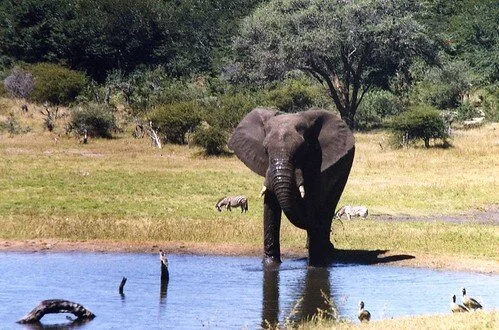
An elephant at a watering hole in Zimbabwe’s Hwange National Park. BARMCD. CC BY-NC 2.0.
After mounting pressure from conservationists, Zimbabwe’s government has declared a mining ban in the country’s national parks. Reports have circulated that Chinese companies are scouting out coal mining sites in Hwange National Park, Zimbabwe’s largest national reserve. The park stretches over nearly 6,000 square miles and is home to about 50,000 of Zimbabwe’s estimated 86,000 elephants. Extensive conservation projects are conducted in the region to preserve its plethora of wildlife species, but the call to protect the elephant population has drawn the most intense focus.
The government’s new ban is the result of a case brought to the country’s High Court by the Zimbabwe Environmental Lawyers Association. The group argues that mining would destabilize the park’s biodiversity while injuring the fragile ecotourism sector. This case was first brought to the High Court after officials of Afrochine Energy and Zimbabwe Zhongxin Coal Mining Group were arrested for conducting illegal mining projects only to be released with special permission by Zimbabwe’s President. Outrage immediately ensued, and conservationists rode the wave of anger to action.
The immense pressure on the government to implement change follows months of anger by environmentalists claiming that Chinese mining companies have already caused catastrophic damage in other regions of Zimbabwe. Environmentalists explain that the companies dump toxic waste, clogging precious dams and resulting in substantial drops in local wildlife populations. Locals also resent the presence of Chinese mining companies due to diminishing livestock populations and disrupted irrigation routes.
Environmental groups also argue that mining will perpetuate the drought and overcrowding problems that have already killed hundreds of elephants. Local residents deal with regular poaching disputes and rely heavily on income from ecotourism; so, many fear that failure to hold off Chinese mining companies could cause economic damage and increased levels of conflict. Furthermore, many Zimbabweans believe that mining in Hwange is only one piece of the bigger picture. Gold and diamond mining sites pepper other parts of the nation, causing equal degrees of environmental destruction to the over 1,000 species of animals that roam the country.
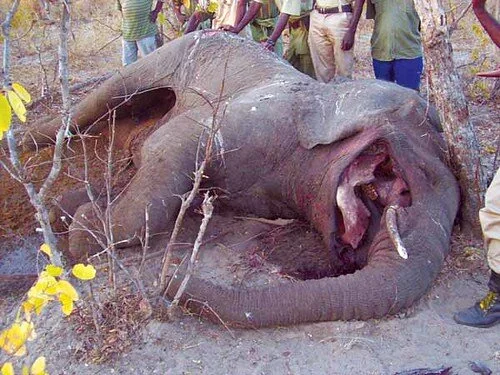
Tusks removed from a poached elephant. Sokwanele. CC BY-NC-SA 2.0.
For now, it seems that the government of Zimbabwe has yielded to the demands of conservation groups, but environmentalists appear far from satisfied. The government says that it is canceling current mining titles, but conservationists are doubtful that this is enough. Shamiso Mtisi, deputy director of the Zimbabwe Environmental Lawyers Association, states that the group is demanding an interdict, which is a legally binding prohibition. Pressure on the government to act quickly increased significantly in the past week as 11 young elephants died due to an unknown bacterial infection. Investigations are now proceeding to determine the cause of the elephants’ deaths, and whether poisoning may be linked to nearby mining activity.
Although the High Court’s verdict is already known, but whether or not Zimbabwe’s government will take the necessary steps to save the country’s natural and economic resources remains a mystery.

Ella Nguyen
is an undergraduate student at Vassar College pursuing a degree in Hispanic Studies. She wants to assist in the field of immigration law and hopes to utilize Spanish in her future projects. In her free time she enjoys cooking, writing poetry, and learning about cosmetics.
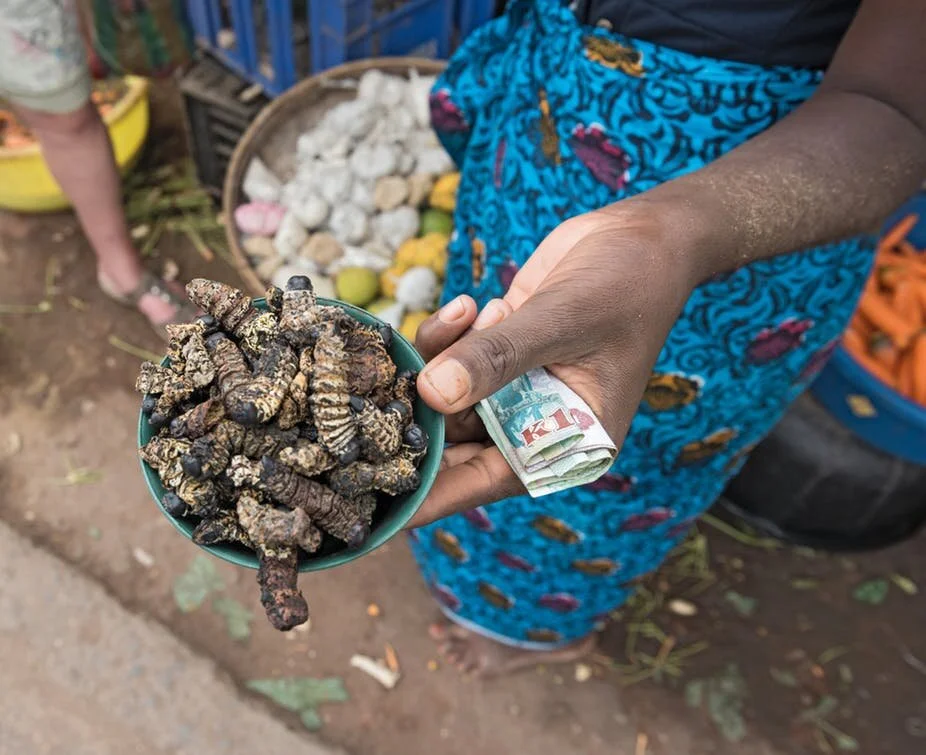
The development of an industry in edible insects such as these mopane caterpillars has been slow. Shutterstock
Why We’re Involved in a Project in Africa to Promote Edible Insects
There is a wealth of indigenous knowledge about capturing and eating insects in sub-Saharan Africa. But the development of edible insects as a food industry has been very slow, despite its many potential benefits.
Sustainability is one. Insects have a small carbon and water footprint. Studies show that insect farming emits less carbon and methane gas than large livestock like cattle and pigs. Much less water is needed to produce the same amount of protein. Insects use feed more efficiently than other sources of animal protein. Farming them could be a new source of jobs and income.
There should be more awareness and promotion of insects as food for humans and as feed for animals, especially at the policy, legislative and business level. In most African nations, edible insects are still viewed as an insignificant source of food and even, in some instances, as food for the poor. There are very few success stories of large-scale insect farming and industrial use in Africa.
We have been involved in a project to promote the integrated use of insects as food in urban areas in Zimbabwe and the Democratic Republic of Congo. Our project works on the edible insect value chain and discovered that the seasonal supply of insects and poor hygiene standards made the market unstable and unattractive to consumers. Traders sold insects in an informal setting and had little interaction with farmers.
We carried out training among farmers, traders, municipalities and others with an interest in this emerging industry. The training included how to handle and process insects after they were harvested, food safety along the value chain and farming crickets (Acheta domesticus and Gryllus bumaculatus).
The trainees have learnt how to rear and sell insects better and have become more aware of what a sustainable value chain should look like. For example, market facilities have to be clean and there must be a steady supply of insects. The training also created awareness of the need to farm insects rather than catching them in the wild. Catching insects can reduce insect populations dramatically when consumption increases. And there are no food safety standards for wild insects.
Together with the urban council in the town of Chinhoyi in Zimbabwe we built a model market structure where traders are selling their insects. Traders are selling some of the most popular edible insects; wild harvested mopane worms (Gonimbrasia belina), termites (Macrotermes natalensis) and wild harvested crickets. Farmers are still building stocks of farmed crickets, but the plan is to sell farmed crickets in the near future. It is still too early to see the impact but one notable improvement is hygiene. The market has also helped women traders, who are the main group selling insects there. They have become more organised about their business.
We hope this will lead to an increase in consumer willingness to buy edible insects, and demonstrate best practice to other regions of Zimbabwe and beyond. Through our project, we have also helped insect traders and farmers to form industry associations.
Why insects are valuable
Insects are highly nutritious and contain protein, fat and energy in proportions similar to grains, vegetables and seeds. They are rich in macro minerals like calcium, sodium and magnesium and micro minerals like zinc, manganese, iron and copper, all of which should be part of a healthy diet. In many parts of sub-Saharan Africa, these minerals come from fruits and vegetables, most of which are farmed seasonally. Edible insects could supply these minerals during seasons where there is less fruit and vegetable production.
They contain essential amino acids such as threonine, cysteine, valine, methionine and isoleucine. The recommended daily minimum intake of amino acids can be consumed by eating just 100 grams of the edible stink bug (Encosternum delegorguei), for example.
Earlier this year, parts of eastern and southern Africa were ravaged by Cyclone Idai. The cyclone destroyed crops and livestock, causing severe food shortages. We believe that in disaster-struck areas, edible insects can build resilience by being a food resource in recovery programmes and an alternative to traditional smallholder farming. There is an excellent example of that in the Democratic Republic of Congo, where orphanages have started insect farms to grow their own protein. The farms have helped decrease hunger and improve health among the orphans.
Read more: Economic chaos is causing a food security and humanitarian crisis in Zimbabwe
What needs to happen?
We were involved in setting up an international conference in Zimbabwe to discuss ways to foster the edible insects industry.
Research is required so that policy makers and those involved in the sector – farmers, processes, marketers and consumers – can make evidence-based decisions. This must happen across disciplines. Researchers should work with farmers and people in business to foster skills, innovation and enterprise. For example, they could develop business cases and scenarios.
Policy makers must understand that the sector is unique. Edible insects have not been categorised under any agricultural sub-sector such as crop or animal farming. On the African continent, they have not previously been farmed and treated as a commodity. That is why it would be helpful to establish and coordinate platforms such as meetings, workshops, exhibitions, magazines and websites.
Policy should also allow innovation and investment to happen at national, regional and international levels. Industry participants will need access to markets and credit.
Farmers, food and feed processors, traders and marketers must seize opportunities to invest and enter niche markets. They can also contribute to policy development and share knowledge about traditional ways of producing and eating insects.
There is momentum generated by several research and business initiatives that have been ignited in sub-Saharan Africa. And there is growing enthusiasm for using edible insects as alternative sources of protein and to build resilience against climatic shocks. It’s an essential step towards improving food security in the region.
Robert Musundire is a Associate Professor of Entomology in the Department of Crop Science and Post-Harvest Technology, Chinhoyi University of Technology
THIS ARTICLE WAS ORIGINALLY PUBLISHED ON THE CONVERSATION
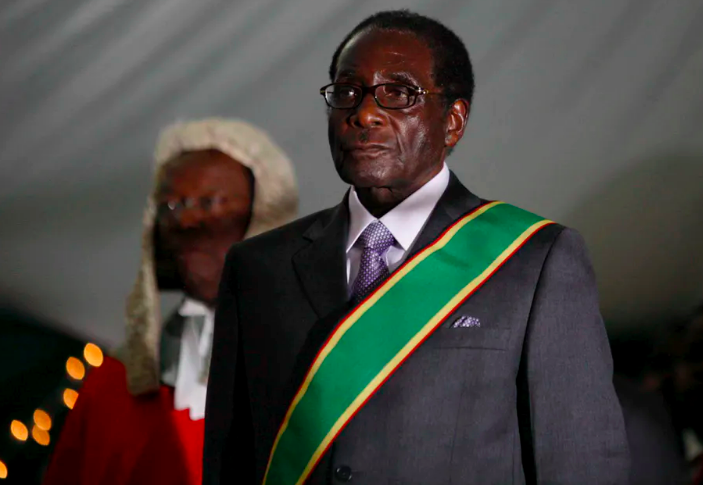
Robert Mugabe during his swearing-in ceremony in Harare, 2008. The former Zimbabwean president has died aged 95. EPA-EFE
Robert Mugabe: As Divisive in Death as he was in Life
Robert Mugabe, the former president of Zimbabwe, has died. Mugabe was 95, and had been struggling with ill health for some time. The country’s current President Emmerson Mnangagwa announced Mugabe’s death on Twitter on September 6:
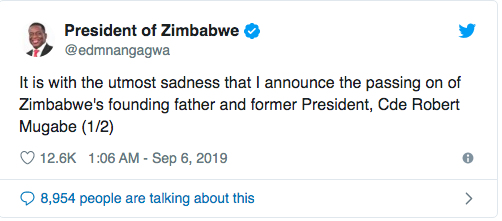
The responses to Mnangagwa’s announcement were immediate and widely varied. Some hailed Mugabe as a liberation hero. Others dismissed him as a “monster”. This suggests that Mugabe will be as divisive a figure in death as he was in life.
The official mantra of the Zimbabwe government and its Zimbabwe African National Patriotic Front (Zanu-PF) will emphasise his leadership of the struggle to overthrow Ian Smith’s racist settler regime in what was then Rhodesia. It will also extol his subsequent championing of the seizure of white-owned farms and the return of land into African hands.
In contrast, critics will highlight how – after initially preaching racial reconciliation after the liberation war in December 1979 – Mugabe threw away the promise of the early independence years. He did this in several ways, among them a brutal clampdown on political opposition in Matabeleland in the 1980s, and Zanu-PF’s systematic rigging of elections to keep he and his cronies in power.
They’ll also mention the massive corruption over which he presided, and the economy’s disastrous downward plunge during his presidency.
Inevitably, the focus will primarily be on his domestic record. Yet many of those who will sing his praises as a hero of African nationalism will be from elsewhere on the continent. So where should we place Mugabe among the pantheon of African nationalists who led their countries to independence?
Slide into despotism
Most African countries have been independent of colonial rule for half a century or more.
The early African nationalist leaders were often regarded as gods at independence. Yet they very quickly came to be perceived as having feet of very heavy clay.
Nationalist leaders symbolised African freedom and liberation. But few were to prove genuinely tolerant of democracy and diversity. One party rule, nominally in the name of “the people”, became widespread. In some cases, it was linked to interesting experiments in one-party democracy, as seen in Tanzania under Julius Nyerere and Zambia under Kenneth Kaunda.
Even in these cases, intolerance and authoritarianism eventually encroached. Often, party rule was succeeded by military coups.
In Zimbabwe’s case, Mugabe proved unable to shift the country, as he had wished, to one-partyism. However, this did not prevent Zanu-PF becoming increasingly intolerant over the years in response to both economic crisis and rising opposition. Successive elections were shamelessly perverted.
When, despite this, Zanu-PF lost control of parliament in 2008, it responded by rigging the presidential election in a campaign of unforgivable brutality. Under Mugabe, the potential for democracy was snuffed out by a brutal despotism.
A wasted inheritance
Whether the economic policies they pursued were ostensibly capitalist or socialist, the early African nationalist leaders presided over rapid economic decline, following an initial period of relative prosperity after independence.
In retrospect, it’s widely recognised that the challenges they faced were immense. Most post-colonial economies were underdeveloped and depended upon the export of a small number of agricultural or mineral commodities. From the 1970s, growth was crowded out by the International Monetary Fund demanding that mounting debts be surmounted through the pursuit of structural adjustment programmes. This hindered spending on infrastructure as well as social services and education and swelled political discontent.
In contrast, Mugabe inherited a viable, relatively broad-based economy that included substantial industrial and prosperous commercial agricultural sectors. Even though these were largely white controlled, there was far greater potential for development than in most other post-colonial African countries.
But, through massive corruption and mismanagement, his government threw that potential away. He also presided over a disastrous downward spiral of the economy, which saw both industry and commercial agriculture collapse. The economy has never recovered and remains in a state of acute and persistent crisis today.
Read more: Zimbabwe's economy is collapsing: why Mnangagwa doesn't have the answers
Reputation
On the political front, the rule of some leaders – like Milton Obote in Uganda and Siad Barre in Somalia – created so much conflict that coups and crises drove their countries into civil war. Zimbabwe under Mugabe was spared this fate – but perhaps only because the political opposition in Matabeleland in the 1980s was so brutalised after up to 30 000 people were killed, that they shrank from more conflict. Peace, then, was merely the absence of outright war.
Some leaders, notably Ghana’s Kwame Nkrumah and Julius Nyerere in Tanzania, are still revered for their commitments to national independence and African unity. This is despite the fact that, domestically, their records were marked by failure. By 1966, when Nkrumah was displaced by a military coup, his one-party rule had become politically corrupt and repressive.
Despite this, Nyerere always retained his reputation for personal integrity and commitment to African development. Both Nkrumah’s and Nyerere’s ideas continue to inspire younger generations of political activists, while other post-independence leaders’ names are largely forgotten.
Will Mugabe be similarly feted by later generations? Will the enormous flaws of his rule be forgotten amid celebrations of his unique role in the liberation of southern Africa as a whole?
A Greek tragedy
The problem for pan-Africanist historians who rush to praise Mugabe is that they will need to repudiate the contrary view of the millions of Zimbabweans who have suffered under his rule or have fled the country to escape it. He contributed no political ideas that have lasted. He inherited the benefits as well as the costs of settler rule but reduced his country to penury. He destroyed the best of its institutional inheritance, notably an efficient civil service, which could have been put to good use for all.
The cynics would say that the reputation of Patrice Lumumba, as an African revolutionary and fighter for Congolese unity has lasted because he was assassinated in 1961. In other words, he had the historical good fortune to die young, without the burden of having made major and grievous mistakes.
In contrast, there are many who would say that Mugabe simply lived too long, and his life was one of Greek tragedy: his early promise and virtue marked him out as popular hero, but he died a monster whom history will condemn.
ROGER SOUTHALL is a Professor of Sociology at the University of the Witwatersrand.
THIS ARTICLE WAS ORIGINALLY PUBLISHED ON THE CONVERSATION
Zimbabwe’s All Women Anti-Poaching Unit
Conservation becomes a community enriching project.
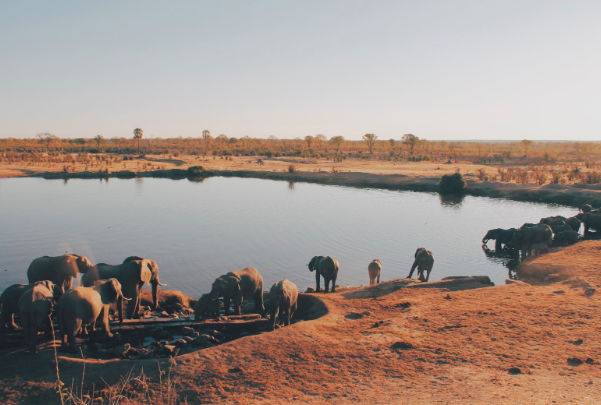
Photo of Zimbabwe’s Hwange National Park by Christine Donaldson on Unsplash.
The unit is called Akashinga, Shona for The Brave Ones, and it could not be more aptly named.
Founded by Damien Mander, an Austrailian former special forces soldier, Akashinga is a part of the International Anti-Poaching Foundation, a non-profit dedicated to preserving the Phundundu Wildlife Area.
Phundundu is a 115-square-mile area in the Zambezi Valley ecosystem which is home to 11,000 elephants and other endangered wildlife. In the past 20 years, frequent poaching has taken its toll on the reserve, resulting in the loss of thousands of elephants. While killing wildlife without a permit is illegal, animal trophies such as bones, tusks, and teeth can be sold on the black market for an amount equivalent to a month’s salary.
According to Akashinga’s website, anti-poaching initiatives often close off “traditional grazing areas, places of burial, worship, water points, food sources and traditional medicine,” making communities feel that endangered plants and animals are more important than their humanity. This resentment can fuel poaching attempts for which offenders can be arrested and sometimes killed. These experiences then reinforce the idea that endangered flora and fauna are of greater importance than the community, creating a cycle of resentment and violence.
To address this phenomenon, Akashinga takes a community-first approach to conservation. By recruiting women from the communities surrounding the Phundundu to serve on the unit, the organization is able to use conservation initiatives to enrich communities. Akashinga’s website describes the effort as having a “community-driven interpersonal focus, working with rather than against the local population for the long-term benefits of their own communities and nature.” To this end, 62% of operational costs are returned to local communities.
In this light, it is significant that the unit is made up entirely of women. According to National Geographic, research shows that in developing countries, women invest 90% of their income in their families, while men only invest 35%. Women are at the grassroots of community life, and when their wages are invested in their families, the entire community proffits.
But this is not the only reason that women are so right for the job. Mander had formerly trained male rangers for years before changing to an all-female model. He said that women are far better rangers; they are less likely to take bribes from poachers, and are skilled at de-escalating high tension situations. In National Geographic he commented that a gun in the hands of a man is a toy, but with a woman it is a tool.
Women also prove to be more resilient. Only three women quit the army-style training necessary to become part of the unit. When Mander was training men, all but three recruits quit after the first day. In National Geographic Mander said that, “we thought we were putting [the women] through hell, but it turns out, they’ve already been through it.”
This resilience is not without cause. Many of the women of Akashinga are victims of abuse, and have experienced their own trauma and exploitation. The BBC writes that Kelly Lyee Chgumbura, a unit member, was raped at seventeen and forced to drop out of school, abandoning her dream of becoming a nurse. She then had to give her baby to her rapist's mother, in accordance with Shona norms where if a mother is unable to provide for her child, the father’s parents become its guardians.
“My goals had been shattered,” she told the BBC, “It was like I couldn’t do anything more with my life.” A few years later, Chgumbura was recruited by her village head to try out for a ranger position. She was selected for the unit, and with a steady career now has a chance to win back custody of her daughter.
Being a ranger provides a sense of purpose as well as an income. “When I manage to stop poachers, I feel accomplished,” Chgumbura told the BBC, “I want to spend my whole life here on this job, arresting poachers and protecting animals.”
Like Chgumbura, most of the unit have faced traumatic experiences and lacked the agency and resources to protect themselves. “Who better to task with protecting exploited animals,” Mander told National Geographic, “than women who had suffered from exploitation?”
Phundundu is the first reserve worldwide to be managed entirely by women, but it will not be the only one for long. According to its website, Akashinga plans to welcome 1,000 new recruits who will protect 20 reserves. They aim to accomplish this by 2025.
EMMA BRUCE is an undergraduate student studying English and marketing at Emerson College in Boston. While not writing she explores the nearest museums, reads poetry, and takes classes at her local dance studio. She is passionate about sustainable travel and can't wait to see where life will take her.






Hoops4Hope
There are few elements across the spectrum of humanity that bind and connect us as people, no matter our age, race, or cultural background. They validate our bond as humans and in many cases, drive the most profound change that is occurring across the globe, bringing us together as a global community. The sport’s friendly competition does exactly this.
This is where Hoops 4 Hope (H4H) comes into play. Since 1995, H4H is an international non-profit organization, which has utilized the “power of sport to create sustainable long-term positive impact for youth, equipping them with the tools to manage the social, health and economic related challenges they face.” — Mark Crandall, H4H Founder & Director More
As the sister organization for Soccer 4 Hope, Hoops 4 Hope utilizes the medium of basketball to provide empowering sports programing to youth across Zimbabwe and South Africa. The organization’s mission is to educate youth with life skills necessary to survive; it has flourished in communities that struggle with poverty, unemployment, HIV/AIDS, violence, crime, substance abuse, and gender inequality.
Over its 18 years of existence, H4H has seen many of its youngsters receive sports scholarships to high schools, coaches being chosen for overseas cultural exchanges, and even have a Zimbabwean athlete now playing professionally in the Euro League. Furthermore, various H4H courts have been graced with visits from German Chancellor, Angela Merkel, along with NBA Star and member of the Chicago Bulls, Luol Deng, amongst many others.
This photo essay highlights Hoops 4 Hope as our NGO of the Week, taking you to the on-site project locations throughout Zimbabwe and South Africa, many of which were made possible through collaborations with local schools, shelters, and community organizations.
Connect with Hoops 4 Hope here.
ANDREW BRIDGE is a global enthusiast with a passion for the road less traveled. As a frequent collaborator with World Hip Hop Market and Nomadic Wax, Andrew has worked with numerous socially conscious artists from around the world in the pursuit of inspiring cultural understanding and exchange through entertainment. This fascination with the world at large has taken him to over 20 countries (so far) through studying, volunteering, and writing about his travels, with no signs of slowing his globetrotting nature down. Connect with Andrew at @Bridgin_TheGap