
Evelyn Garcia Medina
Military activity has long contributed to Switzerland’s noise pollution, with limited progress in reducing the impact.
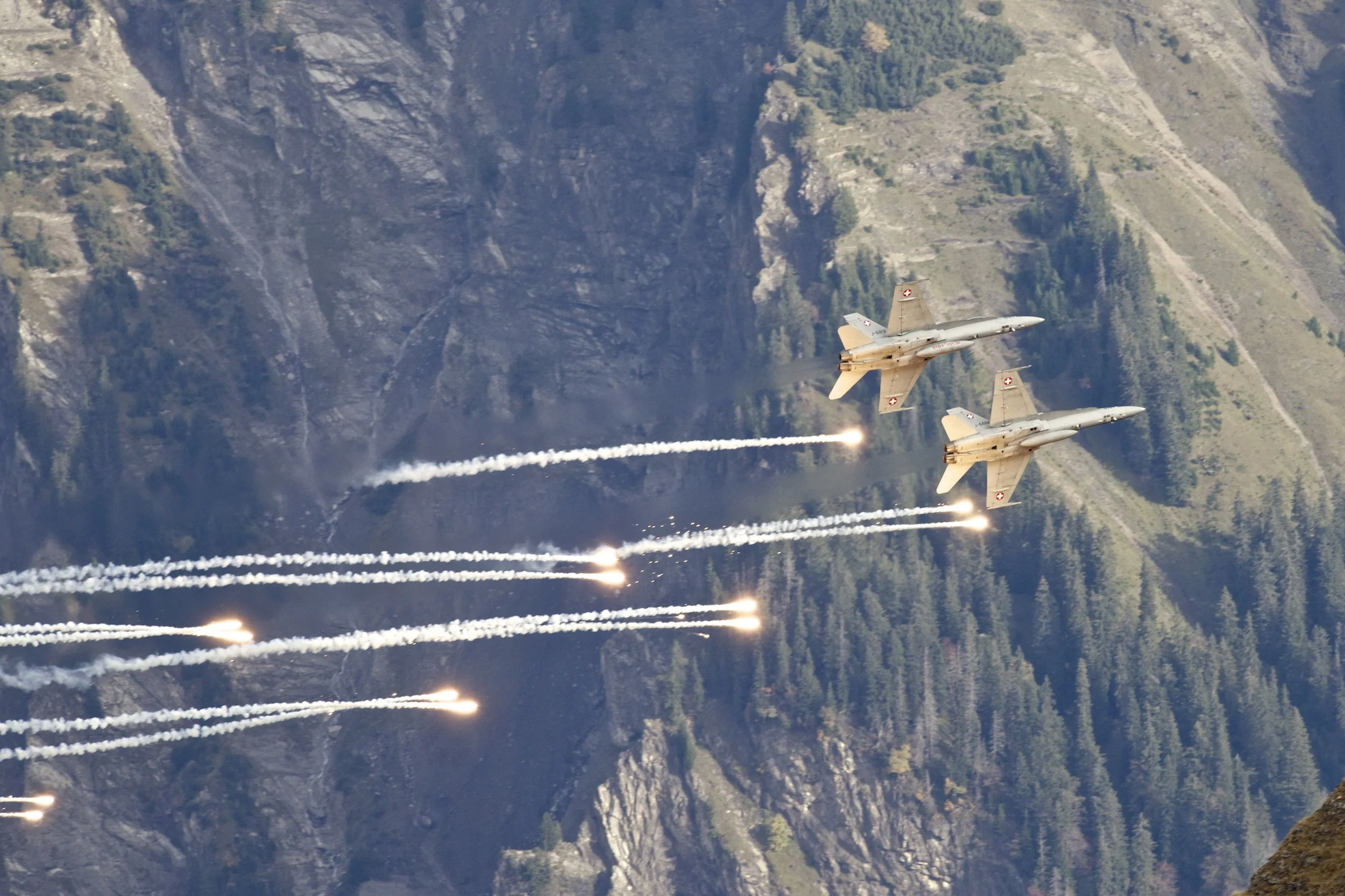
Combat aircrafts and flares during target practice in Switzerland. HooLengSiong. CC BY-NC-SA 2.0.
Noise pollution is defined as excessive, unwanted or harmful sound that disrupts daily life, and it has long been recognized as an environmental and public health concern. In Switzerland, military activity has played a significant role for decades, with some areas forcing residents to live alongside these sounds despite negative health effects.
Noise pollution in Switzerland isn’t a new problem. Military activity has been a contributor to noise pollution for a long time, especially in mountain valleys, where it’s heard by residents throughout. A 2008 study conducted by Europe’s International Commission on Biological Effects of Noise (ICBEN) reported that at the time, “the shooting training of the army [consisted] of about 120,000 large caliber shots and over 25 million small caliber shots [every year].” Much of this training was completed on eight different shooting grounds that had shooting ranges, expanded artillery facilities and tank training facilities.
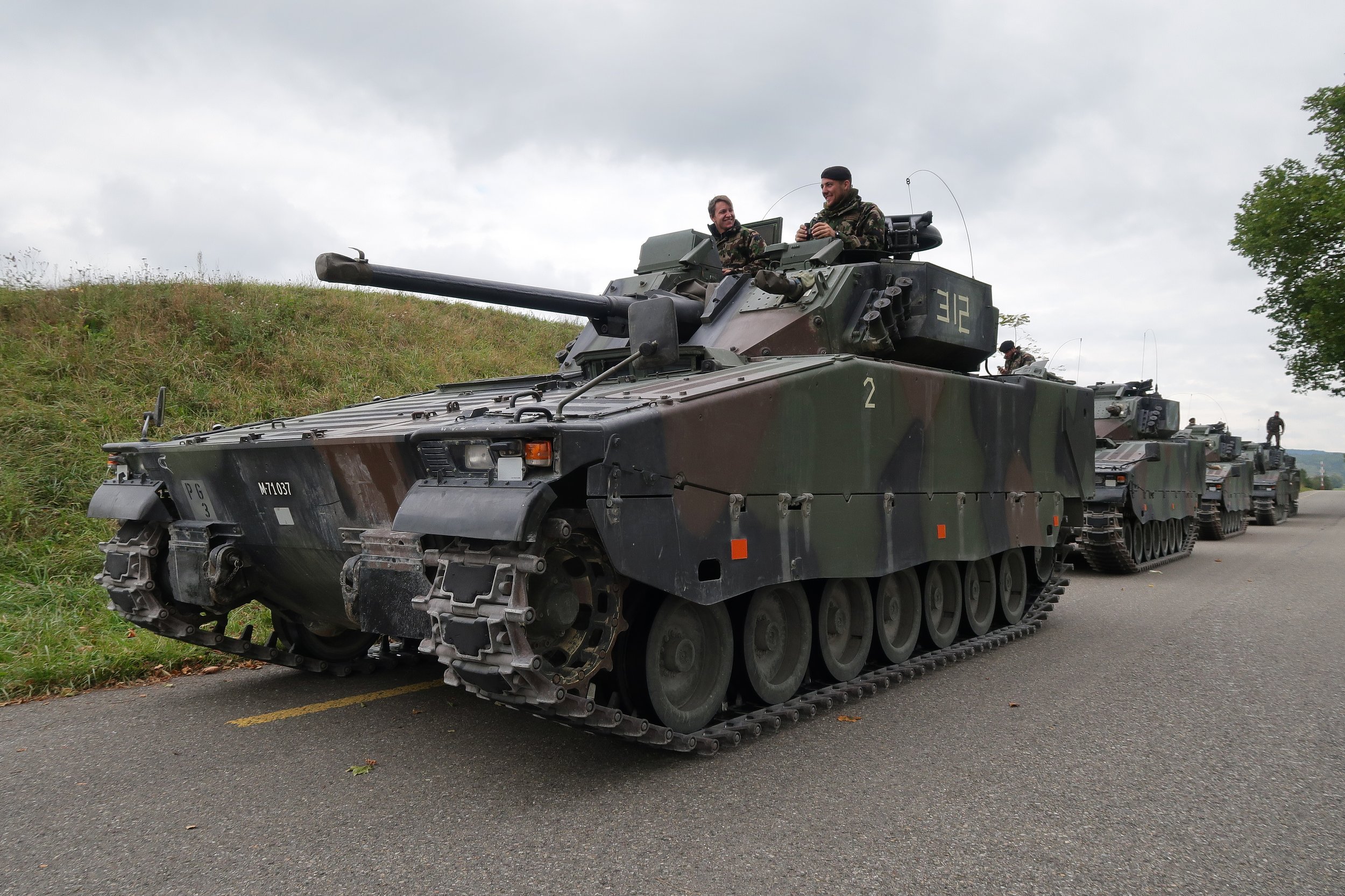
Military tanks lined up on road in Switzerland training facility. Kecko. CC BY 2.0.
Constant, unwanted loud noise is not good for the human body. The Journal of Exposure Science & Environmental Epidemiology (JESEE) published a study saying that noise pollution causes “annoyance and stress to elevated risk of sleep disturbance, cardiovascular disease, hearing impairment, and compromised childhood learning.” Noise from aviation is especially becoming concerning; JESEE reports that aircrafts create a high-frequency noise that is only felt when you’re nearby, but a high amount of low-frequency energy is present despite distance. The European Commission enacted the Environmental Noise Directive in 2002, but ICBEN concluded that military noise pollution remained the same by 2008.
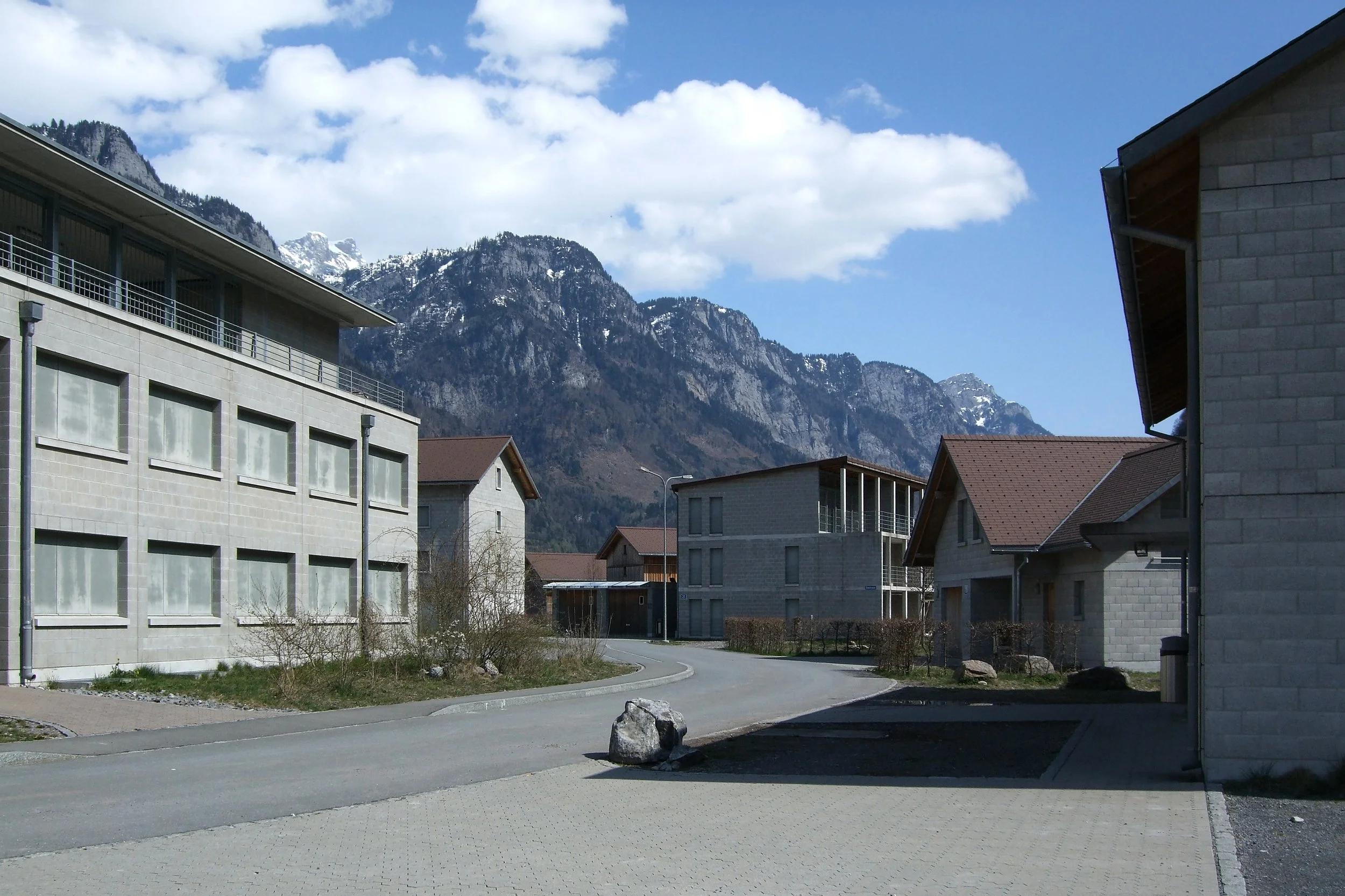
Military city in Switzerland. Kecko. CC BY 2.0.
Noise disturbances from military training are still present in Switzerland today, primarily from fighter jets. There has specifically been talk about the F-35 fighter jet’s three-decibel increase during takeoff from previous fighter jets. A Swiss news broadcasting service, SWI swissinfo.ch, reports that the number of takeoffs and landings will be halved, so noise pollution should remain the same. The Federal Department of Defence's Head of Space and Environment, Bruno Locher, says, “We try to optimize where possible … But if someone doesn’t want the airfield and the fighter jet, we can’t do anything.” As Vice Director of the Federal Office for the Environment (FOEN), Gerard Poffet, puts it: “noise is still seen as a necessary evil for our standard of living … but more and more studies are finding that people do not get used to noise.”
Switzerland has made progress addressing various sources of noise pollution over the years, but military activity remains a contributor. Policies have been enacted to alleviate its negative health effects, but significant reductions in military noise have not taken shape. Without further intervention, military noise is likely to remain an unresolved part of Switzerland’s broader noise pollution problem.
GET INVOLVED:
Most organizations addressing noise pollution in Switzerland research and publish data about pollution levels and promote policies that will reduce noise to a healthier level. The European Environment Agency provides data and assessments on environmental noise across Europe, including Switzerland, which can be useful for understanding noise pollution and potential solutions. The best way to get involved is to understand the problem, create awareness about it and advocate for policy changes that will improve noise for Switzerland’s residents.

Evelyn Garcia Medina
Evelyn is a recent Chicana graduate with a B.A. in English and Comparative Literature. Born and raised in the Bay Area, she draws inspiration from her passions: her cultural roots, environmentalism, and human rights. In her free time, she goes on hikes and enjoys learning about current social issues, history, and animals.