
Daud Azfar
Explore this guide to Lahore, Pakistan, and understand the history behind the major sites of one of South Asia’s most culturally rich cities.
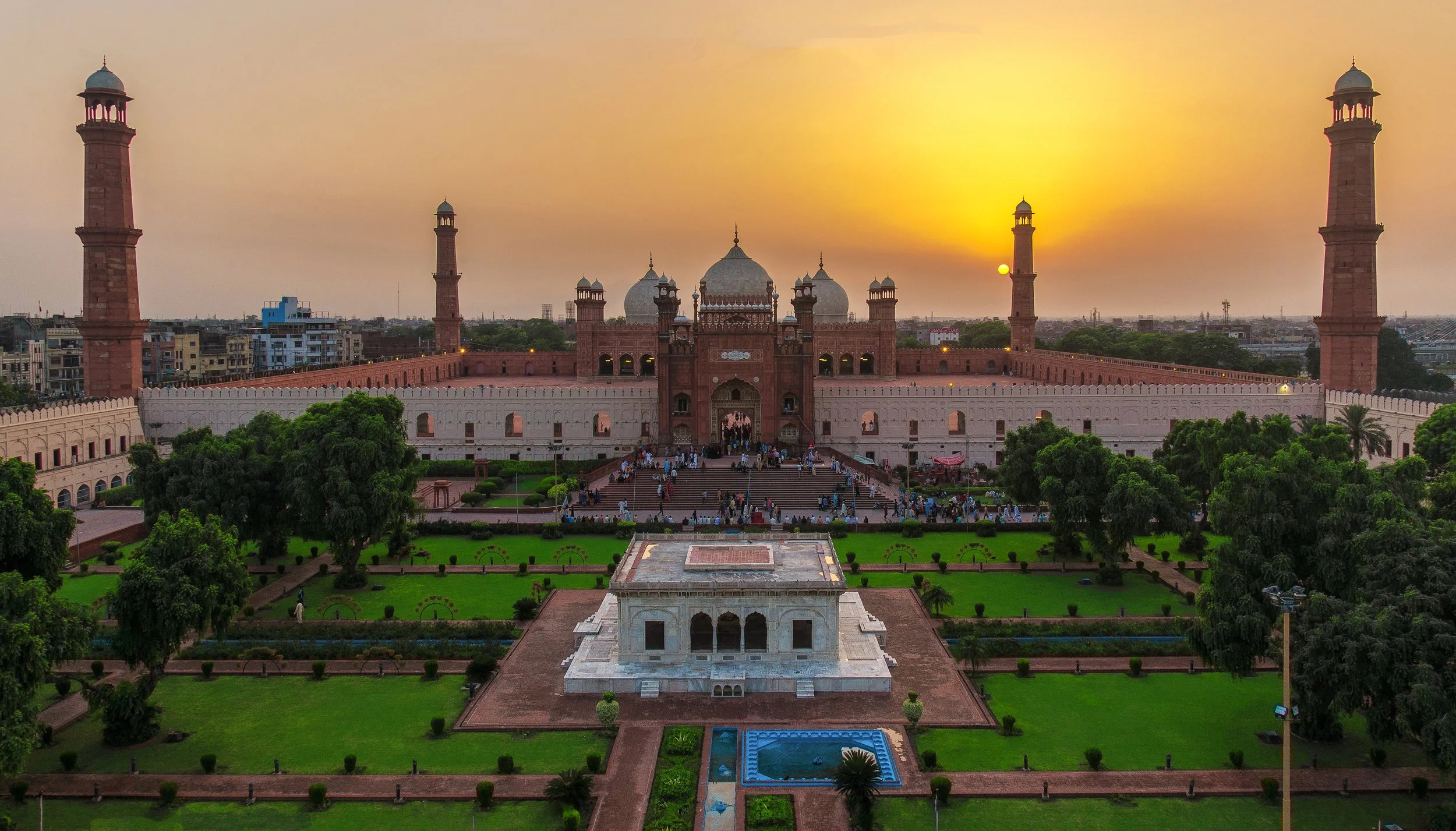
Badshahi Mosque and Hazuri Bagh. Muddiii257. CC BY-SA 4.0.
Lahore is Pakistan’s second-largest city and is fondly called the country’s cultural capital. Located in the eastern province of Punjab, of which it is the capital city, Lahore lies right along the Indian border and is home to some 14 million people. Its history dates back to antiquity, with some experts saying it is 2,000 years old; however, the city reached its peak under the Mughal Empire, which ruled in South Asia for more than 300 years. The third Mughal Emperor, Akbar, played a crucial role in developing Lahore’s “walled city,” fortifying it with a 30-foot wall and 13 gates. Akbar also made Lahore the Empire’s capital for some time, and subsequent rulers, including Ranjit Singh, the founder of the Sikh Empire, which ruled from Lahore for several decades, developed the city further. It remained an important city under British rule and played a significant role in the Indian independence movement. It is within this context that Lahore’s infamous monuments were developed, as well as its reputation for rich art and culture. A famous saying in Punjabi goes, “Whoever hasn’t seen Lahore hasn’t lived.”
Although the city is a popular tourist destination, Lahore’s special sites often go unfrequented, tourists instead going straight to the picturesque Badshahi Mosque or the iconic Minar-e-Pakistan. I myself am guilty of this. After growing up in Lahore and having seen most major sites at least once, my typical trips to the old city now only involve a nice meal followed by a quick look over the sites. I went back this summer and really appreciated the restorative work of the Walled City Authority and their booked tour services. And hearing about the history of the Royal Bathhouse, for instance, really made me appreciate the art and culture that live in every corner of the old city, which deserves time and appreciation.
For a new traveler, the big city can be intimidating, and narrowing down the must-see sights can be tough because there is just so much to see! My list includes 10 historic sights not to miss in Lahore, with a short background of why each site is so special, as well as a couple of suggestions for those interested in experiencing the city’s more modern side.
Lahore Fort
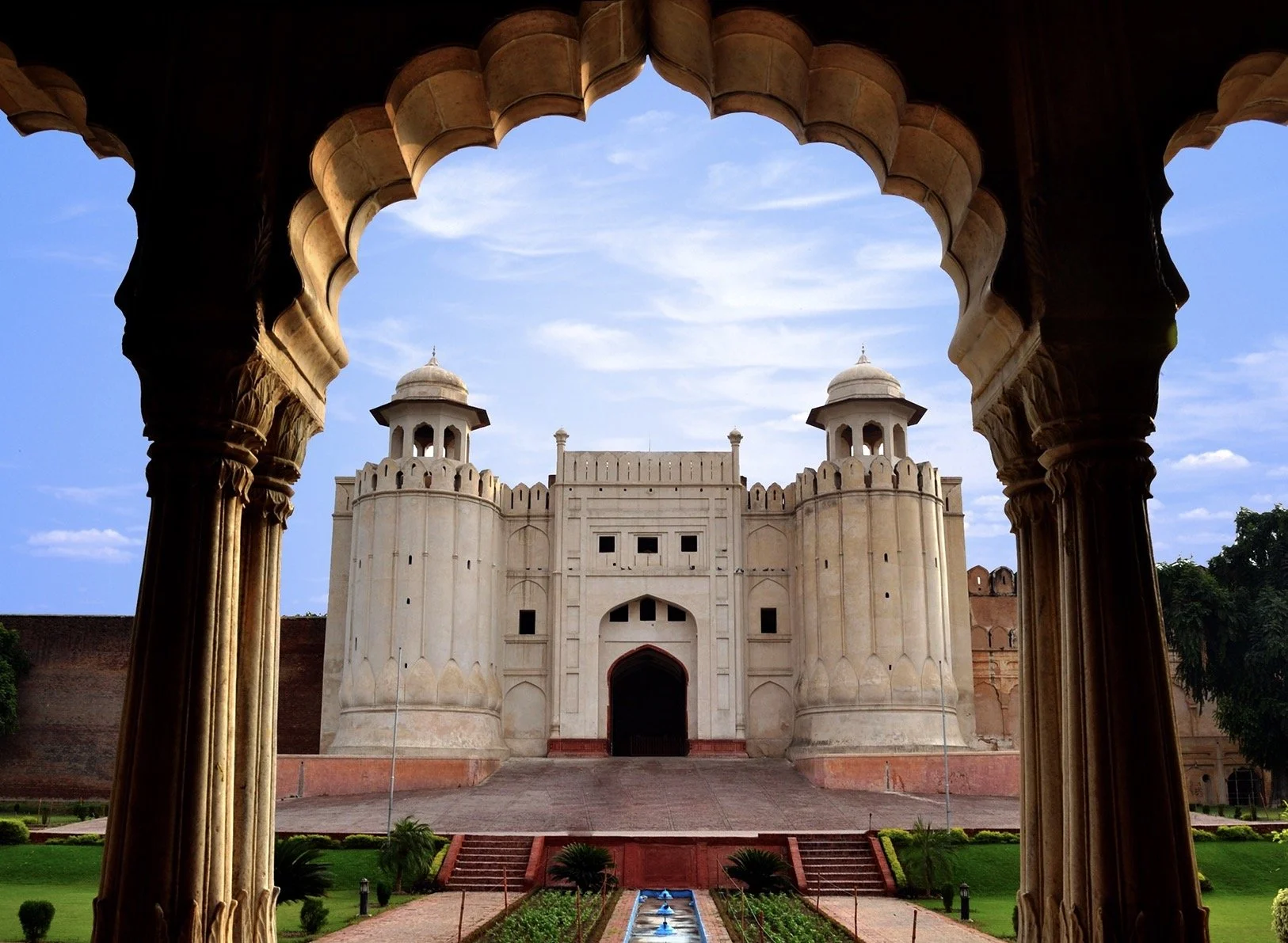
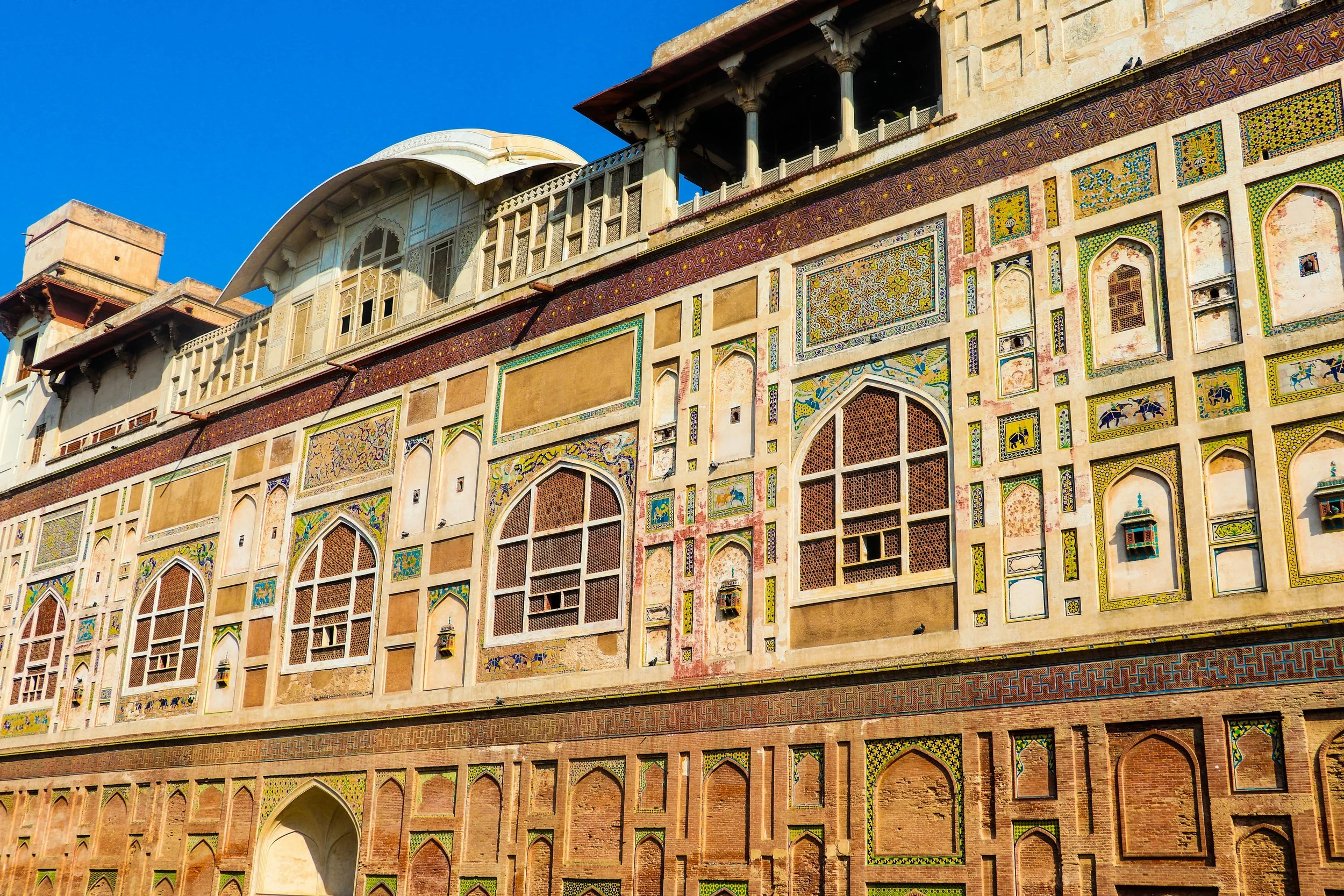
Known as the Shahi Qila, or Royal Fort in Urdu, this brick fortress spreads over an area of almost 50 acres and is home to numerous notable monuments. Under Emperor Akbar, it underwent an extensive reconstruction that gave it its renowned architectural design, which features both Hindu and Islamic motifs. The fort’s structures depict the evolution of the Mughal Empire, from Emperor Jahangir’s 60-foot-tall Picture Wall, which was recently restored by the Walled City Authority, to the Palace of Mirrors commissioned by Emperor Shah Jahan, with a popular story saying he made it so the Queen could feel like she was sleeping under the stars. He’s also credited with the white-marble Naulakha Pavilion and Summer Palace. The fort also hosts the two typical Mughal audience halls, one public and the other private, as well as some monuments from the subsequent Sikh era. The fort’s most recognizable monument, the large Alamgiri Gate, was built by Emperor Aurangzeb, the last great Mughal Emperor.
2. Badshahi Mosque
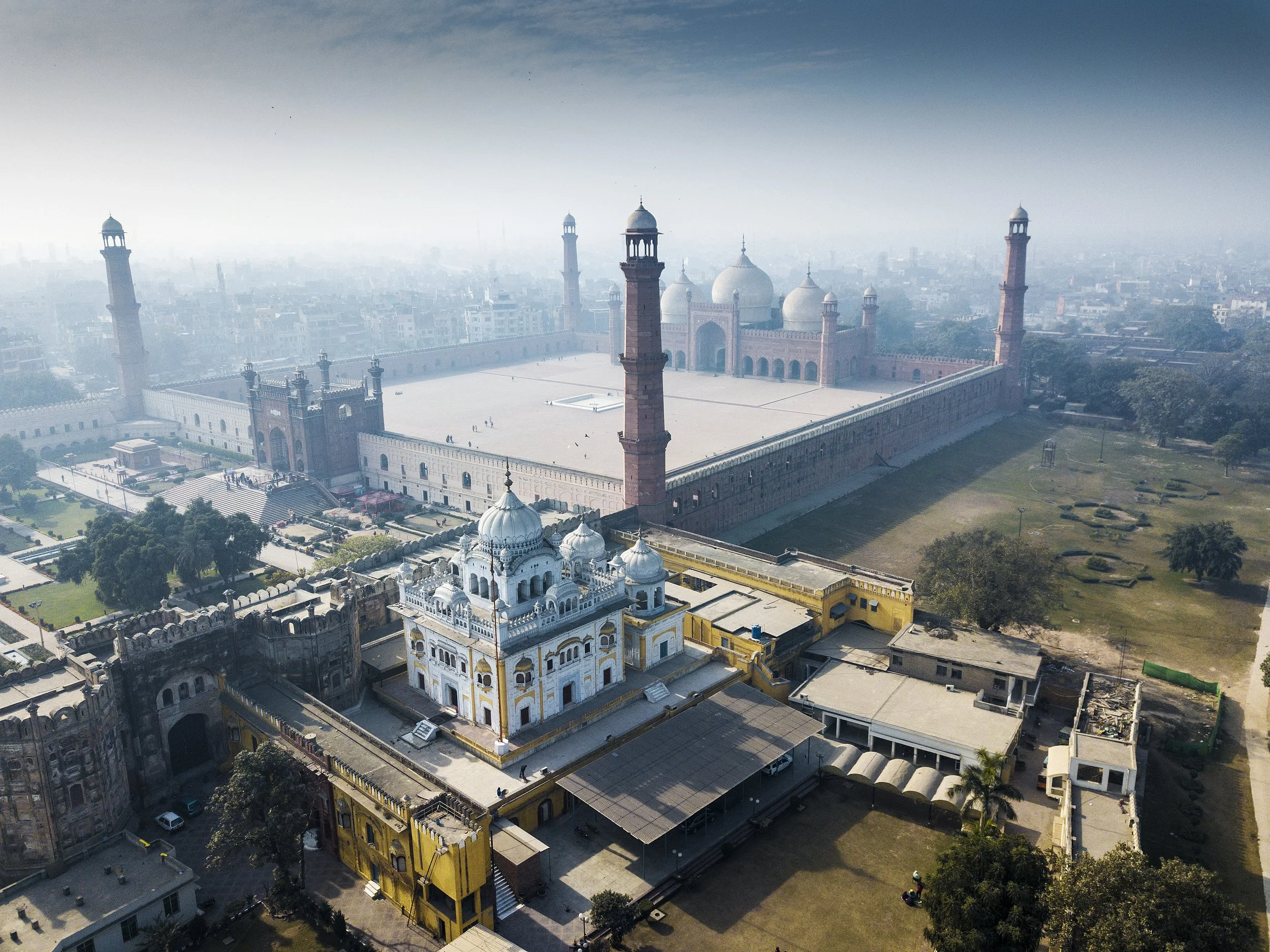
Badshahi Mosque with Ranjit Singh's Samadhi in the foreground. Zill Niazi. CC BY-SA 4.0.
In the heart of the old city, facing the fort’s Alamgiri Gate, lies perhaps Lahore’s most iconic monument. The more than three-hundred-year-old red sandstone mosque remains one of the largest in the world, accommodating some 100,000 worshippers. It was built by Emperor Aurangzeb to commemorate his military victory in the South of India and closely resembles the Jama Masjid in Delhi, mimicking its sandstone construction and white marble inlays, called Sang-e-Mar Mar in Urdu, that were distinct from the other, tilework-centered mosques in Lahore. Under Ranjit Singh, the Mosque fell into disrepair and was used as a horse stable, while the British used it as a military garrison until succumbing to pressure to turn it back into a mosque. Today, the mosque is operational and open to all, although it may shortly be closed during prayer times.
3. Hazuri Bagh Complex
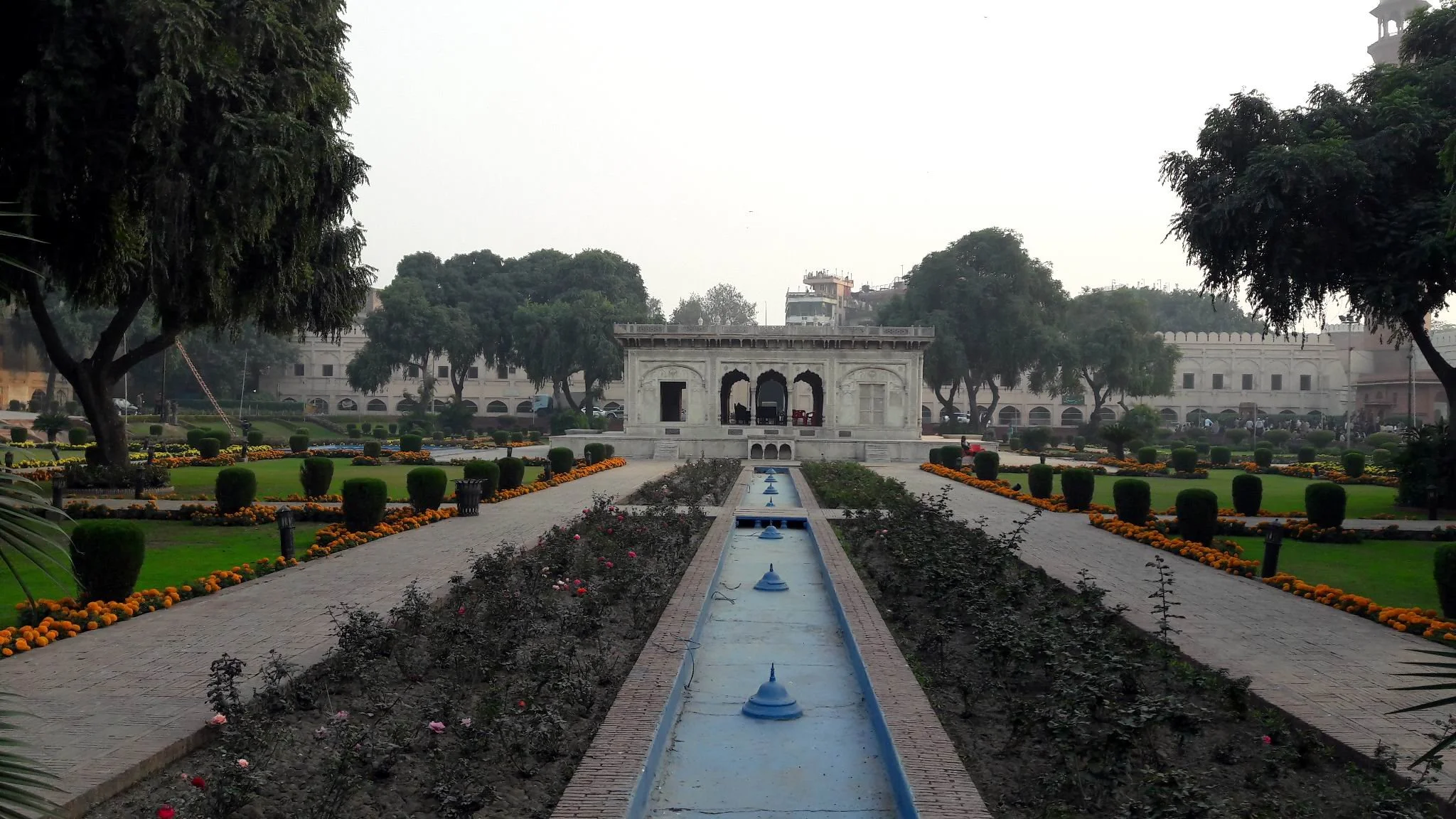
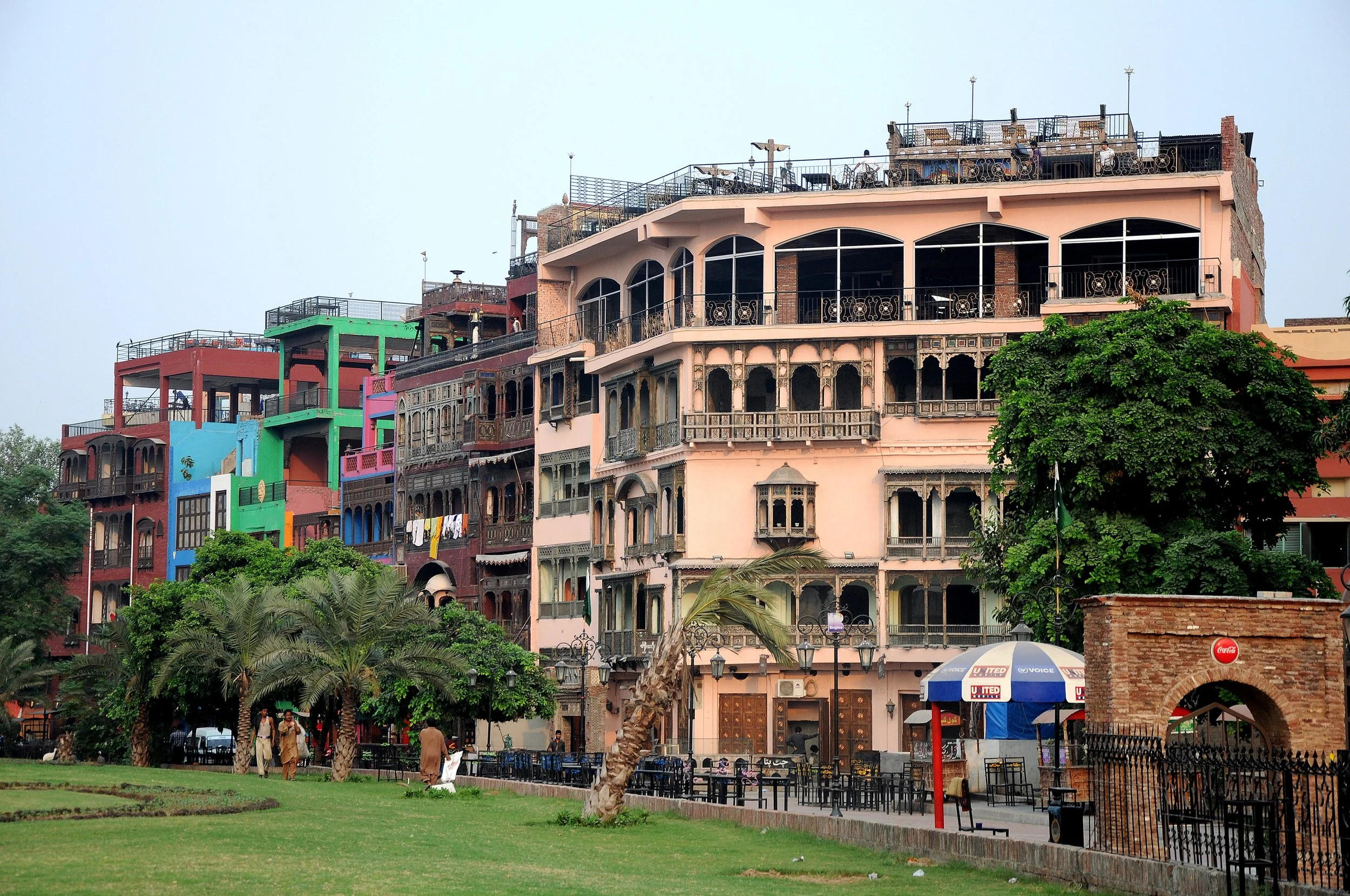
Between the Lahore Fort and Badshahi Mosque lies the Hazuri Bagh, around which are several key monuments. The Bagh, or Garden, was built by Maharaja Ranjit Singh and has a baradari, a traditional 12-door Mughal garden pavilion, at its center. It was built to commemorate his capture of the famed Koh-i-Noor diamond from an Afghan ruler. The Sikh Emperor's mausoleum, called the Samadhi, lies to the north of Hazuri Bagh. The resting place of Allama Iqbal, Pakistan’s National Poet and second most prominent national figure, after the nation’s founder, lies in Hazuri Bagh too, right outside the steps of the Badshahi Mosque. Just outside the Bagh is Lahore’s famous Food Street, serving authentic Pakistani foods with views of the mosque in the background, as well as kiosks for chai and games for kids.
4. Wazir Khan Mosque and Shahi Hammam
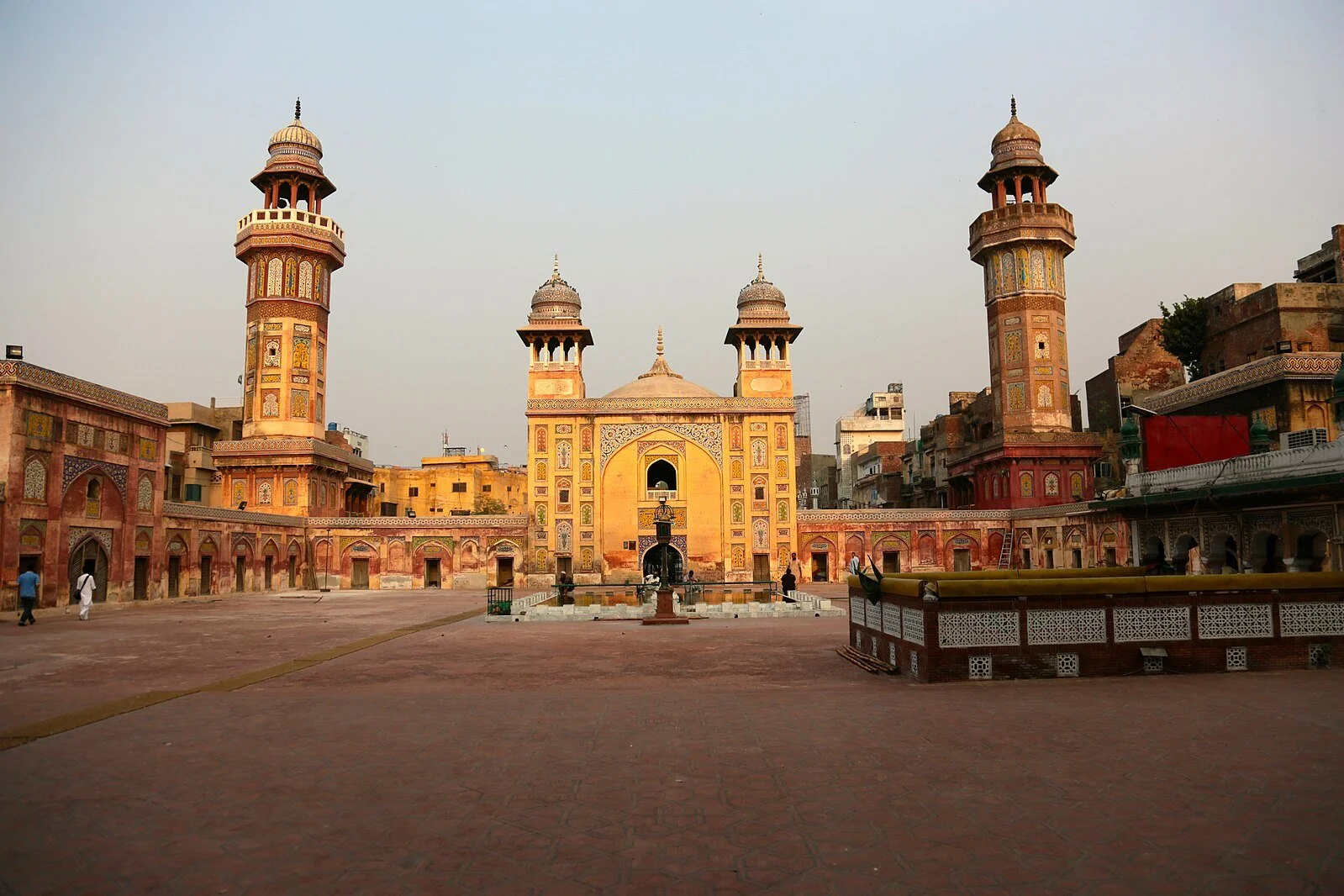
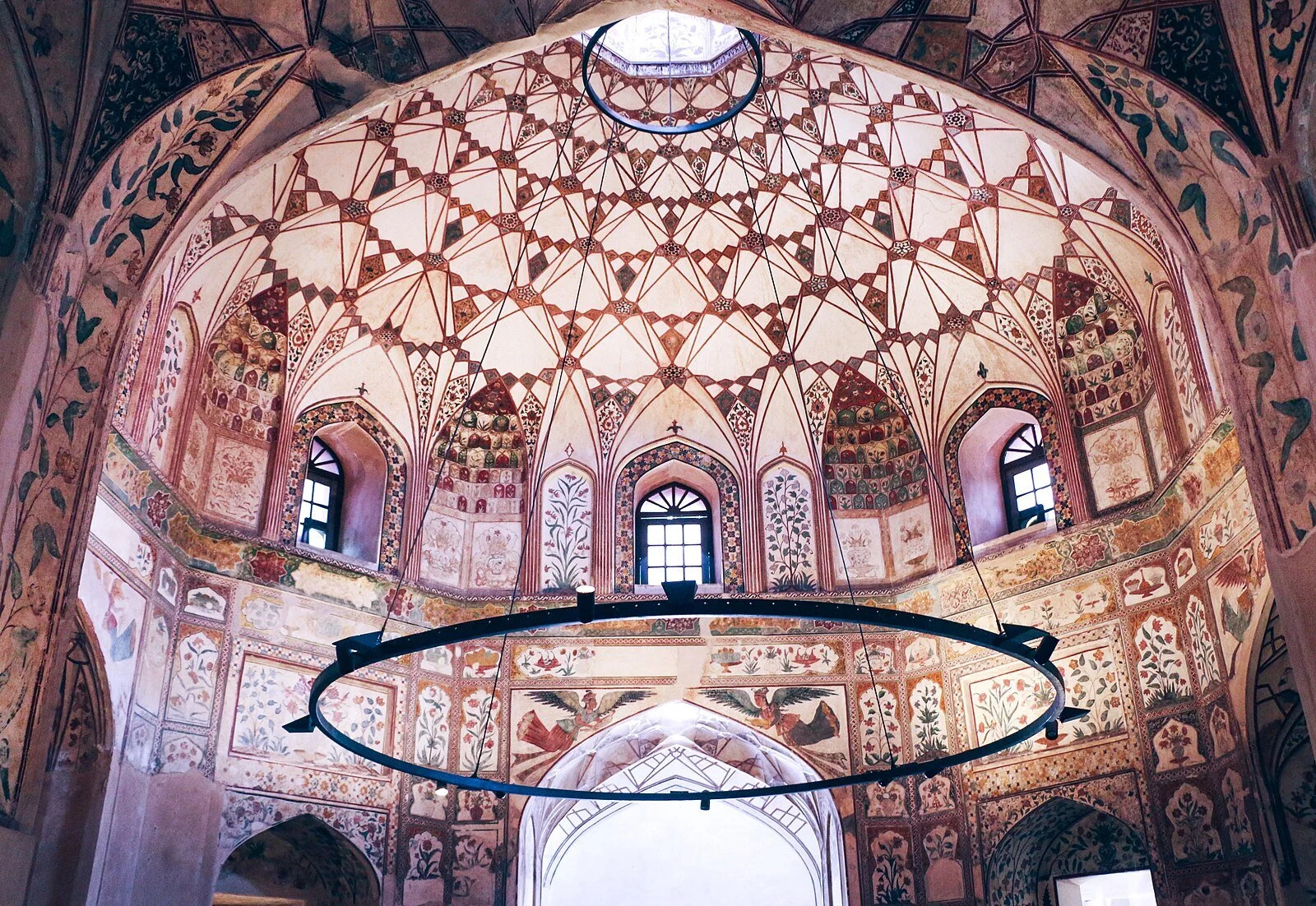
Wazir Khan was a Mughal administrator who was the governor of Lahore during the reign of Emperor Shah Jahan. He was well known for his extensive construction projects, among the most famous of which are Lahore’s Wazir Khan Mosque and the Shahi Hammam, or Royal Bathhouse, which he commissioned to fund the mosque. The Shahi Hammam would be frequented by travelers and caravans entering the city, but it declined alongside the Empire, and the structure even became part of a market complex in Lahore. It was successfully excavated and renovated in 2015 and is now open to visitors. The Wazir Khan Mosque is an icon of Mughal architecture, featuring extensive use of kashi-kari work, or faience tiles, and elaborate frescos, incorporating elements from Persian, Timurid and Mughal styles. The mosque encloses an older tomb of a Sufi saint and Wazir Khan himself is buried within the complex.
5. Minar-e-Pakistan
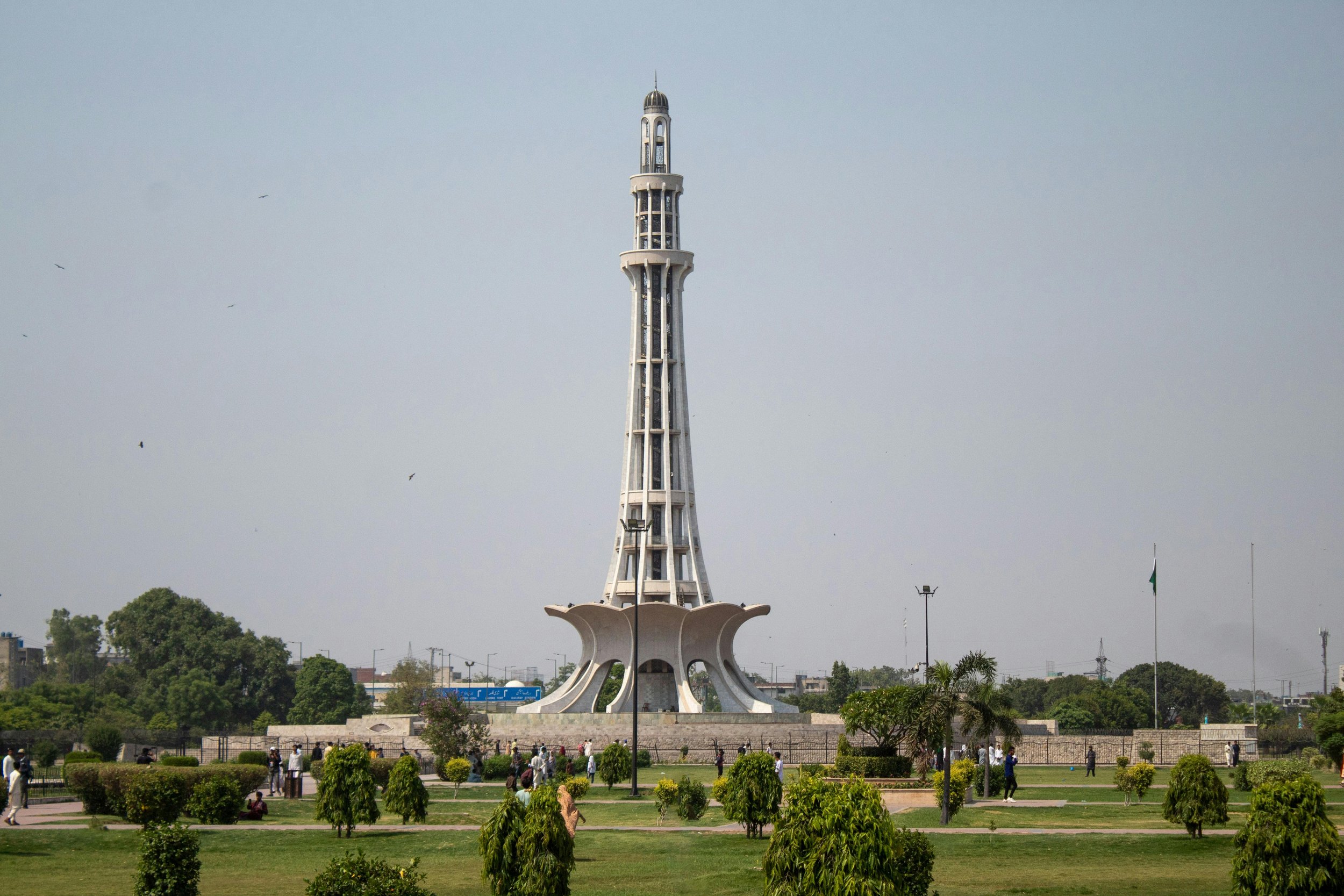
Minar-e-Pakistan. Aatik Ali Makani. Pexels.
In a historic park in the old city, adjacent to the Badshahi Mosque, lies a 70-foot-tall minaret designed to symbolize a blooming flower. The Minar-e-Pakistan, or Tower of Pakistan, stands on the site where the leaders of the All-India Muslim League signed the Lahore Resolution, popularly known as the Pakistan Resolution, in 1940, declaring their intent to create an independent state in the subcontinent after the British left. This marked the official beginning of the Pakistan Movement, and the tower was later built to commemorate this decision and celebrate its success. The surrounding park, once called Minto Park after the British viceroy, is known as Iqbal Park after the country’s National Poet, who is credited with having the dream that started the movement.
6. Shalimar Gardens
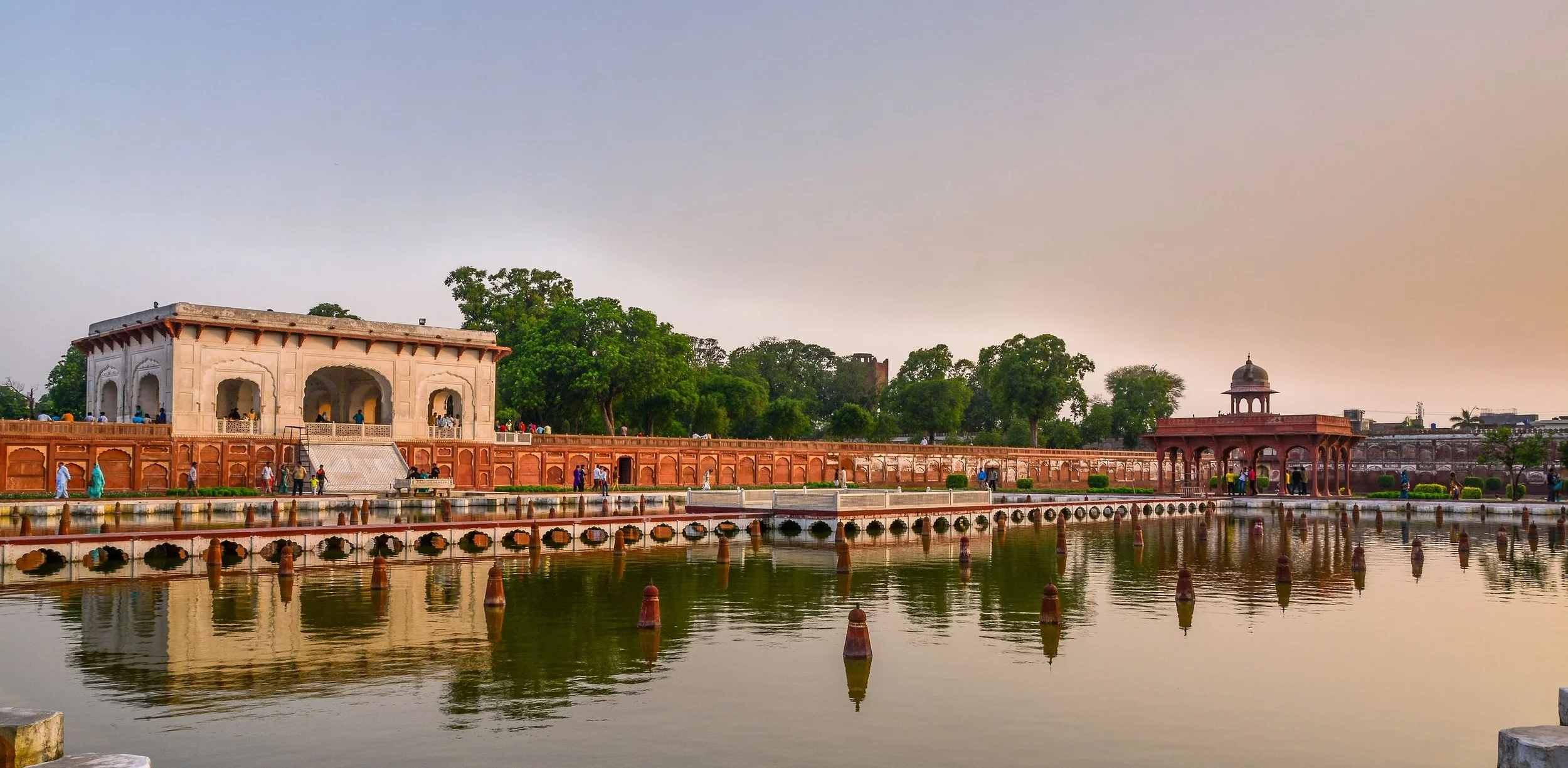
Shalimar Gardens. Muhammad Ashar. CC BY-SA 3.0.
The Shalimar Bagh is a Mughal garden complex inspired by the Persian paradise garden or “charbagh” style that carries religious significance in Islam and other religions. The Gardens were structured across three terraced levels, with a remarkable hydraulic design that saw water flowing from cascades on the highest terrace down to pools at the bottom. The UNESCO World Heritage Site was built by Emperor Shah Jahan in 1642 and remains one of Lahore’s most iconic sites.
7. Lahore Museum
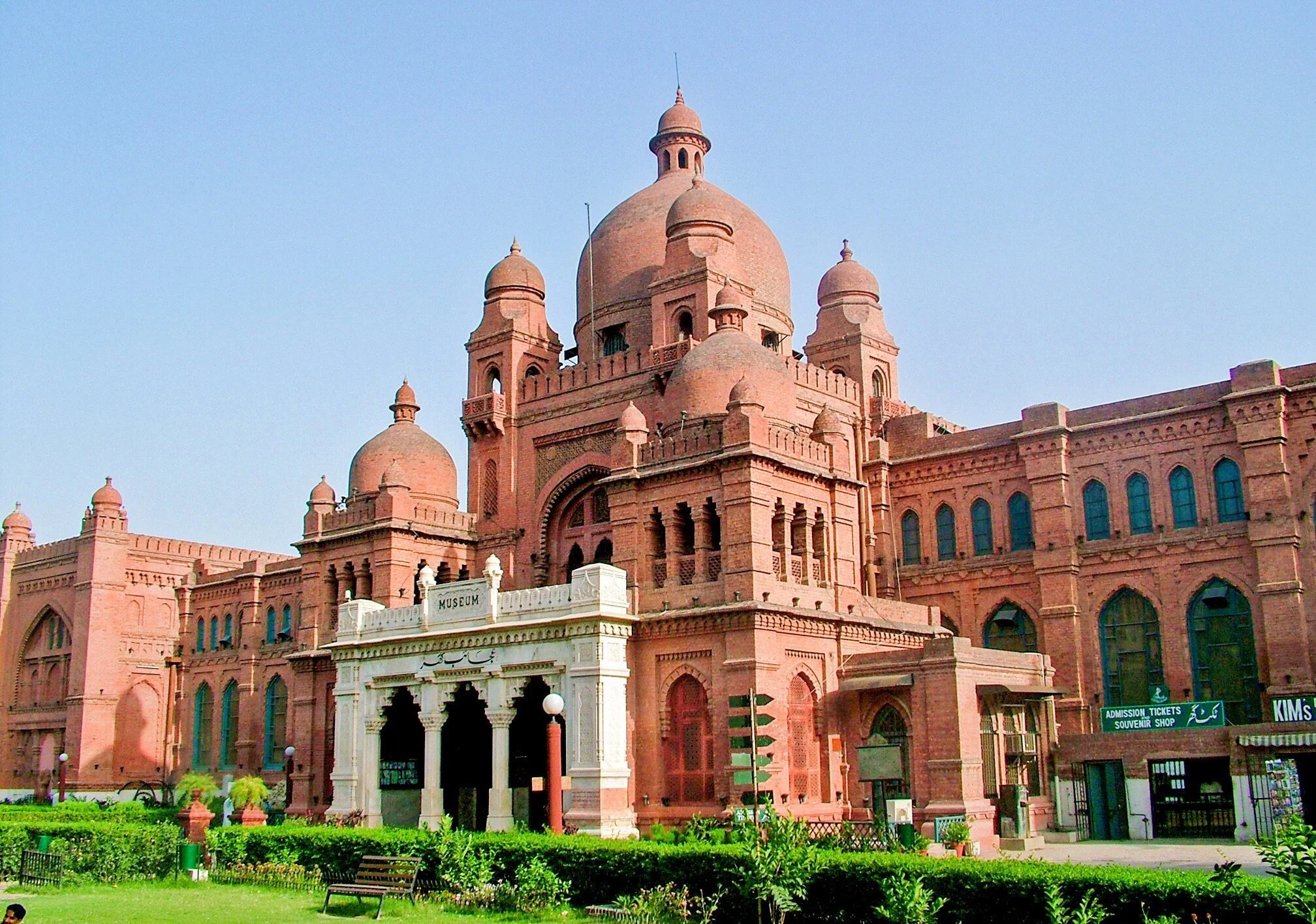
Lahore Museum. Guilhem Vellut. CC BY-SA 2.0.
The Lahore Museum is Pakistan’s largest repository of cultural and historical artifacts. The majestic red-brick building was built during the British period and houses a large collection of artifacts, including Gandhara sculptures, a 40,000-piece coin collection, Jain manuscripts and an Indus Valley collection, to name a few. Driving around the area is also a must, as the museum sits on Lahore’s most iconic road, Mall Road, which hosts many colonial-era monuments, administrative buildings, top hotels and bazars.
8. Wagah Border

Wagah border ceremony. Guilhem Vellut. CC BY 2.0.
The Wagah border is the most famous and well-known border crossing between Pakistan and India, and it’s currently the only operational full-fledged international border crossing between the two states. Every day, a lowering of the flag ceremony takes place before sunset alongside a good faith exchange of stomping and stare downs that culminates in a handshake between soldiers on either side. The excitement, energy and surrealness of the event make the over half an hour ride from Lahore well worth it.
9. Jahangir’s Tomb
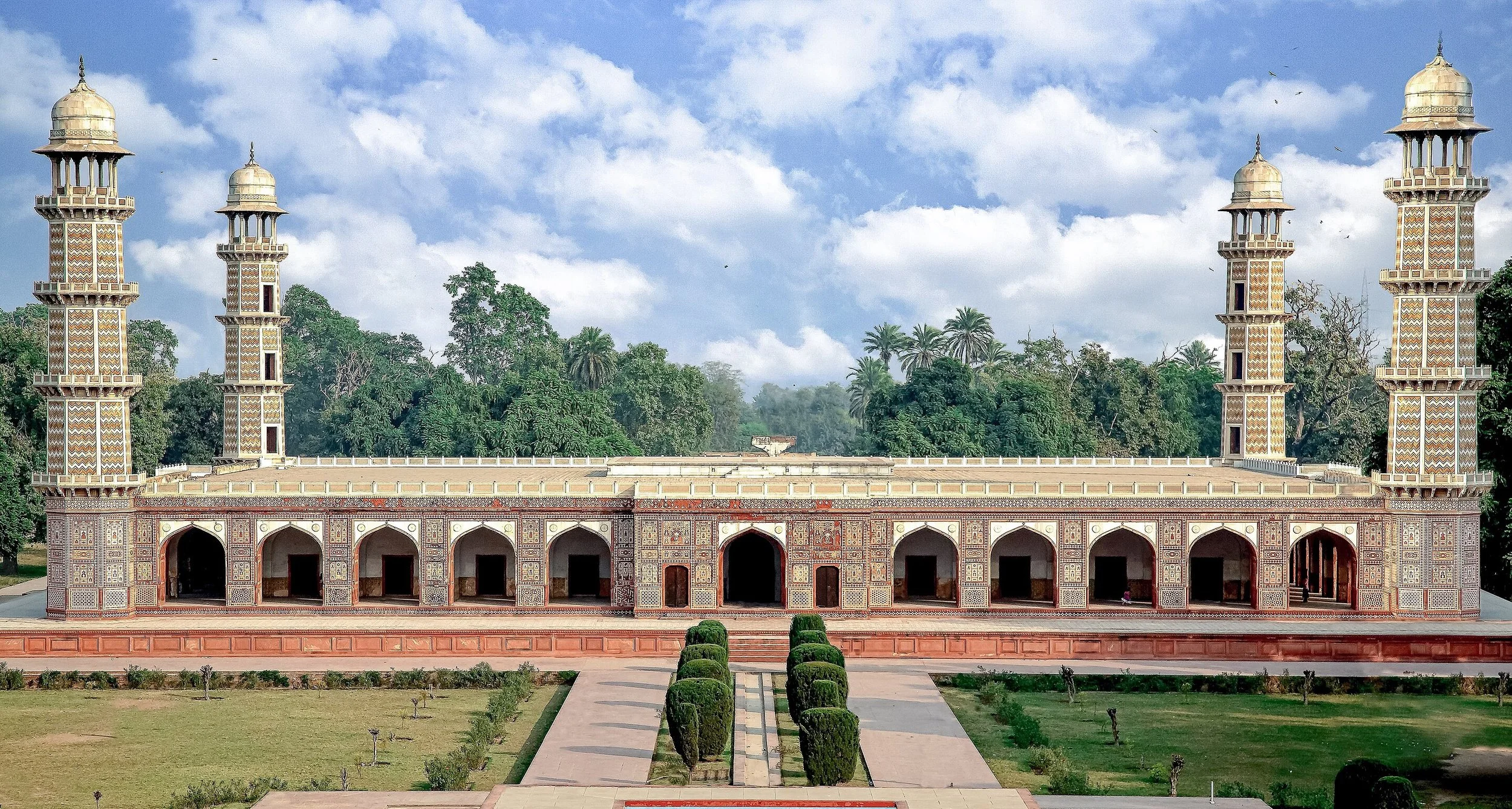
Emperor Jahangir’s Tomb. Tahsin Shah. CC BY-SA 4.0.
The fourth Mughal Emperor, Jahangir, is buried in a stunning mausoleum in Lahore along the banks of the River Ravi. The garden in which the tomb is built is said to have been the Emperor’s favorite spot in Lahore. The mausoleum’s construction was ordered by Jahangir’s son, Emperor Shah Jahan, and features an extensive array of frescos and marbles in the interior and beautiful stone inlays on its exterior.
10. Orange Line to Anarkali Bazar
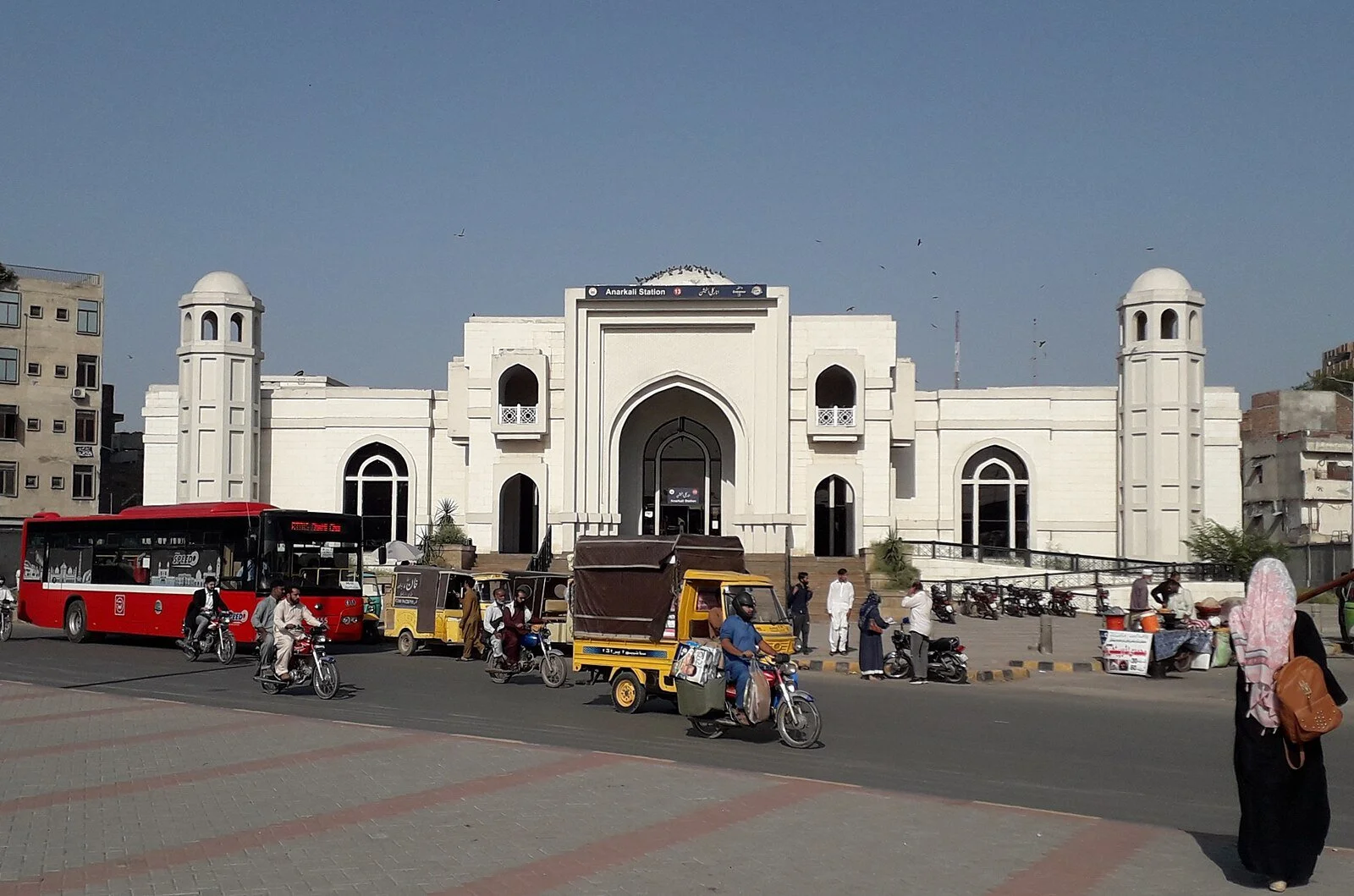
Anarkali Station. King Eliot. CC BY-SA 4.0.
Anarkali Bazar is one of Lahore’s oldest and most iconic bazaars, with shops for clothes, food and handicrafts. To reach the area, you could take Pakistan’s first metro train, the Orange Line Train, which does have women-only train compartments, to Anarkali Station and then take a rickshaw to the bazaar. The bazaar is a great place to get a feel of Lahore’s hustle and bustle and enjoy local delicacies from street vendors.
Modern Lahore:
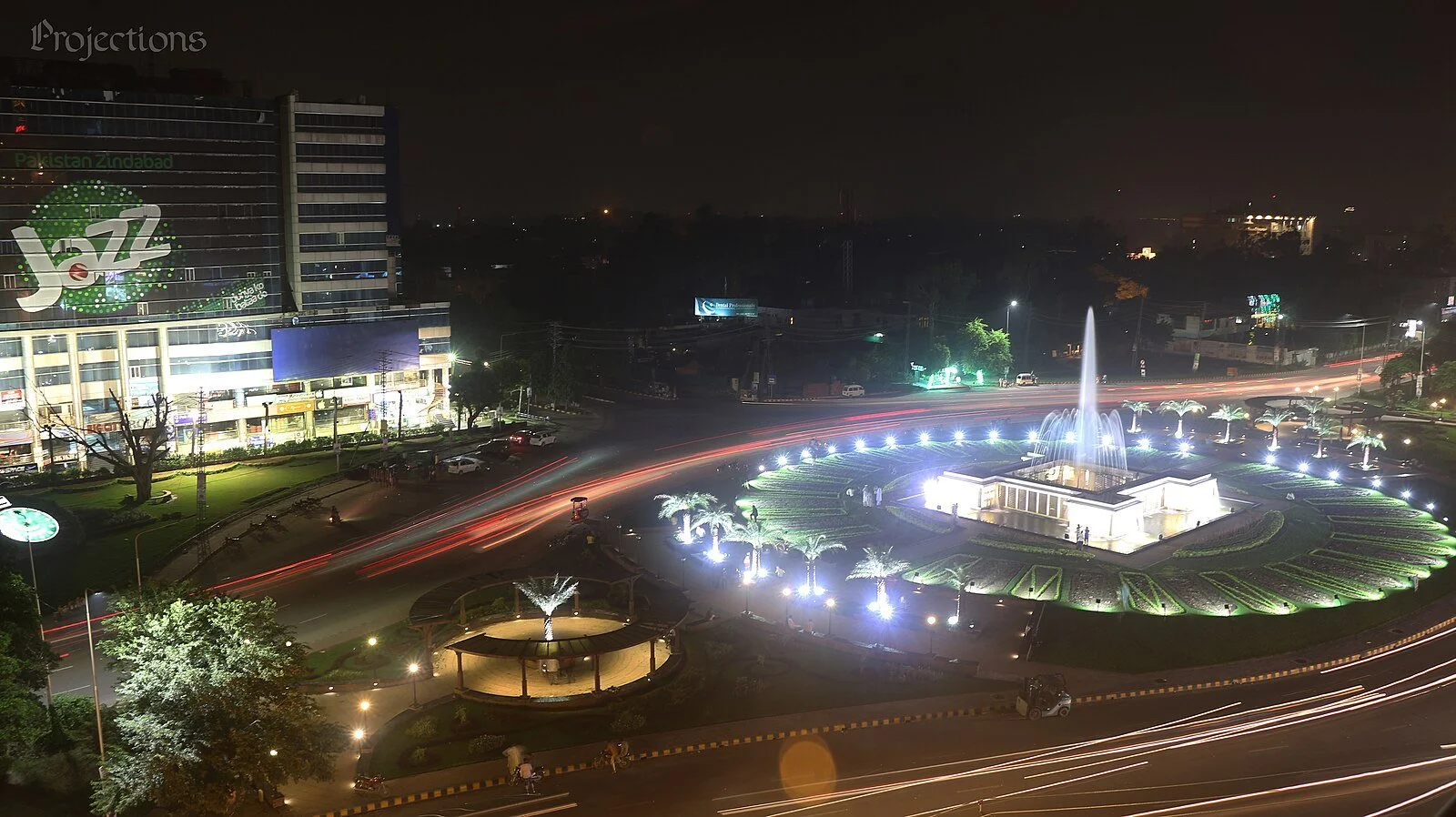
Night view of a popular square. Ammarsharif17. CC BY-SA 4.0.
Aside from all the historic sites, the city has a vibrant modern side too. I’d recommend grabbing a bite at one of M. M. Alam Road’s many fancy restaurants, watching a cricket match at Gaddafi Stadium and checking out Cue Cinemas. Dolmen Mall and Fairways are two new, very popular shopping areas in the city, and there are several padel and pickleball courts, though mostly padel, as the trend has recently overtaken the city.
Daud Azfar
Daud is a second-year student at the University of Virginia, planning on majoring in Politics and Economics. Having grown up in Pakistan, he’s very passionate about the importance of education and social justice. Outside of school, he enjoys spending time with his friends, playing pickleball, and exploring new coffee shops.