
Kelcie Lee
When it comes to the rights over the Amazon rainforest, international governments and Indigenous communities don’t always agree.
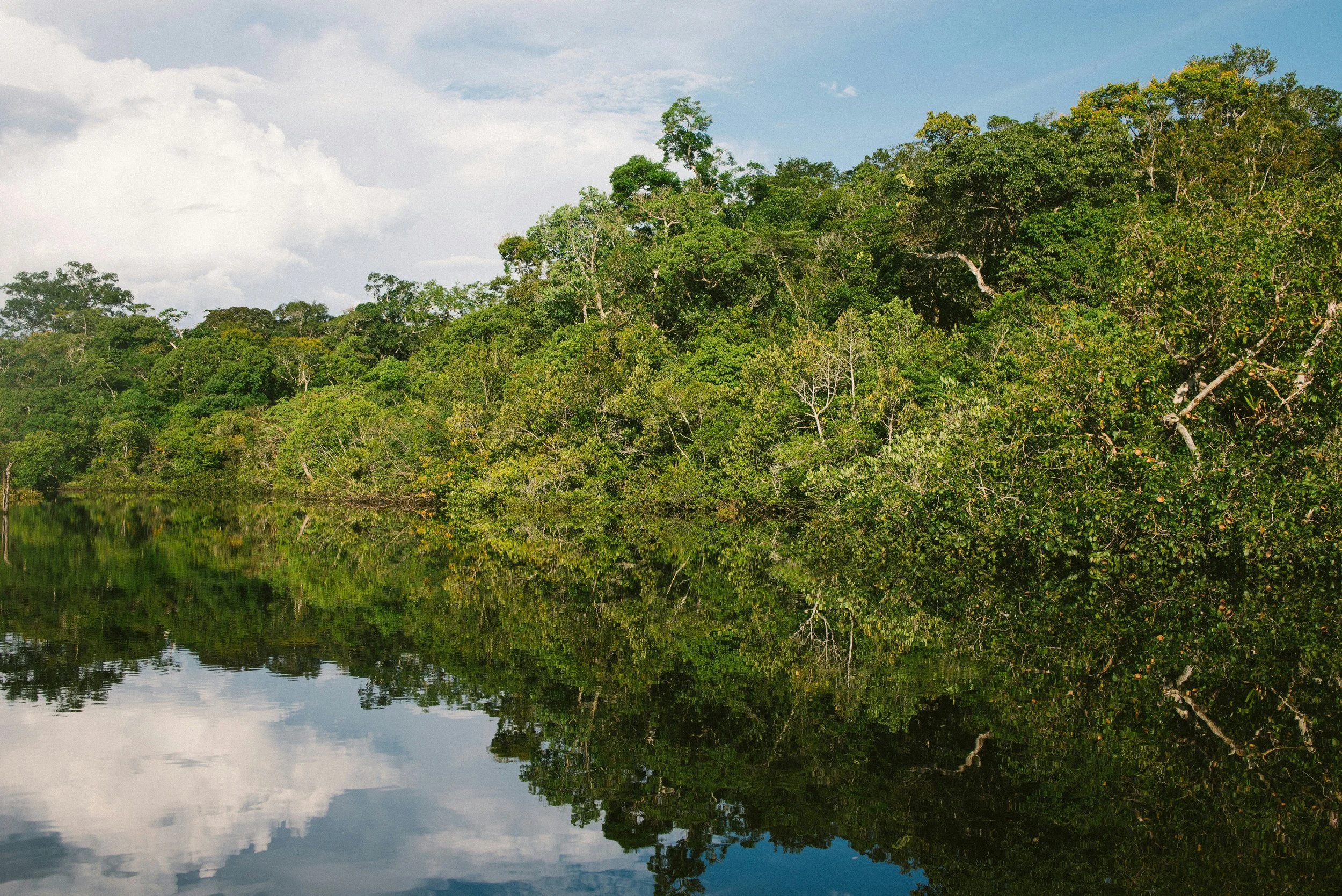
The Amazon Jungle in Brazil. Nathalia Segato. Unsplash.
The Amazon is a stunning rainforest flourishing with biodiversity, with a variety of unique plants and 38 million people living within the region. The rainforest’s importance to the Earth and its role in preserving the climate, not just in South America but around the world, have made the rainforest a highly valuable land that several entities have tried to assert control over. One can understand three common arguments regarding the Amazon’s sovereignty and the complex history behind this debate.
The first position is that the Amazon’s value to all humanity entitles people outside of Brazil to ensure that the forest is conserved, even if it means playing a larger role in intervening in Brazil’s land. While the Amazon spans across nine South American countries, Brazil holds the largest share with 60%.
In the 1980s, the military dictatorship in Brazil advanced its economic agenda by using a state-led development program that launched several initiatives to build roads and airports, while also having fiscal incentives for private companies to pursue cattle ranching, mining and agriculture in the Amazon. Using satellite technology to track deforestation, acres of land were destroyed in the Amazon, which harshly impacted the rainforest’s environment.
Similarly, the Brazilian military engaged in greenwashing, which is essentially a technique promoting faux solutions to the climate crisis in order to manipulate an organization’s public perception as environmentally positive. According to Matthew Johnson, a postdoctoral research fellow at Princeton University, the Brazilian government launched initiatives to make it seem like they were bettering the environment when reservoir building and animal rescues were all for public and media appearances.
In fact, the “dictatorship strongly opposed the environmental movement,” Johnson said. “The animal rescue missions epitomized this program, since they required no alterations in dam design or construction timelines, and were photogenic and superficially commendable, and thus likely to generate sympathetic media coverage.” Additionally, Johnson explains that animals and Indigenous communities often were displaced or died due to these initiatives, all while the media painted a spectacle of all the “good” the government was doing. As a part of greenwashing, reservoir construction also led to intense flooding of 2,850 square kilometers and deforestation throughout the land.
This complex dynamic has led many to see that the decisions of the government are not always in the best interest of the climate or even the land they govern. Several Brazilian dictators claimed sovereignty over the Amazon only to destroy the environment and harm an ecosystem that the whole world depends on for oxygen production and biodiversity.
As a result of this, international governments and environmental preservation services believe that entities outside of Brazil need to play a role in ensuring the forest is conserved. Alejandra Mancilla, researcher and Professor of Philosophy at the University of Oslo, suggests this accomplishment through a model of permanent guardianship. This model reframes the relationship between humans and the environment by showing how the former are caretakers of nature, which has been proven successful in the past with Antarctica due to its collaboration and accountability through the Antarctic Treaty of 1959 and the Environmental Protocol of 1991. This halted national sovereignty to first ensure the protection of the environment. Through collaboration with other countries, Brazil could ensure that the precious environmental resource that we all gain from the Amazon can be best protected when more insight is given.
The second position is that Brazil should have sovereignty over its Amazonian territory without foreign encroachment or extraction of resources. In the past, the Amazon has been victim to colonization from European settlements, as well as economic exploitation from foreign powers, including the United States and Britain, creating a hesitation to trust others to genuinely protect the environment and not take advantage of it.
The danger of allowing external powers to interfere with national sovereignty can be dangerous for Brazil and the communities that depend on the Amazon region. Additionally, encroachment on land and allowing foreign powers access to the Amazon will lead to debates about the sovereignty of the rest of Brazil, which threatens the undermining of more vulnerable populations.
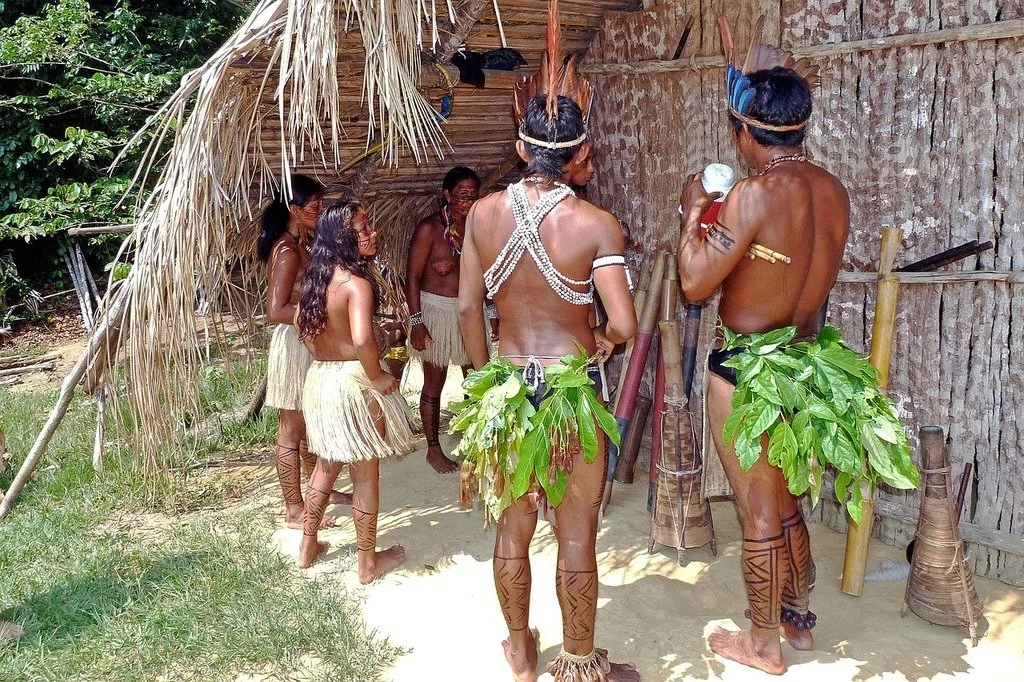
Indigenous group in the Amazon. Hans Schwarzkopf. CC0.
The third position presents a key voice that has historically been ignored or overlooked when looking at the debate of the sovereignty of the Amazon. Although the Amazon is important to both national and international players, it is the lives of Indigenous and local communities that depend on the Amazonian land for everyday life.
The history of local struggles is one that is essential to understand, as resistance has played a long role in the defense of Indigenous land rights. Geoffrey O'Connor’s documentary, “Amazon Journal,” follows the Kayapo and Yanomami people, showing their experiences with miners, missionaries and the media in the Amazon. There have already been tragic consequences in the way they interact with these groups because of the way in which their home has been destroyed, from the revocation of Kayapo land to the unexplained violence against the Yanomami people. These voices are left out of international intervention conversations on environmental preservation, as well as discussions of national sovereignty.
Mancilla argues that “local communities…have already been managing these sites successfully for centuries, and for [them] the notion of guardianship will sound familiar — much more familiar than sovereignty.” In other words, Indigenous and local groups’ voices are important since they have been there for the longest time and should continue to be, especially because of the valuable information they hold about the rainforest.
Indigenous voices are essential in this conversation of sovereignty in the Amazon and the stakes they hold in a rainforest they call home. The debate between national sovereignty and international encroachment leaves out the agency of the most important key players, making it a position often overlooked. These perspectives are backed by history and climate concerns, making it a discussion worth being educated on and a topic worth understanding.

Kelcie Lee
Kelcie is a second-year student at UC Berkeley majoring in history and sociology, with a minor in journalism. She developed her passion for writing and journalism in high school, and has since written for a variety of news and magazine publications over the last few years. When she isn't writing, Kelcie can be found drinking coffee, listening to music or watching the sunset.