
Kelcie Lee
The Japanese value of staying in the moment and being mindful grounds the custom of not eating and walking simultaneously.
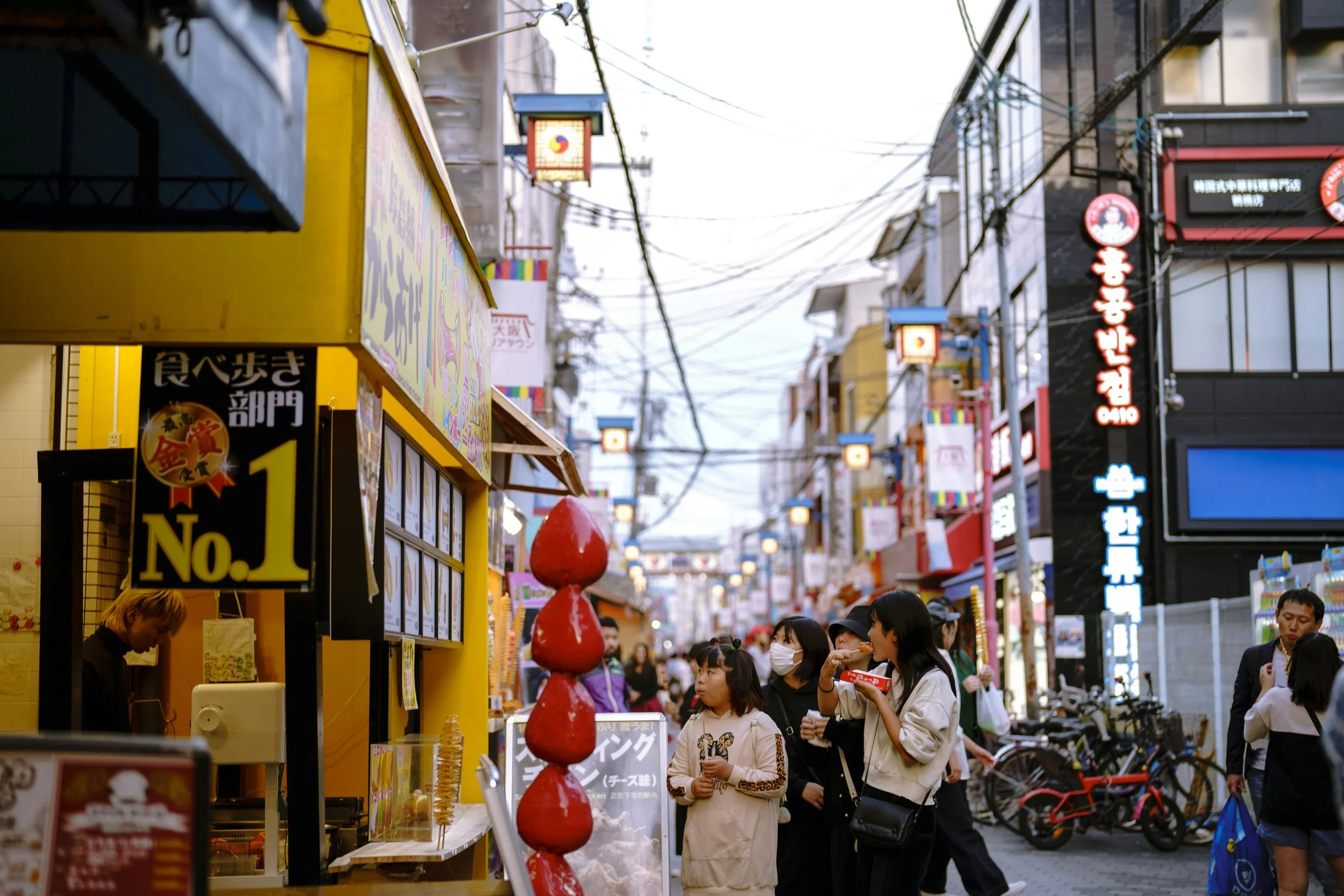
Food market in Japan. Yuka Tanaka. Unsplash.
On any ordinary day in the U.S., it’s common to see someone walking on the street, snacking on a bag of chips or drinking their iced coffee on the bus.
But in Japan, it isn’t.
While walking and eating isn’t banned in Japan, travelers have noticed a unique cultural etiquette that values presence, cleanliness and consideration of others. Locals may frown upon eating while walking or even consider it bad-mannered, making it important to respect those around you and be mindful of the place you are visiting. Additionally, eating while walking may imply that you believe you are too important or busy to sit down and eat.
A distinguishable feature about Japan is that it is remarkably clean, but you likely won’t find garbage cans in public streets. To travelers, this often begs the question: wouldn’t people be encouraged to litter if there are no trash cans, just making the streets dirty? But in Japan, people are expected to bring their garbage home and dispose of it there. Further expectations to leave a space the way they found it and keep public spaces clean are upheld by locals alike.
While there is no start date for when this unspoken rule began, this Japanese custom stems from the cultural etiquette of valuing mindfulness, cleanliness and respect. In the past, simultaneously walking and eating would imply one was of a lower social status, as those with money and time would be expected to eat in what was deemed a proper place. Historically, it was a perception of status that later turned into a general custom. Otherwise, this practice is second nature for Japanese locals, as it directly aligns with their cultural values.
Even with Japan’s famous convenience store food, where everything is packaged grab-and-go style, snacks are often eaten in common seating areas inside or standing just outside of the store. With Japan’s street markets, some workers will ask you to stand in front of their storefronts when eating food, even if it’s a small handheld snack.
When I visited Japan, I had no idea about this unspoken rule until a market owner told me to eat their food right outside of the stall. This didn’t make much sense to me at first, but I quickly realized nobody was eating and walking. At first, I became paranoid about being seen as an insensitive tourist, but I learned to keep in mind that I should stop while eating. When I bought an onigiri, a handheld rice ball, from a corner store, I would make sure to finish it before continuing to explore the city.
Often, travelers initially have no idea that this custom exists, but locals at the markets will often point you to places you can eat. With this, travelers will be able to dispose of their garbage at the food establishment before continuing on with their travel. The custom also encourages cleanliness and respect for surrounding businesses, as goods can also be damaged by food messes.
While it might be inconvenient or a foreign idea for travelers, consider immersing yourself in Japanese culture and customs during your time there. It reminds you to pause, slow down and stay in the moment, all while enjoying authentic Japanese flavors and ingredients. The overall value of being present in everything is something we can adopt into our everyday lives.

Kelcie Lee
Kelcie is a second-year student at UC Berkeley majoring in history and sociology, with a minor in journalism. She developed her passion for writing and journalism in high school, and has since written for a variety of news and magazine publications over the last few years. When she isn't writing, Kelcie can be found drinking coffee, listening to music or watching the sunset.