
Ashley McDermott
Daytrippers only have five hours to spend in one of the U.S.'s least-visited National Parks.
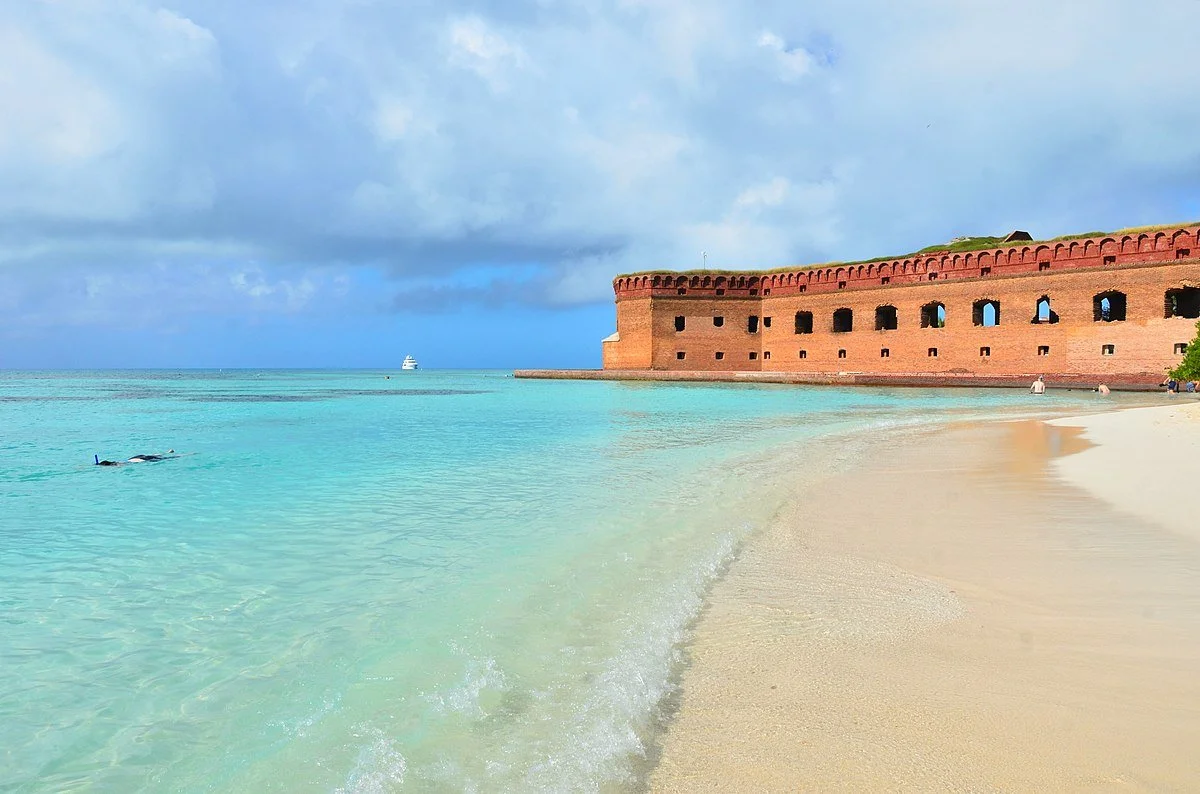
Fort Jefferson from the beach. Jack Cui. CC BY-SA 4.0.
I've never been part of the typical Florida-for-spring-break crowd, but with limited time off before my Ph.D candidacy exams and my being halfway through an attempt to see every U.S. National Park, I booked tickets nearly five months in advance to get a spot on the ferry to Dry Tortugas. The journey alone will convince you that this park isn't your average Florida destination. Throughout its history, Dry Tortugas has remained one of the U.S.'s least visited National Parks due to its remoteness and lack of accessibility; visitors must arrive by private vessel, seaplane, or ferry.
70 miles west of Key West, Florida, lies the Dry Tortugas, an archipelago of coral islands. Franklin D. Roosevelt designated Fort Jefferson on Garden Key a National Monument in 1935 due to its historical significance in the Civil War era, and it is strategically located at the edge of one of the most traveled shipping channels on the Gulf Coast. Later, Congress designated the collective monument, the seven islands and the surrounding waters a National Park to protect the diverse island and marine ecosystems.
For me, and for most who visit the National Park, a trip begins with reservations on the Yankee Freedom ferry made months prior and a 2.5-hour trip from Key West. With the travel time it takes the boat to go there and back, this leaves only five hours to explore Garden Key and Bush Key, the largest of the Tortugas. While I felt that even five hours was worth it to experience the beauty and history of the islands, there are some things I didn't know, like the possibility of walking between keys at low tide, that I wish I had known to truly maximize my time on the Dry Tortugas.
Take a tour of Fort Jefferson
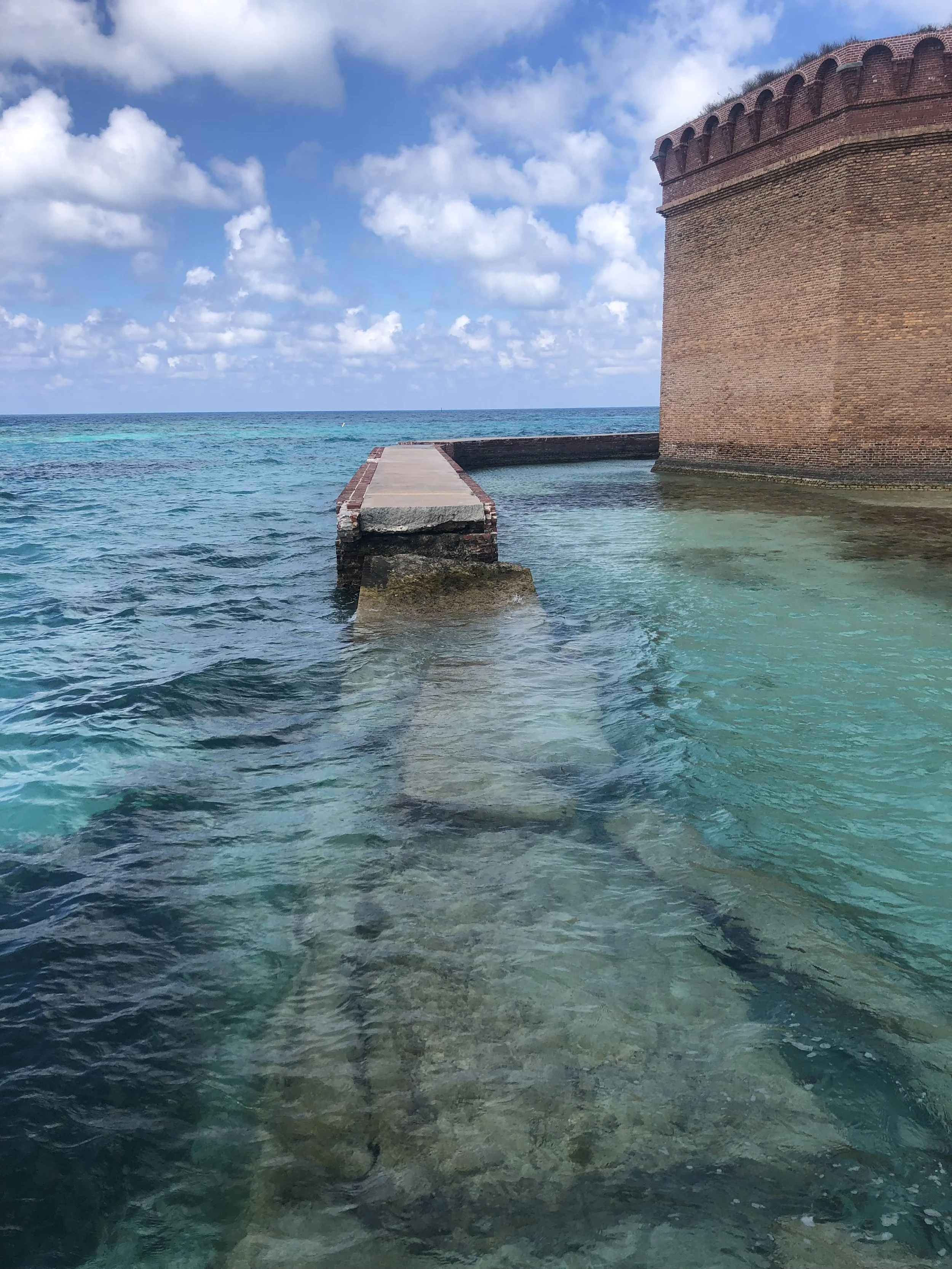
Fort Jefferson moat wall. Ashley McDermott
Nearly all of Garden Key's 21 acres are encircled by Fort Jefferson. At its peak, during the Civil War, nearly 2,000 people called the fort home. Now, only a dozen NPS rangers, staff and researchers live full-time on the island. Though the fort never saw military action, it served as a symbol of U.S. control of the shipping passage from the Atlantic and housed prisoners for the Union, including Dr. Samuel Alexander Mudd, a co-conspirator of John Wilkes Booth in the assassination of President Abraham Lincoln. Famously, author Ernest Hemingway was also a short-time resident, having been marooned there for 17 days after a tropical storm interrupted a fishing trip.
I enjoyed walking the terreplein, the flat top of the fort where the guns were mounted, for a beautiful panoramic view of the sea and surrounding keys. I took the self-guided tour at my own pace using a downloadable National Park Service (NPS) pamphlet, but you can also join a 45-minute ranger-guided tour.
Go snorkeling
Less than 1% of Dry Tortugas National Park is land. One of the best ways to explore the other 99% of the park is by snorkeling. The islands are part of the Florida Keys reef system, the third largest in the world. Due to their location on the Gulf Current and because of their distance from human population centers, NPS describes the parks as a chance to "discover a much greater abundance of marine life…than anywhere else in the Florida Keys."
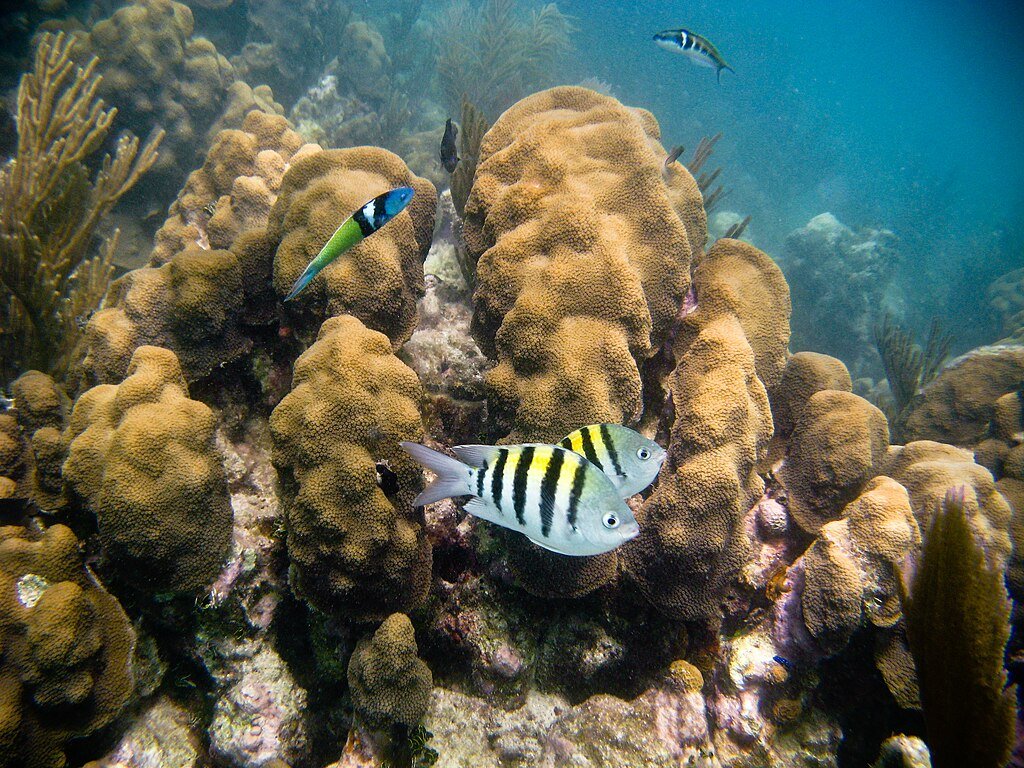
Coral near Garden Key. Dry Tortugas National Park. CC BY 2.0.
Though I brought my own equipment, both the ferry and seaplane services provide snorkels as part of the fare. Both beginner and advanced snorkelers can enjoy the park; the water ranges from 5 feet to 15 feet in depth and is often clear. Living coral and tropical fish are accessible from the white sand swimming beaches on Garden Key, and more experienced snorkelers can swim around the moat wall.
Even in the shallow water of the swim beach, I immediately saw the biggest barracuda I've seen in 20 years of visiting Florida. Despite the excellent experience I had, I regret not making it to the remains of the coal docks on either end of the Garden Key. The pilings are an excellent place to snorkel to see even larger marine animals, such as sharks, large grouper and tarpon.
Look for rare birds
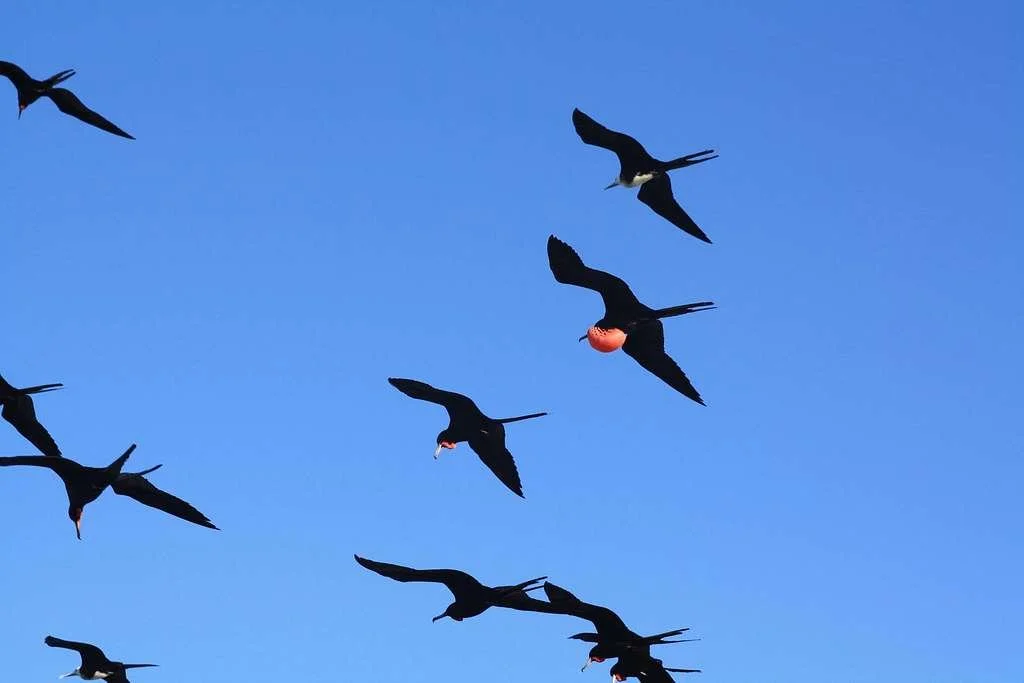
Magnificent frigatebirds flying over Dry Tortugas. National Park Service. CC0.
From the ferry approaching the island, it is impossible to mistake the enormous, black silhouettes of magnificent frigatebirds, enormous seabirds with 7-foot wingspans and red inflatable sacks under their necks. The Dry Tortugas are an essential stopping point for migrating birds and are home to many seabirds. During peak migration times in the spring, it is possible to spot over 200 species of birds in the park, including hooded warblers, summer tanagers and yellow-throated vireos. After severe storms, even more unusual birds stay in the Tortugas for refuge. It's as if "the Dry Tortugas have a giant rest stop sign on it,” says Julie Wraithmell, director of the nonprofit Audubon Florida.
The islands of the Dry Tortugas are also home to several breeding colonies. Long Key is home to the only U.S. breeding colony of magnificent frigatebirds, while 80,000 sooty terns and 4,000 brown noddies return to Bush Key yearly to breed.
To see migrating songbirds, the best location is Fort Jefferson's courtyard, where NPS maintains the sole source of freshwater for migrating birds on the island. From the benches near the fountain, visitors can spot golden-winged warblers, rose-breasted grosbeaks and black-whiskered vireos. From the top of the walls, birders can see magnificent frigatebirds soaring overhead, and, with a good scope, nesting birds on nearby Bush Key are visible.
Take a walk

Sandbar joining Garden and Bush Keys. RuggyBearLA. CC BY 2.0.
My biggest regret is never making it to Bush Key, which was closed for nesting season during my trip. During low tide, the sandbar between Garden Key and Bush Key appears, and visitors can walk from one key to the other. Once on Bush Key, a one-mile trail takes hikers around the circumference of the island, while another trail runs along the center of the island. On Bush Key, hikers can see a variety of the island's small tropical wildlife, including hermit crabs and lizards.
The Fort Jefferson loop runs along the top of Fort Jefferson's brick walls and earthenworks. From the top, there are great views of birds flying overhead, and Loggerhead Key is visible three miles away. You can also walk along the remaining portions of the fort's moat.
Go for a swim
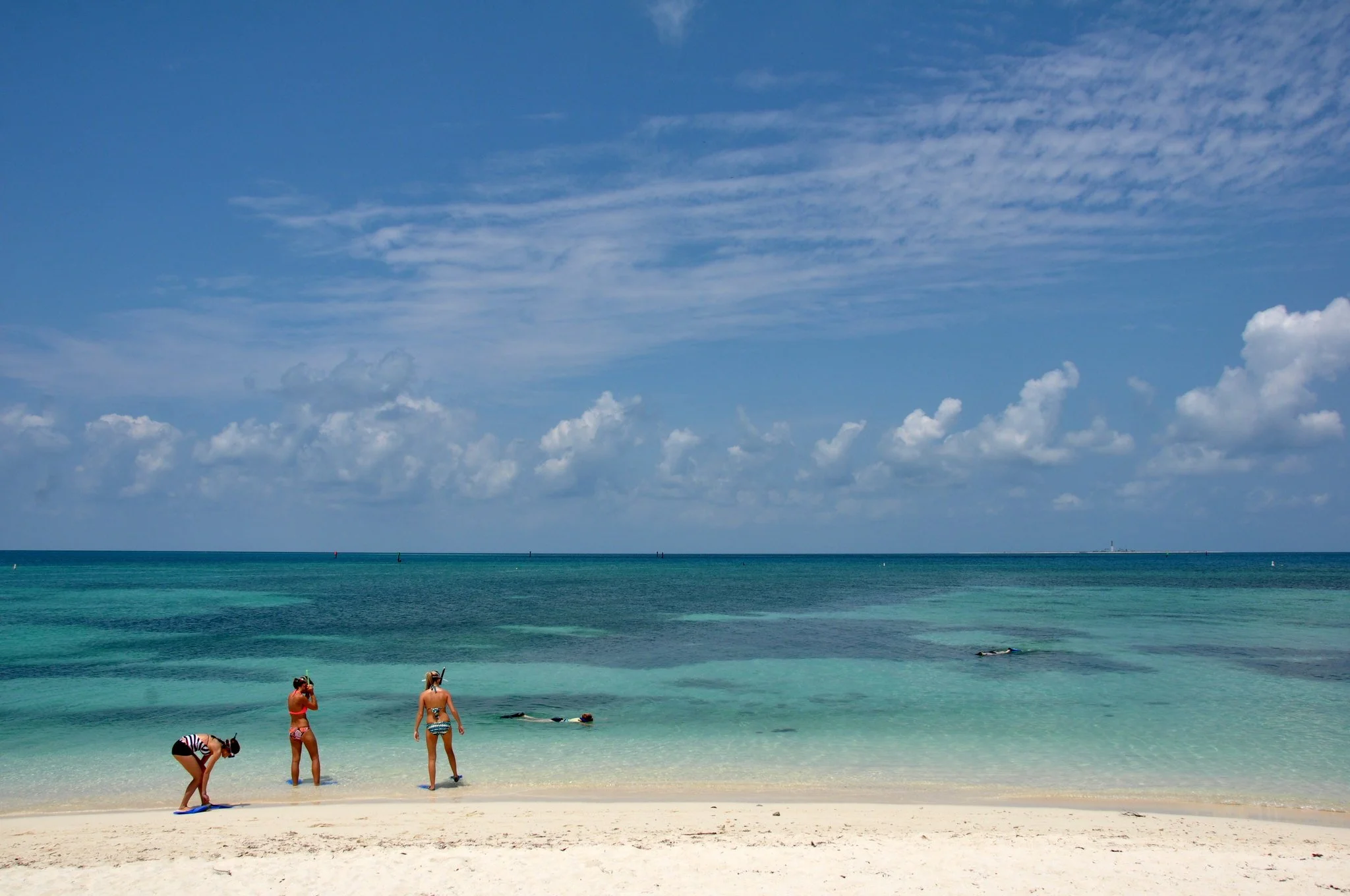
Swimming on Garden Key. dmblue444. CC BY-NC-ND 2.0
There are two designated swim beaches on Garden Key, which have sandy, gradual slopes. They are great for beginners and considered to be some of the best beaches in Florida due to the variety of wildlife and lack of crowds. They are a good place to stop for lunch, for a picnic, or just to relax in the tropical atmosphere.
Staying longer: camping, kayaking, and diving
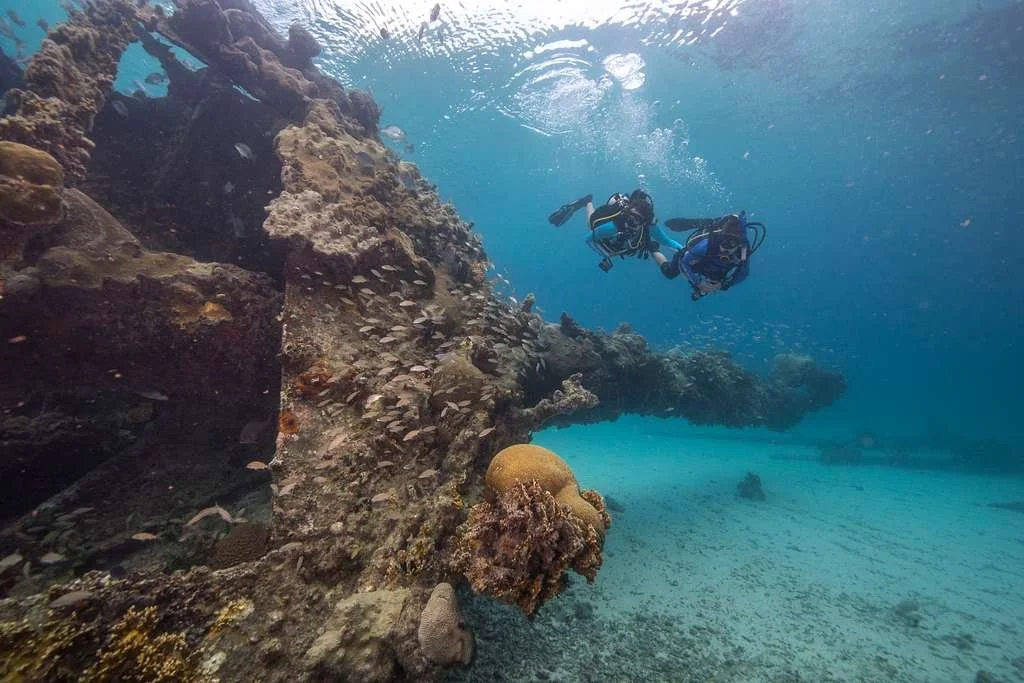
Divers exploring the Windjammer Wreck. National Park Service. CC0.
Camping overnight allows for a different pace of exploration and affords unique opportunities, such as kayaking to Loggerhead Key, that cannot be done in a day trip and require a special permit.
To camp, you must make the necessary arrangements six months in advance when reservations open for the specific day you wish to travel. There is very limited space for camping on the island. You will need to bring all of your equipment on board the ferry, such as a tent, ground cover, sleeping bags, food and water. There is no potable water on the island. Campers are allowed to bring kayaks, subject to space availability on the ferry.
There are many interesting dive sites in the park; however, divers need to be aware that neither the seaplane nor the ferry will bring compressed canisters aboard. Plans need to be made to bring any dive gear on a charter boat or your private vessel.
The most popular dive site is the shipwreck of the Windjammer (Avanti), a three-masted sailing ship. The ship wrecked in 1901 on route to Montevideo with a cargo of lumber. The site includes myriad fish, including reef-dwelling, free-swimming and benthic (bottom) fish.
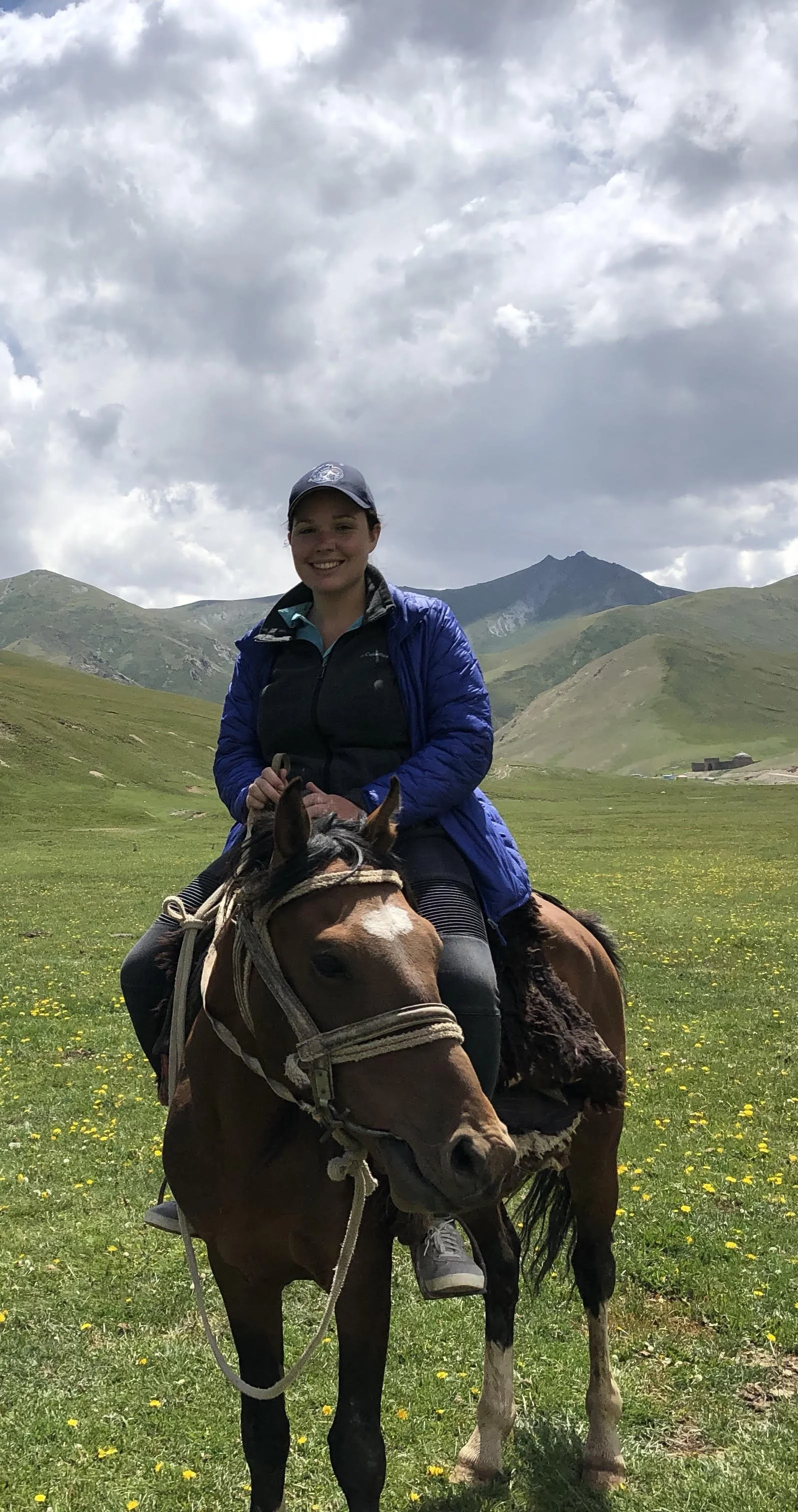
Ashley McDermott
Ashley is a PhD candidate in Linguistic Anthropology at the University of Michigan. She is committed to making her research useful for the communities she works with. Her work explores how families navigate language use and language shift in Bishkek, Kyrgyzstan. When she’s not working on her research, you’ll find her adventuring with her toddler daughter, whose commentary keeps every day interesting.