
Evelyn Garcia Medina
Fairy Meadows, nestled at the foot of Nanga Parbat in Pakistan, attracts travelers each year who navigate a perilous mountain road and steep trek to reach its alpine meadows.
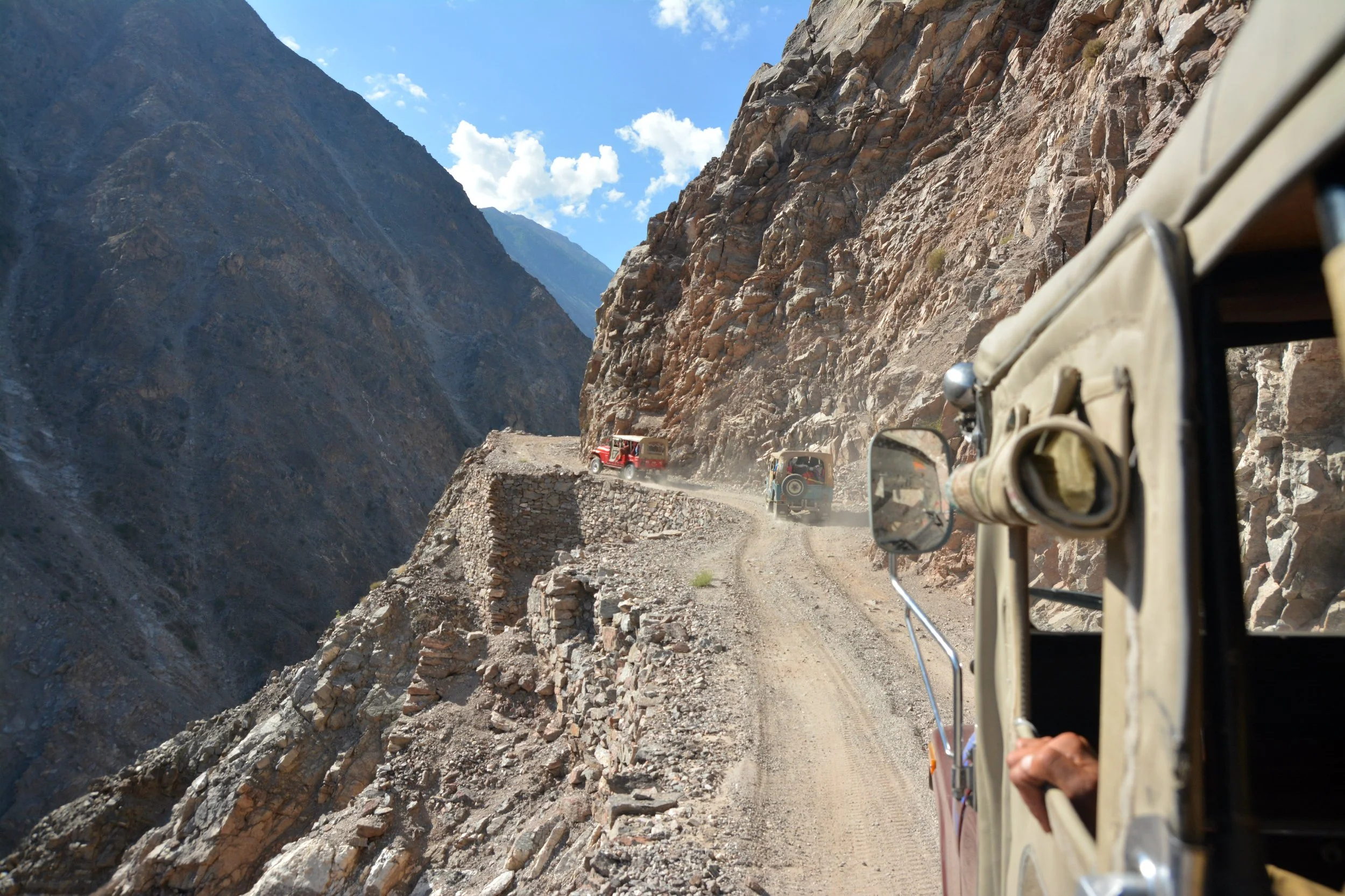
Three jeeps drive on a narrow road on the Karakoram Highway. Khugoo. CC BY-SA 4.0.
The Earth is full of diverse landscapes that create highly sought-after views from travelers, and Fairy Meadows in Pakistan is one of those destinations. However, getting there and reaching the grand meadow isn’t easy and requires an adventurous spirit. The journey there can be adrenaline-inducing, but the payoff is said to be unmatched. The view and adventure are the most popular aspects of this excursion, attracting thousands of people each year.
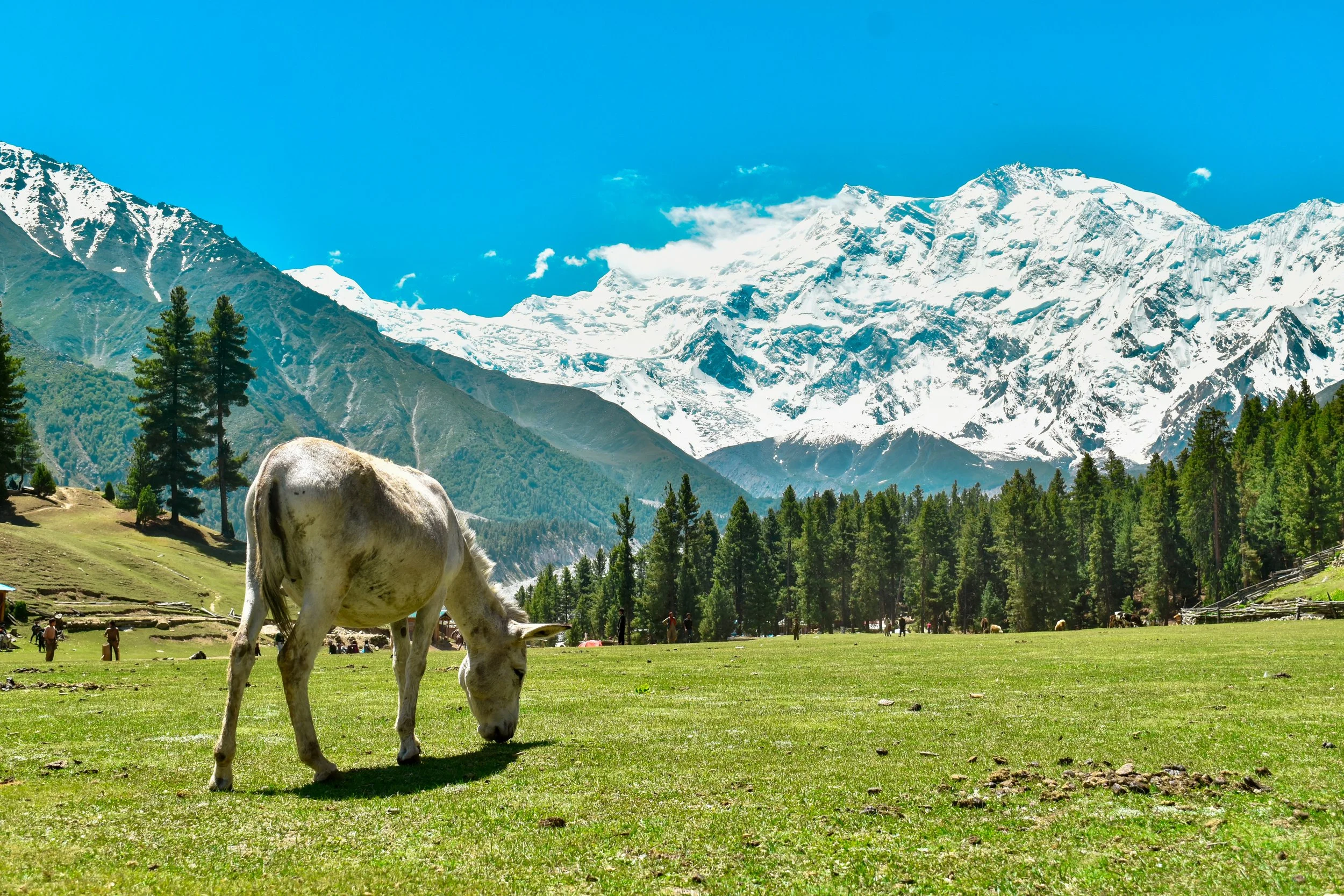
Donkey eats in Fairy Meadows with a view of Nanga Parbat. Fizashakoor. CC BY-SA 4.0.
Fairy Meadows is a grassy meadow surrounded by dense forests and filled with animals roaming around. It sits at an elevation of 10,826 feet, neighboring the ninth-highest mountain peak in the world, Nanga Parbat, also known as the Killer Mountain. The mountain sits right behind the meadow with its snowy peaks, watching over the gorgeous landscape. The meadow is kept healthy by Nanga Parbat’s meltwater, making a clearer path for mountain climbers who are summiting. In 1953, Hermann Buhl, an Austrian climber, became the first person to summit Nanga Parbat and subsequently popularized the spot for climbers.
The meadow is called Joot by locals, but German mountaineers coined the name Marchenwiese, or “Fairy Tale Meadows.” In 1995, it was declared Fairy Meadows National Park, with huts and camp sites added for visitors. Getting to this fairy tale meadow, however, isn’t a walk in the park. It requires courageous and patient steps to arrive, but by following the route and utilizing help from locals, it’s an exciting quest.
To reach Fairy Meadows, travelers must first get to the city of Gilgit, either by plane or by taxi from Pakistan’s capital city, Islamabad. From Gilgit, there’s a two-hour taxi ride to Raikot Bridge, followed by a jeep drive along the notorious 10-mile unpaved mountain road on the Karakoram Highway. Only locals are allowed to drive this two-hour stretch because of its lethal past; it’s been ranked as the world’s second scariest road because of its extreme altitude, narrow turns and absence of barriers, harboring a history of fatalities. The jeep ride ends in the village of Tattu, where there’s a small teahouse with food and restrooms for travelers to visit before their hike. Then, there’s a final 3.5-mile trek to reach Fairy Meadows. To get to the meadow, one of the local services offered is a horse ride, though you can also hike there for a cost-free option.. The hike follows a steady incline and sits at a very high altitude, but there are rest stops and tea houses along the way for breaks before arriving at the site.
The expedition to Fairy Meadows is marked by the road itself, a stretch that has gained international recognition for its danger. Still, this road is needed for locals to travel throughout their home and enjoy the beauty their country has to offer. It functions not only as an access route but as a marker for both the terrain’s difficulty and necessity. The road has become permanently associated with the meadow’s identity, shaping how travelers and locals interact with the landscape and setting the tone for the travels that follow.
Evelyn Garcia Medina
Evelyn is a recent Chicana graduate with a B.A. in English and Comparative Literature. Born and raised in the Bay Area, she draws inspiration from her passions: her cultural roots, environmentalism, and human rights. In her free time, she goes on hikes and enjoys learning about current social issues, history, and animals.