
Daud Azfar
While recent meetings show warmth and unity among the countries’ leaders, the possibility of a sustained alliance seems complex and difficult.
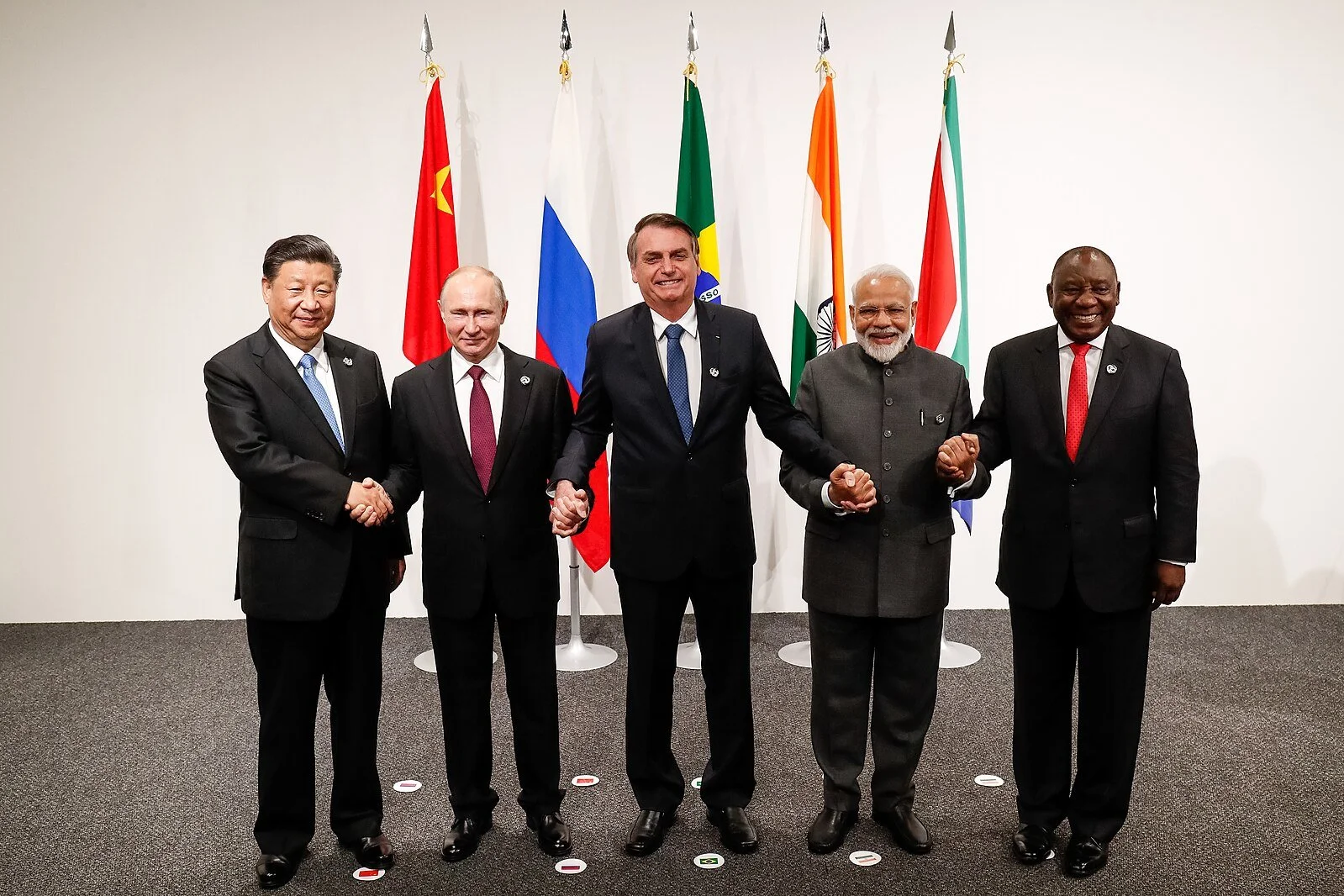
Leaders of China, Russia and India at a G20 Summit. Alan Santos. CC BY 2.0
In early September, many eyes were on a gathering of various political leaders in Beijing, including those of the U.S. President, Donald Trump. The President remarked, “Looks like we’ve lost India and Russia to deepest, darkest, China.” The annual Shanghai Cooperation Organization (SCO) summit in Tianjin, China, was the first time President Vladimir Putin, President Xi Jinping and Prime Minister Narendra Modi had all been in the same room for many years. The very visual warmth between the three leaders, all of whom have complex relations and lead some of the world’s most powerful nations, was manifest amid the backdrop of President Trump’s Liberation Day tariffs and general “America First” foreign policy. These countries are among the founding members of the intergovernmental organization BRICS: Brazil, Russia, India, China, and South Africa. BRICS is an economic cooperation-focused organization often seen as a challenger to the U.S.-centered Western bloc.
Shortly after making those comments, though, the U.S. President seemed to backtrack and highlighted his warm relationship with India’s Prime Minister. After imposing a harsh 50% tariff on Indian goods as punishment for continuing to buy Russian oil, the two administrations seem to be working to de-escalate and negotiate a settlement. Similarly, after a rapid escalation of tit for tat tariffs against China in April, which reached as high as 145%, the two countries met in Geneva and agreed to dramatically reduce tariffs. The situation remains complicated, and it’s safe to say that relations between the U.S. and the world’s two most populous countries are strained and cautious, but it doesn’t mean that the two will work together to counter or pressure the United States.
In fact, China and India don’t get along well at all. They are regional rivals, with a major border dispute over which a war and several skirmishes have taken place. They have a relationship marked by “distrust and suspicion,” according to the United States Institute for Peace’s Andrew Scobell. The situation gets even more complex when we add Russia into the equation. Sure, Moscow is an ally of both India and China, but again, it is a simultaneous rival. Amid Russia’s War in Ukraine, the nation has grown closer to China and seemingly more and more reliant on its military cooperation. This has left India, a historic Cold War-era ally of Russia, in a weird place, as its primary arms supplier is now very close to its regional rival. Even as we just scratch the surface of the tensions and mutual competition between Russia, India and China, the reason why BRICS keeps failing to create a new currency to challenge the dollar and struggles to establish the New Development Bank as an alternative to the IMF or World Bank is manifest. The countries comprising BRICS and the more regional, security-focused SCO have different interests and cultures, and they are often actually competitors to one another.
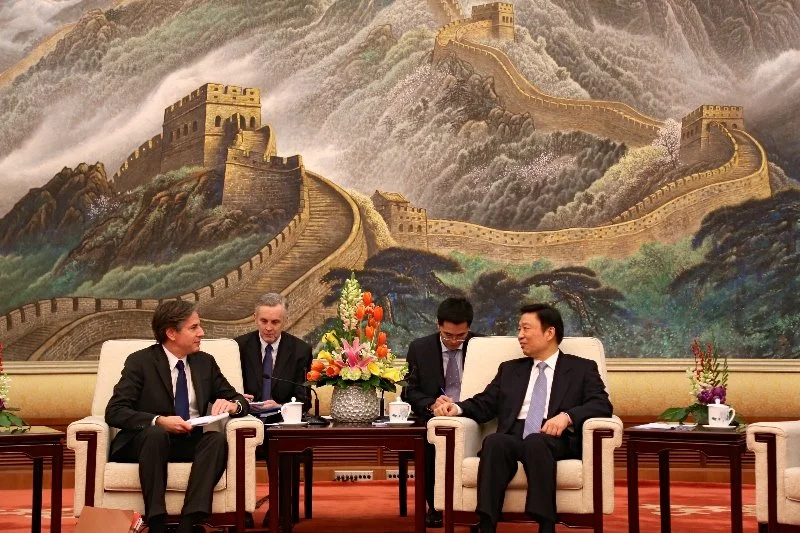
U.S. officials meeting in China in 2020. U.S. Department of State. PD
For the United States, its major rival right now remains China, with its impressive economic and military strength, and so it has a vested interest in maintaining good relations with India. Additionally, after attempts to engage with President Putin, the U.S. President has expressed deep disappointment with Russia’s efforts regarding the Ukraine conflict, indicating a renewal in support for Ukraine and perhaps increased pressure on those who support or trade with Russia. With all this in mind, the symbolic gathering and warmth between the leaders of Russia, China and India in Tianjin was impactful and highlights how the U.S.’s protectionism is pushing other countries together; however, a real alliance between the three countries is uncertain and may be marred by a focus on autonomy, diverse interests and mutual competition.

Daud Azfar
Daud is a second-year student at the University of Virginia, planning on majoring in Politics and Economics. Having grown up in Pakistan, he’s very passionate about the importance of education and social justice. Outside of school, he enjoys spending time with his friends, playing pickleball, and exploring new coffee shops.