The Galápagos Drug Route

By Carol Khorramchahi

A UNESCO wildlife sanctuary is being pulled into the Pacific cocaine trade, putting conservation and community life on the same collision course.
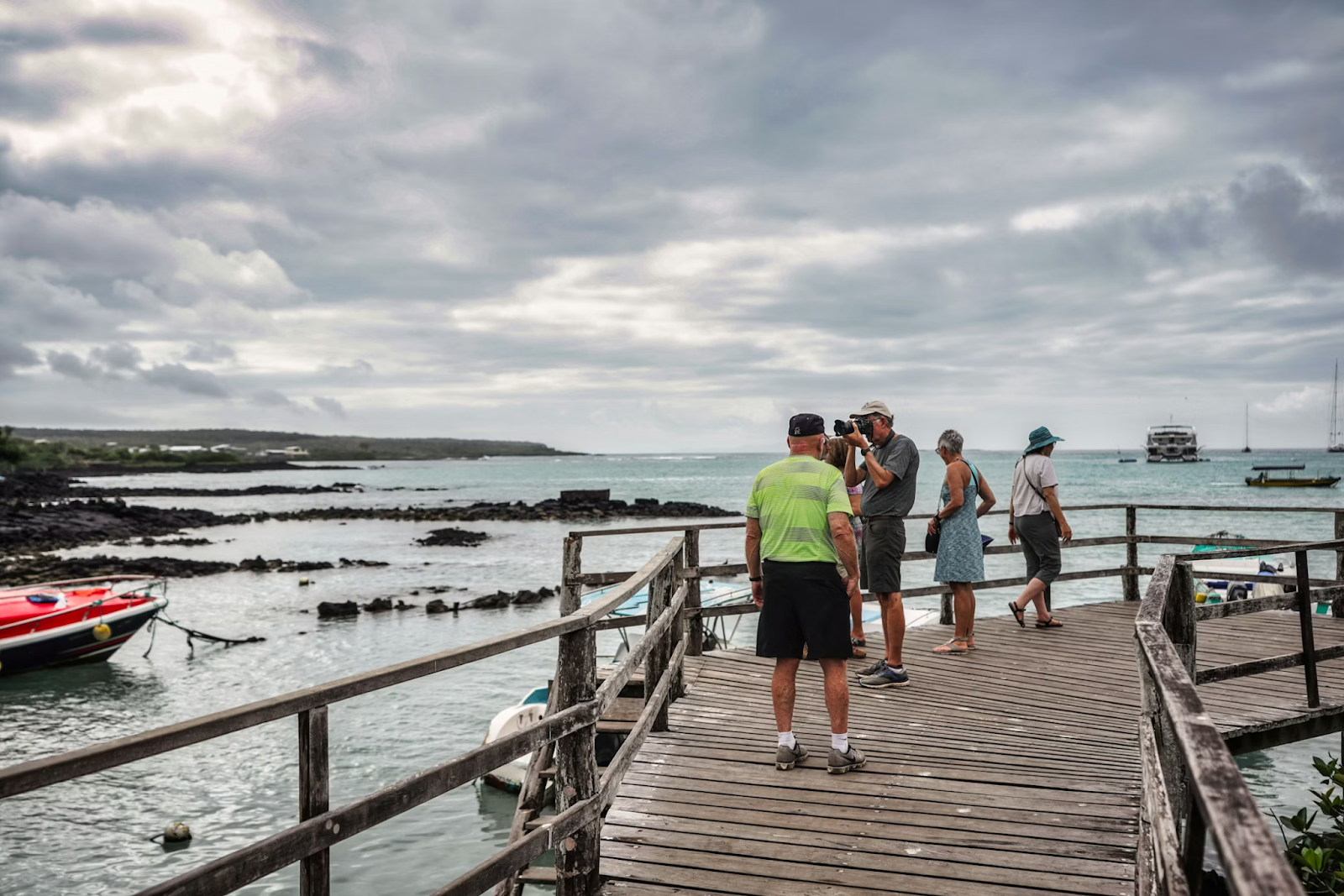
Boats docked in Santa Cruz, Ecuador. Andres Medina. Unsplash.

The Galapagos are marketed as a place outside the modern world, featuring blue water, strict park rules and animals that seem to have missed the memo about humans. UNESCO calls the islands a “living museum and showcase of evolution.”

That is the Galapagos most travelers recognize. But there is another Galapagos, quieter and more recent, shaped by the same geography that makes the islands famous. The archipelago sits deep in the eastern Pacific, far enough from the mainland to feel remote and close enough to ride along lengthy maritime routes that move north toward Central America and beyond. Trafficking networks do not need the Galapagos to be a city; they need it to be a waypoint.

In early 2026, Al Jazeera reported that the islands are increasingly being used as a refueling and staging zone for cocaine shipments moving through the Pacific, with authorities intercepting boats and searching for hidden storage points. The story lands hard because the Galapagos economy depends on tourism and regulated fishing, not on the shadow economy of organized crime. When trafficking pressure rises, the damage is not only criminal: It is social.

Part of the pull is simple distance. Long routes require fuel and logistics, and isolated stretches of ocean provide cover. A Pacific trafficking analysis by the U.N. Office on Drugs and Crime describes expanding transnational organized crime in the region and the importance of maritime routes for moving illicit drugs.

Another part is Ecuador’s wider security crisis, which is pushing criminal networks to innovate and spread. The International Crisis Group warns that Ecuador’s organized crime surge is tied to the country’s role in global cocaine flows and violent competition among criminal groups. That shift does not stay on the mainland: It radiates outward, including into strategic maritime zones.

The consequences in the Galapagos do not always look like those in Hollywood. They can look like corruption pressure on small businesses; fishermen being approached to sell information, fuel or services; authorities trying to police an enormous marine area with limited assets while also protecting one of the most sensitive ecosystems on Earth.

Officials are taking the threat seriously. In March 2025, the U.S. Embassy in Ecuador said Ambassador Art Brown visited the Galapagos and discussed security challenges, including illicit trafficking and illegal fishing, as part of coordination with local and national authorities. The U.S. Embassy has also emphasized the scale of maritime interdictions more broadly. The country’s Ministry of Defense said Ecuador seized 135 tons of drugs at sea in 2025, a record it framed as a major blow to trafficking networks.

The larger lesson is uncomfortable: Trafficking routes shift like water. When enforcement tightens in one corridor, networks test another. The Galapagos are now part of that map, and the challenge is no longer only protecting wildlife; it is protecting a community and a global treasure from being turned into infrastructure for a drug economy.

GET INVOLVED:
Support conservation and community protection efforts through the Galapagos Conservancy and the Charles Darwin Foundation. Follow organized crime and security analysis through the International Crisis Group Ecuador page and regional trafficking research through the UNODC

Carol Khorramchahi

Carol Khorramchahi is a student at Boston University, where she studies English and Psychology and minors in Journalism. She enjoys writing and reporting on stories that bring together culture, identity, and community, and has experience in both newsroom reporting and digital media. She is especially interested in thoughtful storytelling with a global lens.
Finding Adventure in Ecuador

A country of volcanoes and valleys, Ecuador offers travelers innumerable ways to push their limits and get their hearts racing.

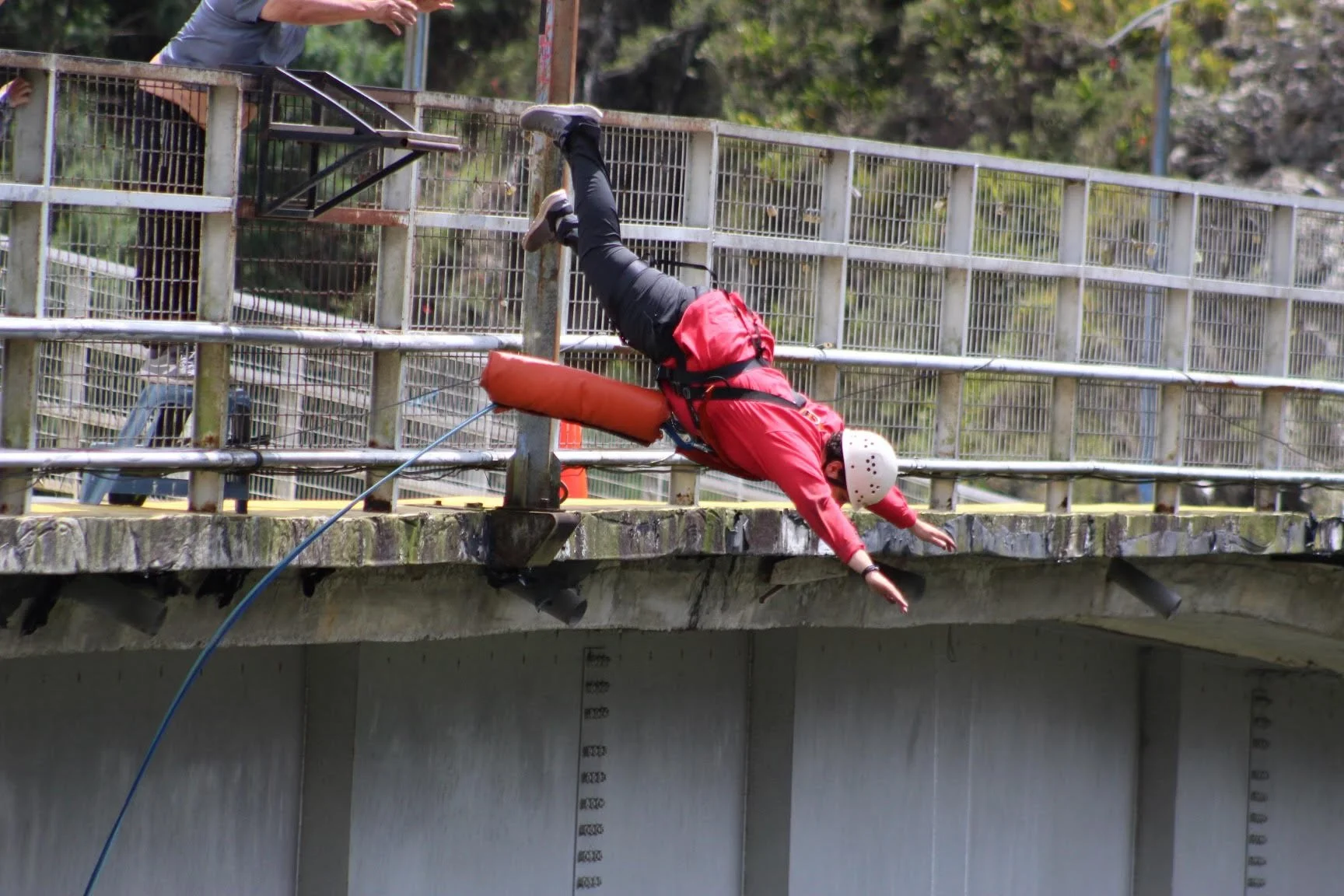
Swing Jumping in Baños, Ecuador. Courtesy of Jeremy Giles.

The above picture is of me jumping into a 100 meter drop from a bridge in Baños, a city bordering the Ecuadorian Amazon. It took me three tries to actually jump; the first two times I stood on the platform, I got scared and had to come down. I probably only ended up jumping because I saw two people go before me and not die. On the third try, I took a deep breath, knowing that if I didn’t jump then I never would, and leaped off. The adrenaline pumped furiously for one of the longest, most terrifying seconds of my life. Then, of course, the line pulled taut and swung me under the bridge, stopping my fall.

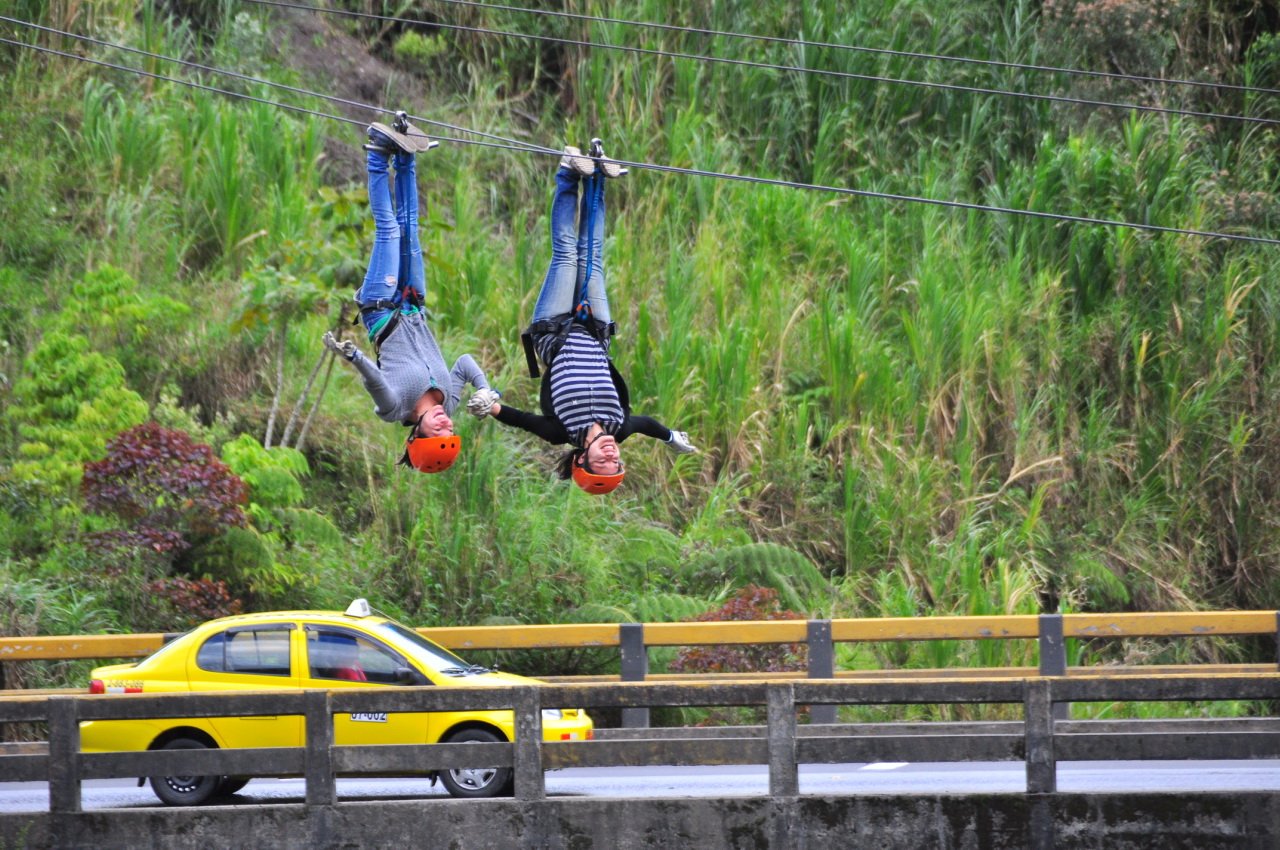
Canopy, Baños, Ecuador, Rinaldo Wurglitsch, CC BY 2.0

Baños, however, is more than just a city I jumped off a bridge in. It has the Andes in the West and the Amazon in the East, making it a beautiful space to see the transition between the two, home to both forests and mountains. Even more, it is the Ecuadorian hub for extreme sports. The entire town center is filled with restaurants and travel agencies, each of the latter offering what felt like hundreds of different extreme sports. Later, on the same day I bungee jumped, I went on a beautiful 6 part zipline system called the canopy, where they let you zipline upside down and even hold hands with another rider. I did it with my friend, but I imagine that if you went with a partner it would be quite romantic.

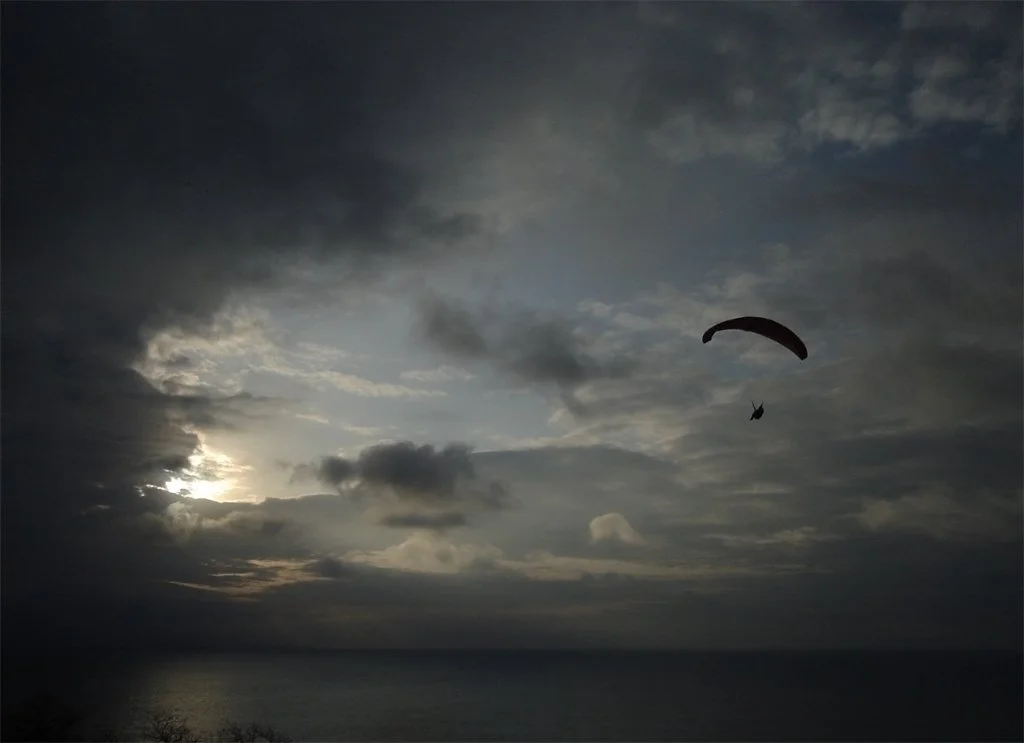
Paragliding in Ecuador, Jsan92, CC BY-SA 4.0

While Baños may be the center of extreme sports in Ecuador, it's hardly the only locale. During my first month in Ecuador I lived in Cumbaya, a suburb outside of the country’s capital Quito. One of the very first things I noticed was the steady stream of paragliders coming from a mountain behind my house. Almost every day over the next month, I’d see a few paragliders in the sky above me. Eventually I got so curious that my host dad walked me to the paragliders’ landing spot. There we learned two important things. First, while this location is good, it is also possible to paraglide on a mountain next to Quito, which is the prime location for the sport and on my bucket list of things to do when I return to Ecuador. Secondly, we saw on the ground below the paragliders a hopeful fiance-to-be had written a marriage proposal. We didn’t stay to see if the proposal was accepted, but I wish them the best of luck.

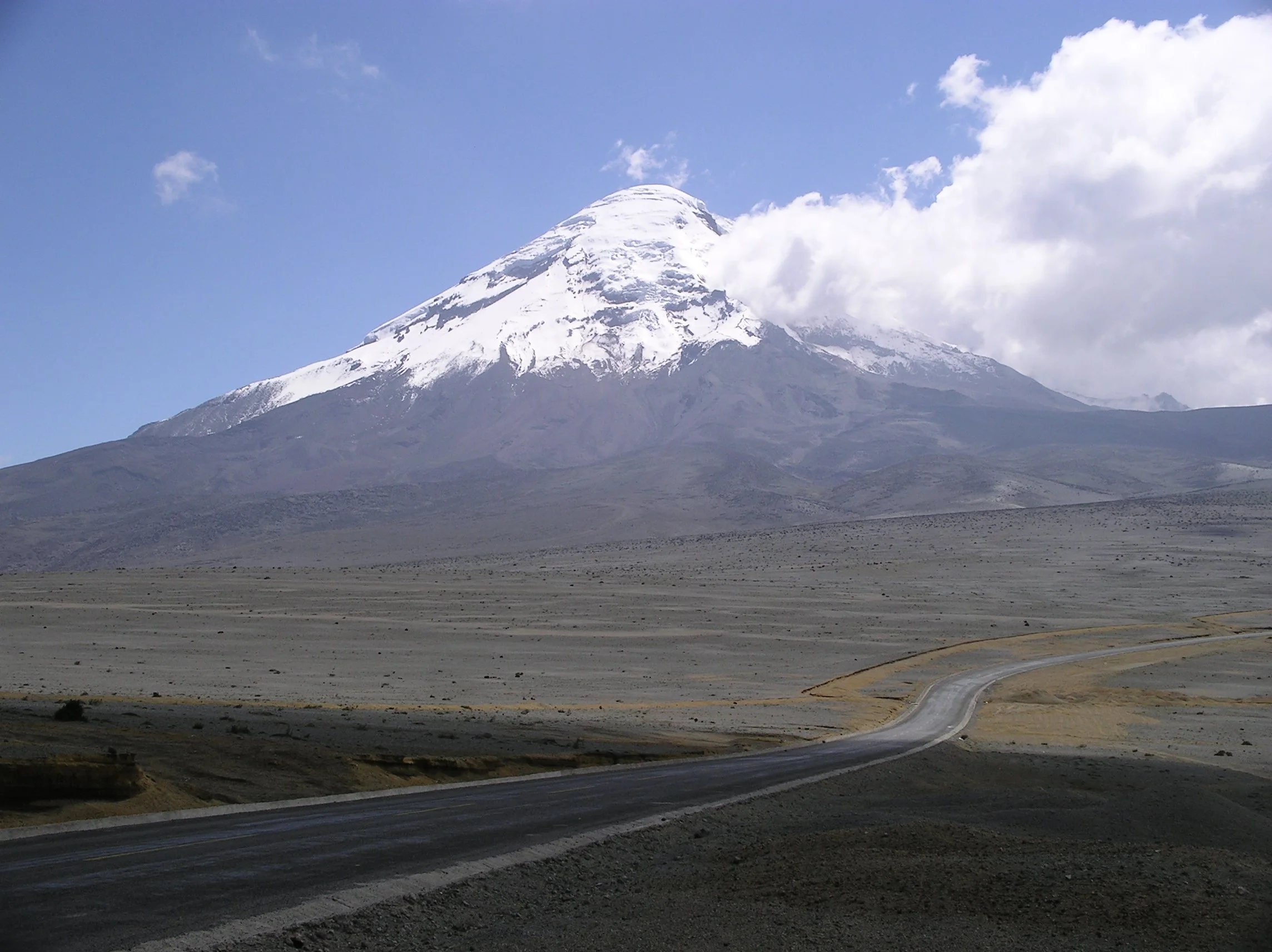
Chimborazo, Ecuador, André Hübner, CC BY-SA 3.0.

In Ecuador, a country smaller than Colorado, there are 47 volcanoes, 32 of which are on its mainland. The tallest volcano (and mountain) in Ecuador is Chimborazo, whose summit is a 6-9 hour climb, but provides such beautiful vistas as to make the trip well worth the effort. The peak of the volcano, due to the bulge of the Earth around the equator, is the farthest point from the center of the Earth on the planet’s surface. While Chimborazo was thought to be extinct, it has recently been found to be a still-active volcano. 

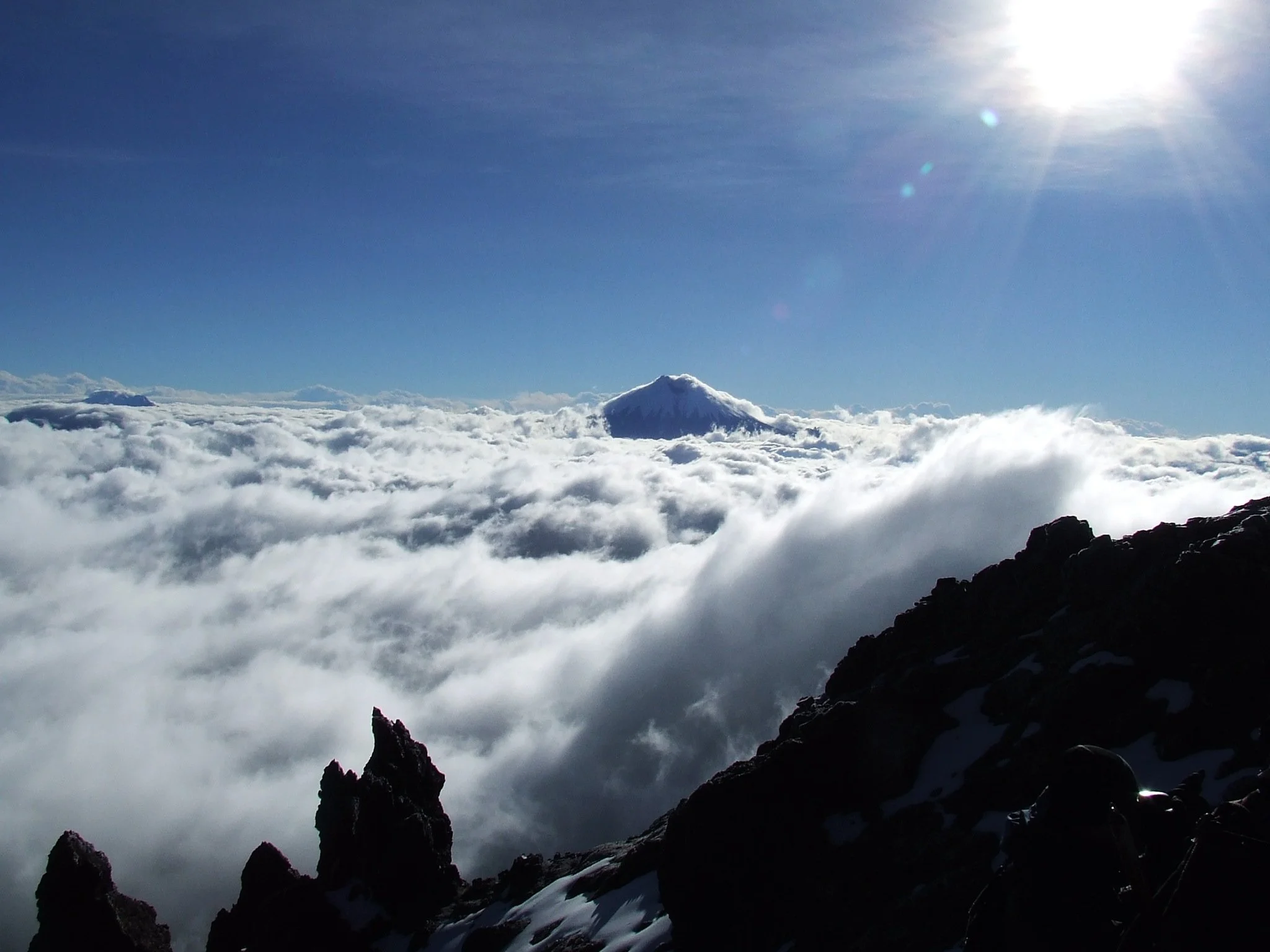
Cotopaxi from Iliniza, Jo Simon, CC BY 2.0.

With that said, there has never been a doubt the Cotopaxi volcano, Ecuador’s second-tallest mountain, is active. Cotopaxi has erupted at least 50 times in the last 300 years. It is perhaps the most popular climbing destination in Ecuador, and towers over Quito, making its amazing views easily accessible.

If you’re interested in these experiences, offers for them can readily be found both on-site and online. Bungee jumping and zip lining in Baños costs about $20-40 per person and the paragliding near my home in Cumbaya was approximately $60-75, although I imagine it would be a bit more in Quito itself. Mountain climbing depends on the mountain and your individual plans.


Jeremy Giles

Jeremy is a Writing Seminars and International Studies major at Johns Hopkins University. He is an avid writer and the Co-Founder of Writers’ Warehouse, Johns Hopkins’ first creative writing group. He is an advocate for Indigenous rights, and studies how Indigenous philosophies can be used to help prevent climate change. Using his writing, he hopes to bring attention to underrepresented voices in today’s world.

The Four Worlds of Ecuador

In a country smaller than Colorado, there are four distinct geographical regions from the coast to the Amazon, each representing its own culture.

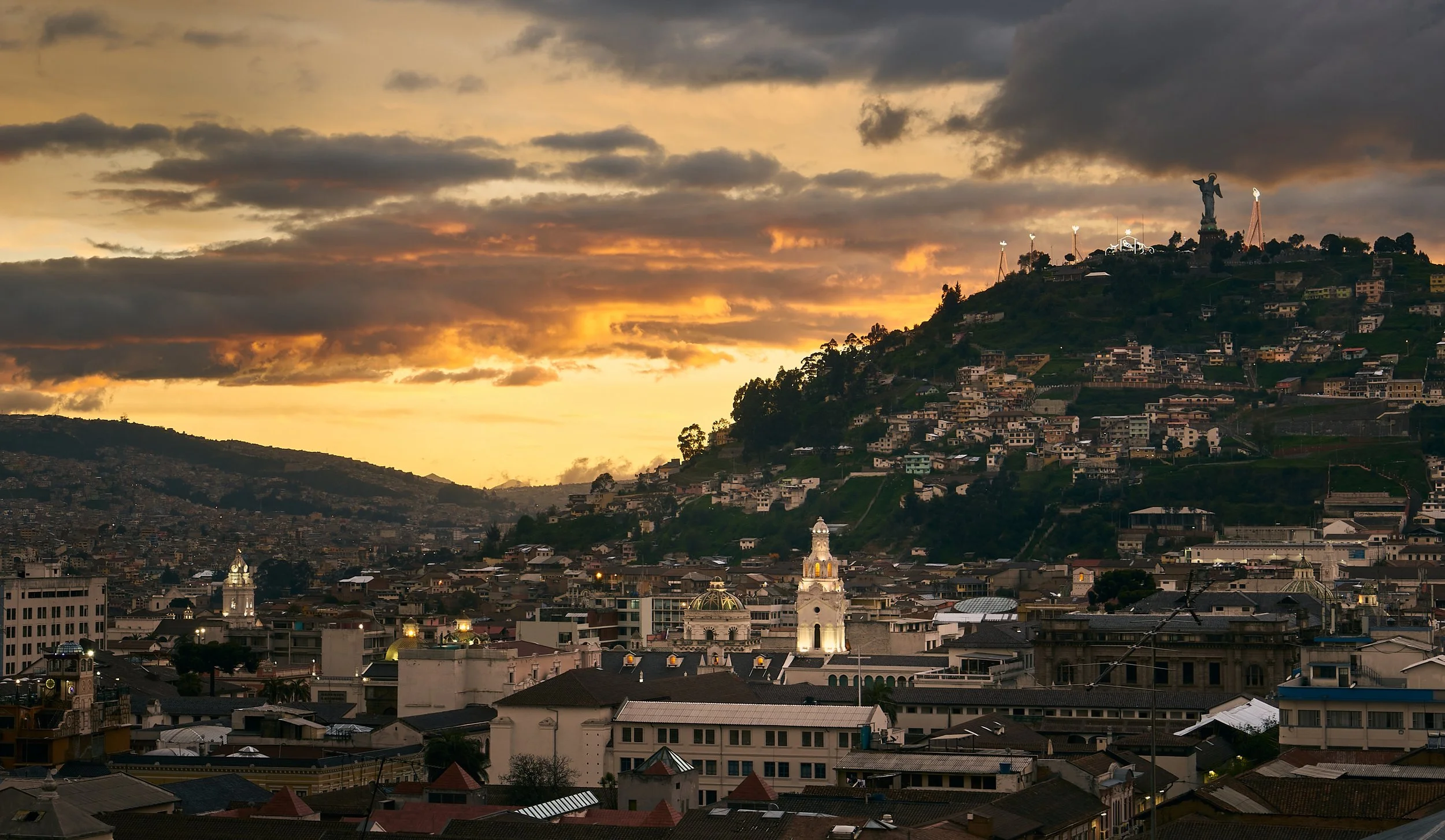
Quito Sunset, szeke, CC BY-SA 2.0.

Per square mile, Ecuador is the most biodiverse country in the world. In the east lies the Amazon Rainforest, known in Ecuador as “el oriente,” or “the orient” in English. The Andes rise like a spine through the middle of the country , and are known in Ecuador as “la sierra.” It is here that Ecuador’s Capital Quito is located, making it the second highest capital in the world. Bordering the ocean is the country’s coast, known as “la costa,” home to Guayaquil, Ecuador’s largest city. Finally, about 600 miles off the coast of Ecuador is the biological treasure of the Galapagos Islands, home of the Galapagos Tortoises, the biggest tortoises in the world. 

I have spent the past 3 and a half months studying in Ecuador. During that time I visited three of the four major regions, and lived in both the Amazon and the Andes. Beyond the geographical differences, each region has its own cultures unique to itself. Based on my research and experiences, this article will discuss what makes each region special.

“La Sierra” - The Andes

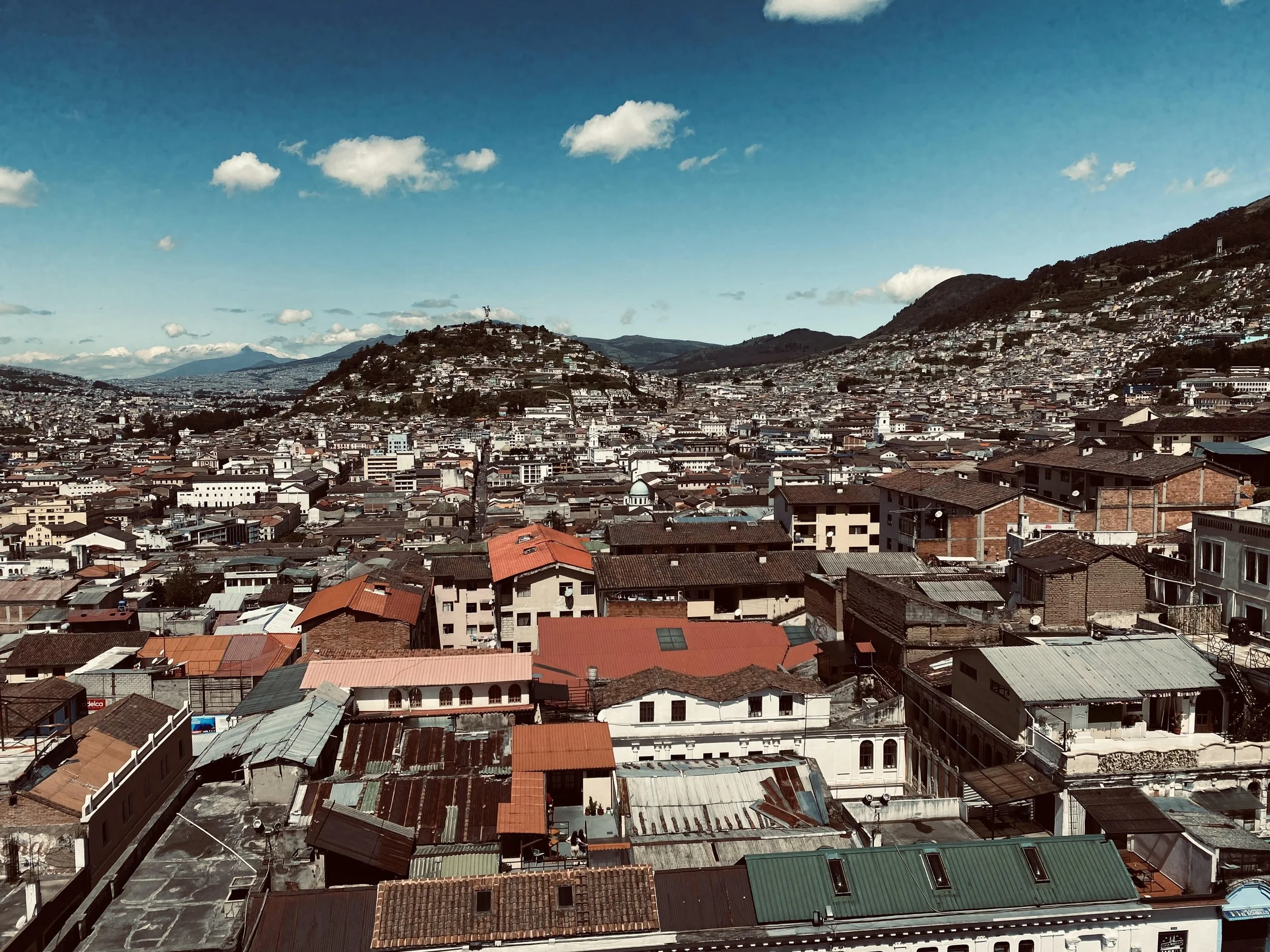
Quito. Jeremy Giles

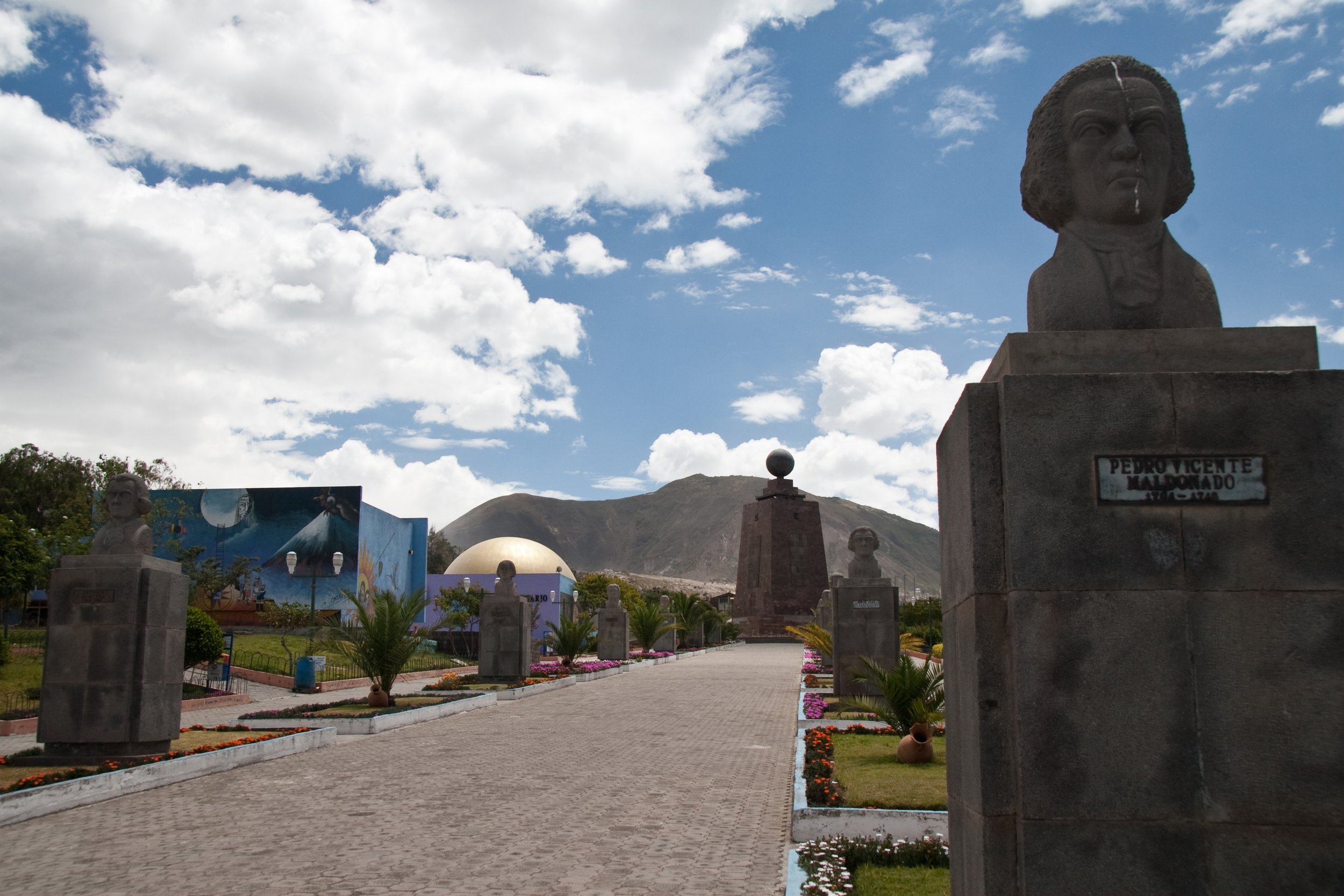
Quito, the capital of Ecuador and its most famous city, is located in the Andes at the center of not only Ecuador but also the world, positioned almost exactly on the Equator line, a fact that appeals to tourist so much that there are not one but two “centers of the world” in and around Quito. The “center of the world” is supposed to be the exact 0.0 line of Ecuador, so having two is very much not possible. Although only one of them is real, both are constantly crowded and attract plenty of visitors every year. In my opinion, the fake one, built up to the point it seems like its own little town, is actually nicer than the real site.

Fake Center of the Earth, Maros M r a z (Maros), CC BY-SA 3.0

If you drive away from Quito in almost any direction, you will run into a volcano. There are 17 volcanoes surrounding the city. Two of the most famous of the volcanoes, Pinchicha and Cotopaxi, are both very much active and occasionally release smoke. The volcanic mountains can be seen throughout most of Quito, creating beautiful vistas wherever you care to look. 

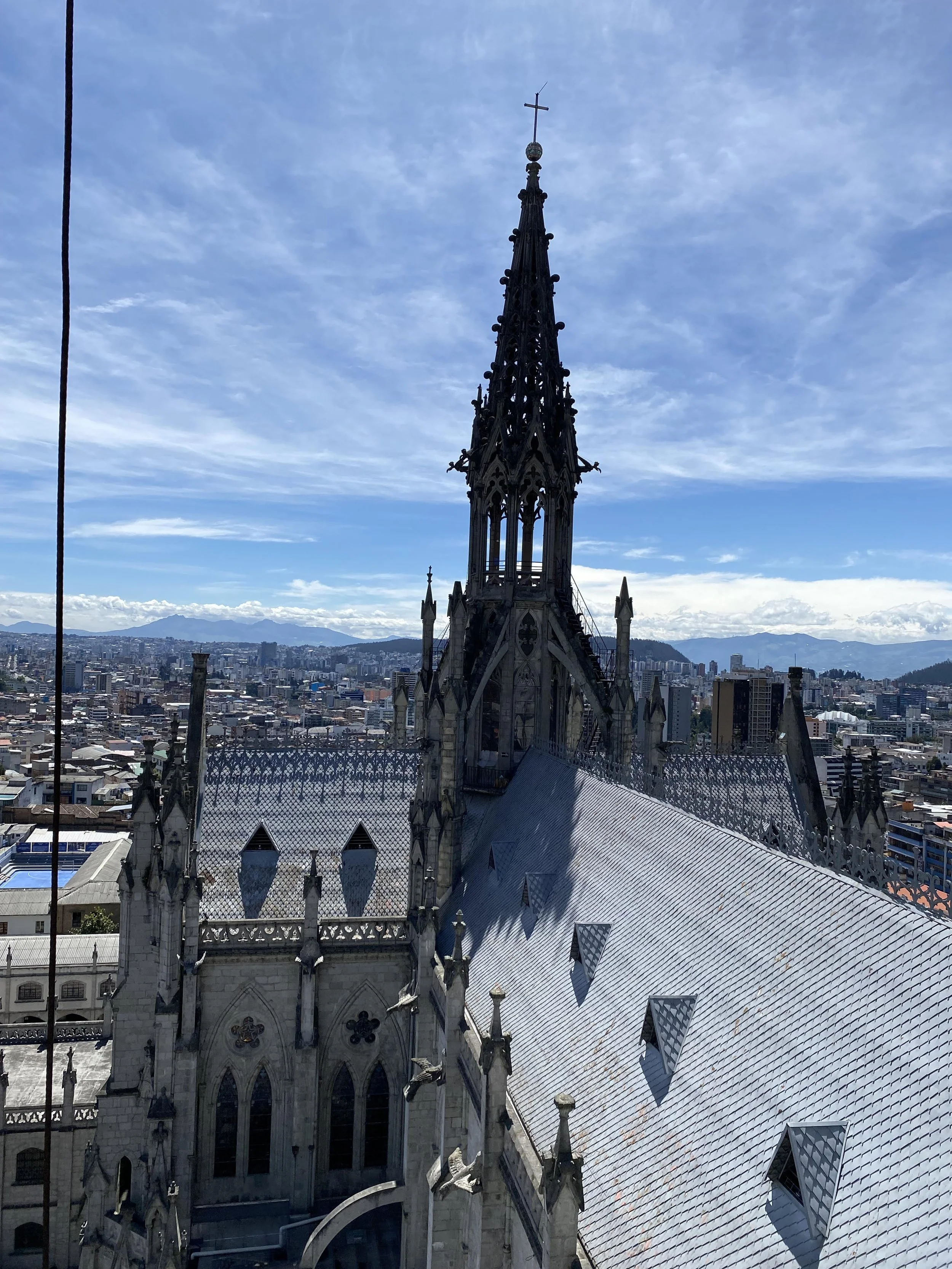
A picture from on top of the Basilica del Voto Nacional. Jeremy Giles

Within the city itself, the star is “el centro historico,” the historic and colonial center of Quito. Here the buildings are hundreds of years old, all built in a Spanish style in a wondrous variety of pastel colors, all on top of slanting roads curving with the mountains underneath it. This branch of the city is home to the Presidential Palace and many other beautiful government buildings and churches. My favorite of all is the Basilica de Voto Nacional, a huge building with two beautiful towers looming over the city, and unlike any other Church I’ve been to, you are actually able to climb up it, giving you spectacular views of the capital. Beyond this, if you look up at the Basilica from the ground, you can see that instead of Gargoyles lining it like a typical Basilica there are famous animals from all different parts of Ecuador.

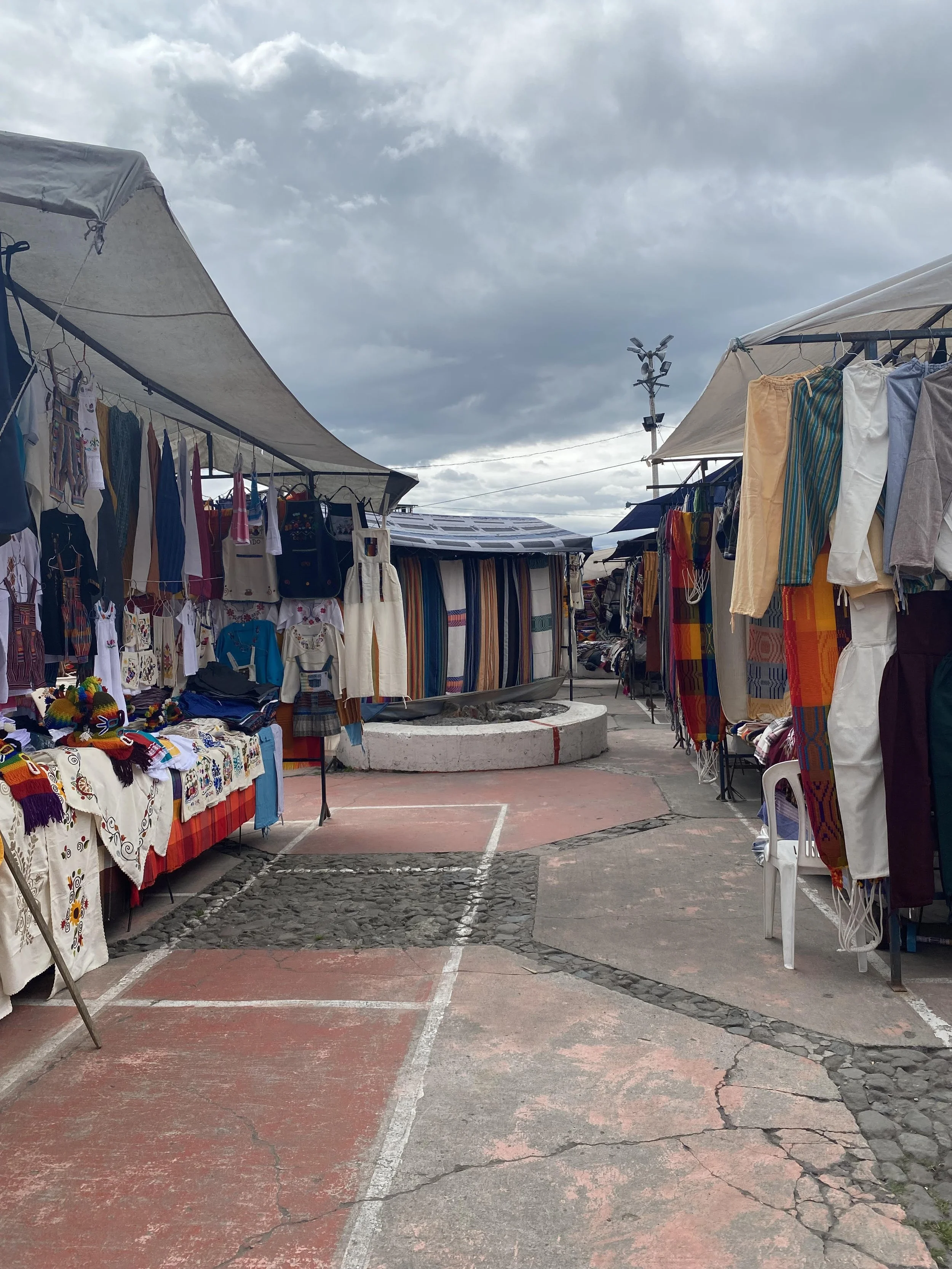
Otavalo Market, Jeremy Giles

While Quito is by far the biggest city in La Sierra, it is not the region’s only attraction. About a two hour drive from Quito is the city of Otavalo, one of the two largest Kichwa areas of Ecuador. The Kichwa peoples were part of the Inca Empire and have been in Ecuador for thousands of years. Today, their culture and language is still very much living. Otavalo is famous for its Kichwa market, where beautiful handmade blankets, sweaters, hammocks and more are created from incredibly soft alpaca wool. The prices are amazing; when I was last there I bought a beautiful alpaca wool blanket for only 20 dollars.

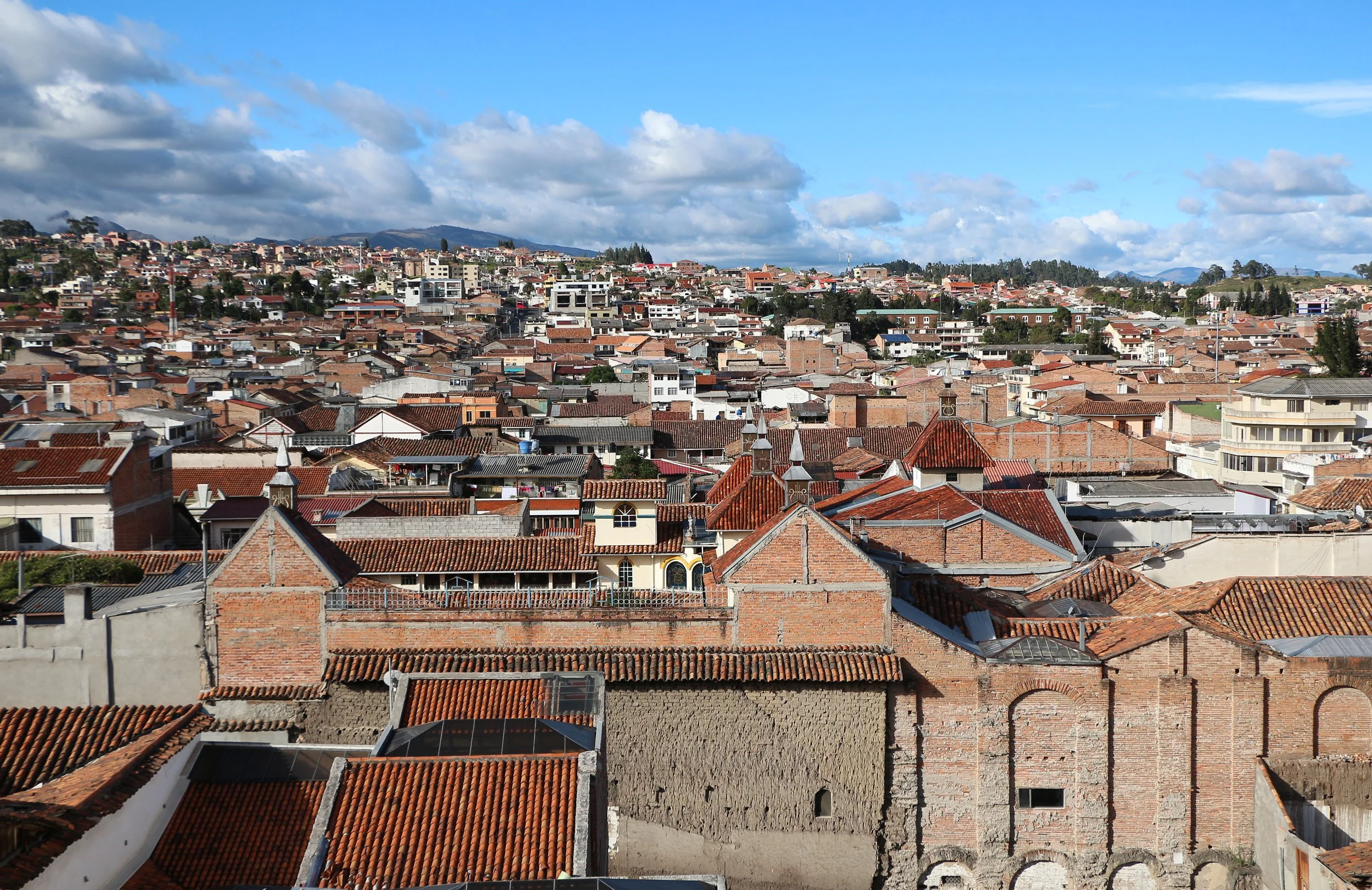
Cuenca, Ecuador, Bernard Gagnon, CC BY-SA 3.0 

While I never had the opportunity to visit it, maybe the most beautiful city in La Sierra is Ecuador’s third largest city, Cuenca. This andean city is known for its thriving culinary scene, often serving some of Ecuador’s best traditional dishes. It has an incredibly charming appeal and is home to the beautiful El Cajas National park. When I next return to Ecuador Cuenca is for sure one of the top destinations on my list.

“El Oriente” - The Amazon Rainforest

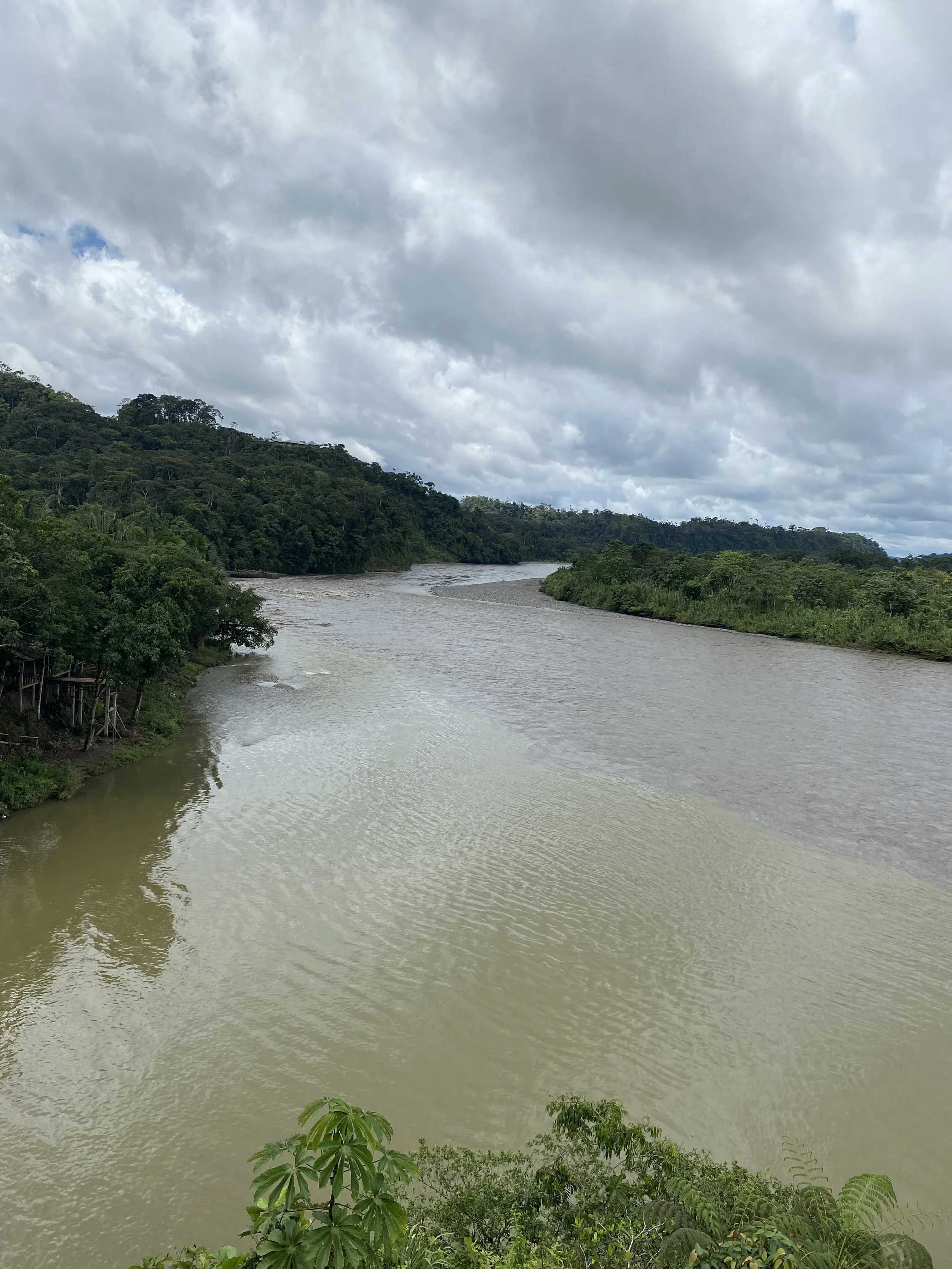
Meeting of the Rivers, Cuenca, Ecuador

To reiterate, Ecuador is known as the most biodiverse country in the world per square mile. The Ecuadorian Amazon is the center of that biodiversity. The Amazon in Ecuador has 300 different species of mammals, 350 of reptiles, 800 of fish, and 1,600 of birds. These species are some of the centerpoints of Amazonian culture in Ecuador. Per indigenous Kichwa beliefs, the Pachamama created the Earth, and the Amazon for its people. When shamans, traditional healers, die, they become a “boa” or “tigre,” general words in the Ecuadorian Amazon for a very large snake or a big cat. The latter is a false friend for English speakers; although “tigre” translates directly to “tiger,” there aren’t actually any tigers in the Amazon.

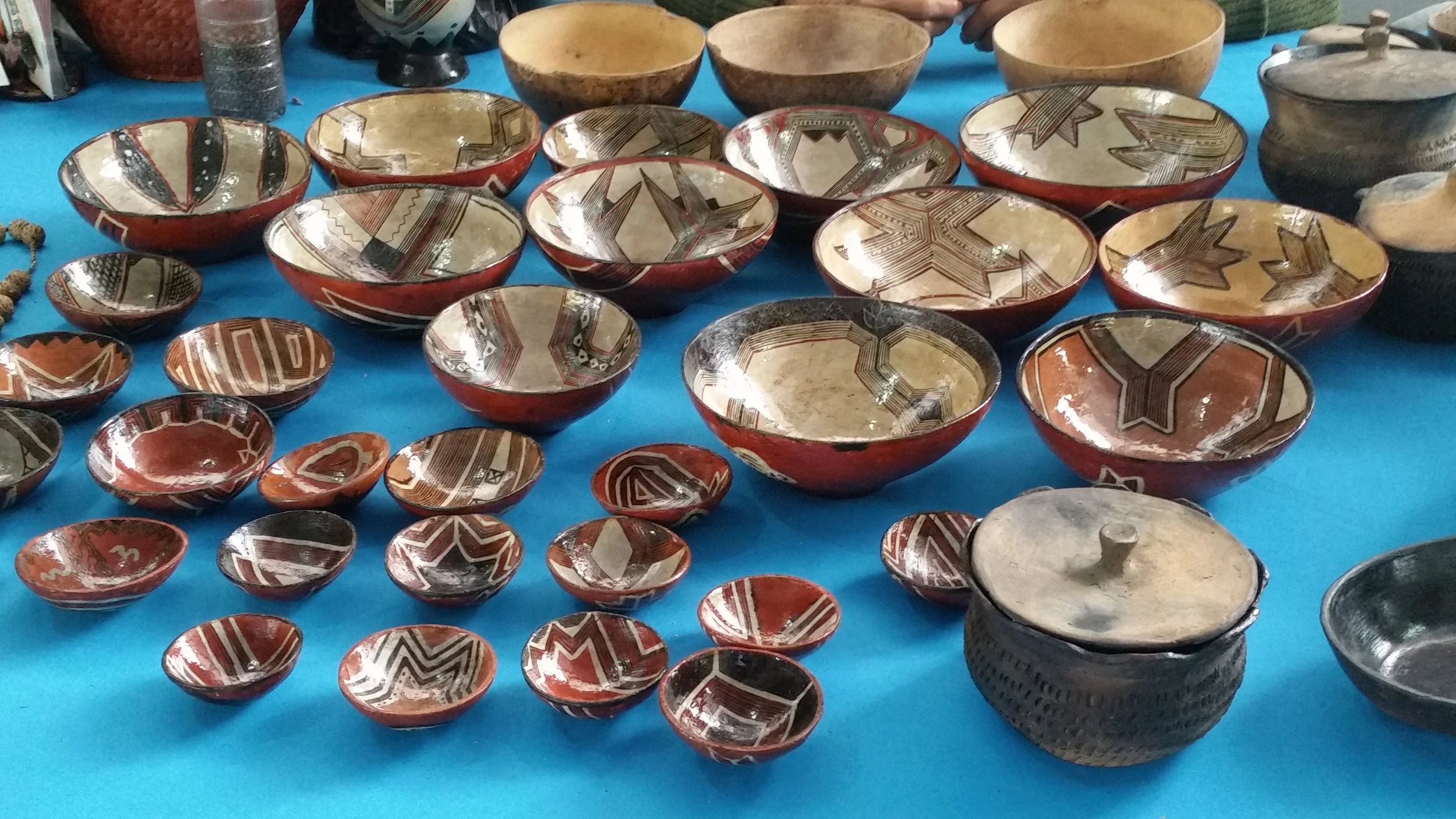
Mocahuas, David C. S., CC BY-SA 4.0

While visiting the Amazon I lived in the Pastaza province, the largest province in Ecuador, and an area almost entirely covered by the Rainforest. Somehow, Pastaza manages to be just as diverse culturally as it is biologically. In Pastaza alone, there are seven different independent Indigenous groups, each with its own separate language, culture, and customs. There are significant efforts in the region to make sure these languages survive, and in schools students learn both Spanish and their Indigenous language.

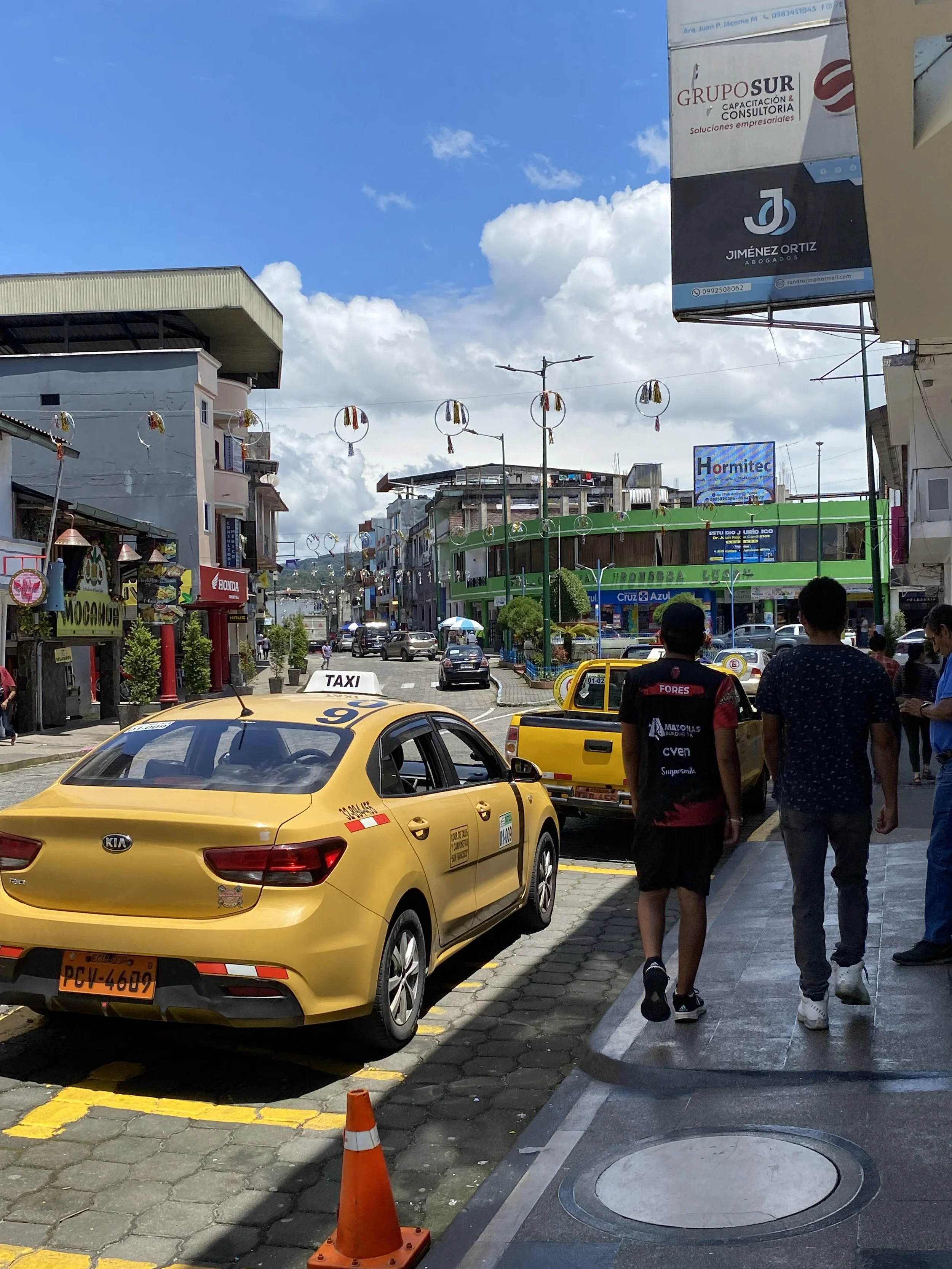
A street in Puyo, Ecuador, Jeremy Giles

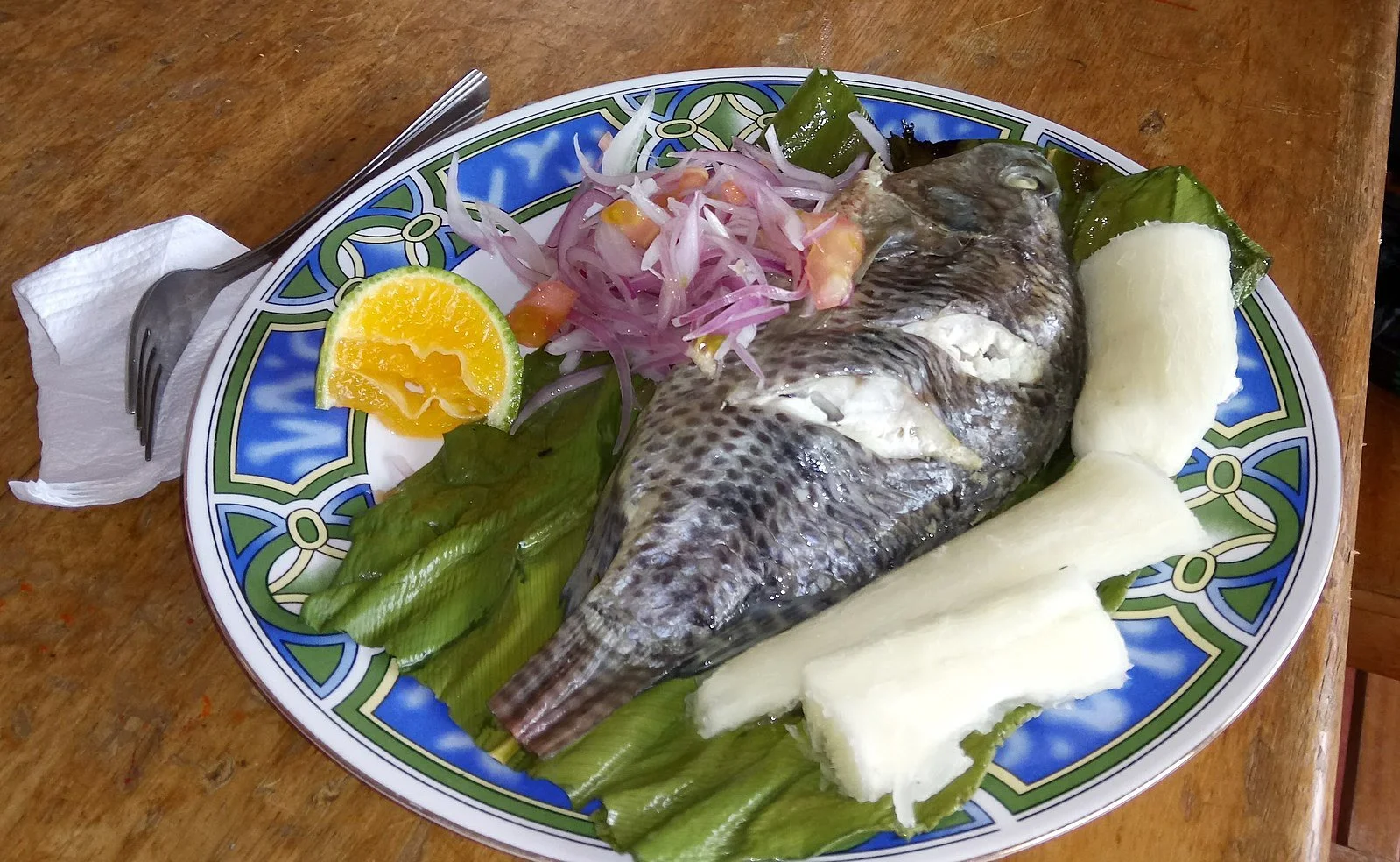
For the month I was in Pastaza, I stayed in its capital Puyo, an incredibly diverse multi-ethnic city of about 40,000 people. There, I felt as welcomed as I’ve ever felt anywhere. Through the generosity of my host families I got to experience many of the special things about Puyo. Here, I will share with you one of my favorites: the food. The Amazon river provides the families of Puyo with an amazing abundance of fresh fish, particularly tilapia, at prices even cheaper than Ecuadorian norm. Once, my host family bought nine individual portion sized live tilapia for 12 dollars.

Maito, Iestrella, CC BY-SA 4.0

After buying the fish, the typical method of preparation is to make a dish called “Maito.” When cooking Maito the family will cut down a really big leaf. They will then put the fish in the leaf and wrap it up. They put this over the fire and let the fish cook. Then they will open the leaf and serve with fish, often accompanied with grilled plantains and a potato-like root vegetable called yucca that is native to the region. Traditionally, the family does not filet fish or remove the skin and eats everything but the bones. I did this while I was there and while it is often avoided in the west, I found the skin quite rich. 

“La Costa” - The Coast

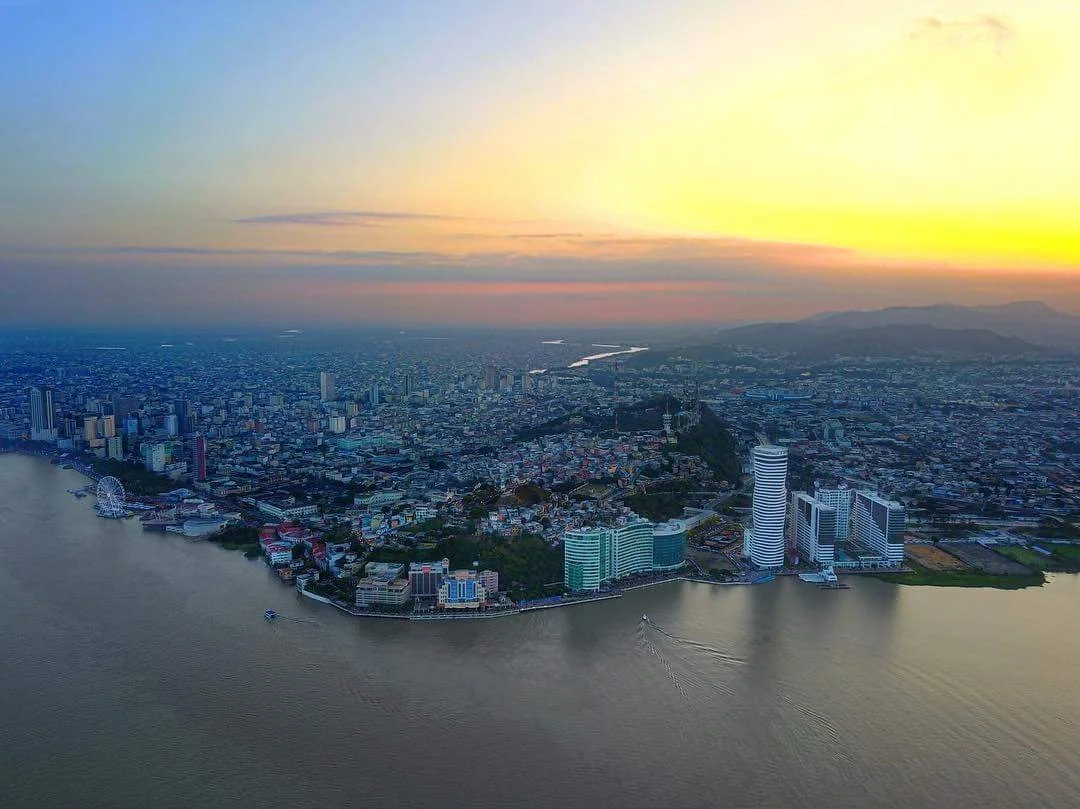
An Aerial View of Guayaquil, JorgeAlejanDroo, CC BY-SA 4.0

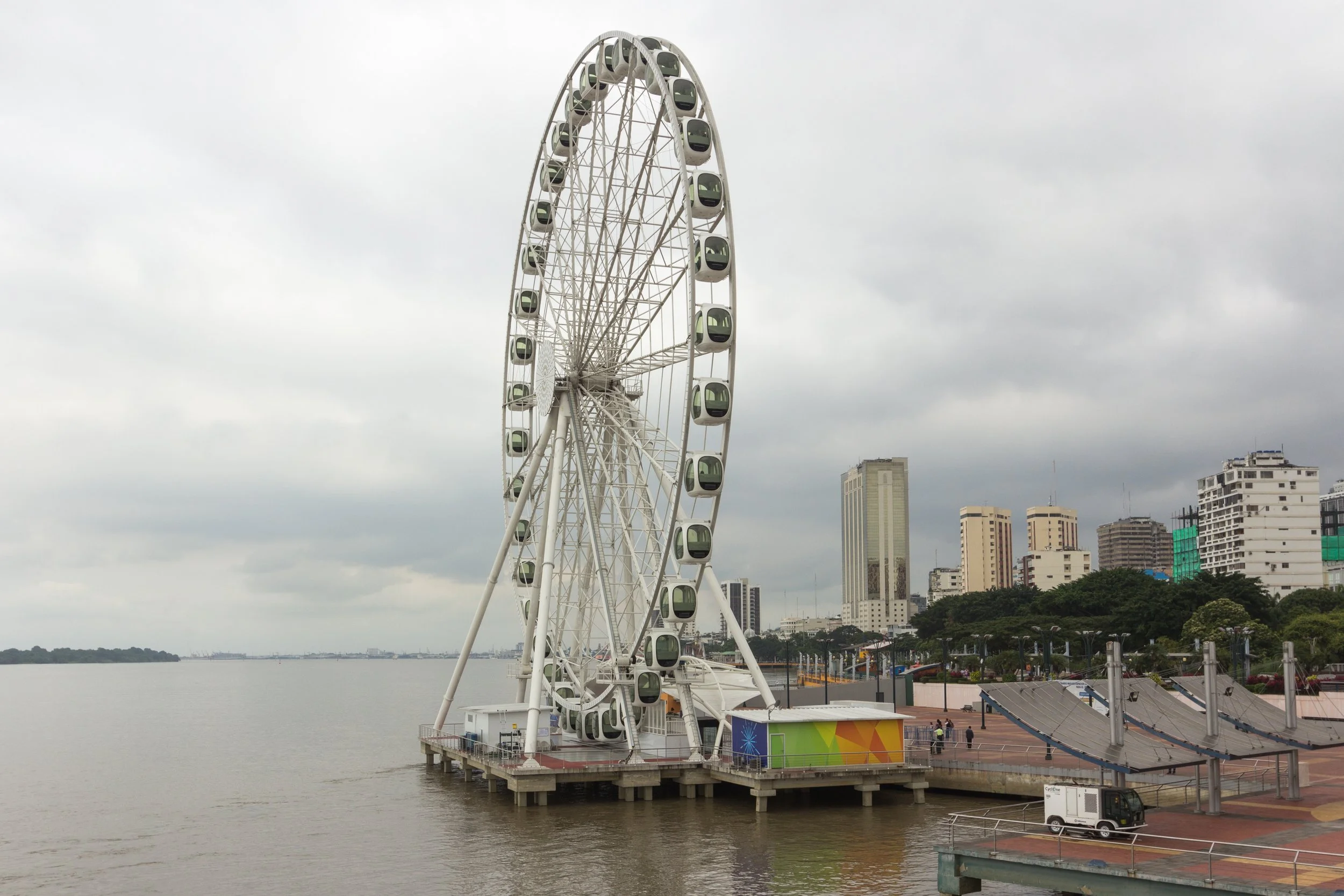
It's impossible to talk about the Ecuadorian coast without discussing the biggest city in all of Ecuador, Guayaquil. While Guayaquil lacks the aesthetic beauty of Quito in the Andes, it is impressive in its own right. Quito is an old city that is sprawled over many many miles, with hardly any tall buildings. Because of this, Guayaquil, a city working hard to modernize, is the home to Ecuador’s tallest building. Along with this is “la perla” or “The Pearl,” which, during its opening in 2015, was the largest ferris wheel in South America. 

Ferris Wheel in Guayaquil, Sebastian Reategui, CC0, via Wikimedia Commons

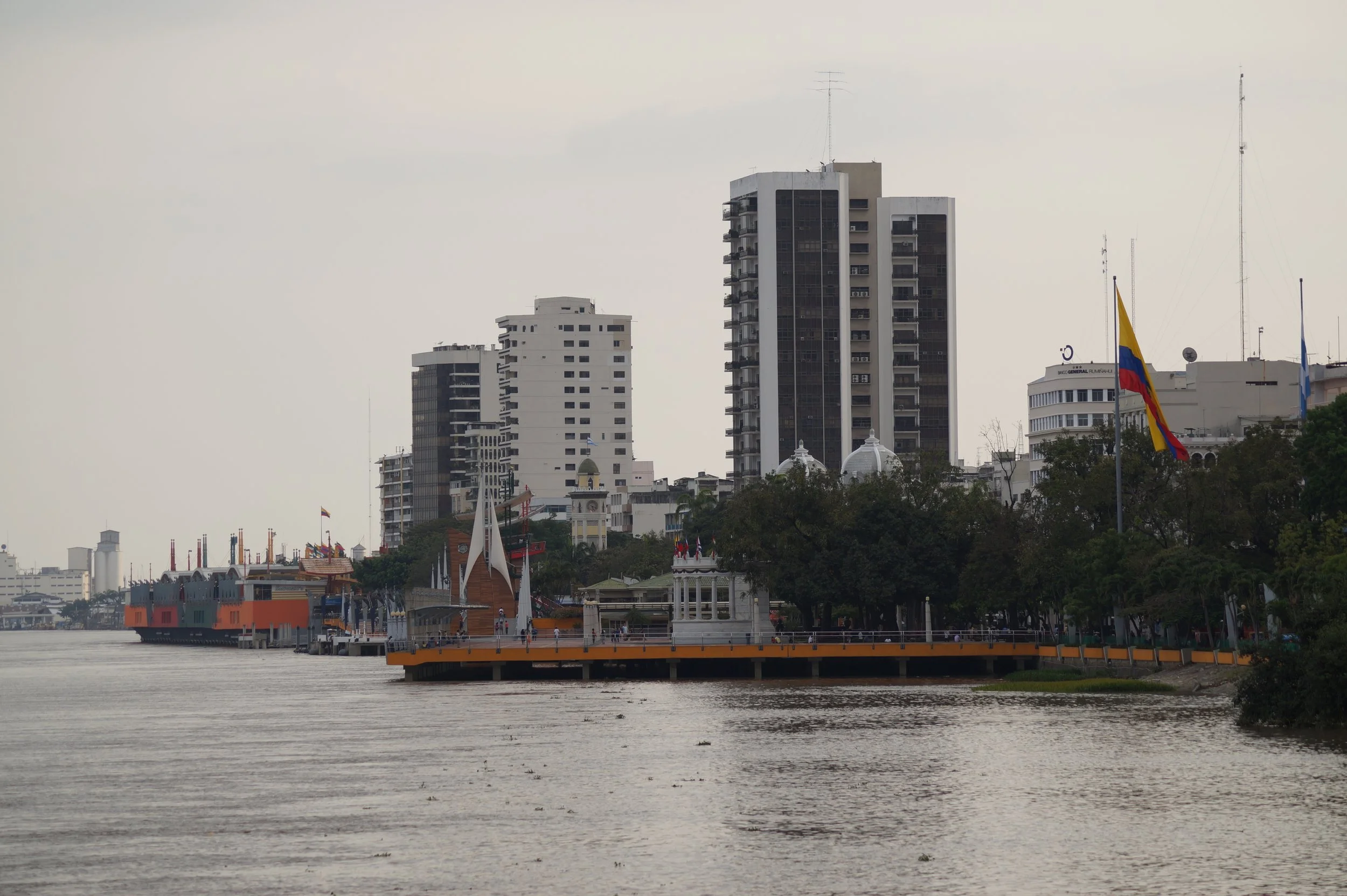
Although the star of Guayaquil, and home to said ferris wheel, is “El Malecon 2000.” El Malecon 2000, named after the year it was opened, is a gorgeous 2.5 kilometer riverfront promenade. Located along the path are plenty of attractions, including a museum of anthropology, an Imax theater and a garden, adorned with its own koi ponds.

Malecon 2000, Guayaquil, Padaguan, CC BY-SA 3.0

It should be noted, however I was in Ecuador as part of a study abroad program. During the program, in our last month, we were allowed to select almost anywhere in Ecuador to conduct an independent study. The two places we were not allowed to study were Ecuador’s border with Colombia, and Guayaquil. Ecuador as a whole has a problem with theft and crime. During my time living in and around Quito and Puyo that was always manageable. If you take common sense precautions and are careful, generally speaking, you’ll be okay, just like in a large city in the United States. The same cannot always be said for Guayaquil, especially for foreigners, who may become more of a target because of their manner of speaking and the color of their skin. Guayaquil is a beautiful city that locals frequent often for its climate, culture, and the amazing beaches of Ecuador’s coast. Foreigners can visit too, but they must exercise a considerable amount of caution.

The Galapagos Islands

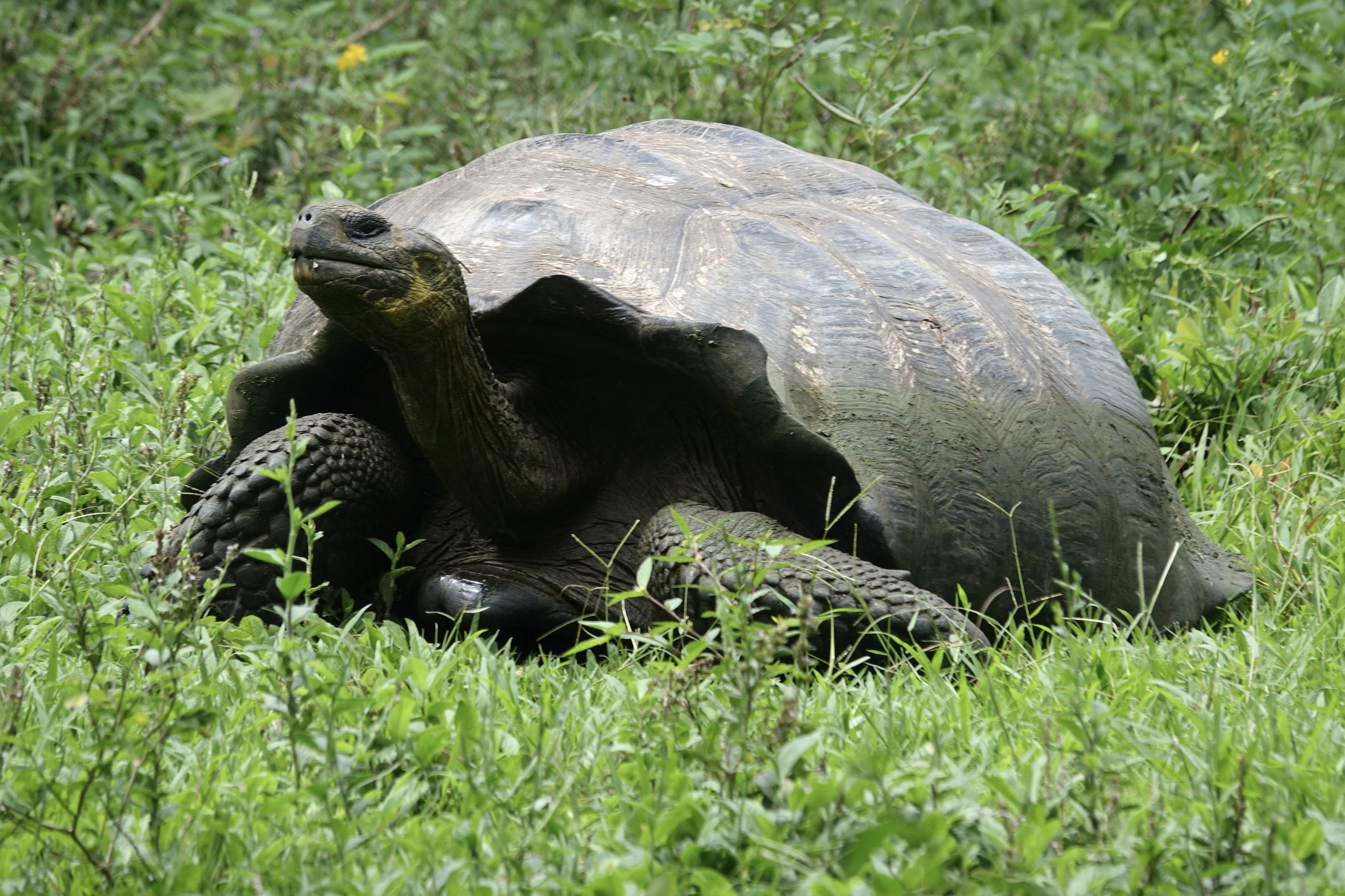
Galapagos Tortoise, Mike's Birds from Riverside, CA, US, CC BY-SA 2.0

The Galapagos Islands are famous for their finches, which Darwin used to prove the existence of evolution. These birds, ironically, while perhaps the most famous species of the islands, are also one of their least impressive, looking just like small sparrows. The Galapagos’ namesake species however, the Galapagos tortoise, is a different story. These gentle behemoths are the biggest tortoises in the world, and one of the few creatures on Earth with a longer lifespan than humans, frequently living over 120 years old. 

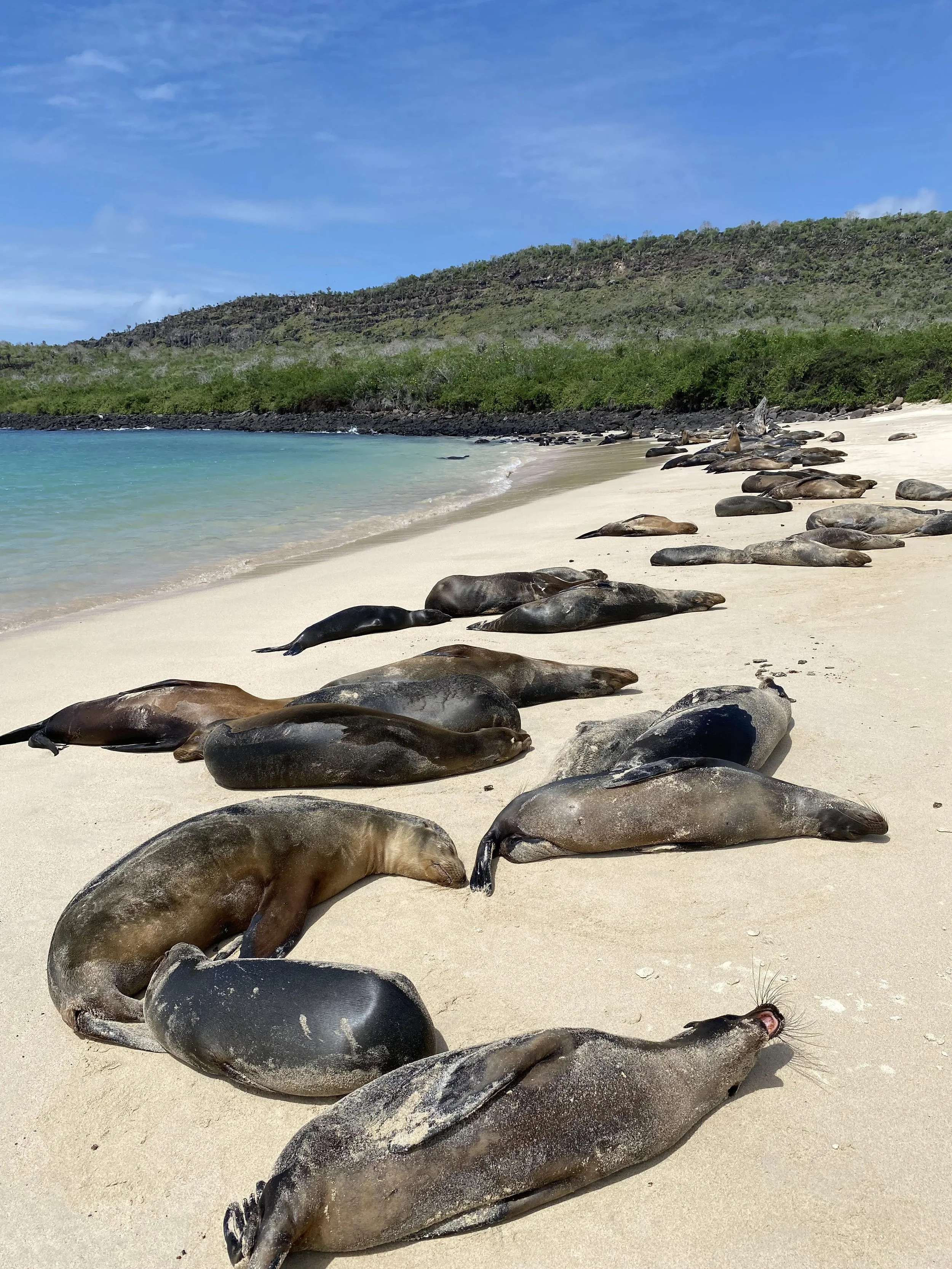
Sea Lions laying on a beach, Jeremy Giles

To add to the tortoises, the Galapagos has a slew of amazing native species, many of which can only be found on the islands. There are native penguins and flamingos, frigate birds with huge red pouches under their throats that can blow up like balloons and a bevy of sea lions loitering across the beaches. My personal favorite is the marine iguana, the only marine lizard species in the world and one that, while swimming, looks almost like a snake with legs.

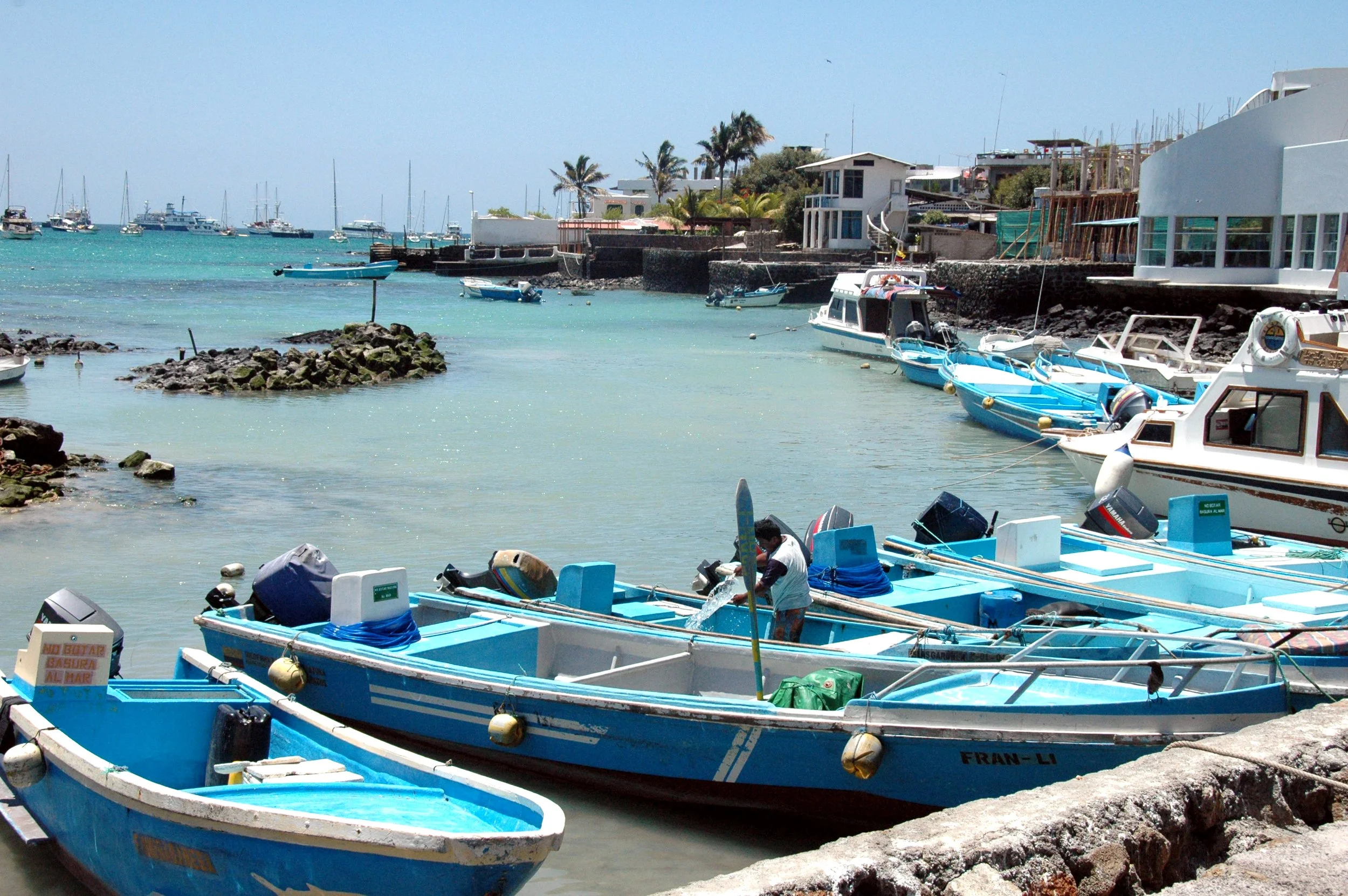
Puerto Ayora Harbor, Santa Cruz Island, Galapagos, David Broad, CC BY 3.0

In addition to the animal species, the Galapagos also has a significant population of people. Four of the 13 major islands are home to around 30,000 permanent residents. While the islands are in the same region, each one has its own individual culture and way of seeing the world. These cultures, due to the interests of foreign countries in protecting the Galapagos, are often very diverse, creating a very interesting dining scene. The biggest town in the Galapagos is Puerto Ayora on Santa Cruz Islands, with a population of more than 10,000.


Jeremy Giles

Jeremy is a Writing Seminars and International Studies major at Johns Hopkins University. He is an avid writer and the Co-Founder of Writers’ Warehouse, Johns Hopkins’ first creative writing group. He is an advocate for Indigenous rights, and studies how Indigenous philosophies can be used to help prevent climate change. Using his writing, he hopes to bring attention to underrepresented voices in today’s world.