
Carol Khorramchahi
As fuel dries up and shortages deepen, Cuba’s state of crisis is becoming impossible to ignore.
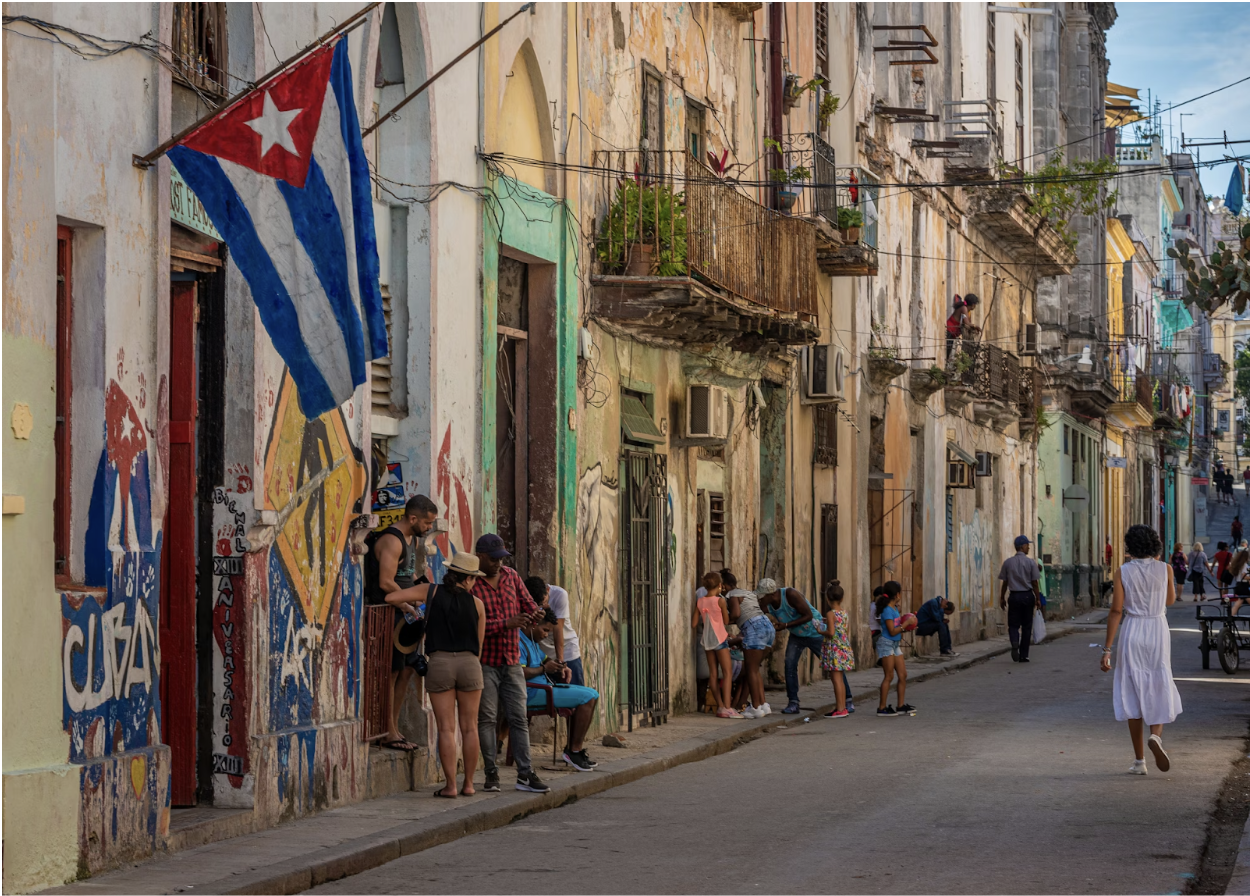
Pedestrians on a Havana street. JF Martin. Unsplash.
Cuba is back in the news this week after a violent episode at sea. On Feb. 25, 2026, Cuban authorities said they killed four exiles and wounded another six when a Florida-registered speedboat entered Cuban waters and opened fire on a patrol. U.S. officials said no American government personnel were involved and promised an investigation. But the boat story, dramatic as it is, sits on top of a much larger crisis: daily life in Cuba has been unraveling under fuel shortages, blackouts and a growing lack of food and medicine.
To understand why, one can look toward the oil industry. For more than 25 years, Venezuela was Cuba’s main external fuel lifeline. Reuters reported that in 2025, Venezuela supplied about 26,500 barrels of oil per day, which is about one-third of Cuba’s daily needs. That relationship was especially significant because Cuba does not produce or refine enough fuel to cover demand on its own. When U.S. pressure cut into Venezuelan shipments, the result was not abstract geopolitics; it was fewer buses, less electricity and harder choices about which parts of daily life could keep running.
That is what makes the current moment more than just another sanctions story. On Feb. 12, U.N. human rights experts condemned Washington’s new fuel restrictions, warning that interfering with fuel imports may trigger “a severe humanitarian crisis” and damage essential services. Cuba’s government has already announced fuel-saving measures to protect sectors like water, education, agriculture and healthcare. The country can meet only about 40% of its fuel needs domestically, leaving it deeply exposed when imports are disrupted.
The healthcare system shows the human cost most clearly. Cuba was long known for its strong public health and for frequently sending doctors abroad, but that image of expertise is colliding with today’s shortages. In a recent BMJ report, physician Tania Maria Cruz Hernandez said there is now a shortage of doctors, nurses and technicians, along with half of the country’s basic medicines and essential medical supplies. Cuban health officials also say that fuel shortages are leaving hospitals without reliable ambulance service and complicating the transport of critical supplies.
That is the question hanging over the current crisis: what exactly is the United States’ goal? Washington says its measures are aimed at the Cuban government, not ordinary people, and the Treasury has now said companies may resell Venezuelan oil to Cuba’s private sector under narrow conditions. But the gap between official intent and daily reality is hard to ignore when flights are canceled for lack of aviation fuel, hospitals struggle to stay open and other countries are shipping emergency food aid.
The speedboat incident may dominate headlines for a day or two. But the more important story is slower and less cinematic: a country where shortages shape nearly every decision, and where the pressure of sanctions is felt not only by the state but by families trying to find transportation, medicine, electricity and a workable future.
GET INVOLVED:
Follow humanitarian updates from the U.N. Human Rights Office, track public-health reporting through the BMJ and support relief work through U.N. agencies responding to Cuba’s shortages, including the World Food Programme and UNICEF.

Carol Khorramchahi
Carol Khorramchahi is a student at Boston University, where she studies English and Psychology and minors in Journalism. She enjoys writing and reporting on stories that bring together culture, identity, and community, and has experience in both newsroom reporting and digital media. She is especially interested in thoughtful storytelling with a global lens.