
Ryan Yianni
On the outskirts of Siem Reap, rats are leading the fight against landmines in one of the world’s most affected countries.
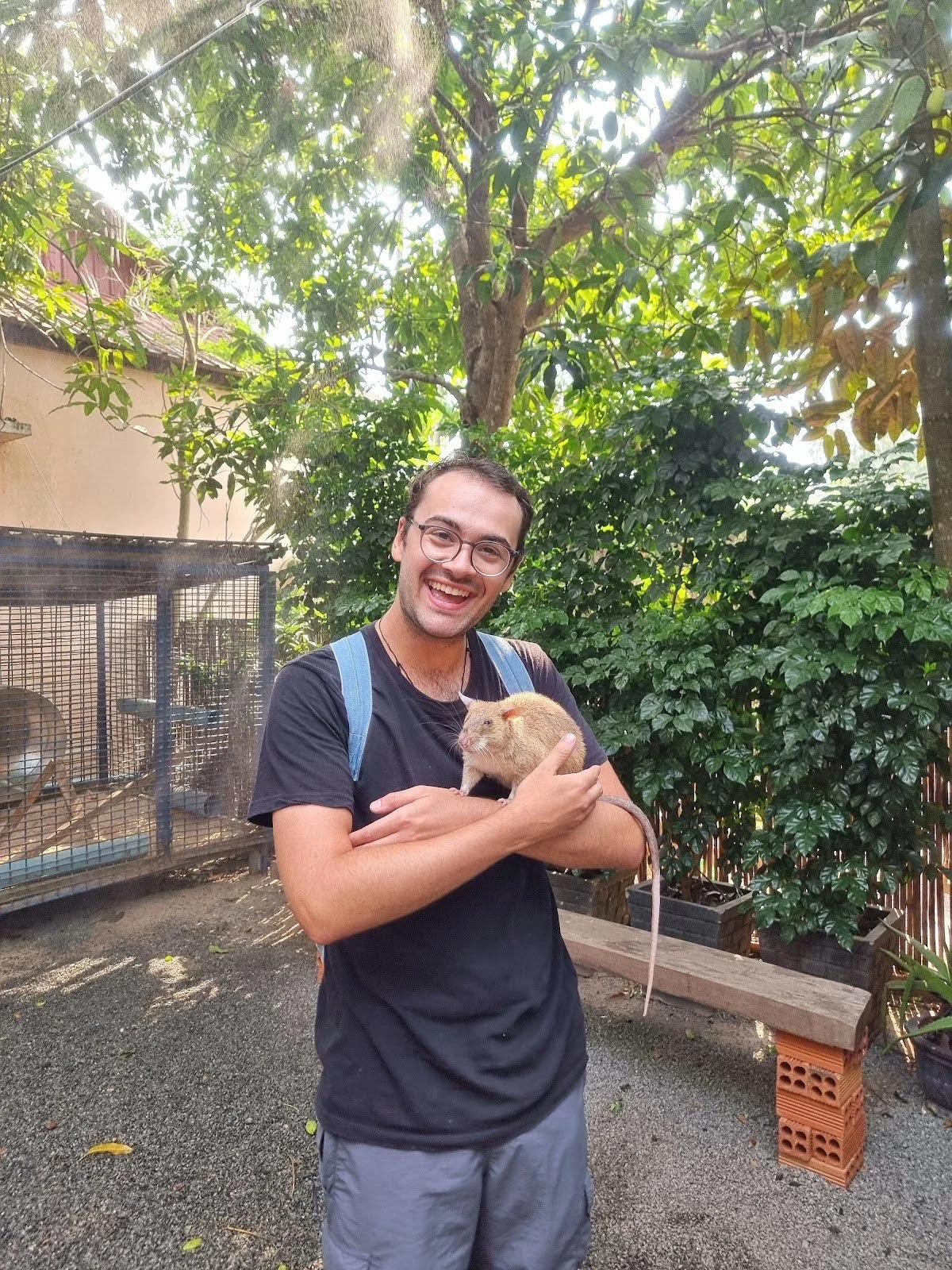
Author pictured with Glen the HeroRAT. Ryan Yianni.
“Once you’ve been to Cambodia, you’ll never stop wanting to beat Henry Kissinger to death with your bare hands.”
One of the late Anthony Bourdain’s most recognizable quotes centers on the role the U.S. played in the devastation of the mine-infested Southeast Asian country during the Vietnam and Cambodian Civil Wars. Cambodia’s natural beauty, plethora of breathtaking temples and numerous UNESCO World Heritage sites are overshadowed by its dark history of authoritarianism and genocide under Pol Pot and the Khmer Rouge. Perhaps there is no greater evidence of the past’s lingering effect on the nation than the estimated 6 million mines still littered across Cambodia, which claimed the lives of 12 people in 2024, along with another 29 casualties and eight amputations. During my visit to the country in March 2025, I was able to seeAPOPO’s visitor center, learning how one organization is working to clear these mines using a rather unconventional method: rats.
Cambodia has one of the highest rates of amputation in the world, with over 40,000 amputees since the outbreak of hostilities in the 1960s. Several sides are responsible for planting the explosives that have caused these casualties; the Americans dropped nearly 3 million tons of ordnance between 1965 and 1973, the Khmer Rouge, under Pot, laid an estimated 4 million to 6 million landmines and other munitions, and the government of the People’s Republic of Kampuchea, a satellite state of Vietnam, planted mines along the entirety of the Cambodia-Thailand border after the Rouge’s overthrowal. There are a number of organizations working to remove the remaining unexploded ordnance (UXO) in Cambodia, such as the HALO Trust, Mines Advisory Group and Cambodian Self Help Demining, all doing valuable work. One notable group is APOPO, which stands out for its innovative use of rats as a mine action solution.
APOPO is a Belgian NGO that trains southern giant pouched rats, dubbed HeroRATs, and survey dogs to detect landmines and tuberculosis. Founded in 1997 by Bart Weetjens, who discovered a publication in which gerbils were used for scent detection, APOPO began training rats in 1998 with funding from the Belgian government before relocating their headquarters to Tanzania in 2000, where they are still based. Having gathered enough evidence that the rats would be effective, they carried out their first trials in 2003, with all twenty landmines successfully found. Achieving operational accreditation in 2004, the group officially launched its HeroRAT campaign the following year before beginning its operations in 2006, tackling mine-clearance procedures in Mozambique. They partnered with the Cambodian Mine Action Center in 2014, with the first group of HeroRATs arriving in 2015. As of 2026, they operate in Angola, Azerbaijan, Cambodia and Ukraine, and they have cleared over 170,000 mines from over 132 million square meters of land. Their work so far in Cambodia has seen them clear over 8,000 landmines and nearly 43,000 pieces of UXO, such as bombs, shells and other munitions that failed to detonate, returning over 75 million square meters of land to local communities. At APOPO’s visitor center in Siem Reap, you can learn firsthand about the work they do in helping clear Cambodia of mines and overcome the traumas of the country’s past.
The visitor center provides tours every day from 8:30 a.m. to 4:30 p.m. Each tour lasts approximately one hour, and tickets can be purchased on arrival or in advance on their website. I arrived at the center in the afternoon after a ten-minute tuk-tuk ride from the core of Siem Reap. Conveniently, the center is also located near Angkor Wat, making the temple a perfect addition to your travel itinerary (plus, they have a cafe on site and make a great mango smoothie). On my visit to the APOPO center, having gone later in the day, I was able to enjoy fewer crowds, followed by a beautiful sunset at Angkor Wat. Most people go to the center in the morning before heading to Angkor Wat during the day, as you can’t go past the main gates of the temple after 5 p.m.
At the start of the tour, you’ll be shown a video contextualizing the scale of the mine issue in Cambodia and explaining the work that APOPO does to clear UXO. Then you will be able to look through the center at the displays of cleared explosives before heading out to the demonstration zone, where you finally meet the stars of the show: the HeroRATs.
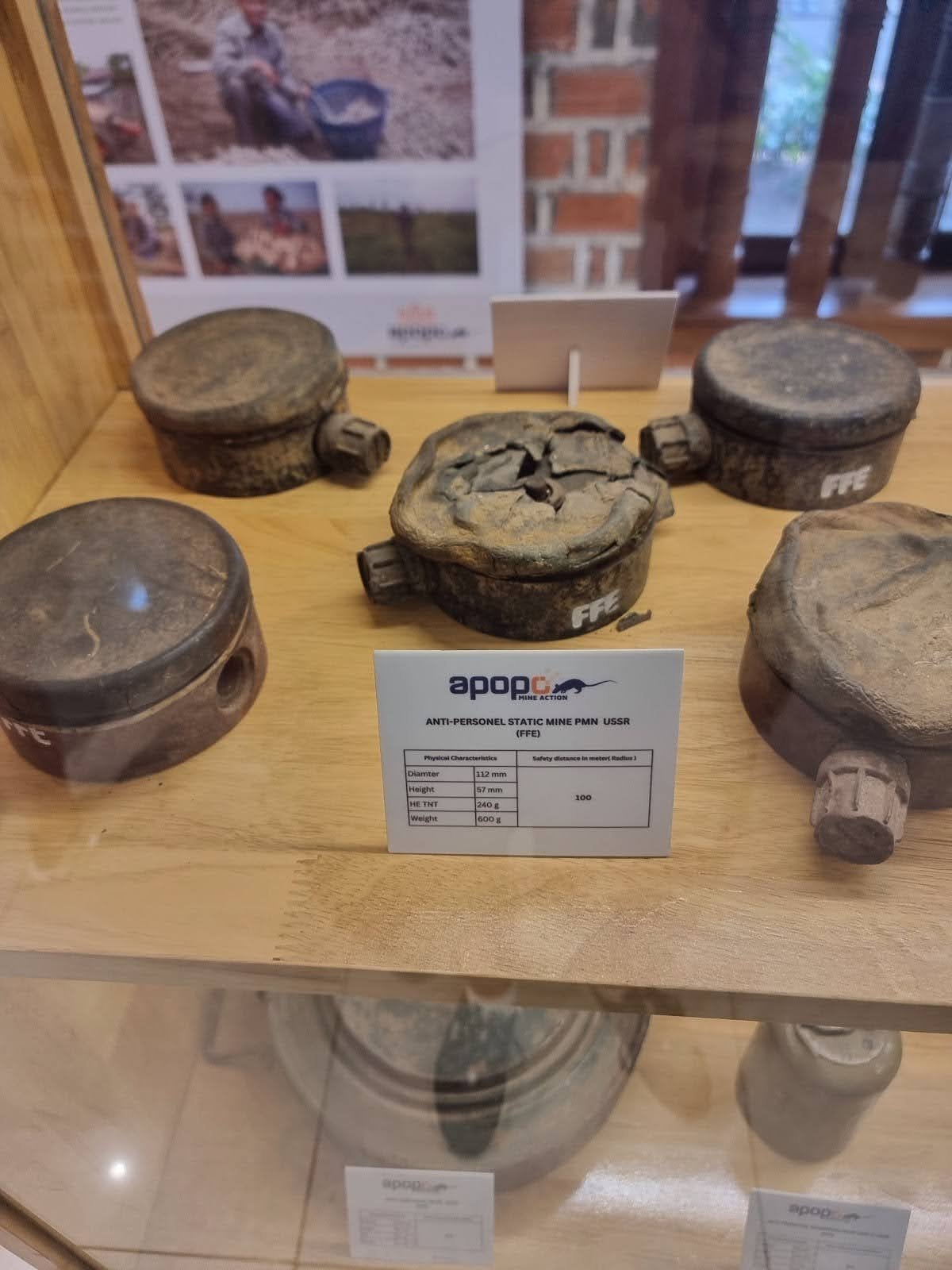
Recovered explosives housed in the APOPO Visitor Center. Ryan Yianni
Once outside, you get an up-close and personal interaction with the rats, even being able to hold one of them. Here, I learned that the rats are trained with a click toy to encourage them to hunt before they are introduced to the TNT scent. The weight of the rats allows them to detect mines without setting them off, and the speed at which they can locate the scents makes for an efficient way to clear large swathes of land. The rats are much quicker and safer than humans ever could be; once fully trained, they can clear an area the size of a tennis court in 30 minutes. To put that into perspective, it would take a human using a metal detector four days to clear an area this size. At the center, you will also get to see a reenactment of how they scan for TNT, with defused mines laid out in the demonstration zone for the rats to sniff and detect.
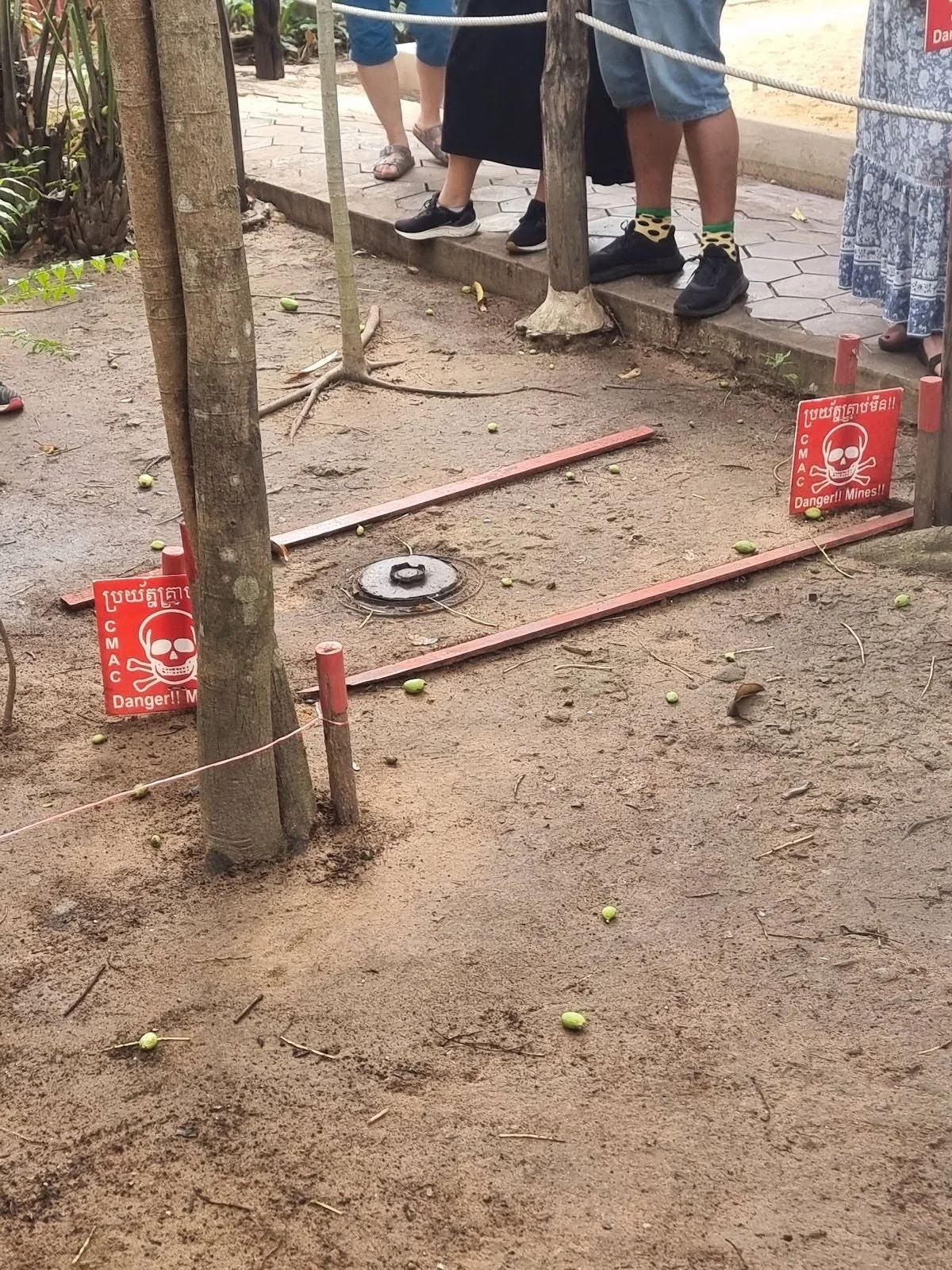
Demonstration area in APOPO Visitor Center. Ryan Yianni.
Undoubtedly, the hero and poster boy of the APOPO mission is Ronin, who in 2024 was awarded a Guinness World Record for being the most successful Mine Detection Rat in history, having detected 109 landmines and 15 items of UXO in Cambodia. Unfortunately, during the production of this article, APOPO announced that Ronin had passed away after suffering health complications. There is still a whole team of HeroRATs stationed in Cambodia, with 24 new rats arriving from their training base in Mozambique in October 2025.
APOPO is a brilliant organization working hard to remove landmines and UXO from the Cambodian countryside and beyond. They strive to make the world a safer place and help countries move past their dark histories, and having recently celebrated 10 years of operations in Cambodia, they’re showing no signs of slowing down in their mission to help the country become completely mine-free. Taking a trip to APOPO’s visitor center is especially enlightening when taking in the context of some of Siem Reap’s other important historical sites, such as the genocide museum and the killing fields. Visiting will give you a raw, unfiltered look into the horrors of the Pol Pot regime and an appreciation for Cambodia’s emergence from the dark history it is still facing the consequences of.
GET INVOLVED:
If you would like to support APOPO’s work, you can do so here.
Ryan Yianni