
Explaining the decades-long issues that surround Mindanao Island.
Read MoreThe Gaza Peace Plan Faces Major Setbacks
Hamas’s decision to relinquish its civilian governing responsibilities marks the latest attempt to revive the stalled peace process in Gaza.
Read MoreRussian Mercenaries Have Built a Drug Empire in the Heart of Africa
Remnants of the Wagner Group have used tramadol, a prescription opioid, to seize control of the Central African Republic.
Read MoreUganda's Media Crackdown Signals More Than an Attack on the Press
Uganda’s latest media shutdown is about more than press freedom: it offers a glimpse into how power is being exercised, and perhaps transferred, in one of Africa’s longest-serving governments.
Read MoreWest Papua’s Struggle for Independence
Learn about the little-known conflict in the Indonesian-controlled territory of Western New Guinea.
Read MoreWhy Ceasefires Fail
From Gaza to Lebanon to Iran, ceasefire agreements meant to halt conflict have been met with continued airstrikes and targeted killings.
Read MoreIran at War: A Day in Tehran
Carol Khorramchahi
For civilians in Tehran, war isn’t a headline; it’s the sound of strikes at night, the scramble for safety and the fear of what comes next.
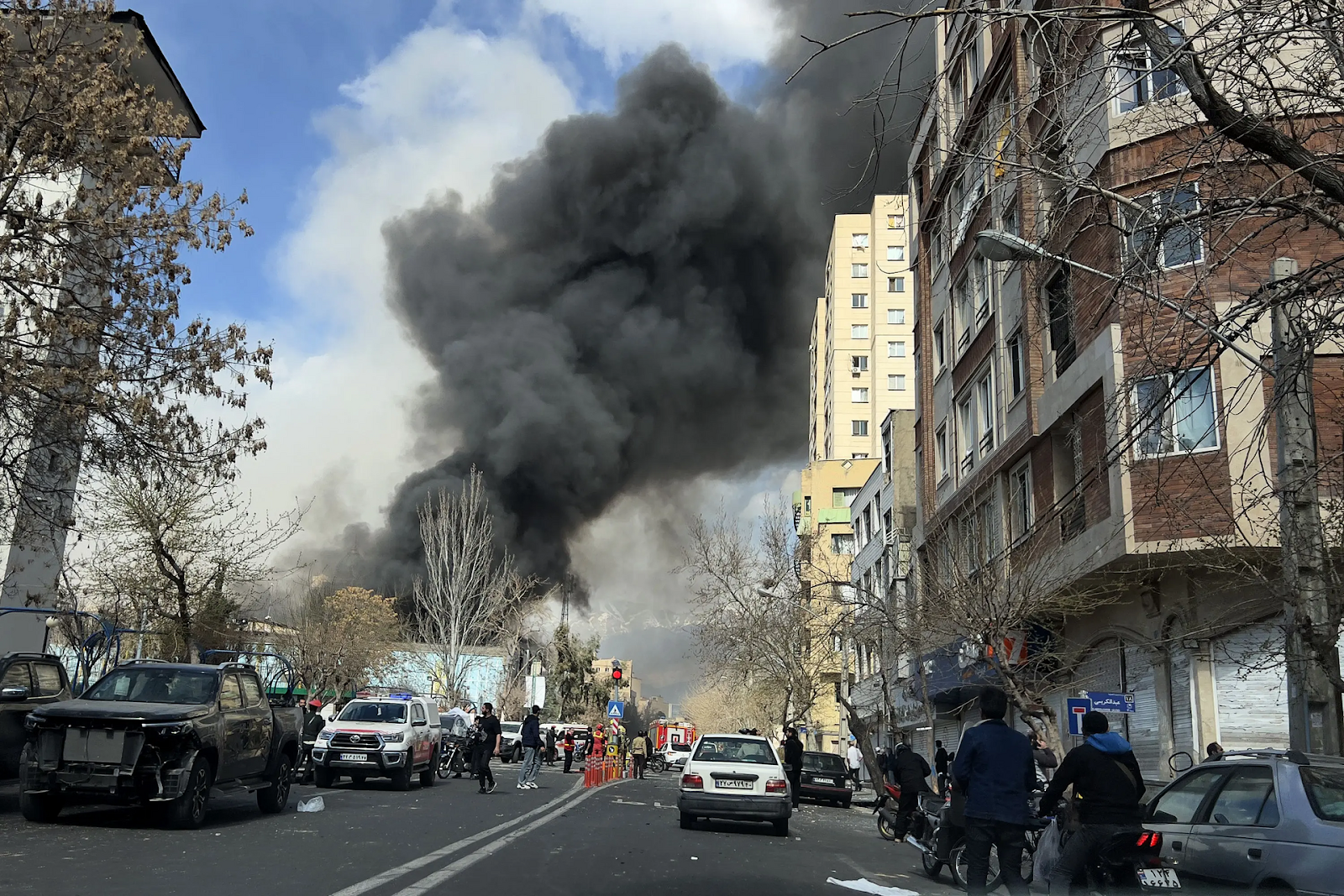
War in Tehran. Muhammad Ali Burno. CC BY 4.0.
For people in Tehran, war is not experienced through maps or military briefings. Instead, it’s felt in nights that don’t feel safe to sleep through, in the sudden rush to a hallway or bathroom when blasts shake the building, in the moment the lights flicker, and you don’t know if it’s a blackout or something worse.
In recent days, the scale of loss has been staggering. Iran’s U.N. ambassador said at least 1,332 Iranian civilians have been killed so far in the conflict, with thousands more injured. And while numbers can’t capture fear, they do show what Tehran residents already know: This is not a distant front line. This is a war reaching into neighborhoods, hospitals, schools and daily routines.
Iran’s Red Crescent reported that about 20,000 civilian buildings have been affected, along with over 70 healthcare facilities. In Tehran, that’s not just damage on paper; it’s what determines whether families can return home, whether clinics can operate and whether ambulances can move quickly when streets are congested or unsafe.
Some of the clearest snapshots of war in Tehran come from the voices of residents themselves. In one report, several Tehran residents described bright flashes turning night “into day,” and one woman told Al Jazeera that “the ground and the windows and our hearts were shaking,” adding that her family sheltered in the bathroom and asked not to be named for security reasons.
Hospitals are still running, but they are under strain. Tehran’s Gandhi Hospital was damaged after strikes hit nearby, and officials said medical facilities and schools had been impacted in multiple places. When healthcare sites are hit or even shaken by nearby blasts, the ripple effects are immediate: Patients get moved, surgeries are delayed and staff are forced to work in uncertainty.
Schools, too, have become part of the story. Reports described strikes that hit schools near Tehran and a wider pattern of attacks affecting education sites. Many parents now face a question that shouldn’t exist: Do you send your child to class when the situation can change overnight?
Even communication, something people rely on to find family, confirm safety and understand what’s happening, has become unreliable. NetBlocks has posted repeated social media updates showing Iran’s wartime internet blackout reaching extreme levels, with connectivity around 1% of ordinary levels during parts of the shutdown. When the internet collapses, it not only silences communities but also cuts off payment systems, disrupts work and makes it harder for people inside and outside Iran to reach each other.
As the threat grows, displacement has become another measure of fear. A U.N. estimate said 3.2 million Iranians have been displaced since the war began, alongside wrenching decisions families face, like whether to flee, where to go and whether leaving might mean not being able to return.
Underneath all of it is a question Iranians are likely arguing about quietly, even when they can’t say it publicly: What comes after this? Some will hope war brings political change. Others will fear that it brings only deeper repression and instability. Some will rally around the state. Others will blame it. Those divisions are visible in glimpses, like demonstrations framed as “defiance and resilience,” even as fear and exhaustion spread.
What’s certain is that for Tehran, war is no longer something “out there.” It is an atmosphere, felt in the noise overhead, the tension in ordinary errands, the uncertainty of school and hospital access and the desperate need to stay connected to the people you love.
GET INVOLVED:
Follow humanitarian updates through ReliefWeb and civilian protection statements from the International Committee of the Red Cross. Track internet shutdown reporting via NetBlocks and digital rights advocacy through Access Now. For human rights documentation, see the U.N. Human Rights Office and Amnesty International.

Carol Khorramchahi
Carol Khorramchahi is a student at Boston University, where she studies English and Psychology and minors in Journalism. She enjoys writing and reporting on stories that bring together culture, identity, and community, and has experience in both newsroom reporting and digital media. She is especially interested in thoughtful storytelling with a global lens.
Cuba’s Oil Shock Is Becoming a Human Crisis
Carol Khorramchahi
As fuel dries up and shortages deepen, Cuba’s state of crisis is becoming impossible to ignore.
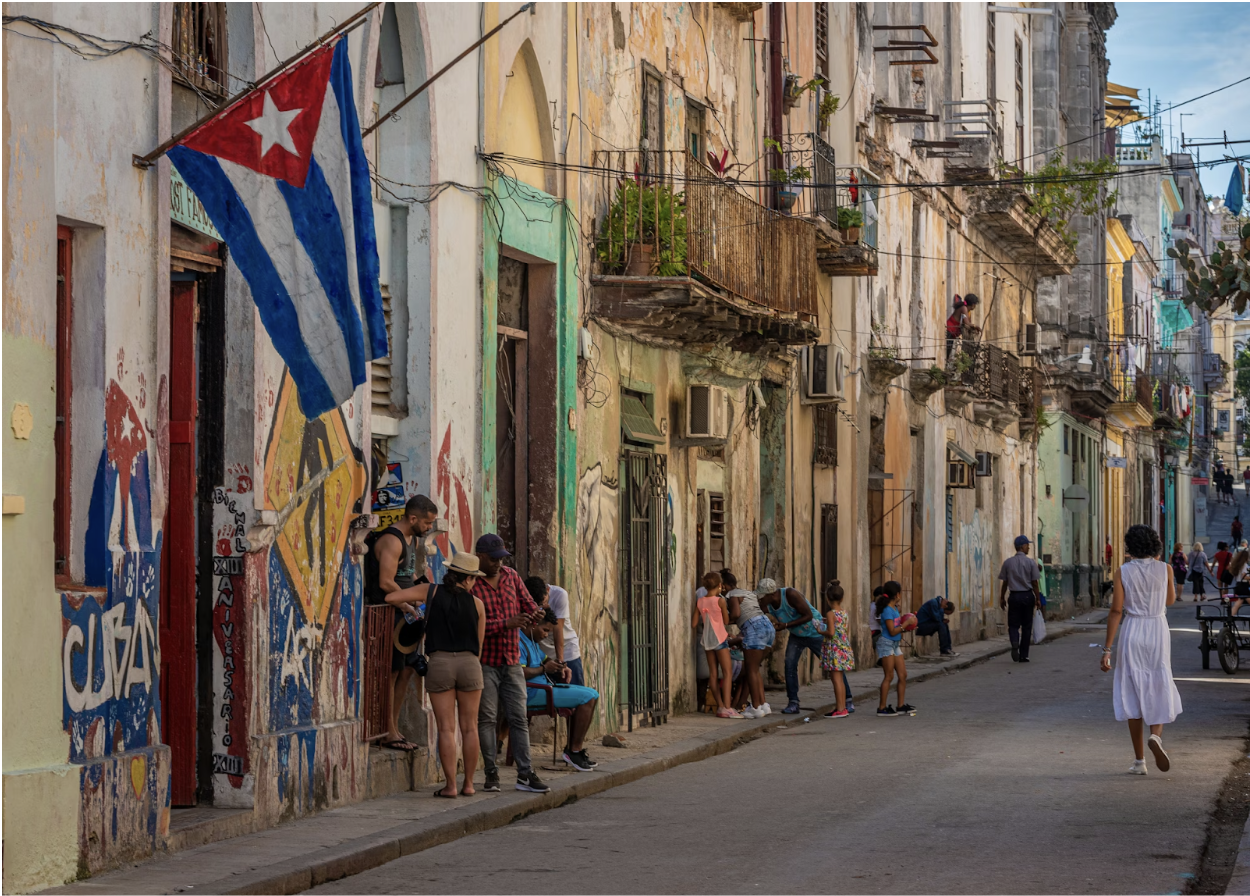
Pedestrians on a Havana street. JF Martin. Unsplash.
Cuba is back in the news this week after a violent episode at sea. On Feb. 25, 2026, Cuban authorities said they killed four exiles and wounded another six when a Florida-registered speedboat entered Cuban waters and opened fire on a patrol. U.S. officials said no American government personnel were involved and promised an investigation. But the boat story, dramatic as it is, sits on top of a much larger crisis: daily life in Cuba has been unraveling under fuel shortages, blackouts and a growing lack of food and medicine.
To understand why, one can look toward the oil industry. For more than 25 years, Venezuela was Cuba’s main external fuel lifeline. Reuters reported that in 2025, Venezuela supplied about 26,500 barrels of oil per day, which is about one-third of Cuba’s daily needs. That relationship was especially significant because Cuba does not produce or refine enough fuel to cover demand on its own. When U.S. pressure cut into Venezuelan shipments, the result was not abstract geopolitics; it was fewer buses, less electricity and harder choices about which parts of daily life could keep running.
That is what makes the current moment more than just another sanctions story. On Feb. 12, U.N. human rights experts condemned Washington’s new fuel restrictions, warning that interfering with fuel imports may trigger “a severe humanitarian crisis” and damage essential services. Cuba’s government has already announced fuel-saving measures to protect sectors like water, education, agriculture and healthcare. The country can meet only about 40% of its fuel needs domestically, leaving it deeply exposed when imports are disrupted.
The healthcare system shows the human cost most clearly. Cuba was long known for its strong public health and for frequently sending doctors abroad, but that image of expertise is colliding with today’s shortages. In a recent BMJ report, physician Tania Maria Cruz Hernandez said there is now a shortage of doctors, nurses and technicians, along with half of the country’s basic medicines and essential medical supplies. Cuban health officials also say that fuel shortages are leaving hospitals without reliable ambulance service and complicating the transport of critical supplies.
That is the question hanging over the current crisis: what exactly is the United States’ goal? Washington says its measures are aimed at the Cuban government, not ordinary people, and the Treasury has now said companies may resell Venezuelan oil to Cuba’s private sector under narrow conditions. But the gap between official intent and daily reality is hard to ignore when flights are canceled for lack of aviation fuel, hospitals struggle to stay open and other countries are shipping emergency food aid.
The speedboat incident may dominate headlines for a day or two. But the more important story is slower and less cinematic: a country where shortages shape nearly every decision, and where the pressure of sanctions is felt not only by the state but by families trying to find transportation, medicine, electricity and a workable future.
GET INVOLVED:
Follow humanitarian updates from the U.N. Human Rights Office, track public-health reporting through the BMJ and support relief work through U.N. agencies responding to Cuba’s shortages, including the World Food Programme and UNICEF.

Carol Khorramchahi
Carol Khorramchahi is a student at Boston University, where she studies English and Psychology and minors in Journalism. She enjoys writing and reporting on stories that bring together culture, identity, and community, and has experience in both newsroom reporting and digital media. She is especially interested in thoughtful storytelling with a global lens.
Why is Israel Targeting Syria Again?
Analysts say Israel’s recent strikes on Syria aim not only to protect the Druze minority but also to serve its goals of geopolitical influence.
Read MoreRussian Draft Dodgers Stir Tensions, Temporarily Boost Economies
After nearly one million Russian men fled conscription in 2022, the countries that received them are still grappling with the impacts of this influx three years later.
Read MoreIs Nuclear Proliferation Simply Inevitable?
With conflicts around the world heating up, the efficacy of diplomacy is put to the test as the threat of nuclear proliferation looms.
Read MoreKenya Protests: The Cost of Dissent
The roots of Kenya’s political crisis are echoed as protests shake the nation.
Read MoreAs Tehran Burns, Civilians are Caught in the Crossfire
Despite facing government censorship, the voices of Iranian residents reveal the fear and grief they endure under Israeli attacks.
Read MoreGang Violence: Haiti’s Fight for National Security
Suffering from centuries of economic and political turmoil, Haiti strives for nationwide stability as gang violence worsens humanitarian crises in the country.
Read MoreGreta Thunberg Sets Sail to Gaza to Raise Awareness
As Israel’s blockade threatens famine, Thunberg and other activists launch a civilian flotilla with humanitarian aid, in protest.
Read MoreHow Congo and Rwanda Arrived at the Brink of War
In their fight over marginalized peoples and access to rare minerals, the Congolese military and Rwanda-backed rebels risk triggering a broader regional war in southeast Africa.
Read MoreUS Declares Genocide in Sudan
After two years of famine, disease, and misery, the U.S. has given an official deemed the ongoing conflict in Sudan as genocide.
Read MoreA New Dawn for Syrian Refugees
The fall of Assad’s regime has left the world wondering about the future of Syrian refugees abroad who plan to return home.
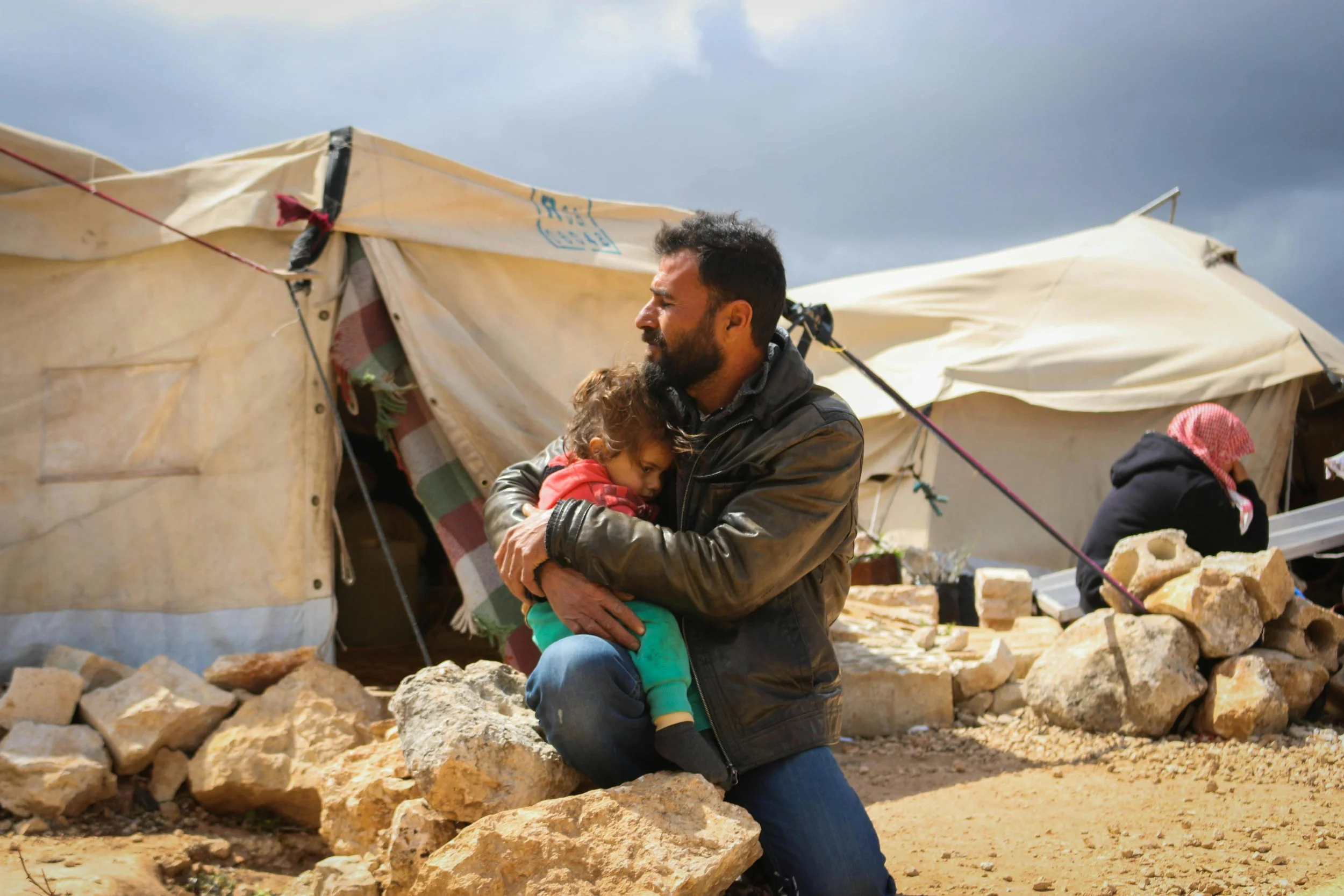
Man and daughter at Syrian refugee camp. Ahmed Akacha. CC0.
The Syrian Refugee Crisis is one of the largest humanitarian crises in history and the largest refugee crisis to date, with over 14 million people both internally and externally displaced. Over six million Syrians fled the country following the civil war that broke out in 2011; the majority of refugees currently live in Turkey, Lebanon, Jordan, Iraq, Egypt and Germany.
President Bashar al-Assad’s violent suppression of pro-democracy protests in 2011 provoked civil conflict, leading to the creation of oppositional militias and rebel groups that began to fight back by 2012. On Dec. 8, 2024, the civil war came to a head when rebel groups seized the Syrian capital, Damascus, forcing Assad to flee to Russia. Assad’s family had ruled Syria under a strict police regime since the 1960s, leading to widespread celebration across the capital as political prisoners were freed.
Despite rebel groups declaring the country free from the autocratic regime, considerable uncertainty remains about the future of the government and Syria’s stability. Some states have expressed a concern that toppling the government may make the country vulnerable to ISIS, whereas others have noted the encroachment of Israeli forces into Syrian buffer zones. The European Union issued a statement claiming that the conditions in Syria have not yet met the conditions for the safe return of refugees, as thousands have continued to flee following the rebel takeover. However, in the days following, videos swept across social media and news outlets featuring thousands of refugees returning home from Turkey, Jordan and Lebanon.
European countries hosting hundreds of thousands of Syrian refugees, including Germany and Austria, have jumped at the opportunity to tighten their asylum regulations. In December 2024, both Germany and Austria paused asylum applications, and Austria announced that they would issue a “return bonus” to Syrians who decided to return to Syria.
Providing incentives or forcing refugees to leave the country could adversely affect host countries, particularly Germany. Approximately two-thirds of employed Syrian refugees in Germany work in critical sectors of the labor force, including healthcare, transportation and food services. Whether forced or voluntary, any kind of mass exodus could negatively affect Germany’s economy by disrupting these industries and causing labor shortages.
Following an outcry from far-right German politicians to close the country’s borders and begin the expulsion of non-naturalized Syrians, current Chancellor Olaf Scholz said that Syrians who are “well-integrated remain welcome in Germany.” However, the Chancellor’s statement may prove unstable, presenting no active policy arrangements if the far-right parties gain control in the upcoming elections and creating further uncertainty for Syrians currently living in Germany.
The United Nations High Commissioner for Refugees advised that countries housing refugees should not forcibly deport them, as Syria is not yet deemed politically stable, and it is estimated that over one million Syrians will return to Syria of their own accord in the first few months of 2025.
Despite this monumental step forward, considerable humanitarian and governmental uncertainty remains surrounding the future of Syrians worldwide, a resolution that may take years to completely unfold.

Zoe Lodge is a student at the University of California, Berkeley, where she is studying English and Politics, Philosophy, & Law. She combines her passion for writing with her love for travel, interest in combatting climate change, and concern for social justice issues.
Israel and Palestine: Divergent Histories of Travel and War
One year after the Oct. 7 attacks, Israel and Palestine’s respective travel landscapes reveal just how differently the two countries are experiencing the ongoing war.
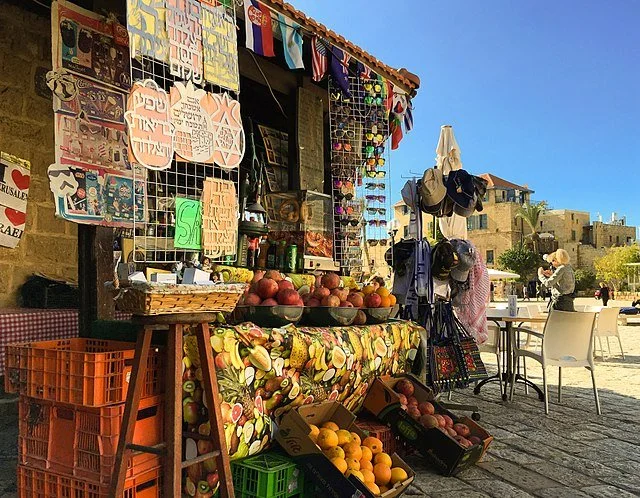
A street vendor in Jerusalem. Ronen Marcus. CC BY 4.0
Boasting ancient holy sites like the Western Wall and natural attractions like the Dead Sea, Israel brands itself as a popular travel destination for both the spiritual and the secular tourist. In 2023, the Israeli Ministry of Tourism reported over 32 million travelers. Palestine, meanwhile, saw 2.5 million visitors between January and early October 2023, according to the Palestinian Ministry of Tourism and Antiquities. While disparate, these numbers reflect a larger pattern in the long history of travel to the region.
Before the Zionist movement (an effort to create a Jewish state through colonization) emerged in the late 19th century, trips to historic Palestine, “the Holy Land,” were almost exclusively religious in nature. After several failed attempts to create a Jewish state, Zionists set their sights on historic Palestine due to the area’s alignment with the biblical land of Israel. To bolster their efforts, Zionists turned to tourism, recognizing that travel to Palestine could help boost immigration and help establish a Jewish presence in the majority-Arab region. Further, Zionists gathered that if they kept promoting tourism, they could perhaps convince secular visitors that this Jewish presence was inherently more valuable and historic, thereby granting it a perception of legitimacy and therefore protection. Desiring to entrench themselves in Palestine, Zionists spent the early 20th century advertising access to biblical Jewish sites, propaganda that continues to prove effective even after Israel’s establishment in 1948.

Posters promoting travel to historic Palestine. (L) 1936. (R) 1940s. CC BY 4.0

Israel enjoys a lucrative tourism industry, seeing more than 32 million travelers and $5 billion in revenue in 2023 alone, according to the Israeli Ministry of Tourism. However, following the immediate aftermath of the Oct. 7 attacks, these numbers plummeted. Flights to Israel were canceled as international airlines and government officials raised safety and security concerns. Traveler rates dropped accordingly. “When the war began, everything stopped,” Israeli tour guide Moshe Benishu said, as reported by The Jerusalem Post. “Not a single tourist arrived in Israel.” Reuters reported 99,000 traveler entries to Israel for the rest of October 2023 and just 39,000 that November. To put this slump into context, the number of monthly entrants into Israel before Oct. 7, 2023, averaged above 300,000.
In recent months, Israel has seen its traveler rates partially recover, tallying 68,100 tourist entrants in February 2024 and 79,500 in March. “Since the beginning of 2024, 400,000 tourists entered the country,” Keren Setton reported for The Media Line in May 2024. During the same January-May period in 2023, Israel saw two million entrants. But still, the monthly rates of 2024 so far mark an increase compared to the last quarter of 2023. “We Israelis are good at reinventing ourselves,” Benishu said. Slowly but surely, things are returning to form in Israel. The same cannot be said for Palestine.
Since the onset of the war, Palestine’s territories, the Gaza Strip and the West Bank, (both occupied by Israel since 1967) have been devastated with next-to-no reprieve. As of Sep. 29, 2024, Palestinian health authorities have attributed more than 41,500 Palestinian deaths to Israel’s air and ground campaign in Gaza alone, though violence in the West Bank has spiked as well.
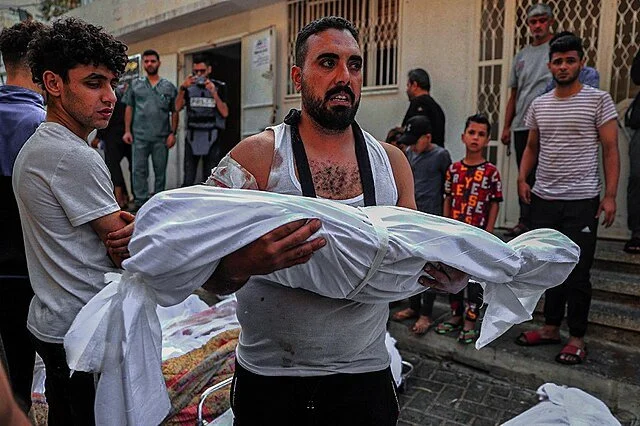
Casualties in Gaza. Saleh Najm and Anas Sharif. CC BY 4.0
Infrastructure, too, has been decimated in Palestine. With hospitals, water/electric systems, houses and schools reduced to rubble, entire Palestinian communities have been destroyed and families killed in scores. As David Leonhardt summarized for The New York Times, “Israel has dropped 2,000-pound bombs on densely populated neighborhoods” with little consideration for less fatal alternatives.
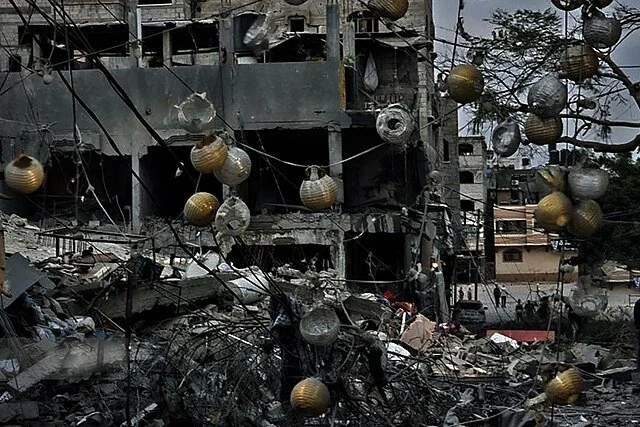
Destruction in Gaza. Saleh Najm and Anas Sharif. CC BY 4.0
As mentioned previously, the West Bank enjoyed a burgeoning tourism industry before Oct. 7. Despite Israel’s control over the flow of travelers, the Palestinian Ministry of Tourism and Antiquities still reported 2.5 million visitors to the occupied enclave between January and early October 2023. Since then, however, the West Bank has not been able to recoup even 1% of this number, with the region’s tourism sector currently experiencing losses of around $2.5 million every day. In Bethlehem especially, where “tourist dollars” are “the cornerstone” of the economy, according to Haaretz, the financial hit has severely strained people’s livelihoods. “Life has been hell,” said Palestinian merchant Mahmoud Falah Sleiman. “The situation was bad even before the war started, but it was better than now. We were able to pay for electricity, food, water.”
In the Gaza Strip, tourism has been virtually nonexistent since 2007 — a consequence of Israel’s land, air and sea blockade imposed after Hamas took root there. Before Israel’s occupation of the region in 1967, Gaza was a hotspot for traveling Egyptians and Lebanese merchants. But after 1967, and especially since the 2007 blockade cut off food, water and humanitarian aid from Gaza’s two million citizens, (conditions some have likened to “collective punishment” and an “open air prison”) there’s been next-to-no tourism. Given the mass destruction of life and infrastructure in Gaza since Oct. 7, there won’t be anytime soon.

Bella Liu
Bella is a student at UC Berkeley studying English, Media Studies and Journalism. When she’s not writing or working through the books on her nightstand, you can find her painting her nails red, taking digicam photos with her friends or yelling at the TV to make the Dodgers play better.
Hunger War: Sudan is Starving
Constant violence is keeping humanitarian aid from entering Sudan.
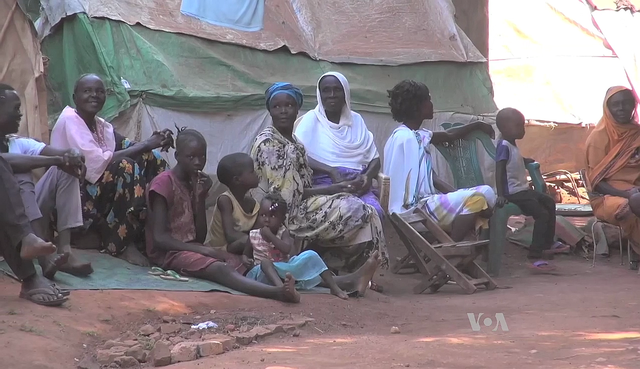
Refugees from South Sudan. Jill Craig. CC 0
The civil war in Sudan has only sped up after entering its second year. After fighting broke out between the two warring factions in Khartoum in April of 2023, the conflict has spread to all corners of the country as the official Sudanese Armed Forces (SAF) and the paramilitary Rapid Support Forces (RSF) vie for control of the nation.
The rest of the country has been forced to either flee their homeland or suffer through increasingly dire conditions. Chad, South Sudan, and Ethiopia have taken in roughly 1.8 million refugees, but tens of millions of people are still trapped within Sudan, enduring acute food insecurity and outright starvation amid intensely destructive violence.
The United Nations World Food Programme (WFP) has stated that almost nine in ten people living in Sudan are trapped in “relentless violence,” which is fueling unprecedented levels of food insecurity. This crisis has been declared the largest hunger crisis in history, as most of the citizens facing starvation are stuck in completely inaccessible areas as a result of the ongoing conflict.
Several nations have attempted to send humanitarian aid to Sudan and to the countries to which refugees have fled. However, the fighting that is keeping citizens trapped in the country is also effectively barring supplies from entering Sudan.
This often takes the form of direct military assaults on citizens and local responders, suggesting that the RSF and SAF are both using starvation as a weapon against each other. In addition, many attempted aid drops have been looted and destroyed by the warring armies.
As of July 2024, over 26 million people in Sudan are facing food insecurity, with an additional 9 million having been driven out of the country by the war. These refugees have triggered smaller but no less serious hunger crises in neighboring Egypt, Chad, South Sudan and Ethiopia.
Currently, over $2.2 billion has been allocated to humanitarian aid and recovery, with roughly $1 billion coming from the United States. However, as the crisis stretches on into 2024, donations have begun to dry up. Estimates suggest that around $200 million is still needed to counteract the rampant starvation, and even that does not account for the total value of all looted and destroyed supplies.
How You Can Help
Humanitarian aid organizations across the country are constantly accepting donations to send to the Sudanese citizens. Groups such as World Food Programme USA and Save the Children aim to provide food, health supplies, and other necessary resources to those trapped in the middle of the war. On an international scale, Doctors Without Borders and the UN Refugee Agency are providing humanitarian aid to Sudanese displaced people and refugees in the surrounding nations

Ryan Livingston
Ryan is a senior at The College of New Jersey, majoring in English and minoring in marketing. Since a young age, Ryan has been passionate about human rights and environmental action and uses his writing to educate wherever he can. He hopes to pursue a career in professional writing and spread his message even further.