
Sofia Stidham
Despite facing government censorship, the voices of Iranian residents reveal the fear and grief they endure under Israeli attacks.
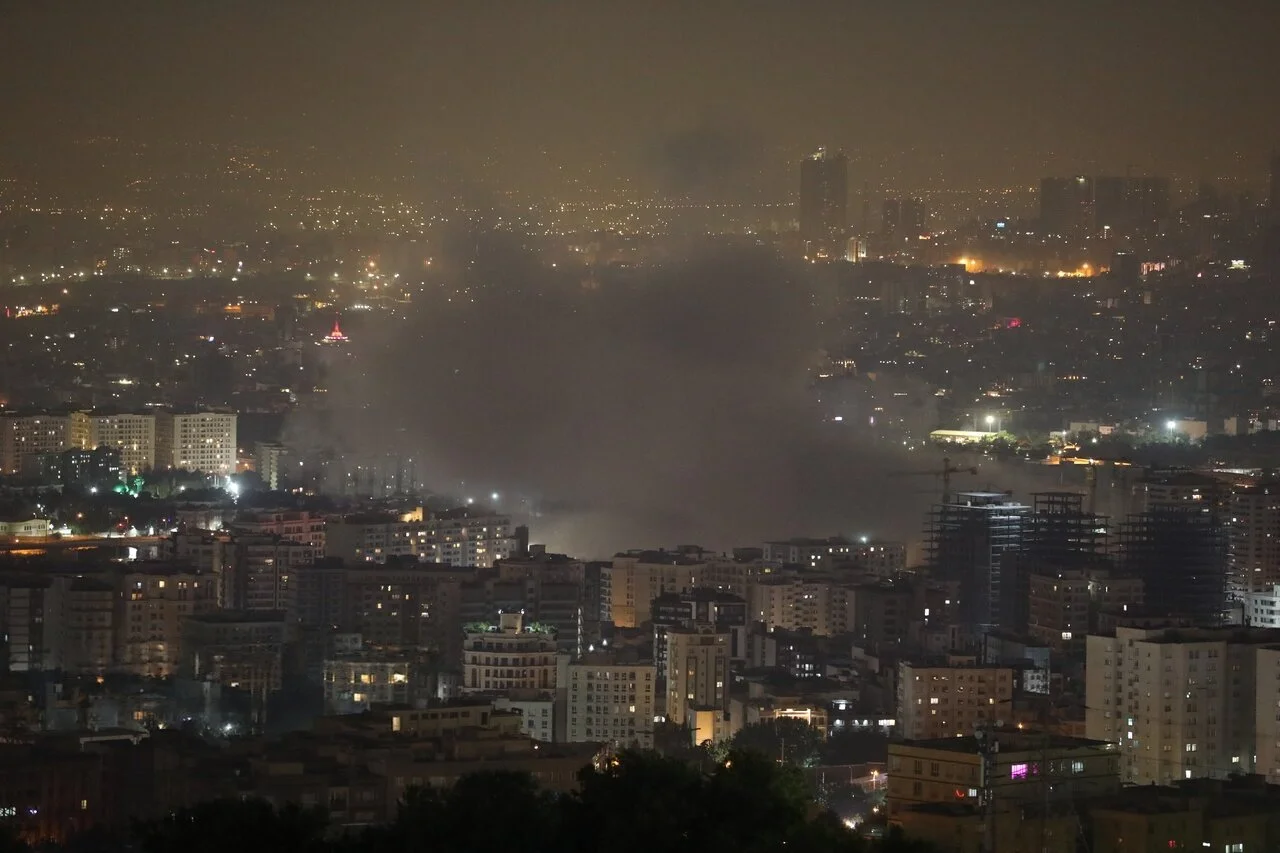
Tehran after Israel’s attack on June 13. Mehr News. CC BY 4.0.
On June 14, 2025, Israeli Defense Minister Israel Katz made a stark statement over X using nothing more than the words: “Tehran is burning.” His post referenced the scathing consequences of Israel’s missile strikes on Iran, which began in the dark predawn hours of June 13, 2025. The multiple attacks, which Israel has alleged are intended to prevent Iran from developing nuclear weapons, have also struck Iran’s oil refineries and Tehran’s residential areas, drawing the lives of the capital’s citizens into the conflict.
An Iranian human rights group in Washington established that, as of June 18, 2025, the strikes have killed at least 585 people in Iran, including 239 identified civilians and 126 security personnel, and injured about 1300 people. Among the murdered are 27-year-old paddle tennis player Parsa Mansour, freelance photographer Ehsan Bayrami and 32-year-old pilates instructor Niloufar Ghalehvand and her family. Iran has also retaliated against Israel numerous times, leading to the death of around 24 people and wounding hundreds more. On June 19, an Iranian missile also hit a hospital in Israel, causing serious damage.
Iranian citizens have called for the Israeli and Iranian governments to recognize that their actions are operating at the expense of basic humanity. Hamid, a fruit seller in Tehran, told the Associated Press, “The leaders of both countries should know that people are suffering.”
Amid this growing concern and four days of mutual onslaught, on June 16, United States President Donald Trump posted on X, warning Tehran’s population of 10 million residents to “immediately evacuate Tehran.” Trump’s post led to speculation about potential American involvement in the conflict, pointed out as one of Israel’s closest allies. “You don’t know that I’m going to even do it. You don’t know. I may do it, I may not do it,” Trump responded.
Trump’s instruction also prompted many Tehrani civilians to raise questions about the feasibility of an evacuation. “Where would I go?” one woman asked BBC Persia. Since Monday, traffic on roads leading out of the city has stretched up to 14 hours, causing residents to be stuck in the very place they were ordered to escape from.
The actions of the Iranian regime also indicate an averted focus from their civilians. Authorities urged Iranians to delete WhatsApp, initially banning access to international websites while maintaining access to local ones, which is seen as an attempt to control the flow of public knowledge. The organization NetBlocks reported that Iran had a “near total national internet blackout” on June 18, leaving citizens unable to contact loved ones abroad. Furthermore, unlike Israel, where people have access to legally mandated bomb shelters, there are no defensive spaces in Iran. This lack of infrastructure indicates yet another example of Iran’s lack of care for its citizens’ safety. A resident, who wished to go by the name of Donya in an interview with the BBC, warned against posing Israel as their liberator from the regime. “We don't want Israel to save us," she said. "We also don't want the Islamic Republic.”
Tehrani residents have not only faced physical barriers to leaving the city but also psychological and emotional tolls. To share rather than suppress their devastation from departure, some residents of Tehran posted a few final photos of their homes. One of them wrote: "Leaving home is unbearably hard when you don't know if you'll ever return." Other civilians of Tehran either do not want to or cannot leave. “My husband and I are not going to pave the ground for them. Let them kill us,” private-sector employee Shirin asserted. Simultaneously, those with mobility issues and their relatives are trapped within high-rise buildings.
Thus, as Tehran burns and as its citizens scatter, many wonder what will come next in Iran and if it will follow the same pattern of destruction enacted upon Gaza and Lebanon after Israel’s evacuation order. In the words of Nahid, a Tehrani stylist: “Who knows what happens tonight?” This moment is critical, not just because of the governments in conflict, but because of the civilians put at risk, in addition to their grief and fear, which transcends borders.
Sofia Stidham
Sofia is a rising fourth-year English Literature student at the University of Edinburgh, having recently completed a year-long exchange at the University of Virginia. Outside of writing, she enjoys spending time with family and friends, going to concerts, curating her wardrobe, and zoning out on long walks. She hopes to pursue a career that allows her to channel her passion for writing into intersectional feminist advocacy.