
Sarah Page-McCaw
My visit to Ireland’s southwestern coast and how I learned to get lost in its landscape.

Dingle Peninsula. IrishFireside. CC BY 2.0.
The summer before I started college, I got itchy feet: I was tired of blazing, stuffy Tennessee summers. So, I earned some cash working at a drugstore and dragged my older sister to Ireland with me. I had read James Joyce’s Irish opus “Ulysses” earlier that spring, and had a hazy idea that Ireland’s landscape would rejuvenate me, that it would seem both idyllic and somehow cerebral. And Ireland couldn’t be as hot as Tennessee.
My sister and I spent some days in Dublin, staying in a hostel whose lobby blasted bone-shatteringly loud EDM music, and appreciating the fact that it was indeed possible to grow tired of recurring cloudy, cold weather. Dublin was neat, but crowded, and seemed most notable to me for its sprawling multiplicity of dull gray concrete buildings. So we bid the city farewell after a few days and headed for the southern Irish coast.
After a rainy train ride to Killarney, we took a taxi to Dingle on the southwestern coast. It was a quiet, misty vacation town, with narrow roads and brightly colored shops looking out onto a small bay. We stayed in the Grapevine Hostel, which was cozy, with the feel of a relative’s house. We slept in quilted bunk beds and made peanut butter and jelly sandwiches in the Grapevine’s dining room, where the walls were decorated with detailed paintings of the Irish coast. We spent a rainy night playing board games in the kitchen with residents we met.
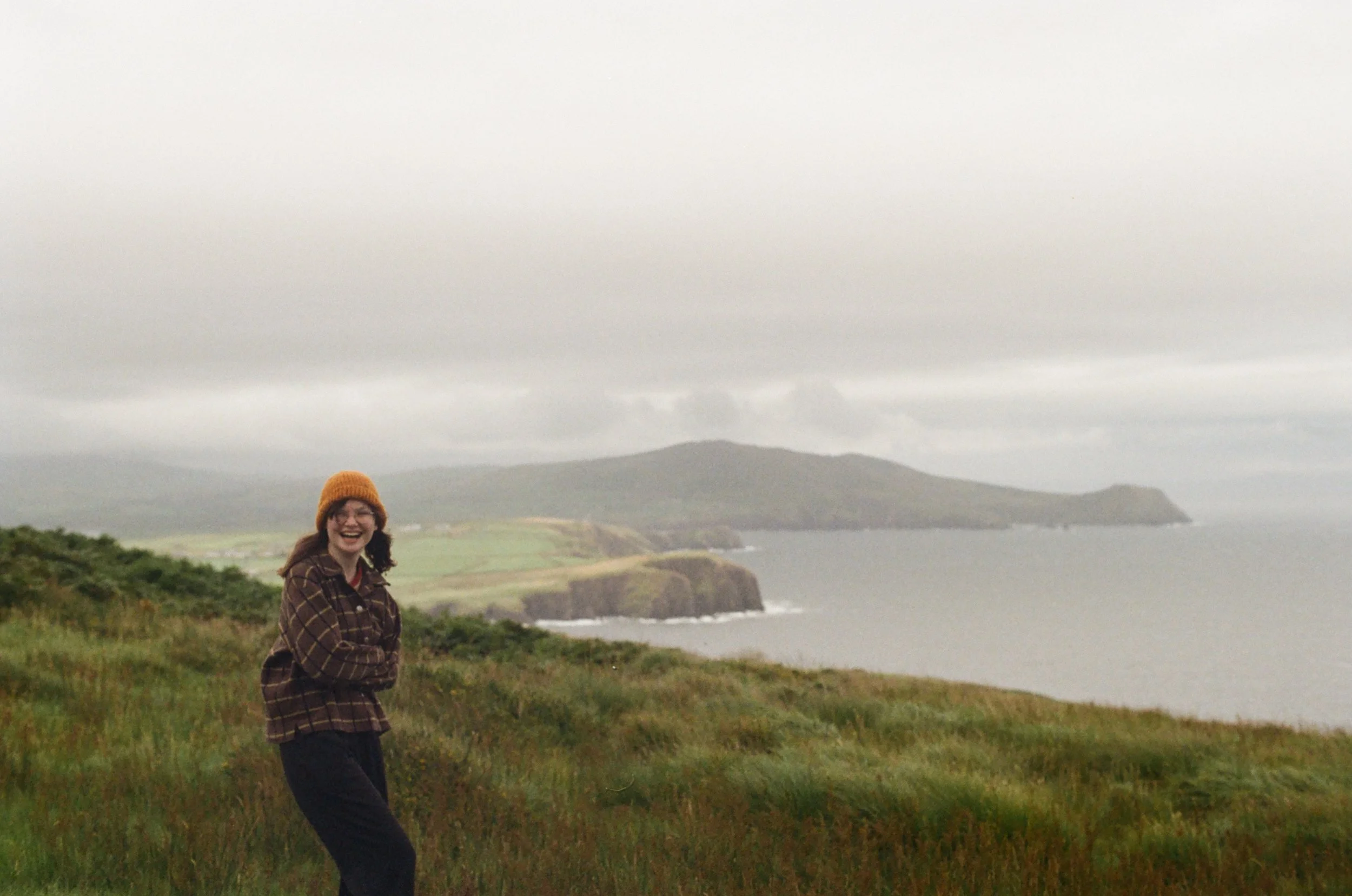
During the days, we explored Dingle’s landscape, which was as green and rugged as any visitor might hope. My sister and I are the sort of people who believe everything should be accessed by foot, cars be damned, so we spent hours walking along verdant residential roads, places where the air sagged and dripped in mist, to access the coast’s sights. These streets were lined with blackberry bushes, and my sister, who told me she considers wild blackberries “tiny gifts from nature,” spent a considerable time picking and eating them, until she was predictably stung on the hand by a wasp nested among the bushes.
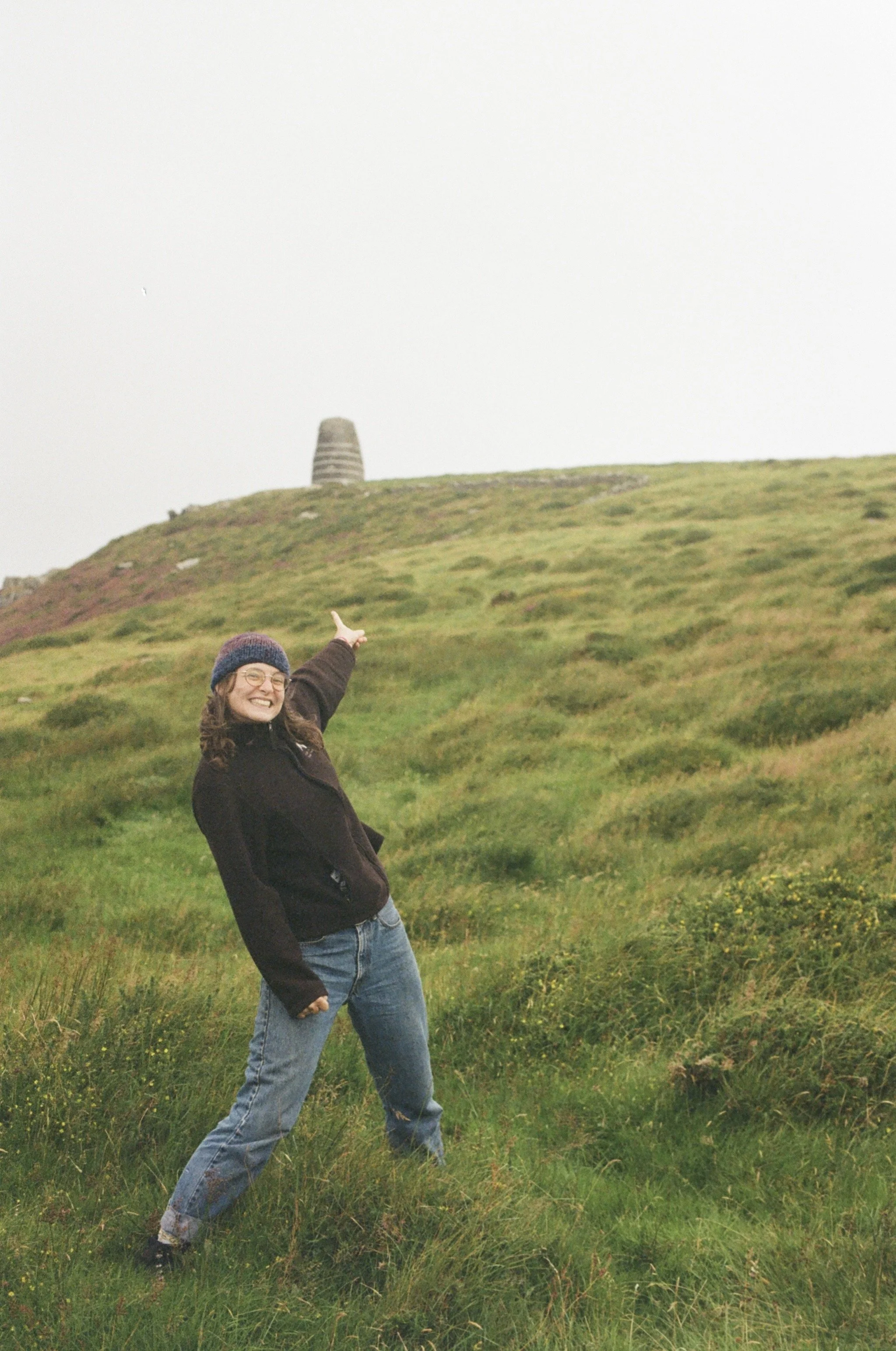
On our first day in Dingle, we walked along the bay and climbed up to Eask Tower, a solid cobble monument built as an Irish Famine relief project to guide ships to the harbor. The tower is somewhat famous, and yet on our walk, we were wonderfully alone, trekking up sheep pastures to the deserted outlook, from which the entirety of Dingle Bay was visible. In general, the coastal Irish landscape was flat and walkable, so there were few specific rules as to where one could trek. We descended the hills a little toward the ocean and sat alone in wet grass, leaning against one another, eating old homemade sandwiches and singing the songs stuck in our heads loudly into the empty green landscape.
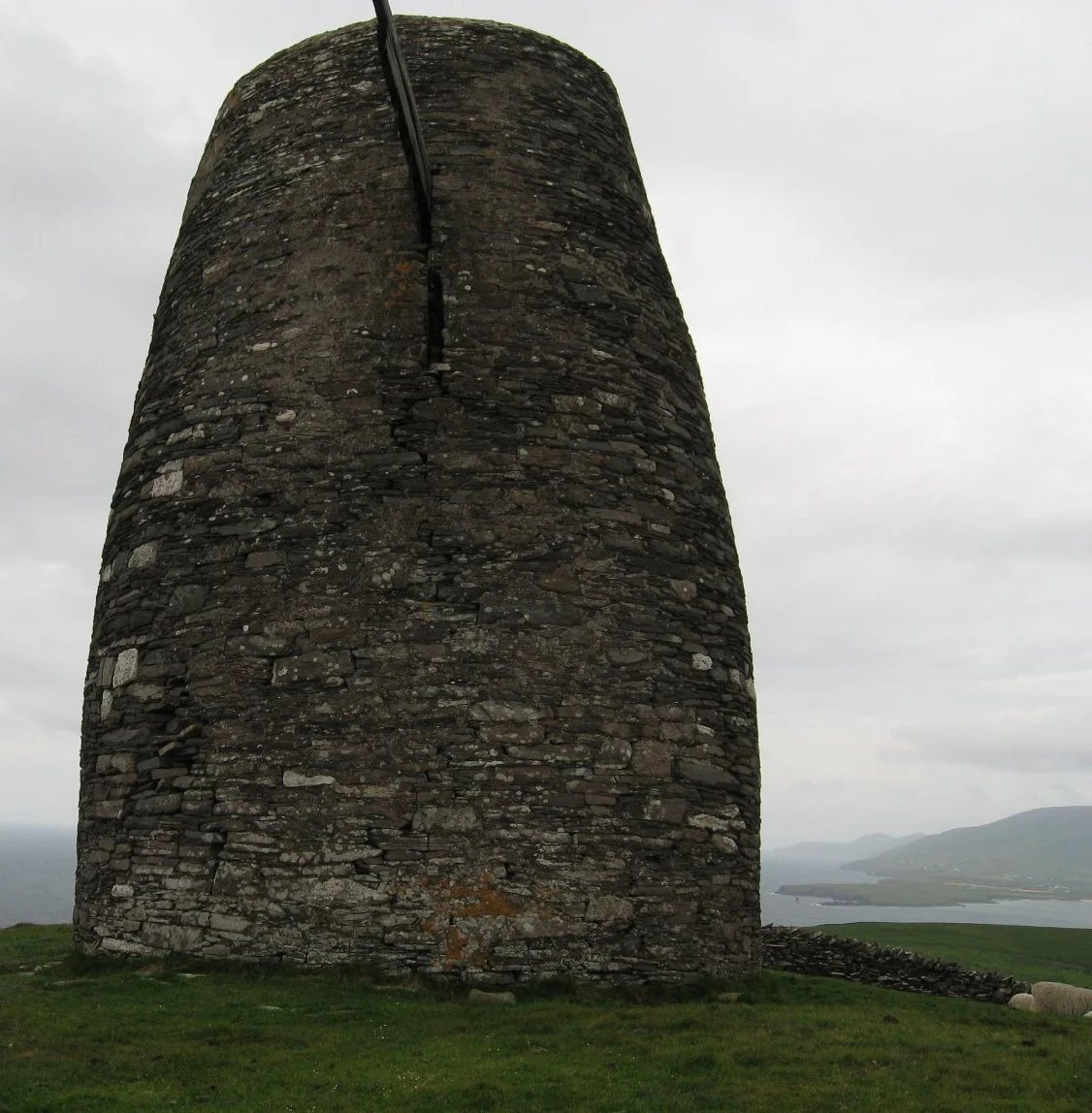
The Eask Tower. Warren Fish. CC BY-SA 3.0.
The next few days in Dingle passed in quick succession, each more enjoyable than the next. Dodging cars, we walked along the main road to visit the Gallarus Oratory, an early chapel constructed impressively out of stone. The exact purpose of the structure is unknown, but it is often believed to be a church. When my sister and I arrived, we received a pamphlet arguing that this old church was a representation of a godly way of life, from a time when men had a primal connection with God, uninhibited by modern distraction. Our history lesson continued when we took a boat tour around Dingle Harbor to learn about its historic sites. My sister was deeply moved by stories of the famine that devastated coastal communities in the mid-19th century and resulted in widespread relief construction projects. I was moved, too, although I was somewhat distracted by my attempts not to vomit off the side of the boat. At night, we walked down Dingle’s main streets and listened to the Irish music lighting up the pubs.
Because of its rugged scenery and its vibrant culture, Dingle has been a thriving destination in Ireland since the 1990s. Like most of Ireland, it has grown rapidly wealthier and more tourist-friendly in the past 30 years. It is perhaps for this reason that my trip, to a point, felt vaguely curated, like an assortment of “best of Ireland” sites. I felt that my visit lacked some essential authenticity –– until my last day there, that was.
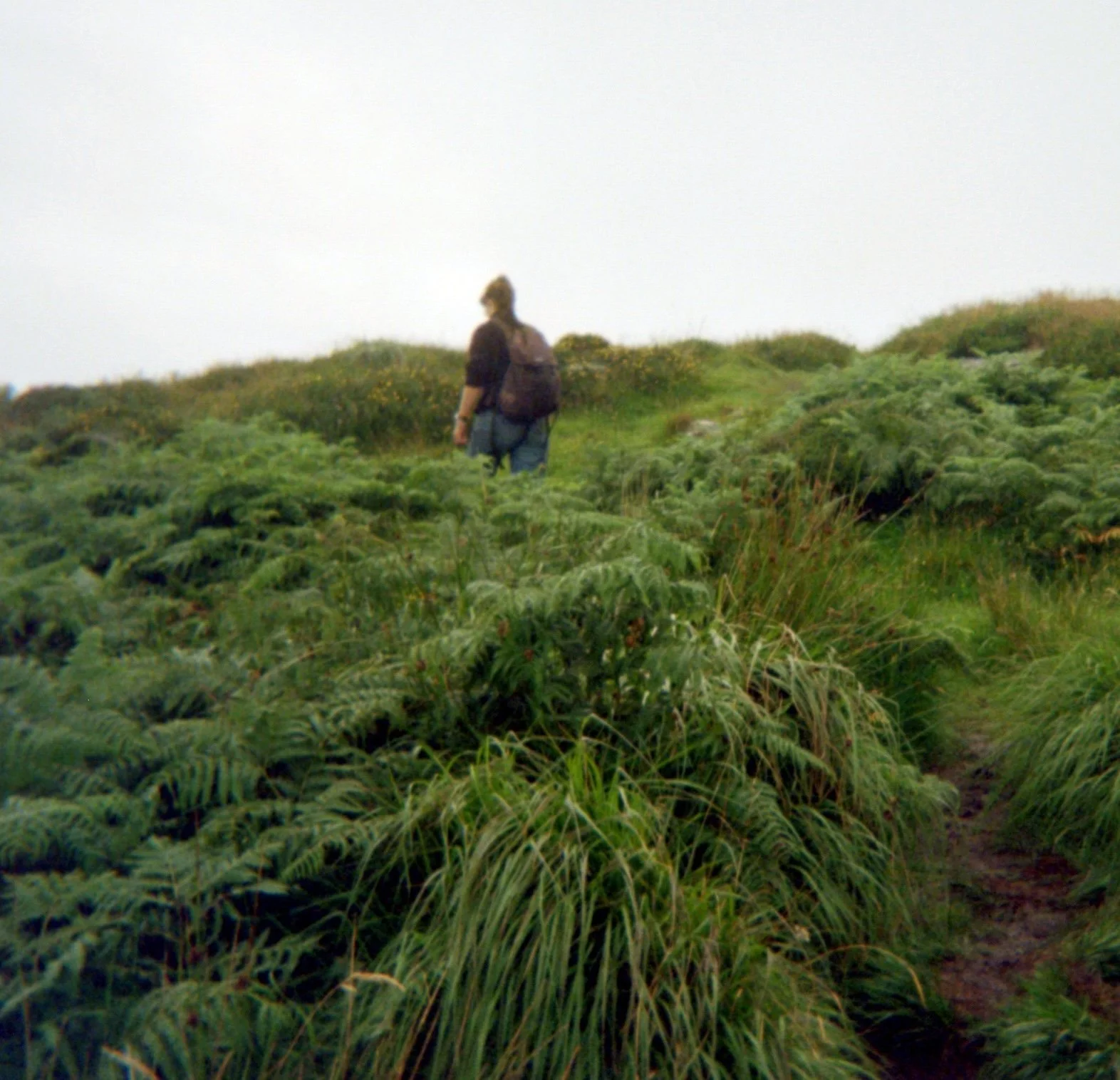
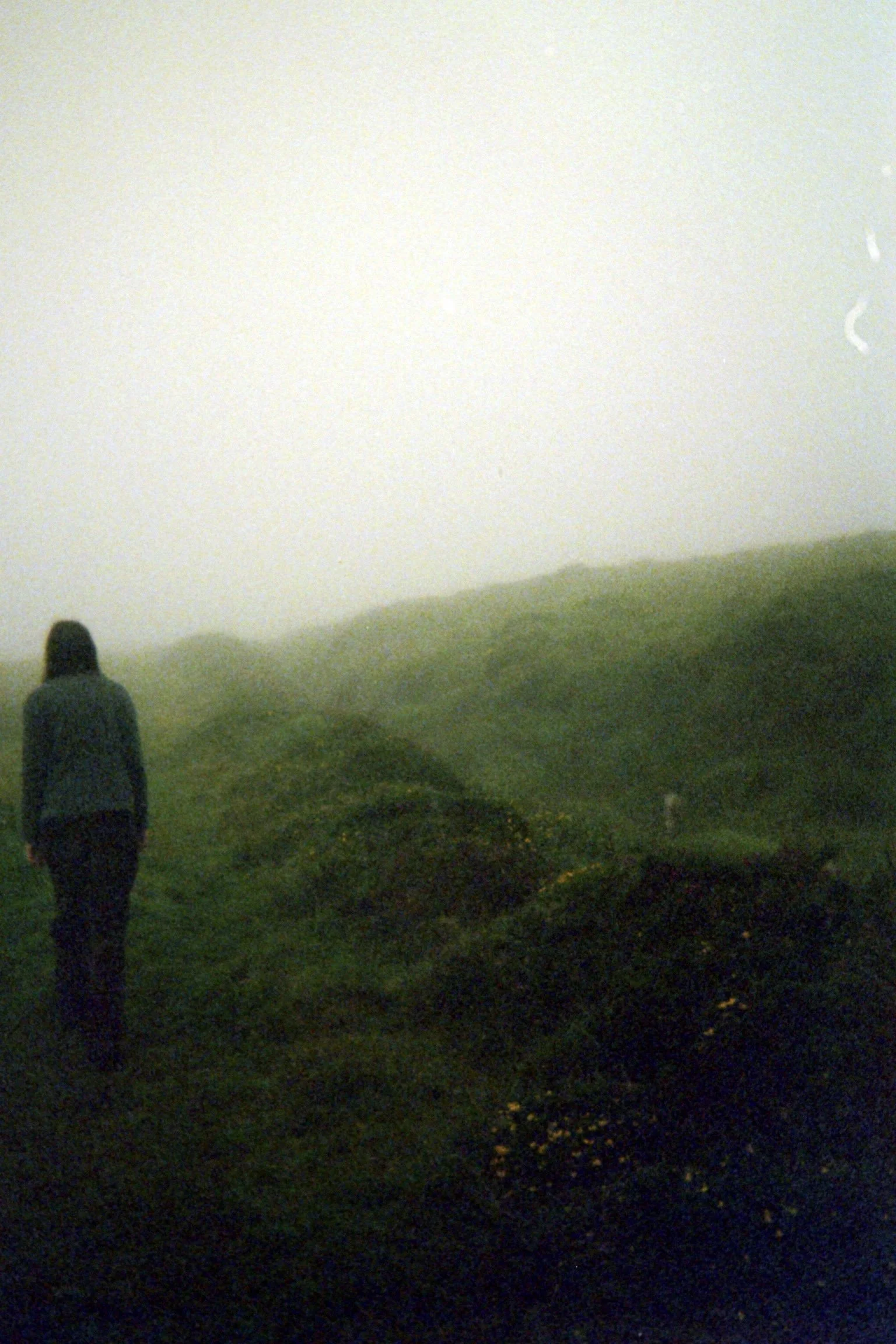
On our last day, we traversed Conor Pass, a winding trail between bare and foggy mountains. Or that was our plan, at least. It was a particularly misty day, and as we walked up a wet road straight into the mist, we found ourselves utterly lost. The concrete road we were following became a dirt path, which turned into a small trail mucked out between sheep and cow pastures, which morphed eventually into nothing except indiscernible walked-in rivets in a sea of long grass. By this point, the air was an impenetrable gray, we could not see five feet in front of us and everything was wet. We were soaked to the skin, our glasses misted up, losing our trail, sloshing blindly through grassy puddles. Eventually, we gave up on seeing Conor Pass. We might have been at the Pass itself and would not have known it, for all that we could see.
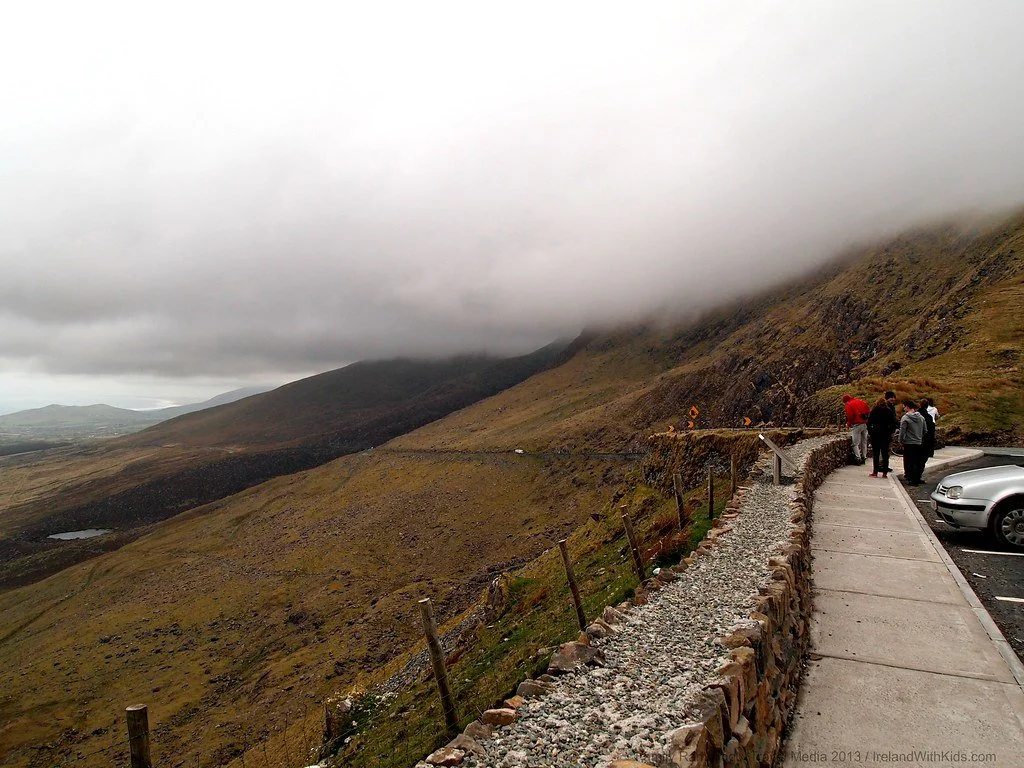
As we stamped back through the pastures, dripping wet, my sister said, “We’re miserable, but we will miss this later.” And I do miss that day, very much. Stepping back into the hostel that afternoon, I felt in some vague, important way that I had really seen the world and interacted with its landscape in some untailored, organic way. I had not promenaded through a curated trail crowded with tourists; I had walked through deserted, rainy sheep pastures, lost my destination and experienced a moment true to itself. By visiting Ireland, I had hoped that I would come to know the landscape in some meaningful, experiential way. I found this kind of experience not in touring famous city sites, but in hiking in mucky green marshes with cows and sheep. Along the Dingle coast, I felt I had truly discovered the country.
WHEN VISITING:
Take a break from cars and other forms of transit in order to explore the region on foot. Walking along Dingle’s remote roads and trails gives you the best sense of the area’s charm. Be sure to stay in one of the many inexpensive but vibrant hotels and hostels in the town center. Delight in the attractions of Dingle town, but make sure to explore the peninsula’s natural wonders in equal measure. Be unafraid to get lost in the landscape.
Sarah Page-McCaw
Sarah is a student at Columbia University studying history and literature. She hopes to study law and is passionate about social justice and combating climate change. In her free time, she enjoys reading, writing, traveling, and music.